绿色消费

Search documents
万物新生执行总裁王永良:二手经济蓬勃发展,绿色生活有望成大众日常丨请回答2025
Sou Hu Cai Jing· 2025-12-23 09:52
Core Insights - The second-hand market is entering a development opportunity period driven by both policy and market factors, with increasing public recognition of resource reuse and strong market demand [1] - Digital technology is accelerating industry transformation, enabling a robust online-offline integration model and improving trust in non-standard product transactions [1] - The concept of a circular economy is seen as a key path to solving resource and environmental issues, with second-hand consumption becoming a green lifestyle choice for more users [3][5] Industry Trends - The second-hand industry is experiencing significant growth, supported by government policies such as the "old-for-new" exchange program, marking a golden development period [3][4] - There is a continuous increase in the penetration rate of second-hand product recycling, indicating a shift in consumer attitudes towards sustainable consumption [4] - The industry is expanding its recovery categories beyond electronics to include bags, watches, gold, and fashion items, catering to diverse consumer needs [4] Company Developments - The company has optimized its quality inspection processes for second-hand devices through technological iterations, enhancing efficiency and expanding the range of recoverable items [3] - The company has been recognized as an industry benchmark, receiving the "Earthshot Prize," highlighting its innovative practices in the second-hand product recycling sector [4] - The company aims to support a green lifestyle by improving service quality and user experience, encouraging more users to participate in sustainable consumption [6]



促消费向稳向好需政策加力优化
Sou Hu Cai Jing· 2025-12-22 22:43
Core Viewpoint - The Chinese government is prioritizing the expansion of domestic demand and strengthening the domestic circulation to stabilize economic growth, with consumer spending playing a crucial role in this strategy [1]. Group 1: Economic Growth and Consumer Contribution - In the first three quarters of 2025, China's GDP grew by 5.2% year-on-year, with final consumption expenditure contributing 53.5% to economic growth, an increase of 9 percentage points compared to the previous year [1]. - The Central Economic Work Conference emphasized the importance of expanding domestic demand and optimizing supply as key tasks for economic work in the coming year [1]. Group 2: Consumer Demand and Retail Performance - From January to November 2025, the total retail sales of consumer goods increased by 4.0% year-on-year, surpassing the 3.5% growth rate of 2024 [2]. - The service retail sector saw a year-on-year growth of 5.4%, indicating a stable growth trend [2]. - The "old-for-new" policy for consumer goods has been expanded, leading to over 2.5 trillion yuan in sales and benefiting more than 360 million people [2]. Group 3: New Consumption Trends - New types of service consumption, such as travel, culture, entertainment, and health, have become popular, with significant increases in domestic travel during holidays [3]. - The online retail of physical goods grew by 5.7% year-on-year, accounting for 25.9% of total retail sales, indicating a shift towards e-commerce [3]. - The retail sales of new energy passenger vehicles increased by 33.3%, with a penetration rate of 50.2% in the first half of 2025 [3]. Group 4: Supply-Side Innovations and CPI Trends - The Consumer Price Index (CPI) rose by 0.7% year-on-year in November 2025, reflecting improvements in product and service quality due to innovation [4]. - The number of new consumer goods registered in 2024 exceeded 21.63 million, marking a significant increase in supply-side innovation [4]. Group 5: Challenges in Consumer Market - Despite the potential and resilience of the consumer market, there are structural contradictions, such as consumer spending growth lagging behind income growth [6]. - The growth rate of service consumption spending has slowed, which may hinder the upgrading of consumption structure [7]. - The consumer market is increasingly segmented, with distinct consumption patterns emerging among different income groups [7]. Group 6: Policy Recommendations for Consumption Growth - To boost consumption, policies should focus on enhancing employment, increasing income, and stabilizing expectations [9]. - The "old-for-new" policy should be optimized to stimulate service consumption, particularly in sectors like tourism and elderly care [10]. - A supportive mechanism combining policy support, digital empowerment, and industrial fund support should be established to foster innovation in consumption [11].
陇原烟火气升腾 新消费活力涌动
Xin Lang Cai Jing· 2025-12-22 00:51
Core Viewpoint - The consumption market in Gansu is experiencing a significant recovery, driven by policy benefits and market vitality, with a notable increase in retail sales of consumer goods. Group 1: Consumption Market Performance - From January to October, Gansu's total retail sales of consumer goods reached 354.52 billion yuan, showing a year-on-year growth of 2.5% [1] - The restaurant industry has seen a resurgence, with long queues at local specialty dining establishments and night markets [1] - The demand for new energy vehicles, home appliances, and furniture has surged, with retail sales growth exceeding 20% for these categories in the first half of the year [1] Group 2: Emerging Consumption Trends - The rise of green, smart, and experiential consumption is becoming a new trend in Gansu's market, with significant increases in orders for AI energy-saving air conditioners and smart refrigerators [2] - The demand for mid-to-high-end home appliances is being driven by the "old-for-new" policy, with consumers benefiting from subsidies [2] - New energy vehicle consumption has seen a remarkable growth rate of 38.1% in the first three quarters of 2025 [2] Group 3: Tourism and Cultural Consumption - Gansu welcomed 400 million tourists from January to September, generating tourism spending of 315.6 billion yuan, marking a substantial year-on-year increase [2] - The integration of cultural and tourism experiences is expanding the market, with activities ranging from cultural studies at Dunhuang Mogao Caves to eco-experiences in Gannan [2] Group 4: Promotional Activities and Infrastructure - Gansu has implemented various promotional activities such as "old-for-new policy benefits + special promotions," "New Year goods festival," and "automobile exhibition," which have stimulated diverse consumer demand [3] - The combination of promotional events and infrastructure upgrades is continuously igniting market enthusiasm [3] - The ongoing trend of consumption upgrading and the release of policy effects are expected to create new opportunities for high-quality economic development in the province [3]
促进形成投资和消费良性互动机制
Xin Lang Cai Jing· 2025-12-21 19:39
Group 1 - The core idea emphasizes the importance of both consumption and investment in driving domestic demand and social reproduction, highlighting the need for effective government investment to stimulate a virtuous cycle between investment and consumption [1][2] Group 2 - The focus should shift towards "investment in people," prioritizing social infrastructure such as education, healthcare, and cultural services to enhance human capital and boost consumption [1] - Investment should be directed towards consumption upgrade areas, particularly in technology innovation, new infrastructure, and green consumption, to unlock new growth avenues [1] - There is a need to enhance urban infrastructure and public services to release the consumption potential of urban residents and migrant populations [1] Group 3 - Deepening reforms is essential to promote the linkage between investment and consumption, addressing market access restrictions and price controls that hinder private investment in sectors like education and healthcare [2] - By adjusting prices and attracting social capital investment, the government can amplify the effects of public investment while ensuring that wage increases and subsidies for low-income groups keep pace with rising costs [2] - Expanding investment in social welfare and consumption upgrade sectors will not only stimulate domestic demand and consumption but also support long-term economic transformation [2]
锐财经丨消费市场新意浓
Ren Min Ri Bao Hai Wai Ban· 2025-12-20 05:53
Core Viewpoint - The consumption market in China is experiencing steady growth, driven by various policies aimed at boosting consumption and the emergence of new consumption patterns, with a notable increase in both retail sales and service consumption [1][3][5]. Group 1: Consumption Market Performance - From January to November, the total retail sales of consumer goods increased by 4% year-on-year, surpassing both the previous year's growth and the overall growth for the year [1]. - In November, retail sales of cultural and office supplies and communication equipment grew by 11.7% and 20.6% year-on-year, respectively, indicating a strong demand for quality consumption [2]. - Service retail sales increased by 5.4% year-on-year from January to November, outpacing the growth of goods retail sales, reflecting a shift towards service consumption [2]. Group 2: New Consumption Trends - New consumption models such as instant retail and live-streaming e-commerce are rapidly growing, with online retail sales of physical goods increasing by 5.7% year-on-year, accounting for 25.9% of total retail sales [4]. - Digital, green, and health-related consumption are emerging as new hotspots, indicating a shift in consumer preferences towards more sustainable and health-conscious products [4]. Group 3: Challenges and Opportunities - Despite the growth, there are challenges such as low consumer confidence and spending capacity, with the consumer rate projected at 39.9% in 2024, still lagging behind developed countries by 10-30 percentage points [6]. - To enhance consumer spending, measures will be taken to improve employment and income levels, as well as to implement policies that stimulate consumption, such as the trade-in program for consumer goods [6][7].
前十一月,社零总额增长百分之四——消费市场新意浓
Xin Hua Wang· 2025-12-19 23:45
Core Insights - The consumer market in China is experiencing steady growth, with a year-on-year increase of 4% in retail sales of consumer goods from January to November, surpassing both the previous year's growth and the total growth for the entire year [1][2][3] Group 1: Consumer Market Performance - The overall consumer market remains stable, with retail sales continuing to expand and service consumption growing rapidly [2][3] - In November, retail sales of cultural and office supplies and communication equipment increased by 11.7% and 20.6% year-on-year, respectively, indicating a strong demand for quality consumption [2] - Retail sales of food and essential goods also saw a significant increase, with grain and oil retail sales rising by 6.1% year-on-year in November [2] Group 2: New Consumption Trends - New forms of consumption, such as instant retail and live-streaming e-commerce, are growing steadily, with online retail sales of physical goods increasing by 5.7% year-on-year, accounting for 25.9% of total retail sales [4] - Digital, green, and health-related consumption are emerging as new hotspots, reflecting a shift in consumer preferences [4][5] Group 3: Economic Context and Future Outlook - The increase in consumer spending is linked to the per capita GDP surpassing $10,000, leading to an upgrade in consumption structure [5] - The potential for consumption growth remains significant, driven by a large middle-income population and the ongoing development of new technologies and consumption models [4][5] - However, challenges such as low consumer confidence and limited spending power persist, necessitating further efforts to enhance consumer capacity and willingness [6][7]
消费市场新意浓(锐财经)
Ren Min Ri Bao Hai Wai Ban· 2025-12-19 23:40
Group 1 - The core viewpoint of the articles highlights the steady growth of the consumption market in China, driven by various policies aimed at boosting consumption and the emergence of new consumption patterns [1][3][5] - From January to November, the total retail sales of consumer goods increased by 4% year-on-year, surpassing both the same period last year and the overall growth rate for the previous year [1][2] - The service consumption sector has shown rapid growth, with service retail sales increasing by 5.4% year-on-year, outpacing the growth of goods retail sales [2][5] Group 2 - The trend of quality upgrading in consumption is evident, with new consumption models such as instant retail and live e-commerce gaining traction [4][5] - Digital, green, and health-related consumption are emerging as new hotspots, contributing significantly to the overall consumption landscape [5][6] - The potential for consumption upgrade remains substantial, with a large middle-income group in China and expectations for GDP per capita to exceed $13,000 in 2024, leading to a shift from basic needs to more discretionary spending [5][6] Group 3 - There are challenges in enhancing residents' consumption capacity and confidence, with the current consumption rate at 39.9%, which is significantly lower than that of developed countries [6][7] - Future efforts will focus on increasing residents' consumption willingness and enhancing their purchasing power through various policies, including employment stabilization and urban renewal initiatives [6][7] - The market's resilience and potential are expected to continue to manifest as new consumption scenarios and environments are developed [7]

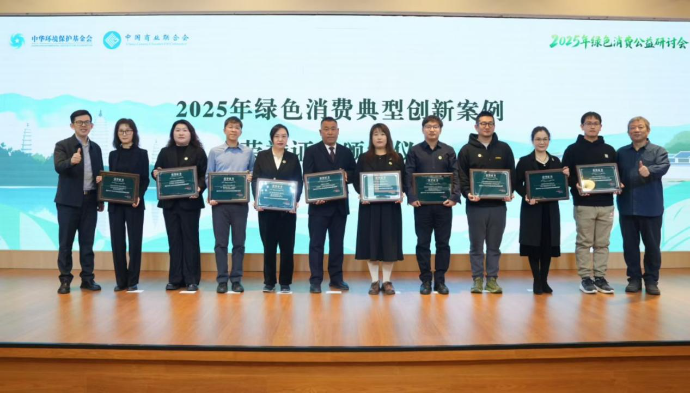
苏宁易购获评2025年绿色消费典型创新案例
Zhong Jin Zai Xian· 2025-12-19 14:14
Core Viewpoint - Suning.com has been recognized as a model enterprise for green transformation in the retail industry by being selected in the "2025 Green Consumption Typical Innovation Cases" evaluation, alongside other notable companies like Metro, Ant Technology, and Starbucks (China) [1] Group 1: Green Practices - Since 2025, Suning.com has systematically built a comprehensive green ecosystem covering supply chain, sales, service, and recycling, focusing on "green operations, green consumption, green logistics, and green recycling" [3] - The company has innovatively integrated a three-tier subsidy mechanism of "national subsidy + manufacturer subsidy + Suning subsidy" to create an integrated consumption model of "trade-in for new" [3] - Suning.com has implemented service commitments such as "one-step delivery and collection" and "five exemptions and four unlimited" to lower consumer participation barriers and enhance recycling efficiency [3] Group 2: Technological Applications - The company utilizes its self-developed AI model "LingSi" for precise recommendations of green products and employs blockchain technology to establish a trustworthy traceability system for the entire process of home appliance recycling [5] - Suning.com has standardized green warehousing in 30 cities and is promoting the use of circular express boxes and new energy logistics vehicles to continuously reduce carbon emissions in logistics [5] - The green procurement platform has a 70% share of energy-saving products, and the standardized recycling network for old home appliances covers the entire country, creating replicable and promotable system experiences [5] Group 3: Future Commitment - The recognition of this national-level award signifies that Suning.com's green practices have received high acknowledgment [6] - Looking ahead, the company aims to deepen its comprehensive green ecosystem and collaborate with partners to promote green consumption, contributing to the achievement of the "dual carbon" goals [6]

消费变迁下的直销新机遇:紧扣Z世代、银发族与绿色需求
Sou Hu Cai Jing· 2025-12-19 03:55
Core Insights - The direct selling model is aligning well with changing consumer demands and trends, reshaping the industry's future [1] - The Chinese consumption market is undergoing profound changes, with the national trend economy expected to reach 2.29 trillion yuan in 2024, driven largely by the "Z Generation" [1] - The aging population is projected to contribute significantly to the economy, with the silver economy expected to reach 7 trillion yuan [1] Consumption Trends - The shift in China's consumption structure is moving from quantity to quality, emphasizing emotional value over functional value [4] - Retail sales of consumer goods are expected to grow from 25.9 trillion yuan in 2014 to 48.3 trillion yuan in 2024, an increase of over 80% [4] - Service consumption is growing faster than goods consumption, with health-related spending increasing at an annual rate of 9.8% from 2013 to 2024 [4] Z Generation Consumption - The "Z Generation" (born 1995-2009) comprises about 260 million people, contributing 40% of total consumption, with their spending projected to quadruple to 16 trillion yuan by 2035 [7] - This generation values personalization and seeks recognition through niche consumption, with a significant portion being rational consumers [7] - Direct selling can leverage the rational consumption habits of the Z Generation by providing expert knowledge and personalized products [7] Silver Economy - By the end of 2024, the population aged 60 and above in China is expected to exceed 300 million, with the silver economy projected to reach 19.1 trillion yuan by 2035 [10] - The health consumption patterns of the elderly are evolving, with a notable increase in demand for senior-friendly products, such as fitness equipment and health supplements [10][11] - The shift from passive treatment to proactive prevention in health-related products presents a significant market opportunity [11] Green Consumption - Green consumption is becoming a mainstream trend, with 83% of consumers willing to pay a premium for smart health appliances [14] - Sales of health monitoring devices are expected to grow by 41.6% year-on-year in Q1 2025, reflecting the rising demand for smart consumer products [14] - Direct selling companies are integrating sustainable development into their core strategies, enhancing consumer trust in green products [14] Direct Selling Model Advantages - The direct selling model's personalized service and strong social attributes align well with new consumer demands [18] - Direct sellers can effectively cater to the Z Generation's preference for experiential and personalized products through social media engagement [18] - The model's one-on-one service can meet the specialized health needs of the elderly, positioning direct sellers as trusted health advisors [18] Future Market Outlook - The evolution of three major consumer forces and the adaptability of the direct selling model create a roadmap for future market changes [19] - Direct selling companies that align with consumer trends and provide high-quality offerings can secure advantageous positions in the expanding market [19] - The industry is poised for a resurgence, with the direct selling model's compatibility with new consumption trends indicating a bright future ahead [19]

帮主郑重:三部门联手“发钱”促消费!哪些领域会诞生下一批牛股?
Sou Hu Cai Jing· 2025-12-18 07:31
Core Viewpoint - Recent policies from central and local governments aim to significantly boost consumption through financial tools and support, indicating a strong commitment to enhancing consumer spending [1] Group 1: Policy Focus Areas - The policies are driven by a dual approach of "commerce" and "finance," targeting the entire consumption chain [3] - The first key area is the upgrade of "physical goods," specifically mentioning durable consumer goods and digital products, with a strong emphasis on automobiles [3] - The second key area focuses on the expansion and quality enhancement of "service consumption," including sectors like home services, tourism, elderly care, education, and healthcare [3] - The third key area is the cultivation of "new consumption," highlighting green consumption, digital consumption, and the integration of technology with consumption [4] Group 2: Investment Opportunities - Long-term investment strategies should focus on sectors backed by national blueprints with significant market potential, such as smart connected vehicles, consumer electronics, and the silver economy [5] - Short-term investment opportunities include sectors directly benefiting from policies like the trade-in programs and financial support for durable goods, as well as those recovering from service consumption, such as tourism and offline retail [5] - Technology companies providing infrastructure for new consumption, such as digital payment and e-commerce service providers, are also highlighted as potential investment targets [5]