AI算力

Search documents
转债事件点评:把握春季行情下半场
GUOTAI HAITONG SECURITIES· 2026-02-23 13:08
Core Insights - The report suggests adopting a "steady first, with growth in mind" approach to maintain gains in the second half of the spring market and to reserve space for future positioning [2][15] - The spring market of 2026 began on December 17, 2025, driven by favorable policies and early capital allocation, leading to a strong performance in the A-share market, with the Shanghai Composite Index achieving 17 consecutive days of gains [9][13] - The convertible bond market experienced rapid growth followed by volatility, with median prices and conversion premiums reaching historical highs, indicating a significant reduction in the safety cushion of bonds [9][10] Market Trends - Historical data from 2017 to 2025 indicates that the market typically experiences a "rise then fall" pattern from the Spring Festival to the National People's Congress (NPC) [13][14] - The report highlights that during the period from the Spring Festival to the NPC, the market is likely to see a "spring surge," with small-cap growth stocks outperforming, particularly in TMT and high-end manufacturing sectors [13][14] - As the NPC approaches, the market may shift towards defensive sectors like pharmaceuticals and utilities, with high valuations in convertible bonds facing potential compression due to stock adjustments [13][14] Investment Strategy - The report recommends a balanced investment strategy, transitioning from aggressive profit-seeking to balancing returns and risks as the market moves into the NPC and Q1 earnings preview phase [15] - It emphasizes the importance of selecting convertible bonds with solid performance and reasonable pricing, while also considering high-quality, high-priced convertible bonds with clear growth prospects [15] - The report identifies sectors such as AI computing, semiconductors, non-ferrous metals, and post-cycle industries like consumption and real estate as favorable for convertible bonds due to improving supply-demand dynamics and favorable policy catalysts [15]
长飞光纤市值突破千亿港元,光纤均价创近七年新高,AI算力缺口引爆港股硬件板块
Jin Rong Jie· 2026-02-23 10:12
Group 1 - The core viewpoint of the news highlights the strong performance of the Hong Kong computing hardware sector, driven by the increasing demand for underlying computing power due to the acceleration of AI applications [1] - Longhua Fiber Optics has seen its market capitalization exceed HKD 100 billion, with a year-to-date increase of over 150%, indicating significant investor interest and confidence in the company [1] - The demand for computing power is further emphasized by the surge in AI applications from major companies like Alibaba and Tencent, which has created a rigid demand for computing resources [1] Group 2 - The fundamental support for Longhua Fiber Optics comes from the significant improvement in the supply-demand relationship within the optical fiber and cable industry, with projected prices for G.652.D single-mode fiber expected to exceed 40 RMB per core kilometer by January 2026, marking a nearly seven-year high [2] - Longhua Fiber Optics has maintained the largest market share in preform rods, optical fibers, and optical cables globally for nine consecutive years since 2016, showcasing its strong competitive position [2] - The company reported a revenue of 10.275 billion RMB for the first three quarters of 2025, reflecting an 18.18% year-on-year growth, indicating robust financial performance [2]

前十大重仓股行业地位透视,汇添富恒生科技ETF联接发起式(QDII)C(013128)核心资产一览!
Sou Hu Cai Jing· 2026-02-23 03:37
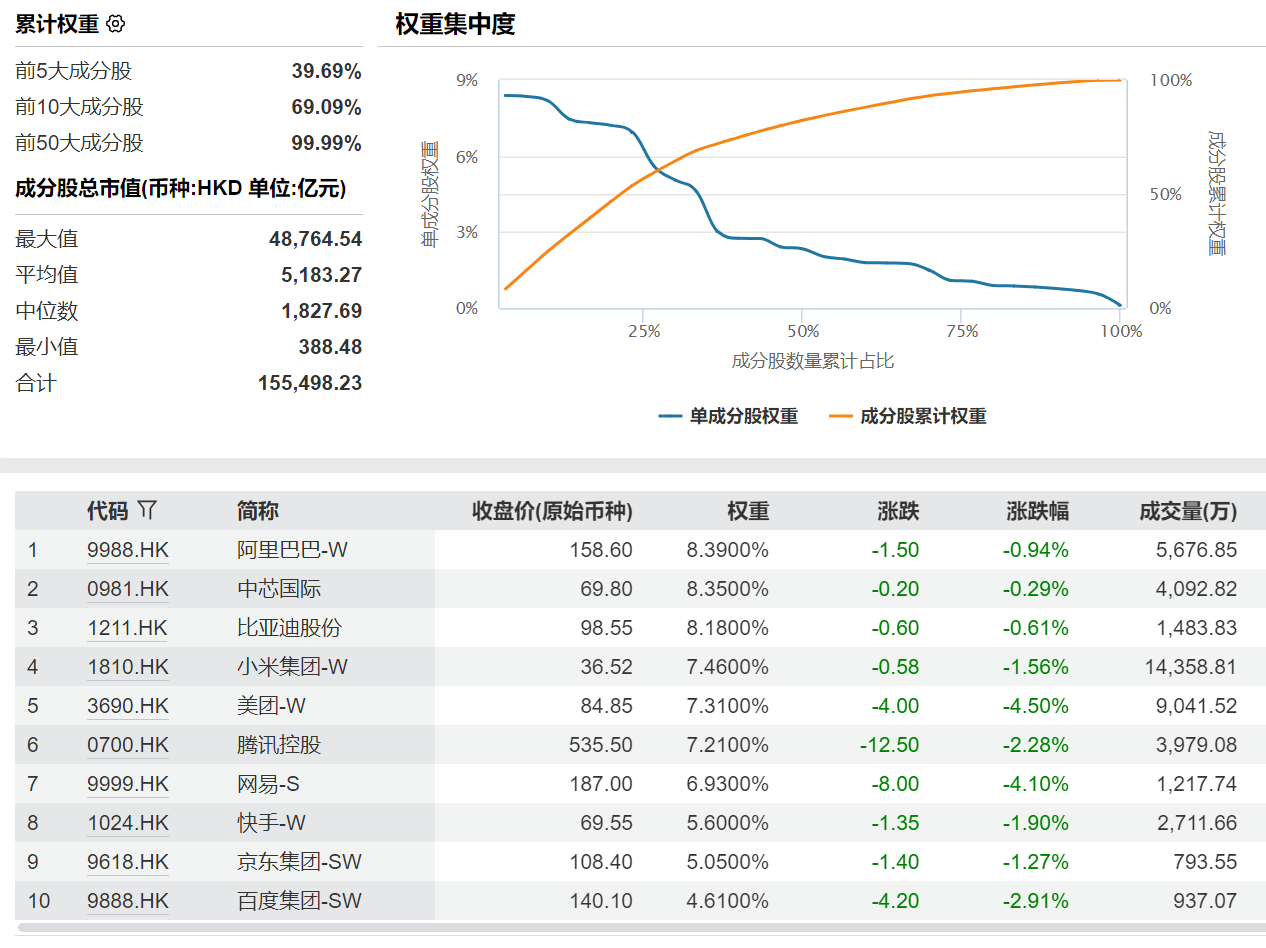
Core Insights - The Hang Seng Tech Index tracked by the Huatai-PineBridge Hang Seng Tech ETF (QDII) exhibits a highly concentrated weight structure, with the top ten constituent stocks accounting for nearly 70% of the total weight [1][6] - The index reflects a significant market capitalization distribution disparity, indicating a power-law distribution characteristic dominated by leading firms [1][6] Weight Distribution and Market Capitalization - The cumulative weight of the top five constituent stocks is 39.69%, while the top ten stocks account for 69.09%, and the top fifty stocks cover 99.99% of the index [2][6] - The total market capitalization of the constituents is notably diverse, with the largest stock (Alibaba) valued at 48,764.54 billion HKD, the smallest at 388.48 billion HKD, an average of 5,183.27 billion HKD, and a median of 1,827.69 billion HKD [6] Analysis of Top Constituents 1. **Alibaba (9988.HK)**: Belongs to the consumer discretionary and internet platform sector, with core businesses in retail, cloud computing, and digital media, demonstrating strong platform attributes and resilience across cycles [6] 2. **SMIC (0981.HK)**: Part of the information technology and semiconductor sector, as a leading foundry in mainland China, it benefits from domestic substitution and AI computing demand [6] 3. **BYD (1211.HK)**: Associated with consumer discretionary and the electric vehicle sector, it has a comprehensive layout across the new energy supply chain, including vehicles, batteries, and semiconductors [6] Overall Index Characteristics - The Hang Seng Tech Index is characterized by a concentration of leading firms, distinct technological attributes, and high growth potential, with the top ten stocks focusing on internet platforms, semiconductors, new energy, and consumer electronics, covering the core assets of China's digital economy [7]

东山精密(002384):AIPCB+光模块双翼齐振 聚力新程
Xin Lang Cai Jing· 2026-02-22 08:25
Group 1: Market Growth and Trends - The global optical module market is expected to grow from $16.3 billion in 2024 to $38.9 billion by 2029, with a CAGR of 18.9% from 2024 to 2029 [1] - The demand for high-speed optical chips is surging, with the 800G optical module market projected to grow from $0.05 billion in 2019 to approximately $4.5 billion by 2024, reflecting a CAGR of 148.5% from 2019 to 2024 [1] - The 1.6T optical module market is anticipated to reach around $14.3 billion by 2029 [1] Group 2: Company Developments - Eastcompeace has rapidly entered the optical communication market through the acquisition of Sors Technology, which offers a wide range of optical modules from 10G to 1.6T [2] - Sors Technology has achieved a shipment volume of over 10 million units for its 100G PAM4 EML chips, which are used in 400G and 800G optical modules, and its 200G PAM4 EML chips have entered mass production [2] - In the first half of 2025, Sors ranked eighth globally in the optical module market with a market share of 3.1% and seventh in optical chip production with a market share of 4.4% [2] Group 3: AI Server and PCB Market Dynamics - North American CSP manufacturers are expected to drive a more than 28% year-on-year growth in global AI server shipments by 2026 [3] - The value of PCBs is significantly increasing due to upgrades in layer count and manufacturing complexity, as well as increased functionality [3] - The design of AI servers is undergoing a structural shift, with PCBs becoming a core component for releasing computing power, entering a high-frequency, high-power, and high-density era [3] Group 4: Advanced PCB Manufacturing - The company has mastered the technology for manufacturing high multilayer PCBs with over 50 layers, achieving signal transmission rates of up to 224Gbps [4] - The company has developed over 70 layers of high multilayer orthogonal backplane technology to replace traditional high-speed cables, enhancing signal integrity and reliability [4] - An investment plan of $1 billion has been set to further enhance the company's high-end PCB production capacity, aiming to capture market opportunities in AI servers [4] Group 5: Financial Projections - The company is expected to achieve revenues of 41.4 billion, 69.8 billion, and 87.9 billion yuan in 2025, 2026, and 2027 respectively, with year-on-year growth rates of 13%, 69%, and 26% [4] - The projected net profits for the same years are 1.55 billion, 7.5 billion, and 13.01 billion yuan, reflecting year-on-year growth of 43%, 384%, and 74% [4] - The current stock price corresponds to a PE ratio of 19 and 11 for 2026 and 2027 respectively, indicating a significantly lower valuation compared to peers, thus maintaining a "buy" rating [4]

动态优化叠加产业前瞻!汇添富恒生科技C(013128)标的指数每季度"换血"背后的增长逻辑
Xin Lang Cai Jing· 2026-02-21 02:36
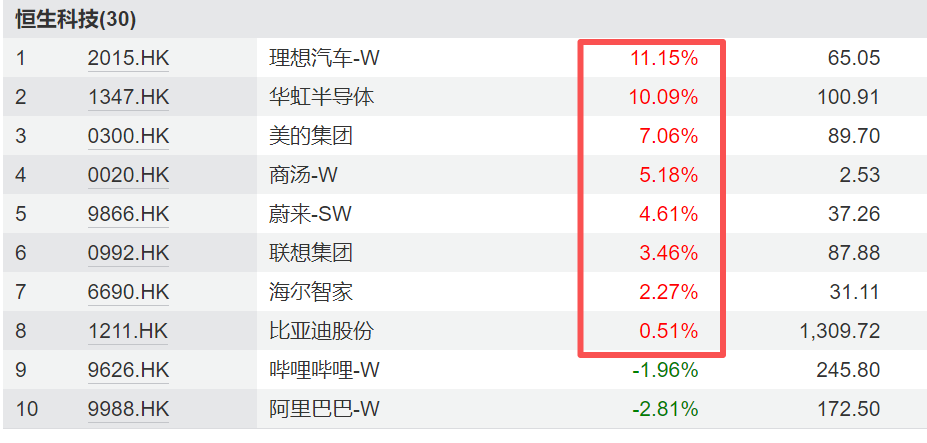
Group 1 - The core mechanism of the Hang Seng Tech Index is its quarterly rebalancing system, which allows for dynamic optimization of component structure, enabling the index to continuously track industry trends and provide a forward-looking technology allocation tool for investors [1] - The "fast inclusion" rule allows new stocks to be added to the index within 10 trading days if their market capitalization ranks in the top 10 among existing constituents, ensuring the index captures the benefits of large tech IPOs promptly [2] - The index has evolved from being dominated by internet services to a more balanced representation of both soft and hard technologies, with significant changes in component weightings reflecting shifts in the Chinese tech industry [3] Group 2 - The index has seen a gradual decrease in the weight of platform economy stocks while increasing the representation of hard tech companies like semiconductor firms, with hard tech now accounting for 20% of the index [3] - Recent adjustments have included electric vehicle companies, raising the automotive sector's weight to 15%, and AI-related stocks, further increasing the weight of semiconductors and AI hardware to 25% [3] - The index employs a "survival of the fittest" mechanism, removing underperforming stocks and maintaining high profitability and growth quality among its constituents, with removed stocks underperforming the index by an average of 15 percentage points in the following year [4] Group 3 - The index limits the weight of any single constituent to 8% and the top five constituents to a combined 40%, which helps mitigate risks associated with volatility in leading stocks [4] - The Hang Seng Tech Index is characterized by a balanced allocation between soft and hard technologies, with internet platform companies comprising over 50% of the index, while hard tech includes electric vehicle and semiconductor firms [5] - The index's structure captures the resilience of the consumer internet while also positioning itself for growth in the industrial internet space [5]
是德科技发布充电测试新品,股价接近60日高点
Xin Lang Cai Jing· 2026-02-20 18:13
Product Development - The company recently launched high-power and megawatt-level charging test solutions, including the SL1047A high-power series and SL2600A megawatt charging discovery system, aimed at supporting global charging standards and reducing development risks for clients [1] - A joint laboratory for charging testing was established with the China Automotive Technology and Research Center on February 2, 2026, to enhance technical implementation in the Chinese market [1] Stock Performance - As of February 20, 2026, the company's stock price was $244.10, with a daily increase of 1.90%, a 5-day cumulative increase of 6.37%, and a 20-day increase of 13.16%, nearing the 60-day high [2] - 63% of 16 institutions rated the stock as buy or hold, with a target average price of $229.50, indicating that the current stock price is above this average [2] - The company is expected to announce its Q1 fiscal year 2026 earnings in late February, with revenue guidance of $1.53 billion to $1.55 billion, reflecting a year-over-year growth of approximately 10% after excluding acquisitions [2] Event Impact - The new charging products highlight technological advantages, but the stock's ability to break through the 60-day high depends on multiple factors, including order growth driven by capital expenditures in electric vehicle charging infrastructure [3] - The Q1 earnings report must meet guidance expectations, and there is a need for sustained order growth in AI and 6G business segments [3] - The testing and measurement industry is influenced by capital expenditures from tech giants, and a slowdown in macro demand could suppress stock prices [3] Future Development - The new charging products are part of the company's technological strategy, but breaking through the 60-day high requires a comprehensive assessment of earnings reports, order volumes, and industry demand [4]
亚太股市全面上涨,韩国综指大涨3.15%,贵金属直线拉升,A股稳了
Sou Hu Cai Jing· 2026-02-20 12:01
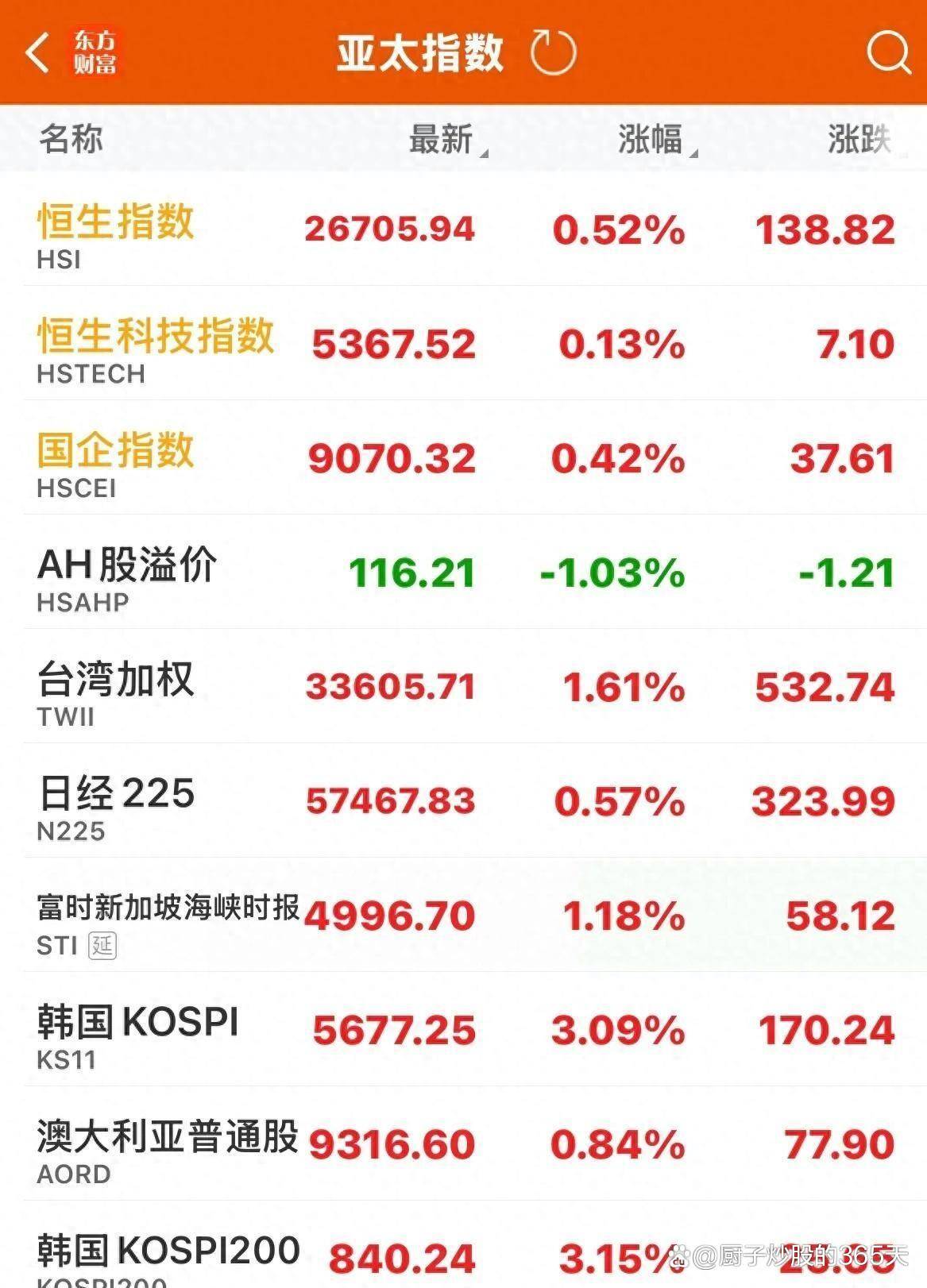
Group 1 - Global capital markets experienced significant activity during the Spring Festival, with A-shares expected to be a key focus upon reopening [1][14][15] - The KOSPI index in South Korea surged by 3.09% to a record high of 5677.25 points, driven by strong performance in the semiconductor sector, particularly Samsung Electronics [3][4] - The Nikkei 225 index in Japan rose by 0.57% to 57467.83 points, buoyed by expectations of economic stimulus from the newly elected Prime Minister [4] Group 2 - U.S. stock markets also showed positive momentum, with the Dow Jones up 0.26%, S&P 500 up 0.56%, and Nasdaq up 0.78%, marking a second consecutive day of gains [5] - Semiconductor stocks were particularly strong, with Micron Technology rising 5.3% due to increased investment from hedge funds, and ASML gaining 3.45% [7] - Geopolitical tensions, particularly regarding Iran, have influenced market dynamics, leading to a spike in oil prices, with WTI crude up 4.3% to $64.94 per barrel and Brent crude up 4.2% to $70.25 [7][8] Group 3 - Precious metals saw a rebound, with gold prices reaching a peak of $5010.90 per ounce before closing at $4979.56, and silver prices rising by 5.04% to $77.2335 [8][9] - The Federal Reserve's January meeting minutes revealed internal divisions regarding future interest rate policies, contributing to market volatility and impacting U.S. Treasury yields and the dollar index [9][12] - The A50 index futures showed positive movement during the A-share market's closure, indicating a favorable outlook for A-shares upon reopening [13][15][17]
2025中国算力产业实录:狂热、阵痛与价值回归丨年度盘点
雷峰网· 2026-02-19 03:32
Group 1 - The core viewpoint of the article emphasizes the transformation of the AI computing power industry, driven by the emergence of DeepSeek, which optimizes computing efficiency and breaks down barriers for deploying large models, marking a significant moment for China's AI industry [2][6] - The article highlights the rapid rise and subsequent decline of integrated machines within four months, illustrating the struggles faced by intelligent computing centers amid idle computing power and the need to sell cards for survival [3][10] - A year-long investigation into the industry reveals the underlying factors that will support the scaling and ecological development of China's AI computing power, emphasizing the importance of endurance, ecology, and trust in this ongoing battle [4][25] Group 2 - DeepSeek's explosive popularity catalyzed a transformation in the AI computing power industry, prompting domestic chip manufacturers to accelerate adaptation processes, benefiting companies like Huawei and Cambricon [7][8] - The article discusses the structural contradictions in the AI computing market, where demand for computing power is surging while many intelligent computing centers face low utilization rates, leading to a paradox of computing shortages on one side and idle resources on the other [10][11] - The article notes that the AI computing power industry is entering a mature phase, with a shift from speculative profits to a focus on core business principles, as evidenced by various industry challenges such as contract breaches and fraudulent activities [12][13] Group 3 - The article outlines the emergence of domestic inference chips, driven by urgent demands for autonomy and rapid growth in inference needs, with several companies like Moore Threads and Nuxi going public [16][17] - It highlights the competitive landscape where domestic chips are attempting to challenge Nvidia's dominance, with the inference segment becoming a critical breakthrough point for domestic computing power [19][20] - The storage sector is experiencing a price surge due to increased demand, significantly impacting the AI server industry and creating survival challenges for smaller manufacturers [21][23] Group 4 - The article reflects on the key developments in 2025, from the initial excitement surrounding DeepSeek to the industry's entry into a more complex phase characterized by chaos and bubble clearing [25] - It notes the collective market entry of several domestic GPU companies, referred to as the "Four Little Dragons," which has expanded the competitive landscape for domestic computing power [25] - Looking ahead to 2026, the article emphasizes the need to focus on the real adaptation progress in AI chips and storage, tracking technological breakthroughs and capital market dynamics to witness the evolution of domestic computing power from mere usability to leadership [25]



云巨头,为何倒向英伟达?
半导体行业观察· 2026-02-19 02:46
Core Viewpoint - The partnership between Meta Platforms and Nvidia signifies a shift in Meta's strategy, indicating that the company's previous open hardware plans are insufficient to meet urgent AI computing demands, leading to a reliance on Nvidia's technology for large-scale AI systems [2]. Group 1: Partnership Details - Meta's recent deal with Nvidia is significantly larger than previous collaborations, valued at hundreds of billions, highlighting the urgency of AI computing needs [2]. - The collaboration involves Meta purchasing millions of Nvidia's Blackwell and Rubin GPUs, with some deployed in Meta's data centers and others potentially rented from cloud partners [7][11]. - The initial deployment will focus on inference tasks, with a possibility of training tasks included, indicating a strategic shift towards large-scale mixed expert models [8]. Group 2: Technical Specifications - Meta operates a vast high-performance cluster that requires tight coupling between CPUs and accelerators, which Nvidia's Grace-Hopper superchip is designed to support [3]. - The partnership includes the first large-scale deployment of Nvidia's Grace CPU, which is expected to enhance Meta's computational capabilities significantly [9]. - The Grace CPU is already being utilized in various high-performance computing clusters, indicating its growing acceptance in the industry [9]. Group 3: Financial Implications - The total value of the GPU procurement could range from $110 billion to $167 billion, depending on the number of GPUs purchased, with a potential annual increase in GPU volume [11]. - Meta's capital expenditure budget for 2026 is projected to be $125 billion, emphasizing the financial commitment to enhancing its AI capabilities [12]. - The reliance on renting computing power could lead to higher operational costs, as rental expenses are significantly greater than direct purchases [11][12].

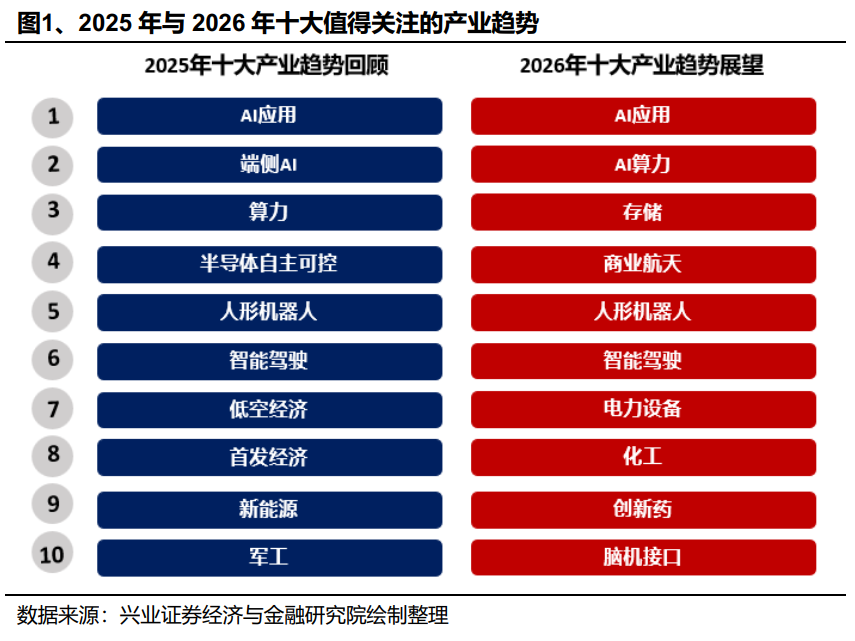
兴业证券:2026年值得关注的十大产业趋势
智通财经网· 2026-02-18 03:45
Group 1: AI Applications - The global AI competition is intensifying, with model iterations driving deeper application scenarios, and the focus is on whether significant capital expenditures by tech giants can lead to commercial applications [2][3] - The competitive landscape for AI applications is shifting from dominance by OpenAI to a more multipolar environment, with major players like Google and Meta integrating AI into their ecosystems [3] - In China, AI applications are experiencing a breakthrough, with major tech companies accelerating model iterations and application deployments, leading to a transformation from model landing to scenario monetization [5] Group 2: AI Computing Power - Overseas, major cloud service providers are maintaining high capital expenditures, with a projected increase of 67% in 2026, reflecting a strong demand for AI computing power [7][8] - In China, leading tech companies are increasing capital expenditures and accelerating the iteration of domestic large models, promoting the performance of domestic chips amid tightening supply from foreign sources [9] Group 3: Storage - The demand for storage is entering a new super cycle driven by AI training and inference needs, with AI servers consuming significantly more memory than traditional servers [11][16] - Supply constraints are expected to persist, leading to continued high prices for storage components, as major manufacturers shift production focus to advanced memory types [16] Group 4: Commercial Aerospace - Commercial aerospace is becoming a key battleground in US-China competition, with significant policy support and funding initiatives in both countries to accelerate industry development [19][21] - Domestic companies are achieving breakthroughs in satellite mass production and reusable rocket technologies, transitioning from technical validation to commercialization [22] Group 5: Humanoid Robots - Major overseas companies are ramping up production plans for humanoid robots, benefiting domestic component suppliers, with Tesla aiming for a production capacity of 500,000 units by 2026 [27][30] - Chinese manufacturers are leading in humanoid robot shipments, with significant contracts and production milestones achieved in 2025 [30] Group 6: Intelligent Driving - Domestic policies are expected to facilitate the commercialization of L3 autonomous driving in 2026, with several manufacturers preparing to launch L3 models [32][33] - Tesla's Full Self-Driving (FSD) technology is setting the direction for autonomous driving, with significant advancements in AI capabilities [35] Group 7: Energy Storage - The expansion of AI computing power in North America is driving electricity demand, with domestic power equipment expected to accelerate exports [37][40] - China's "14th Five-Year Plan" includes significant investments in the power grid and energy storage, creating a favorable environment for industry growth [40][43] Group 8: Chemicals - The chemical industry is undergoing a transformation driven by policies aimed at supply-side reform, with a focus on optimizing supply structures and reducing excess capacity [44][47] - New economic sectors are boosting demand for chemical materials, particularly in AI, renewable energy, and robotics, leading to a favorable outlook for new materials [47][48]