创新驱动

Search documents
重磅解读!中央政治局会议研究明年经济工作,如何理解8项“坚持”?
Zheng Quan Shi Bao· 2025-12-08 10:35
Core Viewpoint - The Central Political Bureau of the Communist Party of China emphasizes the need for a more proactive macroeconomic policy in 2026, focusing on domestic demand and optimizing supply to support economic recovery and growth [1][2]. Group 1: Macroeconomic Policy - The macroeconomic policy will continue to be "more proactive and effective," maintaining a supportive stance through fiscal and monetary measures [2]. - Fiscal policy may see an increase in central government spending, with a potential budget deficit rate raised to 4.5% and continued issuance of special government bonds [2]. - Monetary policy will remain "appropriately loose," with structural tools supporting key sectors while overall monetary conditions will depend on economic circumstances [2][3]. Group 2: Domestic Demand and Supply - The meeting highlights the importance of "domestic demand as the main driver" for economic growth, aiming to build a strong domestic market [4]. - From 2013 to 2024, domestic demand is expected to contribute an average of 93.1% to economic growth, although challenges remain in fully reversing the current insufficient domestic demand [5]. - The government aims to combine "expanding domestic demand" with "quality supply," focusing on enhancing consumer experience and long-term development [5]. Group 3: Innovation and New Growth Drivers - The meeting stresses "innovation-driven development" as a core strategy, transitioning from factor-driven to innovation-driven growth [7]. - There is a need for a collaborative innovation ecosystem that integrates government, market, and social forces to foster high-level technological innovation [7][8]. - Current structural shortcomings in innovation, such as insufficient investment in basic research and challenges in technology transfer, need to be addressed through targeted policies [8]. Group 4: Open Economy and International Cooperation - The importance of "high-level opening up" is reiterated, with a focus on creating win-win cooperation across multiple fields [9][10]. - From 2013 to 2024, China's cumulative imports and exports are projected to reach 31.4 trillion USD, with direct foreign investment totaling 1.9 trillion USD, highlighting the benefits of international cooperation [10]. - Future cooperation will extend to areas like green trade and international industrial chain collaboration, enhancing resilience against external pressures [11]. Group 5: Risk Management - The meeting emphasizes the need for proactive and prudent risk management in key areas, including real estate and local government debt [12][13]. - Policies will continue to evolve to address risks in the real estate sector, with measures to stabilize liquidity and manage long-term risks [13][14]. - The approach to local government debt will focus on building a long-term management mechanism while ensuring that new hidden debts are not created [14].
重磅解读!中央政治局会议研究明年经济工作,如何理解8项“坚持”?
证券时报· 2025-12-08 10:28
最新解读。 据新华社,中共中央政治局12月8日召开会议,分析研究2026年经济工作,审议《中国共产党领导全面依法治国工作条例》。 对于如何做好明年的经济工作,会议提出一些重要表述,包括"更好统筹国内经济工作和国际经贸斗争""实施更加积极有为的宏观政策""持续扩大内需、优化供 给"等,并提出八项"坚持"的重点工作。多位受访专家表示,明年经济增长转型诉求不减,政策需要兼顾短期与长远,内需将继续发挥助力经济总体回升向好的"助 推器"作用,并坚持以开放促改革促发展,重点领域风险化解将更加积极稳妥。 延续"更加积极有为"取向 明年加大逆周期与跨周期力度 今年以来,我国实施更加积极有为的宏观政策,支持实体经济发展力度加大,推动经济持续回升向好。根据中央政治局会议部署,"十五五"开局之年,我国宏观政 策"更加积极有为"的取向不变,继续实施更加积极的财政政策和适度宽松的货币政策。同时,明年将加大逆周期和跨周期调节力度。 "继续实施"今年的财政、货币政策取向,不仅意味着明年政策将保持连续性、稳定性,营造出稳定的宏观政策环境,还意味着明年政策力度依然可期,将坚持支持 性的政策立场。 从财政政策看,"更加积极"意味着明年财政政策有 ...

辽宁盘锦辽滨经开区完善创新培育链
Zhong Guo Jing Ji Wang· 2025-12-08 08:32
近日,在辽宁盘锦市辽滨经开区,投资837亿元的华锦阿美精细化工及原料工程项目正在加紧建设,年 底将全力冲刺机械竣工目标。 2005年成立以来,辽滨经开区地区生产总值增长25倍,工业总产值破千亿,跻身赛迪顾问与石化联合会 化工园区排行榜前20强,分列东北第一、二位,成为盘锦经济核心引擎。2018至2024年实际利用外资 26.9亿美元、进出口总额1187.5亿元。 辽滨经开区管委会副主任吴庆明介绍,辽滨经开区注重创新驱动,放大科技优势。大连理工大学盘锦校 区、大连理工大学盘锦产研院等科研力量集聚,构建了"基础研发—中试熟化—产业放大"体系;完 善"科技型中小企业—高新技术企业—雏鹰瞪羚企业"培育链,省级中试基地架起"实验室—孵化器—开 发区"的转化桥梁,促进了创新要素加速流动。 产业上,辽滨经开区"一核引领、两翼支撑、新兴赋能"生态成型,千万吨炼化、百万吨乙烯筑牢根基, 粮油加工、装备制造、新材料等产业协同发展。政策层面,叠加国家、省、市三级优惠,推出定制化举 措与优厚人才政策,用诚意引才留商。配套方面,基础保障全覆盖,拥有29座万吨级泊位。特别是国家 级循环化改造示范试点顺利通过国家级验收,成功入选2024年 ...
中共中央政治局:继续实施更加积极的财政政策和适度宽松的货币政策
Feng Huang Wang· 2025-12-08 05:40
会议指出,明年经济工作要坚持稳中求进、提质增效,继续实施更加积极的财政政策和适度宽松的货币 政策,发挥存量政策和增量政策集成效应,加大逆周期和跨周期调节力度,切实提升宏观经济治理效 能。要坚持内需主导,建设强大国内市场;坚持创新驱动,加紧培育壮大新动能;坚持改革攻坚,增强 高质量发展动力活力;坚持对外开放,推动多领域合作共赢;坚持协调发展,促进城乡融合和区域联 动;坚持"双碳"引领,推动全面绿色转型;坚持民生为大,努力为人民群众多办实事;坚持守牢底线, 积极稳妥化解重点领域风险。 中共中央政治局12月8日召开会议,分析研究2026年经济工作,审议《中国共产党领导全面依法治国工 作条例》。 ...
青岛以创新驱动提升竞争力
Jing Ji Ri Bao· 2025-12-08 03:03
Group 1 - Qingdao's GDP has crossed five trillion yuan milestones since the 14th Five-Year Plan, with an expected GDP of over 1.7 trillion yuan for this year [1] - The completion of the Weizhou 11-4 CEPD platform by CNOOC Engineering (Qingdao) marks significant technological breakthroughs and sets new records for offshore oil and gas platform dimensions and weights in the Beibu Gulf region [1] - Qingdao's high-tech manufacturing industry has seen an average annual growth of 15.9% during the 14th Five-Year Plan, improving its ranking among China's top 100 advanced manufacturing cities from 11th in 2020 to 6th in 2024 [1] Group 2 - Qingdao has implemented 2,733 key projects with a total investment of 1.84 trillion yuan, significantly boosting emerging industries such as integrated circuits, new displays, artificial intelligence, and green energy [2] - The total retail sales of social consumer goods in Qingdao increased from 520.4 billion yuan in 2020 to 658.5 billion yuan in 2024, reflecting the city's efforts to enhance domestic and international dual circulation [2] - Actual foreign investment in Qingdao reached 18.47 billion USD during the 14th Five-Year Plan, demonstrating the effectiveness of the city's investment cooperation [2]
中部六省跨区域专利转化对接活动在郑举行
Zheng Zhou Ri Bao· 2025-12-08 00:37
Core Viewpoint - The event aims to accelerate the transformation of innovative achievements into productive forces in the central region of China, injecting momentum into collaborative development through intellectual property [1] Group 1: Event Overview - The "2025 Central Six Provinces Cross-Regional Patent Transformation and 'Double Five-Star' Invention Patent Transformation Matching Activity" was held in Zhengzhou [1] - The event was organized by the Henan Provincial Market Supervision Administration (Intellectual Property Office) and focused on "Regional Collaboration and Five Chains Integration for New Quality Productive Forces" [1] Group 2: Objectives and Achievements - The event gathered intellectual property management departments, research institutions, leading enterprises, and financial institutions from the six central provinces to build a cross-regional patent transformation collaboration platform [1] - Intellectual property is identified as a core element for innovation-driven development and an important support for high-quality development [1] Group 3: Key Activities and Outcomes - A signing ceremony for the "Double Five-Star" invention patent supply and demand was held, resulting in 10 cooperative projects with a total signing amount exceeding 40 million yuan [2] - A special action for patent transformation was discussed, with representatives from Henan University of Science and Technology, Henan Academy of Sciences, and China Bank Henan Branch sharing practical experiences [2] - A "Double Five-Star" patent roadshow showcased 12 high-value patent projects focusing on key areas such as key laboratories and new energy materials [2] - An exhibition displayed 40 quality patent transformation projects, highlighting the practical achievements of patent transformation in empowering industrial upgrades [2]
【热点评述】简析“十五五”规划建议
乘联分会· 2025-12-04 08:35
Core Viewpoint - The "14th Five-Year Plan" has entered its final countdown, with many key indicators achieved ahead of schedule, while the "15th Five-Year Plan" emphasizes high-quality development, innovation-driven growth, regional coordinated development, and green development to promote comprehensive modernization of the economy and society [6][7][12]. Group 1: Economic Development Goals - The "15th Five-Year Plan" aims to maintain economic growth at a reasonable pace, targeting a per capita GDP level of a moderately developed country by 2035, indicating the need for sustained economic growth in the near future [5][12]. Group 2: Key Strategic Tasks - The plan prioritizes building a modern industrial system and strengthening the foundation of the real economy, emphasizing self-innovation capabilities and the development of new productive forces [8][12]. - It highlights the importance of constructing a strong domestic market and expanding high-level opening-up, with the automotive industry playing a crucial role in promoting consumption and stabilizing growth [9][12]. Group 3: Regional Coordination and Green Transformation - The plan advocates for promoting regional coordinated development, with the automotive industry serving as a vivid example of this strategy in action [10][12]. - It also calls for a comprehensive green transformation of economic and social development, aligning with the "dual carbon" goals, leading to significant changes in the automotive industry [10][12]. Group 4: Outlook for Economic and Automotive Industry Development - The "15th Five-Year Plan" emphasizes qualitative improvements in economic growth, driven by increases in total factor productivity, contributions from technological innovation, and green low-carbon transitions. Domestic automobile sales are expected to exceed 35 million units during this period, with new energy vehicle penetration rates surpassing 70% [11][12].

毅达资本应文禄:错过人工智能,就是错过一个时代
Xin Lang Cai Jing· 2025-12-04 03:41
Core Insights - The conference theme "Towards the Future, Empowering New Life" emphasizes the need for investment strategies that adapt to changing market conditions and focus on long-term growth opportunities [1][18] Investment Opportunities - Three major investment opportunities are identified: 1. Technological self-reliance, driven by increased internal innovation in response to external pressures [3][20] 2. AI-driven industrial transformation, where companies must either successfully leverage AI or face obsolescence [3][20] 3. Mergers and acquisitions in a stock economy era, where leading companies will increasingly use M&A to enhance their supply chains and realize significant "stock value" [3][20] Market Trends - The investment landscape is undergoing structural changes, with a focus on innovation as the main driver of growth. This is evidenced by the significant rise in technology stock weights in global funds, which have increased by nearly 10 percentage points over the past five years [6][24] - The Chinese market has seen substantial advancements in technology sectors, including leadership in renewable energy and significant developments in semiconductors and AI [7][25] Entrepreneurial Focus - The essence of investment is shifting back to "investing in people," emphasizing the importance of selecting entrepreneurs who can navigate through economic cycles rather than just focusing on industries [10][28] - The ability of entrepreneurs to evolve from technical experts to comprehensive leaders is crucial for the success of their companies [11][29] Core Competencies - Investment firms must maintain a market-oriented approach and develop four core capabilities: 1. Professional return capabilities centered on DPI (Distributions to Paid-In) to meet investor expectations [14][32] 2. Comprehensive compliance and risk management integrated into all investment processes [15][32] 3. Ecosystem symbiosis capabilities to create value beyond financial investment [16][32] 4. Market adaptability to navigate changing environments and adjust strategies accordingly [16][33] Conclusion - The focus should be on identifying the 5% of key variables that can change the world, which includes innovative technologies and adaptable entrepreneurs. Investment firms must uphold their market-oriented principles to remain relevant and impactful in the evolving landscape [34][34]

四度入选“活力之城”,济南靠的是“养”
Feng Huang Wang Cai Jing· 2025-12-04 00:33
Core Insights - Jinan has been recognized as a "Vibrant City" for four consecutive years, indicating a consistent and systematic approach to urban development [1][7] - The city's vitality is attributed to a combination of economic growth, talent attraction, and innovative projects, alongside a diverse urban environment that fosters creativity and cultural expression [2][6] Group 1: Urban Vitality and Cultural Engagement - Jinan's successful urban IP strategy has led to increased tourism, with 379,000 inbound and outbound travelers recorded in the first half of 2025, marking a year-on-year increase of 1.64% for domestic residents and 17.55% for foreign nationals [3][4] - The city's seasonal cultural campaigns, such as "Four Seasons in Jinan," have effectively engaged audiences on social media, enhancing the city's image and attracting global visitors [2][3] Group 2: Industrial Innovation and Development - The establishment of the Lishan International Biopharmaceutical Production Base signifies a new phase of scale and intensive development in Jinan's biopharmaceutical industry [4] - The city's focus on creating a supportive ecosystem for innovation includes a comprehensive service platform for pharmaceutical companies, facilitating the entire process from research to commercialization [4][5] Group 3: Entrepreneurial Ecosystem - Jinan's historical districts are being revitalized with new business models, integrating traditional architecture with modern enterprises, thus enhancing the entrepreneurial landscape [6] - The ongoing "New Momentum Innovation and Entrepreneurship Competition" has successfully attracted 29 academic teams and 639 quality projects, generating a sales revenue of 4.236 billion yuan, showcasing Jinan's commitment to fostering innovation [6][7]
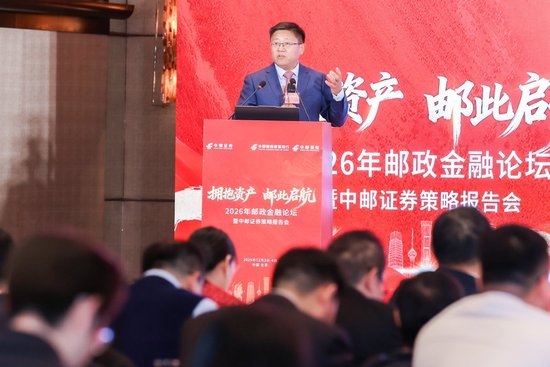
中邮证券黄付生:制造业“K”型分化,居民财富将迎修复
Xin Lang Cai Jing· 2025-12-03 12:25
Core Insights - The report presented by Huang Fusheng at the "2026 Postal Financial Forum" highlights China's economic recovery, driven by the "14th Five-Year Plan" focusing on modern industrial systems and high-tech sectors [3][8]. Group 1: Economic Recovery and Industrial Policy - China is building a modern industrial system under the "14th Five-Year Plan," with a focus on high-tech sectors showing significant performance [3][8]. - The plan prioritizes the construction of a modern industrial system and strengthening the real economy, aiming to "recreate a Chinese high-tech industry" over the next decade [3][8]. - Key strategies include enhancing traditional industries, addressing core technology challenges, and fostering strategic emerging industries like new materials and quantum technology [3][8]. Group 2: Manufacturing Sector Performance - The manufacturing sector exhibits a K-shaped recovery, with high-tech product exports growing faster than the overall export growth rate of 5.3% in the first ten months of 2025 [4][9]. - Profit growth in upstream manufacturing sectors like transportation equipment and non-ferrous metal smelting significantly outpaces that of downstream industries such as furniture and apparel [4][9]. - A-share non-financial companies reported a revenue increase of 0.9% year-on-year in Q3 2025, with net profits rising by 3.29% [4][10]. Group 3: Consumer Wealth and Spending Trends - Recovery of resident wealth is projected to take 3-5 years, with service consumption identified as a future growth area [5][10]. - In 2025, there remains a significant gap in resident wealth compared to the peak in 2021, but optimistic scenarios suggest recovery to previous levels by 2028 [5][10]. - The consumption structure indicates a saturation in goods consumption (15% of GDP) compared to major Western countries, while service consumption in healthcare and education is below global averages, indicating substantial growth potential [5][10].