
房地产发展新模式

Search documents
粤开宏观:《“十五五”规划建议》的12大看点:科技自立与扩大内需引领新征程
Yuekai Securities· 2025-10-28 13:57
Economic Environment and Challenges - The "15th Five-Year Plan" emphasizes the coexistence of strategic opportunities and risks, highlighting increased uncertainty in the development environment[3] - External challenges are expected to intensify, with geopolitical tensions and trade barriers affecting China's economic landscape[17] - The plan identifies effective demand insufficiency and the need for new and old kinetic energy conversion as critical issues[19] Development Goals - The plan sets seven major development goals, including achieving significant high-quality development and a notable increase in the resident consumption rate[20] - Aiming for an average nominal GDP growth rate of 5% during the "15th Five-Year Plan" period to reach a per capita GDP of approximately $27,000 by 2035[21] - The target for the resident consumption rate is to increase from 40% to 43%, necessitating a 6.5% annual growth in consumption[22] Industrial and Technological Focus - The establishment of a modern industrial system is prioritized, with a focus on maintaining a reasonable proportion of manufacturing in the economy[25] - The plan emphasizes the importance of technological self-reliance and innovation as a core component of high-quality development[33] - Specific sectors such as new energy, advanced manufacturing, and digital economy are highlighted for rapid development and support[28] Domestic Demand and Investment - Expanding domestic demand is identified as a strategic foundation for modernization, with a focus on enhancing consumer confidence and increasing disposable income[35] - The plan calls for optimizing the investment structure, directing funds towards education, healthcare, and emerging technologies[36] - Reforming the income distribution system is crucial for sustainable consumption growth and fostering a robust middle-income group[38] Governance and Policy Coordination - The plan advocates for improving the macroeconomic governance system and enhancing policy effectiveness through better coordination of fiscal and monetary policies[39] - Emphasis is placed on creating a stable and predictable institutional environment to support market participants[42] - The need for a proactive fiscal policy is highlighted to address short-term fiscal challenges while ensuring long-term sustainability[43]
“十五五”规划建议发布 持续推动房地产高质量发展
Zheng Quan Ri Bao Wang· 2025-10-28 13:23
Core Viewpoint - The "Suggestions" released by the Central Committee emphasize the need for high-quality development in the real estate sector, focusing on establishing a new development model and improving housing supply for various demographics [1][2]. Group 1: New Development Model - The "Suggestions" prioritize the construction of a new real estate development model, which is essential for the industry's transformation after significant adjustments during the 14th Five-Year Plan [2]. - Key improvements in the foundational systems of development, financing, and sales are identified as crucial for addressing existing risks and bottlenecks in the industry [2]. - Suggestions for enhancing these systems include clarifying legal relationships between project companies and headquarters, exploring current sales to mitigate delivery risks, and designating a lead bank for project financing to ensure timely delivery and protect buyers' rights [2]. Group 2: Housing Security - The emphasis on optimizing the supply of affordable housing highlights the increasing importance of housing security, which is seen as a critical component of social stability and economic consumption [2]. - During the 14th Five-Year Plan, over 11 million units of affordable housing and urban renewal projects were completed, benefiting over 100 million people [3]. - Innovative models like "purchase instead of construction" and "housing vouchers" have shown effectiveness in converting idle properties into affordable rental housing, thus addressing housing issues more efficiently [3]. Group 3: Quality of Housing - The "Suggestions" advocate for the construction of safe, comfortable, green, and smart homes, aligning with standards set in the 2025 housing project guidelines [4]. - Recent practices in various regions have led to the establishment of detailed guidelines for building high-quality homes, focusing on enhancing living experiences through innovative construction methods [4]. - The shift from quantity expansion to quality improvement in real estate is underscored, with a focus on enhancing property quality and service standards as essential strategies for the industry [4][5].
“十五五”民生蓝图:就业、收入、教育等将迎哪些红利?
财联社· 2025-10-28 12:27
Core Viewpoint - The article discusses the release of the "Suggestions on Formulating the 15th Five-Year Plan for National Economic and Social Development," emphasizing various measures aimed at improving employment, income distribution, education, social security, and public services in China [1][2]. Employment and Income Distribution - The plan aims to promote high-quality and sufficient employment by implementing an employment-first strategy, enhancing the employment promotion mechanism, and fostering a job-friendly development model [6]. - It emphasizes the need to improve the income distribution system, advocating for a primary distribution mechanism based on market evaluation and contribution, and increasing the proportion of residents' income in national income distribution [6]. Education - The article highlights the importance of providing satisfactory education, focusing on integrating moral education with practical learning, enhancing physical, aesthetic, and labor education, and improving the education evaluation system [5]. - It also calls for expanding educational resources in urban areas, increasing the scope of free education, and enhancing the quality of basic and higher education [9]. Social Security - The plan outlines the need to establish a comprehensive social security system, including improving the pension insurance system, expanding medical insurance coverage, and enhancing the social assistance framework [7][10]. - It emphasizes the importance of ensuring the rights and interests of vulnerable groups, such as the elderly, children, and disabled individuals [7]. Public Services - The article stresses the need for equalization of basic public services, advocating for a standardized evaluation system and ensuring that public services reach rural and underserved areas [12][16]. - It highlights the importance of improving public health services, including enhancing disease control capabilities and promoting mental health services [10].


“十五五”规划定调房地产高质量发展
Zhong Guo Jing Ying Bao· 2025-10-28 11:02
Core Points - The article emphasizes the need to promote high-quality development in the real estate sector and to establish a new development model for real estate [1] - It highlights the importance of optimizing the supply of affordable housing to meet the basic housing needs of urban workers and various struggling families [1] - The article also discusses the necessity of addressing risks associated with real estate, local government debt, and small financial institutions to prevent systemic risks [1] Real Estate Development - The proposal calls for accelerating the construction of a new model for real estate development, improving the foundational systems for property development, financing, and sales [1] - It suggests implementing a housing quality improvement project and enhancing property service quality [1] - The establishment of a safety management system for the entire lifecycle of housing is also recommended [1] Affordable Housing - The article stresses the need for targeted policies to increase the supply of improved housing [1] - It advocates for the construction of safe, comfortable, green, and smart homes [1] - The proposal aims to ensure that the housing needs of urban workers and disadvantaged families are adequately met [1] Risk Management - The article mentions the importance of coordinating the resolution of risks related to real estate, local government debt, and small financial institutions [1] - It emphasizes the need to prevent systemic risks in the financial system [1] Consumer Protection - The proposal includes measures to improve the consumer protection system, particularly in relation to consumption restrictions on automobiles and housing [1] - It suggests establishing management methods that adapt to new consumption formats and scenarios [1] - The implementation of paid staggered vacations is also highlighted as a means to promote consumption [1]
十五五规划建议:推动房地产高质量发展
Xin Hua She· 2025-10-28 08:53
Group 1 - The core viewpoint emphasizes the promotion of high-quality development in the real estate sector [1] - The establishment of a new model for real estate development is highlighted, focusing on improving the foundational systems for commodity housing development, financing, and sales [1] - There is a call to optimize the supply of affordable housing to meet the basic housing needs of urban working groups and various disadvantaged families [1] Group 2 - The strategy includes implementing city-specific policies to increase the supply of improved housing [1] - The construction of safe, comfortable, green, and smart "good houses" is prioritized, along with the execution of housing quality enhancement projects and property service quality improvement actions [1] - A comprehensive safety management system for the entire lifecycle of housing is to be established [1]
什么是好房子?这个高规格论坛给出了“很懂你”的答案
Nan Fang Du Shi Bao· 2025-10-27 02:20
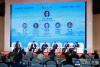
Core Viewpoint - The forum focused on the theme of building "good houses" and providing "good services" to enhance the quality of life, emphasizing collaboration among government, enterprises, and research institutions to innovate in housing development [1][4][8]. Group 1: Government Initiatives - The Shenzhen government is committed to high-quality urban development, aiming to create a modern, resilient, and intelligent city while promoting a new model for real estate development [4][8]. - The Guangdong Provincial Housing and Urban-Rural Development Department is implementing various local standards to support the construction of "good houses" and is promoting the transformation of the construction industry towards green, industrialized, and intelligent practices [4][5]. Group 2: Housing Quality and Standards - The Ministry of Housing and Urban-Rural Development is pushing for the construction of safe, comfortable, green, and smart "good houses," focusing on enhancing the entire lifecycle of housing design, construction, and maintenance [5][9]. - The concept of "good houses" includes improving supply quality, reducing environmental impact, and fostering a modernized residential industry [9][10]. Group 3: Community and Service Enhancements - The importance of property services in supporting "good houses" is highlighted, with initiatives aimed at improving service quality and integrating property management into community governance [6][12]. - The forum discussed the need for a comprehensive service support system to address residents' needs and enhance community living standards [12][18]. Group 4: Financial Support and Innovation - Financial institutions, such as Shanghai Pudong Development Bank, are actively providing customized loan products to support the "four good" construction initiatives, ensuring adequate funding for housing projects [9][17]. - The Shenzhen Housing Provident Fund Management Center is enhancing digital services to better assist residents in addressing housing issues, focusing on optimizing service capabilities [7][13]. Group 5: Technological Integration - The integration of technology in housing development is emphasized, with companies exploring smart home solutions and digital services to improve living experiences [15][14]. - Innovations in property services, such as AI applications, are being implemented to enhance efficiency and service quality in the housing sector [14][15]. Group 6: Practical Examples and Case Studies - The forum included practical examples of successful housing projects, such as the Shenzhen Deep Rail Qianhai Times Respectful Project, showcasing the integration of green building practices and smart operations [19]. - Participants visited various projects to observe the implementation of "good houses" and community services, reinforcing the collaborative efforts in housing development [19].

地产周速达:二手房成交延续“以价换量”
HUAXI Securities· 2025-10-25 13:13
Report Summary 1. Investment Rating for the Industry No investment rating for the industry is provided in the report. 2. Core Views - The weak trend of housing prices continued in September 2025, with a 0.4% month - on - month decline in the prices of newly built commercial residential buildings in 70 cities and a 0.6% decline in second - hand housing prices. [1] - In September, real - estate sales showed resilience through "trading price for volume", with a 48.5% month - on - month increase in the sales area of new homes and a 47.2% increase in sales volume. [1] - After the National Day, second - hand housing transactions in 15 cities increased for two consecutive weeks, indicating strong market resilience, while the recovery momentum of the new - home market weakened. [2] - The industry is accelerating towards "high - quality development", with policy signals indicating a shift from "scale expansion" to "quality improvement" and from "incremental development" to "stock operation". [4] 3. Content Summaries by Related Catalogs 3.1 Market Transaction Data - **Second - hand housing**: In the week of October 17 - 23, the transaction area of second - hand housing in 15 cities was 2.33 million square meters, a 7% week - on - week increase, reaching 79% of the annual high. Although it decreased by 14% year - on - year due to the high base last year, it still had a 11% positive growth compared to the same period in 2023. [2] - **New homes**: In the week of October 17 - 23, the transaction area of new homes in 38 cities was 2.82 million square meters, a 3% week - on - week increase, but a 19% year - on - year decline. From October 1 - 23, the year - on - year decline widened to 24%. [2] 3.2 City - Level Analysis - **Second - hand housing**: First - tier cities' weekly transactions declined for two consecutive weeks, with a 2% decline this week. Second - and third - tier cities performed well, with a 14% and 12% week - on - week increase in transaction areas respectively. [3] - **New homes**: The new - home market showed "first - tier cities rebounding, second - and third - tier cities weakening". First - tier cities' transactions rebounded by 15% week - on - week, and third - tier cities increased by 12%, while second - tier cities decreased by 7%. [3] 3.3 Key City Observations - **First - tier cities**: From October 17 - 23, the second - hand housing transaction area in first - tier cities decreased by 2% week - on - week and 21% year - on - year. The new - home transaction area increased by 15% week - on - week and decreased by 19% year - on - year. [29] - **Other key cities**: In Hangzhou, the second - hand and new - home transaction areas decreased by 4% and 38% respectively compared to the previous week. In Chengdu, they increased by 12% and 2% respectively. [30] 3.4 Housing Price Observations - **Second - hand housing**: In September 2025, the second - hand housing price index in first - tier cities continued to decline, with a 1.0% month - on - month decline and a 3.2% year - on - year decline. [55] - **New homes**: In September 2025, the price of newly built commercial residential buildings in first - tier cities decreased by 0.4% month - on - month and 0.7% year - on - year. [55]
四中全会 | 房地产高质量发展:以新模式为抓手、以“好房子”为根本
克而瑞地产研究· 2025-10-24 03:24
Core Viewpoint - The 20th Central Committee's Fourth Plenary Session emphasizes the importance of promoting high-quality development in the real estate sector as a key strategy for improving people's livelihoods and achieving common prosperity [2][4]. Group 1: High-Quality Development Framework - The new framework integrates "promoting high-quality development" of real estate into the broader context of improving people's livelihoods, marking a shift from viewing real estate merely as a tool for economic stimulus to a critical component of national strategies [4]. - The concept of "high-quality development" is multi-dimensional and systematic, focusing on urban development and renewal, and aims to create a robust supply system, rational resource allocation, and sound regulatory frameworks [6]. Group 2: Key Components of New Development Model - The new model includes four main aspects: 1. Improving the housing supply system to ensure clear roles for both affordable and market-based housing, while fostering a professional rental market [6]. 2. Establishing a mechanism linking "people, housing, land, and finance" to balance supply and demand based on population changes [7]. 3. Reforming real estate development, financing, and sales systems to ensure compliance and protect investors [7]. 4. Promoting the construction of safe, comfortable, green, and smart homes, enhancing standards and operational management throughout the housing lifecycle [7][10]. Group 3: Future Policy Adjustments - Future policy adjustments will reflect three core changes: 1. A comprehensive push for high-quality development that encompasses supply, demand, and operation, shifting focus from new development to optimizing existing resources [12]. 2. Accelerating the formation of a coordinated urban and rural development pattern, enhancing housing demand through urbanization and rural revitalization [13]. 3. Balancing the attributes of public welfare and market functions, ensuring that housing policies remain focused on people's needs while maintaining market vitality [14][15]. Group 4: Significance of High-Quality Development - High-quality development in real estate is crucial for economic growth, enhancing living standards, and ensuring sustainable industry development, transitioning from scale expansion to quality improvement [17].

市场仍在修复 促进房地产止跌回稳仍需努力
Zhong Guo Jing Ji Wang· 2025-10-22 00:29
Core Viewpoint - The real estate market in China is showing signs of stabilization, with a narrowing decline in sales and prices, driven by policy adjustments and seasonal demand [1][2]. Group 1: Sales and Price Trends - In September, the sales area of new commercial housing reached 85.31 million square meters, a month-on-month increase of 48.5% [1]. - The sales revenue of new commercial housing in September was 802.5 billion yuan, a month-on-month increase of 47.3% [1]. - From January to September, the sales area of new commercial housing decreased by 5.5% year-on-year, a reduction of 11.6 percentage points compared to the same period last year [1]. - The sales revenue of commercial housing fell by 7.9% year-on-year, narrowing by 14.8 percentage points compared to the previous year [1]. - In September, the year-on-year decline in new residential prices in first-tier cities was 0.7%, a reduction of 0.2 percentage points from the previous month [2]. - Second and third-tier cities saw year-on-year price declines of 2.1% and 3.4%, respectively, both narrowing by 0.3 percentage points [2]. Group 2: Inventory and Funding - The inventory of commercial housing decreased by 2.41 million square meters at the end of September compared to the end of August, marking seven consecutive months of reduction [2]. - From January to September, the funds available to real estate developers decreased by 8.4% year-on-year, a narrowing of 11.6 percentage points compared to the previous year [2]. Group 3: Future Development Strategies - A new model for real estate development is needed, focusing on a clear supply system for basic and diverse housing needs [3]. - Establishing a mechanism for the interaction of "people, housing, land, and finance" is essential for balancing supply and demand in the real estate market [3]. - Reforming the real estate development, financing, and sales systems is crucial to prevent risks and ensure project delivery [3]. - The goal is to develop safe, comfortable, green, and smart housing, enhancing standards and operational levels in the housing sector [4].
中经评论:促进房地产止跌回稳仍需努力
Jing Ji Ri Bao· 2025-10-22 00:03
Core Viewpoint - The real estate market in China is showing signs of stabilization, with a narrowing decline in sales and prices, driven by policy adjustments and seasonal demand [1][2]. Group 1: Sales and Price Trends - In September, new residential property sales area reached 85.31 million square meters, a month-on-month increase of 48.5% [1]. - New residential property sales value in September was 802.5 billion yuan, a month-on-month increase of 47.3% [1]. - From January to September, the sales area of new residential properties decreased by 5.5% year-on-year, a reduction of 11.6 percentage points compared to the same period last year [1]. - The sales value of residential properties fell by 7.9% year-on-year, narrowing by 14.8 percentage points compared to last year [1]. - In September, the year-on-year decline in new residential property prices in first-tier cities was 0.7%, a reduction of 0.2 percentage points from the previous month [2]. - Second and third-tier cities saw year-on-year price declines of 2.1% and 3.4%, respectively, both narrowing by 0.3 percentage points [2]. Group 2: Inventory and Funding - The inventory of residential properties decreased by 2.41 million square meters at the end of September compared to the end of August, marking seven consecutive months of decline [2]. - From January to September, funding for real estate development enterprises fell by 8.4% year-on-year, but the decline was 11.6 percentage points less than the previous year [2]. Group 3: Future Development Strategies - A new model for real estate development is needed, focusing on a clear and complementary supply structure for basic and diverse housing needs [3]. - Establishing a mechanism for the interaction of "people, housing, land, and finance" is essential for balancing supply and demand in the real estate market [3]. - Reforming real estate development, financing, and sales systems is crucial to prevent risks and ensure project delivery [3]. - The goal is to develop safe, comfortable, green, and smart housing, improving standards and operational levels across the housing sector [4].