春季行情

Search documents
十大机构看后市:当前市场震荡可能是基本面超预期变化出现前的常态,跨年前后或是做多的窗口期
Xin Lang Cai Jing· 2025-12-07 09:29
本周三大指数,上证指数涨0.37%,深证成指涨1.26%,创业板指涨1.86%。后市将如何发展?看看机构 怎么说。 炒股就看金麒麟分析师研报,权威,专业,及时,全面,助您挖掘潜力主题机会! 中信证券:当前市场震荡可能是基本面超预期变化出现前的常态 当前的市场震荡可能是基本面超预期变化出现前的常态,债市的调整导致股债平衡型策略在当下遭遇一 定挑战,对控制持仓波动率可能有更高的要求,也间接影响到股票配置策略。未来人民币的潜在升值压 力可能会带来超预期的货币宽松,这可能是超预期变化的来源并打破震荡格局,在此之前,配置上延续 资源/传统制造业定价权的重估和企业出海两个方向。 光大证券:国内外利好共振 市场有所回暖 市场大方向或仍处在牛市中,不过短期或进入宽幅震荡阶段。与往年牛市相比,当前指数仍然有相当大 的上涨空间,但是在国家对于"慢牛"的政策指引之下,牛市持续的时间或许要比涨幅更加重要。不过短 期来看,市场可能缺乏强力催化,叠加年末部分投资者在行为上可能趋于稳健,股市短期或以震荡蓄势 为主。 华金证券:春季行情开启了吗? 当前来看,明年春季行情可能于今年12 月中下旬提前开启。(1)短期政策和外部事件可能偏积极。一 ...



申万宏源策略一周回顾展望:保险开门红,春季行情的线索
Shenwan Hongyuan Securities· 2025-12-06 12:02
Group 1 - The report indicates that insurance companies have lowered risk factors for long-term holdings in the CSI 300, the China Securities Low Volatility 100, and the STAR Market, with state-owned insurance companies increasing their positions first, followed by the risk factor adjustments. This adjustment provides an additional incentive for other insurance companies to increase equity allocations, with a potential increase in equity investment space amounting to hundreds of billions under unchanged solvency ratios [4][5]. - The report highlights that the spring market's economic and industrial catalysts are not yet clear, and the supply-demand logic of funds may become the main contradiction. Expectations for the insurance "opening red" trading are rising, and high-dividend market trends may begin to emerge before early 2026 [4][5]. - The report suggests that the risk factor adjustments may encourage long-term capital to enter the market, particularly benefiting state-owned insurance companies that have already allocated a high proportion of new premiums to the market. The equity investment risk factor reduction is seen as a delayed policy optimization [5]. Group 2 - The report maintains that the spring market may be a small-scale market, with expectations of a rebound within a high-level oscillation for the overall market. For the oversold technology sector, it may transition into a phase of oscillation after sufficient adjustment [6]. - The mid-term judgment indicates a "two-stage bull market," with the technology structural bull market in 2025 at a high level, and subsequent adjustments may occur. A comprehensive bull market is expected in the second half of 2026 [6]. - The report anticipates that the first half of 2026 will see a "Bull Market 1.0" characterized by oscillation and a focus on cyclical and value styles, while the second half will transition to a "Bull Market 2.0" where technology and advanced manufacturing will dominate [8]. Group 3 - The report identifies potential triggers for the spring market, including the policy layout period starting in mid-December and the "two sessions" in 2026, which may activate policy and industrial themes [6]. - The report emphasizes that the spring market may serve as a foundation for cyclical assets, with a focus on basic chemicals and industrial technology as potential alpha sources. The insurance "opening red" may also highlight high-dividend opportunities [8]. - The report notes that the overall adjustment in technology may lead to a widespread rebound, with particular attention on sectors like innovative pharmaceuticals and national defense, as well as opportunities in AI computing, storage, energy storage, and robotics [8].
多只绩优权益基金限购,释放什么信号?
Guo Ji Jin Rong Bao· 2025-12-04 00:41
Group 1 - Multiple public equity funds have announced the suspension of large subscriptions as the year-end approaches, including several high-performing funds that ranked well over the past year [1][2][3] - The suspension of large subscriptions is seen as a measure to prevent fund sizes from exceeding optimal investment strategies and market capacity, reflecting a shift from pursuing scale to focusing on high-quality development [4][5] - Notable funds that have implemented subscription limits include 中欧红利优享, 中欧价值回报, and 安信远见成长, with recent one-year net value increases of 44.47%, 41.62%, and 39.09% respectively [3][4] Group 2 - The market remains volatile, and the actions of fund companies to limit subscriptions indicate a strategy to manage growth and protect fund performance [4] - Investment firms are preparing for a "cross-year market" with expectations of a rebound in industry allocations and a focus on emerging technologies and undervalued sectors [5][6] - December is anticipated to be a period of resonance among policies, liquidity, and fundamentals, with a focus on growth sectors such as AI and electric vehicles, as well as potential policy-driven opportunities in hospitality and logistics [5][6]
布局未来 年末基金经理更替“忙”
Shang Hai Zheng Quan Bao· 2025-12-03 18:46
Core Insights - The public fund industry is experiencing a peak in fund manager turnover as 2025 approaches, with over 130 changes since November, significantly higher than the same period last year [1][2] - The increase in turnover is attributed to year-end performance evaluations and strategic adjustments by fund companies to seize market opportunities and align with public fund reforms [1][2] Group 1: Fund Manager Changes - A total of 134 fund manager changes were recorded from November to December 3, surpassing last year's 92 changes, with a notable increase in departures, up over 110% year-on-year [2] - The performance evaluation at year-end poses replacement risks for underperforming fund managers, prompting some companies to proactively replace them in hopes of improving rankings [2] - The disparity in fund performance has widened, with equity funds showing a 226 percentage point difference between the best and worst performers over the past year [2] Group 2: New Appointments and Strategies - Despite the turnover, 73 new fund managers were hired since November, exceeding last year's 64, indicating a flow of "fresh blood" into the industry [3] - Some companies are adopting an "old brings new" approach, pairing new managers with experienced ones to ensure continuity in investment strategies [3] - Fund companies are optimistic about the upcoming market, with December seen as a key period for positioning ahead of a potential spring rally [3] Group 3: Regulatory and Structural Changes - The changes in fund management are part of a broader strategy to optimize talent and adapt to industry shifts, enhancing the investor experience [4] - The China Securities Regulatory Commission has outlined a plan to improve the quality of public funds, emphasizing performance-based assessments for fund managers, with at least 80% of evaluation metrics focused on investment returns [5] - Future assessments will prioritize long-term performance, with a significant weight on returns over three years or more, reflecting the industry's human resource-intensive nature [5]
策略专题研究:基于实操视角复盘春季行情
Guolian Minsheng Securities· 2025-12-03 07:41
Group 1 - The report analyzes the historical patterns of the spring market rally, focusing on three main aspects: phase characteristics, market style performance, and strategic responses during the spring rally [4] - The spring rally typically starts between late December and mid-January, with a median starting point of 11 trading days before the Spring Festival. Historical trends can be categorized into three scenarios: symmetrical V-shaped, large-scale trend upward, and small-scale trend upward [4][11] - If the spring rally starts relatively early, it is likely to be a trend market, while a later start suggests a symmetrical V-shaped pattern, with caution advised if the index breaks previous highs [30][4] Group 2 - In the spring rally, small-cap growth stocks tend to outperform, while large-cap value stocks show better value before the rally begins [39] - Historical data indicates that small-cap growth has dominated the spring rally, with few instances of style switching [37][34] - The report provides a detailed comparison of performance across different market styles before and during the spring rally, highlighting that small-cap growth generally leads during the rally period [39] Group 3 - The report suggests several strategic responses for investors during the spring rally, indicating that investing in the ten trading days before the Spring Festival has a high success rate and a low probability of missing the rally [45] - Strategies such as investing in mid-January show a relatively high success rate but lower odds, while investing in the five trading days before the Spring Festival yields high success rates but risks missing the rally [44][43] - The analysis emphasizes that the best strategy is to invest in the ten trading days before the Spring Festival, which has shown high win rates and minimal chances of missing the spring rally [45]
【申万宏源策略 | 一周回顾展望】春季行情的幅度和定位
申万宏源证券上海北京西路营业部· 2025-12-03 02:26
申万宏源策略 【申万宏源策略 | 一周回顾展望】春季行情的幅度和定位 原创 阅读全文 ...


长城基金汪立:新兴科技有望重回主线,适度关注低估值消费与券商
Xin Lang Cai Jing· 2025-12-03 02:16
Core Viewpoint - The market is entering a phase of emotional recovery, with expectations for a rebound in financing buy-in amounts and transaction ratios as risk factors begin to stabilize [1][4]. Group 1: Market Trends - Since the market correction in October, both financing buy-in amounts and transaction ratios have significantly declined, but there has been a recent uptick in two-way financing activity as market risk appetite stabilizes [1][4]. - The overall market is expected to enter a phase of emotional recovery, with financing buy-in amounts and transaction ratios likely to gradually rebound [1][4]. Group 2: Investment Strategy - It is considered an appropriate time to position for the spring market, with emerging technology expected to regain prominence, alongside a focus on undervalued consumer stocks and brokerage firms [2][5]. - The technology growth sector is anticipated to benefit from improved global competitiveness, opening new growth opportunities for Chinese companies, particularly in sub-sectors like internet, semiconductors, media, power equipment, and innovative pharmaceuticals [2][5]. - The consumer sector is showing signs of bottoming out, with valuations and holdings at historical low levels, suggesting potential opportunities in consumer goods, hotels, airlines, and retail [2][5]. - The non-ferrous metals sector may see significant boosts from easing expectations, offering a favorable valuation compared to other popular sectors, thus presenting attractive investment opportunities [2][5].
2026年春季行情可期 券商建议均衡配置成长及周期方向
Zhong Guo Zheng Quan Bao· 2025-12-02 22:05
Core Viewpoint - The upcoming spring market in 2026 is expected to be positively influenced by various factors including policy, fundamentals, and liquidity, with a likelihood of an earlier onset due to the late timing of the 2026 Spring Festival and the deepening "learning effect" in the market [1][2]. Market Dynamics - Spring market is a notable calendar effect in A-shares, typically occurring annually, with variations in timing and magnitude. The 2026 spring market may be advanced due to the late Spring Festival and increased market awareness leading to a "rush" for early positioning [2]. - The concentration of credit and fiscal measures at the beginning of the year is anticipated to boost market confidence, with historical patterns showing that the spring market often starts in January or February [2]. Historical Context - The spring market of early 2025 saw a rebound after a quick drop in early January, with major indices maintaining an upward trend for over two months. Historical analysis indicates that spring markets rarely begin in December of the previous year, providing opportunities for investors to position themselves in December for the following spring [3]. Sector Focus - The AI sector remains a key focus, with recommendations for balanced allocation between growth and cyclical sectors. Specific attention is drawn to military, AI applications, chemicals, and resource products [4]. - Analysts suggest focusing on high-value segments within growth and cyclical styles, including aerospace equipment and AI-related energy storage, while also considering financials and consumer goods as long-term holdings [4]. Investment Opportunities - In the AI sector, there are several subfields currently underperforming due to limited short-term catalysts. However, potential industry events could lead to significant returns, making downstream AI applications a strategic investment opportunity [5]. - Specific areas of interest include AI in innovative pharmaceuticals, military applications, AIGC, media gaming, humanoid robotics, and autonomous driving, which are viewed as promising investment avenues [5].
2026年春季行情可期券商建议均衡配置成长及周期方向
Zhong Guo Zheng Quan Bao· 2025-12-02 20:22
Group 1 - The upcoming spring market in 2026 is expected to be positively influenced by policy, fundamentals, and liquidity, with a likelihood of an earlier onset due to the late timing of the Chinese New Year and deepening market "learning effects" [1][2] - Analysts suggest a balanced allocation between growth and cyclical sectors, with particular attention on military industry, AI applications, chemicals, and resource products [1][3] Group 2 - The spring market typically starts in January or February, driven by concentrated credit and fiscal measures, alongside rising policy expectations before the National People's Congress in March [2] - The current liquidity remains accommodative, and the fundamentals are in a phase of mild recovery, which supports the potential spring market [2][3] Group 3 - The 2025 spring market saw a strong rebound in A-shares, particularly in technology sectors driven by AI, which is expected to remain a key focus in the upcoming market [3][4] - Analysts recommend focusing on high-value segments within growth and cyclical styles, including aerospace equipment, AI-related energy storage, and chemical products [3][4] Group 4 - The technology sector is anticipated to maintain a long-term advantage, with specific interest in military, media gaming, AI applications, and core AI hardware [4] - Investment opportunities in AI-related fields are highlighted, particularly in AI applications combined with innovative pharmaceuticals, military, and autonomous driving sectors [4]
从沙县小吃到民宿,12条重磅惠台政策发布!福建上市公司股价逆势大涨,多只股票“连板”
Mei Ri Jing Ji Xin Wen· 2025-12-02 09:45
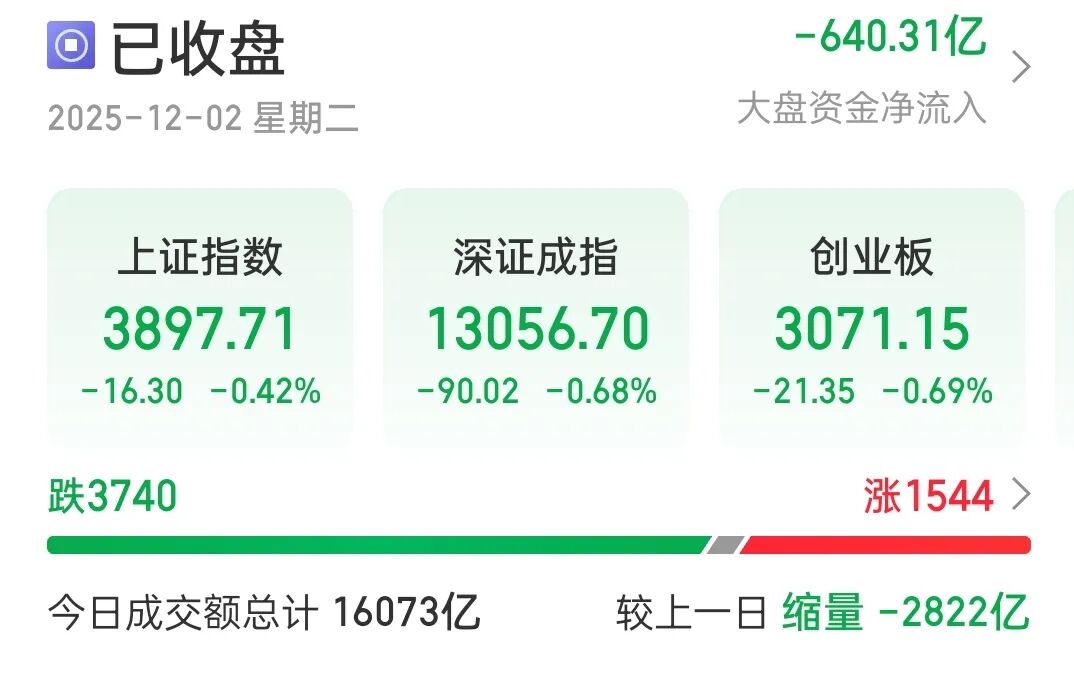
Core Viewpoint - The market experienced fluctuations on December 2, with significant declines in major indices, while the Fujian sector showed resilience due to favorable policies aimed at enhancing cross-strait economic integration [1][4][11]. Market Performance - The Shenzhen Component Index and the ChiNext Index both fell over 1% at one point during the trading day, with the Shanghai Composite Index closing down 0.42%, the Shenzhen Component down 0.68%, and the ChiNext down 0.69% [1]. - The total trading volume in the Shanghai and Shenzhen markets was 1.61 trillion yuan, a decrease of 282.2 billion yuan compared to the previous trading day, with over 3,700 stocks declining [1]. Sector Analysis - The Fujian sector outperformed the market, with stocks like Haixin Food and Ruineng Technology achieving multiple consecutive gains, while the food concept stocks also showed strength with several hitting the daily limit [4][6]. - The commercial aerospace sector was active, with Aerospace Development achieving 9 gains in 13 days, while the battery sector faced declines, with Shida Shenghua dropping 7% [4]. Policy Impact - Fujian Province announced multiple favorable policies to support cross-strait economic integration, including land and sea use guarantees for Taiwanese enterprises and incentives for Taiwanese agricultural projects [6][7]. - The policies aim to enhance the development of Taiwanese businesses in Fujian, including tax benefits and support for cultural exchanges [7][8]. Stock Performance - Fujian High-Speed achieved a 10.10% increase, closing at 4.25 yuan, with a market capitalization of 11.664 billion yuan [8]. - The Fujian sector has seen a cumulative increase of over 56% this year, indicating strong investor interest and confidence in the region [11].