
股债跷跷板效应

Search documents
股基债基跷跷板效应显现
Shang Hai Zheng Quan Bao· 2025-07-20 15:54
Market Dynamics - The equity market has been experiencing an upward trend since mid-April, with a strengthening stock-bond seesaw effect [1] - Multiple equity funds have announced early closures for fundraising, indicating strong demand and a shift in investor interest towards equity products [2] Fundraising Trends - Over 10 equity funds have reported early fundraising closures in July, with reasons including meeting fundraising targets and the desire to quickly establish funds to seize investment opportunities [2] - Notable fund launches include two actively managed equity funds that raised over 2 billion yuan, with specific figures of 2.461 billion yuan and 2.082 billion yuan for respective funds [2] Bond Fund Challenges - Some bond funds have extended their fundraising periods due to challenges, while others have failed to meet fundraising targets [3] - A significant number of existing bond funds have faced large redemptions, prompting announcements to adjust net asset values [3] Innovation in Equity Products - The current fundraising landscape shows a dominance of equity funds, with 60 out of 80 funds being equity-related as of mid-July [4] - Recent approvals for innovative equity products include the first batch of Shanghai Stock Exchange 580 ETFs and related funds, indicating a focus on mid-cap and small-cap growth opportunities [4] Market Sentiment and Investment Trends - Research indicates a high level of congestion in the bond market, with funds flowing into long-term government bonds, while the stock market remains attractive due to favorable price-performance ratios [5] - Confidence among investors in A-shares and Hong Kong stocks is gradually recovering, driven by a scarcity of investable assets in a liquidity-rich environment [6]

瑞达期货宏观市场周报-20250718
Rui Da Qi Huo· 2025-07-18 10:15
Report Summary 1. Report Industry Investment Rating No industry investment rating is provided in the report. 2. Core Viewpoints - The overall economic data is positive, which drives the stock market to rise. The A - share major indexes and stock index futures all increased this week, with small and medium - cap stocks outperforming large - cap blue - chip stocks. The bond market is under pressure due to the strong performance of the equity market, but the long - term bullish foundation of the bond market remains intact considering the weak economic fundamentals, balanced and loose capital, and low inflation [6]. - The U.S. dollar may rebound in the short - term but is likely to remain weak in the medium - term due to factors such as tariff - related inflation risks, profit compression of enterprises, and structural contradictions. The recovery momentum of the eurozone and Japan is different, and trade frictions have affected market confidence [10]. - China's economic growth in the first half of the year exceeded expectations, with manufacturing and domestic demand driving the economy. Fixed - asset investment is stable, but the real estate market needs further improvement [11]. 3. Summary by Directory 3.1 This Week's Summary and Next Week's Allocation Suggestions - **Stock**: The A - share major indexes and four stock index futures all increased this week, with small and medium - cap stocks stronger than large - cap blue - chip stocks. The release of positive economic data promoted the rise of the stock market. The allocation suggestion is to watch cautiously [6]. - **Bond**: This week, the bond futures showed a pattern of short - term strength and long - term weakness. The equity market's strength suppressed the bond market sentiment, but the long - term bullish foundation of the bond market remains. The allocation suggestion is to watch cautiously [6]. - **Commodity**: The commodity market may strengthen further due to factors such as the GDP growth meeting expectations and the approaching Politburo meeting. The allocation suggestion is to buy on dips [6]. - **Foreign Exchange**: The U.S. dollar is in a volatile and slightly stronger trend, while the euro and the euro - dollar futures decreased. The short - term pressure on the euro and yen is affected by the U.S. dollar's rebound. The allocation suggestion is to watch cautiously [6]. 3.2 Important News and Events - **Domestic**: China's macro - policies have achieved results, and the economic growth in the first half of the year exceeded expectations. The Ministry of Finance issued a notice to guide long - term and stable investment of insurance funds, which is beneficial to the capital market [11][14]. - **International**: Trump announced tariffs on Canadian goods, and the U.S. and Indonesia reached a tariff agreement. The EU prepared to impose counter - tariffs on U.S. goods, and the Fed's "Beige Book" showed a slightly pessimistic economic outlook [16]. 3.3 This Week's Domestic and International Economic Data - **China**: In June, the export and import rates improved, the M1 and M2 money supply increased, the second - quarter GDP growth rate was 5.2%, and the industrial added value increased by 6.8%. However, the growth rate of fixed - asset investment and social consumption decreased [17]. - **U.S.**: In June, the CPI met expectations, the PPI decreased, and the initial jobless claims in the week ending July 12 were lower than expected [17]. - **EU**: In May, the industrial output increased, and the June CPI remained stable [17]. - **UK**: In June, the retail price index increased, and the unemployment rate slightly rose [17]. 3.4 Next Week's Important Economic Indicators and Economic Events - Next week, important economic data such as China's one - year loan prime rate, U.S. existing home sales, eurozone central bank deposit rate, and UK consumer confidence index will be released [82]. 3.5 Central Bank's Open Market Operations This week, the central bank conducted 172.68 billion yuan of reverse repurchase operations, with 52.57 billion yuan of reverse repurchase maturing, resulting in a net injection of 120.11 billion yuan [19].

股债交易政策预期偏暖
Zhong Xin Qi Huo· 2025-07-18 10:10
1. Report Industry Investment Rating No relevant content provided in the document. 2. Core Views of the Report - The trading of positive policy expectations in the stock and bond markets continues. In the stock index futures market, the trading of positive policy expectations persists, and it is recommended to hold long positions in IM before the Politburo meeting in July. In the stock index options market, it is advisable to mainly adopt a far - month covered call strategy for defense. In the treasury bond futures market, the yield curve continues to steepen, and in the medium - term, the odds of steepening the curve are relatively high [1][2][6][7][9]. 3. Summary by Relevant Catalogs 3.1 Market Views 3.1.1 Stock Index Futures - **View**: The trading of positive policy expectations continues. The basis of IF, IH, IC, and IM for the current month changed by 5.51 points, 7.44 points, 10.53 points, and 18.99 points respectively compared to the previous trading day; the inter - period spreads (current month - next month) changed by - 5.6 points, 0 points, - 5.2 points, and - 0.6 points respectively; and the positions changed by 7308 lots, 3275 lots, 188 lots, and 5351 lots respectively. - **Logic**: On Thursday, the Shanghai Composite Index strengthened with increased trading volume reaching 1.5 trillion yuan. After the State Council Executive Meeting, the "anti - involution" theme continued to play out, and commodity prices of related and indirect varieties rebounded. Financial funds focused more on the expectation of policy intensification. The expansion of domestic demand was also a policy focus, leading to speculation in the consumer sector. The market sentiment was positive, with offensive sectors leading the rise and defensive sectors leading the decline. Since the expectation of policy intensification is difficult to be falsified, it is recommended to hold long positions in IM. - **Operation Suggestion**: Allocate long positions in IM [6]. 3.1.2 Stock Index Options - **View**: Mainly adopt a far - month covered call strategy for defense. - **Logic**: The equity index oscillated and strengthened. The ChiNext Index rose 1.75%, and the CSI 1000 Index rose 1.14%. The trading volume of each option variety was relatively stable. The implied volatility of far - month options continued to decline. Although selling far - month call options showed floating losses, they still had relatively high absolute returns compared to the index increase. It can be inferred that the market mainly traded far - month call option selling. - **Operation Suggestion**: Adopt a covered call strategy [7]. 3.1.3 Treasury Bond Futures - **View**: The yield curve continues to steepen. The trading volume and positions of T, TF, TS, and TL for the current quarter changed, and the inter - period spreads, inter - variety spreads, and basis also had corresponding changes. The central bank conducted 4505 billion yuan of 7 - day reverse repurchases, with 900 billion yuan of 7 - day reverse repurchases maturing. - **Logic**: On Thursday, most treasury bond futures closed higher, with the 30 - year main contract down 0.02%, the 10 - year main contract up 0.02%, the 5 - year main contract up 0.02%, and the 2 - year main contract up 0.01%. The central bank's large - scale net injection of 3605 billion yuan in the open market was beneficial to the short - end of the bond market, while the rise of the equity market and high risk appetite were negative for the long - end of the bond market, causing the curve to steepen. In the short - term, the bond market may remain volatile. After the tax period, the loosening of the capital side will support the short - end, while the long - end may be cautious due to improved risk appetite and government bond supply. The Politburo meeting at the end of the month may also affect the long - end. - **Operation Suggestion**: Trend strategy: Maintain a volatile outlook. Hedging strategy: Pay attention to short - side hedging at low basis levels. Basis strategy: Appropriately pay attention to the widening of the basis. Curve strategy: The odds of steepening the curve are higher in the medium - term [7][8][9]. 3.2 Economic Calendar - China's export amount year - on - year in June was 5.8% (previous value 4.8%, forecast 3.21%); new RMB loans in June were 22400 billion yuan (previous value 6200 billion yuan, forecast 18447.29 billion yuan); industrial added value year - on - year in June was 6.8% (previous value 5.8%, forecast 5.49%). The US CPI seasonally adjusted year - on - year in June was 2.7% (previous value 2.4%, forecast 2.7%) [10]. 3.3 Important Information and News Tracking - **Tariffs**: US President Trump said on July 16 that the US might implement the tariff rate on Japan as previously stated in the letter and might soon reach a trade agreement with India. The US plans to impose a 25% tariff on Japanese imports starting from August 1. - **Digital Currency Products**: On July 17, Huaxia Fund (Hong Kong) announced the establishment of two tokenized money market funds denominated in US dollars and RMB respectively. The Huaxia RMB Digital Currency Fund is the world's first RMB - tokenized fund. - **Brokerage Technology Application**: The Securities Association of China launched a special survey on the information technology work of brokerage branches to promote the standardization and efficiency improvement of information technology construction and management in branches. - **EU Budget**: The European Commission announced a new budget proposal from 2028 to 2034, with a total amount of 2 trillion euros, a significant increase compared to the current 1.21 trillion euros. Most of the funds will come from EU member states, and the European Commission proposed several fundraising plans, which have been questioned by multiple member states [10][11][12].
债市日报:7月18日
Xin Hua Cai Jing· 2025-07-18 08:12
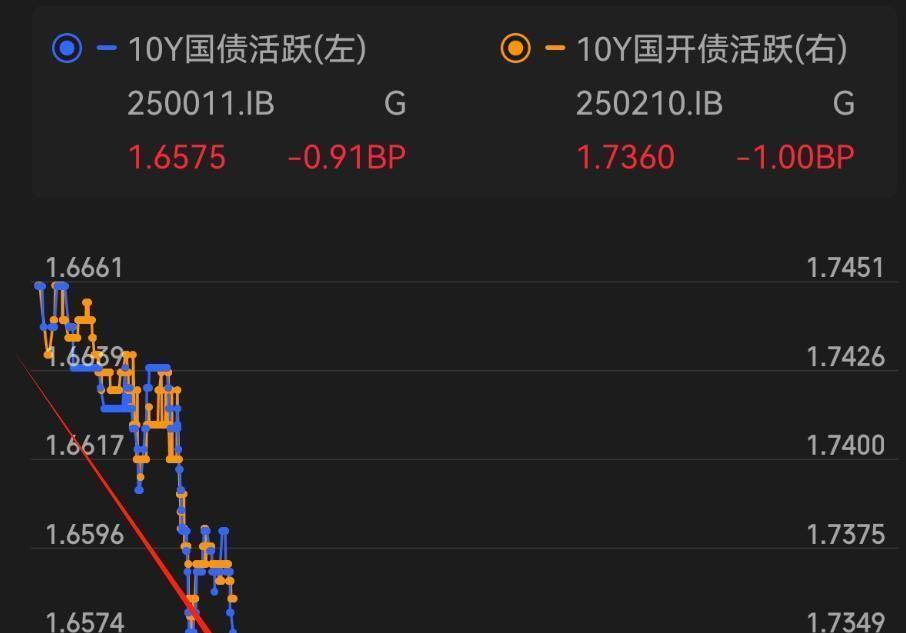
Market Overview - The bond market returned to a weak state on July 18, with most government bond futures closing lower and interbank bond yields generally rising by 0.5-1 basis points [1][2] - The central bank conducted a net injection of 102.8 billion yuan in the open market, while short-term funding rates continued to decline [1][6] Bond Futures and Yields - The 30-year main contract fell by 0.22% to 120.460, the 10-year main contract decreased by 0.08% to 108.790, and the 5-year main contract dropped by 0.05% to 105.990 [2] - The yield on the 10-year "25附息国债11" rose by 0.5 basis points to 1.666%, while the 30-year "25超长特别国债02" increased by 0.75 basis points to 1.875% [2] International Bond Markets - In North America, U.S. Treasury yields were mixed, with the 2-year yield rising by 1.06 basis points to 3.896% and the 10-year yield falling by 0.80 basis points to 4.449% [3] - In Asia, Japanese bond yields fell across the board, with the 10-year yield down by 2.8 basis points to 1.53% [4] Market Sentiment and Predictions - Institutions believe that the low-volatility bond market trend continues, with expectations of policy adjustments increasing towards the end of July [1][8] - According to Zhongjin Company, if the Federal Reserve Chair leaves office early, it would negatively impact the dollar and positively affect gold, while Southwest Securities noted that convertible bond valuations are at a relatively low level [7][8] Fund Flows and Liquidity - The central bank announced a 1.875 trillion yuan reverse repurchase operation at a rate of 1.4%, with a net injection of 102.8 billion yuan for the day [6] - Short-term Shibor rates mostly declined, with the overnight rate down by 0.1 basis points to 1.462% [6]
国债期货日报-20250717
Nan Hua Qi Huo· 2025-07-17 11:51
1. Report Industry Investment Rating - No information provided 2. Core View of the Report - The mid - term outlook for the bond market is not bearish, and short - term trading should be based on the rhythm of the stock market. The bond market is in a narrow - range oscillation pattern, and short - term trading can buy on dips according to the A - share rhythm while mid - term long positions should be held [1][3] 3. Summary by Related Content Market Conditions - Treasury bond futures continued the narrow - range oscillation pattern, rising at noon and falling in the afternoon due to the strengthening of the stock market. The trading volume of T and TL contracts decreased continuously. In the open market, 90 billion yuan matured today, and the central bank conducted 450.5 billion yuan of 7 - day pledged repurchase, with a net investment of 360.5 billion yuan [1] News - There were reports that Trump drafted a letter to fire Powell, but Trump denied the dismissal rumor and hinted that there could be justifiable reasons. Hassett, the director of the White House National Economic Council, is the top candidate to succeed Powell, and Trump said he was considering it [2] Market Judgment - During the tax period this week, the central bank has been making large - scale investments, and the DR001 has fallen to around 1.46%, indicating no concerns about the capital side. From the data in June, the economic momentum is weak, and there is still downward pressure in the future. With no negative factors in the fundamentals, the mid - term outlook for the bond market is not bearish. Recently, the main influencing factor is the seesaw effect between stocks and bonds. The A - share market has been rising through sector rotation, and the wind all - A index is approaching last October's high. Affected by this, the bond market's volatility has decreased, and the trading volume of active varieties such as T and TL has significantly declined. The short - term bond market is difficult to break out of the oscillation pattern, and short - term trading can buy on dips according to the A - share rhythm while mid - term long positions should be held [3] Data Overview - The data shows the prices, trading volumes, and positions of TS2509, TF2509, T2509, and TL2509 contracts on July 17, 2025, compared with July 16, 2025, and the same period last week. It also includes information on basis, DR001, DR007, and DR014 [4] Graphical Data - There are multiple graphs showing the net basis and basis of T, TL, TS, and TF contracts, 10 - year and 30 - year treasury bond yields, 7Y - 2Y treasury bond spreads, US treasury bond trends, US - China spreads, and exchange - traded fund prices [5][10][13]
3500点引发股债跷跷板效应 债基调整净值精度应对赎回压力
2 1 Shi Ji Jing Ji Bao Dao· 2025-07-17 10:50
Group 1 - The A-share market has shown a strong upward trend in the second half of the year, with the Shanghai Composite Index closing above 3500 points for several consecutive days, indicating a potential bull market [1][2] - There has been a significant shift of funds from the bond market to the stock market, leading to large-scale redemptions in bond funds, with 23 products initiating emergency adjustments to net asset value precision due to these redemptions [1][4] - Analysts believe that the current valuation levels of the A-share market are relatively low compared to global indices, enhancing the attractiveness of Chinese assets amid increasing global market instability [2][5] Group 2 - The "see-saw effect" between stocks and bonds has been evident, with rising stock market activity and profitability prompting investors to seek higher returns in equity markets [4][6] - Several fund companies have announced increases in the precision of net asset values for their bond funds to mitigate the impact of large redemptions, with some funds adjusting to eight or nine decimal places [3][4] - The bond market is expected to stabilize and improve in the future, supported by a return of risk appetite and favorable monetary policies, although caution remains due to potential market fluctuations [5][8]
债市日报:7月17日
Xin Hua Cai Jing· 2025-07-17 09:42
Market Overview - The bond market showed a sideways trend on July 17, with the main contracts mostly closing higher, while interbank bond yields fluctuated within a narrow range of 0.5 basis points [1] - The People's Bank of China conducted a net injection of 360.5 billion yuan in the open market, with most funding rates continuing to decline [1][5] Bond Futures and Yields - The closing prices for government bond futures showed mixed results, with the 30-year main contract down 0.02% at 120.730, while the 10-year main contract rose 0.02% to 108.885 [2] - Interbank yields varied, with the 10-year government bond yield rising by 0.1 basis points to 1.6600%, while the 2-year yield fell by 0.25 basis points to 1.3825% [2] International Bond Markets - In North America, U.S. Treasury yields fell across the board, with the 2-year yield down 4.81 basis points to 3.885% and the 10-year yield down 2.40 basis points to 4.457% [3] - Asian markets saw Japanese bond yields decline, while European markets also experienced a drop in yields for various countries, including France and Germany [3] Primary Market Activity - The China Development Bank issued financial bonds with yields of 1.5368% for 3-year bonds and 1.6699% for 7-year bonds, with bid-to-cover ratios of 3.55 and 10.18 respectively [4] Funding Conditions - The central bank conducted a 7-day reverse repo operation of 450.5 billion yuan at a rate of 1.4%, resulting in a net injection of 360.5 billion yuan for the day [5] - Short-term Shibor rates mostly declined, with the overnight rate down 0.3 basis points to 1.463% [5] Institutional Insights - According to Everbright Securities, credit rating adjustments for convertible bonds in the first half of 2025 mainly involved downgrades, particularly among private enterprises in sectors like basic chemicals and computers [6] - Huatai Securities noted that the supporting factors for the bond market have not yet dissipated, suggesting that significant adjustments could present buying opportunities [7]
场内信用债ETF集体“贴水” 释放什么信号?
Mei Ri Jing Ji Xin Wen· 2025-07-16 06:13
Group 1 - The recent phenomenon of "discount" in credit bond ETFs has attracted market attention, with over half of the credit bond ETFs showing this trend since July 8 [1] - As of July 15, the discount rate for several credit bond ETFs, including Guangfa (159397.SZ), exceeded 15 basis points, indicating a significant supply-demand imbalance in the market [1][2] - The rise and fall of the discount rate serves as an important observation indicator for timing operations in bond ETFs, reflecting both asset price fluctuations and changes in market supply and demand [2] Group 2 - Guangfa Credit Bond ETF (159397.SZ) was established on January 22 of this year with an initial fundraising scale of 2.235 billion yuan, and as of July 15, its latest scale reached 14.775 billion yuan, ranking first among benchmark market-making credit bond ETFs in Shenzhen [3]
7.15债市午盘:利率债强势晴天,股民哭了,债民笑了
Sou Hu Cai Jing· 2025-07-16 02:33
Core Viewpoint - The financial market is experiencing a significant shift, with a notable rebound in the bond market driven by a record-breaking 1.4 trillion yuan reverse repo operation by the central bank, which has injected liquidity into the market and provided support to the struggling bond sector [1] Group 1: Bond Market Dynamics - The central bank's announcement of a massive reverse repo operation has led to a surge in bond market activity, with repo trading volume increasing by 92% [1] - The 30-year government bond ETF has surpassed 9 billion yuan in scale, with a daily increase of 0.30%, indicating strong interest from large investors in long-term bonds [2] - Institutional buying has been led by funds and brokerages, while banks and insurance companies have reduced their holdings, reflecting differing investment strategies [4] Group 2: Economic Indicators and Market Reactions - Economic data released showed a 5.2% year-on-year GDP growth for Q2, slightly above expectations, but weak consumer data raised concerns, prompting a flight to safety in the bond market [1] - The bond market is experiencing a split, with city investment bonds gaining favor while industrial bonds, particularly real estate bonds, remain under pressure [4] Group 3: Stock Market Contrast - The convertible bond market is struggling, with the CSI Convertible Bond Index dropping by 0.83%, contrasting sharply with the rising bond market [5] - The widening yield gap between stocks and bonds is forcing investors to reassess their asset allocations, with the dividend yield of the CSI 300 at approximately 2.8% compared to a 10-year government bond yield of only 1.66% [6]

利率 - 债市调整,近忧还是远虑?
2025-07-15 01:58
Summary of Conference Call Records Industry Overview - The records primarily discuss the bond market and its current dynamics, influenced by central bank policies and market conditions [1][2]. Key Points and Arguments 1. **Market Sentiment and Central Bank Actions** The central bank's liquidity injection indicates a protective stance towards the market, despite seasonal increases in funding rates. The overall outlook for the bond market remains bullish, focusing on long-term trends rather than short-term fluctuations [1][2]. 2. **Market Adjustments and Influencing Factors** Recent market adjustments are attributed to high institutional congestion and multiple compounding factors, such as trading restrictions, urban renewal expectations, and bond supply pressures. These adjustments are seen as temporary and beneficial for future policy implementations [1][4][5]. 3. **Stock-Bond Relationship** Concerns regarding the stock-bond "teeter-totter" effect are minimized, as the current stock market rise is primarily driven by policy catalysts rather than economic growth or inflation. Institutional demand for fixed-income assets remains rigid, indicating limited impact from stock market performance on bond investments [6]. 4. **Synchronization of Stock Indices and Bond Yields** In the first half of the year, stock indices and 10-year government bond yields rose simultaneously due to market liquidity concerns and external factors like the Geneva talks. However, these influences are not expected to persist, alleviating short-term worries [7]. 5. **Impact of Agricultural Commercial Bank Restrictions** Restrictions on agricultural commercial banks mainly affect their loan-to-deposit ratios and net interest margins. These measures may lead to balance sheet reductions or alternative bond investments, but their long-term impact on the bond market is considered limited [8]. 6. **Urban Renewal Policy Dynamics** The urban renewal policy differs fundamentally from the shantytown renovation policy, emphasizing gradual price increases through micro-level leverage rather than large-scale demolitions. The sustainability of this policy relies on incremental capital inflows [9]. 7. **Export Trends and Future Outlook** Recent high-frequency data indicates a rebound in exports, particularly to Europe and Southeast Asia, while exports to the U.S. have declined. However, trade restrictions and moderate CPI data suggest a cautious outlook for future export performance [10]. 8. **Supply Conditions in July** July's supply levels are expected to be higher compared to August and September, particularly in the latter part of the month. The issuance results of long-term local bonds have been poor, but historically, actual supply realization can be beneficial for the market. Current 10-year government bond yields are nearing a relative upper limit, presenting potential buying opportunities [11]. Additional Important Insights - The central bank's recent reverse repo operations, totaling 1.4 trillion, reflect a proactive approach to manage liquidity amidst seasonal pressures [2]. - The divergence between quantitative models and subjective judgment highlights the importance of focusing on broader trends rather than short-term fluctuations [3]. This summary encapsulates the essential insights from the conference call records, providing a comprehensive overview of the current state of the bond market and related economic factors.