
智能化

Search documents
楚天科技:公司制药机器人业务布局紧密围绕核心制药装备产业链,聚焦医用洁净核心板块
Zheng Quan Ri Bao Wang· 2026-01-26 14:13
Core Viewpoint - The company, Chutian Technology, is focusing on the development of pharmaceutical robots that align with the core pharmaceutical equipment industry chain, aiming for automation and intelligence in pharmaceutical production [1] Summary by Relevant Categories Business Strategy - The company is concentrating on the clean medical core sector to promote the upgrade of pharmaceutical equipment towards unmanned and intelligent solutions, which aligns with future trends in pharmaceutical production [1] Product Development - Chutian Technology has successfully developed and implemented clean robots and sorting robots, which are adaptable to existing business scenarios [1] Competitive Advantage - The company's core competitive advantages lie in two areas: a deep understanding of the application scenarios of its business segments and a profound comprehension of the production processes in the downstream pharmaceutical industry, enabling precise matching of current pharmaceutical equipment needs [1]


四川出台12345热线新规 群众诉求最快3个工作日内办结
Si Chuan Ri Bao· 2026-01-26 13:36
Core Viewpoint - The Sichuan Provincial Government has issued the "Management Measures for the Operation of the 12345 Government Service Hotline," marking a transition towards a more standardized, intelligent, and efficient service system [1] Group 1: Management Structure - The management responsibilities of provincial and municipal hotline management institutions and handling units have been redefined to address issues of overlapping duties and unclear responsibilities [1] - The provincial government service and resource transaction service center has been clarified as the provincial management institution responsible for construction, operation, and supervision [1] - The inclusion of national vertical management institutions in the handling system ensures that relevant issues can be directed to the appropriate departments [1] Group 2: Service Quality and Process - The management measures introduce a "demand classification processing guide" to replace the previous "non-acceptance matters" approach, providing clear operational guidelines for specific channels such as litigation and arbitration [2] - The measures specify response timeframes: 3 working days for inquiries, 7 working days for suggestions, and 15 working days for complaints [2] - A regular service capability assessment mechanism has been established, with an emphasis on converting hotline data into supervisory resources to address common issues rather than just individual problems [2]
跨国车企在华格局生变:谁在倒退,谁在增长?
3 6 Ke· 2026-01-26 12:49
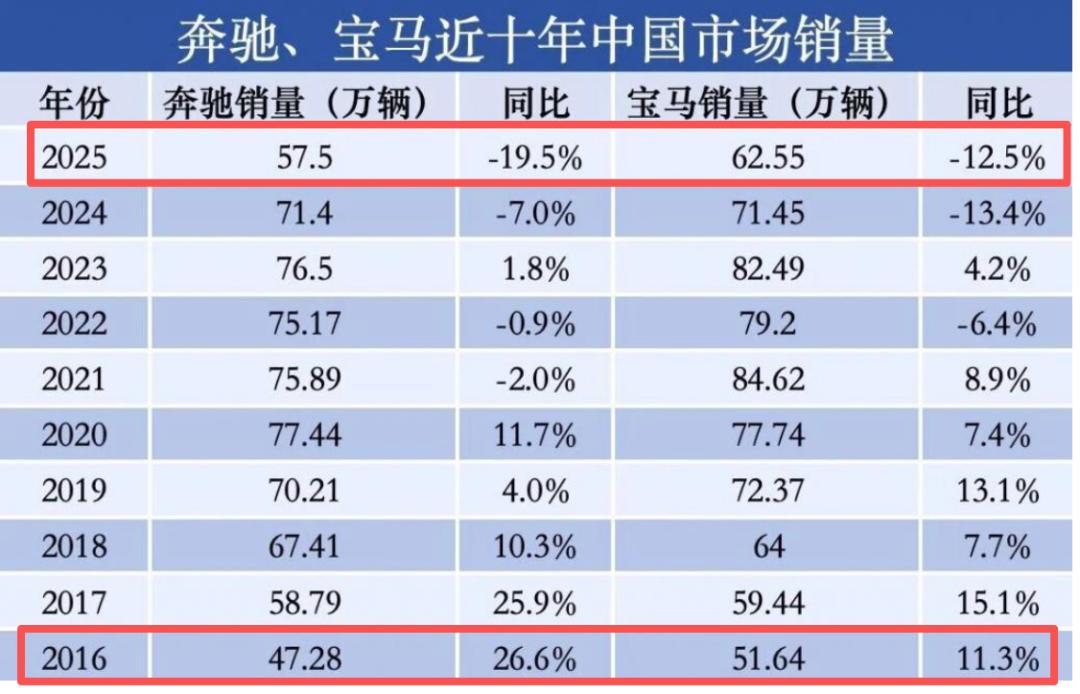
Core Insights - The automotive market in China is experiencing a significant shift, with domestic brands like Leap Motor, AITO, Xpeng, and Xiaomi seeing substantial sales growth, while multinational brands such as Mercedes-Benz, BMW, and Porsche are facing declining sales [1][3] Group 1: Sales Trends of Multinational Brands - Mercedes-Benz and BMW have provided preliminary demand forecasts for 2026, each predicting sales below 500,000 units, a level comparable to their sales in 2016 [1] - Mercedes-Benz's sales in China are projected to drop to 575,000 units in 2025, a decline of 19.5% year-on-year, while BMW's sales are expected to fall to 625,500 units, down 12.5% [2][19] - The decline in sales for these brands reflects a broader trend of losing market share to domestic competitors, with significant drops in brand influence and sales volume [3][19] Group 2: Performance of Other Multinational Brands - Toyota and General Motors are showing stable performance, with Toyota's sales in China exceeding 1.78 million units in 2025, marking a slight increase of 0.23% [3][5] - General Motors reported a notable recovery with sales of 535,000 units, a year-on-year increase of 22.99%, ending a seven-year decline [3][8] Group 3: Challenges Faced by Korean Brands - Korean brands like Hyundai and Kia are struggling, with their market share shrinking from 3.8% in 2020 to 0.9% in 2025 [11] - Hyundai's sales in 2025 are reported at 210,000 units, a 14.8% increase, but this is seen as insufficient given the historical context of their performance [13] - Kia's sales are approximately 254,000 units in 2025, a slight increase of 2.3%, but still far below their peak of 650,000 units in 2016 [14] Group 4: Decline of BBA and Other German Brands - The BBA (Benz, BMW, Audi) group is experiencing significant declines, with Mercedes-Benz's sales dropping from a peak of 774,000 units in 2020 to 575,000 units in 2025 [19][20] - BMW's sales are projected to decrease from 825,000 units in 2023 to 625,500 units in 2025, losing approximately 200,000 units in just two years [20] - Audi's sales are also declining, with projections of 617,500 units in 2025, down 5% from previous years [21] Group 5: Market Dynamics and Consumer Preferences - The shift in consumer preferences is evident, with a growing focus on technology and practical features over brand prestige, impacting the sales of traditional luxury brands [25] - The rapid rise of domestic brands in technology and electric vehicle offerings is reshaping the competitive landscape, making it difficult for multinational brands to maintain their market positions [26]



日立建机即将亮相CONEXPO 2026
Xin Lang Cai Jing· 2026-01-26 11:15
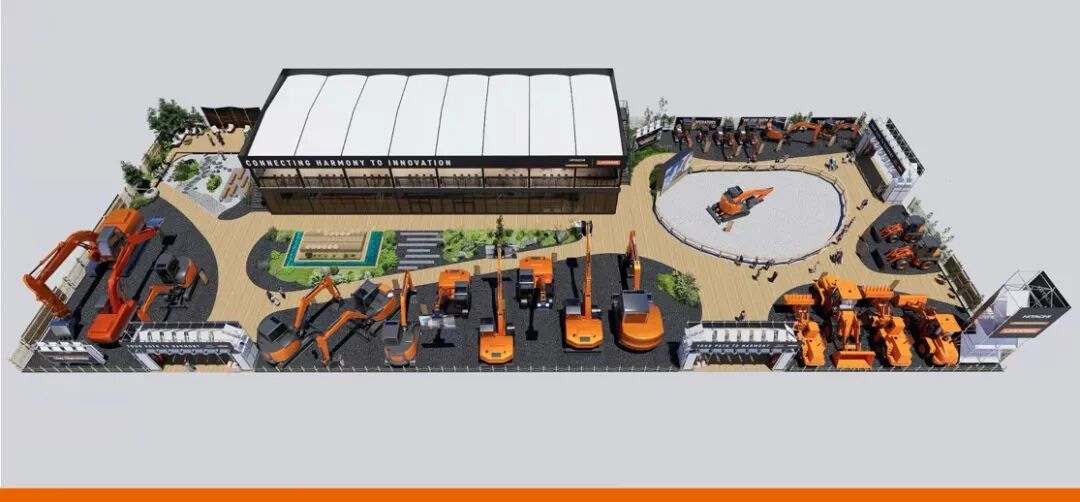
Core Insights - Hitachi Construction Machinery Americas will showcase a 30,000 square foot exhibit at the 2026 CONEXPO-CON/AGG, highlighting a comprehensive range of equipment, technology, and solutions while announcing a brand upgrade to LANDCROS, marking a new phase in the construction machinery industry [1][7] Group 1: Brand Upgrade and Exhibition Details - The company will officially change its corporate and brand name to LANDCROS starting April 2027, while maintaining its manufacturing excellence, dealer support system, and established business operations [5][11] - The exhibit will feature over 20 main equipment models and more than 15 types of attachments, showcasing a full range of products including excavators, wheel loaders, and compact equipment [3][9] Group 2: Technological Innovations - The exhibition will highlight technological innovations developed in collaboration with award-winning startups from the 2024 Entrepreneur Challenge, addressing industry challenges such as labor shortages and equipment adaptability [3][9] - Attendees will experience the AssistPro AI tool, which allows semi-autonomous excavators to learn repetitive task processes, and a new machine guidance system aimed at improving construction accuracy [3][9] - The LANDCROSConnect fleet management system and autonomous transportation solutions for mining trucks will provide technical support for efficient project fleet management, with multiple technologies demonstrated live [3][9] Group 3: Commitment to Future Solutions - As a leading provider of integrated solutions for North American construction and mining scenarios, the company combines precision manufacturing from Japan with localized support from its U.S. headquarters and parts warehouses [5][11] - The exhibition serves as a significant milestone for the company in transitioning to LANDCROS and continuing to lead the construction machinery industry towards a more intelligent and sustainable future [5][11]
广西贺州:从粗放开采到“吃干用尽” 碳酸钙产业迈向智能化绿色化
Xin Lang Cai Jing· 2026-01-26 10:47
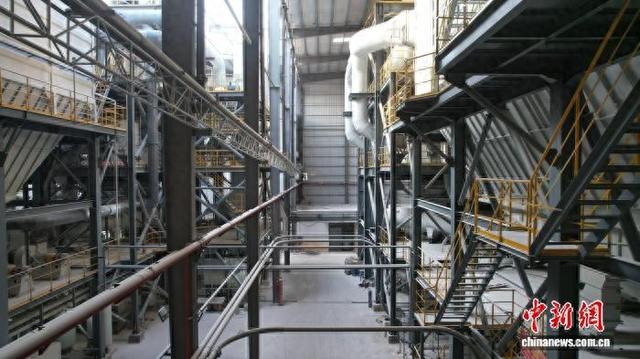
Core Viewpoint - The carbon calcium industry in Pinggui District, Hezhou City, is undergoing a transformation towards green and intelligent manufacturing, leveraging technological innovation and equipment upgrades to achieve high-quality development that balances ecological and economic benefits [1][5]. Group 1: Industry Transformation - The Pinggui District is capitalizing on its resource advantages as "China's Heavy Calcium Capital" to promote the green and intelligent transformation of the calcium carbonate industry [1]. - The production line at Baolifeng Mining Co., Ltd. utilizes an intelligent system for a fully enclosed process, achieving an annual capacity of 1.2 million tons of ultra-fine calcium and 200,000 tons of modified calcium with only 23 workers [3]. - The "ecology + industry" integration model is a key practice during the 14th Five-Year Plan, focusing on extending, supplementing, and strengthening the industrial chain [5]. Group 2: Environmental and Economic Impact - The area of ecological restoration in the mining sector has reached nearly 80% of the total mining area, demonstrating a commitment to sustainable practices [3]. - The establishment of a fully biodegradable thermoplastic plastic industrial park by Guangxi Changhong Biological Materials Co., Ltd. has created an integrated supply chain from ore processing to high-end new material products, enhancing ecological, social, and economic benefits [3][5]. - By 2025, the output value of scale carbon calcium enterprises in Pinggui District is expected to reach 12.31 billion yuan, accounting for 42.3% of the district's industrial output value [5]. Group 3: Future Plans - Guangxi Changhong Biological Materials Co., Ltd. plans to invest 1.5 billion yuan in a second-phase project aimed at producing 500,000 tons of high-end modified calcium carbonate and 450,000 tons of biodegradable masterbatch, filling a gap in Hezhou City's deep processing sector [5]. - The district aims to upgrade its manufacturing industry, expand high-end products like nano calcium carbonate, and develop applications in eco-friendly coatings, targeting an industrial output value of over 15 billion yuan by 2026 [5].
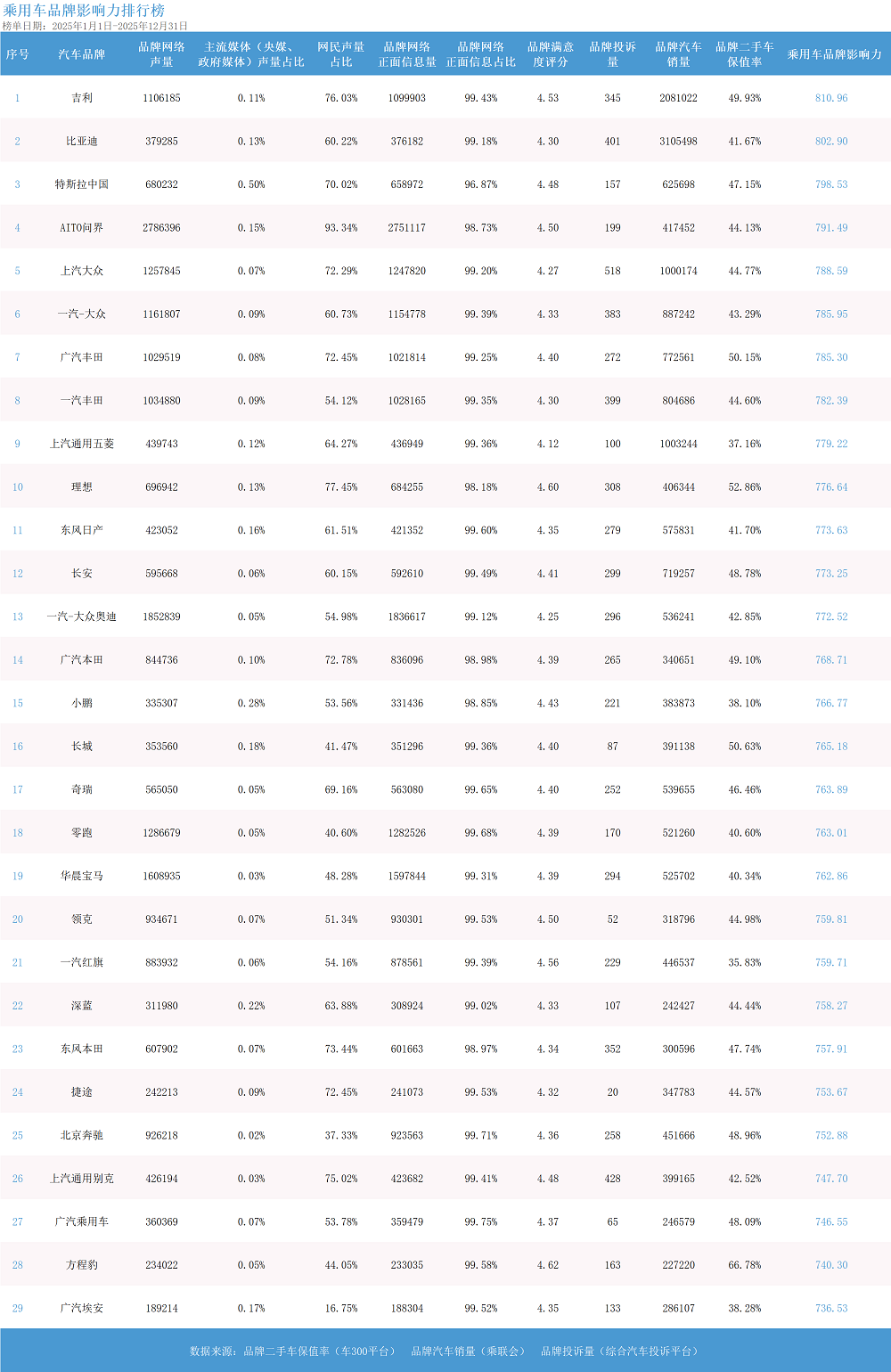
2025年中国乘用车头部品牌“强者恒强”,新势力破局高端市场
Zhong Guo Jing Ji Wang· 2026-01-26 08:37
Core Insights - The article highlights the competitive landscape of the Chinese passenger car market in 2025, emphasizing the rise of domestic brands leveraging technology and user engagement to reshape market dynamics [1][2]. Group 1: Market Dynamics - By 2025, leading Chinese passenger car brands have established competitive advantages based on large-scale operations and strong brand reputation [1]. - Domestic brands, particularly Geely, BYD, and AITO, dominate the market, significantly altering the long-standing influence of joint venture brands [2][4]. Group 2: Brand Performance - Geely ranks first with a comprehensive influence score of 810.96, supported by 1,106,185 annual brand network mentions and 2,081,022 vehicle sales, alongside a 99.43% positive information ratio [4]. - BYD follows closely with a score of 802.90, showcasing a sales figure of 3,105,498 vehicles and a 99.18% positive sentiment [4]. - Tesla China maintains a strong position with a score of 798.53, attributed to its media presence and brand premium [5]. Group 3: Emerging Trends - AITO's performance is notable, with a network mention count of 2,786,396 and a 93.34% user sentiment ratio, indicating a strong foothold in the high-end market [6]. - New energy brands are rapidly growing, with Geely's Galaxy series becoming a key growth driver, while traditional automakers like Great Wall and Changan continue to innovate in hybrid and electric technologies [6]. Group 4: Challenges for Joint Ventures - Traditional joint venture brands face pressure from the rise of domestic brands, leading to a critical phase of adjustment and strategic transformation [7]. - Brands like SAIC Volkswagen and FAW-Volkswagen, despite their historical market presence, show signs of stagnation in user engagement and satisfaction compared to their domestic counterparts [7]. - The need for joint ventures to accelerate local electric vehicle development and adapt global technologies to meet Chinese consumer preferences is emphasized as a core challenge [7].




日立电梯:深耕中国30年“双料冠军”更智能更绿色
Jing Ji Wang· 2026-01-26 08:07
Core Viewpoint - The elevator industry is poised for better development opportunities, particularly in the areas of upgrading and retrofitting old elevators, as highlighted by Hitachi Elevator (China) President Jia Yuhui [1]. Group 1: Industry Growth and Strategy - The main growth points for the elevator business are in retrofitting and maintenance services, with Hitachi Elevator planning to introduce more digital tools to enhance service quality [1]. - Hitachi Elevator has signed contracts for a total of 1.6 million elevators since its establishment in China, with the pace of signing accelerating significantly in recent years [1]. - The Chinese government supports the renovation of old elevators and the installation of new elevators in aging residential communities, aligning with Hitachi's strategy to leverage the "old for new" opportunity [2]. Group 2: Market Position and Achievements - Hitachi Elevator ranks first in market share among elevator suppliers in China and has received awards for being the preferred brand for elevator upgrades and retrofitting [3]. - The company has completed projects in 324 cities, adding elevators to over 47,000 old residential buildings and providing renovation services for more than 18,000 projects across 322 cities [3]. - Hitachi Elevator's reputation is bolstered by its commitment to quality and customer satisfaction, as evidenced by its strong market presence and positive public perception [4]. Group 3: Technological Advancements - Hitachi Elevator's largest R&D team and factory are located in China, enhancing its research capabilities and production capacity [5]. - The company has been recognized for its ultra-high-speed elevator technology, with a record speed of 21 meters per second, certified by Guinness World Records [5]. - Over one-third of the super-tall buildings in China utilize Hitachi elevators, showcasing its significant presence in high-profile projects [6]. Group 4: Service and Maintenance - Hitachi Elevator employs a comprehensive service network with 2,200 maintenance stations and over 12,000 maintenance engineers nationwide, ensuring extensive support for customers [8]. - The company has introduced intelligent inspection robots that perform 24/7 inspections, enhancing operational efficiency and preventive maintenance [8].
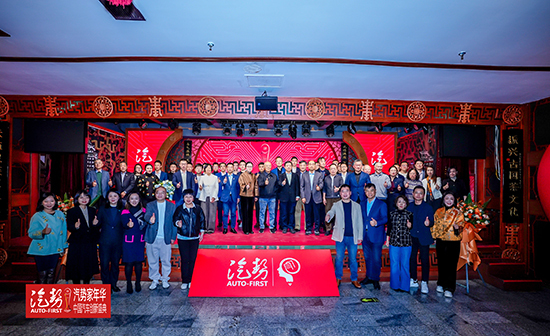
2026汽势家年华,汇聚中国汽车“一键向上”驱动力
Zhong Guo Jing Ji Wang· 2026-01-26 04:37
Core Insights - The event "Auto-First Annual Gala and 2025-2026 China Automotive Innovation Festival" highlights the significant transformation in the automotive industry, with a focus on the increasing dominance of Chinese brands and the shift towards intelligent and electric vehicles [1][3][35] Industry Overview - By 2025, China's automotive sales are projected to exceed 34 million units, with the penetration rate of new energy vehicles approaching 50%, indicating a pivotal moment for the industry [3] - The years 2026-2027 are anticipated to be critical for the industry, with leading companies showcasing their scale advantages and competition intensifying [3] Awards and Recognitions - The event recognized various segments, with Lynk & Co 900 winning "Luxury SUV of the Year" and Zeekr 9X awarded "Flagship SUV of the Year," reflecting the strong reputation of Chinese high-end electric brands [7] - SAIC Group was awarded "Car Company of the Year," while the Wuling Hongguang MINI EV was recognized as "National MPV of the Year," showcasing the diversity and innovation within the market [13][21] Market Trends - The penetration rate of new energy vehicles in China is expected to surpass 54% by 2025, with various technological routes such as plug-in hybrids, range extenders, and pure electric vehicles providing consumers with more choices [23] - Traditional joint venture and luxury brands are actively transforming, with models like the GAC Toyota Platinum 3X and Beijing Hyundai EO winning awards, demonstrating their adaptation to the trends of intelligence and electrification [25] Future Outlook - The automotive market in 2026 is described as a battleground for survival, where success will depend on a combination of technology, cost, and channel strength [35] - The industry is encouraged to focus on high-quality development, aiming to transition from being the largest in scale to being the strongest in capability on the global stage [35][36]

专家共读报告丨李志坚:传统产业“永不落幕”,是经济基本盘
Nan Fang Du Shi Bao· 2026-01-26 04:16
Core Viewpoint - The Guangdong government emphasizes the construction of a stronger modern industrial system and the development of robust traditional industry clusters that are "never-ending" [2] Group 1: Traditional Industries - Traditional industries in Guangdong, such as electronics, home appliances, furniture, clothing, and food, form the economic foundation [5] - These industries are characterized by complete supply chains, responsive market reach, and significant employment capacity [5] Group 2: Challenges and Future Directions - Current challenges for these industries are not merely about overcapacity but involve their positioning within the global value chain [6] - The future competitiveness of these industries should derive from deep understanding of demand, integration of technology, and collaborative efficiency across the supply chain [6] - For example, the home appliance industry should focus on providing smart home solutions rather than just manufacturing appliances [6] Group 3: Pathways to Transformation - The report highlights "intelligent, green, and integrated" approaches as pathways for transformation [7] - Intelligent transformation involves connecting data across design, production, supply chain, and sales through industrial internet platforms [7] - Green transformation is becoming a competitive advantage, addressing both international trade carbon barriers and domestic consumer preferences for eco-friendly products [7] - Integrated transformation blurs the lines between manufacturing and services, allowing products to serve as platforms for services and cultural experiences [7] Group 4: Ecosystem for Industry Clusters - The "never-ending" industry clusters represent a symbiotic ecosystem that requires addressing practical obstacles such as directing innovation resources effectively and ensuring funding reaches small and medium enterprises [8] - Leading enterprises must take responsibility for driving upgrades among supporting companies through technology standards and shared orders [8] - The role of industry associations is crucial in collective technology development, brand building, and maintaining industry order [8] - The upgrade of traditional industries is a gradual process that respects industry laws and captures market signals, relying on continuous improvements in technology, organization, and talent [8]

为线控转向划定安全边界,汽车转向强制性国标发布
Yang Shi Xin Wen· 2026-01-26 03:38
Core Viewpoint - The implementation of the mandatory national standard "Basic Requirements for Automotive Steering Systems" starting July 1 aims to enhance safety and promote the development of new steering technologies in China's automotive industry [1][2]. Group 1: Safety Enhancements - The new standard strengthens safety guarantees by detailing failure provisions for steer-by-wire systems, ensuring safety responses in various failure scenarios such as power source or control transmission failures [2]. - It establishes an alarm mechanism for the aging state and performance deficiencies of the steering system's power supply, mitigating potential risks and ensuring long-term operational safety [2]. Group 2: Reliability and Compliance - The standard outlines functional safety requirements for electronic control systems in steering, addressing the increasing reliance on electronic systems to prevent unreasonable risks due to system anomalies [2]. - It enhances the enforceability of the standard by revising functional safety verification testing requirements and clarifying typical test cases, providing technical basis for inspection and testing institutions [2].