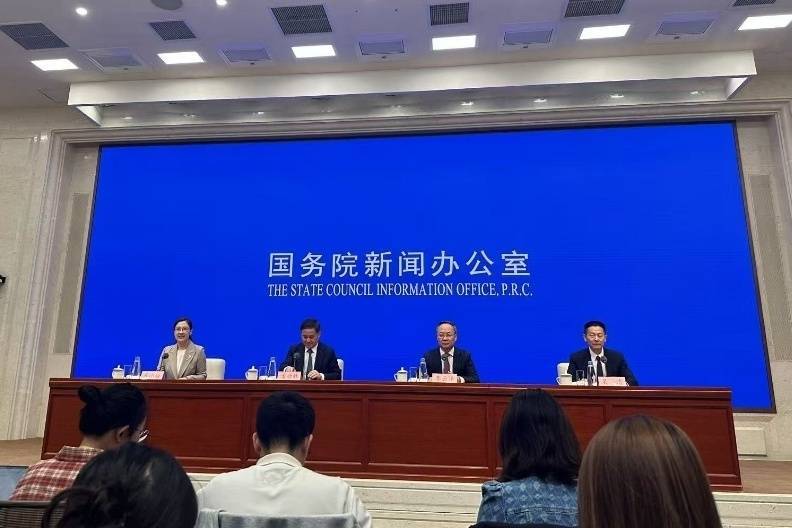
结构性货币政策工具

Search documents
央行释放万亿元活水并全域降息,商业性房地产贷款利率下调0.1%
Hua Xia Shi Bao· 2025-05-07 08:16
Core Viewpoint - The People's Bank of China (PBOC) announced a comprehensive set of monetary policy measures aimed at stabilizing the market and expectations, including lowering reserve requirements and interest rates, as well as optimizing support for the capital market [2][3][5]. Monetary Policy Measures - The PBOC introduced three categories of measures totaling ten items, including a 0.5% reduction in the reserve requirement ratio and a 0.1% decrease in policy interest rates [2][3]. - The reduction in the reserve requirement ratio is expected to inject approximately 1 trillion yuan of long-term liquidity into the market [3][6]. - The 7-day reverse repurchase rate was lowered from 1.5% to 1.4%, which is anticipated to lead to a similar decrease in the Loan Prime Rate (LPR) [3][4]. Impact on Financing and Consumption - The measures are designed to stimulate financing demand from businesses and households, thereby promoting investment and consumption, and boosting market confidence [5][6]. - The expected decrease in the LPR could reduce monthly mortgage payments for homeowners, enhancing consumer spending capacity [7][8]. Structural Monetary Policy Tools - The PBOC announced a comprehensive reduction in the interest rates of structural monetary policy tools, which are designed to address specific economic challenges [8][9]. - The interest rate for the pledged supplementary lending (PSL) was reduced from 2.25% to 2%, and new lending quotas were established for various sectors, including technology and agriculture [9][10]. Future Outlook - Analysts predict that the PBOC will continue to implement interest rate cuts and reserve requirement reductions in response to external economic pressures [10]. - The measures reflect a commitment to maintaining a moderately accommodative monetary policy without excessive liquidity injection [10].

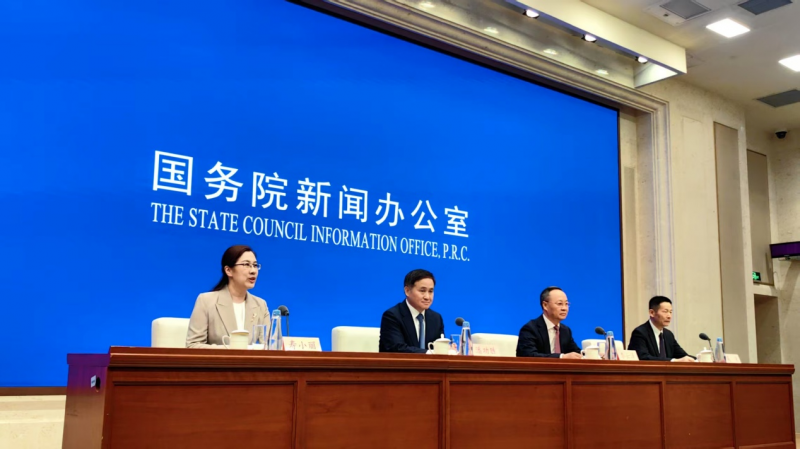
央行十箭齐发:全面降准降息,五项工具支持科创、消费、普惠
Sou Hu Cai Jing· 2025-05-07 06:49
Monetary Policy Overview - The People's Bank of China (PBOC) announced a comprehensive package of monetary policies aimed at stabilizing the market and expectations, including a 0.5% reduction in the reserve requirement ratio (RRR) and targeted RRR cuts for auto finance and financial leasing companies [2][3] - The total monetary policy measures include five items, with two being quantity-based policies and three being price-based policies [4][2] Quantity-Based Policies - A comprehensive RRR cut of 0.5% is expected to provide approximately 1 trillion yuan in long-term liquidity to the market, reducing the average RRR from 6.6% to 6.2% [5][6] - Targeted RRR cuts will reduce the RRR for auto finance and financial leasing companies from 5% to 0%, enhancing their credit supply capabilities [6][7] Price-Based Policies - The policy interest rate will be lowered by 0.1%, bringing the 7-day reverse repurchase rate down from 1.5% to 1.4%, which is expected to lead to a similar decrease in the Loan Prime Rate (LPR) [8][9] - Structural monetary policy tool rates will be reduced by 0.25%, including a drop in the rates for various special structural tools and the pledged supplementary loan (PSL) rate [9][10] - The personal housing provident fund loan rate will be reduced by 0.25%, with the five-year rate for first-time homebuyers decreasing from 2.85% to 2.6%, potentially saving residents over 20 billion yuan in interest payments annually [11] Structural Monetary Policy Tools - Five structural monetary policy tools were introduced to support technology innovation, consumption, and inclusive finance [12] - The re-lending quota for technology innovation and technical transformation will increase from 500 billion yuan to 800 billion yuan, while the quota for agricultural and small business support will rise by 300 billion yuan to 3 trillion yuan [13] - A new 500 billion yuan "service consumption and elderly care re-lending" tool will be established to enhance credit support for service consumption and the elderly care industry [13] - The existing tools for capital market support will be merged into a total of 800 billion yuan to improve flexibility and meet market demands [14] Technology Innovation Support - A new risk-sharing tool for technology innovation bonds will be created, allowing the PBOC to provide low-cost re-lending funds to purchase these bonds, thereby supporting technology enterprises and private equity investment [16][17] - The PBOC aims to broaden financing channels for technology firms and stimulate market confidence through these specific policy arrangements [17]
不一样的降准降息!数量型、价格型、结构型政策工具齐上阵 央行“十箭齐发”权威解读来了
Sou Hu Cai Jing· 2025-05-07 06:46
Core Viewpoint - The People's Bank of China (PBOC) announced a comprehensive financial policy package aimed at stabilizing the market and expectations, including a 0.5% reduction in the reserve requirement ratio (RRR) and a 0.1% cut in policy interest rates, in response to declining economic indicators such as the Purchasing Managers' Index (PMI) [1][2][4] Group 1: Monetary Policy Adjustments - The RRR will be lowered by 0.5%, providing approximately 1 trillion yuan in long-term liquidity to the market [1] - The policy interest rate will be reduced by 0.1%, with the 7-day reverse repurchase rate decreasing from 1.5% to 1.4%, which is expected to lead to a similar decline in the Loan Prime Rate (LPR) [1][3] - Structural monetary policy tools will see a rate cut of 0.25%, including a reduction in the personal housing provident fund loan rate by 0.25% [1][5] Group 2: Economic Context - The decision to lower rates comes after the PMI fell below the critical point, indicating economic contraction, with the manufacturing PMI at 49.0% in April, down 1.5 percentage points from the previous month [1][2] - The external economic environment, including the impact of U.S. tariffs, has intensified challenges for China's economic development, necessitating more proactive macroeconomic policies [2] Group 3: Structural Adjustments - The RRR adjustment is divided into two parts: a general reduction for large and medium-sized banks and a specific reduction for auto finance and financial leasing companies from 5% to 0% [4][5] - This dual approach aims to address structural liquidity issues and enhance the stability of bank liabilities while reducing the incentive for high-interest deposit gathering [4][6] Group 4: Impact on Lending and Consumption - The reduction in policy rates is expected to lower the comprehensive financing costs for the real economy, stabilizing the banking sector's net interest margin [7] - The adjustment in housing provident fund loan rates will lower the threshold for home purchases, stimulating housing consumption and supporting the real estate market [7][8] Group 5: New Financial Tools - The PBOC announced the expansion of several financial tools, including increasing the quota for technology innovation and agricultural support loans, and introducing new tools for service consumption and elderly care [9][10] - These measures aim to enhance credit support for key sectors and stimulate domestic consumption, particularly in technology and service industries [10][11] Group 6: Risk Mitigation Strategies - The introduction of a risk-sharing tool for technology innovation bonds aims to lower financing costs for equity investment institutions, facilitating the issuance of long-term bonds [12] - This initiative is designed to support the financing needs of technology enterprises and enhance the overall investment environment [12]
首次全面下调!事关结构性货币政策工具,央行最新发声信息量巨大
Bei Jing Shang Bao· 2025-05-07 05:47
Core Viewpoint - The People's Bank of China (PBOC) announced a comprehensive set of monetary policy measures aimed at stabilizing the market and expectations, including a reduction in structural monetary policy tool rates and the introduction of new lending facilities to support consumption and innovation [1][4][11] Monetary Policy Measures - The PBOC will implement three categories of monetary policy measures, including quantity-based policies like reserve requirement ratio cuts, price-based policies such as lowering policy interest rates, and structural policies to enhance existing tools and create new ones [3][4] - A 0.25 percentage point reduction in structural monetary policy tool rates was announced, affecting various lending rates including those for agricultural and small business loans [4][6] - The PBOC's structural monetary policy tools have a balance of 5.9 trillion yuan, which is a significant channel for basic currency issuance [6] Support for Specific Sectors - The introduction of a 500 billion yuan "service consumption and elderly care re-lending" facility aims to boost financial support for service consumption and the elderly care sector [7][8] - An increase of 300 billion yuan in the agricultural and small business re-lending quota is expected to enhance credit support for these sectors [9] - The new policy tools are designed to stimulate domestic service consumption and support the development of the elderly care industry, reflecting a broader strategy to enhance consumer spending [8][10] Structural Policy Tools - The PBOC's structural monetary policy tools are intended to address structural issues in the economy, with a focus on key areas such as technology innovation and consumption [6][10] - The recent measures include a significant focus on technology and innovation, with an additional 300 billion yuan allocated for technology innovation and transformation loans [8][11] - The overall approach combines both quantity and price adjustments to effectively support various sectors, indicating a comprehensive strategy to tackle economic challenges [10][11]
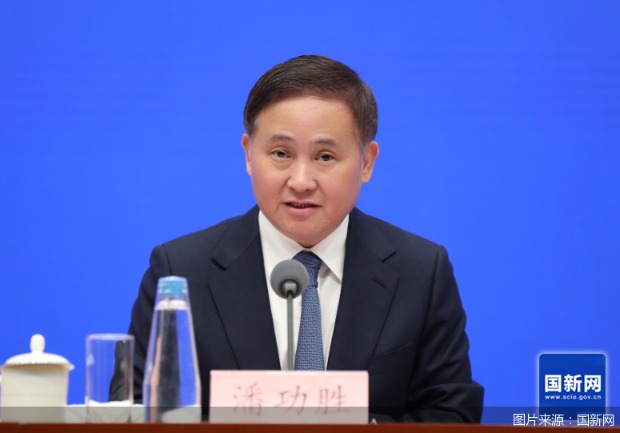
适度宽松货币政策取向下首度降准降息!一揽子货币政策三大类共十项
Mei Ri Jing Ji Xin Wen· 2025-05-07 05:42
Core Viewpoint - The People's Bank of China (PBOC) announced a reduction in the reserve requirement ratio (RRR) by 0.5 percentage points and a decrease in the policy interest rate by 0.1 percentage points, marking the first such move since the introduction of a moderately loose monetary policy in December of the previous year [1][4] Group 1: Monetary Policy Adjustments - The RRR reduction will provide over 1 trillion yuan in long-term liquidity to the market, particularly benefiting large and medium-sized banks [2] - The adjustment aims to enhance the credit supply capacity in specific sectors, particularly for auto finance and financial leasing companies, by lowering their reserve requirement ratio to 0% [3] - The overall monetary policy measures include ten initiatives aimed at improving market liquidity structure and reducing banks' funding costs [1][2] Group 2: Interest Rate Changes - The PBOC's interest rate cuts will lead to a decrease in loan market quotation rates (LPR) and deposit rates, which is expected to stabilize commercial banks' net interest margins and lower financing costs for the real economy [4][5] - The personal housing provident fund loan rate was reduced by 0.25 percentage points, with the five-year rate for first-time homebuyers dropping from 2.85% to 2.6%, effectively lowering the financial burden on borrowers [5] Group 3: Structural Monetary Policy Tools - The PBOC lowered the rates of structural monetary policy tools by 0.25 percentage points, including various special structural tools and re-lending rates, enhancing the effectiveness of monetary policy [6][7] - A new 500 billion yuan "service consumption and pension re-lending" initiative was introduced to encourage banks to increase credit support for service consumption and the aging industry [7] - The PBOC increased the quota for technology innovation and technical transformation re-lending from 500 billion yuan to 800 billion yuan, supporting small and medium-sized enterprises [8] Group 4: Capital Market Support - The PBOC announced the optimization of two monetary policy tools aimed at stabilizing the capital market, merging the quotas for securities, fund, and insurance company swap facilities and stock repurchase re-lending to a total of 800 billion yuan [9][10] - These tools are designed to enhance the financing and investment capabilities of listed companies and industry institutions, contributing to market stability [9][10]
刚刚,央行重磅发声!要点来了
Zhong Guo Ji Jin Bao· 2025-05-07 05:32
Group 1: Monetary Policy Overview - The People's Bank of China (PBOC) is set to implement a package of monetary policy measures aimed at stabilizing the market and expectations, with a focus on liquidity and financing conditions [1][2] - The monetary policy will be characterized by ample liquidity, a reasonable growth of social financing, and low comprehensive financing costs [2] Group 2: Reserve Requirement Ratio and Interest Rate Adjustments - The reserve requirement ratio will be lowered by 0.5 percentage points, providing approximately 1 trillion yuan in long-term liquidity to the financial market, reducing the average reserve requirement ratio from 6.6% to 6.2% [3] - The policy interest rate will be reduced by 0.1 percentage points, leading to a corresponding decrease in the Loan Prime Rate (LPR) and expected annual savings of over 20 billion yuan in housing provident fund loan interest for residents [4] Group 3: Structural Monetary Policy Tools - The PBOC will lower the interest rates of various structural monetary policy tools by 0.25 percentage points and establish a 500 billion yuan service consumption and elderly care re-loan to boost domestic demand [5][6] - The quota for technology innovation and technical transformation re-loans will be increased from 500 billion yuan to 800 billion yuan, supporting small and medium-sized enterprises [6] Group 4: Capital Market Support Tools - The PBOC will merge two capital market support tools with a total quota of 800 billion yuan to enhance flexibility and meet market demands [7] - The maximum loan term for stock repurchase re-loans will be extended from 1 year to 3 years, encouraging banks to issue credit loans [8] Group 5: Technology Innovation Bond Risk Sharing Tool - The PBOC is preparing to launch a "technology board" for bond issuance, supporting financial institutions and technology enterprises, with nearly 100 market institutions planning to issue over 300 billion yuan in technology innovation bonds [10][11] - A risk-sharing tool for technology innovation bonds will be established to lower financing costs and support longer-term bond issuance [11] Group 6: Market Behavior Regulation - The PBOC will enhance the monetary policy framework and strengthen the execution and supervision of interest rate policies, regulating unreasonable market behaviors that may hinder monetary policy transmission [12]
宏观金融数据日报-20250507
Guo Mao Qi Huo· 2025-05-07 05:22
Report Overview - The report is a macro financial data daily report released by the Guomao Futures Research Institute's Macro Financial Research Center on May 7, 2025 [2][3] Central Bank Operations and Monetary Policy - The central bank conducted 405 billion yuan of reverse repurchase operations yesterday, with 1087 billion yuan of reverse repurchases maturing, resulting in a net withdrawal of 682 billion yuan [3] - This week, 1617.8 billion yuan of reverse repurchases in the central bank's open market will mature, with 1087 billion yuan and 530.8 billion yuan maturing on Tuesday and Wednesday respectively [4] - The Politburo meeting stated the need to "timely cut reserve - requirement ratios and interest rates", "create new structural monetary policy tools, and establish new policy - based financial tools to support technological innovation, expand consumption, and stabilize foreign trade" [4] Interest Rate Market | Variety | Closing Price | Change from Previous Day (bp) | | --- | --- | --- | | DRO01 | 1.71 | -7.58 | | DR007 | 1.73 | -7.14 | | GC001 | 1.71 | 17.00 | | GC007 | 1.74 | 1.50 | | SHBOR 3M | 1.75 | -0.20 | | LPR 5 - year | 3.60 | 0.00 | | 1 - year Treasury Bond | 1.46 | 0.25 | | 5 - year Treasury Bond | 1.51 | 0.75 | | 10 - year Treasury Bond | 1.63 | 0.50 | | 10 - year US Treasury Bond | 4.36 | 3.00 | [3] Stock Index and Futures Market Index Performance - The CSI 300 rose 1.01% to 3808.5, the SSE 50 rose 0.55% to 2647.7, the CSI 500 rose 1.93% to 5740.3, and the CSI 1000 rose 2.57% to 6102.9 [6] - The trading volume of the Shanghai and Shenzhen stock markets reached 1336.2 billion yuan, an increase of 166.8 billion yuan from the previous trading day [6] - Most industry sectors rose, with small metals, power equipment, consumer electronics, precious metals, general equipment, communication equipment, computer equipment, diversified finance, and motor sectors leading the gains, while only the banking sector declined [6] Futures Market | Variety | Closing Price | Change from Previous Day (%) | Volume Change (%) | Open Interest Change (%) | | --- | --- | --- | --- | --- | | IF Current Month | 3798 | 1.2 | 22.8 | 0.9 | | IH Current Month | 2646 | 0.7 | -0.6 | 0.0 | | IC Current Month | 5706 | 2.1 | 19.0 | 3.3 | | IM Current Month | 6060 | 2.6 | 1.6 | 2.9 | [5] Market Outlook and Strategy - On the first trading day after the holiday, the A - share market showed a gap - up and high - going trend driven by the collective recovery of overseas markets, with IM leading the gains in index futures [7] - Two repair drivers are worthy of attention: the expectation of Sino - US tariff relaxation and the verification of overseas AI industry prosperity are beneficial to improving market liquidity and boosting the technology sector; after the earnings disclosure window in late April, the performance uncertainty of small - and medium - cap companies has significantly decreased [7] - The CSI 1000's repair strength has significantly lagged behind large - cap indexes such as the CSI 300. If the market continues to recover, its technical catch - up potential is worthy of attention. Historically, the average excess return of CSI 1000 index constituents during the earnings vacuum period (May - July) is 2.3% [7] - It is expected that the significant differentiation between large - and small - cap styles may converge. The strategy is to focus on the elasticity release opportunities of small - and medium - cap stocks after the market stabilizes, with IM as the main long - position variety [7] Index Futures Premium and Discount | Variety | Current Month Contract | Next Month Contract | Current Quarter Contract | Next Quarter Contract | | --- | --- | --- | --- | --- | | IF Premium/Discount | 10.49% | 9.02% | 7.04% | 5.35% | | IH Premium/Discount | 2.64% | 5.55% | 5.00% | 3.24% | | IC Premium/Discount | 22.09% | 16.72% | 11.98% | 9.90% | | IM Premium/Discount | 25.91% | 19.90% | 14.46% | 12.20% | [8]
结构性货币政策工具首迎降息,多项再贷款扩额升级精准发力
Di Yi Cai Jing· 2025-05-07 04:19
Group 1 - The central bank has signaled a further easing of monetary policy through structural interest rate cuts, indicating a shift towards a more accommodative monetary stance [2][4] - The People's Bank of China (PBOC) has lowered the interest rates on structural monetary policy tools by 0.25 percentage points, from 1.75% to 1.5%, and the rate for policy financial institutions' pledged supplementary loans (PSL) from 2.25% to 2% [2][4] - The total balance of structural monetary policy tools is approximately 5.9 trillion yuan, accounting for 13% of the PBOC's balance sheet, which is considered a reasonable level [4] Group 2 - The introduction of new policy tools for service consumption and elderly care loans aims to stimulate financial support in these sectors, enhancing domestic service consumption and supporting the development of the elderly care industry [5][7] - The new policy tool is an expansion and upgrade of the previous inclusive elderly care special re-loan policy, which had an initial quota of 40 billion yuan [6][7] - The PBOC has also increased the quotas for technology innovation and technical transformation re-loans by 300 billion yuan, bringing the total to 800 billion yuan, to support small and medium-sized technology enterprises [7]
央行首降结构性工具利率、增设新工具 权威专家:将挖掘新动能
Bei Ke Cai Jing· 2025-05-07 04:10
Core Viewpoint - The People's Bank of China (PBOC) has announced a series of macro monetary policy measures aimed at addressing structural economic issues and stimulating domestic demand through targeted financial support [1][2][3]. Group 1: Interest Rate Adjustments - The PBOC has lowered the structural monetary policy interest rate by 0.25 percentage points, reducing it from 1.75% to 1.5% for various special structural policies and from 2.25% to 2% for mortgage supplementary loans [2][3]. - This marks the first comprehensive reduction of structural monetary policy tool rates by the PBOC, which includes long-term tools like agricultural and small business re-loans as well as short-term tools for carbon reduction and housing support [3][4]. Group 2: New Policy Tools - A new re-loan tool of 500 billion yuan has been established to support service consumption and elderly care, aimed at encouraging banks to increase credit support in these sectors [5][6]. - This new tool is an expansion and upgrade of the previous inclusive elderly care re-loan policy, which initially had a quota of 40 billion yuan and was piloted before being rolled out nationwide [8][9]. Group 3: Increased Quotas for Existing Tools - The quotas for two existing structural monetary policy tools have been increased by 300 billion yuan each: the quota for technology innovation and technical transformation re-loans has risen from 500 billion yuan to 800 billion yuan [10][11]. - The increase in quotas for agricultural and small business re-loans is expected to enhance support for inclusive finance, particularly for rural, small, and private enterprises [14]. Group 4: Optimization of Existing Tools - The PBOC has merged the quotas of two tools—stock repurchase and securities, fund, and insurance company swap convenience—totaling 800 billion yuan to improve usability and flexibility for different types of institutions [15][16]. - As of now, the swap convenience has conducted two operations totaling 105 billion yuan, and over 500 listed companies have announced the use of loans for stock repurchases, amounting to nearly 300 billion yuan [17].
重磅金融政策密集发布 一文梳理这场国新办发布会
Sou Hu Cai Jing· 2025-05-07 03:50
Group 1 - The People's Bank of China announced a set of 10 policies aimed at enhancing macroeconomic control and promoting high-quality economic development through a moderately loose monetary policy [4][5] - The policies include a 0.5 percentage point reduction in the reserve requirement ratio, expected to provide approximately 1 trillion yuan in long-term liquidity to the market [5] - The policy interest rate will be lowered by 0.1 percentage points, with the 7-day reverse repurchase rate decreasing from 1.5% to 1.4%, which is anticipated to lead to a similar decline in the Loan Prime Rate (LPR) [5][6] Group 2 - An increase of 3 trillion yuan in the re-lending quota for technological innovation and technical transformation, raising it from 5 trillion yuan to 8 trillion yuan [7] - The establishment of a 5 trillion yuan re-lending facility for service consumption and elderly care, aimed at encouraging banks to increase credit support in these areas [7] - The introduction of eight incremental policies by the National Financial Regulatory Administration to stabilize the real estate market and support small and micro enterprises [8][9] Group 3 - The China Securities Regulatory Commission plans to implement a series of financial policies to stabilize the market and expectations, including reforms to public funds to better align with investor interests [16][17] - The reforms will focus on optimizing the fee structure for actively managed equity funds, ensuring that poorly performing funds charge lower management fees [17] - The commission emphasizes the resilience of A-share listed companies, with nearly 90% of their revenue coming from domestic markets, which supports the overall performance of these companies [17]