绿色低碳

Search documents
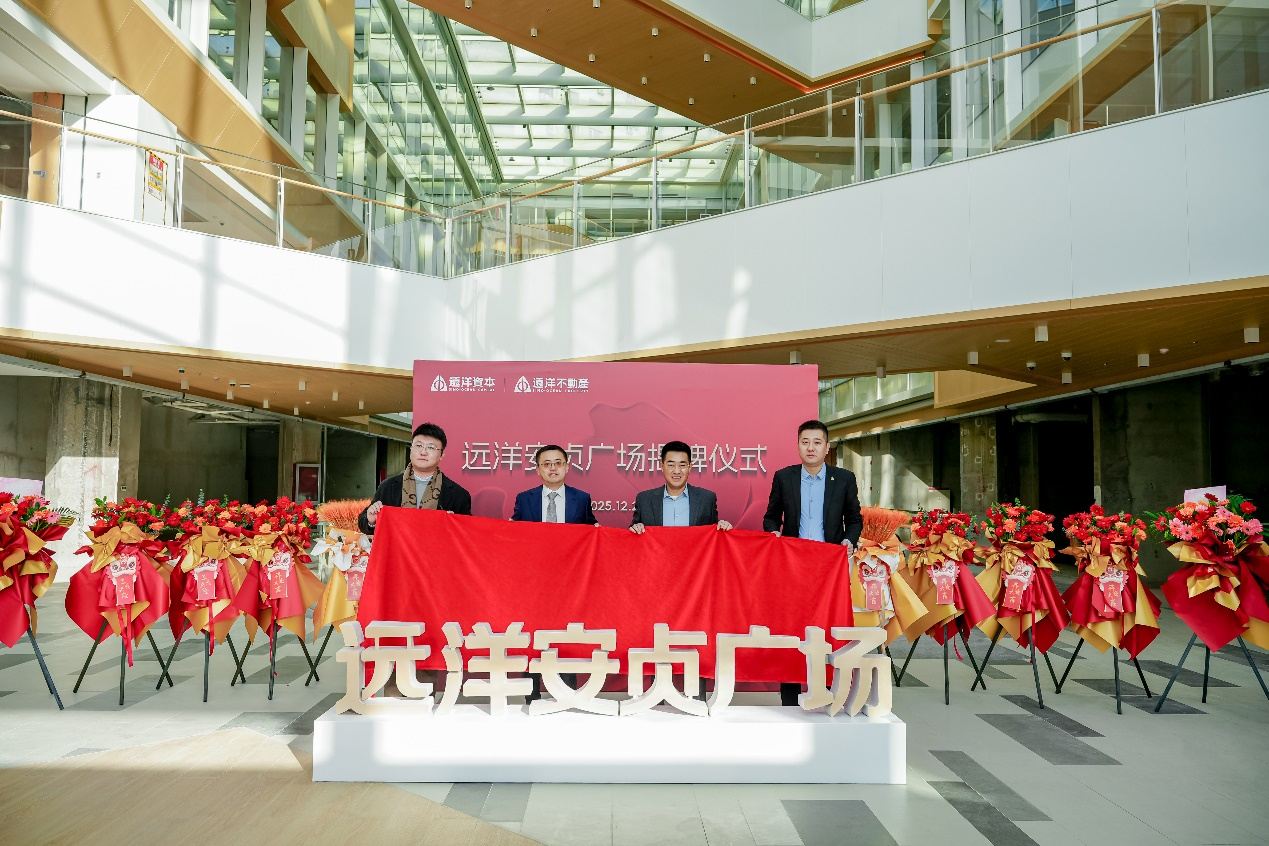
从北三环老百货到“绿氧”综合体 北京远洋安贞广场揭牌
Zheng Quan Ri Bao Wang· 2025-12-25 12:47
Core Viewpoint - The rebranding and renovation of the former Anzhen Hualian Shopping Mall into the Yuan Yang Anzhen Plaza represents a significant transformation, revitalizing a historical site into a modern "green oxygen" complex that meets contemporary urban needs [2][4]. Group 1: Project Overview - Yuan Yang Anzhen Plaza is located at the intersection of Beijing's central axis and the North Third Ring Road, officially unveiled on December 24 [1]. - The project has been redefined and activated by Yuan Yang Group, transitioning from a traditional department store to a mixed-use complex that integrates corporate offices and commercial functions [2]. Group 2: Design and Renovation - The renovation emphasizes a "green and low-carbon" approach, creating a rare "green oxygen" complex in Beijing, addressing the lack of high-quality ecological commercial office spaces in the area [3]. - Significant structural changes were made, including the removal of multiple columns on floors 1 to 5 to create a 26.5-meter high atrium, enhancing natural light and improving the overall spatial experience [3]. Group 3: Market Context and Strategic Positioning - The project aligns with the "14th Five-Year Plan" where over 200 million square meters of commercial properties over 30 years old in first-tier cities will need revitalization, highlighting the importance of asset value reconstruction [4]. - Yuan Yang Group has successfully identified market trends and differentiated product advantages, positioning the plaza as a premium standalone office space for medium to large enterprises [2][4]. Group 4: Future Outlook - The transformation of Yuan Yang Anzhen Plaza is seen as a model for urban renewal in Beijing, with expectations for more historical landmarks to be revitalized under Yuan Yang's management, contributing to sustainable urban development [5].

云南绿色铝产业发展按下“快进键”
Xin Hua She· 2025-12-25 11:51
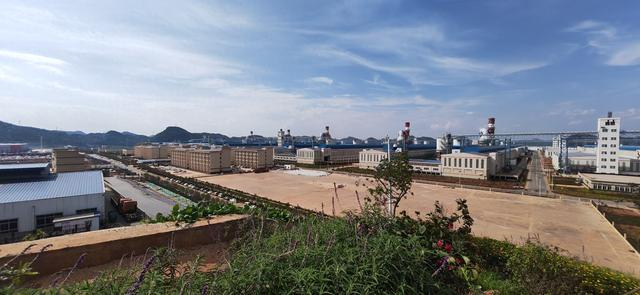
Core Viewpoint - Yunnan Province is leveraging the opportunity of China's aluminum industry layout adjustment to develop a green aluminum industry, significantly increasing electrolytic aluminum production capacity and attracting major companies to establish operations in the region [1][3]. Group 1: Industry Development - The Yunnan Green Aluminum Innovation Industrial Park is a key development area, covering nearly 10,000 acres and featuring modern facilities for electrolytic aluminum production [1][3]. - The park aims to develop 2.03 million tons of electrolytic aluminum and 600,000 tons of recycled aluminum, creating a complete industrial cycle from raw materials to aluminum applications [3][6]. - Yunnan's abundant green energy resources provide a competitive advantage for the development of electrolytic aluminum, which is a high-energy-consuming industry [3][6]. Group 2: Company Initiatives - Shandong Weiqiao Group's subsidiary, Yunnan Hongtai New Materials Co., primarily uses green electricity for its 2.03 million tons green aluminum project, which consumes approximately 28.5 billion kWh annually [5][6]. - Henan Shenhuo Group's Yunnan Shenhuo Aluminum Co. is implementing a 900,000-ton green hydropower aluminum project, incorporating 5G technology for smart factory construction [6]. - Yunnan Aluminum Industry has established a complete industrial chain in various parks, achieving a 96% local processing conversion rate for primary aluminum [6][7]. Group 3: Economic Impact - Yunnan's green aluminum industry generated over 180 billion yuan in output value in the first 11 months of the year, with a year-on-year increase of 10.6% in added value [7]. - The total output value for the green aluminum industry is expected to approach 200 billion yuan for the year, marking it as a new growth driver for Yunnan's industrial development [7].
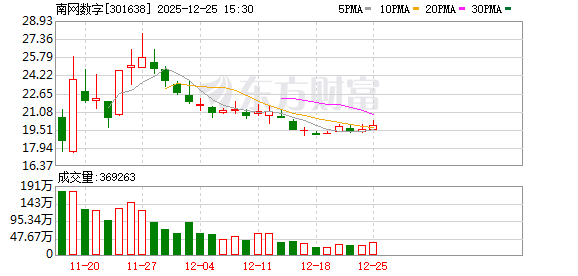
南网数字:公司绿色低碳高效液冷技术显著降低数据中心能耗
Zheng Quan Ri Bao· 2025-12-25 11:12
Core Viewpoint - The company has developed a green, low-carbon, and efficient liquid cooling technology that significantly reduces energy consumption in data centers [2] Group 1 - The new data center architecture is characterized by low energy consumption, high compatibility, and strong adaptability [2] - The technology enables dynamic and precise control of cooling capacity, overcoming the limitations of traditional media [2] - Detailed product information can be found in the company's prospectus [2]
从“速度优先”向“绿色引领”转型——我国邮政业绿色低碳发展观察
Xin Hua Wang· 2025-12-25 11:05
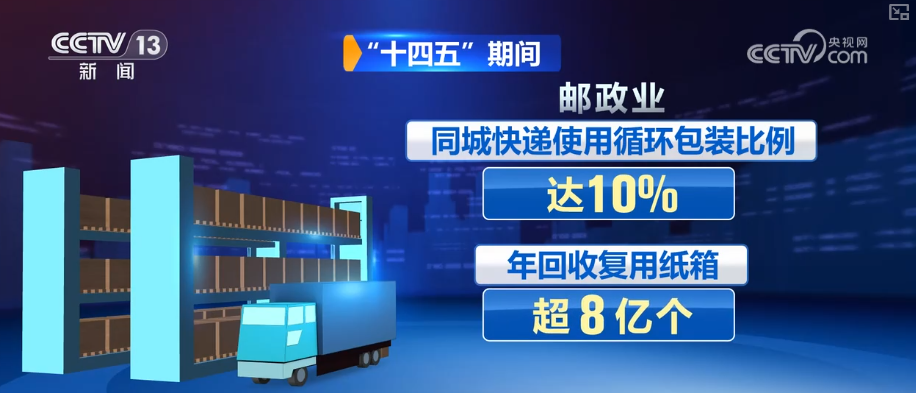
Core Viewpoint - The Chinese postal industry is transitioning from a "speed-first" approach to a "green-led" model, playing a crucial role in building a green, low-carbon, and circular economy system as part of the ongoing "dual carbon" initiatives [1] Group 1: Achievements in Green Development - The postal industry has made significant progress in green low-carbon development, with companies like Yunda promoting reusable smart document bags that can be used 1,000 times, saving materials and being more environmentally friendly [2] - During the 14th Five-Year Plan period, the industry has reduced packaging box layers and bag thickness by over 50%, and the width of tape by 25%, with a 10% usage rate of reusable packaging in same-city deliveries, recycling over 800 million cardboard boxes annually [2] Group 2: Regulatory Framework and Top-Level Design - The Chinese government has introduced 3 laws, 15 standards, and 9 policies aligned with green principles during the 14th Five-Year Plan, establishing a comprehensive regulatory system for the postal industry [3] - The revised express delivery regulations implemented in June 2023 emphasize the creation of a green and energy-efficient express service system, providing institutional support for collaborative governance across departments and regions [3] Group 3: Technological Innovation - The introduction of bamboo-based biodegradable bags by China Post in Hunan Province demonstrates the application of new technologies, reducing costs by over 10% compared to existing biodegradable packaging [4] - The postal industry is leveraging technology to enhance operational efficiency and reduce carbon emissions across the entire supply chain [4] Group 4: Full-Chain Carbon Reduction Strategies - In the collection phase, the industry is promoting the use of biodegradable tape and lightweight packaging, reducing plastic consumption, and utilizing digital methods to lower paper usage [5] - The transportation phase focuses on improving load rates and reducing empty runs through smart route planning and multi-modal transport [6] - In the delivery phase, there is an emphasis on developing and applying unmanned delivery devices and optimizing delivery routes to minimize energy consumption [6] Group 5: Collaborative Governance and Systematic Approach - The postal industry is actively promoting collaboration with upstream e-commerce platforms to reduce excessive packaging and implement smart packing algorithms, achieving a nearly 20% reduction in packaging material usage per order [8] - A systematic approach to express packaging governance has been established, clarifying responsibilities across various stages from design to recycling [9] - The National Postal Administration is enhancing cooperation among various stakeholders, including industry associations, to foster a green supply chain [9]
万亿投资筑底,央企疏解领航!雄安新区书写千年大计新答卷|2025中国经济年报
Sou Hu Cai Jing· 2025-12-25 10:42
Core Insights - Xiong'an New Area is transitioning from large-scale infrastructure construction to urban prosperity, focusing on the integration of non-capital functions from Beijing and promoting urban and industrial development [2] - The area has seen over 1 trillion yuan in cumulative investment over the past eight years, with an average annual investment of 200 billion yuan during the 14th Five-Year Plan period and a GDP growth rate of 17.1% [2] Group 1: Central Enterprises' Relocation - China Huaneng and China Sinochem have officially relocated their headquarters to Xiong'an, marking a significant milestone in the area’s development [3] - The successful establishment of these central enterprises sets a benchmark for subsequent projects, with over 400 central enterprises gathering in the region [3][4] - The relocation of these enterprises not only involves physical space but also ensures a smooth transition in business operations [4] Group 2: Industrial Ecosystem Restructuring - Xiong'an has attracted major energy central enterprises, including China Huaneng, China Huadian, and China Datang, forming a collaborative development model of "headquarters + R&D base + supporting enterprises" [5] - The area is also home to over 4,000 enterprises from Beijing, fostering an environment conducive to innovation and entrepreneurship [5] Group 3: Innovation and Development - The relocation of central enterprises is driving the restructuring of industrial chains, innovation chains, and resource flows, enhancing the region's innovative vitality [6] - Xiong'an has established 118 innovation platforms, including 53 at the provincial level, and has recognized numerous high-tech enterprises, indicating a robust innovation ecosystem [6] Group 4: Education and Research Integration - Four universities have set up 14 provincial-level key laboratories and two provincial-level technology innovation centers, promoting deep integration between academic research and industrial needs [7] - The relocation of financial services and cross-border financial centers is facilitating the flow of capital, technology, and talent in the region [7] Group 5: Green Development Initiatives - Xiong'an is positioning itself as a model for green low-carbon cities, with projects like distributed photovoltaic systems and green building standards being implemented [8] - The focus on green technology and sustainable practices is evident in the initiatives taken by relocated enterprises, contributing to the development of a modern green energy system [9]


快递行业向“新”向“智”向“绿”加速跑 科技重塑作业流程绿色低碳发展动能强劲
Yang Shi Wang· 2025-12-25 10:09
Core Insights - The green transformation of express packaging in China has made significant progress during the 14th Five-Year Plan period, with electronic waybills and circular transit bags achieving near-total coverage, and reductions in packaging box layers and bag thickness by over 50% [1][4] Group 1: Green Packaging Initiatives - The postal industry has achieved over 50% reduction in packaging box layers and bag thickness, and a 25% reduction in tape width [4] - Smart packing algorithms have reduced material consumption by nearly 20%, with the proportion of circular packaging in same-city express deliveries reaching 10% [4] - Over 800 million used cardboard boxes have been recycled annually [4] Group 2: Technological Advancements - Modern information technologies such as artificial intelligence, mobile internet, and cloud computing have reshaped express delivery operations and processes, enhancing green and low-carbon development [7] - Distribution centers have implemented intelligent scheduling, visual tracking, and information management, with over 1,000 green distribution centers and more than 12,500 green sites established [9] Group 3: Regulatory Changes - The revised Express Delivery Temporary Regulations, effective from June 2025, aim to establish a green and energy-saving express service system, with a dedicated chapter on "express packaging" [11] - The regulations provide institutional support for collaborative governance of express packaging across design, production, use, recycling, and disposal [11] Group 4: Local Implementation and Practices - In Fuzhou, postal outlets are adopting green packaging elements, such as biodegradable bags and tape, and new packaging methods that significantly reduce tape usage [13][19] - Packaging recycling boxes have been set up at various outlets, with 2.614 million corrugated boxes recycled in the first 11 months of 2025 [25]
以技术韧性筑底 以开放创新赋能:梅赛德斯-奔驰与中国经济共赴“活力2026”
Mei Ri Jing Ji Xin Wen· 2025-12-25 09:05
Core Viewpoint - The article emphasizes the importance of resilience and innovation in China's economy by 2026, particularly highlighting the automotive industry as a key pillar undergoing transformation and value redefinition [1] Group 1: Mercedes-Benz's Strategic Focus - Mercedes-Benz is committed to long-term strategies, focusing on technological innovation, deep local collaboration, and sustainable practices to build future competitiveness [1][2] - The company aims to enhance its product offerings and services to meet the evolving demands of Chinese consumers, aligning with a more vibrant and sustainable economic ecosystem [2] Group 2: Technological Innovation and Green Transformation - The core of the industry transformation is driven by technological innovation and green transition, with Mercedes-Benz integrating electric technology and circular economy principles [4] - A new Robotaxi based on the S-Class will be launched in Abu Dhabi in 2026, showcasing advanced safety and comfort features, representing a collaboration between Mercedes-Benz and local partners [4][6] - The new all-electric CLA model features an 800-volt platform, achieving a range of 866 kilometers and an energy consumption of 10.9 kWh per 100 kilometers [4] Group 3: Sustainability Initiatives - Mercedes-Benz's commitment to sustainability is evident in its "2039 Vision," aligning with China's dual carbon goals, and achieving carbon neutrality in its Beijing plant [6][7] - The company has implemented a circular economy approach, recovering approximately 391 tons of scrapped batteries and increasing the use of recycled materials in new vehicles [7] - The Beijing plant has installed a 88.8 MW solar power system, meeting about 80% of its energy needs and reducing emissions by nearly 120,000 tons annually [6][7] Group 4: Local Collaboration and Investment - Mercedes-Benz has invested over 100 billion RMB in China over the past decade, with plans for an additional 14 billion RMB investment in 2024 [9][10] - The company collaborates with local tech firms like Momenta to develop tailored solutions for the Chinese market, exemplifying its strategy of "local innovation + global collaboration" [8][10] Group 5: Corporate Social Responsibility - Mercedes-Benz has invested over 360 million RMB in various social initiatives, including environmental protection and education, demonstrating its commitment to corporate social responsibility [11] - The company has supported over 260,000 children through its "Safe Childhood" project and has partnered with Tsinghua University to cultivate carbon-neutral talent [11] Group 6: Long-term Vision and Market Positioning - Mercedes-Benz's long-term approach is reflected in its product philosophy, focusing on customer needs rather than market trends, ensuring a balance between efficiency and luxury [12] - The integration of "Mercedes standards" with "Chinese speed" positions the company to resonate with the evolving economic landscape, driving towards a resilient and innovative future [12]

全省绿色低碳高质量发展专题培训班在济南开班
Qi Lu Wan Bao· 2025-12-25 06:16
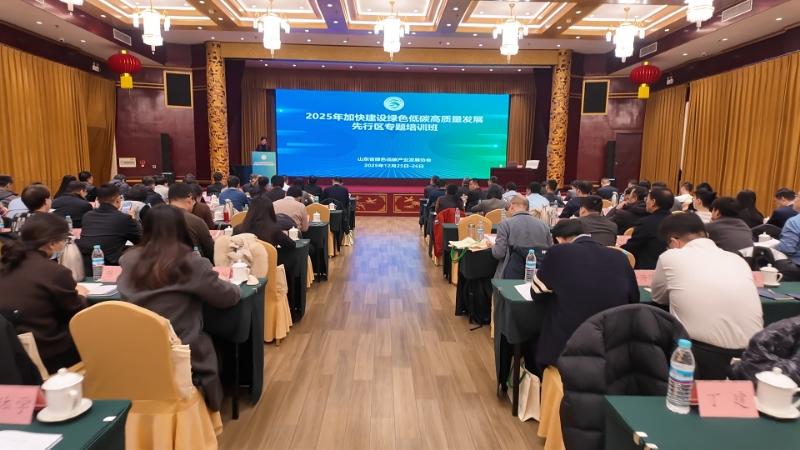
培训首日,山东省工程咨询院专家深入解读了项目谋划的政策机遇;山东社会科学院学者系统分析了双碳背景下 产业与能源转型的挑战与机遇;来自工业和信息化部钢铁行业标准化工作组、上海环境(601200)能源交易所、 中国银行业协会绿色信贷专委会的专家,分别就工业绿色转型实践、碳市场交易分析、绿色金融创新等主题进行 了精彩分享。课程内容既有理论高度,又具实践指导性,现场互动热烈,思想碰撞频繁。 据悉,次日培训将聚焦ESG与可持续发展战略、绿色产品与碳足迹认证实践,并特邀人工智能领军企业专家,探 讨AI大模型如何赋能产业创新变革。培训结束后,学员将带着新的知识、联结与行动共识返回工作岗位,将学习 成果转化为推动本地、本行业绿色转型的具体实践。 本期培训班是山东省绿色低碳产业发展协会发挥平台功能、服务全省战略的重要举措。通过系统化、高质量的能 力建设,旨在培育一支理解政策、精通业务、敢于创新的骨干队伍,为山东省绿色低碳高质量发展先行区建设注 入强劲的专业动能与协同合力。 2025年12月25日,由山东省绿色低碳产业发展协会主办的"2025年全省绿色低碳高质量发展先行区建设专题培训 班"在济南珍珠泉宾馆正式开班。来自全省各级发 ...
打造标杆行业项目,聊城交通绿色低碳转型实现跨越式提升
Qi Lu Wan Bao· 2025-12-25 04:34
Core Viewpoint - The city of Liaocheng is actively promoting the green and low-carbon transformation of its transportation sector as a crucial path for sustainable economic and social development, aligning with national "dual carbon" strategies [1] Group 1: Infrastructure and Project Development - Liaocheng's transportation sector has set four key goals: green infrastructure upgrades, optimized transportation structure, adjusted energy structure, and improved pollution reduction and carbon governance systems [1] - The city has developed exemplary industry projects, including the first certified zero-carbon highway station in the country, which features solar power generation and a zero-emission concrete wastewater system [1] - The construction of a comprehensive transportation hub at Liaocheng High-speed Railway West Station integrates high-speed rail, urban public transport, long-distance passenger transport, and taxis [1] Group 2: Multi-Modal Transport and Green Logistics - The city is focusing on the "public transport to rail" direction and multi-modal transport pathways, achieving positive progress in cargo transportation's low-carbon and efficient transformation [2] - The multi-modal transport system is increasingly established, with significant growth in cargo volume during the 14th Five-Year Plan period, including the successful trial operation of the Guanzhou International Land Port [2] - The city has implemented a green upgrade in transportation modes, exploring a "new energy heavy truck + railway trunk line" transport system [2] Group 3: New Energy Vehicles and Charging Infrastructure - The city has made significant progress in replacing traditional vehicles with new energy vehicles, with over 90% of new buses and more than 1,000 new energy heavy trucks in operation [3] - A comprehensive charging infrastructure network has been developed, including 95 charging stations and 143 charging guns, with a national-level pilot project for charging and swapping facilities [3] - The city is implementing a three-year action plan for green transportation transformation, setting quantifiable goals for solar power installations and zero-carbon facilities [3] Group 4: Carbon Trading and Collaborative Mechanisms - Liaocheng is exploring low-carbon development paths in the transportation sector, achieving a breakthrough in carbon trading with the sale of 200 tons of carbon assets [3] - The city is establishing a collaborative mechanism involving multiple departments to institutionalize and standardize the transformation work [3] - The transportation sector's green low-carbon transformation is seen as a strong driver for high-quality economic and social development in Liaocheng [4]
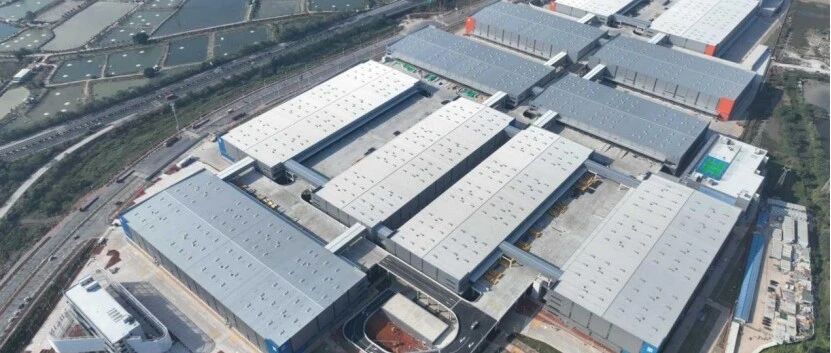
大湾区再添跨境电商新地标!希音湾区西部智慧产业园竣工交付
证券时报· 2025-12-25 04:27
Core Viewpoint - The establishment of SHEIN's West Bay Area Smart Industrial Park in Zhaoqing represents a significant investment in smart supply chain infrastructure, aiming to enhance agile and flexible supply chain capabilities while promoting employment in the fashion industry [1][3]. Group 1: Project Overview - The SHEIN West Bay Area Smart Industrial Park has been completed with a total investment of 3.5 billion yuan and covers an area of over 600,000 square meters [3]. - The park includes a smart sorting center and an order distribution center, equipped with facilities such as employee cafeterias and office buildings, and plans to construct 14 double-layer logistics warehouses [3][4]. - The project will also incorporate solar photovoltaic panels with an installed capacity exceeding 24 megawatts, expected to reduce carbon emissions by over 10,000 tons annually [4]. Group 2: Economic Impact - Zhaoqing's foreign trade import and export value reached 41.85 billion yuan from January to November 2025, marking a year-on-year increase of 20.7%, with cross-border e-commerce being a key driver of this growth [3]. - Upon reaching full production, the park is projected to generate an annual service trade export value of 3.5 billion yuan and create between 20,000 to 30,000 jobs [4]. Group 3: Strategic Initiatives - SHEIN is investing over 10 billion yuan to accelerate the development of a green smart supply chain system across cities in the Guangdong-Hong Kong-Macao Greater Bay Area, including Guangzhou, Zhaoqing, Foshan, and Jiangmen [7]. - The company aims to transform traditional garment production through digital tools and a "small batch quick response" flexible supply chain model, enhancing the potential of upstream and downstream industries [7].