能源安全

Search documents
已成AI"关键瓶颈",高盛:欧美电网远远落后于中国,铜将变成新的石油
Hua Er Jie Jian Wen· 2025-09-28 03:33
Group 1 - Goldman Sachs warns that aging power grids in Western countries have become a "vulnerable link" in energy security due to increasing AI demand and geopolitical tensions, predicting copper prices will rise to $10,750 per ton by 2027 [1][4] - The average operational lifespan of power grids is nearing its end, with Europe at 50 years and North America at 40 years, while China is advancing its ultra-high voltage transmission network [1][2] - The report emphasizes the interdependence of the power grid, AI, and national defense, making investment in grid infrastructure a pressing national security priority [3][4] Group 2 - The rapid development of AI is intensifying pressure on already strained power grid systems, as data centers require significant electricity [3] - Goldman Sachs predicts that by the end of 2030, power grid and infrastructure upgrades will account for approximately 60% of global copper demand growth, equivalent to adding another U.S. consumption level to global demand [4] - The strategic importance of copper is increasing as it becomes essential for power grid construction, leading to its characterization as the "new oil" [4]

乌克兰无人机袭击“友谊”输油管道泵站
Yang Shi Xin Wen· 2025-09-27 23:00
Core Viewpoint - Ukrainian drone strikes targeted an oil pumping station in the Chuvash Republic of Russia, halting oil transportation through the facility, although Russian officials reported no significant damage from the attack [1]. Group 1: Attack Details - The Ukrainian Security Service conducted a drone strike on a pumping station associated with the "Druzhba" oil pipeline, which is a major system for transporting crude oil from Russia to Central and Eastern Europe [1]. - The attack resulted in a fire, leading to the suspension of oil transport through the affected pumping station [1]. Group 2: Impact on Oil Supply - Hungarian Foreign Minister Szijjarto stated that the drone strike did not affect oil supplies to Hungary, indicating that the broader supply chain remains intact despite the attack [1]. - The "Druzhba" pipeline and its facilities have been targeted multiple times recently, highlighting ongoing tensions and risks to energy infrastructure in the region [1].
美国和印度谈崩了,莫迪通知美国:不让买俄油,就买伊朗或委内瑞拉原油
Sou Hu Cai Jing· 2025-09-27 11:35
Core Viewpoint - The negotiations between the U.S. and India are centered around oil purchases, particularly the pressure on India to reduce its imports of Russian oil, which India views as essential for its economy and inflation control [1][5][22]. Group 1: U.S. Pressure Tactics - The U.S. has made it clear that any trade agreements with India are contingent upon India reducing its purchases of Russian oil, with tariffs and visa policies being used as leverage [1][3][22]. - Historical context shows that previous U.S. administrations, including Trump's, have linked trade concessions to India's oil sourcing decisions, indicating a long-standing strategy of using energy as a bargaining chip [3][22]. Group 2: India's Response and Strategy - India has firmly stated that Russian oil is economically necessary due to its affordability, and any unilateral restrictions would lead to increased costs and inflation [5][22]. - India has proposed that if it is to reduce Russian oil imports, the U.S. must ease restrictions on importing oil from Iran and Venezuela, indicating a willingness to negotiate but with conditions [5][13][22]. - The Indian government maintains that discussions with the U.S. have been constructive, leaving room for further negotiations despite the contentious issues [7][22]. Group 3: Broader Implications of Sanctions - The U.S. decision to revoke sanctions waivers for Iran's Chabahar port has significant implications for India's strategic interests, as this port is crucial for connecting to Afghanistan and Central Asia [10][12]. - The uncertainty surrounding the Chabahar port may force India to rely more on spot market purchases and long-distance oil sourcing, complicating its energy strategy [12][22]. Group 4: Domestic and Geopolitical Considerations - Both countries are aware that their negotiations are not just about oil but also about domestic political pressures and public perception [15][22]. - India's recent military advancements, such as the test of the Agni-Prime missile, serve as a demonstration of its capabilities and a signal of strength in the face of U.S. pressure [17][22]. - The ongoing discussions about H-1B visa regulations further complicate the relationship, as these changes directly impact India's IT and engineering sectors [20][22]. Group 5: Future Negotiation Pathways - For a resolution to be reached, the U.S. may need to establish a clear timeline for reducing Russian oil imports, provide compliance windows for Iranian and Venezuelan oil imports, and avoid using tariffs and visa issues as punitive measures [25][27]. - A balanced approach that considers both countries' economic and strategic interests could lead to a more favorable outcome in the negotiations [27].

不许购买俄石油,美公开指责中印,话音刚落,中方回应一针见血
Sou Hu Cai Jing· 2025-09-27 08:37
Core Viewpoint - The article discusses the escalating tensions in the global energy market, particularly focusing on the firm stance of China and India in defending their energy autonomy against U.S. pressure to cease purchasing Russian oil [1][3][5]. Group 1: U.S. Pressure and Response - The U.S. has issued strong warnings to China and India, demanding an immediate halt to their purchases of Russian oil, framing it as a violation of international interests [5][9]. - Despite U.S. pressure, both China and India have responded with a resolute commitment to their energy security, highlighting their independence in energy policy decisions [7][10]. - China's Ministry of Foreign Affairs emphasized that their energy cooperation with Russia is in line with international trade rules, rejecting U.S. accusations as baseless [5][12]. Group 2: International Reactions and Implications - The reactions from the Western bloc have been mixed, with some questioning the U.S.'s unilateral approach and its implications for global energy stability [9][10]. - The situation has prompted a reevaluation of energy strategies among various countries, including traditional U.S. allies in Europe, indicating a shift away from U.S. dominance in energy governance [10][14]. - The article suggests that the ongoing energy dynamics signify a profound transformation in the global energy landscape, with China and India asserting their roles as independent players [12][14]. Group 3: Strategic Considerations - China views energy security as a vital component of its national development, and its partnership with Russia is seen as a pragmatic choice amidst geopolitical shifts [12][14]. - India, as the third-largest oil consumer, has made it clear that its energy choices are sovereign and not subject to external dictation, reinforcing its strategic autonomy [12][14]. - The article concludes that the current energy standoff reflects a broader trend towards a more diversified and balanced international energy order, challenging the previous Western-centric model [14].
乌克兰宣布报复匈牙利
中国能源报· 2025-09-27 02:09
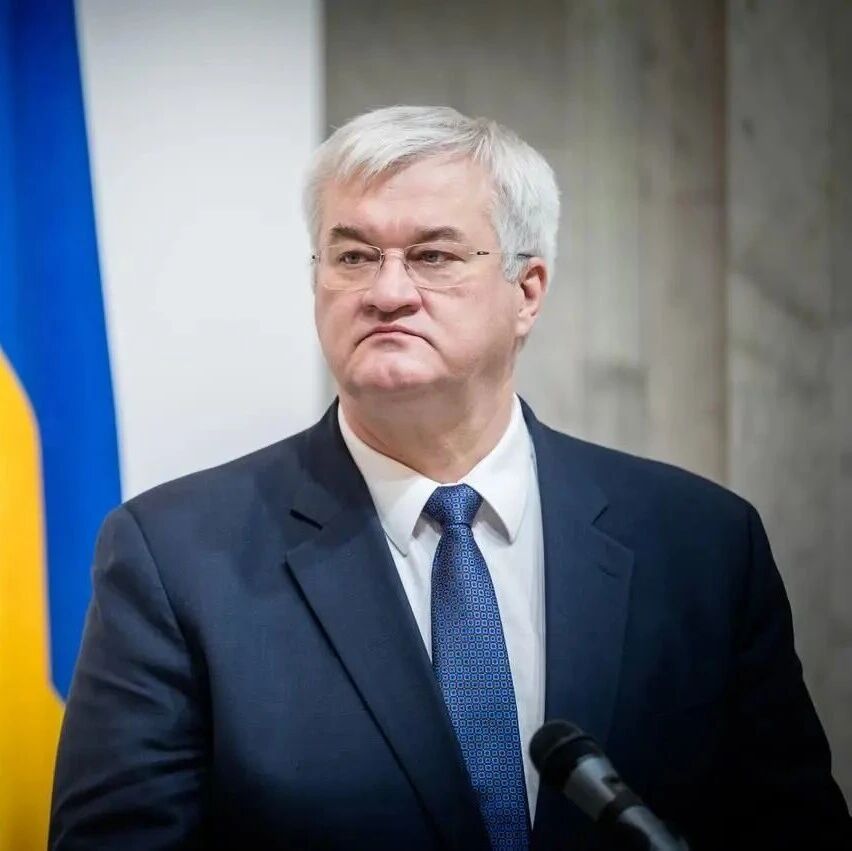
Group 1 - Ukraine has banned three senior Hungarian military officials from entering the country in response to Hungary's previous actions [1] - Hungary's Foreign Minister announced on August 28 that Hungary had banned a Ukrainian officer from entering due to their involvement in attacks on the "Friendship" oil pipeline [3] - The "Friendship" oil pipeline is a major system for transporting Russian oil to Central and Eastern Europe, with disruptions caused by recent Ukrainian drone and missile attacks [3]
西气东输三线在建工程全线投运 从"线"到"网" 筑牢国家能源安全屏障
Yang Shi Wang· 2025-09-26 09:28
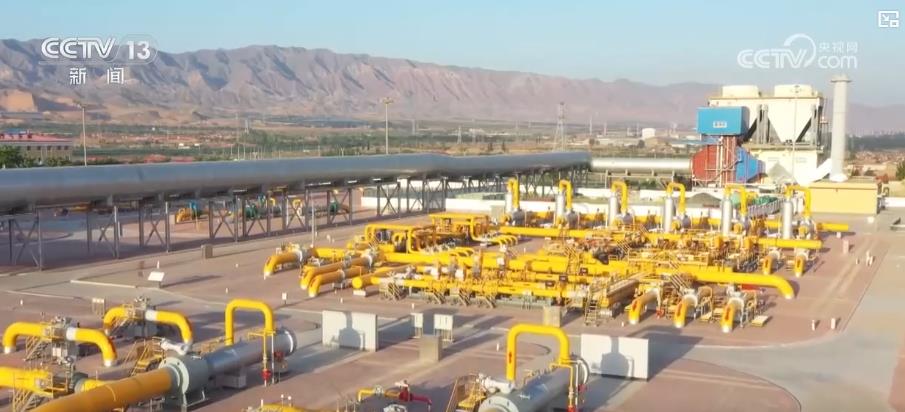
Core Viewpoint - The completion of the Zhongwei to Zhaoyang section of the West-to-East Gas Pipeline Phase III significantly enhances natural gas supply capabilities in China's central and eastern regions, marking the full operation of the pipeline's construction [1][3]. Group 1: Project Details - The Zhongwei to Zhaoyang section is a core segment of the West-to-East Gas Pipeline Phase III, with a total length of 1,235 kilometers, a design pressure of 10 MPa, a diameter of 1,219 mm, and an annual gas transmission capacity of 25 billion cubic meters [3]. - This pipeline connects Ningxia and traverses five provinces (Gansu, Shaanxi, Henan, Hubei), further extending the gas supply to regions such as the Yangtze River Delta, Pearl River Delta, Bohai Rim, and Sichuan-Chongqing area [3]. Group 2: Strategic Importance - The project is a critical link in the national gas network, alleviating the high-load operation of the first and second phases of the West-to-East Gas Pipeline and facilitating the export of increased production from western oil and gas fields [3][5]. - The completion of this section optimizes China's energy transmission structure, ensures regional energy supply, and promotes economic development in central and eastern China [5]. Group 3: National Energy Network - With the full operation of the West-to-East Gas Pipeline Phase III, the national gas backbone network, which includes the first, second, third, and fourth lines, becomes increasingly complete, reinforcing the country's energy security [5]. - The West-to-East Gas Pipeline system, along with other major projects, plays a vital role in the cross-regional allocation of natural resources in China, having achieved an annual gas transmission volume exceeding 100 billion cubic meters and a cumulative transmission volume surpassing 1 trillion cubic meters [7]. Group 4: Environmental and Economic Impact - The West-to-East Gas Pipeline system covers over 400 cities and more than 3,000 medium and large enterprises, benefiting nearly 500 million people, thus contributing to the improvement of energy structure and ecological environment in China [7]. - The pipeline system is essential for the development of domestic gas and the integration of imported gas, facilitating the transition to a cleaner and low-carbon energy structure [9].
美国对俄铀禁令失效?能源部长承认:核电站还得靠俄燃料
Sou Hu Cai Jing· 2025-09-26 06:56
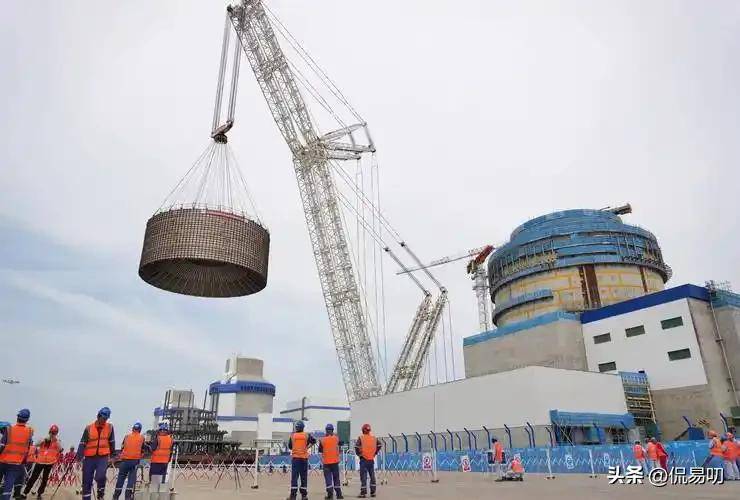
Group 1 - The U.S. government issued a ban on the use of Russian enriched uranium by 2028, revealing a significant dependency on Russian supplies, with about 25% of U.S. nuclear fuel sourced from Russia [1] - Russia holds a dominant position in the global uranium enrichment market, controlling 80%-90% of the market share, and 22 out of 25 nuclear power plants under construction worldwide utilize Russian technology [1] - The U.S. faces a potential 5% power supply disruption if the ban is enforced, as establishing alternative supply chains would require billions of dollars in investment [1][3] Group 2 - The U.S. has only two commercial uranium enrichment facilities, with one meeting only 15% of domestic demand, highlighting the challenges in increasing domestic production [1][3] - The U.S. strategic uranium reserve, initiated in 2020, is projected to last only 14 months, compared to the EU's 2.5 years and China's 12 years [3] - Efforts to collaborate with allies like Canada and Australia to restructure the supply chain face local resistance and resource shortages [5] Group 3 - China has made significant advancements in uranium resources, with a major discovery in the Tarim Basin expected to increase self-sufficiency from 30% to 70% within three years [7] - Russia employs a strategy of bundling technology and resources, exporting nuclear power plants with fuel supply agreements, which enhances its competitive edge [8] - The energy landscape is shifting towards multipolarity, with China's resource breakthroughs and the U.S.-Russia technological rivalry indicating a departure from energy hegemony [8]
2025云栖大会:超70%能源央企接入阿里云AI
Huan Qiu Wang· 2025-09-26 04:17
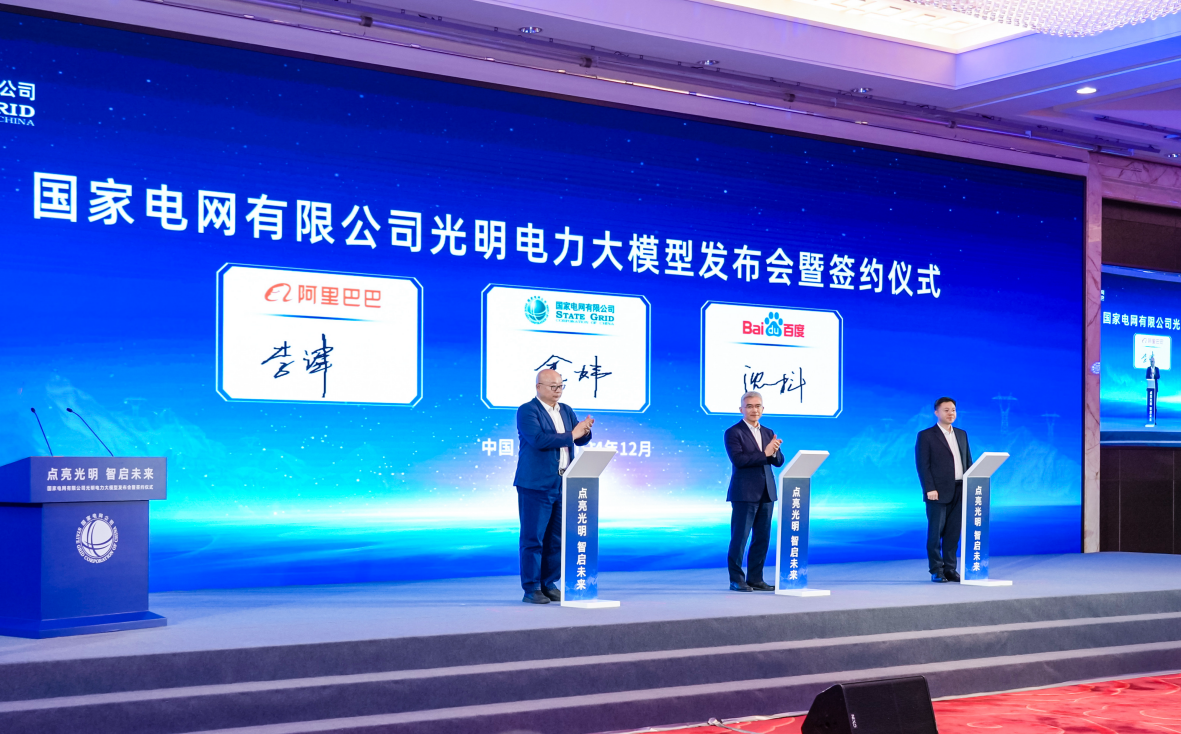
Core Insights - Over 70% of China's energy state-owned enterprises have integrated Alibaba's AI technology, including major players like State Grid, Southern Power Grid, Sinopec, and others, across the entire energy spectrum [1] - The energy sector is under strict technological selection requirements due to "energy security" and "dual carbon" goals, leading to a preference for Alibaba Cloud's full-stack AI capabilities [1] - The State Grid has launched the "Bright Power Model," a comprehensive multimodal industry model supported by Alibaba, which has achieved the highest professional capability rating [1] Group 1: Electricity Sector - State Grid and Southern Power Grid are leveraging AI to address challenges in grid stability caused by large-scale integration of renewable energy [1] - The "Bright Power Model" is recognized as the most comprehensive and capable model in the electricity sector, providing support for safe and stable grid operations [1] - The model's professional capability exceeds that of mainstream models by an average of 15% [1] Group 2: Metering and Automation - Southern Power Grid has upgraded its metering automation system to a leading "Metering Brain," enhancing efficiency and fault recovery rates [3] - The AI Commander developed in collaboration with Alibaba integrates multiple AI functions, resulting in an 8-fold increase in work order processing efficiency and an 80% self-healing rate for faults [3] Group 3: Oil and Gas Sector - The National Pipeline Group has built an open service and trading platform for over 50,000 kilometers of oil and gas pipelines, utilizing Alibaba's AI technology [5] - The platform has improved demand submission efficiency by 60% and enables rapid response for urgent resource allocation [5] Group 4: Coal Industry - China Coal Technology and Engineering Group has integrated AI models into its operations, enhancing decision-making for intelligent mining and disaster prevention [5] - A strategic cooperation agreement has been signed with Alibaba Cloud to develop an AI foundation platform for the coal industry [5] Group 5: Industry Recognition - The choice of Alibaba AI by energy state-owned enterprises reflects recognition of Alibaba Cloud's full-stack AI capabilities [7] - The goal of digital transformation in the energy sector is to achieve greater safety, stability, lower carbon emissions, and higher efficiency [7]




中国买俄石油全球最贵?别傻了,普京38个字评价中国:太会压价了
Sou Hu Cai Jing· 2025-09-25 09:17
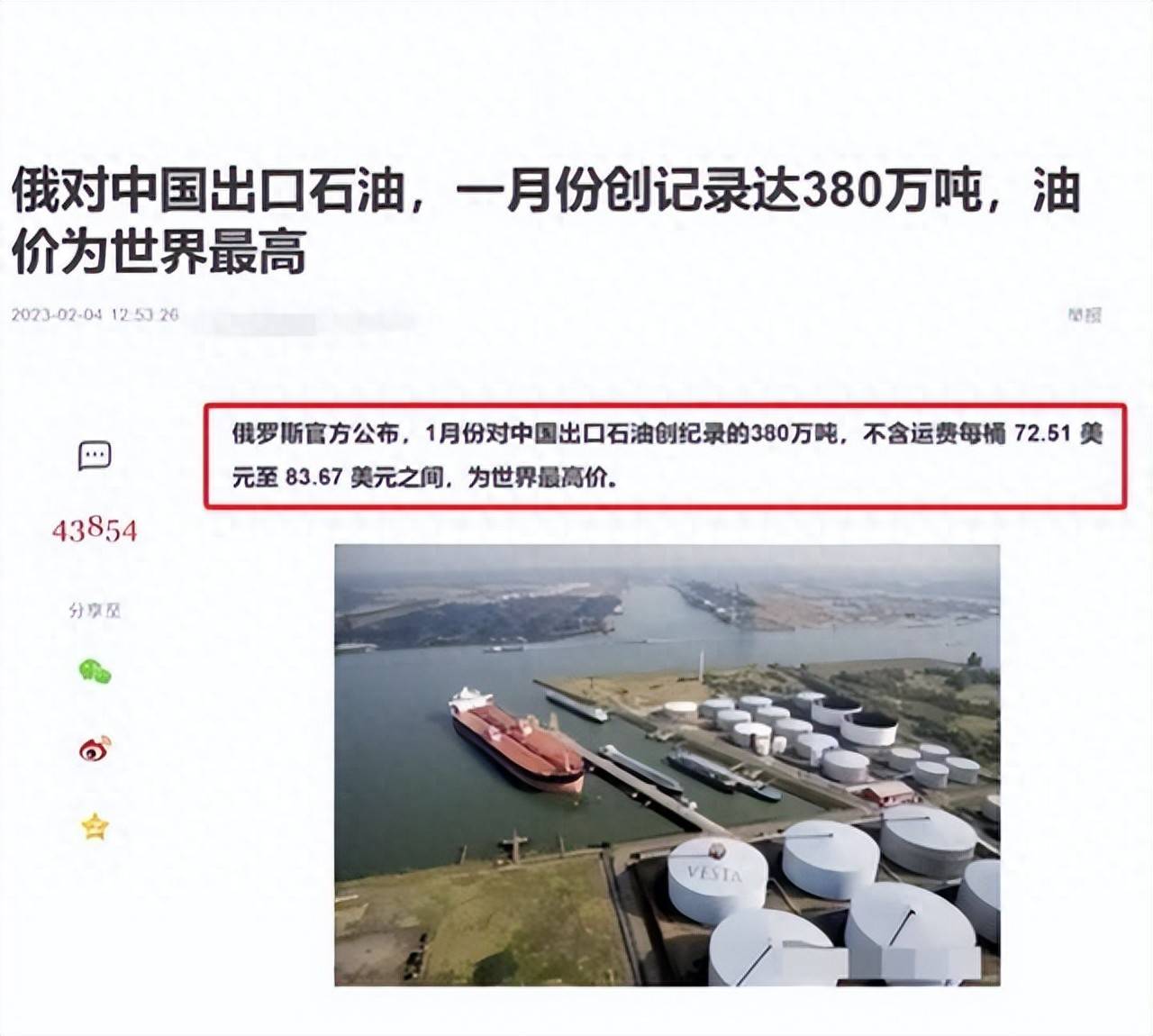
Core Insights - The article discusses the complexities of China's oil imports from Russia, highlighting that while the price per barrel appears higher than India's, the overall value and strategic benefits are more favorable for China [3][4][12]. Group 1: Pricing and Import Dynamics - In January 2023, China imported 3.8 million tons of oil from Russia at a price of $72 to $83 per barrel, while India paid $30 to $35 per barrel, including shipping costs [3]. - China's average import price for Russian oil in 2024 is around $77 per barrel, which is competitive compared to prices from Saudi Arabia and Iran [12]. - The pricing structure for Russian oil involves long-term contracts with fixed pricing formulas, which include a base price minus discounts and transportation costs [4][10]. Group 2: Transportation and Supply Security - China primarily relies on pipeline and rail transport for Russian oil, which incurs higher maintenance and operational costs compared to India's maritime transport [3][4]. - The China-Russia oil pipeline has a capacity of 15 million tons per year, ensuring stable supply and energy security for China [4]. - The reliance on maritime transport by India has led to increased costs due to sanctions and rising shipping rates, affecting their import volumes [5][9]. Group 3: Strategic Negotiations and Market Position - China's negotiation strategy has been effective, allowing it to secure favorable terms despite not always obtaining the lowest market prices [6][12]. - Russian President Putin acknowledged China's negotiation skills, indicating that the relationship is mutually beneficial, especially given Russia's need for stable buyers amid Western sanctions [6][12]. - The long-term energy agreements between China and Russia are seen as a strategic partnership, with China maintaining a significant share of Russian oil imports [10][12]. Group 4: Future Outlook and Market Trends - By 2024, China is expected to import 5.53 million tons of oil, with Russia accounting for 20% of this volume, while India's imports from Russia are projected to decline [9][10]. - The ongoing geopolitical dynamics and energy market fluctuations suggest that China's position as a major buyer will continue to influence pricing and supply strategies in the region [12]. - Future projects, such as the Siberian Power 2 pipeline, are anticipated to further solidify China's energy security and pricing power in negotiations with Russia [12].
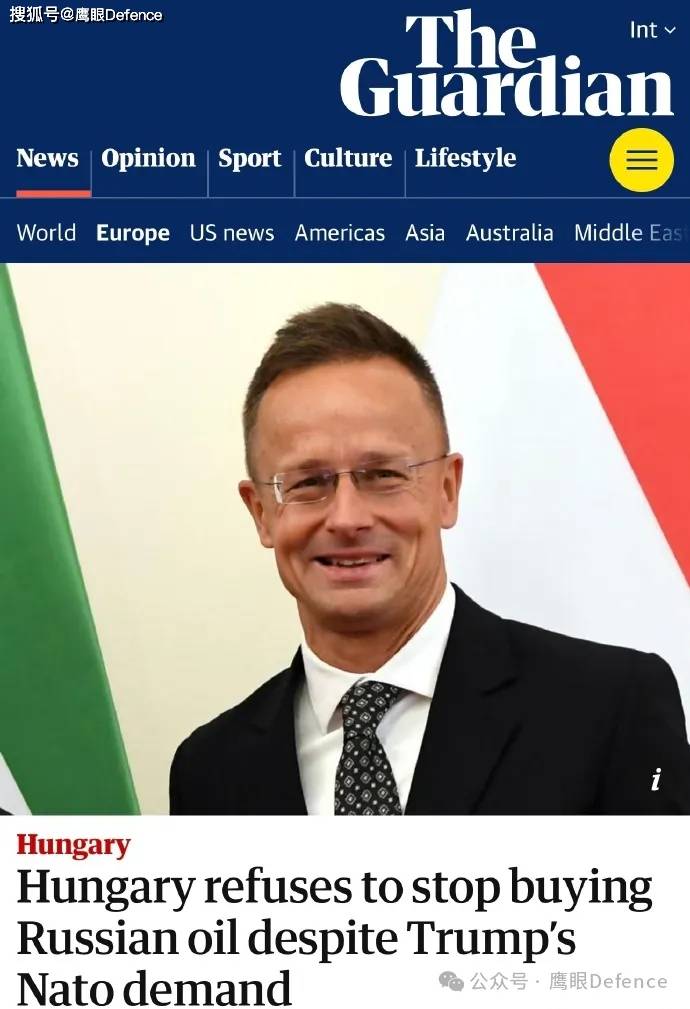
只要谈谈,匈牙利就会停购俄罗斯石油?特朗普其实想抢占欧洲市场
Sou Hu Cai Jing· 2025-09-24 09:16
Group 1 - Trump did not emphasize pressuring the Kremlin to end the war during his meeting with Zelensky and at the UN, only mentioning a potential discussion with Hungarian Prime Minister Orban about halting Russian oil purchases [1] - Hungary has repeatedly stated it will continue to buy Russian oil for energy security, even if Trump requests otherwise, with the Foreign Minister labeling Western officials as "fanatics" [1] - Slovakia shares a similar stance, with its Economy Minister stating that it will not take action until a reliable alternative to Russian oil is found, as hasty actions could severely harm the economy [3] Group 2 - The EU is considering imposing tariffs on Russian oil imported through the Druzhba pipeline if Hungary and Slovakia continue their purchases, which could be passed with a majority vote rather than unanimous consent [5] - Currently, only Hungary and Slovakia are purchasing Russian oil, while several countries still buy Russian natural gas; the EU has committed to halting natural gas imports by 2027 and is making efforts to reduce purchases [5] - In July, the EU purchased €338 million worth of Russian pipeline gas, the lowest level since autumn 1999 [5] Group 3 - Trump is advocating for the EU to impose 100% tariffs on countries like India that purchase Russian oil, but the EU has rejected this proposal, stating it will act based on its own interests [8] - The EU has acknowledged past mistakes and is taking time to adjust economically; Zelensky admitted Ukraine's past reliance on cheap Russian energy was a significant error [10] - Hungary's economic growth is projected at only 0.8% this year, with per capita income at $48,600, lower than Russia's $49,300, and the government debt is 75% of GDP, necessitating 5% of GDP for interest payments [10][12] Group 4 - Orban's economic model is failing, increasing Hungary's reliance on cheap Russian energy, and he has sought economic support from Trump, who has not provided substantial assistance since returning to power [12] - Orban's party may lose the upcoming April election, with current support at 36.6%, while the opposition party led by Peter Magyar has a support rate of 45.9% [12]