
全国统一大市场

Search documents
纵深推进全国统一大市场建设(高质量发展故事汇·第14期)
Ren Min Wang· 2025-12-29 22:23
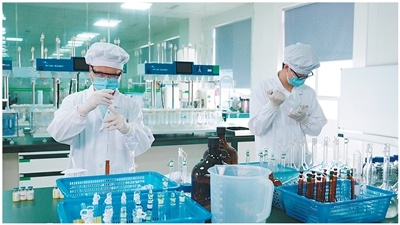
本期主讲人:习近平经济思想研究中心副主任 李玉举 视频报道请看人民日报客户端、"人民网+"客户端,英文报道请看环球时报英文版客户端 海南先声药业实验室,工作人员在做实验。 人民网记者 皇甫万里摄 云南昆明斗南花卉市场一角。 受访者供图 闽粤联网工程福建云霄换流站。 资料图片 建设全国统一大市场,是以习近平同志为核心的党中央作出的重大决策。这不仅是构建新发展格局的基 础支撑和内在要求,也是关乎国家发展全局和长远的战略之举。 当今世界,市场是最稀缺的资源。作为全球第二大消费市场,中国拥有14亿多人口、超1.9亿户经营主 体,这样超大规模且极具增长潜力的市场,是我国发展的巨大优势和应对变局的坚实依托,对资源集 聚、创新激励、产业升级、经济增长发挥着有力支撑作用。如何用好市场资源和优势?纵深推进全国统 一大市场建设,至关重要。 近年来,我们加强战略谋划和顶层设计,出台关于加快建设全国统一大市场的意见,围绕完善法律规范 或操作指引,制定系列配套措施,推动全国统一大市场建设取得积极成效——市场基础制度不断完善, 市场设施互联互通显著增强,商品服务和资源要素流动更加顺畅,统一大市场的规模效应和集聚效应不 断彰显。但是我们也 ...

【年终策划】2025企业回眸·市场·破浪
Xin Lang Cai Jing· 2025-12-29 19:18
Group 1 - The central economic work meeting emphasizes the importance of stabilizing employment, enterprises, markets, and expectations while promoting effective qualitative improvements and reasonable quantitative growth in the economy [2] - The focus for the upcoming year includes maintaining domestic demand as the primary driver and building a strong domestic market [2] - China’s foreign trade continues to show resilience despite the ongoing tariff wars initiated by the United States, highlighting strong global demand for Chinese products [3] Group 2 - China is set to lead the formulation of 275 international standards by 2025, with 38 standards already published in the fourth quarter across various sectors including 5G and aerospace [4] - The country is actively proposing new standards in cutting-edge fields such as quantum technology and AI, with 60 new proposals submitted [4] - Increasing numbers of Chinese companies are expanding overseas by establishing R&D centers and production bases, which enhances their brand internationalization and injects vitality into global markets [5] Group 3 - Various industries are addressing "involution" through policies aimed at shifting competition from price-based to technology and service-based, thereby restoring a healthy industrial ecosystem [6] - The introduction of social security solutions for delivery riders by major platforms like JD and Meituan marks a significant step in improving labor rights and welfare for this workforce [7] - The issuance of 1.3 trillion yuan in long-term special bonds, with specific allocations for consumer upgrades, is expected to significantly boost consumption [8] Group 4 - The year 2025 is designated as a key year for credit repair system development, with new regulations aimed at helping more businesses recover from credit issues [9] - The central economic work meeting's focus on stability provides a strong foundation for market confidence, while the push for a unified national market aims to eliminate local protectionism [11] - The ongoing tariff wars have not deterred China's foreign trade growth, showcasing the economy's robust resilience [11] Group 5 - The transition of Chinese enterprises towards establishing overseas operations reflects a deeper integration into local markets, moving beyond mere product exports [12] - The introduction of anti-involution policies is leading industries like automotive and solar to focus on innovation and value creation, as evidenced by the rebound in the solar supply chain and industrial profits [12] - The comprehensive upgrade of China's standard system is crucial for high-quality development, with the country transitioning from a follower to a leader in international standards [12]
明年财税改革重点明晰 剑指“税收洼地”与地方财力缺口
Zheng Quan Shi Bao· 2025-12-29 19:01
Core Viewpoint - The reform of the fiscal and tax system, focusing on standardizing tax incentives and building a local tax system, is expected to be fully implemented in the first year of the 14th Five-Year Plan, addressing the dual demands of promoting high-quality development and constructing a unified national market [1]. Group 1: Tax Incentives and Local Tax System - The central economic work conference has set a goal to standardize tax incentives and fiscal subsidy policies by 2026, while also addressing local fiscal difficulties [1][2]. - Experts believe that the series of reforms will form a "break and establish" combination, where standardizing tax incentives can eliminate "tax revenue gaps" and foster a fair market environment, while constructing a local tax system can fill the financial gap left by the standardization of incentives [1][2]. - The National Taxation Administration has initiated special governance on illegal tax-related issues in investment promotion, particularly targeting local governments' practices of creating "policy gaps" and attracting "shell companies" [3]. Group 2: Challenges and Recommendations - The complexity of clarifying numerous tax incentives and fiscal subsidy policies is acknowledged, with experts suggesting a priority on cleaning up regional policy gaps and disguised tax refunds by local governments [4]. - Recommendations include creating a public list of existing incentives, establishing red lines for new incentives, and implementing a dynamic evaluation and exit mechanism [4][5]. - The reform is expected to lead to structural changes in fiscal revenue, with regions relying on "tax revenue gaps" facing income reductions and increased fiscal pressure [4][5]. Group 3: Long-term Implications - In the long term, the reform will reshape the fiscal revenue structure and the behavior of local governments, shifting from reliance on unstable regional incentives to sustainable revenue through a legalized tax system [5][6]. - Local governments are expected to focus on optimizing the business and consumption environment, enhancing industrial ecosystems, and improving public service quality [5][6]. - The 14th Five-Year Plan will also aim to standardize tax policies related to operating income, capital income, and property income, maintaining a reasonable macro tax burden level [6][7].

促进居民就业增收、增强地方自主财力!2026年财政发力重点
2 1 Shi Ji Jing Ji Bao Dao· 2025-12-29 11:35
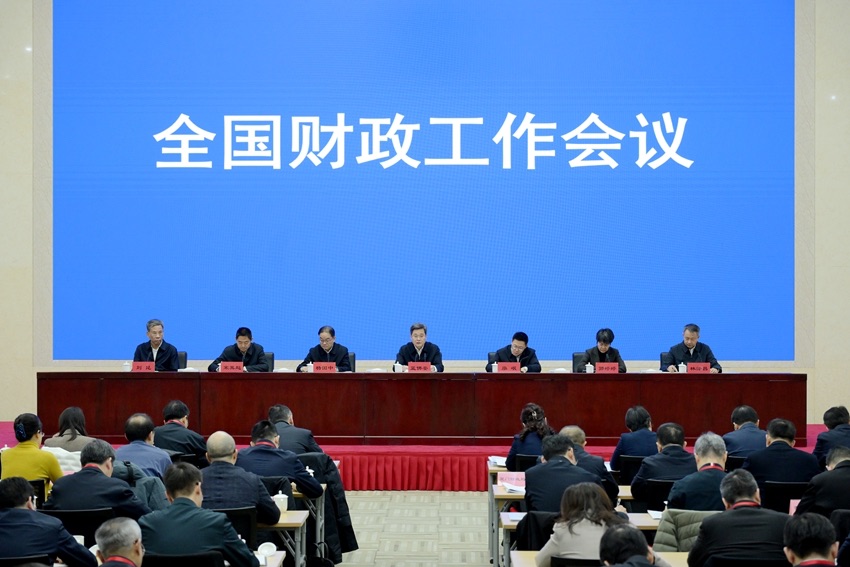
21世纪经济报道记者 周潇枭 北京报道 12月27日至28日,全国财政工作会议在北京召开,对2025年财政工作进行总结, 并布置了2026年重点任务。财政部部长蓝佛安作工作报告。 蓝佛安表示,2026年财政将大力提振消费,深入实施提振消费专项行动,继续安排资金支持消费品以旧换新,调整优化 补贴范围和标准。将促进居民就业增收,统筹就业补助资金、失业保险基金等各类资金,引导支持企业稳岗扩岗、重点 群体就业创业等;积极发挥税收、社会保障、转移支付等调节作用,多渠道增加居民收入。 会议指出,2026年继续实施更加积极的财政政策,扩大财政支出盘子,优化政府债券工具组合,增强地方自主可用财 力,持续优化支出结构,加强财政金融协同。2026年财政工作要抓好六方面重点任务,包括支持建设强大国内市场、支 持科技创新和产业创新深度融合、推进城乡融合和区域联动、切实加强民生保障、推动经济社会发展全面绿色转型、支 持扩大高水平对外开放等。 优化政府债券工具组合 会议指出,继续实施更加积极的财政政策。一是扩大财政支出盘子,确保必要支出力度。二是优化政府债券工具组合, 更好发挥债券效益。三是提高转移支付资金效能,增强地方自主可用财力。四 ...
中央经济工作会议精神解读:以“投资于人”和“苦练内功”稳预期、强动能
Capital Securities· 2025-12-29 10:51
Group 1: Economic Policy Adjustments - The 2025 Central Economic Work Conference has shifted its focus from "nine tasks" in 2024 to "eight tasks," emphasizing the importance of domestic demand as the primary driver of economic growth[9] - The task of expanding domestic demand has been elevated to the top priority, with a focus on "building a strong domestic market" and implementing specific actions to boost consumption and income[10] - The urgency of risk prevention has decreased, with the task of "preventing and resolving key area risks" moving from fifth to eighth place, indicating progress in areas like debt replacement and real estate[9] Group 2: Investment and Consumption Strategies - The conference emphasizes the integration of investment in both physical assets and human capital, with a focus on enhancing income for all urban and rural residents through specific plans[10] - Service consumption is highlighted as a key area for expanding domestic demand, with the service sector showing higher multiplier effects and lower risks compared to traditional goods consumption[25] - The government aims to stabilize the real estate market by encouraging the purchase of existing homes for affordable housing, which is expected to alleviate liquidity pressures on real estate companies[38] Group 3: Financial and Monetary Policies - The fiscal policy will maintain necessary levels of fiscal deficit, total debt, and expenditure, focusing on optimizing the expenditure structure for greater policy effectiveness[15] - Monetary policy will continue to be moderately accommodative, with an emphasis on promoting stable economic growth and reasonable price recovery, while ensuring liquidity remains ample[21] - The total social financing (TSF) increased by 33.4 trillion yuan in the first eleven months of the year, reflecting a 13.6% year-on-year increase, indicating strong financial support for the real economy[27] Group 4: Long-term Economic Outlook and Risks - The macroeconomic outlook remains positive, with structural reforms expected to deepen, focusing on quality improvement and effective growth[60] - Risks include potential delays in policy implementation and effectiveness, external economic pressures, and market and credit risks that could impact domestic asset prices[61]
11月份国民经济延续稳中有进发展态势 - 国家统计局
Guo Jia Tong Ji Ju· 2025-12-29 09:36
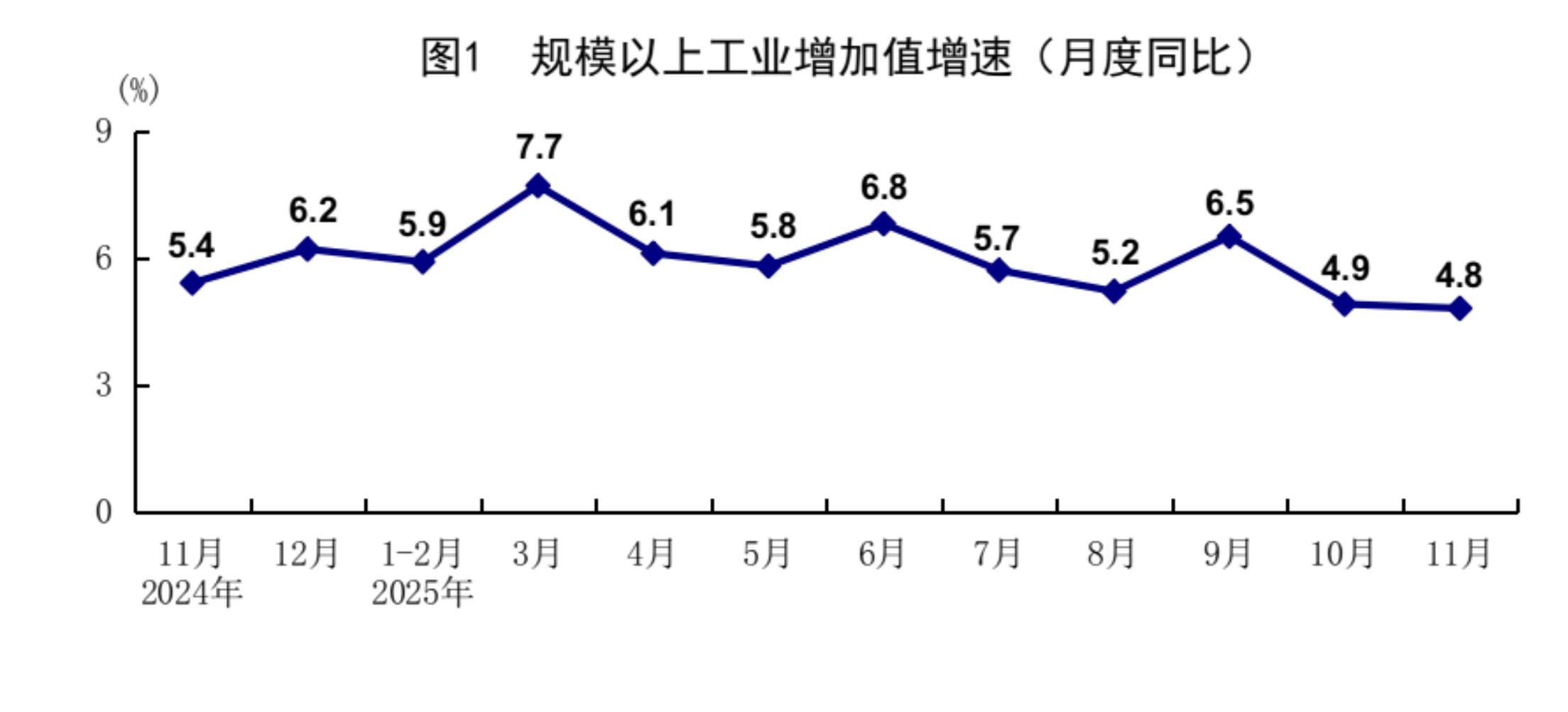
(2025年12月15日) 国家统计局 11月份,在以习近平同志为核心的党中央坚强领导下,各地区各部门认真贯彻落实党中央、国务院决策 部署,坚持稳中求进工作总基调,深入实施更加积极有为的宏观政策,纵深推进全国统一大市场建设, 着力推动高质量发展,生产供给基本平稳,就业形势总体稳定,市场价格继续改善,新质生产力稳步发 展,经济运行延续总体平稳、稳中有进发展态势。 一、全年粮食实现丰收,稳定在1.4万亿斤以上 全年全国粮食产量14298亿斤,比上年增加167.5亿斤,增长1.2%,稳定在1.4万亿斤以上。其中,秋粮 产量10732亿斤,比上年增加163.6亿斤,增长1.5%。全国谷物产量13204亿斤,比上年增加158.4亿斤, 增长1.2%。粮食播种面积增加、单产提高。全国粮食播种面积17.91亿亩,比上年增加134.8万亩,增长 0.1%;粮食单产399.1公斤/亩,每亩产量比上年增加4.4公斤,增长1.1%。 二、工业生产稳定增长,装备制造业和高技术制造业增长较快 11月份,全国规模以上工业增加值同比增长4.8%,环比增长0.44%。分三大门类看,采矿业增加值同比 增长6.3%,制造业增长4.6%,电力、热 ...
全面贯彻省委十二届十一次全会和省委经济工作会议精神推动“十五五”发展改革工作开好局起好步
Zhong Guo Fa Zhan Wang· 2025-12-29 08:36
Core Viewpoint - The meeting emphasized the importance of implementing the "14th Five-Year Plan" and preparing for the "15th Five-Year Plan," focusing on stabilizing the economy and promoting transformation and development in Shanxi Province [2][3]. Group 1: Economic Analysis and Policy Research - The provincial development and reform system has effectively responded to complex challenges, stabilizing the economy and achieving key targets set in the "14th Five-Year Plan" [2]. - A comprehensive analysis of economic performance has been conducted, leading to the formulation of policies aimed at promoting growth and transformation [2]. Group 2: Planning and Investment Management - The meeting highlighted the need for high-quality preparation of the "15th Five-Year Plan" and its associated special plans, ensuring alignment with central government directives [3]. - Efforts to enhance investment management and project construction were discussed, including promoting private investment and securing central funding [2][3]. Group 3: Reform and Innovation - The meeting called for deepening reforms in key areas such as public utility pricing and project approval, while also promoting the development of emerging industries like hydrogen energy and semiconductors [2][3]. - The importance of integrating into the national market and enhancing the role of economic reforms was emphasized [3]. Group 4: Coordinated Development and Social Welfare - Strategies for promoting coordinated urban and rural development were outlined, focusing on new urbanization and rural revitalization [3]. - The meeting stressed the need to improve public resource allocation mechanisms to adapt to demographic changes and enhance social security [3]. Group 5: Political Leadership and Governance - The necessity of maintaining the Party's comprehensive leadership and enhancing political awareness among the development and reform system was underscored [4]. - Continuous efforts to uphold strict party governance and improve the capabilities of the development and reform workforce were highlighted [4].
光伏项目“烂尾”,企业被地方政府追讨1.4亿元,制造“政策洼地”也是在制造麻烦
Mei Ri Jing Ji Xin Wen· 2025-12-29 06:40
Core Viewpoint - The collaboration between Yijing Photovoltaic and the government of Quanjiao County has faced significant challenges, leading to a potential termination of the investment agreement and a demand for repayment of 140 million yuan due to unmet project milestones and unclear responsibilities [1][2]. Group 1: Project Overview - In September 2022, Yijing Photovoltaic signed an agreement with Quanjiao County to invest over 10 billion yuan in a three-phase project, including a 10 GW high-efficiency N-type TOPCon solar cell production line with an estimated investment of about 5 billion yuan for the first phase [1]. - The first phase began construction in November 2022 and started production in July 2023, but is expected to cease operations by October 2024, while the second and third phases have not yet commenced [1]. Group 2: Government and Company Issues - The Quanjiao County government made significant efforts to support the project, including forming a dedicated task force, but the initial enthusiasm has not translated into successful project execution [1]. - The agreement lacked specificity regarding investment progress and capacity realization, making it difficult to determine responsibilities and enforce obligations later on [1][2]. Group 3: Financial and Operational Challenges - The registered capital for the project was set at 1.5 billion yuan, with the company and government contributing 800 million yuan and 700 million yuan respectively, but only 300 million yuan was actually paid in [2]. - Yijing Photovoltaic underestimated the cyclical risks of the solar industry and proceeded with the investment without validating its TOPCon technology, leading to significant cash flow pressures due to a reliance on financing for a 2 billion yuan shortfall [2]. Group 4: Regulatory and Competitive Concerns - The agreement included provisions that restricted Yijing Photovoltaic's operational flexibility, such as prohibiting changes to the project company's registration and requiring government approval for various operational decisions [3]. - The practices of creating low-cost environments for attracting investment and signing exclusive agreements raise concerns about unfair competition and hinder the free flow of resources, conflicting with national market integration goals [3].

项目停产企业被追讨1.4亿元款项 制造“政策洼地”也是在制造麻烦
Mei Ri Jing Ji Xin Wen· 2025-12-29 06:16
笔者留意到,为推动上述投资落地,全椒县可谓倾尽全力,曾将亿晶光电奉为座上宾。2022年的公告显 示,全椒县成立了由县委、县政府主要负责同志牵头的项目工作专班,全力推进项目建设。但这场曾被 寄予厚望的"双向奔赴",仅三年便走向分道扬镳。问题出在哪里? 事后复盘,地方政府做大蛋糕的冲动盖过了理性的考量。一是可行性研判流于表面,盲目追求百亿投资 规模,未充分评估光伏行业周期性风险与企业履约能力;二是协议过于笼统,该协议本身就只是总框架 协议,对双方出资进度、产能落地等缺乏明确考核,后续在项目开展过程中,相关方还要就项目分阶段 另行签署补充协议和相关协议。越是不完整充分的协议,后续厘定责任的难度就越大,约束的效力就越 弱。 事实上,协议约定的项目公司注册资本是15亿元,企业和政府各出8亿元和7亿元,但最终实缴资本只有 3亿元,其中企业实缴1.6亿元,地方政府方面实缴1.4亿元。既是听证,那最终结果就有不确定性,地方 政府的诉求未必就能得到全部满足,因为责任并不清晰。 每经热评|项目停产企业被追讨1.4亿元款项 制造"政策洼地"也是在制造麻烦 每经评论员 杜恒峰 2022年9月,上市光伏企业亿晶光电与安徽省全椒县人民政 ...
财政政策如何继续“更加积极”
Ren Min Ri Bao· 2025-12-29 05:23
Core Viewpoint - The Chinese government plans to implement a more proactive fiscal policy in 2026, focusing on expanding fiscal expenditure, optimizing spending structure, and enhancing policy precision to support economic growth and ensure a strong start to the "14th Five-Year Plan" [1] Group 1: Domestic Demand and Consumption - The domestic market has significant potential, and fiscal policy will play an active role in expanding domestic demand and facilitating economic circulation [2] - In 2026, there will be a strong emphasis on boosting consumption through special actions, including funding support for consumer goods replacement programs and optimizing personal consumption loan interest subsidies [2] - Fiscal investments will target both infrastructure and human capital to alleviate concerns and unleash consumer potential, with a focus on long-term special government bonds to support major projects [2] Group 2: Technological and Industrial Innovation - The government aims to strengthen the integration of technological and industrial innovation, increasing fiscal investment in technology and enhancing the management of technology funding [3] - There will be a focus on supporting enterprises in technological innovation and promoting the transformation and application of technological achievements [3] - The implementation of high-quality development actions for key manufacturing industry chains will be prioritized to build a modern industrial system [3] Group 3: Social Welfare and Regional Development - Strengthening basic social welfare and increasing residents' income through various fiscal measures will be a priority in 2026 [4] - There will be increased fiscal investment in education and healthcare to improve service levels and social security systems [4] - The government will promote urban-rural integration and regional coordination, supporting rural revitalization and new urbanization initiatives while ensuring public services are accessible [4]