
消费升级

Search documents
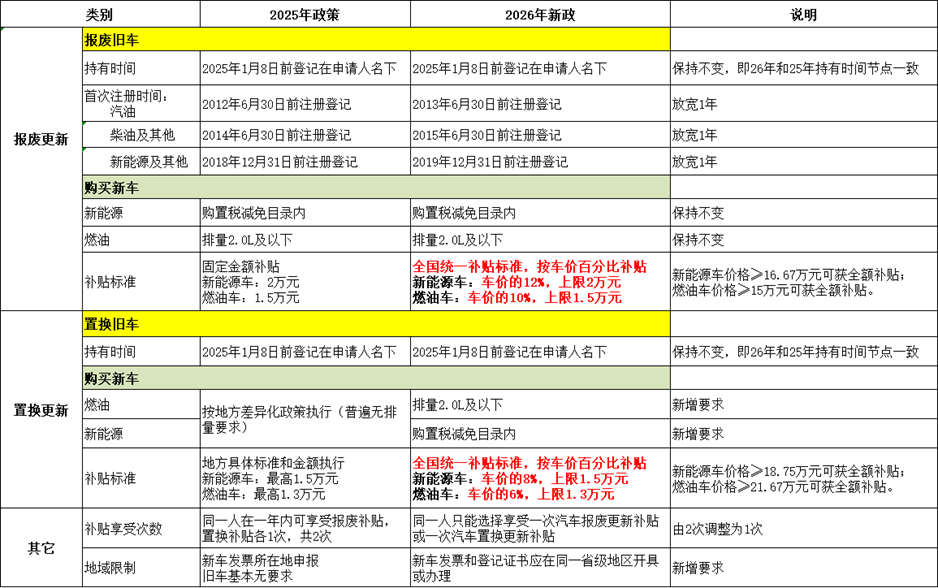
价值竞争取代“价格战”,2026年中国汽车消费向高端化转型
Xin Hua Cai Jing· 2026-01-20 05:00
Core Insights - The adjustment of the new energy vehicle purchase tax policy in 2026 marks a shift in competition within the Chinese automotive market from price competition to value competition [1][4] - The new policy encourages consumers to opt for higher-end models to receive full subsidies, indicating a trend towards market premiumization [1][2] Group 1: Policy Changes - The 2026 policy modifies the subsidy structure for scrapping and replacing vehicles, changing from fixed amounts to a percentage of the vehicle price, with new energy vehicle scrapping subsidies adjusted from 30,000 yuan to 12% of the vehicle price (capped at 20,000 yuan) [2] - The replacement subsidy is also changed to a percentage basis, with new energy vehicles receiving 5% of the vehicle price (capped at 15,000 yuan), requiring higher-priced vehicles to qualify for full subsidies [2] Group 2: Market Trends - The average retail price of domestic passenger cars has increased from 151,000 yuan in 2019 to 184,000 yuan in 2024, indicating a resilient consumer structure [1] - Over 30% of consumers are setting their next vehicle budget at over 300,000 yuan, reflecting a growing sensitivity to "value" rather than "low price" [1][3] Group 3: Consumer Behavior - Data shows that the market share of vehicles priced between 200,000 and 300,000 yuan increased from 18% in 2024 to 19% in December 2025, with the 300,000 to 400,000 yuan segment also showing stable growth [3] - More than 63% of consumers are budgeting for their next vehicle at over 300,000 yuan, indicating a shift in focus from brand prestige to genuine value [3] Group 4: Industry Response - Traditional luxury brands like Mercedes-Benz and Audi are now including features such as heated seats and OTA upgrades as standard to enhance practical value [4] - The industry is experiencing a shift where product strength is becoming the core of competition, moving away from price wars, with a focus on providing solid technology and superior configurations in mainstream price ranges [4]
崔东树:国补退坡叠加消费升级 2026中国汽车消费进入高端化周期
智通财经网· 2026-01-20 03:27
Core Viewpoint - The Chinese automotive market is shifting from a "price war" to a "value competition" as policies encourage technological upgrades and quality consumption, particularly with the implementation of new subsidy policies in 2026 [1][3][12] Policy Changes - The new policies for 2026 will include a shift from universal subsidies to percentage-based subsidies based on vehicle prices, with a maximum of 20,000 yuan for new energy vehicles priced above 166,700 yuan and 15,000 yuan for fuel vehicles priced at or above 150,000 yuan [2] - The holding time for scrapped vehicles remains unchanged, while the first registration date for vehicles eligible for scrapping has been relaxed by one year [2] - The number of vehicles eligible for subsidies is expected to decrease, indicating a move away from price-based competition [2] Market Trends - The market is showing a trend of "volume decline and price increase," with the average retail price of passenger cars rising from 151,000 yuan in 2019 to 183,000 yuan in 2023, and expected to stabilize around 184,000 yuan in 2024 [4] - Over 63% of consumers are setting their budget for the next vehicle at 300,000 yuan or more, indicating a shift towards higher-value purchases [4] Consumer Behavior - Consumers are increasingly focused on tangible luxury experiences rather than brand prestige, leading to a decline in demand for low-priced "pseudo-luxury" models [5][10] - The emphasis is shifting towards practical features such as comfort, driving assistance, and overall quality, with brands like GAC Toyota responding to these demands by enhancing their product offerings [6][11] Competitive Landscape - Traditional luxury brands are adjusting their strategies to focus on user needs rather than just selling brand prestige, with features like heated and ventilated seats becoming standard [10] - New energy vehicle brands are also learning from traditional automakers, focusing on core functionalities and improving user experience [11] - The automotive industry is entering a new competitive cycle centered on long-term user value, with companies that understand user needs and provide solid experiences likely to succeed [3][12]

乘联分会崔东树:国补退坡叠加消费升级,2026中国汽车消费进入高端化周期
2 1 Shi Ji Jing Ji Bao Dao· 2026-01-20 02:02
Core Viewpoint - The article highlights a significant shift in the Chinese automotive market, driven by changes in government policies regarding new energy vehicle (NEV) purchase tax incentives and trade-in programs, leading to a transition from price competition to value competition by 2026 [1] Policy Changes - The adjustment of NEV purchase tax incentives will officially take effect in 2026, marking a pivotal change in the automotive market [1] - Policies are shifting from "universal subsidies" to "encouraging technological upgrades and quality consumption," which will influence consumer behavior towards upgrading their purchases to maximize subsidies [1] Market Competition Dynamics - The core characteristics of the automotive market in 2026 will include a decrease in the effectiveness of "price wars" and the emergence of "value wars" as the main competitive strategy [1] - Competition among car manufacturers will transition from "who is cheaper" to "who can provide more robust technology, superior configurations, and sustained user experiences within the mainstream price range" [1] Long-term Implications - This profound transformation expected to begin in early 2026 indicates that the industry will enter a new competitive cycle focused on long-term user value [1]
济南文旅发展集团:与城市同频共振,助城市释放活力
Qi Lu Wan Bao· 2026-01-20 01:44
Core Viewpoint - The Jinan Cultural Tourism Development Group aims to enhance the city's cultural and tourism integration by introducing high-quality performances and events, thereby stimulating economic growth and improving the overall visitor experience [1][2][3]. Group 1: Performance and Events - In 2025, the Jinan Cultural Tourism Development Group plans to host 62 performances, including 28 concerts featuring renowned artists such as Dao Lang and Jay Chou, establishing Jinan as a preferred city for tours in Northern China [2][3]. - The group will also organize 2 international events and 27 national sports events, with a 262.5% increase in national-level events compared to the previous year [2]. - The Jinan International Tennis Open is expected to attract over 100,000 spectators, significantly boosting local consumption in related sectors [3]. Group 2: Economic Impact - Concerts are projected to generate approximately 50 billion yuan in total consumption, with a 1:7 ratio of ticket sales to surrounding spending [3]. - The influx of visitors during major events has led to a 58.3% increase in retail, accommodation, and dining revenues in the vicinity of the Jinan Olympic Sports Center [3]. Group 3: Cultural Experience Enhancement - The Jinan Cultural Tourism Development Group is focusing on deepening cultural experiences through innovative projects, such as the "Baotu Night Painting" that highlights the city's rich history [5][6]. - The group has successfully hosted 21 large-scale cultural events and nearly 600 smaller performances, enhancing the cultural landscape and visitor engagement [5][6]. Group 4: Integration of Services - The group is promoting the integration of cultural tourism with various industries, enhancing the overall visitor experience through collaborations with local businesses and hotels [7][8]. - Initiatives like the "Ticket + Activity" model have been introduced to encourage visitors to explore local attractions while attending events, resulting in increased foot traffic and sales [8]. Group 5: Quality of Service - The Jinan Cultural Tourism Development Group is committed to improving service quality, ensuring a welcoming environment for visitors through various initiatives, including enhanced customer service during peak times [11][12]. - The group has implemented a comprehensive service system focused on visitor satisfaction, which has been positively received and shared on social media [12]. Group 6: Future Development Goals - The group is aligned with the city's "Project Enhancement Year" initiative, focusing on high-quality development through major project investments, including the construction of a comprehensive leisure resort [10]. - Plans include upgrading existing attractions and creating new experiences to further enhance the city's appeal as a tourist destination [10].
人民财评:52%的贡献率,我国消费市场交出亮眼答卷
Ren Min Wang· 2026-01-20 00:56
Group 1 - The core viewpoint of the articles highlights the significant role of consumption as the main engine of economic growth in China, with a retail sales total exceeding 50 trillion yuan in 2025, reflecting a year-on-year growth of 3.7% [1] - Final consumption expenditure contributed 52% to economic growth in 2025, an increase of 5 percentage points from the previous year, indicating a robust support for economic expansion [1] - The per capita consumption expenditure reached 29,476 yuan, with a real growth of 4.4% after adjusting for price factors, showcasing the steady improvement in residents' consumption capacity [1] Group 2 - New types of consumption are on the rise, with a clear trend of upgrading consumption structure, shifting from a "goods-dominated" model to a balanced focus on both goods and services [2] - Service retail sales grew by 5.5% year-on-year, outpacing goods retail sales by 1.7 percentage points, with a continuous increase in its share of overall retail sales [2] - Specific sectors such as tourism, cultural and recreational services, and the silver economy are experiencing significant growth, reflecting strong consumer demand for cultural and spiritual consumption [2] Group 3 - The implementation of policies promoting the replacement of old goods and the push for digital and green consumption have effectively stimulated the durable goods market, with goods retail sales increasing by 3.8% year-on-year [2] - The sales volume of new energy vehicles has ranked first globally for 11 consecutive years, indicating a strong trend towards green consumption [2] - The integration of online and offline shopping, along with a focus on green and intelligent consumption models, is providing lasting momentum for economic growth [2] Group 4 - The vast scale of the consumption market serves as a strong foundation for addressing risks and challenges, ensuring that consumption continues to play a pivotal role in supporting high-quality economic development in China [3]
去年江苏社零总额达四点六万亿元 首次领跑全国消费市场
Xin Hua Ri Bao· 2026-01-20 00:12
Group 1 - The core viewpoint of the articles highlights Jiangsu's retail sales reaching 4.6 trillion yuan in 2025, marking a 3.3% year-on-year growth, positioning it as the top province in China for retail sales [1] - Jiangsu's "Su New Consumption" initiative will host over 6,800 promotional activities throughout the year, aimed at stimulating consumer enthusiasm across urban and rural areas [1] - The province's policies, such as the trade-in program, have significantly boosted sales by over 230 billion yuan, benefiting more than 18.1 million people [1] Group 2 - In 2026, Jiangsu plans to enhance the "Su New Consumption" brand by organizing over 3,000 unique promotional events and integrating it with local sports events to spread consumer vitality [2] - The province has designated this year as the "Service Consumption Breakthrough Year," focusing on six key areas including transportation and inbound consumption, while also targeting potential sectors like performances and experiential services [2] - Jiangsu aims to upgrade its commercial infrastructure by enhancing pedestrian street (business circle) formats and promoting the "one-quarter-hour" convenient living circles in cities like Nanjing and Suzhou [2]
国泰海通证券:下一阶段政策重心将聚焦扩大内需
Ge Long Hui· 2026-01-19 23:30
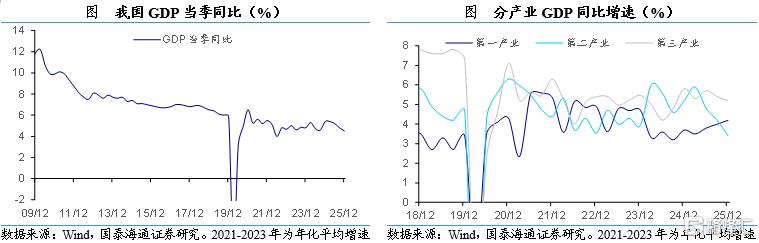
Economic Overview - In 2025, China's GDP reached 1401879 billion yuan, achieving a year-on-year growth of 5.0%, with a quarterly slowdown primarily due to base effects [3][2] - The quarterly growth rates were 5.4% in Q1, 5.2% in Q2, 4.8% in Q3, and 4.5% in Q4, with Q4 being the lowest due to the impact of previous growth policies [3][2] - The economic structure continues to show signs of differentiation, with strong industrial production but persistent mismatches between capacity and demand [2][5] Production Insights - Industrial production showed a recovery in December 2025, with a year-on-year growth of 5.2%, reversing previous months' slowdown [9] - The annual growth of industrial value added was 5.9%, significantly higher than the overall GDP growth, indicating its role as a core driver for economic targets [9] - High-tech manufacturing and green transformation are driving forces, with high-tech industries growing by 11.0% in December [12] Consumption Trends - Retail sales of consumer goods grew by 3.7% in 2025, but Q4 saw a decline in growth momentum, with December's retail sales increasing by only 0.9% [16][20] - Rural consumption outperformed urban areas, with rural retail sales growing by 4.1% compared to 3.6% in urban areas [16][20] - Online retail sales increased by 8.6%, with food-related online sales growing by 14.5%, reflecting a shift towards convenience and immediate consumption [17] Investment Dynamics - Fixed asset investment decreased by 3.8% in 2025, with December showing a significant decline of 15.1% year-on-year [27] - Manufacturing investment is constrained by weak demand and profitability pressures, while infrastructure investment faces funding constraints and project shortages [28] - The real estate sector showed marginal recovery, with a narrowing of declines in sales area and sales value, but overall conditions remain weak [29]

透视2025中国经济年报
Shang Hai Zheng Quan Bao· 2026-01-19 18:45
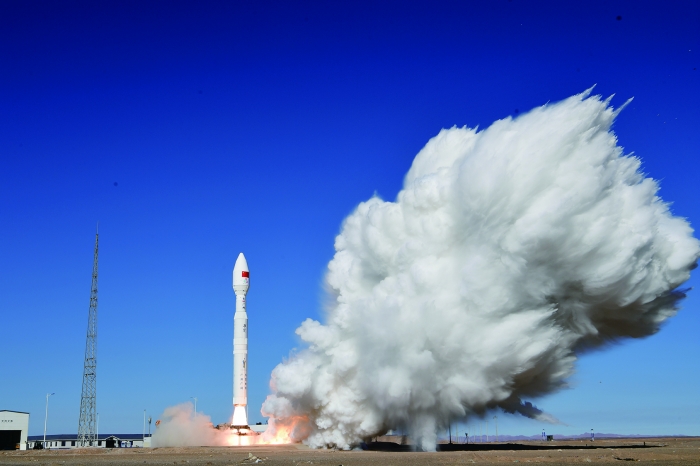
力箭一号遥九运载火箭在东风商业航天创新试验区发射升空 在2025全球工业互联网大会上拍摄的人形机器人 江苏省江都高新技术产业开发区某汽车生产企业的生产线 位于重庆市的长安汽车数智工厂总装车间拍摄的即将下线的新能源汽车 消费者在广西梧州市万秀区一家电动自行车销售门店选购电动自行车 新华社图 (上接1版) 动能向优:消费"主引擎"活力展现 从经济发展的"三驾马车"看,2025年,最终消费支出、资本形成总额、货物和服务净出口对经济增长的 贡献率分别是52.0%、15.3%和32.7%。消费仍然是经济增长的"主引擎"。 2025年,我国消费市场规模再上新台阶,全年社会消费品零售总额501202亿元,突破50万亿元大关,比 上年增长3.7%,增速较2024年进一步加快0.2个百分点。其中,服务零售保持较快增长,比重提升,展 现出较强的活力。 "随着人民生活水平提升,居民消费正从商品消费为主向商品和服务消费并重转变,服务消费潜力不断 释放。"康义表示。数据显示,2025年服务零售额比上年增长5.5%,快于商品零售额1.7个百分点,服务 零售额占整体零售额的比重也在上升。 消费品以旧换新政策加力扩围,促进相关产品销售加快增 ...
全年全省居民人均可支配收入36120元
Xin Lang Cai Jing· 2026-01-19 18:12
Core Insights - The 2025 annual survey data for Sichuan's livelihood indicates steady economic progress, with a focus on agricultural production and consumer spending growth [1][2] Group 1: Economic Performance - Sichuan's total grain production reached 732.5 billion jin, marking a 0.8% increase from the previous year, ranking 7th in growth among 13 major grain-producing provinces and maintaining 9th in total production [1] - The total output of pork, beef, mutton, and poultry in Sichuan was 666.9 million tons, an increase of 21.1 million tons or 3.3% year-on-year, ensuring a solid foundation for livestock product supply [1] Group 2: Income and Consumption - The per capita disposable income for residents in Sichuan was 36,120 yuan, reflecting a real growth of 5.5% compared to the previous year [1] - Per capita consumption expenditure was 26,073 yuan, with a real growth of 5.1% year-on-year, indicating a steady increase in residents' income and consumption willingness [1] - The per capita service consumption expenditure was 11,766 yuan, up 6.0% from the previous year, accounting for 45.1% of total consumption expenditure, which is an increase of 0.5 percentage points, suggesting an upgrade in consumer quality [2]
中国经济“稳进新韧” 2025年GDP首超140万亿
Xin Lang Cai Jing· 2026-01-19 17:09
Economic Growth - China's GDP for 2025 reached 140,187.9 billion yuan, growing by 5% year-on-year, meeting the initial target set at the beginning of the year [1] - The GDP growth rate for the fourth quarter was 4.5%, a slowdown of 0.3 percentage points compared to the third quarter [1] - The contribution rates of final consumption expenditure, capital formation, and net exports to economic growth were 52.0%, 15.3%, and 32.7% respectively for 2025 [4] Industrial Production - The industrial added value in 2025 was 41.7 trillion yuan, increasing by 5.8% year-on-year, contributing 35% to economic growth [6] - Manufacturing output reached 34.7 trillion yuan, with a growth rate of 6.1%, maintaining a stable share of around 25% of GDP [6] - In December 2025, the industrial added value grew by 5.2% year-on-year, with manufacturing increasing by 5.7% [7] Consumer Spending - Retail sales of consumer goods exceeded 50 trillion yuan in 2025, growing by 3.7% year-on-year, with service retail sales increasing by 5.5% [4][5] - The proportion of service consumption in per capita consumption expenditure was 46.1% in 2025, indicating a shift towards service-oriented consumption [5] - The government plans to implement measures to boost consumption, including a special action plan and urban-rural income increase initiatives [5] Economic Outlook - The economic growth rate for 2026 is expected to remain stable, supported by strong fundamentals despite external challenges [1][3] - Analysts predict that while export growth may slow, domestic demand will be bolstered by policy measures aimed at stimulating consumption and investment [8] - The focus for 2026 will be on achieving qualitative improvements and reasonable quantitative growth in the industrial economy [8]