
价格战

Search documents
狂降18万,宝马“神车”伤透3亿中产
创业邦· 2025-06-12 12:55
Core Viewpoint - The article discusses the significant price cuts in the luxury car market, particularly focusing on BMW, and highlights the challenges faced by traditional luxury brands in the context of increasing competition from domestic manufacturers and changing consumer preferences [3][5][11]. Group 1: BMW's Price Cuts - BMW's recent price cuts have led to a dramatic drop in the value of its vehicles, with the BMW 5 Series seeing a price reduction of up to 180,000 yuan, causing distress among loyal customers [5][10]. - The company's first-quarter financial results for 2025 showed a total revenue of 33.758 billion euros, a year-on-year decline of 7.8%, and a net profit of 2.173 billion euros, down 26.4% [6]. - In China, BMW's sales dropped by 17.2% year-on-year, making it the only major market where sales declined, highlighting the brand's struggles in its largest single market [6][13]. Group 2: Market Dynamics - The luxury car market is experiencing intense price wars, with brands like BYD and Geely launching discounts on over 70 models within a week, forcing traditional luxury brands to respond [19]. - The decline in sales for luxury brands like BMW, Mercedes-Benz, and Audi in China is attributed to the rise of domestic competitors and changing consumer preferences, with sales figures showing significant year-on-year drops [13][14]. - The shift towards electric vehicles and smart technology is challenging traditional luxury brands, which must adapt to remain competitive in a rapidly evolving market [14][22]. Group 3: Future Outlook - Despite current challenges, traditional luxury brands like BMW, Audi, and Mercedes-Benz are investing heavily in partnerships and technology, with a total investment exceeding 35 billion euros in 2024, indicating a long-term strategy to regain market competitiveness [23]. - The article suggests that the ongoing price cuts and market dynamics may lead to a significant transformation in the luxury car segment, with the potential for new entrants to disrupt established players [19][23].


狂降18万,宝马“神车”伤透3亿中产
创业邦· 2025-06-12 12:50
Core Viewpoint - The article discusses the current challenges faced by luxury car brands, particularly BMW, in the context of price cuts and market competition in China, highlighting the impact on brand perception and sales performance [4][10][21]. Group 1: Price Cuts and Market Dynamics - BMW has experienced significant price cuts, with the BMW 5 Series dropping by 180,000 yuan, leading to concerns among loyal customers about the brand's value [5][16]. - The luxury car market is witnessing a price war, with brands like BYD and Geely offering discounts, forcing traditional luxury brands to respond similarly to maintain market share [30][31]. - In the first quarter of 2025, BMW's revenue fell by 7.8% to 33.758 billion euros, and net profit decreased by 26.4% to 2.173 billion euros, indicating financial pressure despite some sales growth in other markets [10][21]. Group 2: Sales Performance in China - China is BMW's largest single market, but it saw a 17.2% decline in sales in the first quarter of 2025, which is the most significant drop among major markets [10][11]. - The overall sales performance of luxury brands in China has been declining, with Mercedes-Benz, BMW, and Audi experiencing year-on-year sales drops of 7%, 13.4%, and 10.9% respectively [21][22]. Group 3: Brand Perception and Future Strategies - The aggressive pricing strategy may damage the luxury image of brands like BMW, as low prices can lead consumers to perceive the brand as less prestigious [19][20]. - Traditional luxury brands are now seeking partnerships with Chinese companies, such as BMW and Audi collaborating with Huawei, to enhance their competitiveness in the evolving market [38][40]. - Despite current challenges, the long-term financial strength of luxury brands remains significant, with BBA (BMW, Benz, Audi) planning to invest over 35 billion euros globally in 2024 [40][41].

零跑汽车朱江明:最不喜欢、不希望打“价格战”
news flash· 2025-06-12 11:31
金十数据6月12日讯,6月11日,零跑汽车董事长、CEO朱江明在接受媒体采访时谈到了对于近期汽车行 业"价格战"的看法:"实际上所谓的价格战也没有大家想象得那么激烈,其实很多是把原来的各种优惠 叠加在了一起。这是一种宣传模式,更能吸引眼球。我们是不能随意降价的。我们是最不喜欢、不希望 打'价格战'。"零跑汽车副总裁李腾飞补充道:"首先我们不参与(价格战),我们不会主动挑起(价格 战);第二个就是我们的成本控制能力可以应对这样的市场变化,在保证产品竞争力的同时也能保证持 续的盈利能力。" (每经网) 零跑汽车朱江明:最不喜欢、不希望打"价格战" ...

比亚迪打响“账期战”
Hua Er Jie Jian Wen· 2025-06-12 10:23
Core Viewpoint - The Chinese automotive industry is experiencing a significant shift with the emergence of a "payment term war," where major automakers are committing to shorten supplier payment terms to within 60 days, contrasting the ongoing price wars that have pressured profit margins [2][5][11]. Group 1: Industry Dynamics - The announcement from GAC Group on June 10 initiated a collective response from over 10 automakers, including BYD, to align payment terms with government regulations [2][5]. - The automotive sector has been under pressure from price wars, leading to declining profit margins, with the industry's average profit rate dropping to 4.3% in 2024 and further to 3.9% in Q1 2025 [14][15]. - The new payment term policy is seen as a potential turning point for the industry, aiming to stabilize supply chains and promote healthier financial practices among automakers [7][16]. Group 2: Supplier Relations - The average accounts payable turnover days for domestic automakers previously exceeded 170 days, with some exceeding 240 days, highlighting a significant disparity compared to international standards [8][12]. - The commitment to a 60-day payment term is viewed as a positive development for suppliers, potentially alleviating financial pressures and allowing for reinvestment in technology and capacity [9][10]. - However, suppliers express skepticism regarding the actual implementation of these terms, fearing that automakers may find ways to extend payment periods through various tactics [9][10]. Group 3: Financial Implications for Automakers - The shift to a 60-day payment term poses a substantial operational and financial challenge for automakers, requiring them to manage cash flow more effectively and potentially leading to a reevaluation of their financial health [11][12]. - Many automakers, including BYD and Geely, have high levels of accounts payable, with BYD's accounts payable reaching 244 billion yuan, representing 31% of its revenue [12]. - The new payment terms will test the financial resilience of automakers, particularly those with high operational debts and negative cash flows, potentially leading to a market shakeout [13][17]. Group 4: Market Outlook - The automotive industry is transitioning from a growth phase to a more mature stage, with the "payment term war" acting as a catalyst for structural adjustments and increased market concentration [16]. - The competitive landscape is expected to shift from price-based competition to value creation, as automakers will need to focus on internal growth and efficiency improvements [16][17]. - If the 60-day payment commitment is effectively enforced, it could lead to a healthier and more sustainable automotive ecosystem, benefiting both suppliers and manufacturers in the long run [17].

5月跳楼价活埋价中,十大佬六小龙地位渐稳
汽车商业评论· 2025-06-12 09:51
Core Viewpoint - The article discusses the recent developments in the Chinese automotive market, highlighting the government's intervention to curb price wars and promote high-quality industry growth through measures such as regulating supplier payment terms [4][6]. Group 1: Market Trends and Performance - From January to April, the profit margin of the Chinese automotive industry was 4.1%, increasing to 4.4% in April, compared to 3.9% in Q1 and 3.5% in March, indicating a positive trend [7]. - In May, the retail sales of passenger vehicles reached 1.932 million units, a year-on-year increase of 13.3% and a month-on-month increase of 10.1%, surpassing the level of 1.81 million units in May 2018 [9]. - Cumulative retail sales from January to May reached 8.811 million units, up 9.1% year-on-year [9]. Group 2: Sales Data and Company Performance - In the first five months, sales of Chinese brand passenger vehicles reached 7.562 million units, a year-on-year increase of 26.3%, accounting for 68.8% of total passenger vehicle sales [10]. - The top ten automotive groups sold 10.708 million units in total, representing 84% of the overall market, with varying performance among individual companies [11]. - In May, BYD sold 382,476 units, a year-on-year increase of 15.35%, while SAIC Group sold 366,000 units, up 10.25% [13][14]. Group 3: Competitive Landscape - The article notes that some companies engaged in aggressive pricing strategies, leading to a temporary surge in market activity, but this has raised concerns about sustainability [12]. - The sales performance of major companies varied, with some like Geely and Changan showing significant growth, while others like GAC and Dongfeng experienced declines [14][39]. - New energy vehicle sales are highlighted as a key growth area, with companies like Changan and BYD reporting substantial increases in this segment [29][37].




中国汽车工业协会2025年6月信息发布会在北京召开
中汽协会数据· 2025-06-12 07:02
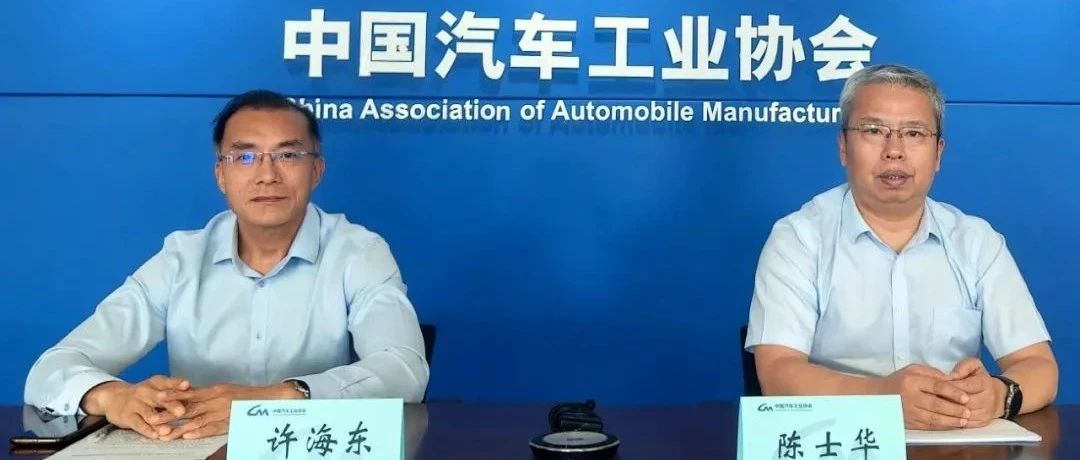
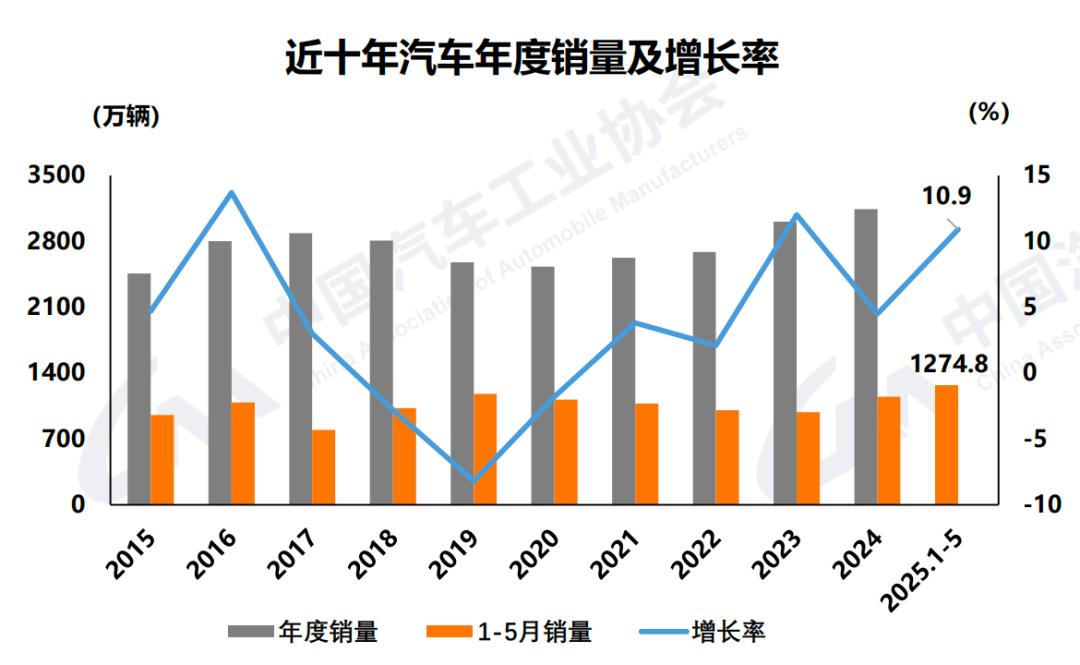
2025年6月11日下午,中国汽车工业协会信息发布会在北京召开。本次发布会内容主要包括2025年5 月汽车产销数据及经济运行情况。中国汽车工业协会副秘书长陈士华出席本次发布会。中国汽车工业协 会专务副秘书长许海东主持发布会。 中国汽车工业协会副秘书长陈士华发布2025年5月汽车产销数据及经济运行情况。 当前,我国汽车行业整体运行呈现稳中向好态势,市场活力不断释放,但行业盈利水平持续下 滑,"增量不增利"的局面未有改善。以无序"价格战"为主要表现形式的"内卷式"竞争,是行业效益 下降的重要因素。协会于5月31日对外发布了《关于维护公平竞争秩序,促进行业健康发展的倡 议》,旨在引导所有企业遵从公平竞争原则,坚持创新驱动,持续提升产品品质和服务质量,共同 维护行业健康发展,《倡议》得到了行业内外的广泛认可和支持。 来源: 中汽协会行业信息部 我国经济总体保持平稳增长,经济运行向新向好,内需空间不断扩展,外需市场更加多元。今 年以来,"两新"政策加力扩围,持续显效,叠加车企新品投放、多地车展促销等利好因素,助力汽 车市场消费活力加速释放。 5月,汽车市场延续良好态势,产销较去年同期实现10%以上的增长,且内需和出口均 ...
多家车企宣布对供应商账期不超60天 能否缓解“价格战”带来的蝴蝶效应?
Yang Guang Wang· 2025-06-12 06:32
Core Viewpoint - Major domestic automotive companies have collectively committed to shorten payment terms to suppliers to within 60 days, responding to the pressures of excessive competition and long payment cycles that have strained suppliers' cash flow [1][5]. Group 1: Industry Context - The automotive industry is currently facing intense competition, leading to a "price war" that has resulted in suppliers experiencing payment terms averaging over 170 days, with some exceeding 240 days, significantly longer than the international standard of 50 to 70 days [1][2]. - The recent revision of the "Regulations on Payment for Small and Medium Enterprises" mandates that large enterprises must pay small and medium enterprises within 60 days of delivery, aiming to stabilize the supply chain and curb unhealthy competition [1][5]. Group 2: Impact on Suppliers - The prolonged payment terms have created significant cash flow issues for suppliers, with many unable to meet their operational costs, leading to potential insolvency and asset depreciation [4][5]. - The automotive industry's reliance on a large number of suppliers, particularly for non-core products, has allowed car manufacturers to exert pressure on suppliers, resulting in extended payment periods [2][3]. Group 3: Future Directions - The commitment to a 60-day payment term is seen as a crucial step towards normalizing the supply chain and enhancing operational efficiency, which could lead to quicker responses to market demands [5][6]. - For sustainable growth, automotive companies are encouraged to focus on technological innovation and high-quality service, rather than solely on cost-cutting measures [6][7].
中国车市自主品牌占比近七成
3 6 Ke· 2025-06-12 04:29
Group 1 - The core viewpoint of the article highlights the continuous increase in market share of new energy vehicles and domestic brands in the passenger car sector, but the issue of revenue growth without profit is hindering sustainable development in the industry [1][4] - In May 2025, passenger car sales reached 2.352 million units, a year-on-year increase of 13.3%, with domestic brands accounting for 1.622 million units, nearly 70% of total sales [1][4] - The growth in sales is attributed to the effectiveness of the vehicle replacement policy, accelerated domestic consumption, and the launch of new products by companies [1][4] Group 2 - The new energy vehicle market continues to grow significantly, with sales reaching 1.307 million units, a year-on-year increase of 36.9%, and exports of new energy passenger vehicles at 204,000 units, a year-on-year increase of 110% [4] - Despite the growth in sales, the overall profitability of the automotive industry is under pressure, with a profit margin of only 4.1%, below the average profit margin of 5.6% for downstream industrial enterprises [4][6] - The industry is facing challenges from "price wars," which are a major factor in declining profitability, leading to a vicious cycle affecting normal operations and supply chain security [4][6] Group 3 - As of May 2025, the passenger car inventory warning index was at 52.7%, indicating high inventory levels, with a peak of 3.5 million vehicles in late April [4][5] - The industry is expected to maintain support for sales in June and the second half of the year due to various factors, including the resumption of workdays, recovery in manufacturing PMI, and continued local consumption incentives [5][6] - However, challenges remain, including high production levels and some inventory pressure that still needs to be released, as well as rising car loan rates and tightening financial support potentially affecting consumer demand [6][7]
「火山」烧向百度云
3 6 Ke· 2025-06-12 03:03
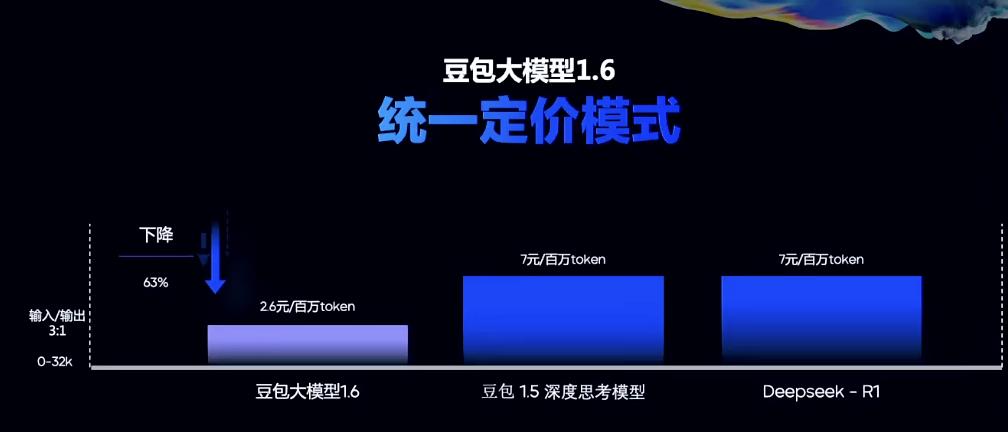
Core Insights - The core viewpoint of the article revolves around the aggressive growth and revenue targets set by Huoshan Engine, aiming for over 250 billion yuan in revenue by 2025, which represents a 100% growth from 2024's revenue of over 120 billion yuan [1][2]. Group 1: Company Growth and Market Position - Huoshan Engine has rapidly transformed from a minor player to a significant disruptor in the cloud market, largely due to its large model, Doubao, which has achieved a market share of 46.4% in 2024 [3][4]. - The competition between Huoshan Engine and Baidu Cloud is intensifying, with both companies engaging in a price war, impacting overall industry revenue [1][2]. - Huoshan Engine's president, Tan Dai, emphasizes the importance of focusing on innovation and core competencies rather than external factors [1][2]. Group 2: Pricing Strategy and Market Impact - The newly released Doubao 1.6 has a significantly lower cost structure, with input and output prices at 0.8 yuan and 8 yuan per million tokens, respectively, making it one-third the cost of its predecessors [4][9]. - The aggressive pricing strategy has led to a substantial increase in customer usage, with average daily token usage per customer growing by 20 to 30 times within three months of Doubao's launch [9][11]. - Despite the low pricing, Huoshan Engine faces challenges in converting its large user base into substantial revenue, as its 2024 revenue of 125 billion yuan still lags behind competitors like Alibaba Cloud and Baidu Cloud [12][16]. Group 3: Future Challenges and Technological Development - Moving forward, Huoshan Engine must focus on enhancing model performance and service quality to maintain competitiveness, as low pricing alone may not suffice [18][19]. - The company has established a research organization, "Seed Edge," to advance its AI technology and improve model capabilities, which is crucial for expanding its market presence [19][22]. - Recent developments show that Doubao 1.6 has surpassed competitors in certain performance metrics, indicating a shift towards prioritizing technological advancements alongside pricing strategies [19][22].
建信期货焦炭焦煤日评-20250612
Jian Xin Qi Huo· 2025-06-12 02:53
1. Report Industry Investment Rating No information about the industry investment rating is provided in the report. 2. Core View of the Report The previous weak market of coke and coking coal futures has changed, and positive factors in the fundamentals and news are accumulating. However, considering the continued impact of the previous high supply and only an expected decline in supply in the future, whether it will lead to a turnaround in the market needs further verification by the market. It is expected that the spot prices of coke and coking coal and the coke futures price may continue to fluctuate weakly, but the coking coal futures price has a demand to repair a large discount and may turn to rebound or fluctuate strongly. There is a possibility of narrowing the price difference between coking coal futures and spot, and the decline in the coke - coking coal ratio also helps investors try the arbitrage opportunity of going long on coking coal and short on coke [11]. 3. Summary by Relevant Catalogs 3.1行情回顾与后市展望 (Market Review and Future Outlook) - **Market Performance on June 11th**: The main contract 2509 of coke futures oscillated and rebounded for two consecutive days, while the main contract 2509 of coking coal futures first rose and then fell, hitting a recent rebound high during the session. The J2509 contract closed at 1356 yuan/ton, up 1.31%, with a trading volume of 25,401 lots and a position of 52,791 lots, a decrease of 1,227 lots. The JM2509 contract closed at 783.5 yuan/ton, up 1.10%, with a trading volume of 1,152,104 lots and a position of 557,029 lots, a decrease of 10,814 lots [5]. - **Spot Market and Technical Indicators**: On June 11th, the quasi - first - class metallurgical coke flat - price index in Rizhao Port, Qingdao Port, and Tianjin Port was 1,270 yuan/ton, with no change. The low - sulfur main coking coal prices in some areas decreased. The daily KDJ indicators of the 2509 contracts of coke and coking coal continued to rise, and the daily MACD red columns of the 2509 contracts of coke and coking coal enlarged for three consecutive days [8]. - **Future Outlook for Coke**: In the past six weeks, the coke output of independent coking plants has slightly declined after hovering near the highest level since early August last year. Since late March, the coke output of steel mills has been gradually declining. In the past seven weeks, the port coke inventory has significantly decreased, but the de - stocking speed of steel mill inventory is slow, and the coking plant inventory has increased for four consecutive weeks, adding new downward pressure on coke prices. The profit per ton of coke has been in a loss for three consecutive weeks, but the loss narrowed in the week of June 6th [10]. - **Future Outlook for Coking Coal**: From January to April, the year - on - year growth of imports turned negative, but the absolute value of imports remained at a high level, and the overall loose pattern was difficult to reverse. The raw coal inventory of coal washing plants reached a new high since February 2021, and the clean coal inventory reached a new high since October 2020. In the past seven weeks, the inventory of independent coking plants has significantly decreased, the port inventory has slightly rebounded from the lowest level since early August last year, and the steel mill inventory has significantly decreased for two consecutive weeks. The raw coal and clean coal output of coking coal mines has significantly decreased for three consecutive weeks. From late May to early June, the customs clearance volume of Mongolian coal decreased significantly compared with the previous two weeks [10]. - **News and Comprehensive Analysis**: Some coal mines in Shanxi stopped or reduced production due to the completion of monthly production tasks; the new "Mineral Resources Law" will be officially implemented on July 1st, which will help the coal price stop falling and rebound; after the third round of price cuts for coke procurement by some steel mills in Tangshan, some steel mills in Xingtai, Tianjin, Shijiazhuang and other places lowered the procurement price of wet - quenched coke by 70 yuan/ton and the procurement price of dry - quenched coke by 75 yuan/ton, starting from 0:00 on June 6th [11]. 3.2行业要闻 (Industry News) - **National Development and Reform Commission's Investment in Livelihood Projects**: Since the 14th Five - Year Plan, the National Development and Reform Commission has increased investment in livelihood construction. It is expected that the central budget - funded investment in social undertakings this year will be more than 30% higher than that at the end of the 13th Five - Year Plan [12]. - **Local Government Debt and Investment**: Many provinces have adjusted their budgets after receiving the annual debt - issuing quota from the Ministry of Finance, increasing their debt - issuing quota and expenditure to support stable growth and structural adjustment [13]. - **Automobile Industry Price War**: In May, some automobile enterprises significantly lowered the prices of new energy vehicles again, causing panic in the industry. The China Association of Automobile Manufacturers issued an initiative to maintain fair competition, and the relevant person in charge of the Ministry of Industry and Information Technology supported the initiative and will strengthen the rectification of "involution - style" competition in the automobile industry [13]. - **Railway Transport Breakthrough**: On June 6th, the Xinshuo Railway became the third railway line in China with a 20,000 - ton heavy - haul transport capacity, significantly improving the overall level of heavy - haul railway transport in China [13]. - **Company Information**: Benxi Steel Plate Co., Ltd. introduced its raw material supply and product sales. Its iron ore raw materials are about 60% purchased from the group, and coking coal and coke are mainly purchased from long - term contracts with domestic mines. Huayang Co., Ltd. stated that its coal mines are operating normally, and the increasing power demand during the "peak summer" in the third quarter will support the coal market [13]. - **Regional Energy Plan**: The "Implementation Plan for Carbon Peak in the Energy Field of Yangquan City" proposes that by 2025, the total coal production capacity of the city will be stable at about 57.4 million tons per year, and the proportion of advanced coal mine production capacity will be stable at about 95% [14]. - **International Trade and Market Information**: Mexico launched an anti - dumping sunset review investigation on cold - rolled steel sheets originating from China; in April 2025, Australia's coal export value decreased both month - on - month and year - on - year; in May 2025, the coal export volume of Australia's North Queensland ports decreased year - on - year but increased month - on - month; in May 2025, Russia's coal exports to China by railway increased both month - on - month and year - on - year [14]. - **Energy Outlook in the United States**: The U.S. Energy Information Administration (EIA) expects that the electricity consumption in the United States will reach a record high in 2025 and 2026; the U.S. coal production in 2025 is expected to be 512 million short tons (464 million tons), and the coal consumption is expected to be 428 million short tons, a year - on - year increase of 4.16%; low oil prices and a decrease in the number of drilling rigs will affect the U.S. crude oil production trend in 2026 [14]. - **OPEC's View on Oil Demand**: OPEC Secretary - General Al - Ghais said that oil demand will maintain strong growth in the next 25 years, and global energy demand will increase by 24% from now to 2050, with oil demand exceeding 120 million barrels per day [15]. - **Russian Policy**: Russian President Putin extended the counter - measures against the price cap on Russian oil and oil products until December 31, 2025 [15]. - **World Bank's Economic Forecast**: The World Bank lowered the global economic growth forecast for 2025 from 2.7% to 2.3%, warning that the 2020s may be the weakest decade since the Apollo moon landing [15]. - **Indian Coal Production**: In May 2025, India's coal production increased both month - on - month and year - on - year, with a year - on - year increase of 2.83% and a month - on - month increase of 5.34% [15]. 3.3数据概览 (Data Overview) The report presents multiple data charts, including the spot price index of metallurgical coke in major markets, the summary price of main coking coal in major markets, the production and capacity utilization rate of coking plants and steel mills, the national daily average pig iron production, the coke inventory of ports/steel mills/coking plants, the profit per ton of independent coking plants, the production and operating rate of coal washing plants, the raw coal and clean coal inventory of coal washing plants, the coking coal inventory of ports/coking plants/steel mills, and the basis of Rizhao Port's quasi - first - class coke and September contracts and Linfen's low - sulfur main coking coal and September contracts. All data sources are from Mysteel and the Research and Development Department of CCB Futures [19][20][22][29][30][33].