内卷式竞争

Search documents
从“以价换市”到“智驾混战” 汽车行业“内卷”何时休?
Zhong Guo Jing Ying Bao· 2025-06-06 06:25
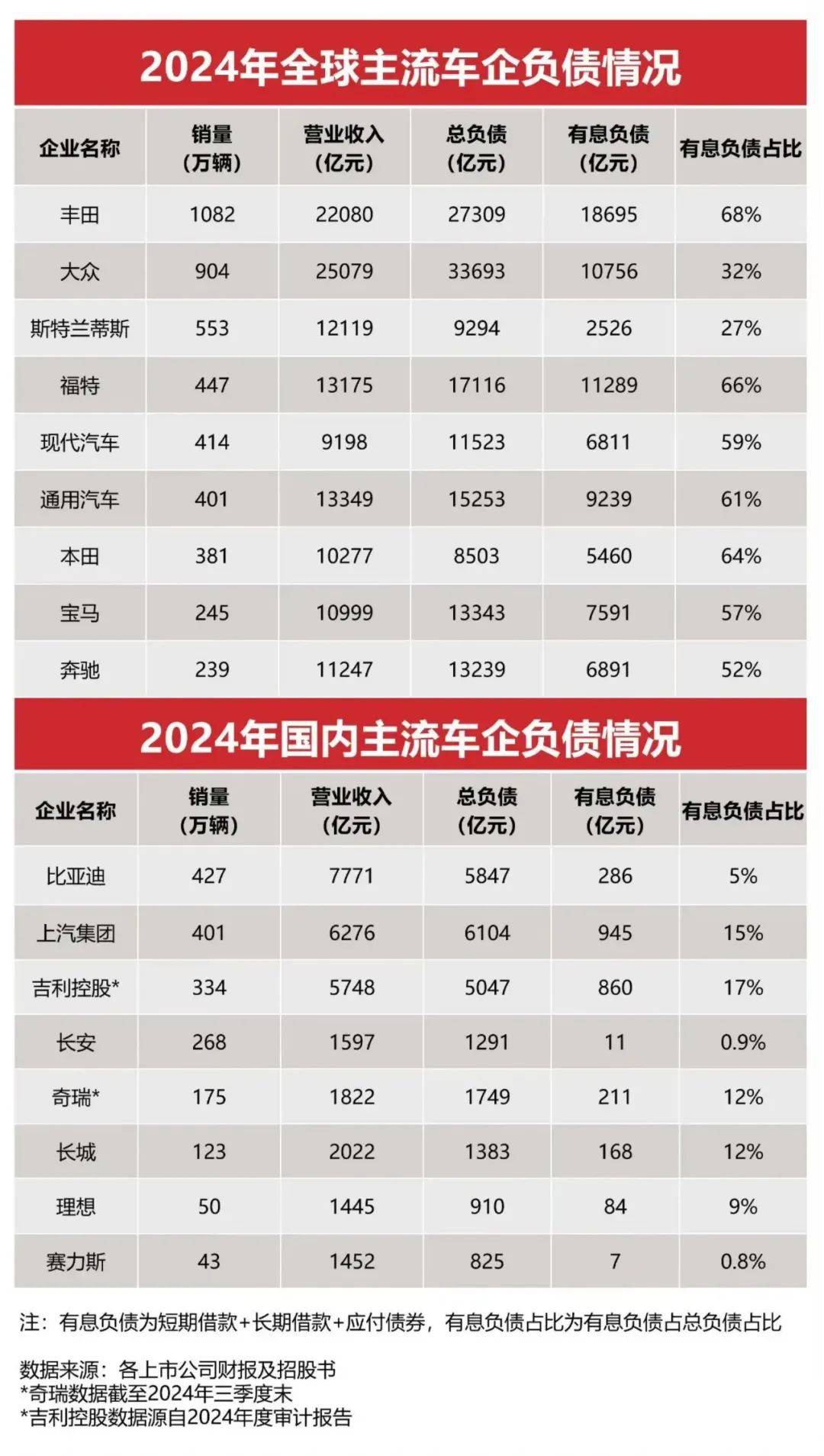
中经记者陈燕南北京报道 日前,中国汽车工业协会发布《关于维护公平竞争秩序,促进行业健康发展的倡议》提出,企业在依法 降价处理商品以外,不以低于成本的价格倾销商品,不进行诱导消费者的虚假宣传,扰乱市场秩序,损 害行业和消费者根本利益。工信部有关负责人表示,赞同并支持中汽协提出的倡议。企业之间无序价格 战,是内卷式竞争的典型表现。价格战没有赢家,更没有未来。 近年来,汽车价格战屡见不鲜,众多企业进入内卷式竞争。这样的情况会持续多久?行业该如何应对? 对此,惠誉评级亚太区评级董事总经理王颖在接受《中国经营报》记者专访时对热点问题作出了解答。 "中国汽车行业的内卷式竞争和相关乱象预计还会持续一段时间。当宏观经济前景更明朗,居民收入增 长加快,消费者消费情绪提升时,内卷式竞争也可能会有所缓和。但具体的持续时间难以准确预测,可 能需要数年时间,直到市场供需达到新的平衡、行业利润率恢复到合理水平、技术发展进入相对稳定阶 段。"王颖表示。 内卷或将持续一段时间 在王颖看来,国内汽车市场存在供给过剩、需求不足的矛盾。2024 年新车大量上市,市场供给大于需 求的趋势在短期内难以改变。在新格局形成之前,内卷式竞争可能会持续一段时 ...
多管齐下整治汽车行业“内卷式”竞争
Jing Ji Ri Bao· 2025-06-05 22:08
"无序'价格战'对售后服务保障的影响也在扩大,对整个流通体系都带来一定压力,阻碍了行业健康发 展,更侵害了消费者利益。"中国汽车流通协会乘用车市场信息联席分会秘书长崔东树表示。 中国汽车工业协会日前发布《关于维护公平竞争秩序促进行业健康发展的倡议》,明确反对车企之间的 无序"价格战"。工业和信息化部也明确表示,无序"价格战"没有赢家,更没有未来,将加大汽车行 业"内卷式"竞争整治力度。 无序"价格战"没有赢家 中汽协公布的最新数据显示,今年前4个月,我国汽车产销量分别完成1017.5万辆和1006万辆,同比分 别增长12.9%和10.8%。这是我国汽车历史上同期产销量首次双双突破1000万辆。 不过,行业增收不增利。国家统计局数据表明,今年前4个月,我国汽车行业收入32552亿元,同比增长 7%;成本28636亿元,同比增长8%;利润1326亿元,同比下降5.1%;汽车行业利润率降至4.1%。 "一段时间以来,行业盈利水平下降。以无序'价格战'为主要表现形式的'内卷式'竞争,是行业效益下降 的重要因素。"中汽协在倡议中称,产品售后服务保障、企业创新发展需要持续加大投入,而无序"价格 战"将进一步挤压企业利润空 ...
标本兼治做优外卖行业
Jing Ji Ri Bao· 2025-06-05 22:04
Core Viewpoint - The regulatory authorities are focusing on the "involution" competition phenomenon in the food delivery industry, emphasizing the need for legal and fair operations among platform companies to promote a healthy and orderly development of the platform economy [1] Group 1: Current Competition Landscape - The food delivery industry is experiencing price wars and low-price dumping as companies compete for market share, leading to market distortion and unfair competition [1] - The phenomenon of "involution" competition is identified as a market failure within the platform economy, necessitating a comprehensive governance approach involving government regulation, industry self-discipline, and social supervision [1] Group 2: Short-term and Long-term Solutions - Short-term measures include precise identification of unfair competition behaviors, increasing regulatory enforcement, and establishing clear compliance standards to prohibit monopolistic practices like "choose one from two" and data blocking [2] - Long-term strategies focus on creating a healthy industry ecosystem by promoting differentiated competition strategies based on each platform's core advantages, rather than uniform business tactics [2] Group 3: Market Expansion Opportunities - Despite the competitive "red ocean" market, there are still growth opportunities in lower-tier markets, full-category delivery, personalized services, and high-end delivery options [3] - The overseas markets in Southeast Asia, the Middle East, and Latin America present significant potential for food delivery platforms to expand and participate in global competition [3] Group 4: Role of Government and Social Supervision - Government regulation should encompass various approaches to guide the competitive order and provide policy support for the industry's overseas development [3] - Social supervision is encouraged through the establishment of evaluation indices for the health of the food delivery industry and corporate social responsibility, promoting a culture of responsible competition and accountability [3]

奇安信:“一块钱中标”对软件行业有破坏性杀伤力
Bei Jing Shang Bao· 2025-06-05 14:47
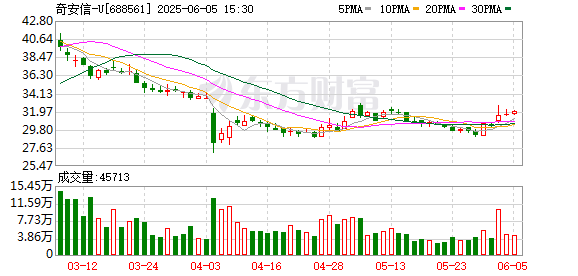
Core Viewpoint - The cybersecurity industry is experiencing severe internal competition, primarily driven by software, which is often perceived as having zero cost but requires significant investment and time for development [2][3] Industry Analysis - The software industry has a lower competitive threshold compared to other sectors, leading to a phenomenon known as "involution," where excessive competition results in resource wastage and decreased efficiency [3] - Involution in the software industry is characterized by a focus on price rather than quality, with companies attempting to gain market share through lower prices [3] - The cost of software development is often hidden, as exemplified by the significant investment required by companies like Qi Anxin, which may spend several years and hundreds of millions on software development [3][4] Market Trends - The global cybersecurity market is projected to grow from nearly $220 billion in 2023 to over $240 billion in 2024, indicating a robust demand for cybersecurity solutions [4] - The complexity of cyber threats is increasing, necessitating a shift in the cybersecurity industry to address these challenges effectively [4] Challenges in Cybersecurity - The cybersecurity industry faces three main obstacles: data silos, insufficient resource investment, and compatibility issues between old and new systems [4] - The current approach to security is often reactive and inadequate, leading to a patchwork of solutions that lack effectiveness [4] Recommendations for Improvement - To combat internal competition and enhance cybersecurity, the industry should focus on three pathways: 1. Eliminate silos and improve data aggregation 2. Innovate security operations through feedback and intelligence 3. Establish a comprehensive security framework to ensure a robust ecosystem [5]


行业反内卷下的改革典范:岚图以创新引领新质生产力
Zheng Quan Shi Bao Wang· 2025-06-05 11:43
Industry Overview - The National Development and Reform Commission of China has announced a crackdown on the increasingly severe "involution" competition in the automotive industry, characterized by chaotic price wars among multiple car manufacturers [1] - This unhealthy competition has severely compressed profit margins for car companies and disrupted the fair competition order in the market [1][2] Current Challenges - Data from the China Automobile Industry Association indicates that some car manufacturers are resorting to selling products below cost to gain market share, leading to a continuous decline in industry profitability [2] - Traditional car manufacturers that have failed to keep pace with the development of new energy vehicles are experiencing declining sales and losses, while some new entrants, despite initial success, are facing significant survival pressures in a competitive environment [2] Policy Response - The Ministry of Commerce has stated that it will actively cooperate with relevant departments to strengthen comprehensive rectification and compliance guidance to maintain a fair competitive market order and promote healthy industry development [2] Company Spotlight: Lantu Automotive - Lantu Automotive, a high-end smart new energy brand under Dongfeng, is positioned as a pioneer in exploring new paths and achieving breakthroughs in the new energy sector [2] - The company emphasizes innovation and has made significant achievements in technology, including the development of the first domestic ESSA native intelligent electric architecture with complete independent intellectual property rights [3] - Lantu has also established a centralized SOA electronic architecture for "software-defined vehicles," enabling hardware and software decoupling and enhancing user experience [3] Organizational Innovation - Lantu has adopted a flat organizational structure to improve operational efficiency and has established a matrix organization to facilitate cross-departmental collaboration [4] - The company is transitioning from a traditional B2B model to a B2C model, creating a direct ecosystem that enhances user service quality [4] Market Performance - From January to May, Lantu Automotive achieved cumulative sales of 46,075 units, representing an 85% year-on-year increase, with May sales reaching 10,022 units, up 122% year-on-year [6] - The company plans to launch several key products in the second half of the year, including the highly anticipated Lantu FREE+, which has undergone four years of development and significant feature optimization [6] Strategic Advantages - Lantu is well-positioned in the current market environment, benefiting from supportive government policies for the new energy vehicle industry and strong technological partnerships, particularly with Huawei [7] - The company has a high localization rate of 41% in its supply chain, enhancing resilience and security while promoting the advancement of the entire industry [4][7]
自主、合资品牌“激战” 车企花式冲刺“6·18”
Zhong Guo Jing Ying Bao· 2025-06-05 04:23
Core Insights - The automotive market is experiencing a promotional surge ahead of the "6.18" shopping festival, with numerous brands announcing price cuts and promotional offers [1][3] - The China Automobile Industry Association has issued a statement advocating for fair competition and opposing reckless price wars, which are seen as detrimental to the industry's health [1][5] - Companies like SAIC-GM are focusing on profitability and sustainable business practices, rejecting the notion of engaging in price wars [4][6] Group 1: Promotional Activities - Multiple automotive brands, including SAIC-GM, Geely, Chery, and others, have announced significant price reductions and promotional offers since mid-May [1] - Chery has launched limited-time discounts on over 30 models, with some vehicles being offered at substantial reductions [3] - Cadillac has introduced a "one-price" sales model for its new XT4 SUV, which has led to a significant increase in sales [2] Group 2: Industry Response to Price Wars - The China Automobile Industry Association has highlighted the negative impact of price wars on normal business operations and the supply chain [5] - The Ministry of Industry and Information Technology has expressed support for the Association's stance, emphasizing the need for innovation and quality over price competition [5] - Executives from various companies, including SAIC-GM and Dongfeng Honda, have reiterated the importance of maintaining profitability and avoiding unsustainable practices [6]
车企内卷式竞争引监管“亮剑”,专家建议严治行业违规行为
Nan Fang Du Shi Bao· 2025-06-04 14:46
Core Viewpoint - The automotive industry in China is experiencing a resurgence of price wars, driven by competitive pressures among manufacturers, particularly in the electric vehicle sector, leading to concerns about the sustainability of business practices and product quality [1][2][4]. Group 1: Sales Performance - BYD continues to lead the market with May sales of 382,500 units, a year-on-year increase of 15.3% [1] - SAIC Group follows closely with sales of 366,000 units in May, up 10.2% year-on-year [1] - Geely's sales surged to 235,200 units in May, marking a significant year-on-year growth of 46% [1] - New energy vehicle companies like Leap Motor and AITO also reported substantial growth, with Leap Motor delivering 45,100 units, a 148% increase year-on-year [1] Group 2: Price War Dynamics - BYD initiated a promotional campaign in May, offering discounts of up to 53,000 yuan on 22 models, aiming to boost sales towards its 2025 target of 5.5 million units [2] - Following BYD's lead, Geely and Chery also announced significant price cuts, with Geely's models seeing reductions to as low as 59,800 yuan and Chery offering discounts of around 40% on certain models [2] - The price war has extended to joint ventures and luxury brands, with notable price reductions from Toyota and Cadillac, indicating a broader market trend [2] Group 3: Industry Response and Concerns - The China Automotive Industry Association issued an initiative to maintain fair competition, warning against the negative impacts of chaotic price wars on profit margins and product quality [1][2] - Industry leaders, including Great Wall Motors and Xiaopeng Motors, expressed concerns about "involutionary" competition, calling for a return to innovation and quality-focused strategies [3][4] - The market is entering a phase of stock competition, with projected sales growth slowing to 4.5% in 2024, indicating a shift in market dynamics [4] Group 4: Implications of Involutionary Competition - The ongoing price wars are seen as a symptom of deeper issues, including insufficient innovation and a lack of effective management in the industry [4][5] - Continuous price reductions have led to a decline in procurement prices for components by 10%-15% annually, which may compromise quality and service reliability [5] - The automotive industry is at a critical juncture, facing challenges in maintaining operational sustainability and brand integrity due to the pressures of price competition [5][6] Group 5: Recommendations for Industry Improvement - Experts suggest that addressing "involutionary" competition requires a combination of government intervention and market regulation to ensure fair practices [6] - Recommendations include stricter penalties for violations, improved oversight of payment practices to suppliers, and the establishment of self-regulatory mechanisms within the industry [6] - Emphasis is placed on enhancing quality control across the supply chain and fostering a culture of innovation to break the cycle of price competition [6]



中汽协发倡议,众专家亮观点(七)| 吴松泉:追求高质量高水平价值竞争才是根本出路
Jing Ji Guan Cha Bao· 2025-06-04 11:14
(原标题:中汽协发倡议,众专家亮观点(七)| 吴松泉:追求高质量高水平价值竞争才是根本出路) 编者按: 5月31日,中国汽车工业协会面向全行业发布《关于维护公平竞争秩序 促进行业健康发展的倡议》。倡 议中指出,自2025年5月23日起,有车企率先发起大幅降价活动,多家企业跟进效仿,引发新一轮"价格 战"恐慌。无序"价格战"加剧恶性竞争,将进一步挤压企业利润空间,进而影响产品质量和售后服务保 障,不仅阻碍行业自身健康发展,也将危害消费者权益,并带来安全隐患。 倡议发布后,工信部相关负责人第一时间作出公开回应,赞同并支持此倡议,同时指出车企之间"价格 战",给汽车企业正常的生产经营带来较大冲击,危及行业健康、可持续发展。 央视新闻、新华社、人民日报、经济日报等主流央媒纷纷报道、转载。当日此事登上多个热搜平台,引 发广泛的关注与讨论。 中国汽车工业协会旗下官方媒体《汽车纵横》围绕这一事件,推出汽车行业知名专家访谈系列。本文为 该系列第7篇,作者为中汽中心资深首席专家、中国汽车战略与政策研究中心总工程师吴松泉。 总书记指出,"加快构建全国统一大市场,着力整治一些领域的'内卷式'竞争""坚决破除地方保护、市场 分割、" ...
专家建言汽车行业“反内卷”:加大对违规企业处罚力度,引导企业技术创新破局
Hua Xia Shi Bao· 2025-06-04 10:30
华夏时报(www.chinatimes.net.cn)记者 刘诗萌 北京报道 过去几年高层会议多次提到的整治"内卷式"竞争,在2025年二季度成为经济领域的高频关键词。 仅仅过去三个月时间,汽车行业"反内卷"再度被提到了新的高度。中汽中心党委书记、董事长安铁成指出,内卷 将导致汽车企业过度关注短期利益,忽视长期创新和研发投入。同时由于产品同质化现象日益严重,可能导致汽 车产业陷入低水平重复降价困境,盈利能力大幅减弱且难以突破现有技术或市场瓶颈。2024年汽车行业利润率仅 为4.3%,2025年Q1进一步下滑至3.9%,低于制造业平均水平。 过去几年,整治"内卷式"竞争也是我国经济工作中的一项重点任务。2024年7月,中共中央政治局会议首次提及防 止"内卷式"竞争,年底的中央经济工作会议更明确提出要综合整治"内卷式"竞争,规范地方政府和企业行为。今 年的政府工作报告,也首次写入了综合整治"内卷式"竞争。 董扬认为,未来政府或将进一步采取的行政措施,如加强对于业内企业违反法律和法规行为的处罚力度;重点检 查相关企业拖欠零部件企业的账期问题,限期落实政府关于缩短账期的要求;支持指导汽车工业协会,聘请第三 方专业组织 ...
五月的汽车圈,不平静也不体面
Hu Xiu· 2025-06-04 09:04
Core Viewpoint - The automotive industry is experiencing intense competition and disputes, particularly among major players in the electric vehicle sector, with significant discussions around financial health and market strategies [1][2][3]. Group 1: Industry Disputes and Financial Health - Wei Jianjun, chairman of Great Wall Motors, suggested that there exists an "Evergrande" situation in the automotive industry, implying financial instability among companies [4]. - Li Yunfei from BYD responded to accusations of financial mismanagement, highlighting BYD's strong financial metrics, including a total debt of over 580 billion yuan and a debt-to-asset ratio of 5% [4][9]. - The financial comparison of major global automakers shows varying levels of debt, with Toyota having a total debt of 273.09 billion yuan and a debt ratio of 68%, while BYD's total debt is 58.47 billion yuan with a debt ratio of 5% [5][6]. Group 2: Market Dynamics and Competition - The automotive market is shifting towards a buyer's market, where consumer recognition is the ultimate standard for success [20]. - The recent price cuts by BYD, with reductions ranging from 12,000 to 53,000 yuan across 22 models, indicate a price war in the industry, followed by similar actions from competitors like Geely and Chery [57][58]. - The introduction of new regulations mandating government procurement of domestic and electric vehicles is expected to significantly impact the market, with a projected market size of over 400 billion yuan for new energy government vehicles by 2024 [26][29]. Group 3: Corporate Developments - The establishment of Jiangsu High合汽车 marks a significant revival after its bankruptcy, with new investments aimed at revitalizing its operations in the electric vehicle market [31][33]. - NIO's Shanghai headquarters has been dismantled, indicating potential operational challenges and a shift in strategy as the company faces leadership and management issues [44][45]. - CATL's recent IPO in Hong Kong, raising significant capital, highlights the growing importance of battery manufacturers in the automotive supply chain, with a market response indicating strong investor interest [47][49].