制裁

Search documents
印度又开始买了
中国能源报· 2025-11-16 10:01
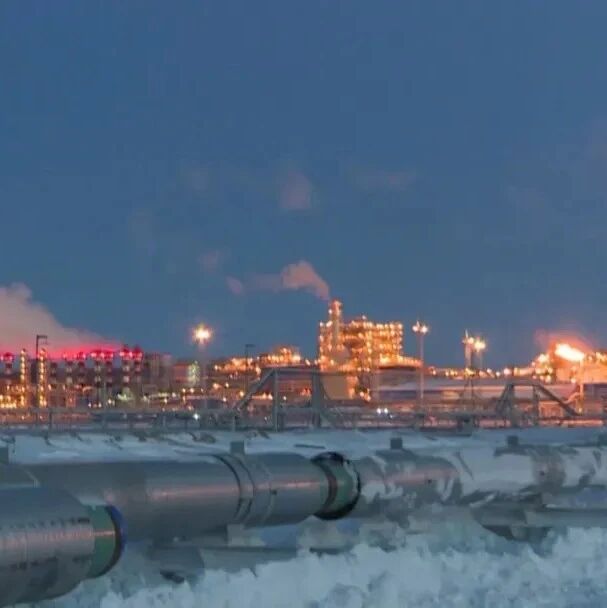
Core Viewpoint - Despite pressure from the United States, India continues to purchase Russian oil, indicating a strong commitment to its energy needs and strategic partnerships [1][2]. Group 1: Oil Purchases - Indian Oil Corporation has made payments for five batches of Russian oil scheduled for delivery in December, totaling approximately 3.5 million barrels of Russian ESPO crude [1]. - The procurement process includes a requirement that the oil must not come from entities sanctioned by the US, UK, EU, UN, or India [2]. Group 2: Strategic Positioning - The CFO of Indian Oil Corporation stated that the company has no intention of abandoning cooperation with Moscow, as long as transactions comply with sanction regulations [2]. - Indian Oil Corporation is maintaining regular procurement of Far East Russian crude while also considering low-sulfur crude offers from West Africa and the US [1].

俄媒曝光:印度又开始买了
Sou Hu Cai Jing· 2025-11-15 15:45
Core Points - Despite U.S. pressure, India continues to purchase Russian oil, with Indian Oil Corporation (IOC) making payments for five batches of oil to be delivered in December [2] - IOC has procured approximately 3.5 million barrels of Russian ESPO crude oil at prices close to Dubai quotes, scheduled for delivery at eastern Indian ports [2] - IOC's procurement documents indicate plans to buy both Russian ESPO and Sokol crude oil for early next year, while also considering low-sulfur crude offers from West Africa and the U.S. [2] - The crude oil is expected to arrive at Indian ports between late January and early February [2] - IOC's CFO Anuj Jain stated that the company intends to maintain cooperation with Moscow as long as transactions comply with sanctions regulations [2]

“太子集团”头目陈志被曝在新加坡遭“黑吃黑”:超3100万元被手下侵吞
Mei Ri Jing Ji Xin Wen· 2025-11-10 12:15
Core Viewpoint - The article discusses the legal and financial troubles surrounding Chen Zhi, founder of the "Prince Group" in Cambodia, and David Wong, who was previously in charge of a family office. Chen Zhi accused Wong of embezzling approximately 5.84 million Singapore dollars (around 31.91 million RMB) from his bank accounts, leading to multiple lawsuits and significant legal disputes between the two parties [1][2]. Group 1: Background and Initial Relationship - Chen Zhi and David Wong first met in 2017, with Chen already wealthy and seeking investment opportunities in Singapore for permanent residency [2] - In 2017, Chen Zhi purchased a luxury home for nearly 40 million Singapore dollars and subsequently established a family office named "DW Capital Holdings" with Wong's assistance [2] - Wong helped Chen Zhi expand his business, forming new companies and establishing relationships with over six major banks [2] Group 2: Legal Disputes and Financial Irregularities - In 2021, Chen Zhi decided to change the operational model of his family office, leading to a shared office arrangement with Wong's family office [3] - Chen's financial assistant discovered that Wong had not submitted critical business documents and that there were suspicious inter-company transfers, including a management fee exceeding 530,000 USD [3][5] - Following a series of events, including locked office access and the discovery of missing funds, Chen Zhi terminated Wong's position as the sole leader of the family office [5] Group 3: Legal Outcomes and Sanctions - In December 2022, the Singapore High Court ruled against Wong, ordering him and his associated companies to pay over 12 million Singapore dollars in debts [6] - Both Chen Zhi and his assistant have been sanctioned by the United States, and multiple countries have frozen assets linked to the Prince Group [7][8] - The Prince Group, which claims to be a multinational business entity, has been accused of running a telecom fraud operation, leading to significant legal actions and asset seizures in various jurisdictions [8][9] Group 4: Impact on Associated Companies - Chen Zhi is the majority shareholder of two publicly listed companies in Hong Kong, which continue to operate normally despite the surrounding controversies [10][11] - Recent resignations of executives from these companies indicate potential instability within their management structures [10] - Regulatory actions have been taken against companies associated with the Prince Group, including the suspension of licenses for investment and insurance firms linked to Chen Zhi [12][13]

What to Make of Hungary's Exemption on Russian Oil?
Youtube· 2025-11-07 23:38
Core Points - The article discusses the erratic behavior of the current administration regarding sanctions and military support for Ukraine amidst the ongoing war with Russia [2][4][10] - There is a focus on the need for continued military assistance to Ukraine, including discussions about Tomahawk missiles and other weaponry [5][7][8] - The impact of sanctions on Russia's crude exports is highlighted, indicating a slump due to tightened measures [4][9] Group 1: Sanctions and Military Support - The article emphasizes the inconsistency in the administration's approach to sanctions against Russia, suggesting favoritism towards certain leaders like Orban [2][3] - It notes that sanctions are intended to apply pressure on Russia, which has seen a decline in crude exports as a result [4][9] - The ongoing dialogue about military support for Ukraine is described as positive, with hopes for the provision of critical weaponry [6][7] Group 2: Political Context and Government Shutdown - The article touches on the political climate, mentioning the government shutdown and its implications for legislative action [11][13][14] - It highlights the frustration with the current administration's handling of healthcare issues during the shutdown, affecting ordinary citizens [16][19] - The need for a deal to ensure affordable healthcare is stressed, indicating a broader concern about the impact of political decisions on the public [18][19]

美制裁俄油企威胁保加利亚能源安全
Jing Ji Ri Bao· 2025-11-03 22:34
Core Viewpoint - The U.S. government has announced new sanctions against Russia, specifically targeting major oil companies Lukoil and Rosneft, which has significant implications for Bulgaria's energy supply and economy [1][2]. Group 1: Sanctions and Immediate Impact - The sanctions include Lukoil and its 34 subsidiaries, affecting oil and gas exploration, extraction, and development [1]. - Lukoil has initiated the process of selling its overseas assets in response to the sanctions [1]. - Bulgaria heavily relies on Lukoil, particularly the Burgas refinery, which produces 190,000 barrels of oil per day and supplies over two-thirds of the country's fuel [1]. Group 2: Economic and Employment Implications - The Burgas refinery is a critical player in Bulgaria's economy, contributing significantly to GDP and creating numerous jobs [2]. - If the refinery ceases operations, it would not only disrupt fuel supply but also severely impact the job market and local economy [2]. Group 3: Government Response and Strategies - The Bulgarian government is exploring various options, including appointing a "special manager" to oversee refinery operations and maintain supply stability [3]. - Concerns have been raised about the feasibility of this management approach due to legal and operational challenges [3]. - The Bulgarian parliament has passed amendments to the Investment Promotion Law, requiring government approval for any sale or transfer of Lukoil's assets in Bulgaria [3]. Group 4: Legal and Strategic Considerations - Experts suggest that Bulgaria could seek a delay in sanctions, citing precedents from Germany and Serbia [4]. - Although U.S. sanctions primarily affect transactions involving U.S. entities, the reliance on the U.S. dollar in global trade may complicate operations for affected companies [4]. - Transactions using non-U.S. currencies could potentially mitigate the impact of the sanctions [4].

油脂:情绪仍偏空,或继续震荡偏弱,蛋白粕:现货提价盘面跟涨,榨利修复或抑制盘面涨幅
Zhong Xin Qi Huo· 2025-10-29 02:24
1. Report Industry Investment Ratings - No specific industry - wide investment ratings are provided in the report. However, individual product outlooks are given as follows: - **Oils and Fats**: Expected to continue to fluctuate weakly, with palm oil, rapeseed oil, and soybean oil all showing a weak - fluctuating trend [1][2][6] - **Protein Meal**: Soybean meal is expected to fluctuate upwards, and the 1 - 5 inverse spread of soybean meal is temporarily held, with double - buying of options [7] - **Corn/Starch**: Expected to fluctuate, with short - term short positions held and attention paid to the stop - profit rhythm [9][10] - **Pigs**: Expected to fluctuate, with a "weak reality + strong expectation" pattern, and attention paid to inverse spread strategy opportunities [11] - **Natural Rubber**: Expected to fluctuate and find the bottom [12][13] - **Synthetic Rubber**: Expected to fluctuate at the bottom, with a possibility of hitting a new low this year [14][15] - **Cotton**: Expected to fluctuate strongly in the short term, but attention should be paid to the upper pressure [15] - **Sugar**: Expected to rebound in the short term but remain bearish in the long - term, with a recommendation to short on rebounds [16] - **Pulp**: Expected to fluctuate, with a preference for waiting and seeing [16][17] - **Offset Printing Paper**: Expected to maintain a narrow - range fluctuation, with a single - side strategy of waiting and seeing [17] - **Logs**: Expected to fluctuate weakly in the near term [19][20][21] 2. Core Views of the Report - The report analyzes the market conditions of various agricultural products, including oils and fats, protein meal, corn/starch, pigs, natural and synthetic rubber, cotton, sugar, pulp, offset printing paper, and logs. It considers factors such as macro - environment, industry supply and demand, and trade relations to provide short - term and long - term outlooks for each product, along with corresponding investment strategies [1][6][7] 3. Summary by Relevant Catalogs 3.1 Oils and Fats - **View**: The sentiment is still bearish, and it may continue to fluctuate weakly [1][6] - **Logic**: Macro - environment includes the US government shutdown, Sino - US trade negotiation consensus, expected Fed rate cut, uncertain sanctions on Russia, and expected OPEC+ production increase. From the industrial side, US soybean data is suspended, the US soybean harvest is about 80% complete with a high probability of yield reduction, Brazilian soybean planting progress is 34.4% as of October 25, domestic soybean imports are at a relatively high level, and domestic soybean oil inventory reduction is slow. Malaysian palm oil is likely to accumulate inventory in October, and Indian vegetable oil imports may decline seasonally. Domestic rapeseed oil inventory is expected to stop falling and rise [1][6] - **Outlook**: Palm oil, rapeseed oil, and soybean oil are all expected to fluctuate weakly [2][6] 3.2 Protein Meal - **View**: The spot price increases, and the futures price follows, but the repair of crushing profit may suppress the futures price increase [6][7] - **Logic**: Internationally, Sino - US trade relations dominate the market. US soybean new - crop is on the market, and Brazilian soybean old - crop exports in October are increased. Domestically, in the short term, crushing profit is gradually repaired, and the spot price is raised. In the medium term, attention should be paid to China's soybean purchases, origin weather, and downstream replenishment. In the long term, domestic soybean meal supply is expected to be sufficient in Q4 2025, with a possible small shortage in Q1 2026 [7] - **Outlook**: Soybean meal is expected to fluctuate upwards, and the 1 - 5 inverse spread of soybean meal is temporarily held, with double - buying of options [7] 3.3 Corn/Starch - **View**: The number of trucks arriving in North China has decreased, and the futures price has rebounded slightly [9] - **Logic**: The short - term rebound is due to low inventory of grain - using enterprises, slow harvest progress, and increased purchases by state - owned grain depots. However, there are still downward drivers, such as high yield in Northeast China, potential low - quality grain pressure in North China, and insufficient upward price drivers in the sales area [10] - **Outlook**: It is expected to fluctuate, with short - term short positions held and attention paid to the stop - profit rhythm [10] 3.4 Pigs - **View**: The second - fattening inventory is postponed, and the market sentiment is cautious [11] - **Logic**: In terms of supply, in the short term, the utilization rate of second - fattening pens increases, and the supply pressure in late October is relieved. In the medium term, the supply in Q4 is abundant. In the long term, sow production reduction is expected to accelerate in Q4 2025, and the supply pressure will be relieved in H2 2026. In terms of demand, it is the off - season, and the ratio of meat to pig price is falling. In terms of inventory, the utilization rate of second - fattening pens increases [11] - **Outlook**: It is expected to fluctuate, with a "weak reality + strong expectation" pattern, and attention paid to inverse spread strategy opportunities [11] 3.5 Natural Rubber - **View**: The futures market sentiment is okay, and attention should be paid to the origin situation [12] - **Logic**: It is currently a short - term oversold rebound. For RU, the negative impact of the previous reserve release is digested, and the slow registration of warehouse receipts is the focus of long - position trading. For NR, there is still an expectation of increased supply. The supply pressure is not large for now, and the demand is expected to be stable. Attention should be paid to the sustainability of the increase in trading volume [13] - **Outlook**: Due to high macro - uncertainty, it is expected to fluctuate and find the bottom [13] 3.6 Synthetic Rubber - **View**: The raw material support is weak, and the futures market has weakened significantly [14] - **Logic**: The decline in the BR futures price is mainly due to the sharp drop in the price of raw material butadiene. High production this year is a major pressure, and although downstream demand is increasing, the growth rate is lower than that of production, resulting in high social inventory. The butadiene price has been weak recently [15] - **Outlook**: The fundamental pressure is large, and the raw material is hard to improve. It is expected to fluctuate at the bottom, with a possibility of hitting a new low this year [15] 3.7 Cotton - **View**: The reduction in production and increase in cost strongly support the cotton price [15] - **Logic**: In the acquisition, the acquisition cost in Northern Xinjiang is fixed, and the acquisition price in Southern Xinjiang is rising. In the inspection, the national inspection volume is 144.07 million tons as of October 27. In terms of inventory, the commercial inventory is in the accumulation stage. Macro - factors such as Sino - US economic and trade consultations may affect the cotton price. The upper pressure is around 13,600 - 13,800 yuan/ton, and the lower support is around 13,100 - 13,300 yuan/ton [15] - **Outlook**: It is expected to fluctuate strongly in the short term, but attention should be paid to the upper pressure [15] 3.8 Sugar - **View**: The expected reduction in imports leads to the rebound of Zhengzhou sugar [16] - **Logic**: Internationally, the new sugar - making seasons in the Northern Hemisphere are coming, and major producers are expected to increase production. Brazil's sugar production has passed the peak, and the international sugar supply is relatively loose. In China, sugar imports in September decreased, and the new sugar has not entered the concentrated crushing period. The market is trading on the expectation of a further reduction in syrup and premixed powder imports [16] - **Outlook**: It is expected to rebound in the short term but remain bearish in the long - term, with a recommendation to short on rebounds [16] 3.9 Pulp - **View**: The financial trading atmosphere drives the increase in pulp futures, but the futures - spot divergence remains [16][17] - **Logic**: Fundamentally, the recent data is bearish. The demand for softwood pulp is weak, and there is export pressure from overseas to China. The hardwood pulp is in excess supply. The futures price is close to some spot prices, and it is difficult for the futures to have a premium [17] - **Outlook**: It is expected to fluctuate, with a preference for waiting and seeing [17] 3.10 Offset Printing Paper - **View**: It runs in a narrow - range fluctuation [17] - **Logic**: The supply pressure exists due to stable production of large - scale paper mills and new production capacity in South China. Dealers have shipment pressure, and downstream printing factories have few new orders. The cost support from the upstream wood pulp is weak. Although publishers in the North are starting to bid, the market expectation is pessimistic [17] - **Outlook**: A single - side strategy of waiting and seeing is recommended, and attention should be paid to new driving factors [17] 3.11 Logs - **View**: There is no bullish driver, and it fluctuates at the bottom [19][20][21] - **Logic**: Recently, the futures price has fallen and remained low. The short - term market is affected by the possible cancellation of special port fees and the weakening fundamentals, including concentrated port arrivals, decreased sales of laminated wood, and high inventory. The market sentiment is bearish [20][21] - **Outlook**: The fundamentals are weakening, and the spot price may fall. It is expected to fluctuate weakly in the near term [21]
特朗普对俄罗斯石油企业制裁,印度石油企业赶在生效截止日期前已开始取消订单!印度最大国有石油公司:将遵守所有适用的制裁
Ge Long Hui· 2025-10-28 10:39
Group 1 - The core viewpoint is that U.S. sanctions on Russian oil companies are causing Indian firms to reconsider their oil orders, with a potential shift towards a complex evasion system to continue acquiring Russian oil [2] - Indian companies, including Reliance Industries, are adjusting their operations to comply with the sanctions, indicating a commitment to adhere to applicable regulations [3] - The Indian government faces a dilemma between maintaining its long-standing relationship with Russia for discounted oil and strengthening ties with the U.S., especially in light of previous tariffs imposed by the Trump administration [2][4] Group 2 - India's largest state-owned oil company, Indian Oil Corporation, has also stated its intention to comply with all applicable sanctions, reflecting a broader industry trend [4] - Analysts suggest that India's reliance on discounted Russian oil complicates its situation, as reverting to previous supply structures would significantly increase costs due to the need to source oil from the Gulf, West Africa, or even the U.S. [4] - Ongoing negotiations between India and the U.S. for a trade agreement may hinge on India's ability to demonstrate a reduction in oil trade with Russia, which could serve as a goodwill gesture [4]

纯苯&苯乙烯周报:地缘与制裁驱动,纯苯苯乙烯成本跟随-20251027
Guo Mao Qi Huo· 2025-10-27 05:44
1. Report Industry Investment Rating - The report does not mention the industry investment rating. 2. Core Viewpoints of the Report - Sanctions and geopolitical factors drive up crude oil prices, causing styrene prices to rise with increasing costs. However, due to various negative factors, styrene is expected to fluctuate with a slight upward bias [4]. - The supply of pure benzene overseas has contracted, but weak demand restricts its price increase. The overall market is still affected by the sluggish downstream demand [37]. - The downstream of styrene is generally weak, with issues such as increased inventory and decreased production load in various sectors [51][60][69]. 3. Summary by Relevant Catalogs 3.1 Main Views and Strategy Overview - **Styrene**: Multiple factors affect styrene. Supply, demand, basis, profit, and macro - policies are all bearish; inventory and valuation are neutral. The investment view is that it will fluctuate, and the trading strategy suggests taking a wait - and - see approach [4]. - **Supply**: The economic situation of styrene producers in Asia remains severely negative, with the styrene - naphtha spread at about $253 and the styrene - benzene spread at $130 [4]. - **Demand**: Port inventories are slightly decreasing, but market expectations are poor. As of October 20, 2025, the commercial inventory of pure benzene in Jiangsu ports increased by 0.9 tons compared to the previous period, a 10% increase. The supply side has increased maintenance, but the low operating rate of derivatives has led to a decline in demand [4]. - **Inventory**: As of October 20, 2025, the total inventory of styrene in Jiangsu port samples increased by 0.6 tons compared to the previous period, a 3.05% increase. The commercial inventory increased by 0.1 tons, a 0.82% increase [4]. - **Basis**: The styrene basis is stable. There are concerns that overseas sanctions may reduce supply - side raw materials [4]. - **Profit**: The styrene - naphtha spread is about $253, and the combined spread of benzene - naphtha and PX - naphtha is about $364 [4]. - **Valuation**: The significant rebound in crude oil prices and the contraction of overseas pure benzene supply may disrupt styrene production due to raw material supply [4]. - **Macro - policy**: On the morning of October 25 local time, the economic and trade teams of China and the United States began economic and trade consultations in Kuala Lumpur, Malaysia [4]. 3.2 Overview of Pure Benzene and Styrene Fundamentals - **Crude Oil**: The escalation of sanctions against Russia has led to a strong upward trend in crude oil prices [6]. - **Styrene**: The integrated profit of styrene has declined, and port inventories have slightly decreased [14][25]. - **Pure Benzene**: Overseas supply has contracted, but weak demand restricts the price of pure benzene [37]. 3.3 Polymer Demand Overview - **Styrene Downstream** - **ABS**: The domestic ABS market is weak, with factors such as price, inventory, and production all showing signs of decline [51]. - **PS**: PS inventory has increased, and the production load has decreased [60]. - **EPS**: EPS inventory has accumulated [69]. - **Pure Benzene Downstream** - **Aniline**: Aniline profit has rebounded, and inventory has increased [79]. - **Phenol**: Phenol port inventory has further decreased [90]. - **Adipic Acid**: The production profit of adipic acid has not improved [101]. - **Caprolactam**: Caprolactam production remains stable, but the price has decreased [114]. - **Household Appliances**: The year - on - year demand for household appliance exports has decreased [124].
战火蔓延至中国?美国对俄下狠手, 制裁两大石油公司, 能源稳定堪忧
Sou Hu Cai Jing· 2025-10-26 10:02
Core Viewpoint - The Trump administration has implemented significant sanctions against two major Russian oil companies, Rosneft and Lukoil, along with nearly 30 subsidiaries, in response to Russia's military actions in Ukraine, while urging Moscow to cease hostilities immediately [1][3]. Group 1: Sanctions Details - The sanctions target two companies that control approximately 60% of Russia's oil and condensate production, which are crucial for funding the Kremlin's military operations [8]. - The U.S. Treasury Secretary emphasized that these sanctions are a direct response to President Putin's refusal to end the ongoing conflict, indicating a strategic move to pressure Russia back to negotiations [4][8]. Group 2: Implications for Global Energy Markets - The sanctions may lead to increased volatility in international oil prices, as historical precedents show that sanctions on key Russian energy firms often result in price fluctuations [9]. - For China, a major importer of Russian oil, the sanctions pose risks to energy trade stability, potentially disrupting normal trade flows and increasing import costs, which could exacerbate domestic inflation [9][12]. Group 3: Geopolitical Context - The sanctions reflect a broader U.S. strategy to align its allies, including the EU and G7 nations, in a coordinated response against Russia, which may pressure other countries to choose sides [11]. - The geopolitical landscape is increasingly influenced by U.S. actions, with the potential for heightened tensions in U.S.-China relations as the U.S. may push for compliance with its sanctions [11][12].
突发!俄罗斯遭袭
中国基金报· 2025-10-25 14:21
Group 1 - The article reports that the Belgorod reservoir dam in Russia has been damaged due to an attack by Ukrainian armed forces, with the local governor warning of potential flooding risks affecting around 1,000 residents [1][2] - Ukrainian officials have reported that a significant 500 kV substation in Volgograd, Russia, has been attacked and damaged, which is crucial for the energy supply to military and transportation hubs [4] - A missile attack by Russian forces on Kyiv resulted in casualties and damage to multiple buildings, with reports indicating 1 death and 10 injuries [6][7][8] Group 2 - The Russian Defense Ministry claims to have gained control over 10 settlements in Ukraine and conducted extensive strikes on Ukrainian defense infrastructure, including the downing of various military assets [9] - A Russian presidential representative has arrived in the U.S. to continue dialogue, emphasizing the importance of mutual respect for national interests in discussions with the U.S. [10] - President Putin's rapid response to U.S. policy shifts indicates a dual approach of willingness for dialogue while also issuing strong warnings against crossing red lines [12][13]