
可持续航空燃料

Search documents
山西证券研究早观点-20250704
Shanxi Securities· 2025-07-04 01:04
Core Insights - The report highlights the significant increase in demand for sustainable aviation fuel (SAF) due to the European Union's proposed subsidies, which could enhance SAF procurement by airlines [5][6] - The establishment of a new subsidiary by the company in Shandong is aimed at improving market access and service efficiency, indicating a strategic expansion in response to regional demand [7] Market Performance - The new materials sector saw a weekly increase of 5.12%, with specific sub-sectors like battery chemicals rising by 9.13% and semiconductor materials by 4.09% [5] - The report provides a detailed weekly price tracking of various chemical raw materials, indicating stability in prices for several products while noting slight declines in vitamins [5] Investment Recommendations - The report suggests focusing on companies like Jiaao Environmental Protection and Zhuoyue New Energy, which are positioned to benefit from the rising SAF demand and have ongoing projects in biofuels [5][6] - The company is projected to achieve significant revenue growth from 2025 to 2027, with expected revenues of 10.55 billion, 12.85 billion, and 15.39 billion yuan, reflecting a compound annual growth rate of approximately 21.8% [7]
山高环能20250627
2025-06-30 01:02
Summary of Conference Call on UCO Industry and Company Insights Industry Overview - The UCO (Used Cooking Oil) market is driven by carbon attributes and green premiums, with prices currently around 7,700-7,800 RMB/ton, reflecting a 500-600 RMB increase since early June [2][5][25] - The market dynamics have shifted due to mandatory bio-jet fuel (SAF) blending policies in Europe and the commissioning of large domestic plants, enhancing the bargaining power of domestic producers [2][5] - The annual production of UCO from regulated kitchen waste treatment plants in China is approximately 800,000 to 900,000 tons, with slow capacity expansion due to strict project approvals [2][3][8] Company Positioning - The company specializes in kitchen organic waste treatment and UCO resource utilization, processing about 4,700-4,800 tons of waste daily with a design capacity of 5,400 tons, achieving an 88% utilization rate [3] - The company’s UCO production is around 90,000 tons annually, positioning it as a leader in the domestic UCO sector [3] Market Dynamics - UCO pricing has been influenced by the European SAF blending mandate, which requires a 2% addition by 2025, leading to increased domestic demand [5][17] - The company’s UCO sales have transitioned from international clients to domestic SAF producers, with major clients including Hai Xin Neng Ke and He Nan Jun Heng [11][12] Production and Supply Chain - UCO is categorized into several types based on quality, with the highest quality sourced from kitchen waste treatment plants, followed by mixed oils and lower-quality oils like gutter oil [9][10] - The company plans to expand its UCO production capacity to 200,000 tons annually through acquisitions and projects like "urban oil fields," targeting a daily processing capacity of 8,000 to 10,000 tons [4][15][16] Regulatory Environment - The UCO industry faces significant regulatory hurdles, with project approvals requiring local government consent and operational experience, limiting the emergence of new large-scale producers [8][9] Future Outlook - The demand for UCO is expected to grow, particularly with European policies mandating higher SAF blending ratios, which could lead to a supply shortage if domestic production does not keep pace [21][22] - The company anticipates a substantial improvement in performance in 2025, driven by cost reductions and increased oil extraction rates, with a focus on monitoring oil price fluctuations [25] Key Risks and Considerations - Oil price fluctuations significantly impact profitability, with a 1,000 RMB increase in oil prices affecting profits by approximately 90 million RMB [25] - The company is advised to keep an eye on UCO price trends and the prices of palm oil and rapeseed oil, as they are closely linked to UCO pricing [25]

鹏鹞环保(300664) - 300664鹏鹞环保投资者关系管理信息20250624
2025-06-24 13:26
Group 1: SAF Market Insights - The SAF market is transitioning to a supply-demand negotiation phase, with production capacity expansion slowing down and effective utilization rates increasing due to market price fluctuations [2] - The EU's 2025 2% SAF blending policy is expected to drive SAF demand growth, leading to potential price increases for SAF and UCO [2] - By 2025, Europe is projected to purchase 1 million tons of SAF at an estimated cost of $1.2 billion, with compliance costs potentially adding an extra $1.7 billion, effectively doubling the procurement cost for European airlines [3] Group 2: Company SAF Project Status - The company's SAF project is progressing steadily through technological upgrades, production optimization, and diversified sales channels, aligning with the company's strategic direction [4] - The SAF industry exhibits cyclical volatility, making market price fluctuations a critical factor for corporate adjustments [4] Group 3: SEED Water Treatment Technology - The SEED water treatment technology demonstrates significant competitive advantages in investment, operational costs, land use, construction time, and carbon emissions compared to traditional water treatment plants [5] - Innovations include the use of special steel structures, factory-prefabricated modules, and advanced integrated processing techniques, resulting in over 70% reduction in carbon emissions and more than 50% savings in construction time [5][6] Group 4: Market Expansion and Project Development - The company has accelerated project implementation, securing contracts in Xinjiang, Henan, and Beijing for municipal water supply and wastewater treatment, marking a significant expansion of SEED technology into the broader water sector [6] - The company aims to sign 10 new SEED-related contracts in 2025, indicating a robust order reserve and a shift from "engineering-driven" to "product-driven" approaches in the wastewater treatment industry [7]
海外SAF需求回暖,UCO-HVO/SAF价格同步上涨 | 投研报告
Zhong Guo Neng Yuan Wang· 2025-06-13 03:23
Core Viewpoint - The report highlights the rising prices of HVO and SAF in Europe due to strong seasonal demand, which is expected to drive up UCO prices in China as well [1][2]. Group 1: HVO/SAF Price Trends - As of June 11, 2025, the prices for HVO and SAF in Europe are $2,002 and $1,949 per ton, reflecting increases of 13.97% and 11.60% respectively from their lowest points in Q2 2025 [1][2]. - The increase in SAF demand is attributed to the strong seasonal demand ahead of the summer flight season in Europe, with high-quality HVO experiencing a larger price increase [1][2]. Group 2: UCO Price Dynamics - In China, as of June 12, 2025, the prices for gutter oil and waste oil in East China are 6,250 and 6,650 RMB per ton, showing increases of 3.31% and 2.31% respectively from their lowest points in Q2 2025 [2]. - The rising demand for HVO and SAF overseas has led to increased inquiries for UCO in Chinese ports, resulting in a price increase for UCO [2]. Group 3: EU SAF Policy and Cost Implications - The EU is gradually implementing a 2% SAF blending policy, with measures such as an environmental surcharge of 6-20 euros being introduced by some airlines to cover the costs associated with SAF blending [3]. - Despite these measures, the compliance costs for using SAF in Europe remain high, with an estimated total cost of $12 billion for purchasing 1 million tons of SAF by 2025, potentially doubling the procurement costs for airlines [3]. Group 4: Future Demand for UCO - The demand for SAF is expected to grow steadily, which will likely increase the demand for UCO as EU end-user demand recovers and SAF production facilities continue to actively procure raw materials [4]. - The price of UCO is influenced by the procurement levels of HVO and SAF plants, with a notable increase in UCO demand observed since 2025 due to its strong carbon reduction attributes [5].
基本面未出现明显宽松 短期预计燃料油震荡偏强
Jin Tou Wang· 2025-06-04 06:14
News Summary Core Viewpoint - The demand for sustainable aviation fuel remains strong, while the supply and demand dynamics for fuel oil are showing signs of weakness, particularly in the low-sulfur segment, influenced by various regional factors and geopolitical events [1][2][3]. Group 1: Market Dynamics - As of June 3, the Shanghai Futures Exchange reported a decrease of 2,000 tons in low-sulfur fuel oil warehouse receipts, totaling 25,000 tons, while fuel oil warehouse receipts remained stable at 28,950 tons [1]. - The International Air Transport Association (IATA) signals a strong ongoing demand for sustainable aviation fuel [1]. - Japan's commercial aviation fuel inventory increased to 878,300 kiloliters, up from 821,100 kiloliters, while commercial kerosene and diesel inventories also saw increases [1]. Group 2: Institutional Insights - According to Guotou Anxin Futures, the demand for high-sulfur fuel oil remains relatively weak, with expectations that summer electricity demand in the Middle East and North Africa will not significantly boost consumption due to lower temperature forecasts [2]. - The supply side saw a 42% increase in Russian fuel oil shipments to Asia, totaling 2.45 million tons, amid expectations of increased supply from OPEC+ [2]. - Fujairah's low-sulfur fuel oil bunkering volumes have significantly decreased, indicating a weakening demand as the peak season for marine fuel approaches its end [2]. Group 3: Economic Outlook - Current market sentiment suggests a slight improvement in the global economy, with expectations of increased gasoline demand due to the summer travel peak in the U.S. [3]. - Geopolitical tensions, particularly the ongoing Russia-Ukraine conflict, are raising oil prices due to increased geopolitical risk premiums [3]. - The demand for fuel oil is expected to strengthen as South Asia and the Middle East enter their peak electricity demand season, with Egypt's recent high-sulfur fuel oil procurement tenders providing a boost [3].
吃完火锅的废油,也能变成下次航班的燃料?
3 6 Ke· 2025-05-20 08:00
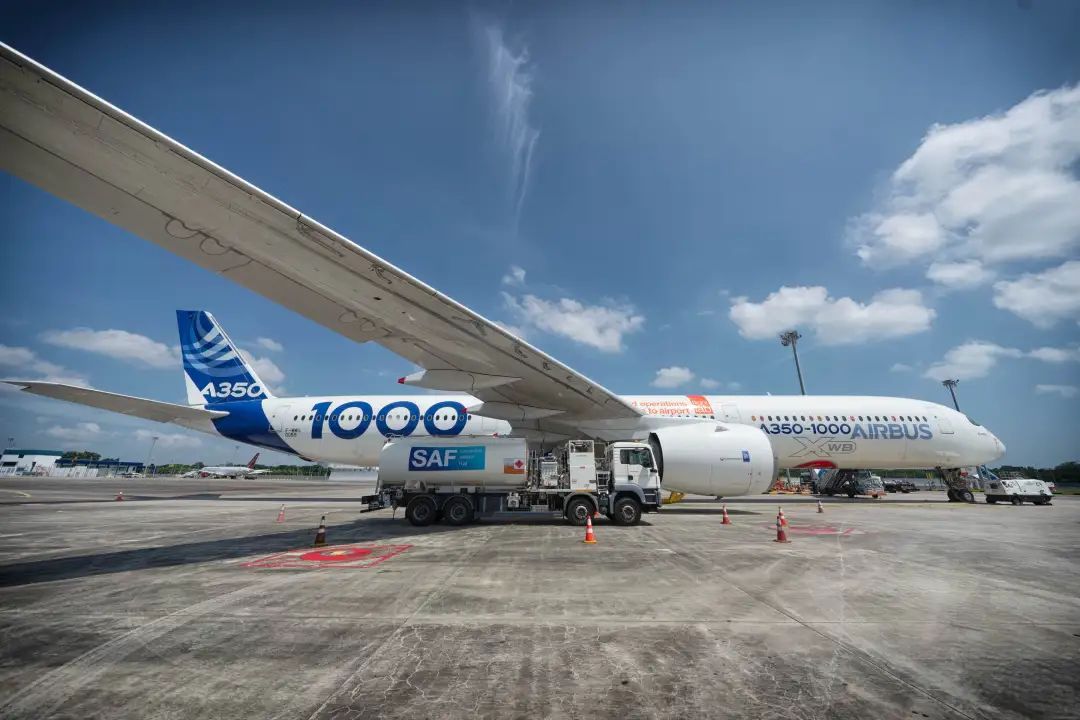
Core Insights - The aviation industry is responsible for approximately 99% of its carbon emissions from fuel consumption during flights, and the adoption of Sustainable Aviation Fuel (SAF) is seen as a key pathway to decarbonization, potentially reducing carbon emissions by 80% over its lifecycle [1][4][11] - The Chinese Civil Aviation Administration has initiated a pilot program for SAF, mandating a 1% blend of SAF in domestic flights from specific airports starting March 19, 2025 [1][8] - The global aviation industry aims for net-zero carbon emissions by 2050, with SAF expected to contribute significantly to this goal, accounting for 65% of the necessary reductions [2][4] Industry Developments - SAF is currently priced at about five times that of conventional aviation fuel, which poses a challenge for airlines in its adoption [4][6] - Airbus has been proactive in using SAF, consuming over 14 million liters in 2024, which accounted for 16% of its total fuel usage, thereby avoiding nearly 35 million tons of CO2 emissions [5] - The International Air Transport Association (IATA) projects that SAF will only represent 0.3% of commercial aviation fuel consumption in 2024, significantly lower than earlier estimates [4][6] Policy and Regulation - The European Union has set mandatory SAF blending targets, requiring 2% by 2025, 6% by 2030, and 70% by 2050, which has stimulated demand [6][7] - China's "14th Five-Year" green development plan aims for a SAF consumption of over 20,000 tons in 2025, which would represent about 0.2% of the annual aviation kerosene consumption [7][8] Market Potential in China - China has a diverse range of raw materials for SAF production, including waste oils and agricultural residues, with potential annual production capacity reaching 12 million tons by 2030 [11][12] - The country is the largest market for renewable energy, which can significantly reduce the energy costs associated with SAF production [11][12] - The strong manufacturing capabilities and engineering execution in China are expected to facilitate the rapid development of the SAF industry [12][13]


Calumet Specialty Products Partners(CLMT) - 2025 Q1 - Earnings Call Transcript
2025-05-09 14:02
Financial Data and Key Metrics Changes - The company reported a strong first quarter with adjusted EBITDA of $56.3 million for the Specialty Products segment, reflecting robust volume growth and operational improvements [32] - Montana Renewables generated $3.3 million in adjusted EBITDA with tax attributes, a significant improvement from a negative $13.4 million in the prior year [36] - The company ended the first quarter with $347 million in liquidity, positioning itself for strong cash flow generation in the upcoming quarters [30] Business Line Data and Key Metrics Changes - The Specialty Products segment achieved one of the highest quarterly volumes on record at approximately 23,000 barrels per day, despite some operational challenges [33] - The Performance Brands segment posted adjusted EBITDA of $15.8 million, driven by strong volume growth and supply chain efficiencies [35] - Montana Renewables saw operational cost improvements, reducing costs to below $0.70 per gallon, with a focus on increasing SAF production [36] Market Data and Key Metrics Changes - The renewable diesel market is currently facing challenges with low index margins, but the company remains optimistic about future demand and regulatory clarity [17] - The biomass-based diesel production undershot the RVO by approximately 230 million gallons in Q1, indicating a temporary market dynamic [17] - The company expects to ramp up SAF sales in late Q2 2025, with a focus on capturing market demand as global mandates increase [37] Company Strategy and Development Direction - The company is executing a deleveraging strategy, including the sale of non-core assets and the completion of a DOE loan to strengthen its balance sheet [6][29] - The MaxSaf project is a key focus, with expectations to bring 150 million gallons of SAF capacity online by early 2026 at a significantly reduced capital cost [20] - The company aims to maintain operational flexibility and cost control to navigate through economic cycles, leveraging its integrated asset base [8][10] Management's Comments on Operating Environment and Future Outlook - Management noted that despite recession fears, the company is not experiencing significant downturns, with strong specialty sales volumes recorded [7] - The management expressed confidence in the company's ability to generate positive cash flow across economic cycles, citing operational improvements and cost reductions [14] - There is optimism regarding regulatory clarity and market recovery, which could enhance margins and operational performance [52] Other Important Information - The company has made significant changes to how it reports adjusted EBITDA to better reflect cash generation capabilities, including the addition of production tax credits [24][26] - The sale of the Royal Purple Industrial business generated approximately $100 million in cash proceeds, aiding liquidity and operational focus [29] Q&A Session Summary Question: Regulatory environment and adjustments to EBITDA reporting - Management explained the rationale behind the changes to EBITDA reporting, emphasizing the need for clarity in cash generation capabilities and the impact of tax credits [41][44] Question: Balance sheet and liquidity concerns - Management reassured that liquidity is strong, with $340 million available, and highlighted the impact of the DOE loan on reducing annual cash flow from debt service [48][50] Question: Higher SAF volumes and capital expenditures - Management clarified that existing assets would be utilized to achieve higher SAF output at a lower capital cost, with a focus on marketing efforts for increased sales [58][60] Question: PTC booking and future expectations - Management confirmed that the full value of the PTC was booked for the quarter and discussed expectations for future bookings based on feedstock optimization [66][68] Question: Strategic alternatives for debt reduction - Management indicated that any cash inflow would primarily be directed towards debt reduction, with ongoing interest in selling non-core assets [77][78]

鹏鹞环保(300664) - 300664鹏鹞环保投资者关系管理信息20250509
2025-05-09 08:28
Group 1: SAF Business Development - The company is currently using an offshore (FOB) trade model for SAF, targeting international oil and gas groups and overseas traders [2] - The company is closely monitoring industry trends and SAF market dynamics to make informed decisions on capacity deployment and business expansion [2] - Ongoing research with chemical institutions aims to enhance SAF production capacity and yield [2] Group 2: Financial Performance - Revenue in Q1 2025 decreased year-on-year primarily due to reduced engineering income, which has low gross margins and significant collection pressure [3] - The decline in net profit excluding non-recurring items is attributed to a government VAT adjustment affecting a legacy project, leading to retrospective income adjustments [3] Group 3: Dividend Expectations - The proposed dividend for the fiscal year 2024 is set at 0.5 yuan per share, with plans to enhance dividend frequency to improve investor returns [3] - The board will seek authorization at the 2024 annual general meeting to establish a mid-year dividend plan based on profit distribution conditions [3]
鹏鹞环保(300664) - 300664鹏鹞环保投资者关系管理信息20250507
2025-05-07 13:44
Group 1: SAF Business Development - The company is currently using an offshore (FOB) trade model for its SAF business, targeting international oil and gas groups and overseas traders [2] - The company is closely monitoring industry trends and SAF market dynamics to make informed decisions on capacity deployment and business expansion [2] - Ongoing research and upgrades are being conducted in collaboration with chemical research institutions to enhance SAF production capacity and yield [2] Group 2: Financial Performance - In Q1 2025, the company's revenue and net profit (excluding non-recurring items) declined primarily due to reduced engineering income, which has low gross margins and high collection pressure [3] - The decrease in net profit was also attributed to a retrospective adjustment of previously recognized revenue due to government VAT policy changes affecting water pricing [3] Group 3: Dividend Expectations - The proposed dividend for the fiscal year 2024 is set at 0.5 yuan per 10 shares, with plans to enhance dividend frequency and investor returns [3] - The board will seek authorization at the 2024 annual general meeting to establish a specific mid-year dividend plan for 2025, contingent on profit distribution conditions [3]
生物航煤技术的破局之路
Zhong Guo Hua Gong Bao· 2025-03-31 03:13
国际民航组织已设定2050年前实现国际航空业净零排放的目标。欧盟规定自2025年1月1日起,飞机燃油 中须添加2%的可持续航空燃料,2030年提升至6%,2050年达70%。英国等也相继出台强制混掺政策。 我国也将可持续航空燃料列为减碳重点,明确要求推进先进生物液体燃料、可持续航空燃料等替代传统 燃油。 近日,中蓖(天津)生物航油技术有限公司(以下简称中蓖航油)技术总监刘思阳获得中国检验检测学会颁 发的证书,表彰其团队作为《绿色设计产品评价技术规范 可持续航空燃料》团体标准第一起草单位, 为中国标准化事业作出的突出贡献,这是该团队牵头起草的第四份团体标准。 在全球应对气候变化的背景下,航空业面临巨大减排压力。可持续航空燃料,也称为生物航煤,已成为 各国竞相布局的战略高地。然而,生物航煤核心技术长期被国外垄断,成为我国航空业绿色转型的"卡 脖子"难题。凭借十余年的技术积累,中蓖航油不仅牵头起草了我国生物航煤团体标准,还积极推进生 产线建设和工艺包研发,助力我国生物航煤产业规模化发展。 生物航煤:航空业的绿色未来 可持续航空燃料是以动植物油脂或农林废弃物等生物质为原料,采用加氢法或费托合成等技术生产的航 空燃料。 ...