国产AI芯片

Search documents
摩尔线程中签结果出炉
Sou Hu Cai Jing· 2025-11-28 07:26
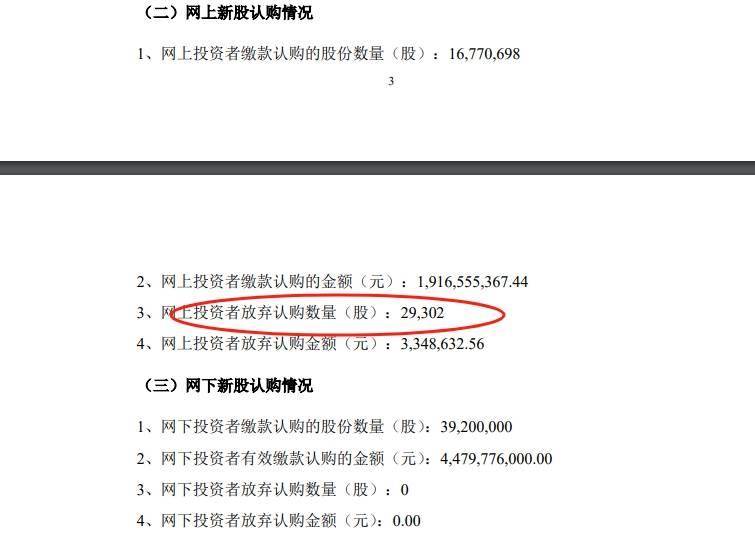
Core Viewpoint - The IPO of Moore Threads has attracted significant interest, with over 4.82 million retail investors participating, leading to a highly competitive subscription process. The company has set a new record for the highest IPO price on the STAR Market this year at 114.28 yuan per share, raising a total of 8 billion yuan, marking it as the largest IPO on the STAR Market in 2023 [4][5][12]. Subscription Details - Online investors subscribed for 16.77 million shares, amounting to 1.917 billion yuan, while offline investors subscribed for 39.2 million shares, totaling 4.48 billion yuan [1]. - The effective subscription rate reached 4,126.49 times, with only 33,600 lucky investors winning the right to subscribe for shares, resulting in a very low winning rate of 0.03635054% [4][5]. - A total of 29,302 shares were abandoned by retail investors during the payment phase, while all institutional investors successfully completed their subscriptions [1][4]. Institutional Interest - Moore Threads attracted 10 strategic placement entities, raising a total of 1.59992 billion yuan, with the largest investment coming from the China Insurance Investment Fund at 499.9 million yuan [8]. - The offline subscription was highly competitive, with 267 institutional investors submitting valid bids, resulting in a total effective subscription of 70.406 billion shares and an offline subscription multiple of 1,572 times [8]. Company Background - Moore Threads, founded in October 2020, is recognized as a representative of domestic AI chip companies, having developed the MUSA architecture that supports various computing tasks [12][13]. - The company has raised over 10 billion yuan in funding through multiple rounds, achieving a valuation of approximately 30 billion yuan after its Pre-IPO round in late 2024, which is an 80% increase compared to its IPO valuation of 53.7 billion yuan [13]. - As of October 2024, Moore Threads holds 425 authorized patents, ranking among the top GPU companies in China in terms of patent quantity [13].

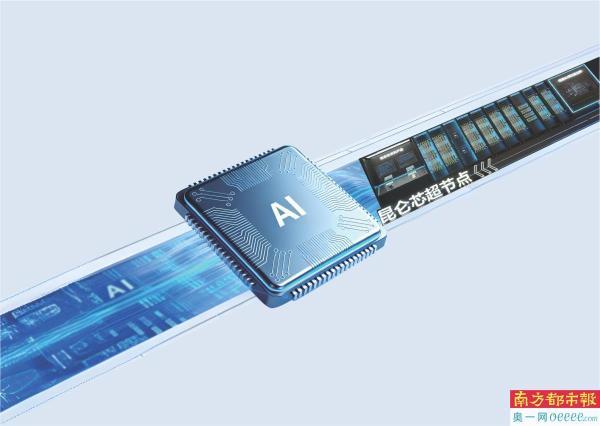
公布技术参数“颗粒度” 大厂接连“秀肌肉” 自研AI芯片为何不再“闷声干”?
Nan Fang Du Shi Bao· 2025-11-25 23:09
Core Viewpoint - The recent announcements from major Chinese tech companies like Huawei and Baidu regarding their AI chip development signify a shift in the domestic semiconductor landscape, aiming to fill the gap left by Nvidia and enhance the competitiveness of Chinese AI chips [3][4][5]. Group 1: AI Chip Development - Major Chinese companies are increasingly revealing their AI chip roadmaps, with Huawei planning to release four Ascend AI chips over the next three years, while Baidu is set to launch two Kunlun AI chips in the next two years [2][3]. - Huawei's detailed disclosure of technical parameters for its chips, including bandwidth, computing power, and memory, marks a significant change in the traditionally low-profile approach of Chinese chipmakers [2][7]. - The introduction of supernodes and clusters is seen as a critical strategy for overcoming the limitations of China's semiconductor manufacturing processes, which are currently capped at the 7nm node [10][12]. Group 2: Competitive Landscape - The competition in the global AI chip market is characterized as asymmetric, with Chinese chips lagging behind North American counterparts like Nvidia in various technical specifications, yet capable of leveraging networking capabilities to surpass them in performance [5][6]. - Huawei's Ascend series has been recognized as a formidable competitor, with its first chip released in 2018 and subsequent iterations showing significant performance improvements despite challenges posed by U.S. sanctions [6][8]. - Baidu's Kunlun chip, while still behind in performance compared to Nvidia's offerings, is focusing on cost-effectiveness and specific use cases, indicating a strategic approach to market entry [8][9]. Group 3: Market Dynamics - The domestic AI chip market is witnessing a shift towards inference tasks, with inference scenarios accounting for 42% of the GenAI IaaS service market, while training scenarios have decreased to 58% [14][15]. - The challenges of using domestic AI chips for large model training are acknowledged, with companies like Huawei and Baidu working to adapt their technologies to meet these demands [14][15]. - The push for self-developed chips by major cloud providers is seen as a way to reduce costs and improve performance, with companies like Kunlun seeking to penetrate external markets [16][17].
“国产英伟达”摩尔线程中签号出炉,33600个幸运儿中签,479.3万户股民陪跑!9家机构以战投身份入局,中国保险投资基金成为最大赢家,获配437.52万股
Sou Hu Cai Jing· 2025-11-25 14:12
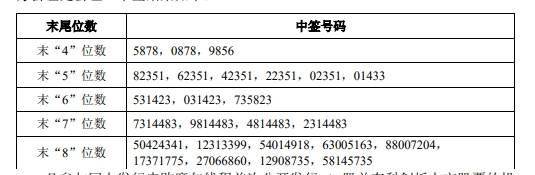
此次散户对于摩尔线程打新热情十分高涨,24日摩尔线程晚间发行申购情况及中签率公告显示,本次网 上发行有效申购户数为482.66万户,超482万户股民疯抢摩尔线程新股,此次有效申购倍数约为4126.49 倍,有效申购股数为462.17亿股,网上发行最终中签率为0.03635054%。 | 末尾位数 | 中签号码 | | --- | --- | | 末"4"位数 | 5878, 0878, 9856 | | 末"5"位数 | 82351, 62351, 42351, 22351, 02351, 01433 | | 末"6"位数 | 531423, 031423, 735823 | | 末"7"位数 | 7314483, 9814483, 4814483, 2314483 | | 末"8"位数 | 50424341. 12313399. 54014918, 63005163, 88007204. | | | 17371775, 27066860, 12908735, 58145735 School And States Company of Children Company of Children And | 共有 ...

三年三次「破局」,江原科技与品高股份如何携手打通国产AI芯片全链路?
Quan Jing Wang· 2025-11-24 05:32
品高股份 (688227.SH)近日宣布,公司与算力芯片重点企业江原科技达成一项深度战略合作。该合作 的核心是以双向股权置换实现利益共同体: 品高股份 通过总计9亿元(增资4亿、股权转让5亿)的投资 成为江原科技第二大股东,江原系也相应成为 品高股份 第二大股东。此举在确保双方控股权不变的前 提下,完成了利益的深度绑定,共同推动国产算力领域软硬件生态国产化发展。 "千淘万漉虽辛苦,吹尽狂沙始到金。"在 AI芯片 领域被 英伟达 等国际巨头长期垄断的格局下,江原科 技以首款全国产先进工艺AI芯片D10为利刃,以实现完全自主可控的D20系列加速卡为战甲,在"卡脖 子"的重围中劈开一条生路。从至暗时刻的资金告急、研发受阻,到流片成功的欢呼雀跃、量产落地的 坚实步伐,这家初创公司的突围之路,恰是国产芯片产业"明知山有虎,偏向虎山行"的生动注脚。 01临危受命:以"苟利国家生死以"的信念启程 2022年10月7日, 美国商务部 发布的139页出口管制令,如惊雷般炸响在中国 半导体 行业。"全面限制 高性能芯片设计工具与制造工艺"的条款,将国产芯片推向了"不自主则无出路"的绝境。彼时正在燧原 科技主导AI芯片研发的李瑛, ...


中芯国际存储爆单!首只聚焦“港股芯片”产业链的港股信息技术ETF(159131)逆市翻红
Xin Lang Ji Jin· 2025-11-18 03:05
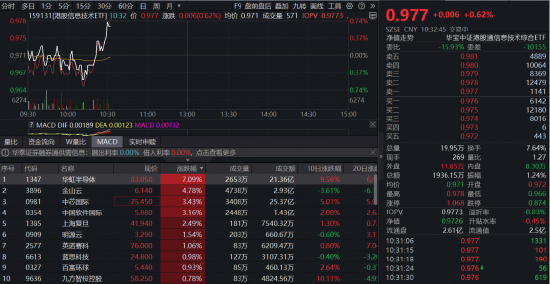
Group 1 - The Hong Kong stock market saw a significant rise in chip-related stocks, with the first ETF focused on the "Hong Kong chip" industry chain (159131) increasing by 0.62% [1] - Key component stocks included Hua Hong Semiconductor, which rose over 7%, and Kingsoft Cloud, which increased nearly 5% [1] - SMIC reported a high capacity utilization rate of 95.8% in Q3, indicating strong demand and a supply shortage in the market [2][3] Group 2 - The newly launched ETF tracks the CSI Hong Kong Stock Connect Information Technology Composite Index, with a composition of 70% hardware and 30% software, focusing on semiconductor, electronics, and computer software sectors [3] - SMIC's market position is expected to remain stable due to long verification cycles and high barriers to entry for new competitors in the NOR Flash, NAND Flash, and MCU markets [3] - The ETF includes 42 Hong Kong hard tech companies, with SMIC holding a weight of 20.27%, Xiaomi Group at 9.11%, and Hua Hong Semiconductor at 5.64% [3]

站在交易所门前的“中国英伟达”
是说芯语· 2025-11-15 00:28
Core Viewpoint - The article discusses the imminent IPOs of several domestic AI chip companies in China, likening them to "China's Nvidia," and highlights the intense competition and challenges they face in the market as they seek to establish themselves and secure funding for growth [4][5][6]. Group 1: IPO Challenges - Domestic chip companies are under pressure as they approach their IPOs, facing scrutiny from investors and the media regarding their progress [5][10]. - The IPO process is seen as a critical step for these companies to secure funding, but it also leads to increased competition in the market [5][16]. - The need for continuous external funding is emphasized, as these companies have not yet achieved a self-sustaining revenue-research cycle [15][16]. Group 2: Investment Landscape - There is a shift in investment dynamics, with a noted increase in activity from domestic funds compared to foreign dollar funds, which are retreating [11]. - The potential for high returns from investing in these IPOs is highlighted, with investors expressing regret over missed opportunities in the past [10][11]. - The article notes that the IPOs of these companies could lead to significant wealth creation for investors and employees, although the realization of this wealth may take time [27]. Group 3: Market Dynamics - The article points out that the current market environment is favorable for new IPOs, particularly in the AI chip sector, as investor sentiment is high [29]. - The competition is not only among domestic companies but also against established players like Nvidia, which is facing challenges in the Chinese market [31][33]. - The demand for AI computing power is surging, creating opportunities for domestic companies to capture market share previously held by foreign firms [36][38]. Group 4: Future Prospects - The growth of AI inference is expected to provide a significant boost to domestic chip companies, as the demand for computing power continues to rise [36][38]. - The article emphasizes the importance of product performance and market acceptance for the success of these companies in the competitive landscape [40][41]. - The need for effective marketing and sales strategies is highlighted as crucial for these companies to establish a foothold in the market [42][44].
亿都(国际控股)涨超6% 公告补充说明苏州清越事件 沐曦股份科创板IPO注册获批
Zhi Tong Cai Jing· 2025-11-14 02:47
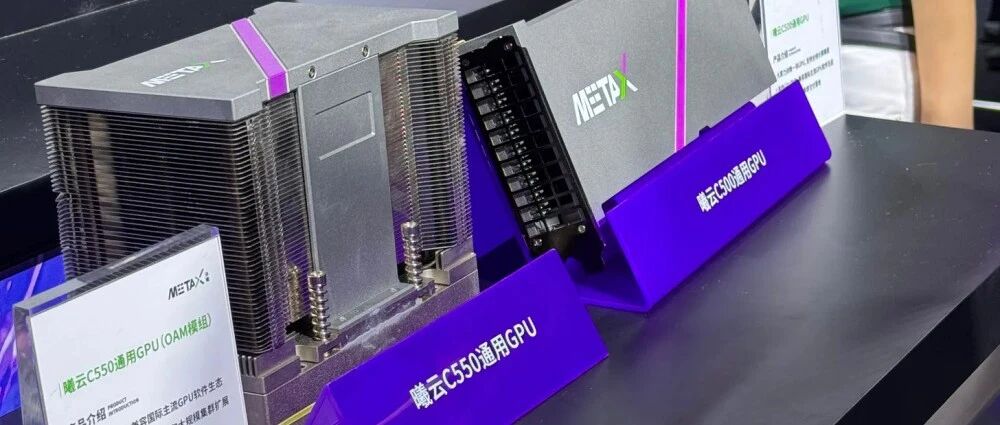
Core Viewpoint - Yidu International Holdings (00259) experienced a stock price increase of over 6%, currently trading at 4.02 HKD with a transaction volume of 3.8388 million HKD, following the announcement regarding the China Securities Regulatory Commission's (CSRC) notice to Suzhou Qingyue [1] Group 1: Company Developments - Yidu International Holdings announced that it has received a notice from Suzhou Qingyue, stating that no further details regarding the incident have been provided [1] - The company is currently assessing whether this incident will impact its financial statements for the fiscal year ending March 31, 2025, as well as past annual performance [1] - Executive Director Mr. Liang Ziquan is one of the five directors of Suzhou Qingyue, but he does not hold any administrative position within the company [1] Group 2: Industry Context - On November 13, the CSRC approved the initial public offering (IPO) registration application for Muxi Co., Ltd. on November 12 [1] - The Shanghai Stock Exchange confirmed that Muxi's IPO on the Sci-Tech Innovation Board has been registered and is effective [1] - Suanfeng Information, a wholly-owned subsidiary of Yidu International, is a core customer and shareholder of the domestic AI chip company Muxi [1] - At this year's WAIC conference, Suanfeng Information collaborated with Muxi, Infinite Light Year, Fudan University, Shanghai Chuangzhi Academy, Luxshare Precision (002475), and Mohe Information to develop the domestic high-density computing system Shanghai Cube [1]
三年三次「破局」,江原科技如何打通国产AI芯片全链路?
雷峰网· 2025-11-11 10:06
Core Viewpoint - Jiangyuan Technology has successfully developed a closed-loop for domestic AI chips with the launch of the D20 series, marking a significant breakthrough in the Chinese semiconductor industry, which has been dominated by international giants like NVIDIA [2][12]. Group 1: Background and Motivation - The U.S. export control measures in October 2022 pushed the Chinese semiconductor industry into a corner, emphasizing the need for self-sufficiency in high-performance chip design and manufacturing [3]. - The founding team of Jiangyuan Technology, led by CEO Li Ying, aimed to create high-performance AI chips with a focus on a fully domestic supply chain and independent design [3][5]. Group 2: Challenges and Solutions - Initial funding of 100 million yuan was insufficient for advanced AI chip development, leading to a cash flow crisis where the company could only sustain operations for three months [8]. - The team faced skepticism from investors regarding the maturity of domestic processes and the ability to compete with NVIDIA's ecosystem, prompting a strategic pivot to highlight the core value of supply chain security [8][9]. Group 3: Breakthroughs and Achievements - The first batch of chips based on domestic advanced processes was successfully tested, marking a pivotal moment for the company [11]. - The D10 chip, measuring over 500 square millimeters, was officially mass-produced in early 2025, featuring LPDDR5 memory and supporting various precision calculations, thus enhancing the IP ecosystem [12][14]. Group 4: Market Strategy and Expansion - Jiangyuan Technology adopted a dual approach of hardware and software collaboration to penetrate the market, launching the "Pinyuan AI Integrated Machine" to facilitate immediate usability [14]. - The D20 series, launched in November 2025, features fully domestically designed and manufactured components, supporting large-scale AI model deployments and achieving significant performance improvements over the D10 [16][18]. Group 5: Future Outlook - Jiangyuan Technology aims to continue its growth trajectory by expanding its product matrix and enhancing its technological capabilities, with plans for the flagship T800 chip targeting performance beyond 6nm [14][21]. - The company is committed to building a robust ecosystem for AI technology in China, contributing to the development of the digital economy and high-quality growth in the Greater Bay Area [21].
寒武纪的加单传闻分析
傅里叶的猫· 2025-10-22 11:05
Core Viewpoint - The article emphasizes the potential growth and market position of domestic AI chip companies, particularly Cambrian, while cautioning against unverified claims circulating in the market [4][10]. Group 1: Cambrian's Business Developments - Cambrian has secured a contract for 10,000 cards per month from the three major telecom operators and received an additional order from ByteDance worth 500 billion, with a requirement to deliver 300,000 chips [1][3]. - The company has invested in Village Dragon, which has increased its production capacity to 8,000 wafers per month, potentially supporting a revenue of 600 billion, exceeding expectations [1][3]. Group 2: Market Dynamics and Demand for AI Chips - Cambrian's current revenue for the first three quarters is 4.6 billion, and with the new contracts, the expected revenue for next year could be ten times this amount, suggesting a potential stock price increase [3]. - The demand for domestic AI chips is expected to grow significantly, with one CSP projected to handle 400 to 500 trillion tokens next year, requiring approximately 330,000 to 350,000 inference cards [6][7]. Group 3: Competitive Landscape and Product Feedback - Cambrian's advantage lies in its established customer base, which includes major CSPs and other industry leaders, providing valuable feedback that enhances product development [5][6]. - The article notes that while domestic chips may not excel in large model training, they are sufficient for inference tasks, which are becoming increasingly important in the AI industry [7][9].

科技大爆发!“易中天”、“纪连海”大涨,发生了什么?
天天基金网· 2025-10-20 05:27
Market Overview - The A-share market shows balanced performance with technology stocks rebounding, including significant gains in companies like Zhongji Xuchuang, which rose by 8.31% with a market capitalization of 449.6 billion yuan and a trading volume of 19.52 billion yuan [3][6] - The Shanghai Composite Index increased by 0.69%, the Shenzhen Component Index rose by 1.38%, and the ChiNext Index surged by 2.49% [6] Technology Sector - The technology sector experienced a rebound, particularly in consumer electronics, computing power, and semiconductor supply chains [8] - Notable performers include companies like Yuanjie Technology, which saw a 14.84% increase, and Changguang Huaxin, which rose by 11.62% [9] AI Chip Companies - Domestic AI chip leaders, Haiguang Information and Cambrian, reported strong third-quarter earnings, with Haiguang achieving a revenue of 9.49 billion yuan, up 54.65%, and a net profit of 1.96 billion yuan, up 28.56% [11] - Cambrian reported a staggering revenue increase of 2386.38% year-on-year, reaching 4.607 billion yuan, and a net profit of 1.605 billion yuan, marking a turnaround from losses [11] Policy Support - Recent government policies, including the Ministry of Industry and Information Technology's initiatives to enhance computing power infrastructure, are expected to drive growth in the sector [13] - The plan aims for a 50% deployment rate of high-performance networks by 2027, which will benefit the computing power industry [13] Solid-State Battery Sector - The solid-state battery sector is witnessing significant growth, with companies like Haike New Energy and Zhuhai Guanyu seeing substantial stock price increases [16] - Recent breakthroughs in solid-state battery technology, including advancements from research teams at the Chinese Academy of Sciences and Tsinghua University, promise to enhance battery performance and efficiency [18][19]