布雷顿森林体系

Search documents
黄金热潮,是理性还是焦虑?
伍治坚证据主义· 2025-10-09 07:57
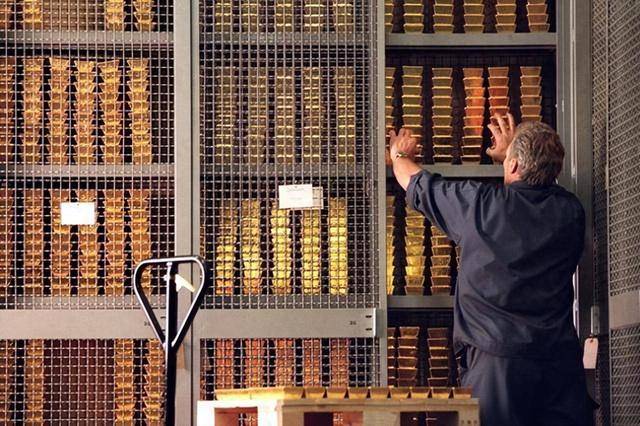
Core Viewpoint - The recent surge in gold prices, nearing $4000 per ounce, is attributed to a combination of declining real interest rates and increased demand from central banks and retail investors, rather than inflation concerns [2][5][9]. Group 1: Gold Price Dynamics - Gold's price has increased over 50% in the past year, with historical parallels drawn to the 1970s and the 2008 financial crisis [2]. - The decline in the 10-year TIPS yield from 2.2% to 1.8% has made gold a more attractive asset as real returns on dollar-denominated bonds diminish [5][7]. - Central banks have significantly increased their gold purchases, with 244 tons bought in Q1 2025 and an additional 166 tons in Q2, indicating a shift towards gold as a non-liability asset [7][9]. Group 2: Investor Behavior - Record inflows into global gold ETFs reached $64 billion from January to September 2025, reflecting a trend of investors using gold as a hedge against uncertainty while still engaging in riskier assets like AI stocks and cryptocurrencies [7][11]. - The current gold buying behavior is characterized by a dual approach of seeking returns while also securing against potential market downturns [7][11]. Group 3: Historical Context - Gold has historically been viewed as the ultimate currency, transitioning from the gold standard to a fiat currency system, which has led to a renewed interest in gold as a hedge against the perceived instability of paper currencies [8][9]. - The rise in gold prices can be seen as a vote against the paper currency system, reflecting a deeper concern about trust in financial institutions and government debt [9][10]. Group 4: Future Considerations - Historical patterns suggest that rapid increases in gold prices are often followed by prolonged corrections, indicating potential volatility ahead [10]. - Gold is not merely an anti-dollar asset but is influenced by the broader dynamics of the dollar system, including interest rates and inflation [10]. - The interplay between gold and emerging technologies, such as AI, highlights the complex relationship between optimism for innovation and anxiety about systemic risks [11].


银行三大货币渠道详解!现代信用货币体系如何平衡风险与增长路径?
Sou Hu Cai Jing· 2025-10-09 04:50
Core Insights - The article discusses the complexities of modern monetary policy, particularly how central banks create money and its implications for the economy and inflation [2][20][22] Group 1: Channels of Money Creation - The first channel of money creation is through foreign exchange inflows, where a company receiving foreign orders converts currency, leading to an increase in the central bank's foreign reserves and base currency [6] - The second channel involves the Medium-term Lending Facility (MLF), where the central bank lends money to banks against collateral, influencing interest rates and subsequently affecting loans to consumers and businesses [8] - The third channel is the purchase of government bonds in the secondary market, which ensures that the government cannot directly print money, maintaining a boundary between fiscal and monetary policy [10][20] Group 2: Historical Context and Evolution - Historically, money creation was constrained by the gold standard, where the amount of money was directly tied to gold reserves [12] - The shift in 1971, when the U.S. abandoned the gold standard, allowed for more flexible monetary policy based on national credit rather than physical assets [12][21] - This evolution has increased the complexity of managing monetary policy, as it now relies on maintaining creditworthiness rather than tangible assets [19] Group 3: Inflation Dynamics - The article explains that inflation does not immediately respond to money creation due to the lag in how new money flows into the economy, often remaining within financial institutions [14][21] - For inflation to rise, there must be an increase in demand from consumers and businesses, which requires banks to lend more actively [16][22] - The relationship between money supply and inflation is not direct; it depends on how effectively new money circulates into the real economy [21][23] Group 4: Risks and Considerations - The accumulation of debt can lead to significant risks, especially during economic downturns when income and asset prices fall [18] - The article highlights the importance of understanding the boundaries of monetary policy to prevent excessive credit expansion that could lead to financial instability [20][22] - The role of gold as a hedge against inflation and financial risk is emphasized, as central banks increase their gold reserves to safeguard against potential credit crises [19]

央行"印钱",为啥你没感觉?新钱先炒房炒股,菜价工资短期动不了
Sou Hu Cai Jing· 2025-10-07 09:48
Core Insights - The essence of "printing money" is the central bank increasing the money supply through specific methods, which raises concerns about currency devaluation, although the average person may not perceive this impact directly [1] Group 1: Modern Monetary System - Understanding the process of money creation requires a breakdown of the logic of the modern monetary system, which has evolved since the abandonment of the gold standard in 1971, allowing central banks to issue currency based on national credit rather than gold reserves [3][4] - Central banks can create money through three main methods, including foreign exchange transactions where commercial banks convert foreign currency into local currency, leading to an increase in the central bank's foreign reserves and the corresponding base currency [4][6] Group 2: Central Bank Operations - The "MLF" (Medium-term Lending Facility) is a typical operation where the central bank lends to commercial banks, impacting borrowing costs and subsequently influencing loan rates for individuals and businesses [4][5] - When the central bank conducts MLF operations, it increases its assets and liabilities on the balance sheet, creating new money backed by collateral from commercial banks [6] Group 3: Economic Impact - A significant portion of newly created money does not directly enter the real economy but remains within banks and financial institutions, leading to asset price inflation rather than immediate consumer price increases [7] - The modern monetary system allows for the anticipation of future money to stimulate short-term economic growth, but this can lead to increased debt levels across households, businesses, and governments, amplifying economic cycles [7][8]
美国为什么支持以色列?
Sou Hu Cai Jing· 2025-09-27 04:26
Group 1 - The article discusses the historical and political influence of Jewish groups in the United States, asserting that they have significantly shaped U.S. support for Israel and its foreign policy in the Middle East [3][4][6] - It highlights the establishment of the Federal Reserve by Jewish families, indicating that the U.S. government lacks control over monetary policy and is indebted to the Federal Reserve [4][5] - The article claims that Jewish capital has created a network of influence in U.S. politics, media, and military, which ensures unwavering support for Israel [6] Group 2 - It mentions that the U.S. national debt is essentially money owed to the Federal Reserve, which is controlled by Jewish interests, and that the government repays this debt through taxes and bond issuance [5][6] - The article emphasizes the role of Jewish capital in shaping electoral outcomes and media narratives, suggesting that any opposition to Israel is met with severe political repercussions [6] - It concludes with a warning about the potential consequences for Israel if it continues its military actions without regard for global opinion [6]
29年来首次!黄金或超美债,全球央行储备格局巨变
21世纪经济报道· 2025-09-11 10:52
Core Viewpoint - The global central bank reserve structure is undergoing a significant transformation, with gold surpassing U.S. Treasury bonds for the first time since 1996, marking gold's ascendance as a primary reserve asset [1][2]. Group 1: Central Bank Gold Reserves - China's central bank has increased its gold reserves for ten consecutive months, reaching 7.402 million ounces (approximately 2302.28 tons) by the end of August, with a month-on-month increase of 6,000 ounces (about 1.86 tons) [1]. - As of the end of August, China's gold reserve value rose by $9.858 billion to $253.843 billion, with gold reserves accounting for 7.64% of total foreign exchange reserves, a historical high [1]. - A survey by the World Gold Council indicates that over 95% of central banks expect to continue increasing gold reserves in the next 12 months, the highest percentage since the survey began in 2019, up 17 percentage points from the previous year [2]. Group 2: Factors Influencing Central Bank Behavior - Three main factors are reshaping central bank asset allocation: the deepening cracks in the dollar-centric international monetary system, high U.S. debt levels undermining dollar credibility, and the restructuring of global order prompting central banks to accumulate gold to mitigate political risks [2][3]. - The freezing of Russian reserve assets has accelerated gold accumulation among central banks, with Russia leading this trend [3]. - The U.S. federal government debt is projected to reach 124.3% of GDP by the end of 2024, leading to a decline in the ability to service debt, prompting other countries to reduce dollar assets in favor of gold [3]. Group 3: Structural Changes in Reserve Strategies - A structural shift in central bank gold reserve strategies is evident, with 59% of central banks opting to store gold domestically, an increase of 18 percentage points from 2024 [4]. - 73% of central banks anticipate a decline in the share of U.S. dollar reserves over the next five years, while the shares of the euro, renminbi, and gold are expected to rise [4].

29年来首次!黄金或超美债 全球央行储备格局巨变
2 1 Shi Ji Jing Ji Bao Dao· 2025-09-11 10:43
Core Insights - The global central bank reserve landscape is undergoing a significant transformation, with gold surpassing U.S. Treasury bonds for the first time since 1996 in terms of reserve composition, marking a milestone for gold as a reserve asset [1] - China's central bank has increased its gold reserves for ten consecutive months, reaching 7.402 million ounces (approximately 2302.28 tons) by the end of August, with a reserve value increase of $9.858 billion to $253.843 billion, representing a historical high of 7.64% of total foreign reserves [1][2] - A recent survey by the World Gold Council indicates that 95% of central banks expect to continue increasing their gold reserves in the next 12 months, the highest level since the survey began in 2019, with 43% planning to add to their gold holdings despite rising gold prices [2] Group 1: Factors Influencing Central Bank Gold Purchases - The deepening cracks in the U.S.-centric international monetary system, highlighted by the freezing of Russian reserve assets, have prompted central banks to accelerate gold accumulation as a direct response [3] - The high level of U.S. government debt, projected to reach 124.3% of GDP by the end of 2024, undermines the credibility of the dollar, leading other countries to reduce dollar assets in favor of gold as a safer, inflation-resistant alternative [3] - The restructuring of the global order and increased political risks have led central banks, especially in emerging markets, to prefer gold over dollar assets to hedge against potential structural risks in the dollar system [4] Group 2: Changes in Central Bank Reserve Strategies - A structural shift in central bank gold reserve strategies is evident, with 59% of central banks opting to store gold domestically, an increase of 18 percentage points from 2024 [4] - 73% of central banks anticipate a decline in the share of dollar reserves over the next five years, while the shares of the euro, renminbi, and gold are expected to rise [4]
为何我国的600吨黄金不放在中国,反而要放在美国,不怕被他们私吞吗?
Sou Hu Cai Jing· 2025-08-28 20:54
Core Viewpoint - The presence of 600 tons of China's official gold reserves in the United States is a complex issue influenced by historical, practical, and strategic considerations rather than mere risk [1][10][16]. Historical Context - The arrangement for China to store gold in the U.S. dates back to the Bretton Woods Conference in 1944, which established the dollar's link to gold, making the dollar the hard currency for international trade [3][10]. - This practice has continued for decades, becoming a norm for countries wishing to engage in global trade [3][10]. Practical Considerations - The choice to keep gold in the U.S. is driven by transaction efficiency, as New York is the largest gold trading center with a mature clearing system, allowing for quick and cost-effective transactions [5][8]. - Storing gold domestically would incur high transportation and insurance costs, and could be affected by geopolitical risks, making the current arrangement more practical [8][10]. Security Aspects - The New York Federal Reserve's underground vault is considered one of the safest storage facilities globally, providing a secure environment for national reserves [8][10]. - Gold serves as a financial stabilizer during currency devaluation or international crises, and the safety and operational efficiency of the New York facility currently surpass domestic options [8][10]. Strategic and Diplomatic Implications - Storing gold in a global financial center signals China's active participation in the international financial order, enhancing its credibility as a trading partner [10][16]. - The gold reserves also support the internationalization of the renminbi, increasing its global recognition and acceptance [10][16]. Risk Management - Concerns about the potential for the U.S. to seize the gold are mitigated by international law protecting central bank assets, as well as the potential repercussions for the U.S. economy if it were to act against these assets [12][14]. - China's significant holdings of U.S. Treasury bonds and investments in American companies create a complex interdependence that discourages aggressive actions against its gold reserves [12][14]. Future Considerations - While the current strategy is well thought out, China remains vigilant to changes in the international financial landscape and may adjust its gold storage strategy if necessary [18]. - The gold reserves are viewed as both wealth and a strategic asset, playing a crucial role in China's position within the global financial system [18].
中国将600吨黄金放在美国,咋不存自家国库?三大原因让人感慨
Sou Hu Cai Jing· 2025-08-26 12:42
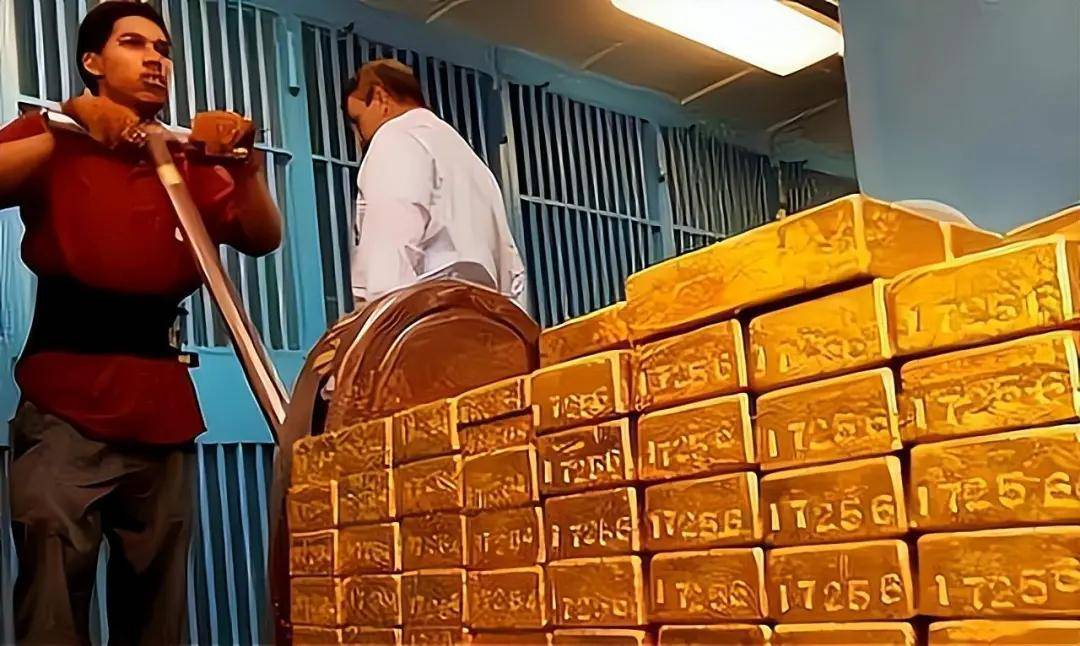
Group 1 - The article discusses China's significant gold reserves, totaling approximately 2298.55 tons, ranking sixth globally, with about 600 tons stored in the United States [5][7][20] - The storage of gold in the U.S. is attributed to historical, economic, and security factors, facilitating international trade and providing a sense of security [14][26][28] - The U.S. gold storage system is described as highly secure, with extensive physical and procedural safeguards in place [18][20] Group 2 - The article highlights the risks associated with storing gold in the U.S., particularly in light of rising U.S. national debt and past incidents where other countries faced delays in retrieving their gold [22][24] - China's gold stored in the U.S. represents a small percentage of its total reserves, allowing for manageable risk exposure [24][28] - The potential for economic retaliation exists, as China could leverage its holdings of U.S. debt and assets of American companies in China if necessary [26][28]
稳定币的宏观冲击波
Huachuang Securities· 2025-08-20 03:12
Group 1: Macro Impact of Stablecoins - Stablecoins are evolving from mere crypto assets to key financial variables with macroeconomic influence, impacting money supply, credit creation, and the U.S. Treasury market[1] - Full reserve requirements are crucial for preventing net expansion of M2; as long as stablecoins maintain a 1:1 full reserve, they represent structural changes within existing M2 rather than an increase in total money supply[1] - The demand for U.S. Treasury securities, particularly short-term bonds, is significantly bolstered by stablecoins, which have reached a reserve scale of hundreds of billions, positioning them as a potential "new cornerstone" for the Treasury market[7] Group 2: Financial Institutions' Adaptation - Financial institutions are shifting from passive defense to proactive positioning in response to stablecoin impacts; commercial banks are issuing on-chain deposits to mitigate deposit outflows and provide reserve custody services[3] - Asset management companies are seizing opportunities by managing reserve assets for stablecoin issuers, particularly U.S. Treasury securities, as stablecoin reserves reach trillion-dollar levels[3] - Payment companies are leveraging their networks to create closed ecosystems by issuing proprietary stablecoins or integrating third-party stablecoins, aiming to reduce payment costs and enhance transaction efficiency[3] Group 3: Regulatory Landscape - Global jurisdictions are rapidly developing regulatory frameworks for stablecoins, with the U.S. establishing clear licensing and reserve requirements through the GENIUS Act, mandating 1:1 reserves and regular disclosures[2] - Hong Kong and Singapore have implemented detailed regulations for stablecoin reserves and redemption, reflecting a growing trend towards regulatory clarity in the stablecoin space[2] Group 4: Risks and Challenges - The potential shift to a fractional reserve system for stablecoins could lead to significant monetary expansion, posing challenges to monetary sovereignty and financial stability, reminiscent of the Nixon shock that ended the gold standard[6] - Stablecoins may become a "fragile fulcrum" in the U.S. Treasury market, with risks of liquidity mismatches and potential market disruptions during extreme conditions, such as large-scale redemptions[7]
FT中文网精选:美元的“超额特权”还能维持多久?
日经中文网· 2025-08-18 02:34
Core Viewpoint - The article discusses the historical fluctuations of the US dollar system, highlighting significant events such as the "Nixon Shock" in 1971 and the "Plaza Accord" in 1985, and suggests that a new "dollar shock" may be approaching due to increased policy volatility during the Trump era [5][6]. Group 1 - Since the mid-20th century, the US dollar has maintained its status as the world's dominant currency, but history shows that no hegemonic position is eternal [6]. - The "Nixon Shock" in August 1971, when President Nixon announced the suspension of the dollar's fixed exchange rate with gold, marked the end of the Bretton Woods system and initiated a shift towards floating exchange rates globally [6]. - The "Nixon Shock" set the stage for subsequent economic challenges, including stagflation and financial turmoil over the following decade [6].