楼市小阳春

Search documents
网签突破1.5万套 北京1月二手房市场站稳“小阳春”前哨
Bei Jing Shang Bao· 2026-02-01 15:12
2026年开年,北京二手房市场平稳开局。据北京商报记者统计,1月北京二手房网签量达15082套,连续 三个月站稳1.4万套关口,市场企稳态势巩固。从市场表现来看,入学需求的释放推动部分区域客源心 态发生转变,此前持观望态度的购房者加速入市,相关片区单月成交量连续三个月保持在60—70套区 间。与此同时,在以刚需房源为成交主力的区域,随着高性价比刚需房源供应减少,改善型房源的成交 量出现回升。 连续三个月站上1.4万套关口 北京商报记者统计数据显示,2026年1月北京二手房网签量达15082套,至此,北京二手房网签量已连续 三个月稳定在1.4万套以上。 具体来看,北京二手房市场自2025年11月起持续回暖,2025年11月至2026年1月,二手房网签量依次为 14446套、17200套、15082套。 合硕机构首席分析师郭毅表示,从需求端来看,市场成交已连续三个月稳定在15000套左右的水平, 2026年1月一线城市成交更是连续三周突破4000套,预示楼市"小阳春"期间网签量有望维持高位,市场 成交将实现稳健企稳。 成交量稳定的背后,业主定价趋于理性是重要因素之一。石景山区西黄村片区某头部中介经纪人陈少华 向北 ...
网签突破1.5万套,北京1月二手房市场站稳“小阳春”前哨
Bei Jing Shang Bao· 2026-02-01 08:15
2026年开年,北京二手房市场平稳开局。据北京商报记者统计,1月北京二手房网签量达15082套,连续 三个月站稳1.4万套关口,市场企稳态势巩固。从市场表现来看,入学需求的释放推动部分区域客源心 态发生转变,此前持观望态度的购房者加速入市,相关片区单月成交量连续三个月保持在60—70套区 间。与此同时,在以刚需房源为成交主力的区域,随着高性价比刚需房源供应减少,改善型房源的成交 量出现回升。 连续三个月站上1.4万套关口 北京商报记者统计数据显示,2026年1月北京二手房网签量达15082套,至此,北京二手房网签量已连续 三个月稳定在1.4万套以上。 具体来看,北京二手房市场自2025年11月起持续回暖,2025年11月至2026年1月,二手房网签量依次为 14446套、17200套、15082套。 合硕机构首席分析师郭毅表示,从需求端来看,市场成交已连续三个月稳定在15000套左右的水平, 2026年1月一线城市成交更是连续三周突破4000套,预示楼市"小阳春"期间网签量有望维持高位,市场 成交将实现稳健企稳。 成交量稳定的背后,业主定价趋于理性是重要因素之一。石景山区西黄村片区某头部中介经纪人陈少华 向北 ...
未知机构:地产观点0120政策预期提升业绩预期降低地产板块亦有春季躁动-20260121
未知机构· 2026-01-21 02:05
政策预期提升,低估值地产板块有布局机会。 地产观点0120:政策预期提升&业绩预期降低,地产板块亦有"春季躁动" 保利发展昨晚发布业绩预减公告,毛利率波动和资产 各行业"春季躁动"中,地产关注春节后的"小阳春"成色,政策面预计个别城市限购优化力度或超预期,配合利率调 整形成政策组合拳,或带动地产基本面逐步企稳。 头部房企业绩预告释放压力,引导市场正视调整。 头部房企业绩预告释放压力,引导市场正视调整。 保利发展昨晚发布业绩预减公告,毛利率波动和资产减值导致利润下滑,通过业绩预告释放压力,同时引导市场 正视房企在行业调整阶段的业绩波动。 积极的政策氛围或带动楼市一季度迎来成色较高的"小阳春"。 推荐基本面优质的头部改善性房企,如绿城中国、建发国际集团、中国金茂、华润置地、滨江集团等;建议关注 估值受房价影响弹性大的标的,如新世界发展、新城控股等。 地产观点0120:政策预期提升&业绩预期降低,地产板块亦有"春季躁动" 政策预期提升,低估值地产板块有布局机会。 各行业"春季躁动"中,地产关注春节后的"小阳春"成色,政策面预计个别城市限购优化力度或超预期,配合利率调 整形成政策组合拳,或带动地产基本面逐步企稳。 ...
所有人注意了!2026年楼市升温,小阳春要来了
Sou Hu Cai Jing· 2026-01-12 12:03
Core Viewpoint - The real estate market in 2026 is showing positive signs with significant increases in transaction volumes in first-tier cities, driven by strong policy support and a gradual release of demand, indicating a transition from bottoming out to stabilization in the market [1][4]. Policy Support - The core driver of the 2026 real estate market recovery is systematic policy support, characterized by precise and substantial measures rather than tentative adjustments [4]. - The Central Economic Work Conference emphasized stabilizing the real estate market, proposing strategies such as "city-specific policies to control increments, reduce inventory, and optimize supply" [4]. - Local governments are rapidly implementing supportive policies, including optimizing housing fund policies and providing subsidies to stimulate market activity [4]. Market Performance - The market has shown clear signs of recovery, with new home transaction volumes in first-tier cities surging by 74% in the first week of 2026, and Shenzhen experiencing a remarkable 263% increase [7]. - High-end properties in core cities are performing exceptionally well, with significant sales recorded in premium developments [7]. - Key indicators of the real estate market have returned to reasonable levels, with new construction and sales metrics reflecting historical lows, suggesting a solid foundation for market recovery [8]. Financial Environment - The financial environment remains supportive, with the five-year Loan Prime Rate (LPR) at historical lows and first-time home loan rates dropping below 3%, significantly reducing borrowing costs [8]. - The financing costs for leading real estate companies are stable, which helps mitigate delivery risks and boosts buyer confidence [8]. Structural Characteristics - The recovery in the real estate market will exhibit significant structural characteristics, moving away from a "universal rise" era [9]. - Core cities in metropolitan areas are expected to stabilize and even see structural price increases, while lower-tier cities may continue to face prolonged adjustment periods [9]. - The market is shifting towards higher-quality housing, with improved demand for better properties and a decline in the competitiveness of older stock [9]. Outlook for 2026 - The first quarter of 2026 is anticipated to see a "small spring" in the market, with increased activity expected due to delayed traditional sales seasons and concentrated marketing efforts from developers [10]. - The overall market recovery will depend on improvements in employment and income expectations, as well as the availability of quality supply [10]. - The arrival of the "small spring" is viewed as a critical turning point for the industry, signaling a transition towards high-quality development in the real estate market [10].

政策利好接力,楼市能否迎来“小阳春”行情?
Jing Ji Guan Cha Wang· 2026-01-08 07:02
Group 1 - The real estate market in first-tier cities is showing signs of recovery, with significant increases in new home transaction volumes and prices [1][2][4] - From January 1 to January 2, 2026, the first "Good House Festival" in Shenzhen attracted over 5,000 visitors and resulted in a 74% week-on-week increase in new home transaction area [1] - The average price of new residential properties in 100 cities rose by 2.58% in 2025, with a notable increase in December, driven by the launch of high-end projects in core cities [2][3] Group 2 - Recent government policies aimed at stabilizing the real estate market include easing purchase restrictions for non-local families and providing housing support for families with multiple children [3][4] - The central government's economic work conference emphasized the need for targeted measures to control inventory and improve supply in the real estate sector [4] - Analysts expect that the real estate market will enter a new phase focused on stabilizing expectations and shortening adjustment times, with January being a critical month for market performance [7][8] Group 3 - The article in "Qiushi" magazine highlighted the importance of providing clear and decisive policies to restore market confidence, emphasizing that policies should be implemented comprehensively rather than incrementally [5][6] - Analysts believe that the recent policy direction indicates a shift from fragmented control to a more systematic approach, which could lead to a stabilization of the real estate market in 2026 [7] - The market is anticipated to experience a "small spring" in 2026, with positive signals emerging from both new and second-hand housing transactions [7][8]
网签销售面积环比增长近六成 楼市持续“小阳春”
Chang Jiang Ri Bao· 2025-12-04 00:48
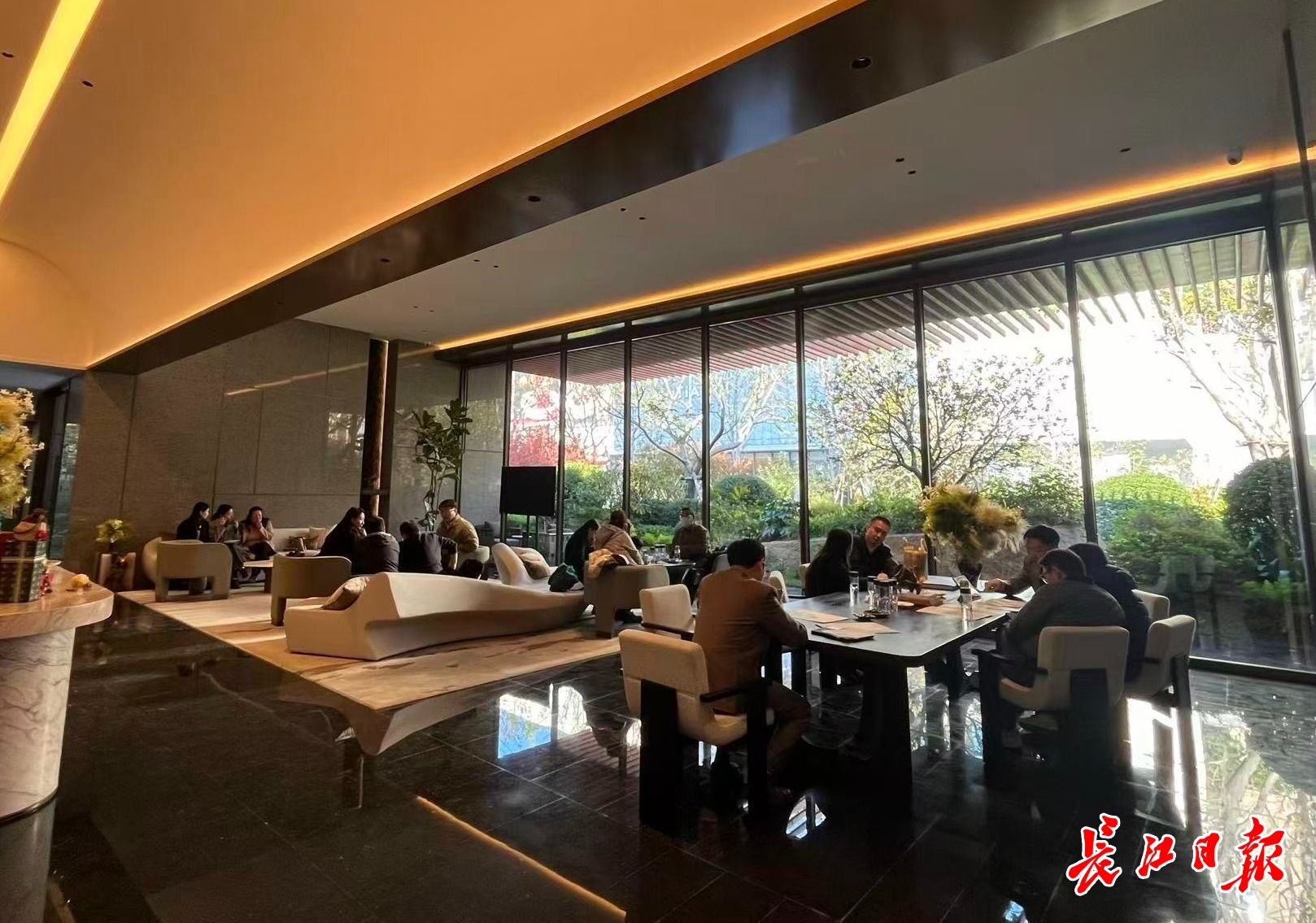
Group 1 - The core viewpoint of the article highlights a significant recovery in the Wuhan real estate market, with November seeing a 56.99% month-on-month increase in commercial housing sales area to 1.9691 million square meters and a 2.93% increase in new housing contract units to 10,753 [1] - Industry experts suggest that favorable policies and restored market confidence are contributing to a "U-shaped" recovery in the Wuhan housing market, with November's performance continuing the positive trend observed in October, indicating a rise in both volume and price [1] - The sales center for the Yunyi project experienced a surge in visitor numbers, prompting the temporary reassignment of staff to assist with the increased customer inquiries [1][3] Group 2 - The Yunyi project recorded nearly 1,000 visitor groups in November, with its first opening on November 22 resulting in nearly 100 units sold and sales exceeding 520 million yuan, with 40% of buyers being new customers [4] - The demographic of buyers includes 51% from the 30-40 age group and 54% being families with one child, indicating a trend towards improvement-oriented housing [4] - The Yunyi project distinguishes itself through personalized design features, including flexible structural designs that allow homeowners to adjust interior spaces according to their needs, catering to various family structures from single living to multi-generational households [5]
最新发布:22城新房+5城二手房涨价,二季度楼市怎么走?
Nan Fang Du Shi Bao· 2025-05-19 07:30
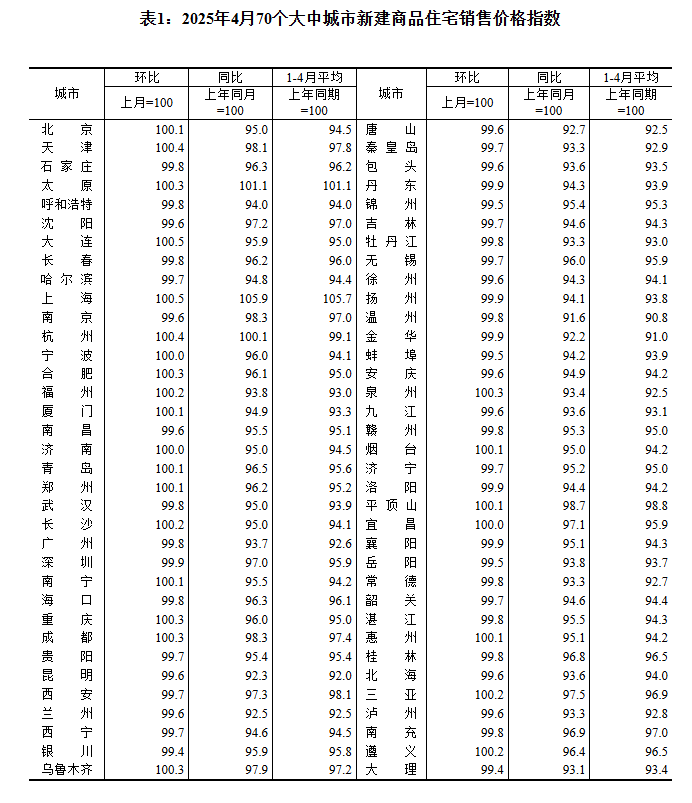
Core Viewpoint - The number of cities with rising housing prices has significantly decreased after a brief period of recovery, indicating a potential cooling in the real estate market [1][2][6]. New Housing Market - In April 2025, 22 out of 70 major cities saw new housing prices increase, down from 24 in March [2][10]. - First-tier cities experienced mixed results, with Beijing and Shanghai seeing slight increases of 0.1% and 0.5%, while Guangzhou and Shenzhen saw declines of 0.2% and 0.1% respectively [2][10]. - The average price of new homes in first-tier cities fell by 2.1% year-on-year, with Shanghai showing a notable increase of 5.9% [5][10]. Second-Hand Housing Market - Only 5 cities reported increases in second-hand housing prices in April, a drop from 10 cities in March, with 64 cities experiencing price declines [2][10]. - The overall second-hand housing price index decreased by 0.4% month-on-month and 6.8% year-on-year [10][11]. - Major cities like Beijing, Shanghai, Guangzhou, and Shenzhen saw year-on-year declines of 1.0%, 0.6%, 7.4%, and 3.7% respectively [5][10]. Market Trends and Dynamics - The market is currently in a phase of adjustment, with core cities showing resilience in demand, while second-tier and third-tier cities face ongoing downward pressure due to high inventory and insufficient demand [6][7][8]. - The "price for volume" strategy is prevalent, particularly in the second-hand market, where prices are being pressured down due to an oversupply of listings [8][9]. - The overall sentiment in the market remains cautious, with expectations for further policy support to stabilize buyer confidence and market activity [9][12]. Future Outlook - Analysts suggest that while there are signs of stabilization, the recovery of the housing market will require a multi-faceted approach, including improved buyer confidence and economic conditions [9][12]. - The second quarter is expected to see a typical seasonal decline in prices, particularly in the second-hand market, as new supply impacts demand dynamics [11][12].
4月杭州成交9421套二手房 多项指标同比出现上涨
Mei Ri Shang Bao· 2025-05-14 22:25
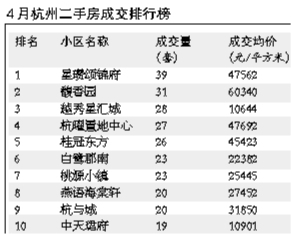
Core Insights - The second-hand housing market in Hangzhou continues to show strong performance, with April seeing a total of 9,421 transactions, a 24% decrease from March but a 12% increase year-on-year, marking the highest transaction volume for April in nearly four years [1][2] - The average transaction price reached 29,634 yuan per square meter, reflecting a 1.9% year-on-year increase, indicating sustained demand despite a natural decline in transaction volume [1][2] Group 1 - The decline in transaction volume in April is attributed to the release of pent-up demand from March, influenced by seasonal factors such as the school enrollment period, and the overall economic environment not stimulating new demand [2] - The market has seen a depletion of lower-priced good properties, leading to a more rational negotiation process between buyers and sellers, which has slowed down transaction speeds [2] - Despite the decline, the market remains active, with April's transaction volume above 9,000 units, positioning Hangzhou as one of the most vibrant real estate markets in the country [2] Group 2 - In early May, the second-hand housing market maintained strong performance, with a 58% year-on-year increase in property viewings during the May Day holiday and a 15% increase in new contracts [3] - The active viewing numbers indicate robust demand, and the market is expected to experience fluctuations in both volume and price in the near future [3] - Leading indicators such as viewing numbers and client inquiries suggest that the net signing volume for second-hand homes will remain at a relatively good level [3]
“五一”楼市众生相:热点楼盘深夜不打烊,二手房冷热分化
Di Yi Cai Jing· 2025-05-06 06:17
Group 1: New Housing Market Trends - The new housing market in major cities experienced a "spot" heat during the May Day holiday, with significant discounts attracting buyers, including reductions of up to 1 million yuan on certain properties [1][2] - Developers in cities like Beijing launched aggressive promotions, with various types of properties, including residential and villas, seeing substantial price cuts [2][3] - The hot-selling properties are characterized by either high cost-performance ratios or superior design and quality due to upgrades in housing standards [1][3] Group 2: Second-Hand Housing Market Dynamics - The second-hand housing market showed signs of stabilization after the traditional peak season, with a notable shift towards "price for volume" strategies in core cities [1][4] - In Beijing, the number of second-hand housing transactions remained above 15,000 units in March and April, with a year-on-year increase of 16.59% in April [5] - The market is experiencing a "cold-hot" differentiation, with demand concentrated in lower-priced segments, particularly for first-time buyers [5][6] Group 3: Regional Highlights - In Shanghai, the "national price king" project saw a subscription rate exceeding 220% before the holiday, indicating strong demand despite the high price point of over 17,000 yuan per square meter [6][7] - Other cities like Hangzhou and Wuhan also reported significant sales during the holiday, with some projects experiencing a "rush" for properties [8] - In Guangzhou, the market saw increased visitor numbers and sales, with some projects achieving sales of over 30 billion yuan during the holiday [9][10] Group 4: Shenzhen Market Performance - Shenzhen's new housing projects performed well during the holiday, with a year-on-year increase of 105% in signed contracts and 33% in viewings [10][11] - Local developers launched multiple projects, achieving significant sales figures, including over 1.78 billion yuan in sales for one project [11] - The second-hand market in Shenzhen also showed strong performance, with a 66% increase in signed contracts compared to the previous year [12][13]


专题回顾 | 一季度小阳春特征解析和持续性展望
克而瑞地产研究· 2025-05-05 02:27
Core Viewpoint - The real estate market showed signs of stabilization in Q1 2025, with a potential continuation of weak recovery in Q2, particularly in hot cities [1][3]. Group 1: Market Overview - In Q1 2025, the overall real estate market stabilized, with total transaction area for new and second-hand homes reaching 82.04 million square meters, a year-on-year increase of 17% [3][5]. - New home transactions in 115 key cities remained flat compared to last year, with a total area of 51.31 million square meters [5]. - First-tier cities outperformed second and third-tier cities, with first-tier cities showing a 26% year-on-year increase, while third and fourth-tier cities experienced an 8% decline [5][7]. Group 2: City-Specific Trends - Hot cities like Beijing, Shanghai, Hangzhou, and Chengdu saw stronger recovery in second-hand home markets compared to new homes [7]. - Cities such as Guangzhou, Tianjin, and Wuhan showed signs of weak recovery, with transaction levels returning to last year's figures [9]. - In contrast, cities like Hefei and Nanjing displayed insufficient growth momentum, with declining customer conversion rates [16][19]. Group 3: Product and Market Dynamics - Strong product offerings, particularly new regulations for high-efficiency housing, have driven market interest, with new products achieving high sales rates [22][23]. - Well-developed infrastructure, such as transit-oriented developments and school districts, has become a key selling point for properties [27]. - Discounted pricing and strong marketing strategies for entry-level homes have contributed to increased sales volume [30]. Group 4: Future Outlook - The market is expected to continue its weak recovery trend into Q2 2025, with new home quality upgrades attracting second-hand home buyers [31][32]. - The average sales price of second-hand homes in core cities has increased, indicating a warming market that extends to first-time buyers [31].