海外市场

Search documents
大比拼!A股家电三巨头,美的领衔、海尔居中、格力掉队
中国基金报· 2025-08-30 10:09
Core Viewpoint - The performance of the three major home appliance giants in A-shares shows significant differentiation, with Midea leading, Haier in the middle, and Gree lagging behind [2][5]. Group 1: Midea Group Performance - Midea Group reported a revenue of 251.12 billion yuan for the first half of 2025, a year-on-year increase of 15.58%, and a net profit of 26.01 billion yuan, up 25.04% [3][8]. - The company plans to distribute a cash dividend of 5 yuan per 10 shares, totaling 3.798 billion yuan [3][8]. - Midea's smart home business revenue grew by 13.31% to 167.20 billion yuan, accounting for 66.58% of total revenue [23]. Group 2: Haier Smart Home Performance - Haier Smart Home achieved a revenue of 156.49 billion yuan in the first half of 2025, reflecting a year-on-year growth of 10.22% [10][19]. - The net profit attributable to shareholders was 12.03 billion yuan, an increase of 15.59% [13]. Group 3: Gree Electric Performance - Gree Electric's revenue decreased by 2.46% to 97.32 billion yuan, while its net profit increased by 1.95% to 14.41 billion yuan [6][18]. - Gree announced it would not distribute cash dividends, marking a shift from its previous status as a "dividend giant" [8][18]. Group 4: Market Trends and Competition - The domestic air conditioning market saw a retail sales increase of 12.4% to 126.3 billion yuan in the first half of 2025, driven by policy incentives and high temperatures [20]. - The competition in the domestic home appliance market is expected to intensify in the second half of 2025, with a slight projected increase in retail scale [20]. Group 5: Overseas Market Growth - Midea, Haier, and Gree all reported significant growth in overseas markets, with Midea's overseas revenue reaching 107.19 billion yuan, accounting for 42.69% of its total revenue, a year-on-year increase of 17.70% [22][24]. - Haier's overseas revenue was 79.08 billion yuan, making up 50.53% of its total revenue, while Gree's overseas revenue was 16.34 billion yuan, accounting for 16.78% [22][24]. Group 6: B-end Business Development - Midea and Gree are both transitioning towards B-end business, with Midea's commercial and industrial solutions revenue growing by 20.79% to 64.54 billion yuan, representing 25.70% of its total revenue [32][34]. - Gree's other business revenue reached 9.83 billion yuan, accounting for 10.10% of its total revenue [28].





再次冲击IPO!奇瑞汽车更新港交所招股书,一季度净利润上涨91%
Zhong Guo Jin Rong Xin Xi Wang· 2025-08-29 03:08
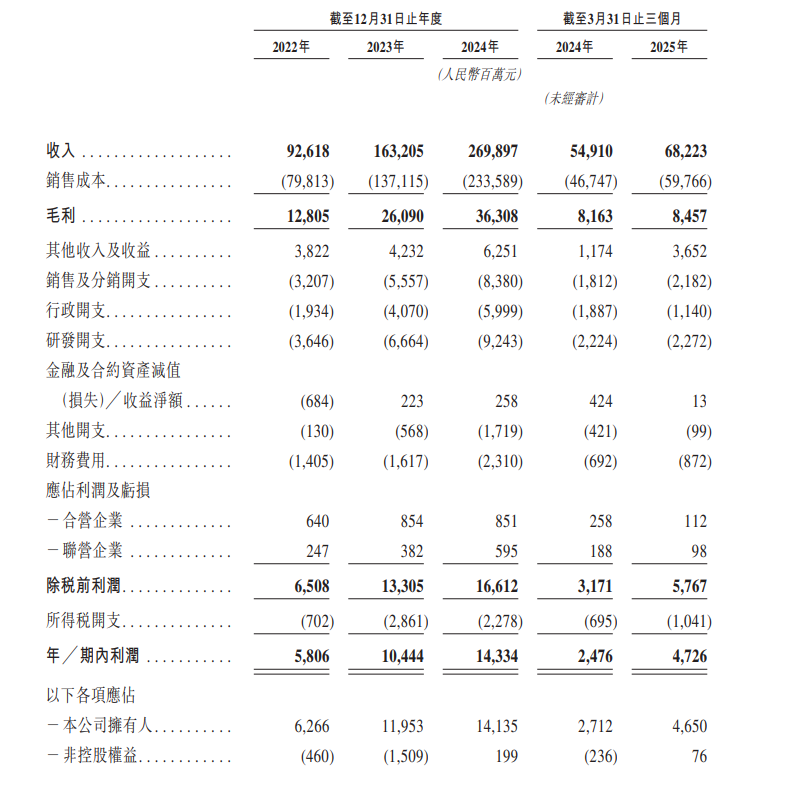
Core Viewpoint - Chery Automobile is progressing with its Hong Kong IPO, planning to issue up to 699 million shares and convert 2.016 billion shares from domestic to overseas listings, with a strong performance in both traditional and new energy vehicle sales [1][4]. Financial Performance - In 2024, Chery's revenue reached 269.9 billion RMB, a year-on-year increase of 65.4%, and net profit was 14.3 billion RMB, up 37.2% [1][3]. - For Q1 2025, revenue rose by 24.2% to 68.2 billion RMB, while net profit surged by 90.9% to 4.7 billion RMB [2][3]. Market Position and Sales - Chery's total vehicle sales exceeded 13 million units, ranking 11th globally and 2nd among Chinese brands in 2024 [1]. - The company achieved a remarkable 277.3% increase in new energy vehicle sales in 2024, with overseas revenue accounting for 37.4% of total sales [4]. Brand Strategy - Chery has established five differentiated brands targeting various market segments, with the Chery brand leading in overall sales [4]. - The company has a robust global dealer network with 6,621 outlets, including 3,663 in China and 2,958 overseas [4]. Use of IPO Proceeds - The funds raised from the IPO will be allocated to expanding the passenger vehicle product line, R&D for next-generation vehicles and advanced technologies, global strategy implementation, upgrading the Wuhu production base, and supplementing working capital [6].
拆解“宇通系”两家A股上市公司2025半年报:未分配利润超65亿元,继续向这两大市场要效益
Mei Ri Jing Ji Xin Wen· 2025-08-28 15:19
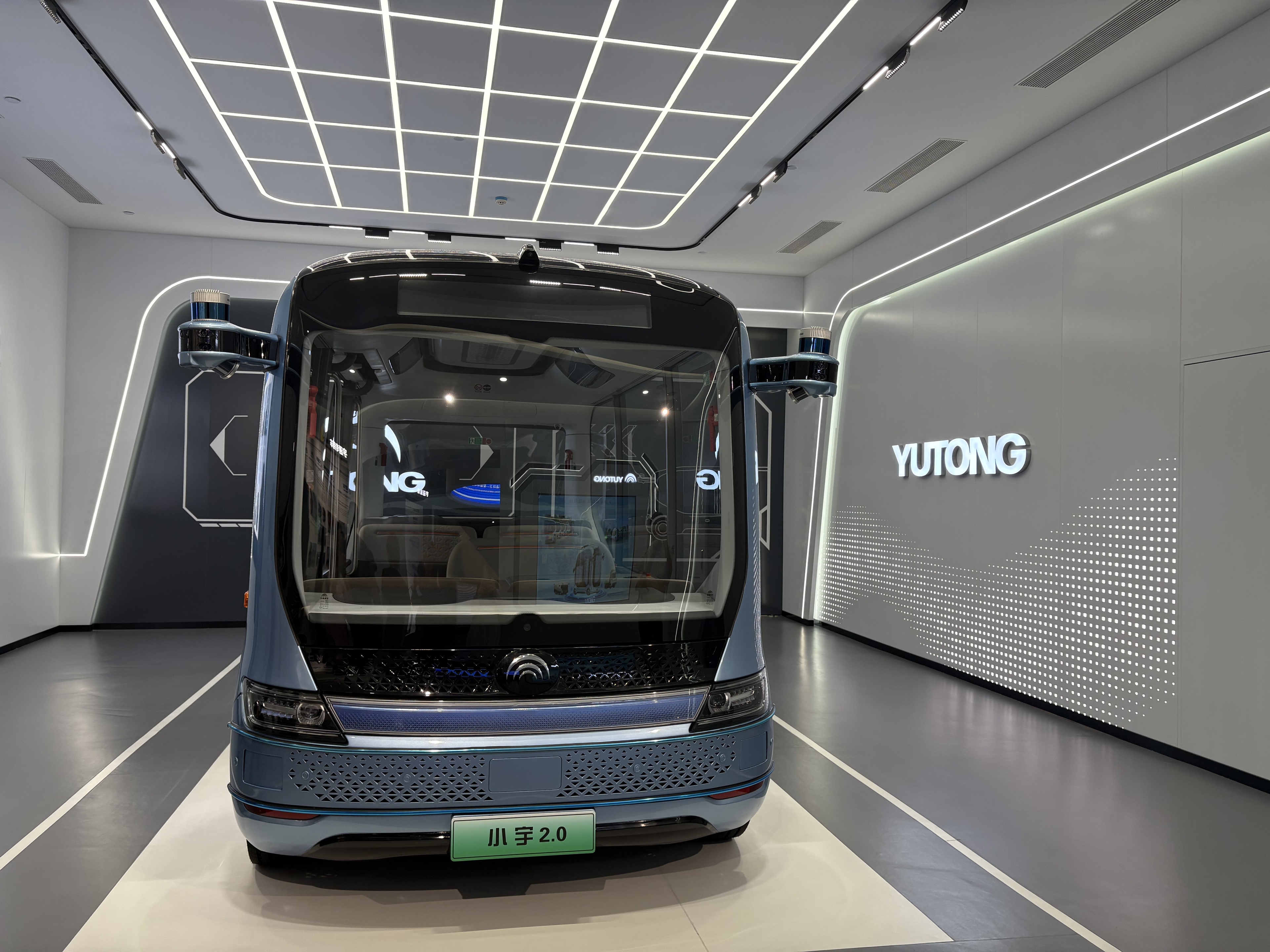
Core Viewpoint - Yutong Group's A-share listed companies, Yutong Bus and Yutong Heavy Industry, reported a combined revenue of 17.789 billion yuan and a net profit attributable to shareholders of 2.055 billion yuan for the first half of 2025, alongside significant mid-year dividend plans [1][2]. Financial Performance - Yutong Bus and Yutong Heavy Industry's combined revenue for the first half of 2025 was 17.789 billion yuan, with a net profit of 2.055 billion yuan [1]. - Yutong Bus's retained earnings reached 5.985 billion yuan, while Yutong Heavy Industry's was 0.598 billion yuan, totaling 6.583 billion yuan [1]. - Yutong Bus reported a net cash flow from operating activities of 1.715 billion yuan, down 68.04% year-on-year, while Yutong Heavy Industry's was -15.6527 million yuan, down 112.88% [1][2]. Dividend Plans - Yutong Bus plans to distribute a cash dividend of 5 yuan per 10 shares, while Yutong Heavy Industry plans to distribute 1 yuan per 10 shares [1]. Cash Flow Management - Yutong Heavy Industry has reduced its accounts payable by 32% since the beginning of the year, leading to a significant decrease in payable turnover days [2]. R&D Investment - Yutong Bus invested 746 million yuan in R&D, accounting for 4.63% of its revenue, focusing on smart connectivity, assisted driving, and new energy products [2][5]. - Yutong Heavy Industry's R&D expenditure increased by 25% year-on-year to 71 million yuan, aimed at supporting new product development [5]. Market Trends - The domestic commercial vehicle market showed signs of recovery, with a 6.47% year-on-year increase in retail sales from January to July 2025 [6]. - Yutong Bus sold 21,300 buses in the first half of 2025, a 3.73% increase year-on-year, achieving a market share of 55.4% in the large and medium-sized bus segment [6][7]. New Energy and Overseas Expansion - Yutong Bus's sales of large and medium-sized new energy buses reached 3,701 units, up 57.8% year-on-year, with a significant increase in sales of new energy buses [7]. - The company plans to enhance its overseas market presence and local service networks to meet growing international demand [10].


颐海国际(1579.HK):第三方经营稳健 期待海外和B端新增量
Ge Long Hui· 2025-08-26 20:02
Core Viewpoint - The company reported stable performance in 1H25 with revenue of 2.927 billion yuan, a year-on-year increase of 0.02%, and a net profit attributable to shareholders of 309 million yuan, up 0.39% year-on-year, reflecting overall resilience in both revenue and profit [1] Financial Performance - The company declared a dividend of 0.3107 HKD per share (approximately 0.2836 RMB), with a payout ratio of 95%, indicating generous shareholder returns [1] - The third-party business revenue reached 2.064 billion yuan, a year-on-year increase of 6.5%, accounting for 70.5% of total revenue, up 4.3 percentage points year-on-year [1] - The company’s gross profit margins for hot pot seasoning, compound seasoning, and instant food were 31.2%, 33.6%, and 24.0% respectively, showing slight declines compared to the previous year [2] Product and Market Development - The company is enhancing its product development capabilities and channel management, which has led to a 2.1% year-on-year increase in revenue from third-party distributors [1] - The company’s Southeast Asia factory has been completed, and production capacity is expected to gradually increase, with plans to expand overseas B-end market share [2] - The sales revenue from third-party B-end reached 156 million yuan, a year-on-year increase of 131.7%, indicating strong growth potential in overseas markets [2] Profit Forecast and Valuation - The company has adjusted its net profit forecasts for 2025-2027 down by 8%, 9%, and 11% to 783 million, 860 million, and 959 million yuan respectively, with corresponding EPS of 0.76, 0.83, and 0.92 yuan [3] - The company is assigned a valuation of 22 times PE for 2025, reflecting a discount compared to comparable companies, with a target price adjustment to 18.17 HKD [3]
安靠智电20250826
2025-08-26 15:02
Summary of Anke Electric's Conference Call Company Overview - **Company**: Anke Electric - **Industry**: Electric Power Equipment and Systems Key Points Financial Performance - In the first half of 2025, Anke Electric's overall revenue decreased by 32% year-on-year, primarily due to a decline in domestic renewable energy investments and government infrastructure project investments [3][4] - The cable system business saw a 10% decline compared to the same period last year, mainly due to delays in the completion of 220kV and 500kV products, with expected revenue recognition in the second half of the year [3][4] - Revenue from household products and system services dropped significantly from 136 million yuan to 60 million yuan, attributed to a shift from large projects to smaller orders [3][4] - R&D expenses increased by 13 million yuan, focusing on integrated machine development, transformer technology, and environmentally friendly gas research [2][3] Market Outlook - The company has a strong order backlog and anticipates accelerated project deliveries in the second half of the year, with expectations for the cable accessory business to remain stable or see slight growth [2][4] - Major projects for the second half include large orders from Haidong Commercial Center and Green Development Xinjiang, totaling nearly 200 million yuan [4] - The company is actively tracking ultra-high voltage projects, with an estimated total equipment volume of 2 to 3 billion yuan expected to be tendered by the end of this year to next year [2][7] Strategic Initiatives - The modular parallel station business is focusing on new energy boosting and supercomputing data centers, with multiple projects in Xinjiang, Qinghai, and Gansu [8] - The Yajiang project, approximately 1,800 kilometers long, is expected to be completed between the end of 2027 and 2030, utilizing 500kV equipment [9] Competitive Landscape - Anke Electric faces competition from new entrants like Pinggao and Hengchi Electric, which have rapidly improved their manufacturing capabilities [15] - Despite the competitive pressure, the company believes that the monopolistic nature of the grid industry provides a buffer against new entrants [15] Environmental and Technological Developments - The company is developing C4 environmentally friendly gas production facilities to address high carbon emissions from traditional SF6 insulation media, with production capacity expected by the end of the year [10][18] - Anke Electric is also focusing on reducing carbon emissions in the Yajiang project, with potential collaboration with State Grid for C4 technology development [19] International Expansion - The company is prioritizing overseas market expansion due to intense domestic competition, with successful sales in Russia and ongoing efforts in Egypt, Saudi Arabia, and Kuwait [16] - Anke Electric has achieved stable sales of over 20 million yuan annually with 3M and is working on product validation and certification for international markets [16] Product Pricing and Cost Structure - Current market prices for various products include 15,000 yuan/meter for 220kV three-phase products and approximately 8,000 yuan/meter for 500kV products [20][21] - The company anticipates cost reductions in the long term due to increased production volume, although prices are expected to remain stable due to the industry's monopolistic nature [20][21] Conclusion - Anke Electric maintains a positive outlook for the second half of 2025, driven by a solid order backlog and strategic project deliveries, while navigating challenges from market competition and environmental regulations [2][4][16]
零跑半年赚0.3亿,D系列车型最快10月亮相
Jin Rong Jie· 2025-08-19 10:20
Core Viewpoint - Leap Motor has achieved a net profit of 30 million yuan in the first half of 2025, becoming the second new energy vehicle company to report a half-year profit, with a revenue of 24.25 billion yuan, representing a year-on-year growth of 174% [1][2][3]. Financial Performance - In the first half of 2025, Leap Motor's revenue reached 24.25 billion yuan, a 174% increase year-on-year, while the net profit was 30 million yuan, marking a return to profitability [3]. - The gross margin for the first half of the year was 14.1%, up 13 percentage points year-on-year, with expectations for further improvement in the second half [3][5]. Sales and Delivery - Leap Motor delivered over 221,000 vehicles in the first half of 2025, a year-on-year increase of 155.7%, making it the sales champion among new energy vehicle manufacturers [1][3]. - The company has raised its annual sales target to between 580,000 and 650,000 vehicles, with a goal to challenge for 1 million vehicles in 2026 [1][4]. New Product Launches - Leap Motor has entered a phase of intensive new vehicle launches, with several models set to debut, including the B01 and a new model in the D series [6][9]. - The D series is anticipated to be a significant product line, with the first model expected to be unveiled in October 2025 [6][9]. Market Expansion - Leap Motor has exported 20,375 vehicles in the first half of 2025, leading among new energy vehicle companies in exports [8]. - The company is collaborating with Stellantis Group for localized assembly in Malaysia, aiming to enhance its global market presence [9]. Strategic Focus - Leap Motor is prioritizing market penetration over immediate profitability in overseas markets, focusing on establishing a strong foothold before pursuing profit margins [10].
技术攻坚迎接350万销量大考上汽集团打响新能源车突围战
Zhong Guo Zheng Quan Bao· 2025-08-07 21:11
Core Viewpoint - SAIC Group is aggressively advancing in the new energy vehicle (NEV) sector, aiming for significant growth in sales and technological innovation by 2025, with a target of 3.5 million NEV sales, representing a 250% increase from 2022 [1][2][3] Group Performance - In the first half of 2025, SAIC Group's total vehicle sales reached 2.053 million units, a year-on-year increase of 12.4% [2] - NEV sales in July reached 117,300 units, marking a year-on-year growth of 64.91% [1] - The current monthly average NEV sales of 110,000 units fall short of the target of 290,000 units, indicating a potential shortfall in achieving the annual sales goal [1] Strategic Reforms - SAIC Group has restructured its operations by consolidating brands like Roewe, Feifan, and MG into a "large passenger vehicle sector" to enhance resource allocation [2] - The company is focusing on three main areas: independent brands, new energy, and overseas markets, which have driven growth in the first half of the year [2][3] NEV Segment Growth - The NEV segment has become the fastest-growing business unit, with cumulative sales exceeding 764,000 units in the first seven months, a year-on-year increase of 43.5% [3] - The main brand, SAIC-GM Wuling, contributed 720,000 units to NEV sales, while Zhiji Auto delivered 7,027 units in July [3] Overseas Market Performance - SAIC Group's overseas sales reached 576,000 units in the first seven months, a year-on-year increase of 1.1%, accounting for 24.1% of total sales [3] - The company has established a sales network covering over 170 countries and regions, with cumulative overseas sales surpassing 6 million units [3] Technological Advancements - The company is entering a phase of intensive product and technology launches, with MG brand introducing several new models and technologies, including the CyberGTS and MG4 [4][5] - MG has achieved significant sales in Europe, exceeding 150,000 units in the first half of the year, outperforming Tesla [4] - The introduction of semi-solid-state batteries and the "Star" super-range technology by Zhiji Auto aims to enhance the value proposition of range-extended vehicles [5] Future Outlook - By 2027, SAIC Group plans to have over 60% of its sales from independent brands and smart electric vehicles, with current figures showing 63.5% for independent brands and 32% for NEVs [3] - The company is focused on leveraging technological synergies across its brands to enhance competitiveness and reduce innovation costs [5][6]

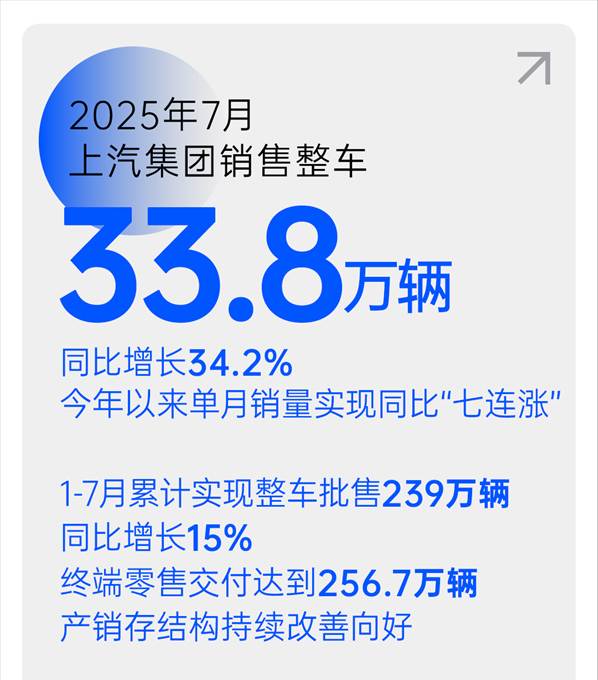
上汽7月份整车销量同比增长34.2% 新能源车大涨64.9%
Zhong Guo Jin Rong Xin Xi Wang· 2025-08-04 03:14
Core Insights - SAIC Motor Corporation reported a significant increase in vehicle sales, with July sales reaching 338,000 units, a year-on-year growth of 34.2%, marking the seventh consecutive month of growth in 2023 [1] - Cumulative vehicle sales from January to July reached 2.39 million units, a 15% increase year-on-year, with retail deliveries hitting 2.567 million units, indicating an improving production and sales structure [1] Group 1: Sales Performance - In July, SAIC's self-owned brand sales reached 214,000 units, up 39.4% year-on-year, while new energy vehicle (NEV) sales were 117,000 units, reflecting a 64.9% increase [3] - Overseas market sales totaled 82,000 units, demonstrating steady growth despite various challenges [3] - SAIC's joint venture brands also saw a rebound, with sales increasing by 26.1% year-on-year, supported by the launch of new models such as the SAIC Audi A5L Sportback and Buick's high-end sub-brand "Zhijing" [3] Group 2: Product and Market Development - From January to July, cumulative sales of SAIC's self-owned brands reached 1.518 million units, a 23.3% increase, accounting for 63.5% of total sales, up 4.3 percentage points from the previous year [3] - Upcoming new models, including the Roewe M7 DMH and the new MG4, are expected to further boost sales for SAIC's self-owned brands [4] - In the NEV segment, cumulative sales reached 764,000 units from January to July, a 43.5% increase, outpacing the overall NEV market growth [4] Group 3: International Market Performance - SAIC's products are sold in over 170 countries and regions, with significant market presence in Europe, where it has achieved a cumulative sales volume exceeding 6 million units [4] - In the European market, SAIC's MG brand delivered nearly 180,000 units from January to July, achieving double-digit growth, particularly with HEV models outperforming many overseas competitors [4]
7月制造业PMI:边际回落,政策或稳中求进,降息添变数
Sou Hu Cai Jing· 2025-08-01 13:44
Group 1 - The manufacturing PMI in July showed a marginal decline, significantly weaker than seasonal trends observed in previous years, with the new orders index particularly affected [1] - Manufacturing momentum is experiencing a marginal downturn, indicating overall downward pressure on the sector [1] - Despite the challenges, the political bureau meeting has set a positive policy tone for the future, suggesting a focus on stability and progress in the second half of the year [1] Group 2 - The government is expected to accelerate bond issuance as part of its policy response, particularly if data continues to show a downward trend [1] - In the overseas market, the Federal Reserve's recent meeting indicated a hawkish stance from Chairman Powell, with a focus on employment and inflation [1] - June inflation slightly exceeded expectations due to rising commodity prices, adding uncertainty to the timing of potential interest rate cuts [1]
赴港上市即将失效,尹同跃带领奇瑞“最后一跃”?
Sou Hu Cai Jing· 2025-08-01 02:14
文:互联网江湖 作者:刘致呈 对于IPO这事儿,尹同跃也定下了目标:2025年完成企业上市是首要任务。 到现在,招股书递交已有5个月,奇瑞年内IPO的目标还能达成吗? 20年前,奇瑞就曾经启动上市程序,彼时因为与上汽的股权争议,上市计划很快夭折,随后,奇瑞开始股份制改造,继续谋求上市。谁想到,2007年二次 IPO遇上国际金融危机,再次上市失利。 此后,奇瑞汽车先后6次IPO未果,堪称"IPO仰卧起坐大师",直到今年2月,奇瑞再向港股递表。 "奇瑞十年前就该上市了。"2022年11月,奇瑞汽车董事长尹同跃曾对《财经》杂志表示。 IPO似乎成了奇瑞的"执念"。 即将进入8月,奇瑞赴港IPO却没了动静。 根据港交所的规定,IPO申请的有效期通常为6个月,如果未在6个月内完成聆讯或上市,申请可能失效。 也就是说,2月份递交招股书后,奇瑞IPO的有效期仅剩一个月。 "含电量"不足,奇瑞千亿估值能实现吗? 过去奇瑞IPO失败,原因有很多,有股权争议,有混改的影响,总之,IPO这条路走得不容易。天眼查APP股权信息显示,当前奇瑞控股持股奇瑞汽车 38.6%。 | 序号 | | 股东(发起人) 查看实际控股人 > | 持股 ...