美国经济放缓

Search documents
金晟富:8.5黄金承压下行符合预期!晚间黄金行情分析参考
Sou Hu Cai Jing· 2025-08-05 11:10
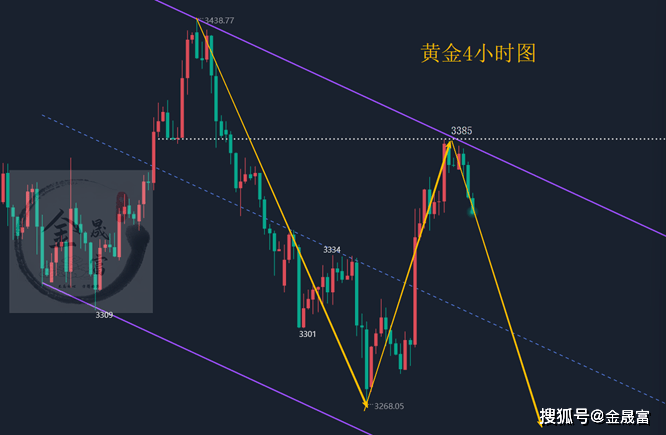
Group 1 - The recent rise in gold prices is driven by weak U.S. economic data and increased expectations for interest rate cuts by the Federal Reserve, with over 90% probability for a rate cut in September according to CME FedWatch [2] - U.S. non-farm payroll data indicates a weakening labor market, reinforcing market bets on a new round of rate cuts [2] - Global trade uncertainties, exacerbated by recent tariff increases signed by President Trump, continue to support gold's safe-haven appeal [2] Group 2 - Technical analysis suggests that gold may have reached a short-term peak, with bearish signals emerging [3] - A downward channel has formed in the short term, indicating potential further declines in gold prices [5] - Key resistance levels for gold are identified at 3385-3390, while support levels are at 3335-3340 [5]

百利好晚盘分析:美经济数据走弱 黄金短期获支撑
Sou Hu Cai Jing· 2025-08-05 09:18
黄金方面: 智昇研究资深分析师辰宇认为,倘若特朗普对俄罗斯的二级制裁没有落地,那么印度以及东方大国将继续大幅购买俄罗斯石 油,叠加在第二季度中国和印度已经囤了大量的石油,后续原油需求降低叠加产油国加大增产,油价将进一步下行,甚至有跌 破60美元的风险。 倘若美国对俄罗斯二级制裁落地,那么印度购买俄罗斯石油可能减少150万-200万桶/日,东方大国从俄罗斯购油量也会有一定的 影响,叠加产油国本身的补偿性减产协议,产油国增产幅度将达不到220万桶/日,难以弥补俄油缺口,则油价极有可能再度强 势走高。 技术面:日线上,连续多个交易日行情下行,显示近期行情偏弱势,指标上看,行情处于62日均线下方运行,警惕进一步下行 风险,日内关注下方65美元一线支撑情况。 日经225方面: 日线上,行情回调测试62日均线获得支撑并且收阳线,显示短期回调有望企稳,后续进一步走高机会较大。日内关注下方40400 一线支撑情况。 周一(8月4日)公布美国6月工厂订单月率录得-4.8%,市场预期-4.8%,前值8.3%。美国6月工厂订单月率虽然符合市场预期, 但远低于前值的8.3%,暗示在特朗普的关税政策之下,美国制造业极有可能面临衰退风险 ...

海外高频 | 8月1日后,美国平均关税税率升至18.3% (申万宏观·赵伟团队)
申万宏源宏观· 2025-08-04 03:28
Group 1 - The average tariff rate in the US increased to 18.3% after August 1, down approximately 4 percentage points from 22.5% on April 2 [62][63] - The new tariff rates for countries with trade agreements range from 10% to 20%, while those for countries with trade deficits range from 25% to 41% [62][63] - Ongoing negotiations between the US and other countries, including India, aim to finalize a phase one agreement by fall 2025, focusing on agricultural products, medical devices, and digital trade tariffs [62] Group 2 - Developed market indices experienced declines, with the S&P 500 down 2.4% and the French CAC40 down 3.7% [2][3] - Emerging market indices also saw declines, with the South Korean Composite Index down 2.4% and the Ho Chi Minh Index down 2.3% [3] - The majority of sectors within the S&P 500 fell, particularly materials, consumer discretionary, healthcare, and financials, which dropped 5.4%, 4.5%, 3.9%, and 3.8% respectively [6] Group 3 - The yield on the 10-year US Treasury bond decreased by 17.0 basis points to 4.2% [16] - Other developed countries also saw declines in their 10-year bond yields, with Germany at 2.8% and Japan at 1.6% [16] - Emerging market 10-year bond yields mostly fell, with Turkey down 21.0 basis points to 29.3% and South Africa down 24.0 basis points to 9.6% [22] Group 4 - The US dollar index rose by 1.0% to 98.69, while most other currencies depreciated against the dollar [27][39] - The offshore Chinese yuan depreciated to 7.1929 against the dollar [39] - Major emerging market currencies also saw depreciation, with the Mexican peso down 1.6% and the Philippine peso down 1.0% [27] Group 5 - Commodity prices showed mixed results, with WTI crude oil rising 3.3% to $67.3 per barrel, while coking coal prices fell 13.2% to 1093 yuan per ton [45][46] - Precious metals experienced varied performance, with COMEX gold up 0.9% to $3360.1 per ounce, while COMEX silver fell 3.4% to $36.8 per ounce [52][58] Group 6 - The US economy's Q2 GDP grew at an annualized rate of 3%, surpassing market expectations of 2.6%, but internal demand showed signs of weakness [73] - Consumer spending in Q2 grew at an annualized rate of 1.4%, below the expected 1.5% [73] - The overall GDP growth was primarily driven by net exports, indicating a potential end to the trend of "importing" [73] Group 7 - The US added 73,000 jobs in July, falling short of the expected 104,000, with previous months' job additions revised down significantly [76] - The unemployment rate rose to 4.2%, aligning with expectations, while job openings in June decreased to 7.437 million, below the anticipated 7.5 million [76]

美国劳动力市场:脆弱的“紧平衡”
Shenwan Hongyuan Securities· 2025-08-04 02:43
Labor Market Insights - July non-farm payrolls increased by 73,000, below the market expectation of 104,000[13] - Revisions for May and June showed a downward adjustment of 125,000 and 133,000 respectively, indicating a weaker labor market than previously thought[13] - The unemployment rate rose to 4.2% in July, aligning with market expectations, while the labor force participation rate fell to 62.2%[13] Economic Trends - The labor market is entering a "relaxation" phase, with both supply and demand weakening, leading to a potential rise in the unemployment rate[2] - The average tariff rate in the U.S. increased to 18.3% after August 1, which may have a more significant short-term impact on investment than on consumption[4] - The second quarter GDP growth was reported at an annualized rate of 3%, surpassing the market expectation of 2.6%[4] Federal Reserve Outlook - Following the release of the July employment data, the market has priced in an 80% probability of a 25 basis point rate cut in September[3] - Fed Chair Powell indicated a focus on the unemployment rate rather than non-farm payroll numbers, suggesting that a rate cut may be contingent on unemployment exceeding 4.3%[3] Market Reactions - Following the employment data release, the S&P 500 index fell by 2.4%, while the 10-year U.S. Treasury yield decreased by 17 basis points to 4.2%[4] - The dollar index rose by 1.0% to 98.69, and the offshore RMB depreciated to 7.1929 against the dollar[4]
银河证券:充满疑点的劳动数据可以支持9月美联储降息吗?
智通财经网· 2025-08-03 07:20
Core Viewpoint - The report from China Galaxy Securities indicates that the new non-farm employment figures were weaker than expected, with a significant downward revision of 258,000 jobs from previous months, and the unemployment rate rising to 4.25% [1][2][3] Employment Data Summary - New non-farm jobs added in July were 73,000, below the market expectation of 110,000; June's employment was revised down from 147,000 to 14,000, and May's from 144,000 to 19,000, totaling a downward revision of 258,000 jobs [2] - The non-farm hourly wage growth accelerated to 0.33% month-on-month and rose to 3.91% year-on-year [2] - The unemployment rate increased to 4.248% from the previous 4.117%, while the labor participation rate decreased to 62.2% [2] Labor Market Analysis - Concerns about the quality of labor data have emerged, as the significant downward revisions in employment figures for May and June have pushed the three-month average of new jobs into a range that could theoretically support rising unemployment [3] - Despite the weakening labor market, the extent of this weakening may not be sufficient to justify a rate cut by the Federal Reserve in September [3] - The quality of labor data is deteriorating, which complicates the Federal Reserve's decision-making process regarding interest rates [4] Economic Contribution and Outlook - The labor market's contribution to consumption remains stable, with no significant weakening observed; thus, the unemployment rate may not drop to levels that would compel the Federal Reserve to lower rates before the September FOMC meeting [5] - The report suggests that the probability of the unemployment rate exceeding 4.4% and forcing a rate cut is low, given the current economic conditions [5] Market Reactions - The market has significantly increased its pricing for rate cuts, with expectations for three rate cuts totaling 75 basis points by December 2025 [6] - Major stock indices such as the S&P 500, Nasdaq, and Dow Jones have experienced notable declines, while the yield on 10-year U.S. Treasury bonds has decreased significantly [7]
又一政治干预!特朗普为何解雇劳工统计局局长?
Sou Hu Cai Jing· 2025-08-02 10:40
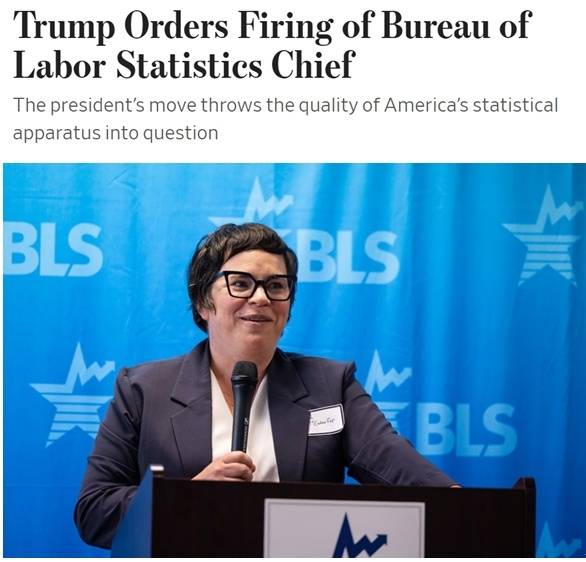
Core Points - The U.S. labor market is showing signs of significant cooling, with July's unemployment rate rising and non-farm payrolls underperforming expectations [1][4] - President Trump expressed dissatisfaction with the employment data and ordered the dismissal of the Labor Statistics Bureau director, accusing her of manipulating data for political purposes [1][7] - Economic indicators suggest a downward trend in the U.S. economy, with GDP growth in the first half of the year at only 1.4%, below the potential growth rate of 1.8% [4] - Manufacturing PMI dropped to 48, indicating contraction, with new orders and employment indices also reflecting a decline [4] - Trump has been pressuring the Federal Reserve to lower interest rates, aiming to manage the national debt of $36 trillion through cheaper financing [8] Economic Indicators - July's unemployment rate increased, and non-farm payrolls were significantly revised down for May and June, indicating a cooling labor market [1] - The manufacturing PMI fell to 48, with the new orders index declining sharply due to trade tensions [4] - The employment index reached a five-year low at 43.4, and unemployment claims exceeded expectations, further signaling labor market deterioration [4] Political Interference - Trump's actions, including the dismissal of the Labor Statistics Bureau director and calls for the resignation of Federal Reserve Chairman Powell, reflect increasing political interference in economic institutions [7][8] - The pressure on the Federal Reserve to lower interest rates is seen as a strategy to alleviate the burden of national debt, but it raises concerns about the independence of the Fed [8]
宏观点评报告:非农史诗级下修,9月降息50bp成备选-20250802
HUAXI Securities· 2025-08-02 09:53
Employment Data - July non-farm employment increased by 73,000, below the expected 104,000[1] - Unemployment rate rose by 0.13 percentage points to 4.248%[1] - Labor participation rate declined by 0.06 percentage points to 62.2%[1] - Average hourly earnings increased by 0.3%, in line with expectations[1] Data Revisions - Non-farm employment for May and June was revised down by a total of 258,000[2] - May's employment was revised down by 125,000 to 19,000, and June's by 133,000 to 14,000[1] Market Reactions - Following the non-farm data release, the dollar index fell from 100 to 98.7[2] - The 2-year U.S. Treasury yield dropped over 20 basis points[2] - Gold prices increased by 2.2%, while the S&P 500 fell by 1.6%[2] - Rate cut expectations rose from 33 basis points to 56 basis points[2] Federal Reserve Outlook - Potential for a 50 basis point rate cut in September due to weak labor market signals[3] - The resignation of a Federal Reserve governor may expedite the selection of a new chair[3] - Market skepticism regarding the independence of the Federal Reserve may lead to expectations of a 75-100 basis point cut[4] Risk Factors - Economic, employment, and inflation trends in the U.S. may exceed expectations, impacting fiscal and tariff policies[5]
美国7月非农新增就业7.3万人 失业率为4.2%
Sou Hu Cai Jing· 2025-08-02 02:38
Group 1 - The U.S. labor market showed unexpected weakness in July, with non-farm payrolls increasing by only 73,000 jobs, significantly below the market expectation of over 140,000 jobs [1] - The unemployment rate rose to 4.2%, an increase of 0.1 percentage points from the previous month [1] - The U.S. Labor Department revised down the employment figures for May and June, with a total downward revision of 258,000 jobs, indicating growing concerns about the slowdown in the U.S. economy [1] Group 2 - Job growth in July was primarily driven by the healthcare and social services sectors, which added 55,000 and 18,000 jobs respectively, while federal government employment continued to decline [1] - The average hourly wage for non-farm employees in July was $36.44, reflecting a month-over-month increase of 0.3% and a year-over-year increase of 3.9% [1] - The Federal Reserve officials expressed concerns about the labor market, noting that private sector job growth is nearly stagnant and that the labor market is showing signs of vulnerability [2]
新兴市场债券展现韧性
Guo Ji Jin Rong Bao· 2025-08-01 06:45
Core Insights - Emerging market bonds have rebounded following the suspension or cancellation of certain tariffs, with local rate yields and emerging market currencies outperforming other fixed income assets [1] - The weakening of the US dollar is changing market perceptions of the US economic dominance, creating investment opportunities in emerging and developed markets outside the US [1] - Geopolitical conflicts in the Middle East and elsewhere have led markets to separate geopolitical risks from other global macro uncertainties, indicating a favorable environment for bottom-up investment opportunities [1] - Structural and cyclical shifts in US and emerging market policies and growth dynamics are increasing the attractiveness of emerging market bonds [2] Emerging Market Dynamics - Emerging markets are expected to benefit from widening growth differentials, with their fundamentals remaining resilient compared to developed markets [2] - Many emerging market countries have seen improvements in their fiscal deficits, stabilizing public debt levels and leading to sovereign credit upgrades [2] - The weakening dollar is expected to lower the ratio of emerging market public debt to GDP, creating a more favorable external environment [2] - Emerging market central banks have room to implement accommodative policies to boost domestic demand due to controlled inflation and stable currencies [2] Investment Opportunities - Emerging market hard currency bonds offer a rare combination of high yields, risk diversification, and macro resilience, making them attractive for investors [3] - Despite rising US real yields, most emerging market currencies have appreciated against the dollar, indicating potential relative value opportunities [3] - The expectation of a weaker dollar is driven by ongoing tariffs and their negative impact on growth, which may lead to more aggressive rate cuts by the Federal Reserve compared to other central banks [3] Market Challenges - The market faces headwinds from uncertainties related to trade disputes and potential deterioration of the situation in the Middle East [4] - The reshaping of the global order presents opportunities, particularly for investors who are cautious about risks associated with single asset classes [4]
透视美国经济形势,美联储前高级经济学家胡捷:高利率的抑制作用开始显现
Di Yi Cai Jing· 2025-07-16 09:47
Economic Overview - The U.S. economy is experiencing a slowdown, with various economic indicators showing a contraction trend compared to the previous two years [1][4] - The OECD has revised its GDP growth forecast for the U.S. in 2025 from 2.2% to 1.6%, and further down to 1.5% for 2026 [1] - The IMF has also lowered its 2025 growth expectation by 0.9 percentage points to 1.8% [1] Labor Market Analysis - In June, the U.S. added 147,000 non-farm jobs, exceeding the expected 110,000, while the unemployment rate fell to 4.1%, better than the anticipated 4.3% [5] - Despite a seemingly stable labor market, there are signs of weakness, particularly in the private sector, where job growth is sluggish [5] - The labor market is under pressure from overall economic slowdown and structural adjustments within industries [5] Inflation and Tariff Impact - The Consumer Price Index (CPI) rose by 2.7% year-on-year in June, the highest level since February [1] - Tariff policies theoretically increase prices, but their actual impact is mitigated by falling global energy prices and limited implementation of tariffs [2][6] - Energy prices have decreased significantly, with crude oil dropping from around $80 per barrel to approximately $65, contributing to lower inflation [6] Monetary Policy Outlook - The Federal Reserve is expected to initiate interest rate cuts, with a probability exceeding 90% for the September meeting [8] - Current economic conditions, including declining inflation indicators and global economic slowdown, suggest that maintaining the current federal funds rate of 4.25%-4.5% is inappropriate [8] Currency Market Dynamics - The U.S. dollar index is under pressure due to expectations of Fed rate cuts and a slowdown in global trade growth [9] - The dollar's share in global foreign exchange reserves is close to 60%, and its role in global trade settlements is about 50%, indicating a significant impact from trade tensions [9] - Despite some supportive factors for the dollar, such as stable capital inflows, the prevailing negative factors are expected to dominate in the short term [9]