美联储扩表

Search documents
中信期货晨报:国内商品期货持续跌多涨少,集运欧线涨幅居前-20251205
Zhong Xin Qi Huo· 2025-12-05 00:31
1. Report Industry Investment Rating The document does not provide the industry investment rating. 2. Core View of the Report - Overall, the macro - environment in the fourth quarter is still friendly to risk assets. It is recommended that investors maintain a balanced allocation, hold long positions in stock indices, non - ferrous metals, and precious metals, and wait for opportunities to increase positions in stock indices on dips [6]. 3. Summary by Relevant Catalogs 3.1 Overseas and Domestic Macroeconomic Situation - **Overseas Macro**: US "Black Friday" and "Cyber Monday" online sales reached record highs, but consumers preferred daily necessities and more people borrowed short - term debt for shopping. The weak demand dragged down the US ISM manufacturing PMI in November. Dollar liquidity is becoming the main line of major assets in the next quarter, and the market expects the Fed to discuss balance - sheet expansion around December to ease liquidity constraints [6]. - **Domestic Macro**: In October, the profit margin of industrial enterprises continued to be under pressure due to weak domestic demand. However, policy - based financial instruments and special bonds promoted the significant recovery of enterprise investment and recruitment forward - looking indicators. In November, the manufacturing PMI rebounded, and both supply and demand improved marginally. The construction business activity index also increased. The domestic economy maintains a weak and stable pattern, and the guiding role of policies on expectations is strengthening [6]. 3.2 Asset Views - The overall allocation idea in the fourth quarter remains unchanged. It is recommended to maintain long - position opportunities in stock indices, non - ferrous metals, and precious metals, and wait for opportunities to increase positions in stock indices on dips [6]. 3.3 View Highlights 3.3.1 Financial Sector - **Stock Index Futures**: The trading volume cannot support an upward attack, and the short - term judgment is a volatile upward trend. Attention should be paid to the situation of incremental funds [7]. - **Stock Index Options**: The market sentiment is stable, and the volatility is somewhat differentiated. The short - term judgment is a volatile trend. Attention should be paid to the liquidity of the options market [7]. - **Treasury Bond Futures**: The sentiment at the long end is still weak. The short - term judgment is a volatile upward trend. Attention should be paid to the implementation of monetary policies [7]. 3.3.2 Precious Metals Sector - **Gold/Silver**: Geopolitical and trade tensions have eased, and precious metals are in a phased adjustment. The short - term judgment is a volatile trend. Attention should be paid to the US fundamentals, Fed monetary policies, and the global equity market trend [7]. 3.3.3 Shipping Sector - **Container Shipping to Europe**: The peak season in the third quarter has passed, and there is a lack of upward driving force due to loading pressure. The short - term judgment is a volatile trend. Attention should be paid to the rate of freight decline in September [7]. 3.3.4 Black Building Materials Sector - **Iron Ore**: The supply - demand contradiction is not significant, and the price fluctuates. The short - term judgment is a volatile trend. Attention should be paid to policy - level dynamics [7]. - **Steel**: The demand is under pressure in the off - season, and the price on the futures market has limited upward momentum. The short - term judgment is a volatile trend. Attention should be paid to the issuance progress of special bonds, steel exports, iron - water production, and other factors [7]. - **Coke**: The supply - demand situation is slightly loose, and the price is still under pressure. The short - term judgment is a volatile trend. Attention should be paid to steel mill production, coking costs, and macro - sentiment [7]. - **Coking Coal**: The supply remains at a low level, and coal mines continue to accumulate inventory. The short - term judgment is a volatile trend. Attention should be paid to steel mill production, coal mine safety inspections, and macro - sentiment [7]. - **Silicon Ferroalloy**: The supply and demand are both weak, and there is limited upward momentum. The short - term judgment is a volatile trend. Attention should be paid to raw material costs and steel tendering [7]. - **Manganese Ferroalloy**: The cost transfer is not smooth, and inventory accumulates. The short - term judgment is a volatile trend. Attention should be paid to cost prices and foreign quotes [7]. - **Glass**: The demand is still weak, and supply needs to be reduced. The short - term judgment is a volatile trend. Attention should be paid to spot sales [7]. - **Soda Ash**: The supply remains at a low level, and there is still an oversupply. The short - term judgment is a volatile trend. Attention should be paid to soda ash inventory [7]. 3.3.5 Non - Ferrous Metals and New Materials Sector - **Copper**: The expectation of Fed rate cuts is fluctuating, and the copper price is consolidating at a high level. The short - term judgment is a volatile upward trend. Attention should be paid to supply disruptions, domestic policies, Fed policies, and domestic demand recovery [7]. - **Alumina**: The oversupply situation has not improved significantly, and the alumina price continues to be under pressure. The short - term judgment is a volatile trend. Attention should be paid to ore复产 and electrolytic aluminum复产 [7]. - **Aluminum**: The macro - sentiment is fluctuating, and the aluminum price is oscillating at a high level. The short - term judgment is a volatile upward trend. Attention should be paid to macro - risks, supply disruptions, and demand [7]. - **Zinc**: The export window is open, and the zinc price is oscillating at a high level. The short - term judgment is a volatile trend. Attention should be paid to macro - risks and zinc ore supply [7]. - **Lead**: The delivery of LME lead has slowed down, and the lead price may gradually stop falling. The short - term judgment is a volatile upward trend. Attention should be paid to supply disruptions and battery exports [7]. - **Nickel**: There are environmental disturbances in Indonesian MHP production enterprises, and the nickel price fluctuates. The short - term judgment is a volatile downward trend. Attention should be paid to macro - and geopolitical changes, Indonesian policies, and supply [7]. - **Stainless Steel**: Driven by the rebound of the nickel price, the stainless - steel futures market has recovered. The short - term judgment is a volatile trend. Attention should be paid to Indonesian policies and demand growth [7]. - **Tin**: The market sentiment has warmed up, and the tin price is oscillating at a high level. The short - term judgment is a volatile upward trend. Attention should be paid to the复产 expectation in Wa State and demand improvement [7]. - **Industrial Silicon**: The oversupply pressure remains, and the silicon price fluctuates. The short - term judgment is a volatile trend. Attention should be paid to supply - side复产 and policy changes [7]. - **Polysilicon**: Policy expectations are fluctuating, and polysilicon is oscillating at a high level. The short - term judgment is a volatile trend. Attention should be paid to supply - side复产 and domestic photovoltaic policies [7]. - **Lithium Carbonate**: Driven by demand expectations, the lithium price has strengthened again. The short - term judgment is a volatile trend. Attention should be paid to demand, supply disruptions, and new technological breakthroughs [7]. 3.3.6 Energy and Chemical Sector - **Crude Oil**: The geopolitical premium is fluctuating, and the supply pressure continues. The short - term judgment is a volatile trend. Attention should be paid to OPEC+ production policies and the Middle East geopolitical situation [9]. - **LPG**: The import cost has rebounded, and the spot support continues. The short - term judgment is a volatile trend. Attention should be paid to the cost progress of crude oil and overseas propane [9]. - **Asphalt**: The asphalt futures price is recovering towards the spot price after an oversold situation. The short - term judgment is a volatile trend. Attention should be paid to sanctions and supply disruptions [9]. - **High - Sulfur Fuel Oil**: The fuel oil futures price is weakly oscillating. The short - term judgment is a volatile downward trend. Attention should be paid to geopolitics and crude oil prices [9]. - **Low - Sulfur Fuel Oil**: The low - sulfur fuel oil futures price is weakly oscillating. The short - term judgment is a volatile downward trend. Attention should be paid to crude oil prices [9]. - **Methanol**: The expected coastal unloading is high, and the inland supply - demand provides phased support. The short - term judgment is a volatile trend. Attention should be paid to macro - energy and overseas actual shutdown dynamics [9]. - **Urea**: The off - season storage is progressing steadily, and the futures market is oscillating. The short - term judgment is a volatile trend. Attention should be paid to enterprise inventory de - stocking and commercial storage progress [9]. - **Ethylene Glycol**: The domestic supply - demand pattern has not significantly weakened, but expectations are suppressing sentiment. The short - term judgment is a volatile trend. Attention should be paid to coal and oil price fluctuations, port inventory rhythm, and device disturbances [9]. - **PX**: The short - term cost guidance is limited, and PX has a strong profit under its independent logic. The short - term judgment is a volatile upward trend. Attention should be paid to crude oil fluctuations, macro - changes, and US - Asia aromatics blending for oil [9]. - **PTA**: The market lacks new drivers and follows cost fluctuations. The short - term judgment is a volatile upward trend. Attention should be paid to crude oil fluctuations, macro - changes, and downstream polyester load support [9]. - **Short - Fiber**: The upstream cost provides support, but the off - season demand cannot change the short - fiber game pattern. The short - term judgment is a volatile upward trend. Attention should be paid to downstream yarn factory purchasing rhythm and season conversion [9]. - **Bottle Chip**: The price volatility has narrowed, and the trading atmosphere has slightly declined. The short - term judgment is a volatile upward trend. Attention should be paid to bottle - chip enterprise production - reduction target implementation and new device commissioning [9]. - **Propylene**: The spot is strong, and PL is oscillating. The short - term judgment is a volatile trend. Attention should be paid to oil prices and the domestic macro - situation [9]. - **PP**: The oil price has rebounded, and PP still needs to pay attention to maintenance changes. The short - term judgment is a volatile trend. Attention should be paid to oil prices and domestic and foreign macro - situations [9]. - **Plastic**: The maintenance support is limited, and plastic is oscillating. The short - term judgment is a volatile trend. Attention should be paid to oil prices and domestic and foreign macro - situations [9]. - **Styrene**: The liquidity is slightly tight, and styrene is oscillating strongly. The short - term judgment is a volatile upward trend. Attention should be paid to oil prices, macro - policies, and device dynamics [9]. - **PVC**: With low valuation and weak expectations, PVC is cautiously weak. The short - term judgment is a volatile trend. Attention should be paid to expectations, costs, and supply [9]. - **Caustic Soda**: The inventory continues to accumulate, and caustic soda is weakly oscillating. The short - term judgment is a volatile downward trend. Attention should be paid to market sentiment, production, and demand [9]. 3.3.7 Agricultural Sector - **Oils and Fats**: The downward pressure is increasing. The short - term judgment is a volatile trend. Attention should be paid to US soybean weather and Malaysian palm oil production and demand data [9]. - **Protein Meal**: The discount of South American soybeans is cost - effective, and attention should be paid to Chinese ship - buying. The short - term judgment is a volatile trend. Attention should be paid to weather, domestic demand, macro - situation, and Sino - US and Sino - Canadian trade wars [9]. - **Corn/Starch**: The supply - demand game intensifies, and the futures price hits a new high. The short - term judgment is a volatile upward trend. Attention should be paid to demand, macro - situation, and weather [9]. - **Pigs**: The supply - demand is loose, and the pig price is running weakly. The short - term judgment is a volatile downward trend. Attention should be paid to breeding sentiment, epidemics, and policies [9]. - **Natural Rubber**: The downstream buying is light, and the futures market is weak. The short - term judgment is a volatile trend. Attention should be paid to production area weather, raw material prices, and macro - changes [9]. - **Synthetic Rubber**: There is insufficient bullish driving force in the futures market. The short - term judgment is a volatile trend. Attention should be paid to crude oil fluctuations [9]. - **Cotton**: The concentrated listing of new cotton suppresses the short - term price, but the long - term valuation repair is still expected. The short - term judgment is a volatile trend. Attention should be paid to production and demand [9]. - **Sugar**: The downward pressure is increasing marginally. The short - term judgment is a volatile downward trend. Attention should be paid to imports and Northern Hemisphere production [9]. - **Pulp**: Driven by shutdown news, the pulp price continues to rise but maintains a wide - range oscillation. The short - term judgment is a volatile trend. Attention should be paid to macro - economic changes and US dollar - denominated price fluctuations [9]. - **Double - Glued Paper**: The spot price is stable, and the futures market is oscillating. The short - term judgment is a volatile trend. Attention should be paid to production and sales, education policies, and paper mill production dynamics [9]. - **Log**: New Zealand has entered a reduced - shipping stage, and the medium - term supply pressure may ease. The short - term judgment is a volatile trend. Attention should be paid to shipping volume and delivery volume [9].
华泰证券今日早参-20251203
HTSC· 2025-12-03 01:54
Macro Overview - The price indicators for November show a moderate recovery, with PPI's year-on-year decline expected to continue narrowing and CPI showing a slight rebound. The optimization of supply-demand dynamics is gradually becoming evident as companies exercise self-discipline in capacity expansion [2][3] - Overall consumption and investment remain relatively flat, but actual total demand appears more stable than surface macro data. Consumption is showing a differentiated trend, with some categories weakening due to subsidy reductions, while discretionary services like business travel and hotels are stabilizing [2][3] - Social financing and credit issuance are expected to increase slightly year-on-year, reflecting the impact of policy financial tools. The fiscal expenditure data for the fourth quarter may decline compared to the first half of the year due to last year's high base, allowing for policy space for a strong start in the first quarter of next year [2][3] Fixed Income Insights - In a consensus-driven environment, potential expectation gaps may arise regarding the Federal Reserve's balance sheet expansion, overseas inflation risks, and the U.S. credit environment. The article discusses these underpriced market directions and tail risks [3][4] - Asset allocation strategies should focus on high volatility environments, with an emphasis on improving odds in sectors like Hong Kong internet, pharmaceuticals, and cyclical domestic sectors [3][4] Transportation Sector Analysis - For 2026, three main lines of focus are recommended: 1. **Aviation**: Supply is expected to slow down further, with demand showing marginal improvement, leading to increased passenger load factors and ticket prices. The state-owned airlines are preferred due to their high win rates and odds [6][7] 2. **Oil Shipping**: Benefiting from OPEC+ production increases and geopolitical factors, oil shipping rates are expected to rise significantly. Preferred stocks include COSCO Shipping Energy and China Merchants Energy [6][7] 3. **Alpha Stocks**: Attractive valuations in industry leaders and companies with broad niche market potential are highlighted, such as ZTO Express and SF Express [6][7] Company-Specific Insights - **Zhonghui Group (382 HK, Buy)**: Reported FY25 revenue of 2.489 billion yuan, a year-on-year increase of 7.7%, with net profit of 514 million yuan, down 28.1% year-on-year. The company maintains a cash dividend rate of approximately 30%, reflecting its commitment to shareholder returns [7] - **China Education Group (1890 HK, Buy)**: Reported FY25 revenue of 1.872 billion yuan, a year-on-year increase of 10.6%, with net profit of 748 million yuan, down 9.6% year-on-year. The company declared a final dividend of 0.06 HKD per share, maintaining a cash dividend ratio of about 30% [7] Rating Changes - **Hayan Engineering (KAP)**: Target price adjusted to 58.91, rating changed from Buy to Accumulate [8] - **Aerospace Intelligence (300446)**: Initiated coverage with a Buy rating and a target price of 26.00 [8] - **BOSS Zhipin (2076)**: Initiated coverage with a Buy rating and a target price of 107.60 [8]
又见暴跌,这波全球流动性杀什么时候结束?
Sou Hu Cai Jing· 2025-11-21 09:59
Core Viewpoint - The current global liquidity crisis is primarily driven by the U.S. government shutdown and the Federal Reserve's uncertain monetary policy, leading to widespread declines in various asset classes, including stocks, gold, and cryptocurrencies, while the U.S. dollar index rises above 100 [1][2][7]. Group 1: Causes of Global Liquidity Crisis - The liquidity crisis began with the U.S. government shutdown, which prevented the flow of funds into the market, causing short-term borrowing rates to spike [2][4]. - The Federal Reserve's meeting on October 30 further exacerbated the situation, as Chairman Powell indicated uncertainty regarding future interest rate cuts, which led to a loss of market confidence [2][6]. - The failure of the U.S. Senate to pass a funding bill on November 4 intensified market fears, resulting in a significant sell-off across various asset classes [4][5]. Group 2: Market Reactions and Implications - Following the government shutdown's resolution, the market initially rebounded; however, the lack of timely economic data and increasing divisions among Federal Reserve officials created further uncertainty [6][7]. - The announcement that the October non-farm payroll data would not be released until December contributed to a decline in the probability of interest rate cuts, with the likelihood dropping to 32% [7][9]. - The market's focus has shifted back to liquidity concerns, with the potential for a more severe downturn if economic data continues to show weakness [10][11]. Group 3: Future Outlook - The liquidity crisis is expected to end around mid-December, coinciding with the release of significant economic data, including employment reports, which are anticipated to be poor due to the government shutdown's impact [12][15]. - The Federal Reserve is likely to halt its balance sheet reduction by December 1, which may lead to a resumption of asset purchases if economic conditions worsen [13][14]. - The recovery of global liquidity could prompt investment opportunities across various markets, including U.S. stocks, A-shares, and Hong Kong stocks, depending on the timing and nature of the economic data released [16].

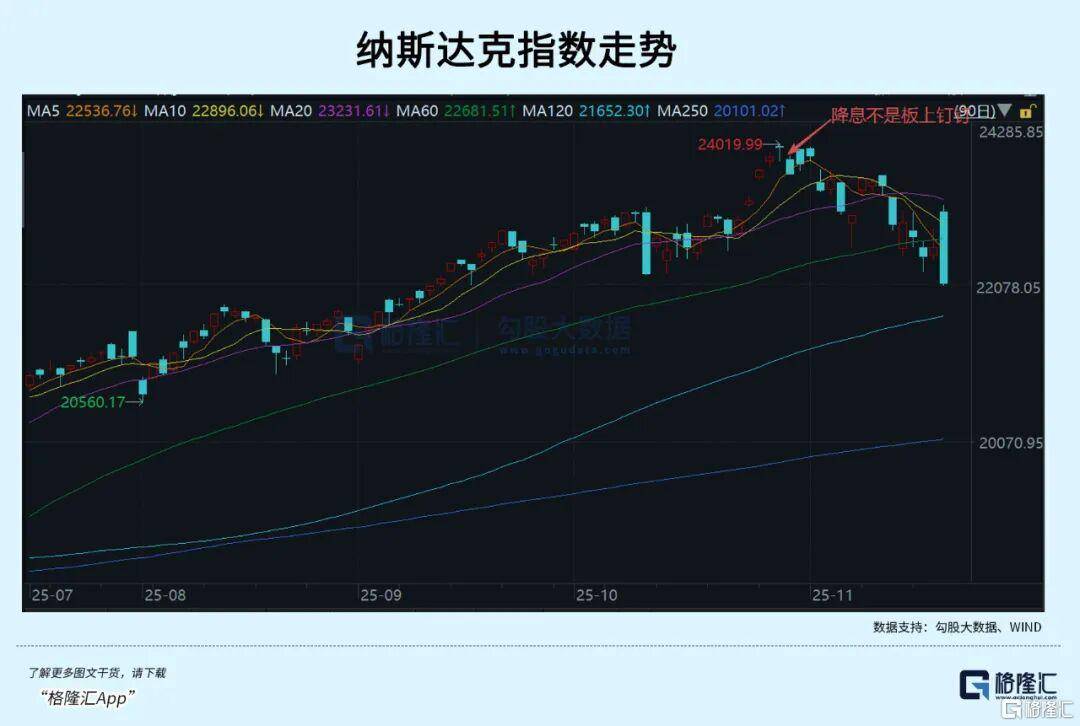
11月15日隔夜要闻:油价上涨 黄金下跌 桥水大幅减持英伟达 甲骨文债券遭抛售 大空头质疑美国...
Xin Lang Cai Jing· 2025-11-14 22:43
Company - Hillhouse Capital (高瓴HHLR) disclosed a significant increase in its U.S. stock holdings, with a total market value surge of $7 billion, indicating a continued focus on increasing investments in Chinese assets [2] - Google plans to invest $40 billion in building data centers in Texas, reflecting its commitment to expanding its infrastructure and operations in the region [2] - Oracle bonds faced sell-off due to heightened investor concerns over artificial intelligence investments, indicating potential volatility in the tech sector [3] - Walmart CEO Doug McMillon will retire in January after 12 years at the helm, marking a significant leadership change for the company [3] Industry - The European Union has imposed a €3 billion fine on Google, raising concerns about the potential dismantling of its advertising empire [3] - The tech sector is experiencing scrutiny over profit quality, with notable short-seller Michael Burry questioning accounting practices among major U.S. tech firms [3] - The geopolitical risks are driving up oil prices, while gold and copper prices are experiencing declines, indicating a complex landscape for commodity markets [3]


PPL International金评:美股受挫带动国际金价短期回调下跌
Sou Hu Cai Jing· 2025-11-14 08:38
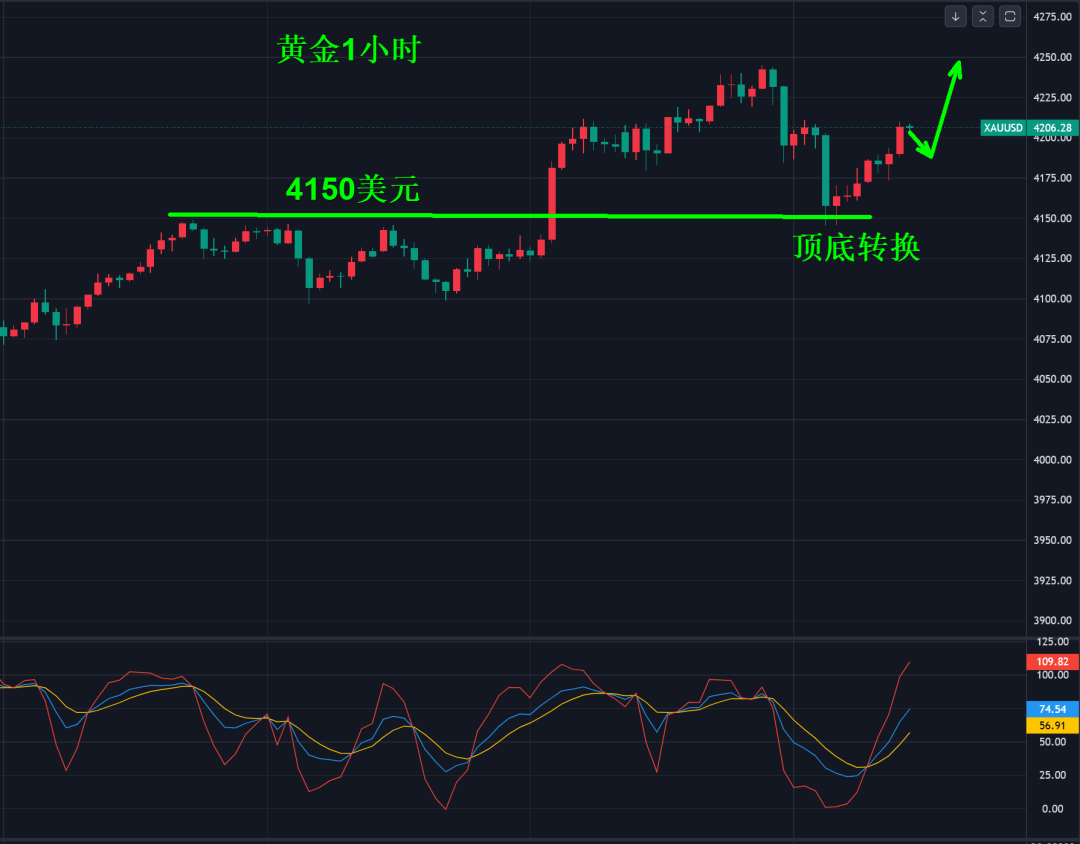
Core Viewpoint - The recent fluctuations in spot gold prices, with a notable drop from $4245 to around $4150, indicate a strong tug-of-war between bullish and bearish sentiments in the market [1] Market Analysis - Recent negative news includes three Federal Reserve officials expressing caution regarding a potential interest rate cut in December, which has reduced the market's expectation of a rate cut in October from 60% to 51%, contributing to gold's weakness [2] - The primary reason for the recent decline in gold prices is attributed to excessive buying pressure, as gold had risen significantly from the $4000 mark amidst similar comments from Federal Reserve officials about exploring rate cuts [2] - The drop in gold prices coincided with a significant decline in U.S. stocks and cryptocurrencies, suggesting that these markets are influencing gold's performance negatively [2][4] Liquidity and Market Dynamics - The underlying logic for the current market conditions is the tightening liquidity in the U.S., prompting the Federal Reserve to consider expanding its balance sheet to inject liquidity [4] - Historically, when U.S. stocks decline, gold tends to rise, indicating that the current downward trend in gold may be a short-term effect [4] Technical Analysis - Spot gold reached a high of $4210 before retreating to a low of $4160, which is identified as a critical support level [5] - If gold can maintain above the $4160 support level, it may signal the end of the recent downward trend, with strong buying interest noted in the $4150-$4160 range [5] - The overall strategy suggests a bullish outlook for gold, with key support levels at $4150 and $4100, and potential targets at $4200 and $4160 [7]

黄金,4150之上多!
Sou Hu Cai Jing· 2025-11-14 03:42
Group 1 - The article emphasizes the importance of philosophical thinking in decision-making, particularly in investment, where understanding the underlying logic and needs is crucial [1] - It highlights the gap between knowledge and action, suggesting that self-reflection is necessary for growth and progress [1] - The discussion includes a recent analysis of gold prices, indicating a rebound after hitting a support level at $4150, with a focus on the significance of this level for future price movements [3] Group 2 - The article notes that the market is currently focused on the Federal Reserve's "balance sheet expansion" plan, with implications for interest rates and inflation [3] - It suggests that as long as the $4150 support level holds, the bullish trend in gold is likely to continue, with potential upward targets at $4210-$4220 and a key resistance at $4240 [3] - The commentary indicates that the recent price adjustments in gold are viewed as opportunities for further long positions rather than bearish signals [3]
“美联储或将很快需要启动扩表,应对流动性需求”
Sou Hu Cai Jing· 2025-11-08 02:09
Core Viewpoint - The Federal Reserve is approaching a new phase of "liquidity replenishment" after two years of balance sheet reduction, with potential plans to expand its securities holdings soon [3][4]. Group 1: Federal Reserve's Strategy - The Federal Reserve plans to assess whether the reserve levels have transitioned from "slightly above adequate" to "adequate" before gradually resuming net asset purchases [4]. - Any future bond purchases will be part of a pre-planned liquidity management action under the "adequate reserves framework," not a new stimulus policy [4][6]. Group 2: Market Conditions - Recent fluctuations in the repo market indicate a transition of liquidity from "ample" to "adequate," with some repo rates exceeding the Fed's target range [5]. - The usage of the Standing Repo Facility (SRF) has surged, reaching the highest frequency since its establishment in 2021, with borrowing exceeding $10 billion on two occasions last week [5]. Group 3: Future Expectations - Market analysts anticipate that the Federal Reserve may officially initiate "reserve management" bond purchases in the first quarter of 2026 to maintain liquidity in the banking system [7]. - The Federal Reserve is closely monitoring indicators such as the federal funds market and repo market to evaluate changes in reserve demand [7].

德意志银行:预计美联储将在第一季度开始扩表。
Sou Hu Cai Jing· 2025-11-07 18:39
Core Viewpoint - Deutsche Bank anticipates that the Federal Reserve will begin expanding its balance sheet in the first quarter [1] Group 1 - The expectation of balance sheet expansion by the Federal Reserve indicates a shift in monetary policy [1]

A50,突发!三大利好“集结”!这场“闹剧”,影响多大?
券商中国· 2025-11-05 03:16
Core Viewpoint - A-shares show resilience compared to the global market, supported by three key positive factors despite external market volatility [1][2][4]. Group 1: Positive Factors Supporting A-shares - The China Warehousing Index for October 2025 is reported at 50.6%, an increase of 1 percentage point from the previous month, indicating a steady recovery in economic activity [2][3]. - The People's Bank of China announced a 700 billion yuan reverse repurchase operation on November 5, aimed at maintaining liquidity in the market, alleviating concerns over external liquidity tightening [2][4]. - Active market segments, particularly in Hainan and Fujian, have shown significant gains, with multiple stocks reaching their daily limit up, reflecting strong investor interest [3][4]. Group 2: External Market Concerns - The global market adjustment is primarily attributed to sudden liquidity tightening in the U.S., driven by the ongoing government shutdown, which raises questions about the extent of its impact on A-shares [4][5]. - Analysts suggest that the U.S. liquidity crisis narrative may be overstated, as the current reserve levels are adequate, and the Federal Reserve is not under immediate pressure to expand its balance sheet [5][4]. - Concerns over high stock valuations and uncertainty regarding potential interest rate cuts in December are contributing to volatility in the U.S. market, which may indirectly affect A-shares [5][4].

特朗普公然唱反调!鲍威尔美联储官宣成笑柄,市场动荡将成常态?
Sou Hu Cai Jing· 2025-10-17 21:36
Group 1 - The global market is experiencing significant asset declines, while gold prices are rising due to ongoing geopolitical instability [1] - The Federal Reserve's upcoming October meeting is crucial, as key economic data is unavailable due to the government shutdown, making Powell's statements particularly important [3][5] - Powell's strategy includes cautious interest rate cuts and an end to balance sheet reduction to prevent liquidity issues [5][7] Group 2 - The Fed's simultaneous interest rate cuts and balance sheet reduction create a challenging liquidity environment, reminiscent of the 2019 liquidity crisis [7][9] - Trump's recent trade actions, including increased tariffs on Chinese goods, add to market volatility, despite the potential legal challenges to these tariffs [9][11] - The U.S. economy is under pressure from high inflation and employment issues, making aggressive trade actions risky [11][13] Group 3 - Investors should accept market volatility as a norm and consider defensive sectors like consumer and healthcare, which are less affected by economic fluctuations [15] - Structural opportunities may arise post-balance sheet reduction, particularly in technology and renewable energy sectors, but caution is advised regarding export-related companies due to ongoing trade conflicts [17]