自动驾驶

Search documents
新力量NewForce总第4988期
First Shanghai Securities· 2026-03-26 05:42
Group 1: Tesla's Developments - Tesla's Robotaxi fleet is expanding to new cities, including Henderson, Las Vegas, and is in the final validation phase for Cybercab vehicles in California[5] - Elon Musk confirmed the upcoming release of FSD v14.3, which enhances proactive reasoning capabilities compared to v14.2, and includes new features like automated parking and an upgraded smart summon[7] - The Terafab project aims to produce over 1 TW of AI computing power annually, addressing the current 20 GW output that meets only 2% of global demand[8] Group 2: Financial Metrics - Tesla's stock price is currently at $383.03, with a market capitalization of $1.44 trillion and a total share count of 3.752 billion[6] - The 52-week high and low for Tesla's stock are $498.83 and $214.25, respectively[6] - The book value per share is $21.90, indicating a strong asset base relative to its stock price[6] Group 3: Product Innovations - Tesla's new patent for an "electric vehicle range extender integration" could solve range issues for heavy-duty trucks by allowing dynamic power balancing between the main battery and auxiliary batteries[9] - The launch of the Roadster has been postponed to late April 2026, promising advanced technology integration[10] - Tesla has introduced the Model YL Premium six-seater in Thailand, priced at 1,999,000 Thai Baht, with plans for U.S. production[10] Group 4: Strategic Initiatives - Tesla is planning to launch Megapack operations in India, supported by government incentives for energy storage investments[11] - The company is investing $2.9 billion in advanced solar manufacturing equipment from Chinese suppliers to meet its goal of producing 100 GW of solar cells by 2028[12]

索尼本田EV中止,电动化被中企甩远
日经中文网· 2026-03-26 03:37
Core Viewpoint - The article discusses the significant impact of declining EV demand in the U.S. on Honda's EV strategy, leading to the cessation of the AFEELA 1 electric vehicle development by Sony Honda Mobility, which highlights the widening gap in electrification competition between Japanese and Chinese companies [1][3]. Group 1: Company Developments - Sony Honda Mobility announced the suspension of its AFEELA 1 EV development due to reduced EV demand in the U.S., which has forced Honda to completely adjust its EV strategy [1]. - The AFEELA 1 was priced starting at $89,900, with plans for delivery in North America by 2026, but all accepted reservation deposits will be refunded [1]. - The second model, originally scheduled for delivery after 2028, has also been canceled [1]. Group 2: Strategic Adjustments - Honda, Sony Group, and Sony Honda will discuss future development directions, with Sony Group acknowledging a "certain impact" on its performance due to these changes [3]. - Honda had previously set a goal to convert all new vehicles to EVs and fuel cell vehicles by 2040, with a planned investment of 10 trillion yen by 2030, of which 3.5 trillion yen has already been invested [4]. - Due to the low demand and the adjustment of EV support policies by the Trump administration, Honda decided to suspend the flagship EV development and may incur losses of up to 2.5 trillion yen by the fiscal year ending March 2027 [4]. Group 3: Industry Context - Other Japanese automakers, like Subaru, are also reevaluating their EV strategies in light of slowing demand in North America, with Subaru planning to strengthen hybrid vehicle development [5]. - Chinese companies, particularly BYD, are rapidly expanding their influence in the EV market, with BYD expected to surpass Tesla in EV sales by 2025, becoming the global leader [5]. - Chinese firms are also leading in autonomous driving technology, with Huawei applying its self-developed operating system and driving assistance features to partnered automotive brands, posing a competitive threat to Japanese companies in both EV and future autonomous driving markets [5].



文远知行 | 2025营收高增 Robotaxi全球化持续落地【国联民生汽车 崔琰团队】
汽车琰究· 2026-03-25 13:51
Core Viewpoint - The company reported significant revenue growth for 2025, achieving 685 million yuan, a year-on-year increase of 89.6%, while reducing net losses to 1.7 billion yuan, a decrease of 34.2% compared to the previous year [3]. Revenue Growth - In Q4 2025, the company generated revenue of 314 million yuan, a year-on-year increase of 123.0%, with product revenue reaching 211 million yuan, up 308.9%, driven by increased sales of Robotaxi and Robobus [4]. - Service revenue in Q4 2025 was 103 million yuan, reflecting a 15.2% increase, primarily due to growth in smart data services and autonomous driving support services [4]. Profitability - The gross margin for Q4 2025 was 28.5%, down 8.0 percentage points year-on-year, mainly due to a reduction in high-margin ADAS research service contributions [4]. - The net loss for Q4 2025 was 556 million yuan, a decrease of 6.1% year-on-year [4]. Expense Management - R&D expenses in Q4 2025 amounted to 411 million yuan, an increase of 28.9% year-on-year, driven by enhanced global data compliance efforts and pre-installation R&D for Robotaxi [4]. - Administrative expenses were 217 million yuan, down 28.8% year-on-year, primarily due to a reduction in share-based payments [4]. - Sales expenses were 27 million yuan, up 76.3% year-on-year, but significantly lower than the revenue growth rate [4]. Robotaxi Commercialization - The company is accelerating the commercialization of its Robotaxi services, with operations now covering 12 countries and over 40 cities globally [5]. - As of March 2026, the global Robotaxi fleet reached 1,125 vehicles, a record high, with domestic user registration for Robotaxi services increasing by over 900% year-on-year [5]. - The company has initiated fully autonomous commercial operations in Abu Dhabi and received Switzerland's first passenger service autonomous driving license [5]. Technological Advancements - The company has developed a universal simulation platform, WeRide GENESIS, integrating physical AI and generative AI, which significantly accelerates model iteration cycles and safety validation efficiency [6]. - In collaboration with Geely, the company has launched a new generation GXR model specifically designed for autonomous taxis, adopting a pre-installed autonomous driving system production model, enhancing system safety consistency and significantly reducing manufacturing costs [6]. Future Projections - The company is expected to evolve into a comprehensive platform for "autonomous driving technology solutions + all-scenario smart travel services," with projected revenues of 1.076 billion yuan, 1.881 billion yuan, and 2.964 billion yuan for 2026, 2027, and 2028, respectively [7]. - The projected growth rates for revenue are 57.1%, 74.8%, and 57.6% for the years 2026, 2027, and 2028 [8].

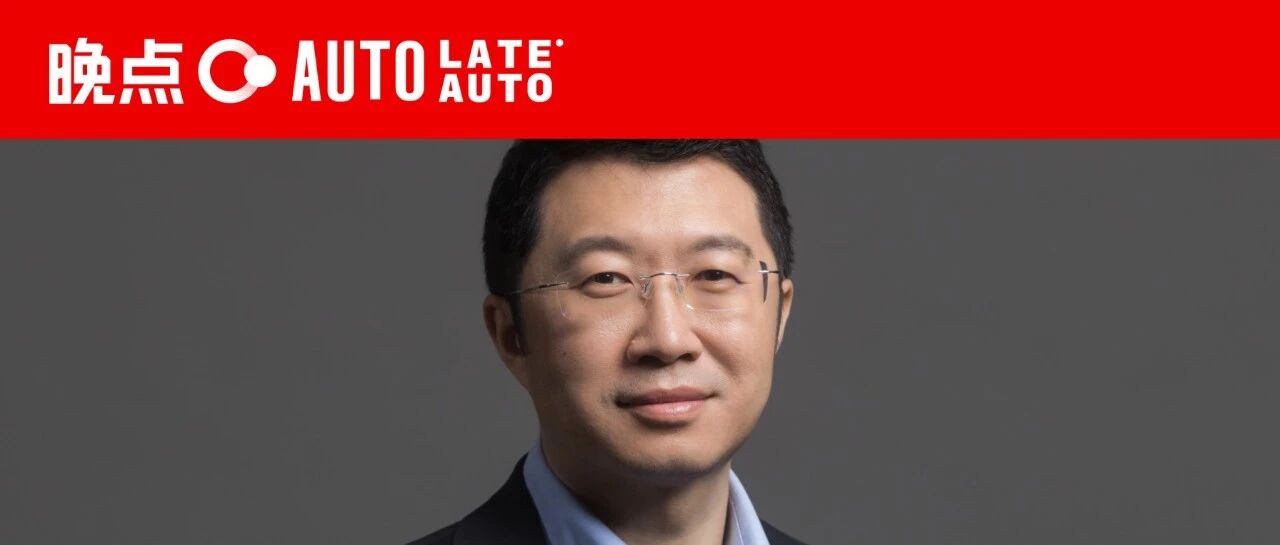
对谈文远知行韩旭:智驾终局论是妄想,不存在必赢的技术路线
晚点Auto· 2026-03-25 12:33
Core Viewpoint - The autonomous driving industry is still in its early stages, and the notion of a "final conclusion" is premature as technology continues to evolve rapidly. The competition is ongoing, and significant advancements are expected in the coming years [2][33]. Group 1: Industry Insights - The CEO of WeRide, Han Xu, argues that the so-called "endgame theory" is driven by leading companies that are eager for the competition to conclude, but the reality is that the race is far from over [2][33]. - The industry is witnessing a shift towards a "final circle" or "elimination race," with predictions that by 2026, only a few companies will emerge victorious [2][33]. - WeRide's recent advancements, particularly in their end-to-end model, have positioned them as a new variable in the autonomous driving race, with a reported revenue growth of 90% to 690 million yuan [3][33]. Group 2: Technological Developments - WeRide's breakthrough in the end-to-end model is attributed to their internal simulation platform, WeRide GENESIS, which has made significant progress in generating high-quality training data [3][7]. - The WeRide GENESIS platform can create complex driving scenarios that are essential for training autonomous driving models, addressing the industry's data bottleneck [3][7]. - The platform is designed to generate realistic scenarios that adhere to physical laws, enhancing the training process for autonomous vehicles [7][9]. Group 3: Company Strategy - WeRide's strategy includes a focus on both L2++ and L4 autonomous driving technologies, with a commitment to developing high-quality products and services [15][36]. - The company emphasizes internal talent development and a collaborative culture, which they believe is crucial for long-term success in the competitive landscape [26][27]. - WeRide aims to integrate their end-to-end technology into their L4 offerings, enhancing the performance of their Robotaxi services [36][39].
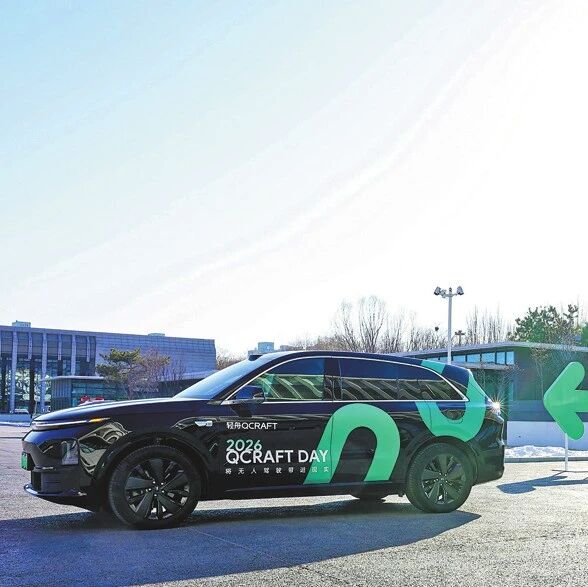
「华舟魔」三强之一,加速迈向物理AI
雷峰网· 2026-03-25 10:05
Core Viewpoint - The article discusses the recent $100 million funding round for Qianzhou Zhihang, emphasizing its strategic shift towards physical AI and the development of advanced technologies in autonomous driving and general physical AI [2][3][4]. Group 1: Funding and Strategic Shift - Qianzhou Zhihang completed a Series D funding round of $100 million, with investors including leading domestic automotive manufacturers and various investment funds [2]. - The company plans to enhance its research in world models and reinforcement learning, which are crucial for advancing physical AI technologies [3][4]. Group 2: Importance of Physical AI - AI can be categorized into digital AI, which processes information, and physical AI, which interacts with the physical world. The latter is still in its early stages, particularly in autonomous driving [4][5]. - The CEO of Qianzhou Zhihang highlighted that autonomous driving is the best entry point for physical AI, with the potential for significant opportunities in the next 5-10 years [5][6]. Group 3: Technological Development - The company aims to leverage structured data from autonomous driving to develop a robust world model, which is essential for understanding physical interactions in complex environments [7][9]. - The integration of world models and reinforcement learning is seen as a solution to the challenges faced in the unpredictable physical world, allowing for proactive decision-making in autonomous systems [9][10]. Group 4: Market Position and Production Scale - Qianzhou Zhihang has achieved a production scale of over 1 million vehicles equipped with its autonomous driving system, positioning itself among the top players in China's intelligent driving sector [12][13]. - The company plans to expand its model offerings significantly by 2026, with a focus on urban navigation assistance (NOA) capabilities [13][14]. Group 5: Competitive Landscape - The competitive landscape includes major players like Huawei and Momenta, each adopting different strategies to penetrate the market. Qianzhou Zhihang focuses on maximizing the efficiency of single-chip solutions for urban NOA [16][17]. - The company aims to target the price segment of 100,000 to 200,000 yuan, which represents a significant portion of the Chinese new energy vehicle market [17][18]. Group 6: Technological Integration and Future Plans - Qianzhou Zhihang's approach emphasizes standardization and compatibility across different vehicle models, allowing for rapid adaptation and deployment of its technologies [20][21]. - The company plans to showcase its latest technological advancements at the Beijing Auto Show in April 2026, highlighting its transition from L2 to L4 autonomous driving and general physical AI [24].
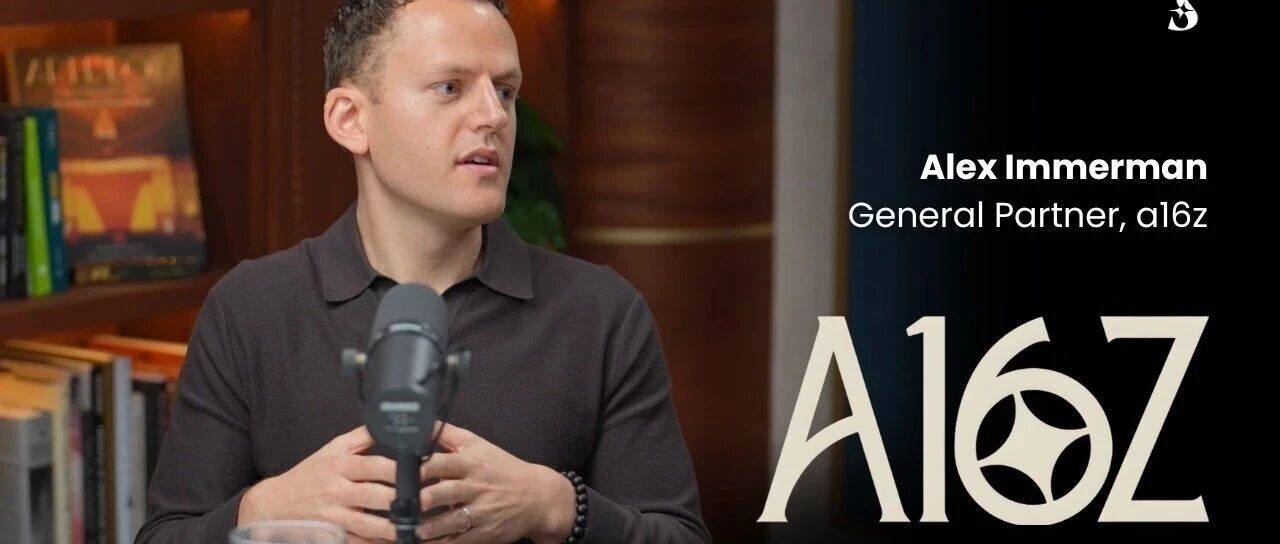
喝点VC|a16z合伙人:真正的问题在于,你究竟是在依附别人的模型,还是在它之上搭建了有意义的东西
Z Potentials· 2026-03-25 04:07
Core Insights - The article discusses the investment strategies of Andreessen Horowitz (a16z) in growth-stage companies, particularly in sectors like AI, fintech, and autonomous driving, highlighting the importance of identifying a "second growth curve" for sustained value creation [1][3]. Group 1: Investment Logic and Company Selection - a16z focuses on companies that demonstrate significant growth potential, with a preference for those that can achieve growth rates of several hundred percent [4][5]. - Approximately 50% of a16z's investments are follow-on investments in early-stage winners, leveraging existing board relationships for better insights and collaboration [5]. - Companies like Flock Safety are highlighted as undervalued, showcasing their impact on crime reduction and the potential for technology to improve societal outcomes [6]. Group 2: Market Dynamics and Growth Metrics - There is a notable growth disparity between private and public markets, with private market companies often exceeding 30% growth rates, while public market counterparts struggle to achieve similar figures [7][8]. - Gross margins are still considered important, despite many AI companies currently operating with margins between 0% and 50% [8][9]. - Engagement metrics are emerging as critical indicators of future retention and growth, with companies like Harvey demonstrating strong customer engagement [9]. Group 3: Specific Company Insights - Waymo has raised $16 billion in Series D funding, achieving a valuation of $126 billion, and is rapidly gaining market share in the ride-hailing sector [11][12]. - The ride-hailing market is valued at approximately $125 billion, with Waymo capturing around 25% market share in San Francisco, indicating significant growth potential as they expand to new cities [12][13]. - ElevenLabs has successfully raised $500 million, demonstrating strong growth in both consumer and enterprise segments, with notable clients like Meta and Salesforce [29][32]. Group 4: Regulatory Considerations and Market Positioning - Kalshi's success is attributed to its regulatory-first approach, becoming the first CFTC-regulated prediction market, which has helped build trust with consumers and partners [36][37]. - The competitive landscape in prediction markets is evolving, with Kalshi positioned to lead in user engagement and transaction volume, surpassing competitors like Polymarket [38][40]. - The article emphasizes the importance of product differentiation and regulatory compliance in achieving long-term success in emerging markets [37][39]. Group 5: Future Trends and Strategic Outlook - The article suggests that the future of fintech platforms like Coinbase, Robinhood, and Revolut will involve further diversification and the development of "super apps" that integrate multiple financial services [43][44]. - The potential for stablecoins to revolutionize payment systems is highlighted, with applications expected to expand into various consumer and business transactions [46]. - a16z's investment philosophy emphasizes the need for companies to demonstrate a clear path to profitability and sustainable growth, focusing on metrics like retention and gross margins [48][49].


Robotaxi:开启万亿级城市出行新纪元
HUAXI Securities· 2026-03-25 03:33
Investment Rating - The report suggests a positive investment outlook for the Robotaxi industry, highlighting significant growth potential and key players in the market [3]. Core Insights - The Robotaxi market is projected to exceed $2 trillion by 2030, driven by advancements in technology, supportive policies, and decreasing costs [2][20]. - Major players like Tesla, Baidu, and WeRide are accelerating their operations, with Tesla leading the way in commercial deployment [2][34]. - The report identifies a turning point for the Robotaxi industry, with improvements in technology, favorable policies, and a shift towards profitability for operators [2]. Summary by Sections What is Robotaxi? - Robotaxi represents a specific application of autonomous driving technology, with varying levels of automation from L2 to L4 [5][9]. Market Space - The global Robotaxi market is expected to reach approximately $2.3 trillion by 2030, based on assumptions of urbanization and travel patterns [20][22]. Tesla's Leadership - Tesla is a key player in the Robotaxi space, utilizing a pure vision-based approach and extensive real-world data to enhance its autonomous driving capabilities [28][32]. Baidu's Business Model - Baidu's Robotaxi service, "Luo Bo Kua Pao," has proven its business model in Wuhan, achieving profitability and expanding its operations to multiple cities [41][44]. Beneficiary Stocks - Beneficiary stocks in the Robotaxi sector include leading companies in autonomous driving, chassis control, lidar, domain controllers, and smart driving chips [3].


黄仁勋:英伟达已经从GPU公司演变为“AI工厂”
阿尔法工场研究院· 2026-03-25 02:12
Core Insights - NVIDIA has evolved from a GPU company to an AI factory, emphasizing the importance of decoupled inference technology and AI factory architecture [2][3] - The demand for AI computing is expected to grow exponentially, with calculations potentially increasing by over ten thousand times in two years, driving the need for robust AI infrastructure [2][3] - NVIDIA's CEO highlights the importance of defining vision and strategy, focusing on challenging areas that leverage the company's core strengths [2] AI Factory Operations - The AI factory operating system "Dynamo" was launched approximately two and a half years ago, seen as the next industrial revolution's operating system, with decoupled inference as its core technology [2] - NVIDIA plans to integrate Grok chips to optimize workload distribution across various components, including GPUs, CPUs, switches, and network processors [2] Market Analysis - The physical AI sector is projected to be a $50 trillion industry, with NVIDIA already generating nearly $10 billion in annual revenue from this rapidly growing business [3] - Digital biology is anticipated to experience a "ChatGPT moment," leading to significant transformations in the healthcare industry in the coming years [3] Impact of AI Agents and Open Source Models - Open source AI projects like "OpenClaw" are redefining computing and are seen as the blueprint for future personal AI computers, with agents becoming crucial for achieving work outcomes [4] - The enterprise software industry is expected to see a hundredfold growth due to the widespread use of AI agents [4] Autonomous Driving Strategy - NVIDIA's strategy in the autonomous driving sector focuses on providing a complete technology stack, including training, simulation, and onboard computing, without manufacturing vehicles [4] Competitive Advantage - NVIDIA is confident in its unique position as the only company collaborating with all global AI firms to provide end-to-end solutions deployable across any cloud and edge environment, with increasing market share [4] Robotics Industry Outlook - High-functionality robotic products are predicted to become mainstream within 3 to 5 years, with China being a key player in the global robotics supply chain [4] AI and Employment Perspectives - While some jobs may be replaced by AI, it is believed that more new jobs will be created, emphasizing the importance of becoming proficient in using AI and maintaining skills in science, mathematics, and language [5]


41岁张雪峰去世,生前关联11家企业;35岁张渊接任蜜雪冰城CEO;地平线CEO余凯回应疑员工内涵小鹏智驾;Sora宣布关停丨邦早报
创业邦· 2026-03-25 00:10
Group 1 - Zhang Xuefeng, founder of Suzhou Fengxue Weilai Education Technology Co., Ltd., passed away on March 24, 2026, due to cardiac arrest [2] - Tencent has recruited several key technical personnel from ByteDance's Seed team, who will report directly to AI scientist Yao Shunyu [4] - Xiaomi reported a record revenue of 457.3 billion yuan for 2025, a 25% year-on-year increase, with innovative business segments like smart electric vehicles contributing significantly [4] - Mixue Group announced a revenue of 33.56 billion yuan for 2025, a 35.2% increase year-on-year, and appointed a new CEO [4] Group 2 - OpenAI plans to discontinue its Sora AI video generation service to streamline its product line [8] - Meta Platforms appointed Andrew Bosworth as the new leader for its AI-native transformation project [11] - Gilead Sciences signed an acquisition agreement with Ouro Medicines for up to $2.175 billion, including an initial payment of $1.675 billion [11] - Nintendo reduced its production target for the Switch 2 console by over 30% due to lower-than-expected holiday demand [13] Group 3 - SK Hynix plans to raise approximately $10 billion to $15 billion through a U.S. IPO to invest in AI infrastructure [15] - Hesai Technology reported a net income of 3.028 billion yuan for 2025, a 45.8% increase year-on-year [15] - Tongcheng Travel achieved a revenue of 19.4 billion yuan in 2025, with a significant increase in paid user numbers [15] - Alibaba launched its new flagship processor, the Xuantie C950, which features the highest performance among RISC-V CPUs [19]


被困在无人车里的6分钟:砸窗、锁门、无人应答
汽车商业评论· 2026-03-24 23:06
Core Viewpoint - The article highlights the emerging challenges faced by Robotaxi services, particularly focusing on safety concerns and public hostility towards autonomous vehicles, as exemplified by a recent incident involving a Waymo vehicle in San Francisco [3][4][6]. Group 1: Incident Overview - A recent incident involved a passenger, Doug Fulop, who experienced a threatening situation while riding in a Waymo Robotaxi, where an assailant attempted to break into the vehicle and threatened the occupants [3][4][8]. - The incident lasted approximately six minutes, during which the vehicle remained stationary due to its safety protocols, raising concerns about the lack of immediate action to protect passengers [8][10]. - Waymo's response to the incident emphasized that remote assistance personnel do not have the capability to control the vehicle directly, which limits the options available to passengers in dangerous situations [12][10]. Group 2: Public Hostility and Challenges - Hostility towards Robotaxi services in cities like San Francisco and Los Angeles has escalated from mere pranks to more aggressive actions, including blocking sensors and vandalism [4][14][19]. - Reports indicate that this hostility is not isolated, with multiple incidents of harassment and attacks on Robotaxis, highlighting a growing trend of public resistance against autonomous vehicles [21][24]. - The article notes that while some passengers feel safer in Robotaxis compared to human-driven vehicles, others have chosen to stop using the service due to safety concerns [26][27]. Group 3: Expansion Plans and Safety Measures - Waymo plans to significantly increase its operational scale, targeting 15 million rides in 2025 and expanding to over 20 cities by 2026, which raises the stakes for addressing safety and public perception [5][31][32]. - Despite Waymo's claims of a 92% reduction in severe accidents compared to human drivers, the safety performance of autonomous vehicles remains a contentious topic, with varying assessments of their reliability in different scenarios [34]. - The industry is beginning to address these challenges, with companies like General Motors and Waymo developing systems to detect and respond to hostile actions against their vehicles [35][36].