
金融改革

Search documents
国务院关于金融工作情况的报告:人民币成为我国第一大跨境收付币种
Bei Jing Shang Bao· 2025-10-28 12:00
Financial Reform and Opening-up - Financial institution reforms are deepening, with state-owned commercial banks successfully raising 520 billion yuan to supplement capital. Efforts are being made to improve the quality of small and medium-sized financial institutions and accelerate the transformation of non-bank financial institutions like asset management companies [1] - A multi-tiered financial market is developing rapidly, with the implementation of comprehensive capital market reform plans and initiatives to promote high-quality development of public funds. There is a focus on increasing the equity investment ratio and scale of long-term funds like insurance capital, as well as expanding the scale of over-the-counter bond business [1] - A comprehensive cross-border payment system for the renminbi has been established, with the CIPS system playing a key role. The interconnectivity of payment systems between mainland China and Hong Kong, as well as with nine other countries, has been achieved [1] High-level Financial Opening-up - The orderly expansion of high-level financial opening-up is being promoted, with progress in optimizing the layout of renminbi clearing banks and developing the offshore renminbi market. The renminbi has become the largest currency for cross-border payments in China and ranks third in the IMF's Special Drawing Rights basket [2] - Measures have been introduced to facilitate cross-border capital flows and improve the foreign exchange management of cross-border investment and financing. The integration of domestic and foreign currency pools for multinational corporations is being expanded [2] International Financial Cooperation - International financial cooperation is deepening, enhancing the country's financial security capabilities. Financial exchanges and cooperation are being integrated into national diplomacy, with mechanisms established for meetings between central bank governors of China and Europe [3] - The foreign exchange reserve scale is projected to reach 3.3 trillion USD by the end of September 2025, an increase of 72.8 billion USD compared to November 2024 [3]
国务院关于金融工作情况的报告
中国基金报· 2025-10-28 11:49
Core Viewpoint - The report emphasizes the importance of financial work in supporting economic stability and high-quality development, guided by the principles set forth by Xi Jinping and the central leadership [2][3]. Monetary Policy Execution - The financial system has implemented a series of monetary policy measures, including a new round of reductions in reserve requirements and interest rates, aimed at supporting innovation, consumption, small and micro enterprises, and stabilizing foreign trade [4]. - By the end of September 2025, the social financing scale and broad money supply increased by 8.7% and 8.4% year-on-year, respectively, with the average interest rate on new corporate loans at 3.14% [4]. Financial Industry Operation and Regulation - As of September 2025, total assets of financial institutions exceeded 520 trillion yuan, with commercial banks' capital adequacy ratio at 15.36% and non-performing loan ratio at 1.52% [5]. - The Shanghai Composite Index rose by 18.4% from November 2024 to September 2025, reaching a ten-year high of over 3900 points [5][6]. Financial Support for the Real Economy - From November 2024 to September 2025, 98 companies in the A-share market raised 91.8 billion yuan through initial public offerings, with 86% being private enterprises [7]. - Loans for technology, green, inclusive, elderly, and digital economy sectors grew by 11.8%, 22.9%, 11.2%, 58.2%, and 12.9% year-on-year, respectively, significantly outpacing overall loan growth [7]. Financial Reform and Opening Up - The report highlights the deepening reform of financial institutions, including a 520 billion yuan capital increase for state-owned banks and the expansion of the bond market [8][9]. - The RMB has become the largest currency for cross-border payments in China and ranks third in the IMF's Special Drawing Rights basket [9]. Risk Prevention and Mitigation - The report outlines measures to address risks in small and medium-sized financial institutions, with a 71% decrease in the number of financing platforms and a 62% reduction in operating financial debt by September 2025 compared to March 2023 [10]. - The establishment of a macro-prudential and financial stability committee aims to enhance risk monitoring and prevention mechanisms [10]. Future Work Considerations - The focus will be on maintaining a suitable monetary environment to support economic recovery, enhancing financial regulation, and providing high-quality financial services to key sectors [13][14]. - Continued efforts will be made to deepen financial supply-side structural reforms and promote the internationalization of the RMB [15].


桑给巴尔推进金融改革
Shang Wu Bu Wang Zhan· 2025-10-27 16:28
Core Insights - The Zanzibar Ministry of Finance is advancing economic and financial reforms, including the issuance of special bonds and the distribution of dividends to investors for the first time [1] - A new social security program has been initiated to enhance the welfare of the population [1] - The government is committed to the prudent and transparent use of special aid funds to foster a participatory economy aimed at common prosperity [1]
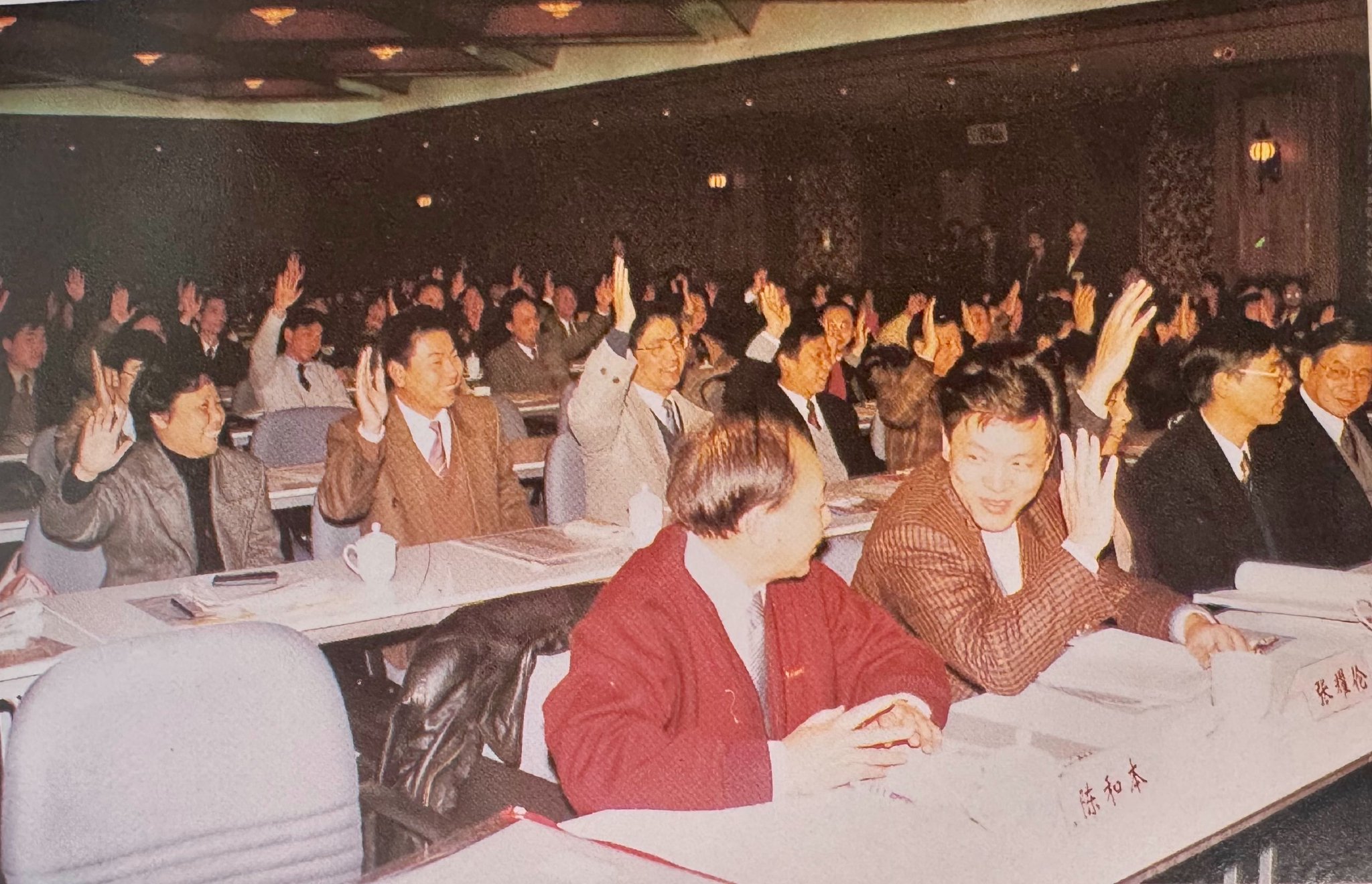
口述历史·上银30年|敢闯敢试,上海城市合作银行成立,探索城市商业银行新路子
Zhong Guo Jin Rong Xin Xi Wang· 2025-10-20 02:59
Core Viewpoint - The article highlights the evolution and significance of Shanghai Urban Cooperative Bank, emphasizing its role in supporting local economic development and financial reform in Shanghai since its establishment in 1995 [1][4][13]. Group 1: Historical Development - Shanghai Urban Cooperative Bank originated from the urban credit cooperatives established in 1986, evolving through various stages of financial reform [1][2]. - The bank was officially established on December 29, 1995, becoming a key player in China's financial landscape [13]. - The establishment process involved integrating 99 urban credit cooperatives and required significant coordination and effort to meet the government's timeline for completion [6][8][9]. Group 2: Financial Innovation and Structure - The bank adopted a modern shareholding system, moving away from traditional cooperative structures to enhance governance and operational efficiency [14][15]. - It established a three-tiered ownership structure involving local government, enterprises, and individual shareholders, facilitating future foreign investment [14]. - The bank's management model shifted to a centralized, efficient operation, allowing for improved service delivery and operational effectiveness [14][15]. Group 3: Economic Impact and Community Engagement - Shanghai Urban Cooperative Bank expanded its services beyond small enterprises to support major urban development projects, contributing significantly to local infrastructure [16][17]. - In its first year, the bank provided substantial loans for urban renovation and transportation projects, demonstrating its commitment to regional economic growth [17]. - The bank has been recognized by the community as "Shanghai's own bank," reflecting its deep-rooted connection and contribution to the lives of local residents [19].

证券ETF(512880)大涨5%点评
Sou Hu Cai Jing· 2025-09-29 20:21
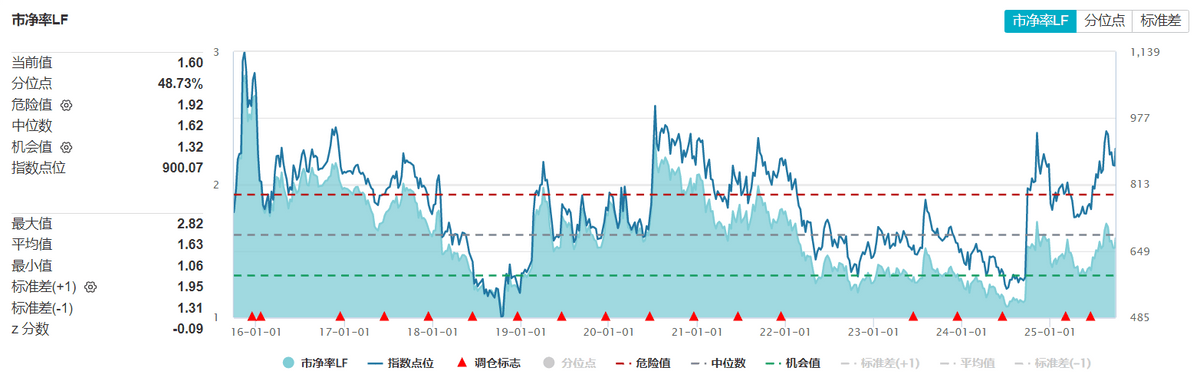
Core Viewpoint - The A-share market has shown a collective increase, with significant gains in major indices, driven by expectations of financial reform and improved profitability in the securities industry [1][2]. Market Performance - On September 29, the three major A-share indices rose collectively: Shanghai Composite Index increased by 0.90%, Shenzhen Component Index by 2.05%, and ChiNext Index by 2.74%. The total market turnover reached 2.18 trillion yuan [1]. Reasons for the Uptrend - The rise in the market is attributed to the "anti-involution" policy regarding brokerage commissions, which aims to prohibit extremely low commission rates and promote a more sustainable commission structure. This includes banning "万1免5" and ensuring that commissions do not fall below cost [2][3]. - The China Securities Regulatory Commission (CSRC) has emphasized that by 2025, brokers must not attract clients through "zero commission" or below-cost pricing, which is expected to enhance the profitability of securities firms in the short term and support the long-term health of the industry [2][3]. Market Outlook - The market is expected to remain active, with a "slow bull" trend anticipated. The margin financing balance is maintained at a high level of 2.4 trillion yuan, and the profitability of the securities industry in Q3 is expected to exceed expectations [4]. - The recent interest rate cuts by the Federal Reserve are likely to attract foreign capital back to the A-share market, as the appeal of RMB assets increases. Historical data shows significant inflows of foreign investment into Chinese bonds and stocks following previous rate cuts [4]. - Domestic savings have increased significantly, with total savings rising from 93 trillion yuan at the end of 2020 to 162 trillion yuan by mid-2023, indicating potential for further investment shifts from savings to the stock market [4]. Long-term Capital Inflows - A plan set for January 2025 aims to steadily increase the scale and proportion of long-term capital invested in A-shares, with annual additions of several hundred billion yuan expected. Public funds are projected to increase their holdings of A-share market value by at least 10% annually over the next three years [5]. - Large state-owned insurance companies are encouraged to allocate 30% of their new premiums to A-share investments starting in 2025, aiming for a steady increase in the proportion of insurance funds invested in the stock market [5]. Investment Opportunities - The securities ETF (512880) is highlighted as a key investment opportunity due to its large scale and liquidity, with a current size exceeding 54.1 billion yuan and a price-to-book ratio of only 1.6, indicating it is at a historically low valuation [6][7]. - Investors are advised to consider gradual investments in the securities ETF and its related funds [8].
申银万国期货首席点评:规模以上工业企业利润同比增长
Shen Yin Wan Guo Qi Huo· 2025-09-29 03:17
Key Points of the Report Report Industry Investment Rating No information about the report industry investment rating is provided in the given content. Core Viewpoints of the Report - The Chinese capital market is in the initial stage of strategic allocation, with the 9 - month stock index in a high - level consolidation phase after continuous growth. The CSI 500 and CSI 1000 indices are more offensive, while the SSE 50 and SSE 300 are more defensive [2][12]. - For bonds, it is recommended to be bearish on long - term bonds and remain on the sidelines for short - term bonds, as the central bank's policy adjustment awaits central government deployment, and the equity market is strengthening [14]. - In the energy and chemical sector, the outlook for various products varies. For example, crude oil's future depends on OPEC's production increase; methanol is short - term bearish; rubber is expected to fluctuate within a range; and polyolefins may continue to oscillate in a low - level range [15][16][17][19]. - Regarding metals, copper is supported in the long - term due to potential supply shortages; zinc may fluctuate weakly in the short - term; and lithium carbonate may oscillate in the short - term with demand and inventory factors at play [21][22][23]. - In the agricultural product sector, protein meal may oscillate at a low level; some oils are showing signs of rebound; and cotton and sugar are expected to have complex short - term trends influenced by supply and demand [27][28][30][31]. - The shipping index of container shipping to Europe may be in a short - term oscillatory pattern, with the focus on shipping companies' price increases and capacity adjustment [32]. Summaries by Related Catalogs 1. Macroeconomic Situation - From January to August, the total profit of Chinese industrial enterprises above designated size was 4.69297 trillion yuan, a year - on - year increase of 0.9%. In August, the profit increased by 20.4% year - on - year, compared with a 1.5% decline in the previous month. The equipment manufacturing industry was a major driver, with 7 out of 8 sub - industries seeing profit growth [1]. - The US core PCE price index in August increased by 2.9% year - on - year and 0.2% month - on - month, in line with expectations. Real consumer spending increased by 0.4% for the third consecutive month, exceeding the expected 0.2% [1]. 2. Key Varieties Analysis Financial - **Stock Index**: The US three major indices rose, while the previous trading day's stock index declined. The oil and petrochemical sector led the gain, and the computer sector led the decline, with a market turnover of 2.17 trillion yuan. On September 25, the margin trading balance increased by 13.288 billion yuan to 2.427411 trillion yuan [2][12]. - **Treasury Bonds**: Treasury bonds rose slightly. The central bank continued to inject medium - term liquidity, but the cross - festival capital tightened. The profit of industrial enterprises above designated size in August increased significantly. The Fed restarted interest rate cuts, and the US GDP growth rate was revised up. It is recommended to be bearish on long - term bonds and remain on the sidelines for short - term bonds [13][14]. Energy and Chemical - **Crude Oil**: The SC night session rose 1.21%. Russia will impose a partial ban on diesel exports by the end of the year and extend the gasoline export ban. The global decline rate of oil and gas field production has accelerated. Attention should be paid to OPEC's production increase [3][15]. - **Methanol**: Methanol oscillated at night. The average operating load of domestic coal - to - olefin plants increased. Coastal methanol inventory decreased, but it is still at a historical high. Methanol is short - term bearish [16]. - **Rubber**: Natural rubber futures oscillated. Supply in some areas improved, and bonded area inventory decreased. The start - up rate of all - steel tires increased. It is expected to continue to oscillate within a range [17]. - **Polyolefins**: Polyolefins continued to rebound at night. The price generally fluctuated with the cost. It may continue to oscillate in a low - level range, with attention on demand and supply - side policies [18][19]. - **Glass and Soda Ash**: Glass futures declined. The short - term market supply and demand are slowly recovering, and attention is on the supply - side contraction. The inventory of glass and soda ash production enterprises decreased. The market has a positive expectation for the glass industry's supply change [4][20]. Metals - **Copper**: The copper price at night decreased by 0.7%. The concentrate supply has been tight, but the smelting output has been growing. The Indonesian mine accident may lead to a supply shortage, supporting the long - term price [21]. - **Zinc**: The zinc price at night decreased by 1.25%. The zinc concentrate processing fee increased, and the smelting output is expected to rise. The short - term supply may be in surplus, and the price may fluctuate weakly [22]. - **Lithium Carbonate**: Supply and demand both increased, and inventory decreased. The bullish logic has been weakened, and the price may oscillate in the short - term [23]. - **Double Cokes**: The double - coke futures were weak at night. The steel fundamentals put pressure on coking coal, and investors are advised to operate cautiously before the holiday [24]. - **Iron Ore**: Steel mills' demand for iron ore is supported. Global iron ore shipments decreased, and port inventory decreased rapidly. The price is expected to be strong and oscillate [25]. - **Steel**: The steel supply pressure is increasing, and the inventory is accumulating. The export of billets is strong. The market is in a situation of weak supply and demand, with hot - rolled coils stronger than rebar [26]. Agricultural Products - **Protein Meal**: The prices of soybean and rapeseed meal were weak at night. Argentina temporarily cancelled export taxes, but the exemption period has ended. The domestic market may oscillate at a low level [27]. - **Oils**: The price of soybean oil declined slightly at night, while rapeseed and palm oil were strong. After the digestion of the negative news of Argentina's tax cancellation, the oil price rebounded [28]. - **Sugar**: The international sugar market is in a stock - building stage, and the domestic market is supported by high sales - to - production ratio and low inventory, but also dragged by import pressure. Zhengzhou sugar may oscillate after a rebound [30]. - **Cotton**: The international cotton market has supply pressure, and the domestic market is affected by the new cotton harvest. The price may oscillate weakly in the short - term [31]. Shipping Index - **Container Shipping to Europe**: The EC oscillated and declined on Friday. The SCFI European line price decreased. Shipping companies are trying to raise prices, and the contract may shift to the 12 - month contract. It is expected to be in an oscillatory pattern in the short - term [32]. 3. News Summaries - **International News**: Ukrainian drones attacked Russian refineries, causing fuel shortages in some Russian regions. Russia will impose a partial ban on diesel exports and extend the gasoline export ban [3][6][15]. - **Domestic News**: The "Super Golden Week" of the Mid - Autumn Festival and National Day is approaching. The tourism market is booming, with changes in travel patterns and consumer preferences [7]. - **Industry News**: The Ministry of Agriculture and Rural Affairs requires supporting Xinjiang to improve grain production capacity, promote cotton seed breeding, and develop characteristic industries [8][9].
碳酸锂市场周报:稳步降库预期转好,锂价或将有所支撑-20250926
Rui Da Qi Huo· 2025-09-26 09:51
1. Report Industry Investment Rating - Not provided in the given content 2. Core Viewpoints of the Report - The weekly closing price of the lithium carbonate futures main contract fluctuated and declined, with a change of -1.46% and an amplitude of 3.62%. As of the end of this week, the main contract closed at 72,880 yuan/ton. The overall fundamentals of lithium carbonate may show a situation where supply increases slightly and demand gradually rises, with positive industry expectations and gradual reduction of inventory. It is recommended to conduct short - term long trades at low prices with a light position and control risks [5]. 3. Summary by Relevant Catalogs 3.1 Weekly Summary - **Market Review**: The main contract of lithium carbonate futures fluctuated and declined, with a change of -1.46% and an amplitude of 3.62%. As of the end of this week, the main contract closed at 72,880 yuan/ton [5]. - **Market Outlook**: Overseas miners still have a strong willingness to support prices, and the supply of domestic mining areas is expected to gradually become clear. Lithium ore may continue to have firm quotes. Supply is expected to show an increasing trend, and the overall domestic supply of lithium carbonate may increase slightly. Driven by the traditional consumption season, downstream orders and production schedules have improved, and the industry maintains a high - growth trend. Policy support is more positive, and the demand for lithium carbonate is expected to increase [5]. - **Strategy Suggestion**: Conduct short - term long trades at low prices with a light position and control trading rhythm to manage risks [5]. 3.2 Futures and Spot Market - **Futures Price**: As of September 26, 2025, the closing price of the lithium carbonate main contract was 72,880 yuan/ton, a week - on - week decrease of 1,080 yuan/ton. The near - far month spread of lithium carbonate was - 200 yuan/ton, a week - on - week increase of 80 yuan/ton [10]. - **Spot Price**: As of September 26, 2025, the average price of battery - grade lithium carbonate was 73,600 yuan/ton, a week - on - week increase of 100 yuan/ton. The basis of the main contract was 720 yuan/ton, a week - on - week increase of 1,180 yuan/ton [16]. 3.3 Upstream Market - **Lithium Spodumene**: As of September 26, 2025, the average price of lithium spodumene concentrate (6% - 6.5%) was 876 US dollars/ton, with no change from the previous week. The spot exchange rate of the US dollar against the RMB was 7.1253, a week - on - week increase of 0.24% [20]. - **Lithium Mica**: As of the latest data, the average price of lithium mica (Li₂O: 2.0% - 3%) was 2,645 yuan/ton, with no change from the previous week. The average price of lithiophilite was 7,285 yuan/ton, a week - on - week increase of 70 yuan/ton [27]. 3.4 Industry Situation - **Supply Side**: As of August 2025, the monthly import volume of lithium carbonate was 21,846.92 tons, an increase of 8,001.6 tons from July, a growth rate of 57.79%, and a year - on - year increase of 23.54%. The monthly export volume was 368.905 tons, an increase of 2.56 tons from July, a growth rate of 0.7%, and a year - on - year increase of 56.97%. The monthly output was 45,880 tons, an increase of 1,280 tons from July, a growth rate of 2.87%, and a year - on - year increase of 31.09%. The monthly operating rate was 43%, a month - on - month decrease of 5% and a year - on - year decrease of 32% [32]. 3.5 Downstream Market - **Demand Side**: - **Lithium Hexafluorophosphate**: As of September 26, 2025, the average price of lithium hexafluorophosphate was 59,000 yuan/ton, a week - on - week increase of 15,000 yuan/ton. As of August 2025, the monthly output of electrolyte was 192,100 tons, an increase of 10,150 tons from July, a growth rate of 5.58%, and a year - on - year increase of 43.84% [35]. - **Lithium Iron Phosphate**: As of the latest data, the average price of lithium iron phosphate (power type) was 34,300 yuan/ton, with no change from the previous week. As of August 2025, the monthly output of lithium iron phosphate cathode materials was 240,000 tons, an increase of 26,040 tons from July, a growth rate of 12.17%, and a year - on - year increase of 32.6%. The monthly operating rate was 57%, a month - on - month increase of 6% and a year - on - year decrease of 3% [38]. - **Ternary Materials**: As of August 2025, the monthly output of ternary materials was 65,860 tons, an increase of 3,940 tons from July, a growth rate of 6.36%, and a year - on - year increase of 17.61%. The monthly operating rate was 55%, a month - on - month increase of 3% and a year - on - year decrease of 4%. As of the latest data, the prices of ternary materials 811, 622, and 523 continued to strengthen [43]. - **Lithium Manganate**: As of August 2025, the monthly output of lithium manganate was 10,330 tons, an increase of 210 tons from July, a growth rate of 2.08%, and a year - on - year decrease of 6.09%. As of the latest data, the average price of lithium manganate was 32,000 yuan/ton, with no change from the previous week [48]. - **Lithium Cobaltate**: As of August 2025, the monthly output of lithium cobaltate was 14,980 tons, an increase of 2,110 tons from July, a growth rate of 16.39%, and a year - on - year increase of 92.05%. As of the latest data, the average price of lithium cobaltate was 230,000 yuan/ton, with no change from the previous week [51]. - **Application Side**: - **New Energy Vehicles**: As of August 2025, the penetration rate of new energy vehicles was 45.53%, a month - on - month increase of 0.54% and a year - on - year increase of 8.03%. The monthly output was 1,391,000 vehicles, a month - on - month increase of 11.91%; the sales volume was 1,395,000 vehicles, a month - on - month increase of 10.54% [53]. - **New Energy Vehicle Exports**: As of August 2025, the cumulative export volume of new energy vehicles was 1.532 million, a year - on - year increase of 87.29% [58]. 3.6 Options Market - According to the option parity theory, the premium of the synthetic underlying asset is 0.18, presenting a positive arbitrage opportunity. Based on the performance of option at - the - money contracts and fundamental conditions, it is recommended to build a long straddle option to bet on increased volatility [61].
建信期货镍日报-20250926
Jian Xin Qi Huo· 2025-09-26 02:24
Report Information - Report Title: Nickel Daily Report [1] - Date: September 26, 2025 [2] - Research Team: Non-ferrous Metals Research Team [3] - Researchers: Yu Feifei, Zhang Ping, Peng Jinglin [3] 1. Investment Rating - No investment rating information is provided in the report. 2. Core View - The net surplus pressure of pure nickel still exists, but at the current position, it is also difficult to decline significantly due to the support of nickel ore and cost. Recently, the prices of NPI and nickel sulfate are relatively strong. Continue to pay attention to the supply-side news from Indonesia. The reference for the bottom support of Shanghai nickel has been slightly raised to the 120,000 level [7]. 3. Summary by Directory 3.1 Market Review and Operation Suggestions - **Market Data**: The main contract of Shanghai nickel (2511) rose 1.08% to 122,990 compared to the previous day. The average premium of Jinchuan nickel decreased by 20 to 2,300. The average price of domestic electrowon nickel was reported at -100 - 200. The average price of 8 - 12% high-nickel pig iron decreased by 0.5 to 955 yuan/nickel point, and the average price of battery-grade nickel sulfate increased by 50 to 28,200 yuan/ton [7]. - **Supply and Demand Analysis**: Indonesia will start the 2026 approval work in October. The adjustment of the RKAB approval cycle may still disrupt the supply of the ore end at the beginning of next year. Some smelters may stock up on nickel ore in advance in the fourth quarter. It is expected that the price of nickel ore will not decline significantly this year and may rise slightly. NPI remains strong due to cost support and the expectation of demand recovery, but the improvement space for the stainless steel terminal is limited, and the subsequent upward space may be restricted. The demand for stockpiling before the double festivals supports the price of nickel salts to remain strong [7]. 3.2 Industry News - **Congo's Cobalt Export Ban**: The Democratic Republic of the Congo is considering extending the cobalt export ban for at least two months. The decision is to allow the cobalt price to recover further and to have more time to implement the quota framework. The decision needs to be approved by the presidential palace. If the ban is extended, it is expected to drive up the MHP cobalt coefficient and keep the smelting enterprises' inventory below the safety level [8][10] - **Indonesia's Mining Crackdown**: Indonesia's forest law enforcement task force will conduct a centralized crackdown on illegal mines. The country is a major producer of coal, nickel, tin, and copper, as well as the largest exporter of palm oil [10] - **FPX Nickel's Sustainability Initiatives**: FPX Nickel has joined the Mining Association of Canada (MAC) and the United Nations Global Compact, demonstrating its commitment to responsible mineral exploration and project development [10]
五年砺剑 筑金融强国根基
Jin Rong Shi Bao· 2025-09-23 02:08
Core Viewpoint - The financial sector in China has made significant achievements during the "14th Five-Year Plan" period, contributing to the country's modernization and economic development through robust reforms and enhanced service capabilities [1][2][4]. Group 1: Financial Sector Achievements - As of June 2023, China's banking sector total assets reached nearly 470 trillion yuan, ranking first globally; the stock and bond markets are the second largest in the world; and foreign exchange reserves have maintained the top position for 20 consecutive years [1]. - The balance of green credit has reached 42.39 trillion yuan, supporting the construction of a beautiful China, while the digital payment penetration rate stands at 86%, showcasing the accessibility of financial services [1]. - Over the five years, the banking and insurance sectors have provided an additional 170 trillion yuan in funding to the real economy, highlighting the crucial role of financing channels [2]. Group 2: Reform and Market Activation - The financial reforms during the "14th Five-Year Plan" have deepened and materialized, with a series of transformative reforms enhancing governance efficiency and market vitality [2]. - The modern monetary policy framework has begun to take shape, significantly improving policy implementation and transmission effectiveness, thereby supporting the main economic and social development goals [2]. Group 3: Risk Management and Safety - Risk prevention measures have been effectively implemented, leading to a significant reduction in high-risk financial assets and the orderly restructuring of small and medium-sized financial institutions [3]. - The overall risk in key areas such as real estate and local government debt remains controllable, with the resilience of the financial system continuously strengthening [3]. Group 4: Global Competitiveness and Openness - The financial services sector has seen a deepening of institutional openness, with mechanisms like the Shanghai-Hong Kong Stock Connect being optimized, and foreign holdings of domestic stocks and bonds exceeding 10 trillion yuan [3]. - The international status of the renminbi is steadily rising, with China becoming one of the top three currencies in global trade financing and payment, reinforcing its role in the international monetary system [3].
涟水农商银行召开第五届董事会第一次会议
Jiang Nan Shi Bao· 2025-09-22 15:02
Core Viewpoint - Lianshui Rural Commercial Bank has successfully convened its first meeting of the fifth board of directors, marking the beginning of a new phase of high-quality development for the bank [1][2] Group 1: Board Meeting Outcomes - The meeting elected a new board of directors and senior management team, establishing a clear strategic direction for future development [1] - The meeting reviewed and approved the formation of four specialized committees, enhancing the corporate governance structure and decision-making effectiveness [1] - The new board includes a diverse range of members, including executives from state-owned enterprises, university professors, and representatives from the bank's staff, ensuring a strong and professional governance foundation [1] Group 2: Compliance and Future Plans - The bank reported its 2024 regulatory rating and corporate governance assessment results, and conducted training on anti-money laundering and counter-terrorism financing for all board members and senior management [2] - The board engaged in discussions on future development planning, rural revitalization, and deepening financial reforms, fostering a consensus on development [2] - The bank aims to leverage opportunities in rural revitalization and county economic transformation, enhancing financial service quality and contributing to the creation of a higher-level "Top 100 County" [2]