C2M模式

Search documents
贝好家全国已落地17个项目 用大数据和AI打造“好房子”
Zhong Guo Jing Ying Bao· 2025-12-14 15:25
Core Insights - The concept of "customer sovereignty" has taken center stage in the real estate development industry for the first time in over 30 years, as highlighted by Xu Wangang, Vice Chairman of Beike and CEO of Beihome, during the media appreciation event for the Beicheng S1 project [2] Group 1: Project Launch and Sales Performance - The Beicheng S1 project in Chengdu, launched in November, has 108 units available, with a cumulative online signing of 20 units by December 11 [2] - Beihome has established 17 projects across major cities including Beijing, Shanghai, Guangzhou, and Chengdu, with the Shanghai Beilian C1 project also having commenced sales [2] - The Beicheng S1 project ranks second in cumulative online signing volume for residential properties priced over 20 million yuan in Chengdu for the year 2025 [4] Group 2: Land Acquisition and Development - Beihome acquired a 24-acre plot in Chengdu's Financial City with a floor price of 27,300 yuan per square meter, marking a 42.19% premium and setting a record for land prices in Chengdu [3] - The Beicheng S1 project features main unit types of 275 square meters and 375 square meters, delivered with high-end finishes and smart home systems [3] Group 3: C2M Development Model - Beihome employs a C2M (Customer to Manufacturer) model, utilizing big data and AI algorithms to deeply understand customer needs and predict product types and price expectations [5] - The C2M model has been integrated into various stages of real estate development, including land acquisition, planning, design, and marketing, with extensive customer research conducted prior to project development [5] - Xu Wangang emphasizes the importance of fully implementing the C2M concept throughout the residential development chain, aiming to be a partner rather than just a developer [6]


贝好家CEO徐万刚首度回应“停做自操盘”质疑:不是卖得不好所以不做开发了 轻资产模式是主动选择
Mei Ri Jing Ji Xin Wen· 2025-12-14 13:30
Core Viewpoint - Beike Group's subsidiary, Beihome, emphasizes its focus on a light-asset model rather than becoming a developer, aiming to leverage its strengths in the real estate market [2][5]. Group 1: Company Strategy - Beihome's CEO Xu Wanggang stated that the decision to not pursue further self-operated projects is not due to poor market performance of existing projects in Chengdu and Shanghai, but rather a strategic shift to collaborate with more real estate partners [2][5]. - The company aims to focus on its C2M (Customer to Manufacturer) model, which is designed to better meet customer needs through comprehensive service offerings [2][4]. Group 2: Market Performance - As of December 11, the Beicheng S1 project in Chengdu achieved 20 signed contracts within a month of opening, ranking second in total signed contracts for high-end residential properties in the city for the year [2][4]. - The Shanghai Beilian C1 project also performed well, ranking third in sales area and number of units sold in November [2]. Group 3: Industry Insights - The real estate market has shifted from a seller's market to a buyer's market since 2021, leading to longer transaction cycles and increased sales costs for developers [3]. - Despite market challenges, high-quality properties continue to sell well, indicating a demand for good housing and services [3]. Group 4: Future Collaborations - Beihome is exploring new collaboration methods beyond traditional developers, including partnerships with city investment companies, construction firms, and financial investors [6].
贝好家CEO徐万刚首度回应“停做自操盘”质疑:不是卖得不好所以不做开发了,轻资产模式是主动选择
Mei Ri Jing Ji Xin Wen· 2025-12-14 13:28
Core Viewpoint - Beike Group's subsidiary, Beihome, emphasizes its focus on a light-asset model rather than becoming a developer, aiming to leverage its strengths in the real estate market [1][3] Group 1: Company Strategy - Beihome's CEO Xu Wanggang stated that the decision to not pursue self-operated projects is not due to poor market performance but rather a strategic shift to collaborate with developers [1][3] - The company aims to focus on its C2M (Customer to Manufacturer) model, which is designed to better meet customer needs through comprehensive services and partnerships with other real estate firms [1][2] - Beihome has launched its C2M positioning plan based on data and AI algorithms to predict customer preferences and guide product positioning [2] Group 2: Market Performance - As of December 11, the Beichen S1 project in Chengdu achieved 20 signed contracts within a month of opening, ranking second in total signed contracts for high-end residential properties in the city for 2025 [1][2] - The Shanghai Beilian C1 project also performed well, ranking third in sales area and number of units sold in November [1][2] Group 3: Future Collaborations - Beihome is exploring new collaboration methods, not limited to developers but also including city investment companies, construction agents, and financial partners [4] - The company has established 17 projects across major cities such as Beijing, Shanghai, and Guangzhou, collaborating with various real estate firms [3]
2025 年燕窝品牌推荐:告别繁琐炖煮,拥抱开盖即饮
Tou Bao Yan Jiu Yuan· 2025-12-12 12:19
Investment Rating - The report does not explicitly state an investment rating for the industry Core Insights - The edible bird's nest industry is characterized by a diverse consumption scenario, continuous product innovation, standardized and intelligent production processes, and stricter regulations. The market is expected to grow from CNY 242.22 billion in 2020 to CNY 421.24 billion by 2024, with a compound annual growth rate (CAGR) of 14.6% [5][8] - The demand for bird's nest products is shifting towards younger consumers, particularly women aged 18-40, who now represent approximately 80% of the market. This demographic shift is driving the transition of bird's nest from a traditional gift item to a daily health product [9][11] - The industry is moving towards high-quality development, with trends including diversified consumption scenarios, innovative product forms, standardized production, and integrated supply chains [18][19] Market Background - The bird's nest industry involves a complete supply chain from raw material sourcing to processing, branding, and end consumption, primarily sourced from Southeast Asia, with Indonesia being the largest supplier [6] - The market has evolved from chaos to regulation, particularly after the "blood nest" incident in 2011, leading to the establishment of the CAIQ traceability system [7] Market Status - The market size is projected to grow from CNY 461.24 billion in 2025 to CNY 651.28 billion by 2029, with a CAGR of approximately 8.9% [9] - The supply side is highly concentrated, with 84.3% of registered bird's nest production companies in China coming from Malaysia and Indonesia [10] - The demand side shows a significant trend towards younger consumers and a blend of online and offline sales channels, with online sales accounting for about 45% of the market [11] Market Competition - The competitive landscape is characterized by a concentration of leading brands such as Yanzhiyu, Xiaoxiandun, and Zhengdian Bird's Nest, which dominate the market through strong supply chains and brand marketing [13] - The evaluation dimensions for companies in the industry include supply chain integration, brand strength, and product innovation capabilities [12] - The report highlights ten recommended brands, emphasizing their unique strengths and market positions [14][15] Development Trends - The industry is witnessing a shift towards high-frequency self-use scenarios, with products evolving into convenient forms such as ready-to-eat bird's nest and bird's nest porridge [18] - The implementation of stricter regulations and the CAIQ traceability system is pushing companies towards standardized production [18] - Successful companies are those that achieve quality traceability, product innovation, and multi-channel distribution [19]
贝壳副董事长徐万刚:匹配客户需求的好房子仍然热销
Xin Lang Cai Jing· 2025-12-12 07:39
Core Insights - The core viewpoint of the articles is that Beike is leveraging the C2M (Customer to Manufacturer) model to transform the real estate development sector, emphasizing the importance of customer sovereignty in a changing market landscape [1][2][3] Group 1: Market Dynamics - The real estate market has shifted from a seller's market to a buyer's market since 2021, leading to more cautious purchasing behavior and longer transaction cycles [1][3] - As the market declines, customer acquisition becomes more challenging, resulting in increased sales costs for real estate companies [3] Group 2: Beike's Strategy - Beike aims to validate and enhance its C2M capabilities by independently managing real estate projects, creating a larger model to promote the C2M approach across various cities and projects [2][3] - The company has established 17 diverse real estate development projects in major cities like Beijing, Shanghai, and Guangzhou, with specific projects such as Chengdu Beichen S1 and Shanghai Beilian C1 being managed independently by Beike [2][3] Group 3: Product Philosophy - Beike's product philosophy prioritizes quality living over sales performance, emphasizing that understanding customer needs is more important than mere development experience [2][3] - Research conducted on 1,352 new projects in top 10 cities indicates that high-quality projects have better sales velocity, reinforcing the demand for well-matched housing solutions [1][3]
这一年 经济运行总体平稳、稳中有进(年终特别报道)
Ren Min Ri Bao· 2025-12-09 22:32
Economic Development - The year 2025 is significant for China's modernization process, with a focus on high-quality development and achieving major economic and social goals [1] - The Central Economic Work Conference has outlined systematic plans for 2025, emphasizing the development of various economies such as the "first release economy," "ice and snow economy," "silver-haired economy," "platform economy," "county economy," and "marine economy" [1][2] First Release Economy - The first release economy is gaining traction, with cities like Beijing, Shanghai, and Chengdu enhancing policy support to attract new brands and stores, thus tapping into domestic demand [1][3] - Chengdu has seen a significant increase in first stores, with 631 new stores established in the first three quarters of the year, making the concept of "catching the first release" a new lifestyle trend [5] Ice and Snow Economy - The ice and snow economy is evolving from a seasonal focus to year-round activities, with the industry expected to exceed 1 trillion yuan by 2025 [1][6] - Harbin is enhancing its ice and snow attractions with innovative features, including AI interactions and diverse shopping experiences, to boost consumer engagement during the ice and snow season [6][7] Silver-Haired Economy - The silver-haired economy is expanding, with tailored services for the elderly, such as specialized travel experiences and community engagement activities, reflecting a shift in consumption patterns towards quality and personalization [1][8] - In Yunnan, over 80% of tourists on specialized silver-haired travel trains are aged 60 and above, indicating the growing importance of this demographic in the tourism market [8][9] Platform Economy - The platform economy is transitioning from a "what to sell" model to a "what is needed" approach, enhancing consumer satisfaction through direct connections between platforms and manufacturers [1][10] - E-commerce platforms have significantly boosted domestic demand and facilitated foreign trade, with notable growth in agricultural product sales and a 5.5% increase in industry e-commerce transaction volumes [10][11] County Economy - The county economy is experiencing rapid growth, with initiatives like "Hundred Villages, Thousand Stays" promoting eco-tourism and local agricultural products, leading to increased income for rural communities [1][12] - In Luanchuan County, the integration of tourism and local agriculture has resulted in high occupancy rates for rural accommodations and significant revenue growth for local farmers [12][13] Marine Economy - The marine economy is advancing with a focus on green technologies, such as ammonia fuel for ships, aiming for zero carbon emissions in the shipping industry [1][14] - The marine engineering sector in Qingdao is witnessing robust growth, with a reported 16.9% increase in output value for the shipbuilding industry in the first ten months of the year [14][15] Bay Area Economy - The Guangdong-Hong Kong-Macau Greater Bay Area is fostering innovation and collaboration, with companies leveraging local resources for technological advancements and market expansion [1][16] - The synergy between Hong Kong's research capabilities and the manufacturing strengths of the Pearl River Delta is enhancing the commercialization of scientific innovations [16][17]
“国民好车”背后的商业三角:从“听劝”到“保障”的范式创新
Hua Er Jie Jian Wen· 2025-12-04 15:10
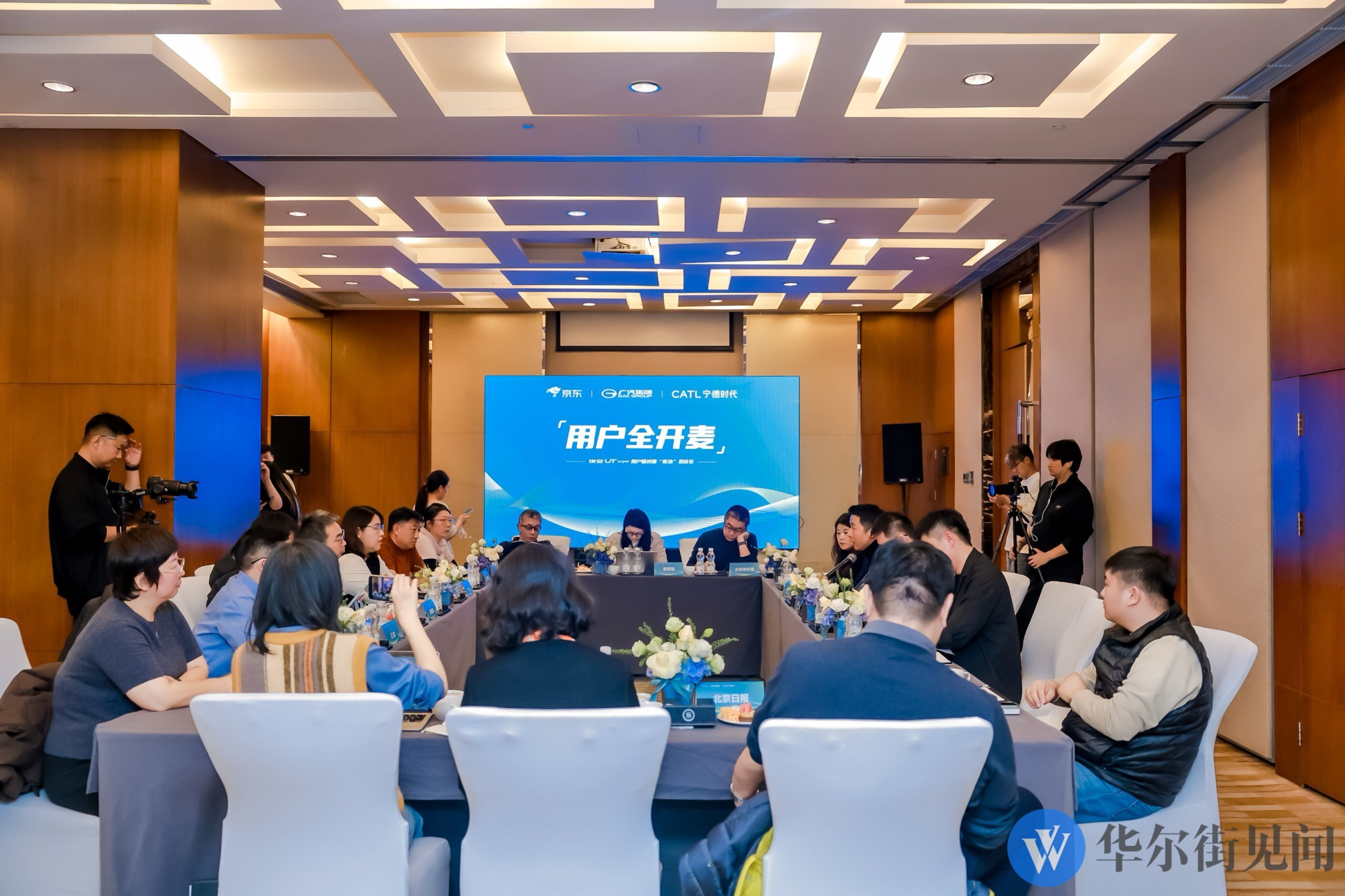
广汽的制造、宁德时代的电池、京东的服务,三方联盟正将"用户导向"从口号变为可感知的消费信心。 12月1日,一场特殊的"用户全开麦"恳谈会让京东、广汽、宁德时代三家企业的项目负责人坐在一起,直面用户的尖锐提问。从"宣传图有天窗,实车为什么 没有"的质疑,到租电方案里程限制的担忧,再到开票地域限制的困惑,用户的问题直接而具体。 这场恳谈会没有变成简单的答疑解惑,而是三方合作模式进入深度磨合期后的一次集中展示。更为重要的是,这一次的恳谈会,直接体现出了三方都在积极 面对用户,持续为提升用户的体验而出力。 在本次合作中,京东、广汽、宁德时代三大巨头跨界联盟,以C2M(用户直连制造)模式对汽车产业价值链进行了一次外科手术式重构。 京东以其覆盖超3000家门店的线下网络与数亿用户的数据洞察能力,扮演"超级供应链组局者",精准定义需求并压缩渠道成本;广汽依托其智能制造体系, 担当整车品质与安全的"压舱石";宁德时代则以其"巧克力换电"技术及"只换不修"的承诺,构建起解决续航与电池衰减焦虑的"技术护城河"。 三者分工明确,风险共担,共同为消费者编织了一张名为 "三倍保障" 的信心之网。这一模式的竞争力,在于其同时祭出了 "高 ...



家纺货源群电商群,家纺电商供应链
Sou Hu Cai Jing· 2025-11-27 02:39
Core Insights - The home textile e-commerce industry is undergoing a transformation from traditional durable goods to experience-driven fast-moving consumer goods, reshaping product forms and the entire value chain [4] - Consumer behavior is shifting towards emotional consumption, where purchases are driven by psychological satisfaction rather than just functional needs [5] - The sleep economy is entering a precise era, with smart bedding systems enhancing customer loyalty and significantly increasing average transaction values [6] Group 1: Industry Transformation - The home textile industry is evolving into an experience-oriented sector, moving away from the traditional durable goods model [4] - The introduction of smart materials and technologies is revolutionizing product offerings, allowing for dynamic adjustments rather than static protection [8] - The shift from standardized production to personalized customization is becoming a key trend, with flexible manufacturing processes gaining traction [10] Group 2: Consumer Behavior - Emotional consumption is becoming a dominant trend, with consumers seeking products that provide psychological comfort [5] - The integration of color psychology into product design is emerging, with specific color combinations shown to alleviate anxiety and improve sleep [9] - Subscription-based services for home textiles are gaining popularity, particularly among high-end users, with acceptance rates reaching 42% [24] Group 3: Technological Advancements - The adoption of digital printing technology has significantly reduced costs for small batch customizations, enabling quicker market validation [12] - AI algorithms are being utilized to predict regional consumer preferences, leading to tailored product strategies [14] - AR/VR technologies are enhancing the shopping experience by allowing consumers to visualize products in virtual settings, resulting in improved conversion rates [17] Group 4: Market Dynamics - The competitive landscape is shifting from product-based competition to ecosystem-based competition, where comprehensive solutions are prioritized [21] - Home textile products are becoming crucial data entry points in smart home ecosystems, linking sleep data with other smart devices [22] - Cross-industry collaborations are emerging, blurring the lines between home textiles and health or beauty sectors, creating new market opportunities [25] Group 5: Future Challenges - The industry faces challenges related to data privacy, necessitating the establishment of transparent data usage rules and security systems [27] - The demand for agile supply chains is increasing, with digital supply chain management becoming a core competitive advantage [28] - There is a significant shortage of professionals who possess both home textile expertise and digital operational skills, which could hinder industry growth [29] Conclusion - The home textile e-commerce sector is transitioning from a transactional model to a lifestyle solution model, driven by a user experience-centric revolution that is fundamentally altering the industry landscape [30]
50城入选消费新业态新模式新场景试点城市
Zheng Quan Ri Bao Wang· 2025-11-22 04:05
Core Viewpoint - The Ministry of Commerce and the Ministry of Finance announced the results of the competitive evaluation for pilot cities in new consumption formats, with 50 out of 75 cities selected to promote diverse consumption and stimulate domestic demand [1][8]. Group 1: Pilot City Characteristics - The selected pilot cities are primarily large cities with strong consumption bases, innovation capabilities, and significant regional advantages [2][3]. - The list includes 4 municipalities, 5 separately planned cities, and 41 other cities, ensuring a balanced regional distribution [2]. - Key commonalities among the cities include solid consumption foundations, sufficient innovation momentum, and notable location and service advantages [2][3]. Group 2: Differentiated Consumption Paths - The pilot cities are encouraged to explore differentiated paths based on their unique advantages rather than following a one-size-fits-all model [4]. - The support directions include enhancing the first-release economy service system, innovating diverse service consumption scenarios, and promoting cross-industry collaborations [3][4]. Group 3: Reshaping Domestic Consumption Ecology - The pilot program aims to optimize the consumption supply structure, activate industry innovation, and drive economic and employment growth [5][6]. - The initiative is expected to create "scene-driven" consumption growth, restructure industrial chain divisions, and activate regional consumption potential [6][7]. - The program is seen as a way to transition from "scale expansion" to "quality improvement" in the domestic consumption market, providing new momentum for high-quality economic development [6][8]. Group 4: Local Characteristics and Avoiding Homogeneity - There is a need for cities to focus on local characteristics to avoid issues like "repackaging without content" and "project homogeneity" [7]. - The development of new consumption formats requires enhanced digital capabilities for small and medium enterprises, emphasizing the importance of tailored solutions [7]. - Future efforts should encourage cities to innovate in rules, service models, and digital infrastructure while solidifying effective experiences to prevent a "copycat" approach [7].
艾瑞咨询:2025双11电商消费观察报告
艾瑞咨询· 2025-11-15 00:06
Core Insights - The 2025 Double 11 event marks a significant transformation in the e-commerce landscape, characterized by an extended promotional period, simplified promotional strategies, and a diversified competitive environment [1][2][3] Market Overview - The market scale for Double 11 reached a new historical high, with total online retail sales nearing 1.8 trillion yuan, reflecting a year-on-year growth of over 10% [2] - This growth represents a staggering increase of approximately 35,000 times compared to the first Double 11 in 2009, which had sales of only 52 million yuan [2] Growth Trends - The growth rate has slowed down, but the quality of sales has improved, indicating a shift from rapid growth to a more mature market phase [3] - The promotional period has been extended to over 30 days, leading to a more distributed sales pattern rather than a peak on November 11, which alleviates logistics pressure and enhances user experience [3] Platform Differentiation - Different platforms are adopting unique development models: Taobao focuses on flash sales, JD leverages its supply chain, and Pinduoduo emphasizes cost-effectiveness and direct connections with manufacturers [4] - Market shares remain stable, but competition in specific categories and user demographics is intensifying [5] User Growth - Active user numbers for major e-commerce apps have generally increased compared to 2024, with JD showing the most significant growth at 24.7% [8] Consumption Behavior - Consumer behavior is shifting towards rationality, with distinct competition among categories and the rise of new consumption trends [10] Category Performance - In the 3C digital category, JD holds over 60% of online sales, maintaining its leading position due to advantages in product authenticity and service [12][14] - JD also leads in the home appliance category, while Taobao/Tmall and Douyin are gaining traction in smaller appliances [15][17] - In the apparel category, JD has achieved significant growth, with a sales increase of 30%, outperforming the industry average [20] - For daily necessities, JD, Pinduoduo, and Douyin rank as the top three in growth, with JD leading at a 29% year-on-year increase [23] Emerging Consumption Trends - Five key emerging consumption trends are identified: smart consumption, health-oriented products, emotional value-driven purchases, personalized customization, and instant retail [24][26] Innovation in E-commerce - AI technology has been deeply integrated into various aspects of e-commerce, enhancing operational efficiency and user experience [27][29] - Marketing strategies have shifted towards simplified, transparent pricing models, with innovations in live streaming and social marketing [31][33] - User experience has been prioritized across platforms, focusing on service quality, logistics, and customer support [34][36] Industry Evolution - The Double 11 event signifies a transition from scale-driven growth to quality-focused development, highlighting the importance of user trust and experience in the evolving e-commerce landscape [38][39]