人民币国际化

Search documents
数字人民币能计利息了!对你的钱包有何影响?
新华网财经· 2026-01-03 04:22
Core Viewpoint - Starting from January 1, 2026, digital yuan wallet balances will earn interest based on current deposit rates, marking a transition from "digital cash" to "digital deposit currency" [2][4]. Group 1: Significance of Digital Yuan Interest - The introduction of interest on digital yuan balances positions China as the first economy to pay interest on central bank digital currency (CBDC), which is expected to enhance user willingness to adopt digital yuan and expand its usage scenarios [2][4]. - Major state-owned banks, including ICBC, ABC, CCB, BOC, PSBC, and BOCOM, will implement this interest policy, aligning with the current deposit interest rates [4]. Group 2: Current Applications and Features - Digital yuan has established a presence in various sectors such as retail, dining, education, public services, and cross-border settlements, showcasing a versatile application model that integrates both online and offline capabilities [5]. - The digital yuan operates on a broad account system, supporting a decoupled banking account function, and is equivalent to physical RMB, possessing value characteristics and legal tender status [9]. Group 3: Payment Methods and User Experience - Users can download the "Digital Yuan" app, register a wallet, and convert bank funds into digital yuan through the app [11]. - Payment methods include QR code payments, NFC "tap-to-pay," and direct transfers using phone numbers or wallet IDs, transitioning from a cash-like 1.0 version to a deposit-like 2.0 version [12]. Group 4: Advantages of Digital Yuan - The issuance cost of digital yuan is lower as it eliminates the need for physical currency production, thus reducing costs associated with printing and maintaining physical money [20]. - Digital yuan transactions are recorded, aiding in the fight against illegal activities [21]. - The digital currency facilitates international transactions, promoting the global use of the RMB [22]. Group 5: Comparison with Other Payment Methods - Unlike WeChat and Alipay, which serve as wallets for various currencies, digital yuan functions as a direct form of money, enhancing the payment experience [16][18]. - Merchants will be required to accept digital yuan, while they can refuse other payment methods like WeChat and Alipay, which may incur service fees [25].


人民币兑美元破 6.97,汇率突破背后的多重支撑
Sou Hu Cai Jing· 2026-01-03 04:04
Core Insights - The offshore RMB/USD exchange rate has successfully broken the 6.97 mark, reaching a high of 6.9678, marking the highest level since May 2023, driven by both short-term market sentiment and long-term support from an improved RMB ecosystem and enhanced cross-border payment convenience [2] Group 1: Support Behind the Exchange Rate Breakthrough - The recent appreciation of the RMB is attributed to ongoing upgrades in internal financial infrastructure, including the launch of the digital RMB 2.0, which offers interest on wallet balances at a rate of 0.05%, making China the first economy to provide interest on central bank digital currency [3] - As of November 2025, the digital RMB has recorded 3.48 billion transactions totaling 16.7 trillion yuan, with 230 million personal wallets and 1.884 million corporate wallets, indicating a growing penetration in cross-border scenarios [3] - The upcoming implementation of new CIPS business rules on February 1, 2026, will ease access for foreign institutions, enhancing the efficiency of RMB cross-border circulation with 190 direct participants and 1,567 indirect participants globally [3] Group 2: Analysis and Outlook on Appreciation Trend - The breakthrough of the 6.97 exchange rate reflects increasing market confidence in the RMB, with the interest mechanism for digital RMB wallets enhancing their savings attributes and reducing holding risks, thereby attracting more users [4] - The global expansion of the CIPS system facilitates easier use of the RMB in cross-border trade and investment, steadily improving its international acceptance [4] - Long-term trends suggest that the RMB will continue to appreciate, supported by the ongoing development of the digital RMB ecosystem and the implementation of new CIPS regulations, although exchange rate fluctuations will still be influenced by global economic conditions and monetary policies of major economies [4]
我国拒接美8500亿债务,华尔街震动的背后是一场持续18年的金融博弈
Sou Hu Cai Jing· 2026-01-02 11:52
Core Viewpoint - The article discusses a significant shift in the financial relationship between the United States and China, highlighting China's declining holdings of U.S. Treasury bonds and the implications of this trend for global finance and the U.S. economy [2][3][4]. Group 1: U.S. Treasury Bonds and China's Position - In December 2025, the U.S. Treasury proposed that China purchase $850 billion in new U.S. debt, while China has reduced its holdings from a peak of $1.3 trillion to $688.7 billion over the past 12 months [2]. - China's foreign trade as a percentage of GDP has decreased from 57% in 2008 to 35% in 2025, allowing China to be more assertive in its financial decisions [3]. - The U.S. federal debt surpassed $38 trillion in 2025, with annual interest payments exceeding $1 trillion, raising concerns about the sustainability of U.S. debt [3]. Group 2: Global Trends in Debt Holdings - In October 2025, Canada sold $56.7 billion in U.S. debt in a single month, while India and Japan also reduced their holdings, indicating a broader trend of global divestment from U.S. Treasury bonds [4]. - The dollar's share in global foreign exchange reserves has fallen to 56.32%, reflecting a structural decline in the dollar's credibility [4]. Group 3: China's Financial Strategies - China has increased its gold reserves to 74.09 million ounces, with gold now making up 8% of its official reserves, indicating a strategic shift towards gold as a financial asset [5]. - The use of the CIPS system for direct payments in RMB for international trade has surged, with RMB settlements in goods trade reaching 28% in the first half of 2025 [5]. - A "triangular swap" strategy is emerging, where Chinese entities exchange U.S. debt for infrastructure services in RMB, promoting the internationalization of the Chinese currency [6]. Group 4: Impact on Global Finance - The RMB has surpassed the euro to become the second-largest trade financing currency globally, with over 80 central banks including it in their foreign reserves [7]. - The total value of offshore RMB assets reached 10.42 trillion yuan in 2025, marking a new high and indicating increased global capital flows towards China [7]. - The article suggests that while the U.S. continues to rely on outdated financial strategies, China is establishing a new financial paradigm that diminishes the necessity of the dollar [8].

人民币国际化重大突破,外国开始用人民币收税,引起外界高度关注!
Sou Hu Cai Jing· 2026-01-02 06:05
Core Viewpoint - Zambia's central bank has confirmed the acceptance of payments in Renminbi for mining taxes and royalties since October, marking a significant breakthrough in the internationalization of the Renminbi [1][3]. Group 1: Economic Implications - Zambia's decision to accept Renminbi for tax payments signifies a shift in the role of the currency, moving beyond mere transactional use to a recognition of its importance in national fiscal sovereignty [3]. - The move reflects a growing trend among developing countries to diversify their currency options and reduce reliance on a single currency, indicating a collective action towards "de-risking" [4]. Group 2: Market Dynamics - The latest survey from the Bank for International Settlements shows a rapid increase in the Renminbi's share of global foreign exchange transactions, with more central banks incorporating it into their foreign exchange reserves [3]. - The internationalization of the Renminbi is still in its early stages, facing challenges such as the need for a deep, liquid, and transparent financial market to attract long-term holders [3][4]. Group 3: Historical Context - The acceptance of Renminbi for sovereign tax payments is seen as a natural evolution of demand, driven by deep integration of Chinese and global supply chains, rather than coercive measures [4]. - The internationalization of the Renminbi reflects broader themes of national strength, including manufacturing capabilities, technological advancements, and stable political and economic expectations [4]. Group 4: Future Outlook - While the path to Renminbi internationalization is long, Zambia's decision serves as a significant signal for future developments in global currency dynamics [5].

稳步发展数字人民币,建设自主可控的人民币跨境支付体系|新刊亮相
清华金融评论· 2026-01-01 10:18
Core Viewpoint - The article emphasizes that the digital renminbi (e-CNY) is transforming the digital financial landscape and facilitating the internationalization of the renminbi through technological upgrades and institutional innovations [10]. Group 1: Digital Renminbi Development - The digital renminbi has transitioned from a cash equivalent (M0) to a fully functional legal digital currency, marking a new paradigm in digital finance and the internationalization of the renminbi [10]. - The People's Bank of China has established three principles for the digital currency: "no loss, compliance, and interoperability," which serve as fundamental guidelines for building cross-border infrastructure [5][6]. - As of November 2025, the digital renminbi has processed 3.48 billion transactions, amounting to 16.7 trillion yuan, with 230 million personal wallets opened through the digital renminbi app [6]. Group 2: Cross-Border Payment System - The digital renminbi is positioned to enhance domestic payment efficiency and promote financial inclusion while reshaping the cross-border payment landscape [7]. - Traditional cross-border payment systems face challenges such as high costs and inefficiencies, which the digital renminbi aims to address through point-to-point payments and real-time settlement mechanisms [7]. - The implementation of a partial reserve system for the digital renminbi will create new issuance channels and enhance user retention by allowing interest payments on digital currency held in wallets [8]. Group 3: Strategic Importance and Challenges - The digital renminbi's unique characteristics present new challenges for issuers, operators, and users, necessitating enhanced technical capabilities and security measures [9]. - The widespread application of the digital renminbi will impact the central bank's monetary policy transmission and macroeconomic regulation, requiring a comprehensive approach to development and security [9]. - The establishment of an international operational center and the expansion of the "mBridge" network will position the digital renminbi as a "digital bridge" connecting more countries [8].

非洲首个!“已用人民币缴税费”
Sou Hu Cai Jing· 2026-01-01 09:51
► 文 观察者网 阮佳琪 人民币国际化进程在非洲的推进势头正愈发凸显。据美媒彭博社12月31日报道,在非洲第二大铜矿生产 国赞比亚,中资矿山运营商已开始使用人民币缴纳矿区开采使用费及税款。赞比亚央行(BoZ)周三在 邮件回复中证实,人民币结算缴费模式已于10月正式落地。 报道指出,赞比亚由此成为非洲首个确认接受人民币支付矿业税款的国家,此为人民币在非洲大陆接受 度持续提升的最新佐证,"非洲正逐渐成为推进人民币国际化的关键阵地"。 赞比亚央行卢萨卡分行 彭博社 美媒引述的赞比亚央行邮件内容写道,"赞比亚大部分铜矿出口目的地为中国,而且中资矿企对华出口 已有部分甚至全部货款都是以人民币结算的。赞比亚央行的核心目标之一是实现外汇储备多元化并扩大 储备规模,增持人民币资产有助于实现这一目标。" "技术层面,中国主导的人民币跨境支付系统(CIPS)清算系统正在推广,企业使用CIPS可降低对环球 银行金融电信协会(SWIFT)的依赖,有效降低系统性风险。与SWIFT清算系统相比,CIPS的使用不 受其他国家政策的直接影响,这为中非之间的贸易和投资提供了更加稳定和安全的环境",他补充道。 据报道,赞比亚央行于2018年首次 ...

财经观察|今日起,数字人民币开始计息!对你我生活有何影响?
Sou Hu Cai Jing· 2026-01-01 08:59
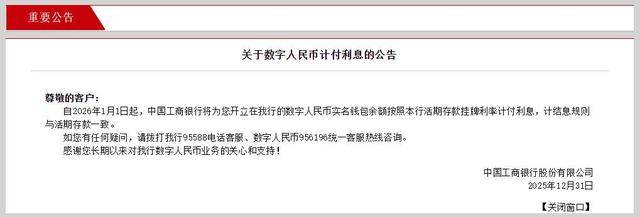
今天,数字人民币正式迈入"计息"时代,用户实名钱包里的余额能"钱生钱"了。 图片截取自工商银行官方网站 六大行集体官宣 图片截取自农业银行官方网站 2025年12月31日,工商银行、农业银行、中国银行、建设银行、交通银行、邮储银行集体发布关于数字 人民币重磅公告。公告称,自2026年1月1日(含)起,将为客户开立在该行的数字人民币实名钱包余 额,按照活期存款挂牌利率计付利息,计结息规则与活期存款一致。 这意味着,存放在这些钱包里的数字人民币,将和传统银行活期存款一样,开始产生收益。目前,几家 大行官网显示的活期存款挂牌利率为0.05%。 图片截取自工商银行官方网站 值得注意的是,并非所有数字人民币钱包都能享受计息。 数字人民币现金型1.0版迈入存款货币型2.0版,一大变化点是由央行对客户负债,变成了商业银行对客 户负债。为何会出现这一变化? 中国人民银行党委委员、副行长陆磊在撰文中指出,数字现金作为中央银行对公众的负债,理论上不需 要商业银行等金融机构参与运营维护。但是在研发试点中,数字现金与流通中纸币的权责关系存在明显 差异。商业银行是数字钱包开立、场景开发和技术维护不可或缺的运营者,其服务伴随数字现金流通 ...




数字人民币2.0:“计息数字货币”的机制与技术创新
Hua Er Jie Jian Wen· 2026-01-01 08:06
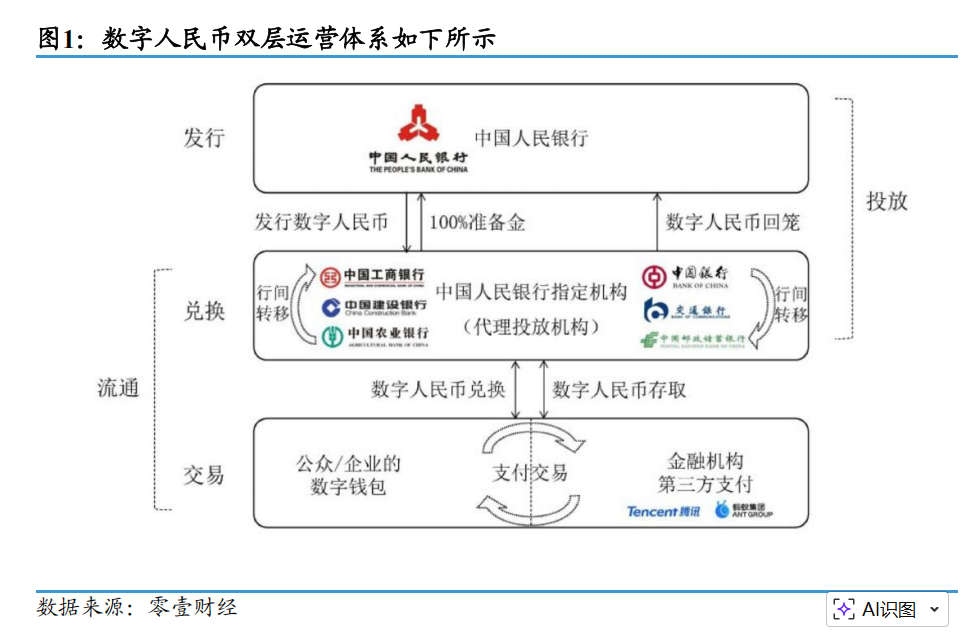
Core Viewpoint - The People's Bank of China is officially transitioning the digital yuan from a "cash-type 1.0" to a "deposit currency type 2.0," introducing a historical transformation that enhances its functionality as a financial asset with value storage capabilities [1][2]. Group 1: Mechanism Innovation - The core mechanism innovation of version 2.0 is characterized by the redefinition of liability attributes and the incorporation of a macro framework, allowing digital yuan balances in commercial banks to be classified as "account-based commercial bank liabilities" [3][6]. - The cancellation of the "non-interest" policy for digital yuan enables liquidity to flow directly into the electronic wallet system, marking the end of the cash era [3][6]. - The new framework enhances user willingness to hold and use digital yuan while providing banks with a manageable asset-liability space [6]. Group 2: Technical Architecture - The technical architecture features three major innovations: an account system, a currency string, and smart contracts, which facilitate a digital path for the digital yuan [7]. - The upgrade maintains compliance with existing bank account rules while introducing a "currency string" for value transfer and offline circulation, enhancing verification and system resilience [7]. - Smart contracts embedded in the funding flow can trigger conditions and automate verification in various scenarios, reducing misuse risks and compliance costs [7]. Group 3: Cross-Border Applications - The transition to "digital deposit currency" is reshaping the liquidity foundation and settlement efficiency of the multilateral central bank digital currency bridge (mBridge) [11]. - As of November 2025, digital yuan holds a dominant position in mBridge operations, accounting for 95.3% of transactions, with a total of 4,047 cross-border payments amounting to 387.2 billion yuan [14]. - The introduction of deposit insurance significantly lowers the risk costs for foreign participants holding digital yuan, enabling more robust fund position management [14].


数字人民币今起升级,2.0版有何好处?对你我有何影响?
Sou Hu Cai Jing· 2026-01-01 07:14
Core Viewpoint - The People's Bank of China will implement a new action plan to enhance the management and service system of the digital renminbi, transitioning from a cash-like version to a deposit currency version starting January 1, 2026 [1][2]. Group 1: Transition to Digital Deposits - The digital renminbi will shift from being classified as "digital cash" to "digital deposits," allowing banks to pay interest on customer balances in digital renminbi wallets [2][6]. - Digital renminbi deposits will be included under deposit insurance, providing a protection limit of up to 500,000 yuan for customers in case of bank risks [2][8]. - Major banks, including ICBC and ABC, will start paying interest on digital renminbi wallet balances at the same rate as regular savings accounts [2][8]. Group 2: Implications for Banks - The new framework allows banks to manage digital renminbi as liabilities, enabling them to earn interest and comply with reserve requirements, thus integrating digital renminbi into their balance sheets [7][9]. - Previously, digital renminbi existed in M0 form, which did not allow for monetary creation; the new structure will allow it to be categorized under M1 or M2, improving liquidity in the banking system [8][9]. - The transition to digital deposits will enhance banks' motivation to promote digital renminbi, addressing previous cost burdens without corresponding revenue [9]. Group 3: Technological and Regulatory Aspects - The digital renminbi will incorporate distributed ledger technology and smart contracts, facilitating efficient payment processes and regulatory compliance [9]. - The new system aims to support real-time cross-border transactions, reducing intermediary costs and enhancing settlement efficiency, which may aid in the internationalization of the renminbi [9].

2025年国债市场年鉴:筹资精准服务国家战略 收益率于预期交织中锚定“新平衡”
Xin Hua Cai Jing· 2026-01-01 06:42
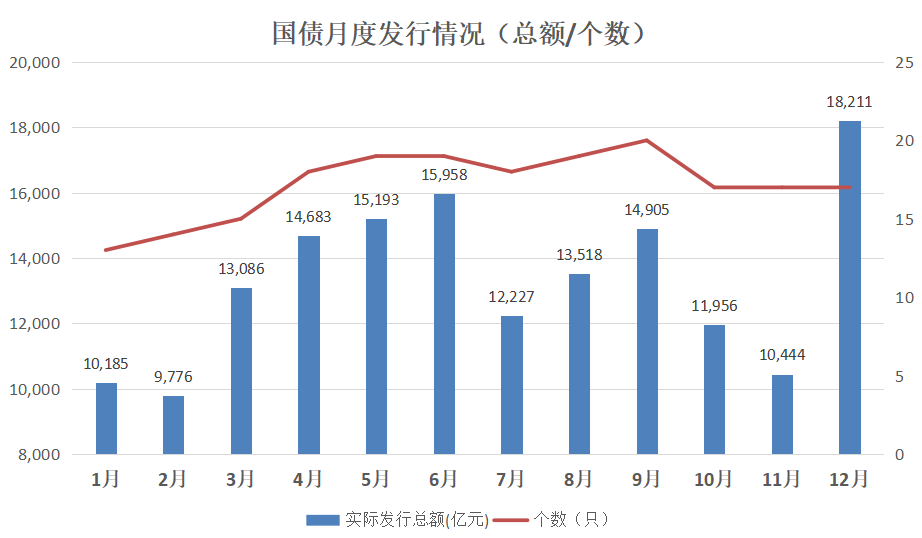
Core Viewpoint - The Chinese government bond market in 2025 is characterized by a unique path amid macroeconomic narratives and intense market dynamics, effectively supporting fiscal policies and enhancing resilience while fulfilling its core mission of financing and liquidity provision [1] Group 1: Primary Market - The primary market for government bonds in 2025 achieved a historic leap with a total issuance of 16,014.02 billion yuan, a significant increase of 28.37% compared to 12,474.83 billion yuan in 2024 [2][3] - The issuance structure was optimized with a scientific front-loading of issuance schedules, ensuring timely funding for major national strategies [4] - The issuance of special bonds, particularly ultra-long-term special bonds amounting to 1.3 trillion yuan, targeted critical national strategic areas and is expected to significantly boost annual GDP growth [4] Group 2: Interest Rates and Market Dynamics - The overall interest rates for government bonds showed a downward trend, effectively guiding the financing costs across the economy, with short-term rates ranging from 1.16% to 1.79% and 10-year bond rates stabilizing around 1.78% [5] - The secondary market experienced fluctuations in the 10-year bond yield, which ranged from approximately 1.6% to 1.9%, reflecting a complex interplay of market expectations and policy responses [7] Group 3: Market Functionality and Future Outlook - The evolution of the government bond market in 2025 transcended mere financing, becoming a cornerstone of national financial strategy, enhancing its role as a stabilizer and attractor of foreign investment [11] - The modernization of bond management, including the integration of bond trading into regular monetary policy tools, marks a significant milestone in improving monetary policy transmission efficiency [11] - Looking ahead, the bond market is expected to continue evolving under the theme of "high-quality development," balancing government financing needs with financial stability while enhancing the role of the yield curve as a pricing benchmark [12]