
经济增长

Search documents
首破10万亿元!经济第一大省“晒”成绩单
Shang Hai Zheng Quan Bao· 2025-10-25 00:52
Economic Overview - Guangdong's GDP for the first three quarters of this year reached 10.517698 trillion yuan, marking a year-on-year growth of 4.1% [1][3] - This is the first time Guangdong's GDP has surpassed the 10 trillion yuan mark in the first three quarters, comparable to the total GDP of 10.767107 trillion yuan for the entire year of 2019 [1][3] Sector Performance - The primary industry added value was 383.85 billion yuan, growing by 4.5%; the secondary industry added value was 3.927075 trillion yuan, growing by 2.7%; and the tertiary industry added value was 6.206773 trillion yuan, growing by 4.9% [3] - Industrial added value for large-scale industries in Guangdong increased by 3.5% year-on-year, with a 1.3 percentage point increase compared to the period from January to August [3] New Growth Drivers - Advanced manufacturing and high-tech manufacturing sectors saw added value growth of 5.4% and 6.4%, respectively, accounting for 55.5% and 33.8% of total industrial added value [3] - Specific sectors such as electronic and communication equipment manufacturing, computer and office equipment manufacturing, and advanced equipment manufacturing grew by 7.0%, 11.0%, and 7.8% respectively [3] - Production of certain high-tech and new energy products experienced rapid growth, with industrial robots, service robots, civilian drones, and 3D printing equipment increasing by 33.7%, 15.2%, 44.8%, and 40.3% respectively [3] Investment Trends - Fixed asset investment in Guangdong declined by 14.1% year-on-year, with real estate development investment dropping by 20.6% and new commercial housing sales area decreasing by 12.5% [4] Consumer Market - The total retail sales of consumer goods in Guangdong grew by 2.8% year-on-year, with significant growth in the replacement-related goods sector [5] - Retail sales of cultural and office supplies, home appliances, and communication equipment increased by 21.0%, 31.0%, and 16.5% respectively [5] Government Response - The Guangdong Provincial Committee emphasized the need to maintain confidence and address economic challenges with actionable measures to ensure a strong finish to the fourth quarter and achieve annual economic and social development goals [6]

今年前三季度数据,房价全线下跌,无一城不降!
Sou Hu Cai Jing· 2025-10-24 23:52
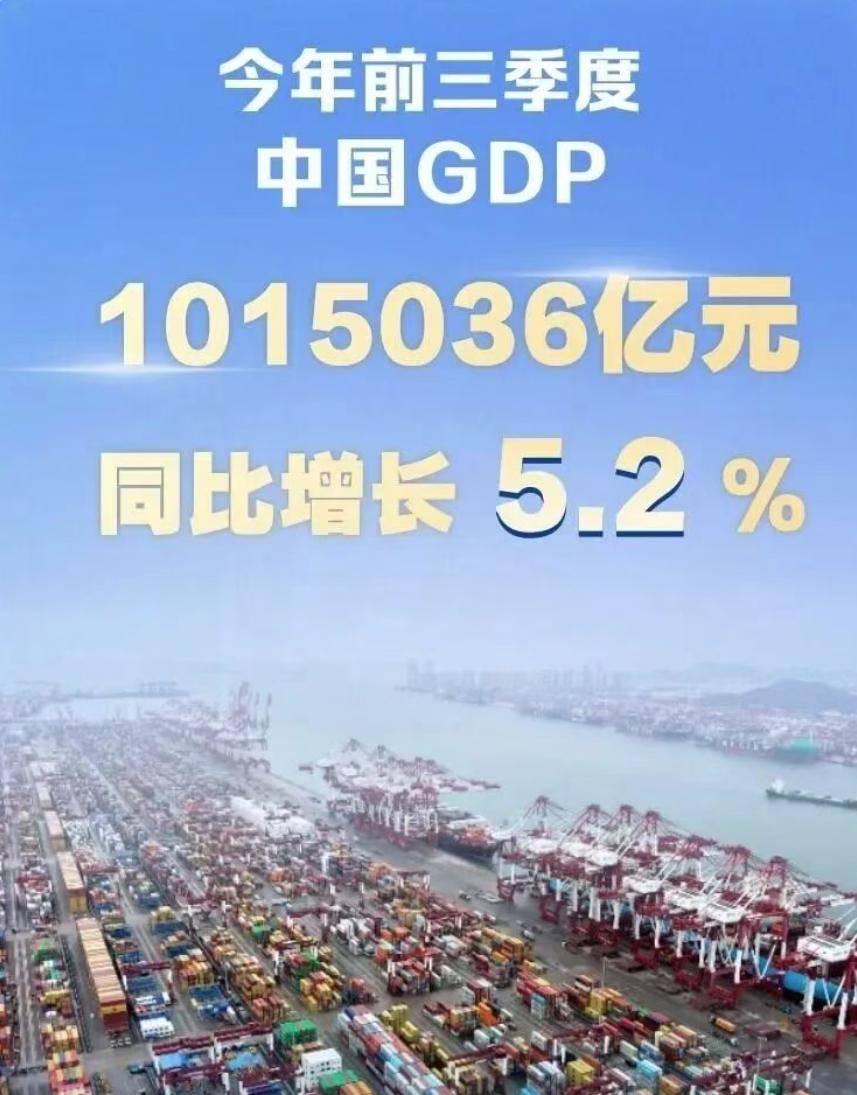
Group 1: Real Estate Market Overview - The real estate market is experiencing a significant downturn, with key metrics showing alarming declines, marking the largest drop since 2021 [2] - National real estate development investment has seen a substantial year-on-year decrease, remaining in negative growth since April of the previous year [2] - Land sales revenue has halved compared to the peak in 2021, leading to a drastic reduction in developers' willingness to acquire land [2] Group 2: Sales and Pricing Trends - New housing sales, both in terms of area and revenue, are continuously declining, with no regions spared from this trend [2] - The once-promising "golden September and silver October" sales period has lost its luster, with home prices experiencing widespread declines [2] - The second-hand housing market is struggling, with sellers forced to lower prices to attract buyers [2] Group 3: Government Response - In response to the market downturn, major cities like Beijing, Shanghai, and Shenzhen have implemented policies to stimulate the market, but the effectiveness has been limited as of September [4] Group 4: Changing Demand Dynamics - The demand structure has shifted, with wealthy individuals refraining from purchases, middle-class consumers hesitant due to economic uncertainty, and ordinary people unable to afford high prices [7] - Younger generations are increasingly unwilling to compromise their future for high housing costs, preferring to invest in lifestyle rather than property [9] - Residents' leverage has reached its limit, with many families already stretched thin financially, making it difficult to take on additional debt for home purchases [11] Group 5: Demographic Trends - A noticeable trend of population decline is emerging, leading to reduced housing demand as empty properties accumulate [13] Group 6: Economic Context - Despite the real estate slump, the overall macroeconomic environment remains stable, with GDP growth reaching 5.2% in the first three quarters, surpassing market expectations [14] - Consumption has been a significant driver of economic growth, contributing over half to the overall performance [14] Group 7: Future Outlook - The path to a rebound in the real estate market requires finding a new balance between economic growth, public income, and housing prices, which may take considerable time and effort [15]
越南前三季度经济增长好于预期
Jing Ji Ri Bao· 2025-10-24 22:09
Core Viewpoint - Vietnam's GDP growth reached 8.23% year-on-year in Q3 2025, with a cumulative growth of 7.85% for the first three quarters, marking the fastest growth in three years despite a complex global economic environment [1][3]. Group 1: Economic Growth Drivers - The strong performance of the manufacturing sector is the core driver of Vietnam's economic growth, supported by robust exports and foreign direct investment (FDI) [1][3]. - Vietnam's total goods import and export volume reached $680.66 billion in the first nine months of 2025, a year-on-year increase of 17.3%, with exports growing by 16% and imports by 18.8%, resulting in a trade surplus of $16.82 billion [1][2]. Group 2: Export Performance - Exports are a key engine for Vietnam's economic growth, with export value nearing $349 billion in the first nine months of 2025, reflecting a 16% year-on-year increase [2]. - Major export categories include computers, electronic products, and components, with export values of $38.41 billion, and mobile phones and components at $22.4 billion [2]. Group 3: Foreign Direct Investment - Vietnam attracted a total of $28.54 billion in foreign investment by September 30, 2025, a year-on-year increase of 15.2%, with actual FDI reaching $18.8 billion, up 8.5%, marking a five-year high [2]. - The processing and manufacturing sector accounted for 82.8% of the total actual foreign investment, with additional capital for existing projects soaring by 122% to $8.95 billion [2]. Group 4: Domestic Consumption and Business Activity - Domestic consumption has significantly contributed to economic growth, with over 230,000 new or resumed businesses in the first nine months of 2025, a 26.4% year-on-year increase [3]. - The survey of manufacturing and processing enterprises indicated that 40.8% expect improved conditions in Q4, while 41.7% anticipate stable operations [3]. Group 5: Monetary Policy and Economic Outlook - The central bank of Vietnam has maintained stable monetary policy to address inflation and exchange rate fluctuations, demonstrating economic resilience despite currency volatility [3]. - The strong economic growth in Q3 2025 reflects Vietnam's adaptability to global challenges, with coordinated development across industries and a focus on achieving a 10% growth target for 2026 [3][4].
US government shutdown will inflict temporary pain to economy
Reuters· 2025-10-24 10:41
A prolonged shutdown of the U.S. government amid a standoff over funding between Republicans and Democrats in Congress could dent economic growth in the fourth quarter, but much of the lost output would be recovered when normal operations resume. ...
如何解读三季度经济数据︱重阳问答
重阳投资· 2025-10-24 07:32
Core Viewpoint - The third quarter economic data indicates that China's economy is maintaining resilience, with GDP growth of 5.2% year-on-year for the first three quarters and 4.8% for the third quarter, driven primarily by the production sector [2][3]. Group 1: Economic Growth - The industrial production maintained a rapid growth rate, with industrial added value increasing by 6.5% year-on-year in September, up by 1.3% from the previous month [2]. - Exports showed improvement, with a year-on-year growth of 3.8% in September, a significant recovery from the previous month's decline of 0.4% [2]. - The production sector is identified as the most important driver of economic growth this year, supported by policy measures and seasonal effects [2]. Group 2: Demand Side Analysis - Fixed asset investment has continued to decline, with a year-to-date decrease of 0.5%, primarily due to weakened real estate and infrastructure investments [3]. - Retail sales of consumer goods grew by 3% year-on-year in September, marking a 0.4 percentage point decline from the previous month, continuing a four-month downward trend [3]. - Service consumption remains a bright spot, with total service consumption growth rising by 0.1% to 5.2%, contributing 2.7 percentage points to GDP growth in the third quarter [3]. Group 3: Structural Issues and Policy Needs - There are evident signs of weakening in housing prices, with all 70 major cities reporting declines in second-hand housing prices in September [4]. - The GDP deflator index stands at -1.07%, remaining negative for over ten consecutive quarters, indicating ongoing structural issues [4]. - To support economic growth for the upcoming year, it is necessary to further implement stability policies, especially considering the high base from last year's growth [4].

经济学家调查:欧洲央行利率或“定格”2%至2027年底
智通财经网· 2025-10-24 07:10
Core Viewpoint - The European Central Bank (ECB) is expected to maintain the Eurozone borrowing rate at 2% until the end of 2027, with a possibility of further actions in the future [1][5]. Group 1: Monetary Policy Outlook - A survey indicates that one-third of economists expect at least one more rate cut from the ECB, while 17% foresee potential rate hikes by the end of next year [1]. - The upcoming December monetary policy meeting is considered a critical juncture, as it will incorporate economic forecasts for 2028 [1]. - ECB officials, led by President Lagarde, express satisfaction with current inflation rates and economic resilience, deeming the monetary policy to be in an "ideal state" [2][10]. Group 2: Economic Challenges - Europe faces challenges from renewed US-China trade tensions, particularly in the semiconductor and rare earth sectors, complicating the economic landscape [2]. - France's fiscal difficulties are exacerbated by credit rating downgrades, while doubts arise regarding the effectiveness of Germany's large-scale infrastructure and defense investments [2]. - The potential delay of the new carbon emissions trading system may exert inflationary pressure in the coming years, alongside concerns about high asset valuations increasing the risk of market collapse [2]. Group 3: Inflation and Growth Risks - Current inflation in the Eurozone has risen to 2.2%, the fastest pace in five months, leading to concerns about upward price pressures [8]. - Economists predict that if inflation rates drop significantly below the 2% target, it could trigger further rate cuts [7][13]. - The balance of short-term risks to economic growth and inflation is perceived as roughly even, but long-term uncertainties remain high [8]. Group 4: Structural and Political Factors - Over 60% of respondents believe that the Eurozone's economic growth limitations stem from both cyclical and structural factors, with many attributing weakness primarily to structural issues [10]. - Supply chain disruptions, particularly in the automotive sector, pose significant challenges, exacerbated by geopolitical tensions and export restrictions from China [10]. - Political instability in France and declining public support for Germany's leadership further complicate the economic outlook [10].

英国9月零售销售连续第四个月增长 为降温经济注入“强心针”
Zhi Tong Cai Jing· 2025-10-24 07:09
Group 1 - UK retail sales increased for the fourth consecutive month, with a 0.5% rise in September, surpassing economists' expectations of a 0.4% decline [1] - The sales growth follows a revised 0.6% increase in August, indicating a resilient retail sector despite adverse weather conditions [1] - Consumer confidence showed signs of improvement, with GfK's household confidence index rising by 2 points to -17 in October, matching August's level [1] Group 2 - The UK was the fastest-growing economy among the G7 countries in the first half of the year, but the job market is deteriorating, leading traders to bet on potential interest rate cuts by the Bank of England [2] - Policymakers are closely monitoring budget conditions for any signs that new tax measures could further suppress economic growth [2]
【环球财经】澳大利亚2024-25财年经济或增长1.4% 与前一财年持平
Xin Hua Cai Jing· 2025-10-24 06:06
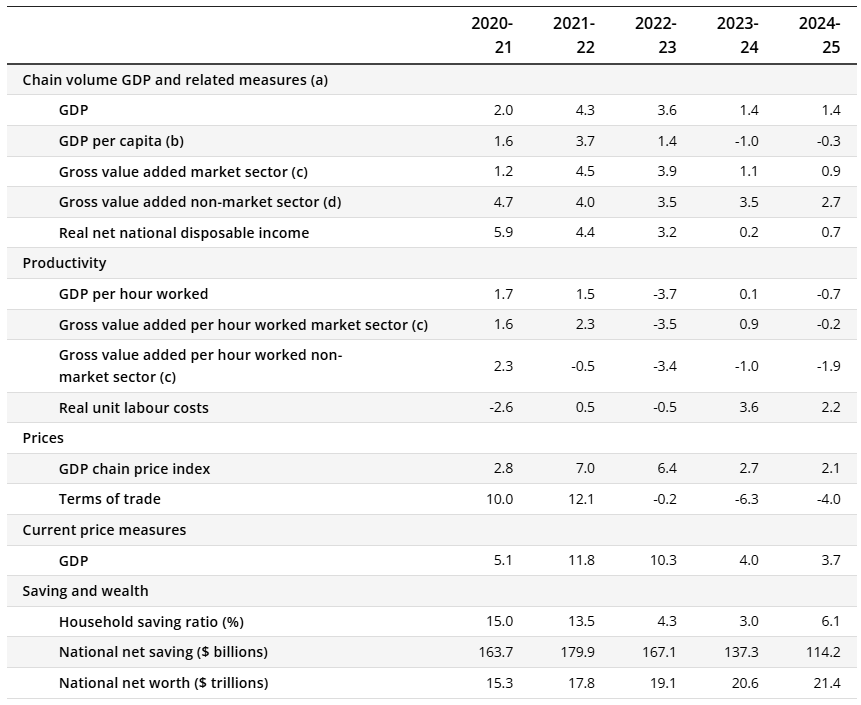
Economic Growth - Australia's GDP growth for the fiscal year 2024-2025 is projected at 1.4%, consistent with the previous fiscal year but lower than 3.6% in 2022-2023 and 4.3% in 2021-2022 [1][2] - In current price terms, the GDP growth for 2024-2025 is expected to be 3.7%, down from 4% in 2023-2024 and significantly lower than 10.3% in 2022-2023 [2] Per Capita and Productivity - Per capita GDP in Australia is anticipated to decline by 0.3% in 2024-2025, following a 1% decrease in 2023-2024 [2] - Labor productivity, measured as GDP per hour worked, is expected to decrease by 0.7% in 2024-2025, contrasting with a 0.1% increase in the previous fiscal year [2][3] National Savings and Wealth - The household saving rate is projected to rise from 3% in the previous fiscal year to 6.1% in 2024-2025 [2][3] - National net saving is estimated to be approximately 114.2 billion AUD (about 529.73 billion RMB), down from 137.3 billion AUD in 2023-2024 [2][3] - National net worth is expected to reach around 21.4 trillion AUD, an increase from 20.6 trillion AUD in the previous fiscal year [2][3]
IMF预测希腊2025年经济增长2%,通胀3.1%
Shang Wu Bu Wang Zhan· 2025-10-23 19:23
Core Viewpoint - The International Monetary Fund (IMF) forecasts that Greece's economy will demonstrate strong resilience, with a projected GDP growth of 2% in 2025, nearly double the average growth rate of the Eurozone [1] Economic Growth - Greece's GDP is expected to grow by 2% in 2025 and maintain the same growth rate in 2026, indicating a robust economic recovery [1] - This growth rate is nearly double the average for the Eurozone, highlighting Greece's strong economic performance [1] Inflation - The IMF predicts an inflation rate of 3.1% for Greece in 2025, which is above the Eurozone average [1] - Inflation is expected to decrease to 2.5% in 2026, with the goal of reaching 2% by 2027 [1] Unemployment - The unemployment rate in Greece is projected to improve, with expectations of a decline to 9% this year and further down to 8.4% by 2026 [1] - This trend indicates a positive labor market outlook as the economy continues to recover [1]
希腊第三季度经济稳健增长
Shang Wu Bu Wang Zhan· 2025-10-23 13:30
Core Insights - The Bank of Greece forecasts a 2.2% year-on-year GDP growth and a 0.7% quarter-on-quarter growth for Q3 2025 [1] - Economic sentiment index rose to 109.6 points from July to August, indicating high confidence in the industrial and construction sectors [1] - The unemployment rate dropped to 8% in July, marking the lowest level in 17 years [1] Economic Contributions - The tourism sector continues to significantly contribute to economic growth, with international passenger traffic at Athens airport increasing by 7% year-on-year in July and August [1] - Loans to the private sector increased by 10.5% year-on-year in July, with consumer loans growing by 6.2% [1] - VAT revenue rose by 9.8% year-on-year, while public investment and recovery fund expenditures maintained a double-digit growth of 15% [1]