
贸易逆差

Search documents
贸易冲突的“终局”?——关税“压力测试
2025-05-15 15:05
贸易冲突的"终局"?——关税"压力测试 20250515 2025 年 5 月 12 日,美国对中国的关税进行了降级,目前美国对中国的平均关 税税率已经降至 42%,而中国对美国的关税税率则降至 27%。双方相比于过 去的极端关税情况,出现了较大幅度缓和,超出了市场预期。结合最新变化来 看,美国整体对外关税税率已降至 16%,而在此之前为 27%。尽管如此,中 国在美国整体关税中的贡献占比仍然较大,目前为 40%。即使经过此次降级, 美国整体对外关税仍处于近 50 年来偏高水平。 特朗普政府在贸易政策上的推进速度及其影响是什么? 摘要 • 美国对外关税税率已降至 16%,但仍处近 50 年高位,中国贡献占比仍达 40%,显示关税调整幅度虽超预期,但贸易压力依然存在。 • 特朗普政府贸易政策调整加速,净支持率显著下降,经济政策支持率降幅 尤为明显,促使其调整策略,优先考虑政绩诉求。 • 美国贸易策略调整包括提高关税税率、降低非关税壁垒,并保护农业和制 造业利益,以减少贸易逆差并满足国内政治需求。 • 关税调整后,2025 年美国 GDP 或下降 0.7%,PCE 通胀可能上升 1.4%,中长期 GDP 也可能下 ...
美债,又崩了
Sou Hu Cai Jing· 2025-05-15 14:53
Group 1 - The core viewpoint of the article highlights the increasing concerns among foreign investors regarding U.S. Treasury securities due to rising yields and the impact of U.S. tariff policies under the Trump administration [1][9][11] - U.S. Treasury yields have collectively surged, with the 30-year yield approaching 5% and the 10-year yield surpassing 4.5%, indicating a potential new wave of investor sell-off [1] - The article discusses the implications of the Trump administration's tariff policies, which have heightened the risks for foreign holders of U.S. debt, leading to fears of actual default on dollar-denominated debt [1][11] Group 2 - The article outlines that the persistent overvaluation of the dollar is a root cause of dissatisfaction with the U.S. economy, affecting international competitiveness and leading to trade imbalances [4] - It suggests that to induce a depreciation of the dollar, foreign central banks need to be incentivized or compelled to sell their dollar reserves, which could lead to increased domestic interest rates and a steeper yield curve [4][5] - The potential for a 20% depreciation of the dollar could result in a 60-100 basis point increase in the Consumer Price Index (CPI) inflation rate, indicating significant inflationary pressures [5] Group 3 - The article raises concerns about the sustainability of the U.S. external balance, with net foreign debt projected to exceed 90% of GDP by 2024, raising alarms about the long-term viability of U.S. fiscal policies [7][8] - It notes that the demand for the dollar as a reserve currency has helped stabilize the U.S. economy despite rising debt levels, but this demand may not last indefinitely [7] - The article emphasizes that the combination of rising net foreign debt, the weaponization of the dollar, and tariff policies poses a serious threat to the dollar's status as the world's reserve currency [11]


这个几乎没人听过的美国法院,突然火了!
Huan Qiu Wang· 2025-05-14 15:44
据多家美国媒体的最新报道,在美国纽约,一个连美国人都几乎没听说过的法院,这两天正成为舆论焦点。 因为这个名叫"美国国际贸易法院"的机构,正在审理一起案件,即美国今年4月2日对全世界超过180个国家和地区征收"对等关税",是否违反 了美国的法律。 从美国消费者新闻与商业频道(CNBC)的报道来看,已经于北京时间5月14日凌晨开庭审理的这起诉讼,是由五家很依赖外国进口产品的美 国本土企业在今年4月中旬提起的。 这五家企业聘请的律师认为,美国政府在4月2日对全世界众多国家和地区加征"对等关税"违反了美国宪法。其论据可以简单概括为以下两点: 美国宪法没有明确给予总统对外加征关税的权力,这个权力应该是属于国会的;虽然美国有一个名叫《国际紧急经济权力法》的法律,授权总 统可以在面对"不寻常与特别的威胁"时,对与别国的贸易进行干预,但该法律不仅没有明说总统可以加关税,而且贸易逆差也不属于"不寻常 与特别的威胁",而是国际贸易中常见的情况。 由此,原告方希望成立于1980年的美国国际贸易法院,能够拦下白宫于4月2日对全世界超过180个国家和地区征收的"对等关税",并让美国政 府用这段时间加征的关税来补偿利益受损的5家原告企业 ...
韩国拟以互惠交换策略推动关税谈判
Jing Ji Ri Bao· 2025-05-13 21:49
Group 1 - The US and UK have reached a tariff agreement covering automobiles, steel, and agricultural products, allowing the UK to reduce tariffs on exports to the US [1] - UK tariffs on car exports to the US will decrease from 27.5% to 10%, and steel and aluminum tariffs will drop from 25% to zero, applicable to 100,000 UK cars, nearly covering last year's total exports [1] - In exchange, the UK will open its markets further for US products, providing $5 billion in export opportunities for the US and planning to purchase $10 billion worth of Boeing aircraft [1] Group 2 - South Korea is studying the US-UK trade agreement to find negotiation breakthroughs, particularly focusing on the automotive sector, which accounted for $34.2 billion in exports to the US in 2024, making up 26.8% of total exports [2] - Experts suggest South Korea could adopt a "conditional reciprocity" approach to achieve tariff reductions, leveraging US cooperation needs in shipbuilding and LNG projects [2] - The Korean government is exploring the possibility of a low tariff quota mechanism to secure a 10% preferential tariff for its automobiles [2] Group 3 - South Korea faces significant negotiation challenges, with projected car exports to the US reaching 1.43 million units in 2024, compared to the UK's 100,000 units [3] - The US may demand more concessions from South Korea in agricultural imports, digital trade, and other non-tariff barriers, aiming to maintain a 10% basic tariff while reducing trade deficits [3] - The Korean government aims to balance interests across multiple areas to maximize national benefits in negotiations, with plans to monitor US negotiation strategies and finalize their approach after the new government takes office [3]
分析师:关税对美国通胀的全面影响尚未充分显现
news flash· 2025-05-13 12:53
Core Viewpoint - Analysts suggest that the full impact of tariffs on U.S. inflation has not yet been fully realized, as indicated by lower-than-expected CPI data [1] Group 1: Inflation Data - The Consumer Price Index (CPI) data was below expectations, indicating limited direct transmission of tariffs to broader prices [1] - In April, commodity prices remained flat compared to the previous month, with a mere 0.1% increase when excluding food and energy [1] Group 2: Tariff Impact - The current low tariff levels may not fully reflect their comprehensive impact on inflation, as retailers are still digesting previously accumulated inventory [1] - The ongoing trade deficit continues to widen, suggesting that the macroeconomic effects of trade war policies remain unclear [1] Group 3: Financial Market Reaction - Despite the unclear macroeconomic impacts of trade policies, the lower-than-expected inflation data has undoubtedly provided a short-term boost to financial assets [1]
未来中美关税谈判可能情景及应对
Chengtong Securities· 2025-05-13 11:36
Group 1: Macroeconomic Context - The US economic growth forecast for 2025 has been downgraded from 2% to 1%, while inflation expectations have risen from 2.5% to 4.5%[1] - In Q1 2023, the US GDP contracted at an annualized rate of 0.3%[1] - China's exports to the US fell significantly, with a year-on-year decline of 21% in April 2023[14] Group 2: Future Scenarios of US-China Tariff Negotiations - Optimistic scenario: The US may cancel the suspended 24% tariff, retaining a 10% tariff, leading to a total tariff rate of 30%-50% by 2025[2] - Baseline scenario: If negotiations fail, the US could impose a total tariff rate of approximately 74% by 2025, with an additional 54% tariff on Chinese goods[3] - Pessimistic scenario: The US may reimpose the 24% tariff and increase tariffs further if economic conditions allow, with potential retaliatory measures from China[3] Group 3: US Motivations for Negotiation - The US is under pressure from rising inflation and economic stagnation, prompting a willingness to negotiate tariffs[14] - Strong discontent from the US business community regarding tariffs has influenced the US administration's approach to negotiations[15] - China's non-tariff measures, particularly in rare earth exports, have significantly impacted US negotiations[15] Group 4: China's Response Strategies - China may adopt a "genuine negotiation" approach, where it could agree to certain conditions while leveraging non-tariff measures[3] - Alternatively, if the US is not sincere, China should maintain a firm stance and focus on expanding domestic demand and diversifying trade partnerships[3] - China aims to strengthen international cooperation and oppose unilateral actions from the US[3]
选中国还是美国?石破茂刚直言“非常遗憾”,日本爆出重大丑闻
Sou Hu Cai Jing· 2025-05-13 10:38
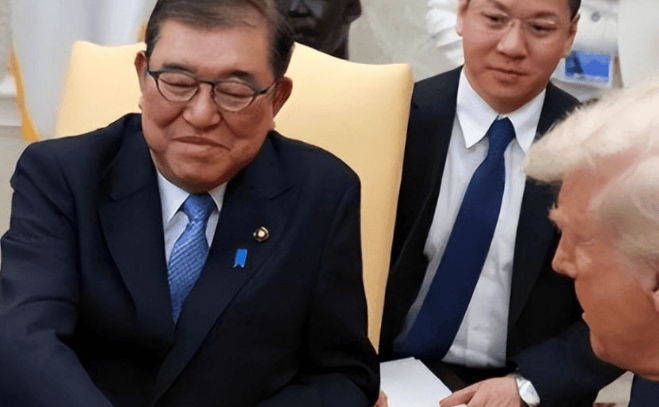
Group 1: Trade Negotiations and Tariffs - Japanese Prime Minister Kishida expressed regret over the US imposing a 25% tariff on key automotive parts and is urging the US to reconsider these measures [1] - The US is demanding Japan to "level the trade deficit," which includes conditions such as importing American cars, exempting tariffs, and increasing imports of beef, rice, and seafood [1][3] - Kishida emphasized that Japan will not comply with US demands that link security issues with tariff negotiations [1][3] Group 2: Impact on the Automotive Industry - The automotive industry is a crucial pillar of the Japanese economy, with significant exports to the US [3] - Toyota is expected to face a burden exceeding 1 trillion yen due to tariffs, while other companies like Honda and Nissan are also projected to incur impacts in the hundreds of billions of yen [3] - Kishida indicated that Japan will consider all options to respond to US tariff policies, hinting at a potential strong response to protect the domestic automotive industry [3] Group 3: Japan's Economic Position - Japan holds over 1 trillion USD in US Treasury bonds, raising questions about whether it might leverage this in trade negotiations [3] - Japan's Finance Minister stated that the country does not intend to use the sale of US Treasury bonds as a negotiating tool in trade discussions [3] Group 4: Political Context - Recent allegations of illegal political donations against Kishida could destabilize his position, especially in light of his strong stance in US tariff negotiations [8] - There are speculations that the US might influence Japanese domestic politics in response to Kishida's firm approach towards trade negotiations [8]



日本财长:将寻求在G7会议期间与贝森特继续商讨外汇问题
Jin Shi Shu Ju· 2025-05-13 09:04
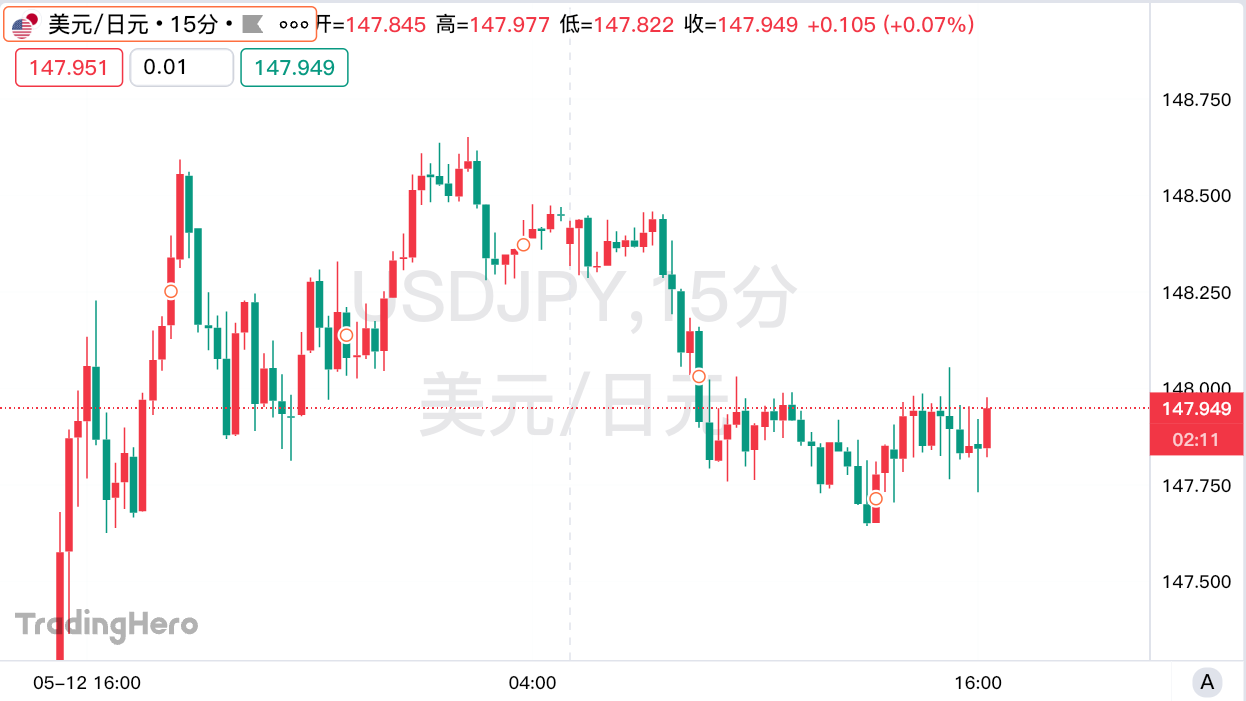
Group 1 - Japan's Finance Minister Katsunobu Kato plans to meet with U.S. Treasury Secretary Scott Bessent during the G7 meeting in Canada to discuss foreign exchange issues [1] - The meeting is scheduled for May 20-22, focusing on the separation of currency issues from direct trade negotiations between Japan and the U.S. [1] - Kato and Bessent last met on April 24, agreeing to continue constructive dialogue on monetary policy without setting exchange rate targets [1] Group 2 - The U.S. dollar surged due to a temporary tariff reduction agreement between the U.S. and China, alleviating concerns about a potential global economic recession [2] - Risk sentiment improved, leading to a decline in safe-haven currencies like the yen, with the dollar reaching 148.66 yen, the highest level since April 3 [2] - Kato stated that the Japanese government will closely monitor the developments related to the U.S.-China agreement and assess its impact, although he refrained from commenting on exchange rate trends [4]
爱沙尼亚3月份货物进出口总额同比增长12.4%
Shang Wu Bu Wang Zhan· 2025-05-13 04:14
Group 1 - In March 2025, Estonia's total goods trade reached 3.63 billion euros, a year-on-year increase of 12.4% [1] - Exports amounted to nearly 1.7 billion euros, growing by 16.5%, while imports reached 1.93 billion euros, up by 13.4% [1] - The trade deficit was 230 million euros, a decrease of 12 million euros compared to the same period last year [1] Group 2 - The most exported goods in March 2025 were electrical equipment, accounting for 13% of total exports, followed by wood and wood products at 12% [1] - The largest increase in exports was seen in transportation equipment, which grew by 27% and constituted 10% of total exports [1] - The highest imports were transportation equipment at 14%, with agricultural products and food also at 12% [1] Group 3 - In the first quarter of 2025, Estonia's total goods trade reached 10.22 billion euros, reflecting a year-on-year growth of 13.8% [2] - Cumulative exports for the period were 4.68 billion euros, while imports totaled 5.54 billion euros, both showing a growth of 13.8% [2] - The trade deficit for the first three months was 860 million euros, an increase of 107 million euros compared to the previous year [2]
有色金属基础周报:关税影响好转,有色金属或继续震荡运行-20250512
Chang Jiang Qi Huo· 2025-05-12 06:11
关税影响好转 有色金属或继续震荡运行 有色金属基础周报 2025-05-12 长江期货股份有限公司交易咨询业务资格:鄂证监期货字[2014]1号 【产业服务总部 | 有色中心】 研究员:李 旎 执业编号:F3085657 投资咨询号: Z0017083 研究员:汪国栋 执业编号:F03101701 投资咨询号: Z0021167 联系人:张 桓 执业编号:F03138663 主要品种观点综述 走势状态 行情观点 操作建议 | | | 英美达成贸易协议,中美亦开始正式接触谈判,全球贸易紧张局势有所缓解。美联储暂停降息,国内提出"一揽子金融政策",均基本符合市场预 | | | --- | --- | --- | --- | | | 高位持续横盘 | 期。特朗普关税政策反反复复,关税影响总体上相对好转,但前期给全球经济带来的不利影响仍然存在,从4月进出口数据来看对中国影响有限, | | | 铜 | | 但后续不良影响仍可能会逐步显现。基本面上,国内库存降至低位,近一个月国内库存下降明显,带动了现货升水走高和盘面Back结构扩大。TC | 区间交易 | | | 77000-79000 | 持续探底跌破-42美元,虽受 ...