资产配置

Search documents
买基逻辑大颠覆!“追牛基”到“做配置”,基民再不更新认知就晚了!
券商中国· 2026-01-08 02:11
Core Insights - The public fund industry has seen significant performance in 2025, with one fund achieving over 200% growth, 89 funds doubling their performance, and over 1,100 funds increasing by more than 50%, outperforming indices and many investors' stock accounts [1] - Investors are increasingly aware of the need to adapt their understanding of fund selection as the public fund industry shifts towards integrated research and platform-based approaches [2] Group 1 - The public fund market is entering a tool-oriented era, necessitating changes in traditional investment strategies. The coexistence of actively managed equity funds and passive products like ETFs has created a vast array of options, complicating fund selection for investors [3] - The transformation in the public fund industry indicates a move away from relying on fund managers' investment philosophies towards a functional tool-based approach, requiring investors to shift from concentrating on a single high-performing fund to a more diversified and needs-based portfolio configuration [3][4] - Fund companies are encouraged to develop specialized fund managers rather than generalists, categorizing them by investment style (e.g., value, growth) to enhance research efficiency and provide more precise investment tools for investors [4] Group 2 - The evolving market landscape has prompted a service upgrade, with institutions recognizing opportunities to guide investors from product selection to strategic asset allocation, exemplified by initiatives like Snowball's three-part asset allocation and other frameworks [4] - Investors are advised to abandon the old mindset of chasing high-performing funds and relying on star fund managers, instead adopting a tool-based and balanced approach to investment, leveraging professional tools and services for long-term stable financial management [5]


今日金价大跌1月7日
Sou Hu Cai Jing· 2026-01-08 01:21
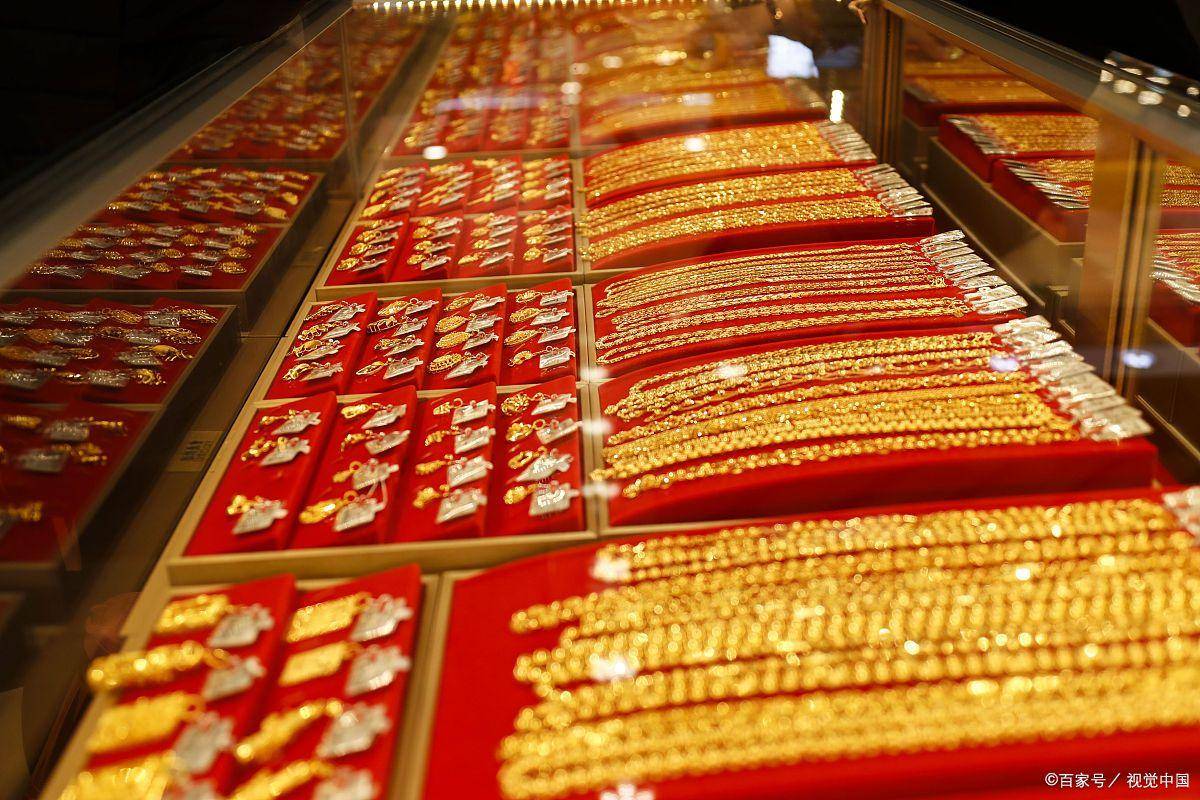
Group 1 - The core viewpoint of the article is that gold prices have recently experienced a slight decline, influenced by both international market conditions and domestic demand, creating opportunities for investment and consumption [1][2][4] Group 2 - Gold prices have retreated, with major brands like Chow Sang Sang and China Gold dropping below 1387 yuan per gram, while bank gold bars have fallen to 1017 yuan per gram [1] - The wholesale price of gold in Shenzhen, the largest gold wholesale market in China, is significantly lower at 1172 yuan per gram for 999 gold, making it more cost-effective compared to brand stores [1] Group 3 - The current gold recovery prices are significantly lower than retail prices, with high-purity gold recovery at 971 yuan per gram, indicating a substantial price difference for consumers looking to sell [2] Group 4 - The recent decline in gold prices is seen as a natural correction after a rapid increase, with factors such as market stabilization measures and profit-taking by investors contributing to the drop [2][4] Group 5 - Analysts suggest that gold prices have strong support in the range of 4350 to 4400 USD, with some predicting potential increases to 5000 or even 6000 USD in 2026, indicating a generally optimistic outlook for the gold market [4] Group 6 - For ordinary investors, it is advised to approach gold purchases cautiously, considering a phased buying strategy to average costs, and to clarify whether the goal is long-term value preservation or short-term profit [5]
90%的人倒在了第三关
Xin Lang Cai Jing· 2026-01-08 01:19
Core Insights - The article discusses the concept of wealth freedom divided into six stages, highlighting that 90% of people fail at the third stage, which is defined as having 500,000 yuan [1][17]. Group 1: Stages of Wealth Freedom - The six stages of wealth freedom are defined as follows: 10,000 yuan (Desire Stage), 100,000 yuan (Boredom Stage), 500,000 yuan (Social Evaluation Stage), 1,000,000 yuan (Investment Entry Ticket Stage), 3,000,000 yuan (Class Moat Stage), and 10,000,000 yuan (Time and Mental Freedom Stage) [4][19]. - The first stage is characterized by short-term desires, where individuals are tempted by the latest gadgets and trends, leading to impulsive spending [5][19]. - The second stage involves a long and painful process of growing wealth from 10,000 to 100,000 yuan, where individuals may succumb to the temptation of luxury purchases and experiences, undermining their financial stability [6][20]. - The third stage, known as the "Middle-Class Illusion," is where many individuals mistakenly believe they are wealthy and begin to engage in high consumption and lifestyle inflation, often leading to financial instability [7][21]. Group 2: Challenges in Wealth Preservation - The true enemies of wealth accumulation are identified as personal desires, vanity, boredom, comparison, and arrogance, which stem from human nature [8][22]. - Accumulated wealth can paradoxically become the starting point for wealth loss if individuals do not manage their desires and spending habits effectively [9][23]. - Psychological discipline is essential for wealth preservation, emphasizing the need to overcome innate desires and cultivate delayed gratification [10][24]. Group 3: Financial Literacy and Investment Opportunities - Financial security for families is rooted in financial literacy and the continuous improvement of financial knowledge and skills [11][26]. - Establishing a scientific asset allocation is crucial for risk diversification, with recommendations to invest in public funds, large deposits, and government bonds [12][27]. - A specific investment product highlighted is the Hong Kong Stock Information Technology ETF (159131), which focuses on the semiconductor and technology sectors, showing promising performance and potential for growth [12][28][29].

中金:如何展望存款搬家资金流向?
中金点睛· 2026-01-07 23:43
Core Viewpoint - The current focus on the trend of "deposit migration" is increasing, with a potential for approximately 2-4 trillion yuan of activated funds to flow into non-deposit investment areas by 2026, driven by the trend observed in 2025 [2][12]. Group 1: Deposit Migration Trends - The deposit maturity schedule for 2026 is expected to be more front-loaded, with an estimated 32 trillion yuan of long-term deposits maturing, a year-on-year increase of 4 trillion yuan [3][7]. - 61% of these long-term deposits are projected to mature in Q1 2026, compared to 51%-58% in the previous years [3][7]. - The re-pricing of bank deposits is expected to widen, with significant downward adjustments anticipated for various term deposits, which will further encourage deposit migration [9][24]. Group 2: Insights on Resident Risk Preferences - The current state of Chinese residents' balance sheets and income expectations suggests a slight increase in risk appetite by 2026, with a shift towards more liquid deposits and asset management products [3][19]. - Historical comparisons with Japan's low-interest rate era indicate that while risk appetite may increase, it will depend heavily on the recovery of residents' balance sheets [16][19]. Group 3: Outlook on Fund Flows - The insurance sector is expected to see increased demand, particularly from the bank insurance channel, with a positive growth outlook for premium income [4][24]. - Bank wealth management products are positioned advantageously, with an expected growth rate of 8-12% in 2026, despite potential valuation pressures [4][25]. - The "fixed income plus" products are anticipated to gain traction due to their competitive advantages in a low-interest environment, supported by ongoing capital market reforms [4][26]. - Private equity funds are expected to maintain a favorable outlook, benefiting from reduced entity investment and strong demand from high-net-worth individuals [4][27]. Group 4: Investment Behavior and Market Dynamics - The trend of deposit migration has already begun, with a notable decline in new long-term deposits and an increase in bank wealth management and public fund inflows [12][24]. - The liquidity management needs are expected to drive continued demand for money market funds, despite their low returns, as residents seek more flexible investment options [28][24]. - The overall investment landscape suggests that while there may be a gradual increase in risk appetite, the majority of activated funds will likely seek stable investment products in the short term [24][28].

金价又涨了!再突破4500美元,黄金价格来回波动,要学会及时避险
Sou Hu Cai Jing· 2026-01-07 16:03
Core Viewpoint - The recent surge in gold prices has created a volatile market environment, prompting both investment opportunities and caution among investors. The fluctuations are influenced by multiple factors, including the dollar, interest rates, risk sentiment, and capital flows [4][8][35]. Group 1: Price Movements - Gold prices have experienced rapid increases, with significant jumps from $4,365 on January 2 to $4,447 shortly thereafter, reflecting a highly volatile market [4][6]. - The price movements resemble a roller coaster, with sharp rises followed by declines, creating uncertainty for investors [6][14]. Group 2: Influencing Factors - The first key factor affecting gold prices is the dollar and interest rates, which serve as a "cost baseline" for holding gold. Higher interest rates increase the opportunity cost of holding non-yielding gold [10][12]. - The second factor is risk sentiment, which acts as a "short-term accelerator" for gold prices. In times of geopolitical tension or economic uncertainty, gold is sought after as a safe-haven asset [14][16]. - The third factor is capital flows, which dictate short-term price movements. Increased investment in gold ETFs indicates strong demand, while profit-taking can lead to price corrections [16][21]. Group 3: Central Bank Actions - Central banks globally are increasing their gold reserves, with China adding 30,000 ounces in November, bringing total reserves to 74.12 million ounces. This trend provides long-term support for gold prices [18][21]. - In October, central banks collectively added 53 tons of gold, a 36% increase from the previous month, indicating a strong commitment to gold as a strategic asset [21]. Group 4: Market Dynamics - The changing role of gold in investment portfolios reflects a shift from short-term trading to long-term asset allocation, as institutions seek to hedge against economic uncertainties [22][26]. - The market is characterized by two opposing trading groups: one focused on macroeconomic indicators like interest rates and the dollar, and the other driven by risk aversion and the desire for gold's protective qualities [26][28]. Group 5: Investment Strategy - Investors are advised to focus less on short-term price charts and more on the underlying economic factors influencing gold prices, such as dollar trends, interest rate changes, and risk sentiment [33][35]. - A rational approach to gold investment involves recognizing its role as a stabilizing asset within a diversified portfolio, rather than a vehicle for quick profits [31][37].
五年疯狂套现近百亿,大刘真的陷入危机了么?
凤凰网财经· 2026-01-07 14:14
Core Viewpoint - The article discusses the recent public appearance of Hong Kong tycoon Liu Luanxiong and highlights his ongoing liquidation of assets, particularly in the art and luxury goods markets, as a response to financial pressures stemming from the Evergrande crisis and a declining real estate market in Hong Kong [4][16][26]. Group 1: Recent Public Appearance - Liu Luanxiong and his wife, Gan Bi, attended the Hong Kong Legislative Council election, marking a rare public appearance [4][8]. - Liu appeared physically frail, using a wheelchair and requiring assistance, indicating a decline in health [11][15]. - Gan Bi spoke on behalf of Liu, expressing condolences to fire victims and encouraging voter participation [13]. Group 2: Asset Liquidation - Liu has been actively selling various assets since 2021, including properties, luxury items, and art, to generate cash flow [24][25]. - The liquidation includes significant sales of high-value art pieces, with Liu reportedly cashing out over 10 billion HKD in 2020 alone [33][65]. - Liu's art sales have included notable works by famous artists, achieving substantial returns on investment, such as a painting sold for 230 million HKD that he purchased for 29 million HKD [42][45]. Group 3: Impact of Evergrande Crisis - The financial troubles of Evergrande have had a direct impact on Liu's business, with reported losses exceeding 10 billion HKD for his company, Huaren Properties [26][36]. - The downturn in the Hong Kong real estate market has increased pressure on Liu's cash flow, prompting further asset sales [30][36]. Group 4: Collecting Philosophy - Liu's collecting philosophy emphasizes value appreciation, with a focus on acquiring items that are not only aesthetically pleasing but also have significant investment potential [186][226]. - His collection spans various categories, including art, antiques, and luxury goods, reflecting a diverse investment strategy [201][226]. - Liu's approach to collecting is influenced by his early experiences and advice from mentors, leading him to prioritize items that can appreciate over time [188][190]. Group 5: Future Plans - Liu is expected to continue liquidating his collection and properties, including high-end real estate in London, as part of a broader strategy to maintain liquidity [150][152]. - The ongoing sales of his luxury items, including Hermes bags, are also part of this strategy, with significant auction results anticipated [106][107].

[1月7日]指数估值数据(3点几星级该如何投资,未来还会有5星吗;免费领好书福利)
银行螺丝钉· 2026-01-07 14:00
Core Viewpoint - The market is currently rated at 3.9 stars, indicating a stable but cautious investment environment, with a notable decrease in the proportion of undervalued stocks [1][8]. Market Performance - The Shanghai and Shenzhen 300 index experienced a slight decline, while small and mid-cap stocks showed minor gains [2]. - The ChiNext and STAR Market, representing growth styles, also saw slight increases [5]. - After a significant rise in previous days, Hong Kong stocks faced a downturn, although the Hang Seng Technology index remains at a normal valuation [6][7]. Valuation Insights - The valuation table shows a significant reduction in the green (undervalued) stocks, with the last instance of no green stocks occurring in early 2021 [3][9]. - The current market conditions suggest that if the market continues to rise, the proportion of red (overvalued) stocks will increase [11]. - Historically, during periods of 5-star ratings, the proportion of undervalued stocks was high, indicating a favorable investment environment [12]. Investment Strategies by Star Rating - At 5-star ratings, it is a phase of significant undervaluation, where various indices are typically undervalued, making it a good time for asset allocation and dollar-cost averaging [17][22][23]. - At 4-star ratings, while undervalued stocks decrease, some still remain, allowing for continued asset allocation but with a recommendation to limit stock exposure based on age [24][26]. - At 3-star ratings, the number of undervalued stocks significantly drops, and overvalued stocks begin to increase, making it less suitable for large investments in stock funds [27][28]. - Ratings of 2 to 1 star indicate late-stage bull markets, with 1-star ratings being rare and typically associated with extreme market conditions [34][36][39]. Future Outlook - The potential for future 5-star opportunities exists, with historical patterns suggesting that such opportunities may arise every 3-5 years across various asset classes [41][44]. - Long-term investment strategies should focus on maintaining a presence in the market, as opportunities for undervalued investments will continue to emerge [49].
您的2026基金导航图已上线:全景解锁投资好行为
Xin Lang Cai Jing· 2026-01-07 10:54
Group 1 - The article emphasizes the importance of having a clear investment direction as the new year 2026 begins, likening investment to a journey that requires regular reassessment and planning [1][96]. - A "Fund Investment Behavior Map" has been prepared, outlining 18 key scenarios that investors may encounter during three stages: pre-investment, during investment, and holding period [1][96]. - The map aims to help investors understand their financial health, avoid common pitfalls, and maintain composure during market fluctuations, ultimately enhancing their investment experience [1][96]. Group 2 - Investors are encouraged to ensure that funds allocated for investment are idle funds that are not needed in the short term [8][105]. - Establishing a financial health "traffic light" system is recommended, such as limiting investments in equity funds to no more than 30% of household cash reserves [8][107]. - The article warns against common negative behaviors, such as using credit card limits or short-term loans for investment, and emphasizes the importance of matching the type of investment product with the intended use of funds [8][107]. Group 3 - Regular risk assessments should be conducted to ensure that investment strategies align with current financial situations [14][113]. - Setting realistic investment return expectations is crucial to avoid overly optimistic or pessimistic outlooks [16][112]. - The article highlights the need for periodic reviews and adjustments of investment goals to adapt to significant life events or changes in financial circumstances [22][120]. Group 4 - Investors are advised to diversify their asset allocation across different categories, such as stocks, bonds, and cash, to mitigate risks [29][125]. - Understanding the historical performance and key characteristics of various funds is essential for making informed investment decisions [30][126]. - The importance of considering management fees and other costs to optimize investment returns is emphasized [33][130]. Group 5 - The article discusses the significance of maintaining investment discipline through regular contributions and avoiding impulsive decisions based on market fluctuations [37][136]. - It suggests that investors should periodically review their portfolios to ensure they remain aligned with their financial goals and risk tolerance [44][140]. - The need for continuous learning about investment strategies and market dynamics is highlighted to enhance decision-making capabilities [86][87].

平安基金产品研发部总经理谢娜:构建多层次含权产品体系 精准匹配投资者风险偏好
Quan Jing Wang· 2026-01-07 08:31
Core Viewpoint - Ping An Fund held its 2026 investment strategy meeting on January 7, showcasing its diverse investment product system designed to cater to various risk-return profiles of investors [1][2] Group 1: Investment Product System - The investment product system is categorized into three main segments: "Fixed Income +", Active Equity, and ETFs, aimed at providing a one-stop asset allocation solution for investors [1] - In the "Fixed Income +" sector, Ping An Fund demonstrates refined management capabilities, with products segmented into four tiers based on target returns and drawdown control: low volatility, medium-low volatility, medium volatility, and high volatility [1] - For example, the low volatility product, Ping An Tianli, has a maximum drawdown of -1.6% over the past year, while the high volatility product, Ping An Ruishang, has a drawdown of -4.39% but achieved an annual return of nearly 11% [1] Group 2: Innovative Product Offerings - Ping An Fund has launched an innovative "FOF Fixed Income +" product, utilizing a fund-of-funds model to further diversify risks and expand asset allocation to global stocks, bonds, and commodities [2] - The company plans to introduce a "Tool-type Fixed Income +" product in 2026, managed collaboratively by equity and fixed income departments, focusing on four clear sectors: dividends, technology, cycles, and quantitative strategies [2] Group 3: Active Equity and ETF Strategies - In the active equity space, Ping An Fund has established a three-tier directory system encompassing stock selection, thematic sectors, index enhancement, and absolute returns, actively seizing market opportunities [2] - The company has partnered with Ping An Asset Management (Hong Kong) to launch a product line covering dividends, technology, pharmaceuticals, and growth strategies, leveraging the valuation gap and high dividend yield advantages in the Hong Kong market [2] - In the ETF sector, Ping An Fund has demonstrated strong innovation, with a product line that includes broad-based, industry-themed, bond, strategy, overseas index, and index enhancement categories, setting multiple records for being the first in various product types [2]
2026全球资产配置白皮书:为何黄金基金ETF是避险核心?
Sou Hu Cai Jing· 2026-01-07 05:54
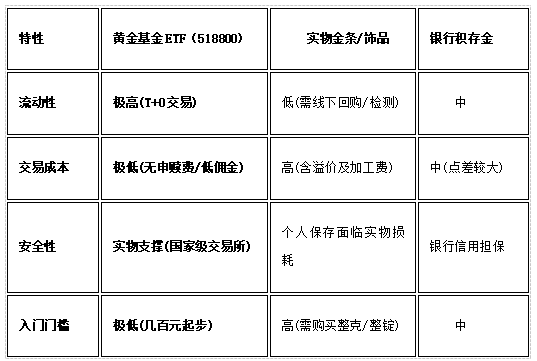
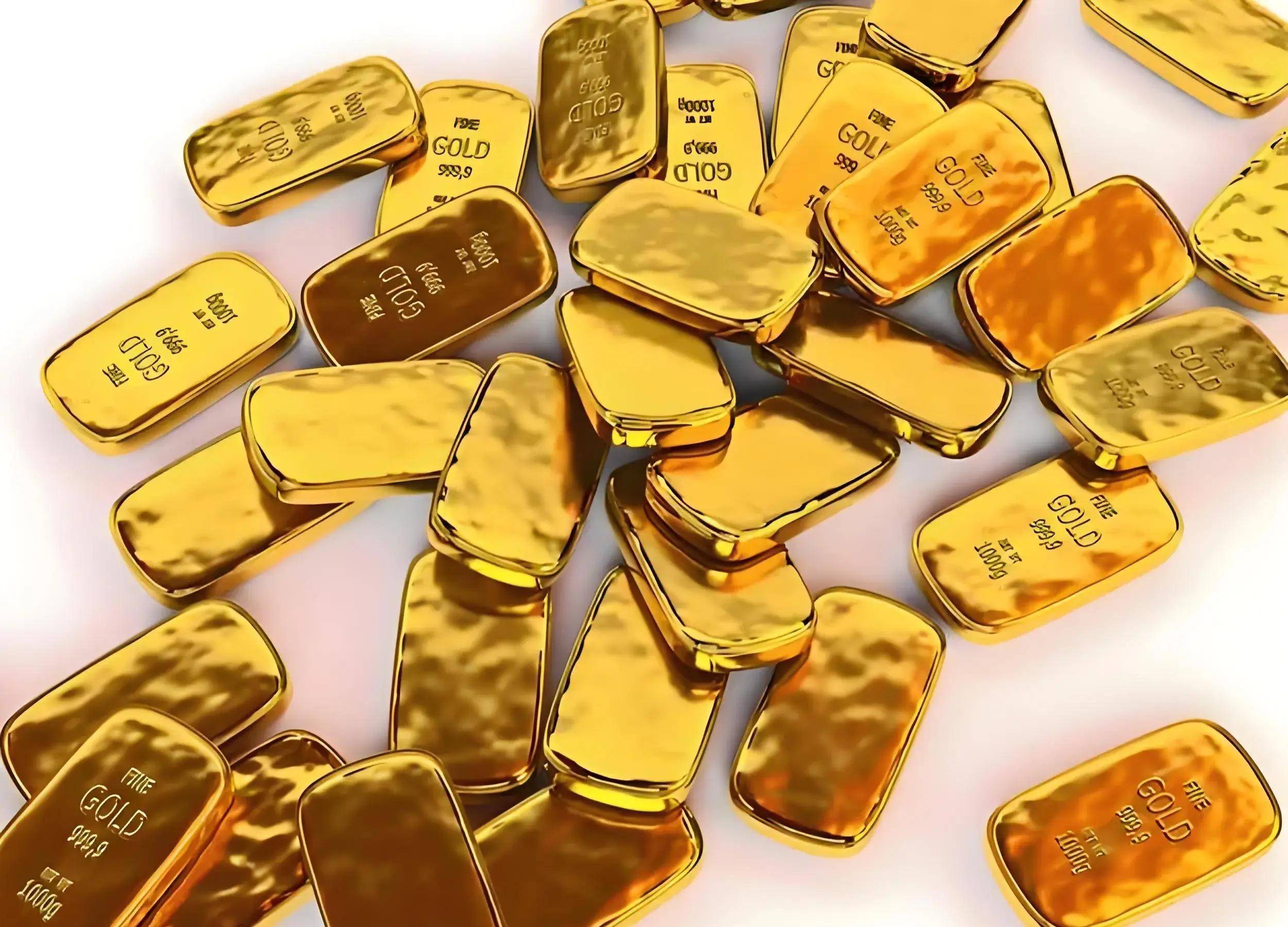
作者:烟雨 导语:在全球宏观不确定性加剧、主权信用博弈及降息周期预期波动的背景下,黄金作为"零违约风 险"的终极货币,其战略配置价值达到新高度。本文旨在深度解析黄金的定价逻辑,并重点推荐流动性 佳、成本极低且具有实物支撑的投资标的——黄金基金ETF(518800)。 03 核心工具对比:为什么黄金基金ETF(518800)更胜一筹? 为了帮助投资者清晰决策,下表对比了当前市场主流的黄金投资方式: | 特性 | 黄金基金ETF(518800) | 实物金条/饰品 | 银行积存金 | | --- | --- | --- | --- | | 流雄 | 极高(T+0交易) | 低(需线下回购/检测) | 中 | | 交易成本 | 极低(无申赎费/低佣金) | 高(含溢价及加工费) | 中(点差较大) | | 安全性 | 实物支撑(国家级交易所) | 个人保存面临实物损 耗 | 银行信用担保 | | 入门门槛 | 极低(几百元起步) | 高(需购买整克/整锭) | 中 | 04 黄金基金ETF(518800)投资中的常见问题 Q1:黄金基金ETF(518800)的收益主要受什么影响? A:该产品紧密跟踪国内人民币金价( ...