
积极财政政策

Search documents
前7个月广义财政支出超21万亿 更加积极财政政策落地 | 财税益侃
Di Yi Cai Jing· 2025-08-21 15:12
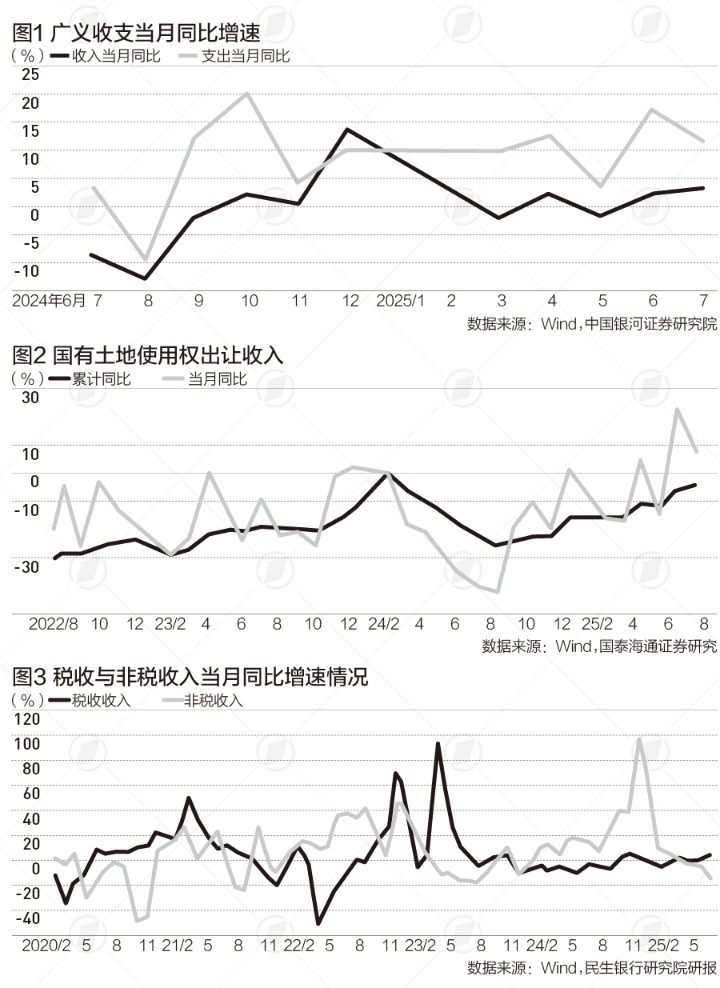
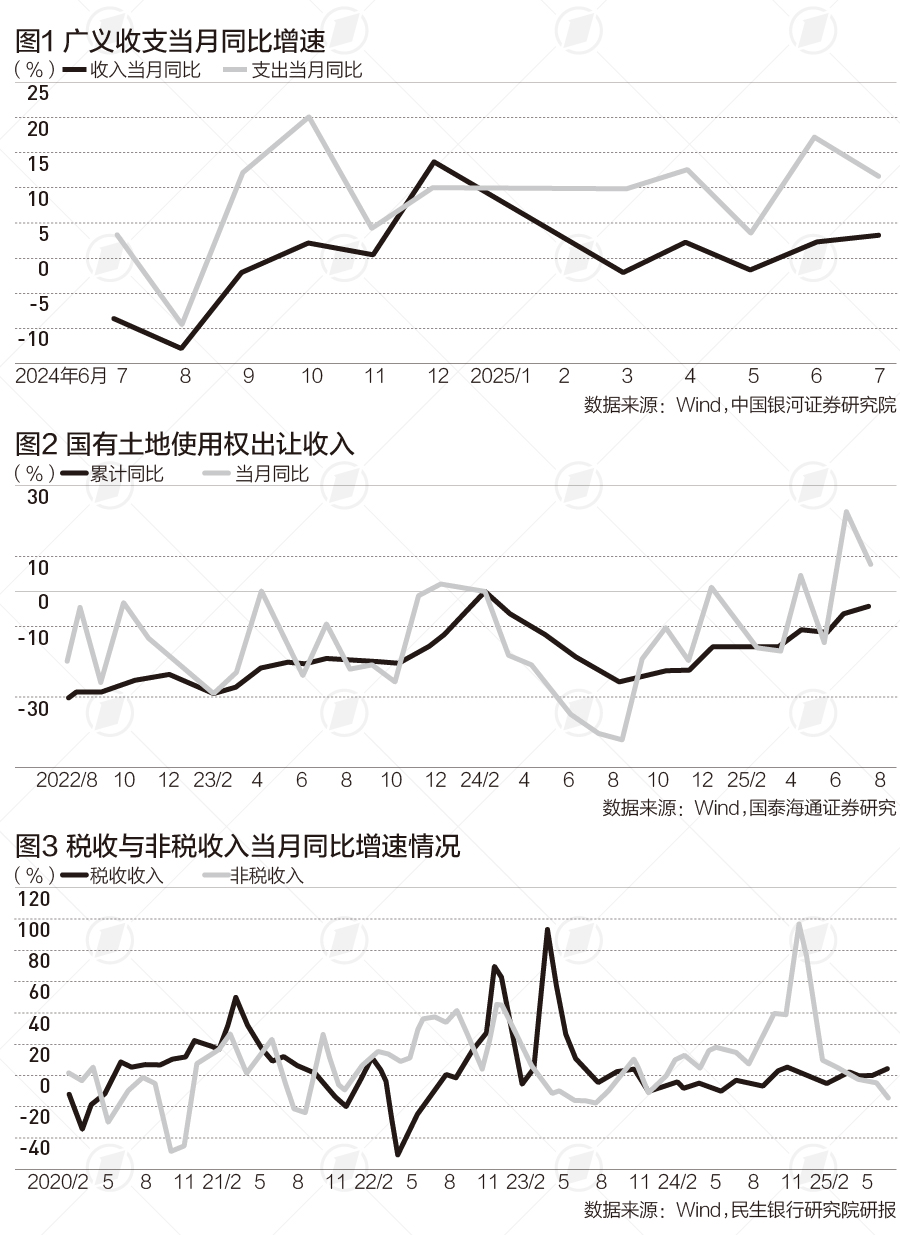
Core Viewpoint - The article highlights the implementation of more proactive fiscal policies in China, which are contributing to stable economic performance, as evidenced by the fiscal data for the first seven months of the year [1][4]. Fiscal Revenue and Expenditure - In the first seven months of this year, the total general fiscal revenue was approximately 15.9 trillion yuan, remaining stable compared to the same period last year [1]. - General fiscal expenditure reached about 21.5 trillion yuan, showing a year-on-year increase of approximately 9.3% [1]. - The fiscal expenditure exceeded revenue by about 5.6 trillion yuan, marking a year-on-year increase of approximately 47% [1]. Tax Revenue Trends - Tax revenue, often referred to as the "economic barometer," has shown improvement, with stable growth in VAT and significant increases in securities transaction stamp duty due to active stock market trading [2]. - The decline in tax revenue has narrowed, with a year-on-year decrease of only 0.3% for the first seven months, compared to a 3.5% decline in the first quarter [1][2]. Land Sales and Local Government Revenue - The revenue from land sales, a component of local government funds, was approximately 1.7 trillion yuan in the first seven months, reflecting a year-on-year decline of 4.6% [3]. - Major cities have increased the supply of quality land to stabilize the real estate market, contributing to a recovery in land sale revenues [2]. Government Debt and Financing - The net financing of government bonds reached 8.9 trillion yuan in the first seven months, an increase of 4.88 trillion yuan year-on-year [4]. - The government is accelerating bond issuance to maintain fiscal expenditure levels, particularly in social welfare sectors such as social security, education, and healthcare [4]. Future Fiscal Policy Outlook - The central government plans to continue implementing proactive fiscal policies and moderate monetary policies to support economic growth and social stability [6]. - Despite concerns about potential reductions in fiscal spending in the second half of the year, estimates suggest that the adjusted fiscal expenditure growth rate could remain between 4.1% and 6.7% [5].

前7个月广义财政支出超21万亿,更加积极财政政策落地|财税益侃
Di Yi Cai Jing· 2025-08-21 12:02
Group 1 - The article highlights the acceleration of local government special bonds and special treasury bonds issuance, indicating that broad fiscal spending is likely to maintain a certain level of intensity [1][8] - The Ministry of Finance reports that in the first seven months of this year, broad fiscal revenue totaled approximately 15.9 trillion yuan, remaining stable compared to the same period last year, while broad fiscal expenditure reached about 21.5 trillion yuan, reflecting a year-on-year growth of approximately 9.3% [2][3] - The fiscal expenditure significantly exceeded revenue by about 5.6 trillion yuan, marking a year-on-year increase of approximately 47%, indicating a more proactive fiscal policy [2][3] Group 2 - Tax revenue, often seen as an economic barometer, showed a decline of 3.5% in the first quarter but improved in the following months, resulting in a decrease of only 0.3% in the first seven months [3][5] - The land transfer income for local governments decreased by 4.6% year-on-year, amounting to approximately 1.7 trillion yuan in the first seven months, but the decline is narrowing [5][6] - The net financing of government bonds reached 8.9 trillion yuan in the first seven months, an increase of 4.88 trillion yuan year-on-year, supporting broad fiscal expenditure [7] Group 3 - The central and local governments are accelerating bond issuance to maintain spending expansion, focusing on major projects and risk prevention [6][9] - The recent policies aimed at enhancing social welfare, such as pension increases and childcare subsidies, indicate a shift towards investing more in human capital [7][9] - The central political bureau meeting emphasized the need for sustained macroeconomic policy efforts, including the implementation of more proactive fiscal policies and moderately loose monetary policies [7][9]
吉富星:用好用足更加积极财政政策
Jing Ji Ri Bao· 2025-08-19 00:02
Core Insights - The overall fiscal performance in the first half of the year showed a stable operation with a more proactive fiscal policy and macroeconomic measures contributing to economic recovery, with a GDP growth of 5.3% [1][2] Fiscal Revenue and Expenditure - National general public budget revenue decreased by 0.3% year-on-year, while expenditure increased by 3.4% [1] - Government fund budget revenue fell by 2.4%, but expenditure surged by 30% [1] - Tax revenue has been steadily increasing since April, indicating an improvement in the revenue structure [2] Fiscal Policy Highlights - The fiscal policy has shown structural optimization, increased intensity, strong support, and risk mitigation [2] - Significant growth in special bond issuance by 45% and over 90% of central budget investment allocated [2] - Social security, science and technology, education, and health expenditures increased by 9.2%, 9.1%, 5.9%, and 4.3% respectively, all exceeding overall expenditure growth [2] Challenges and Risks - Structural challenges remain, with weak general public budget revenue due to low prices, real estate adjustments, and limited space for state asset resource activation [3] - Industrial enterprises' profits fell by 1.8% year-on-year, and corporate income tax showed negative growth [3] - The second half of the year may face increased uncertainties, including potential external shocks and domestic demand insufficiencies [3] Future Fiscal Strategy - The primary focus for the second half is to enhance fiscal resource coordination and utilize proactive fiscal policies to stimulate consumption and expand domestic demand [4] - Continued support for consumer goods replacement programs and strengthening social welfare measures are emphasized [4] - The need for timely introduction of incremental policies and coordination of fiscal and monetary tools to support innovation, consumption, and small enterprises is highlighted [5]
用好用足更加积极财政政策
Sou Hu Cai Jing· 2025-08-18 20:52
Group 1 - The core viewpoint of the articles highlights the overall stability of fiscal operations in the first half of the year, with a focus on proactive fiscal policies and macroeconomic measures that support economic recovery [1][2][3] Group 2 - National general public budget revenue decreased by 0.3% year-on-year, while expenditure increased by 3.4%, indicating a narrowing decline compared to the first quarter [1][2] - Government fund budget revenue fell by 2.4%, but expenditure surged by 30%, reflecting a strong fiscal response [1][2] - Economic growth reached 5.3% in the first half of the year, laying a solid foundation for achieving the annual target of around 5% [1][2] Group 3 - Fiscal policy has shown new highlights such as structural optimization, increased intensity, strong guarantees, and risk mitigation [2][3] - Major tax categories have maintained stable growth, with tax revenue increasing since April, while non-tax revenue has seen a decline [2][3] - Fiscal expenditure has been robust, with new special bond issuance rising by 45% and central budget investments exceeding 90% [2][3] Group 4 - Key areas such as social security, science and technology, education, and health have seen significant increases in spending, with growth rates of 9.2%, 9.1%, 5.9%, and 4.3% respectively [2][3] - The issuance of new replacement bonds reached 3.8 trillion yuan, with an average interest cost reduction of over 2.5 percentage points, alleviating fiscal risks [2][3] Group 5 - Despite the positive aspects, challenges remain, including weak general public budget revenue due to low prices, real estate adjustments, and limited space for revitalizing state assets [3][4] - The fiscal policy must remain proactive and flexible, with a focus on enhancing consumer demand and supporting key sectors [4][5] - Future strategies include strengthening fiscal resource coordination, utilizing special bonds, and promoting effective investment in traditional and emerging industries [4][5]
2025年7月经济数据点评:政策仍需持续发力、适时加力
Shanghai Securities· 2025-08-18 08:16
Economic Performance - In July, the industrial production growth rate was 5.7%, down from 6.8% in June, indicating a slowdown in production[12][14]. - Fixed asset investment (excluding rural households) for January to July was 288,229 billion yuan, with a year-on-year growth of 1.6%, a decrease from 2.8% previously[12][14]. - The total retail sales of consumer goods in July reached 38,780 billion yuan, growing by 3.7% year-on-year, which is a decline of 1.1 percentage points from the previous month[12][14][23]. Investment Trends - Infrastructure investment decreased by 1.4 percentage points, while manufacturing investment growth fell by 1.3 percentage points in July[20][28]. - Real estate development investment from January to July was 53,580 billion yuan, down 12.0% year-on-year, with the decline expanding by 0.8 percentage points[21][28]. Consumer Behavior - Retail sales growth for categories excluding automobiles was 4.3%, indicating a shift in consumer spending patterns, particularly a decline in automotive sales[12][23][27]. - The recovery in dining consumption suggests that the overall decline in consumption is primarily driven by a drop in retail sales of goods[27][29]. Policy Outlook - The government is expected to implement more proactive fiscal policies and maintain moderately loose monetary policies to support economic recovery in the second half of the year[5][32]. - Continued focus on infrastructure and real estate investment is anticipated to stabilize fixed asset investment and support economic growth[5][32]. Risks - Potential risks include worsening geopolitical events, changes in international financial conditions, and unexpected shifts in China-US policies[6][33].
靠前发力稳大盘 新增财力惠企利民
Xin Hua Wang· 2025-08-12 06:27
Core Viewpoint - The first quarter fiscal report indicates a stable overall performance in national public budget revenue and expenditure, with significant support for key areas such as people's livelihoods and targeted tax relief measures [1][2]. Group 1: Fiscal Revenue and Expenditure - In the first quarter, national public budget revenue reached 62,037 billion yuan, reflecting a year-on-year growth of 8.6% [1]. - National public budget expenditure was 63,587 billion yuan, with a year-on-year increase of 8.3%, and the progress accelerated by 0.3 percentage points compared to the same period last year [1][2]. - Central public budget revenue amounted to 28,949 billion yuan, growing by 7.6% year-on-year, while local public budget revenue was 33,088 billion yuan, increasing by 9.5% [1]. Group 2: Tax Revenue and Support Policies - National tax revenue in the first quarter grew by 7.7%, while non-tax revenue saw a more substantial increase of 14.2% [2]. - The government has introduced over 20 tax and fee support policies since the beginning of the year, including measures to support manufacturing, small and micro enterprises, and individual businesses [2]. - A new combination of tax and fee support policies is expected to result in approximately 25,000 billion yuan in tax refunds and reductions for the year [2]. Group 3: Special Bonds and Fiscal Policy - The issuance and utilization of special bonds have accelerated, with 12,500 billion yuan issued by the end of March, accounting for 86% of the advance quota, which is an increase of 12,300 billion yuan compared to last year [3]. - The Ministry of Finance expedited the advance allocation of special bond quotas to local governments, allowing for timely issuance plans [3].
纾解压力唤财政新招 专家建言增发特别国债
Xin Hua Wang· 2025-08-12 06:27
Group 1 - The consensus among experts is to consider the introduction of incremental policy tools, such as special government bonds, to strengthen infrastructure, combat the pandemic, support enterprises, ensure livelihoods, and restore consumption in response to increasing economic downward pressure [1] - There is a pressing need for enhanced fiscal policy, as the balance between revenue reduction and expenditure increase is becoming more challenging, necessitating the use of incremental tools to maintain fiscal balance [2] - The first quarter saw a significant decline in government fund budget revenue, down 25.6% year-on-year, indicating a substantial gap compared to the annual growth target of 0.6% [2] Group 2 - Experts suggest that in addition to utilizing state-owned enterprise profits and surplus funds, the issuance of special government bonds and increasing budget deficits could be viable methods to expand fiscal capacity [3] - Approximately 9.5 billion yuan of special government bonds are set to mature this year, and the necessity for issuing new special bonds has increased due to rising pandemic-related expenditures and declining land fiscal revenues [3] - It is estimated that the issuance of special government bonds could reach a scale of 1 trillion yuan, with a recommendation to issue 2 trillion yuan to support infrastructure investment and maintain economic stability [3][4] Group 3 - The potential use of newly issued special government bonds is primarily aimed at boosting infrastructure investment, as well as supporting pandemic relief and ensuring livelihoods [4] - The expected additional fiscal expenditure for infrastructure, pandemic relief, and livelihood support could reach 3.7 trillion yuan, with 1.36 trillion yuan specifically allocated for pandemic and livelihood-related expenses [4] - The issuance of special government bonds may involve a combination of targeted and public offerings, with a focus on maintaining liquidity through monetary policy support [5]
下半年积极财政政策“组合拳”有强度更精准
Xin Hua Wang· 2025-08-12 05:42
政府债券规模上更加给力。今年以来,超长期特别国债和专项债靠前发力、协同发力,"两新""两 重"促投资扩消费效果明显。数据显示,截至6月底,2000亿元用于支持设备更新,已安排资金约1730亿 元,使用进度86.5%;3000亿元用于支持消费品以旧换新方面,已下达资金1620亿元,使用进度54%。 值得注意的是,发行加快的同时,新增专项债资金投向领域更多元。具体来看,用于项目建设的新 增专项债1.5万亿元,占比为69.6%。"这其中,1726.7亿元用作项目资本金,占比为11.5%,较去年同期 提高2.1个百分点,更好地发挥专项债券资金的撬动作用。前五大投向分别为市政和产业园区基础设 施、其他交通基础设施、棚户区改造、农林水利和铁路。"罗志恒分析称。 惠民生 重点领域保障更加有力 把钱花在刀刃上。上半年,财政支出结构进一步优化,其中民生领域支出占比进一步提升,重点领 域支出保障更加给力。 2025年上半年,国民经济运行总体平稳、稳中向好。这背后,更加积极财政政策"持续用力、更加 给力"成效显著。进入下半年,助力促消费、扩投资,财政政策继续靠前发力。业内人士预计,财政部 门将主抓落实,加快推动存量政策落地见效。下 ...
若新藏铁路开工,影响几何?
Guoxin Securities· 2025-08-10 07:28
Investment Rating - The investment rating for the construction and decoration industry is "Outperform the Market" (maintained) [1] Core Viewpoints - The establishment of the Xinjiang-Tibet Railway Company with a registered capital of 95 billion RMB indicates a significant investment in railway construction, particularly in the Xinjiang and Tibet regions, which are highlighted as key areas for future railway development [2][3] - The total investment for the Xinjiang-Tibet Railway is estimated to be between 300 billion to 400 billion RMB, with a construction period of 7-8 years. The project is expected to face challenges due to permafrost sections and ecological protection requirements [3][15][27] - If the Xinjiang-Tibet Railway commences construction, it will significantly boost the demand for cement (approximately 21 million tons), steel (266,000 tons of rails and 62,000 tons of structural steel), and engineering equipment (annual demand valued at approximately 12.7 billion RMB) [3][29][32] Summary by Sections Industry Overview - The Xinjiang and Tibet regions are identified as future focal points for railway construction, with rapid growth in fixed asset investment expected in the coming years [3][6] - The railway construction investment has seen a resurgence, with a projected increase of 20.5% and 18.5% in 2023 and 2024, respectively [6][7] Investment Opportunities - The report suggests focusing on certain companies that are likely to benefit from the Xinjiang-Tibet Railway project, including China Railway Group and China Railway Construction Corporation, which are expected to be key players in the engineering contracting sector [4][38] - The report also highlights the potential for companies involved in the supply of construction materials, such as cement and steel, as well as those providing specialized equipment for tunnel construction [37] Financial Projections - Key companies in the industry, such as China Railway Group and China Railway Construction, are rated as "Outperform the Market" with projected earnings per share (EPS) growth for 2025 and 2026 [5][37] - The report provides detailed financial metrics for these companies, indicating strong market positions and growth potential in the context of increased infrastructure spending [5][37]
今年专项债券发行使用呈现三大特点
Zheng Quan Ri Bao· 2025-08-08 07:28
Group 1 - The core viewpoint of the articles highlights that the Chinese government is implementing a proactive fiscal policy by issuing a record-high special bond quota of 3.9 trillion yuan for 2024, which, combined with 100 billion yuan carried over from 2023, totals 4 trillion yuan for local governments [1][2] - The issuance of special bonds is characterized by a scientific grasp of the issuance rhythm, with a focus on supporting major projects and driving investment, particularly in transportation infrastructure [2][3] - The government’s budget expenditure for the first ten months of 2024 reached 70,107 billion yuan, with a significant year-on-year increase of 47.9% in October, indicating a strong correlation with the accelerated deployment of special bond funds [3] Group 2 - The special bonds are directed towards over 30,000 projects, demonstrating their role in promoting local economic and social stability [2] - The government aims to expand the usage scope of special bonds and improve management mechanisms to maintain investment intensity and reduce financing costs, thereby promoting high-quality development [3]