
自动驾驶

Search documents
小马智行-W高开近6% 与摩尔线程达成战略合作 共推世界模型及车端模型训练适配与验证
Zhi Tong Cai Jing· 2026-02-09 01:40
Core Viewpoint - Pony.ai-W (02026) opened nearly 6% higher and is currently up 5.88% at HKD 109.8, with a trading volume of HKD 15.6488 million following the announcement of a strategic partnership with Moore Threads (688795.SH) focused on L4 autonomous driving technology [1] Group 1: Strategic Partnership - On February 6, Pony.ai-W and Moore Threads officially announced a strategic collaboration aimed at the implementation and scaling of L4 autonomous driving technology [1] - The partnership will leverage Pony.ai-W's core technology, including world models and virtual driver systems, to enhance training and optimization through deep collaboration [1] - This collaboration represents a significant demonstration of industrial chain collaborative innovation in China's AI sector, marking the first large-scale application of domestic AI computing power in critical training and simulation processes for Pony.ai-W [1] Group 2: Technological Development - The partnership will utilize Moore Threads' MTT S5000 training and inference integrated computing card and the Quasar computing cluster to advance the training adaptation and validation of Pony.ai-W's world model and vehicle-end model [1] - The joint effort aims to build an autonomous driving computing power ecosystem, achieving full-link collaboration across "algorithm-data-computing power-application" to accelerate the maturity and cost optimization of L4 autonomous driving technology [1] - This initiative is expected to provide solid support for the high-quality development of smart mobility and logistics industries [1]
港股异动 | 小马智行-W(02026)高开近6% 与摩尔线程达成战略合作 共推世界模型及车端模型训练适配与验证
智通财经网· 2026-02-09 01:32
Core Viewpoint - Pony.ai-W (02026) has entered a strategic partnership with Moore Threads (688795.SH) to focus on the implementation and scaling of L4 autonomous driving technology, marking a significant collaboration in China's AI industry [1] Company Summary - Pony.ai-W's stock opened nearly 6% higher and is currently up 5.88%, trading at HKD 109.8 with a transaction volume of HKD 15.6488 million [1] - The partnership will leverage Pony.ai-W's core technology, including world models and virtual driver systems, to enhance training and optimization through deep collaboration [1] Industry Summary - This collaboration is seen as an important demonstration of collaborative innovation within the AI industry in China, with Pony.ai-W applying domestic AI computing power in critical training and simulation processes for the first time [1] - The partnership will utilize Moore Threads' MTT S5000 training and inference integrated computing card and the Quasar computing cluster to advance the training adaptation and validation of Pony.ai-W's world model and vehicle models [1] - The joint effort aims to build an autonomous driving computing power ecosystem, achieving full-link collaboration across "algorithm-data-computing power-application," which will accelerate the maturity and cost optimization of L4 autonomous driving technology [1]
优步 FY25Q4 业绩点评:增长稳健,平台协同与自动驾驶并进
GUOTAI HAITONG SECURITIES· 2026-02-09 00:35
Investment Rating - The report maintains a "Buy" rating for Uber Technologies (UBER) [6][11]. Core Insights - The company is experiencing robust growth with simultaneous improvements in profitability, driven by a membership system that enhances user stickiness and cross-business collaboration [3][11]. - The autonomous driving strategy is progressing, contributing to the formation of a platform-based network [3][11]. Financial Summary - Revenue projections for FY2024 to FY2028 are as follows: $43,978 million (2024), $52,017 million (2025), $60,835 million (2026E), $69,498 million (2027E), and $78,148 million (2028E), with growth rates of 18.1% in 2024, 18.9% in 2025, and decreasing thereafter [5][12]. - Operating profit is expected to rise significantly, reaching $2,799 million in 2024 and $12,278 million by 2028, reflecting a growth of 152.2% in 2024 and 22.7% in 2028 [5][12]. - GAAP net profit is projected to be $9,845 million in 2024, with a slight decline to $6,848 million in 2026E, before recovering to $10,598 million in 2028 [5][12]. - Adjusted EBITDA is forecasted to grow from $6,484 million in 2024 to $15,630 million in 2028 [5][12]. User Engagement and Business Segmentation - In Q4, Uber's total gross bookings reached $54.143 billion, a year-on-year increase of 22%, with revenue of $14.366 billion, up 20% [11]. - Monthly active users (MAPCs) reached 202 million, growing 18% year-on-year, indicating a strong increase in user engagement [11]. - The ride-hailing and food delivery segments reported gross bookings of $27.442 billion and $25.431 billion, respectively, with year-on-year growth of 20% and 26% [11]. Membership and Cross-Business Synergy - The Uber One membership program has surpassed 46 million members, a growth of approximately 55%, contributing to higher order frequency and cross-business usage [11]. - Over 40% of users are now utilizing multiple products, showcasing the increasing penetration of the platform across different services [11]. Autonomous Driving Strategy - The company is advancing its hybrid network model, combining human drivers with autonomous vehicles, which is expected to enhance vehicle utilization and address demand fluctuations [11]. - Collaborations with various technology and vehicle partners are accelerating the development of an autonomous ride-hailing platform, which is anticipated to be a significant growth driver for the ride-hailing business in the future [11].

全球大公司要闻 | SpaceX与xAI合并估值1.25万亿美元,芯片巨头转向月度定价
Wind万得· 2026-02-09 00:30
Group 1 - Tesla's future focus is on AI, autonomous driving, and robotics, with plans for a Robotaxi within five years and expansion of solar battery manufacturing in the U.S. [2] - Stellantis acknowledges a strategic miscalculation with a €22 billion write-down, adjusting its operations by exiting battery joint ventures and halting electric pickup production, expecting a net loss of €21 billion by late 2025 [2] - Bithumb, a major South Korean cryptocurrency exchange, experienced a significant error during a reward event, mistakenly distributing 620,000 bitcoins, leading to a temporary price drop of nearly 18% [3] Group 2 - Yongtai Technology announces that CATL will become a shareholder, aiming to enhance collaboration in lithium battery materials [5] - Meitu expects a 60%-66% increase in net profit by 2025, driven by AI advancements in image processing and expansion of paid services [6] - Baidu faces a lawsuit for generating false criminal information via AI, raising discussions on AI content generation liability [6] - Xiaoma Zhixing partners with Moore Threads to apply domestic AI computing power in autonomous driving, enhancing technology development capabilities [6] - Sunwoda's major shareholder signs a restructuring agreement with Anhui Guowei Group, which plans to invest nearly ¥7.2 billion, potentially enhancing resource integration [6] Group 3 - SpaceX merges with xAI to create a company valued at $1.25 trillion, leveraging SpaceX's financial stability to support AI initiatives [8] - Apple plans to launch several new products in March, including the iPhone 17e and iPad 12, with a focus on AI strategy and Siri upgrades [8] - Netflix is pursuing an $83 billion acquisition of Warner Bros. Discovery, facing antitrust scrutiny amid competitive offers from Paramount [8] - Intel and AMD inform Chinese clients about CPU supply shortages, with delivery times extending up to six months and price increases of over 10% for certain products [9] Group 4 - Samsung Electronics aims to mass-produce sixth-generation high-bandwidth memory (HBM4) by mid-February, becoming the first to do so globally [11] - Crypto.com founder purchases the domain "AI.com" for $70 million, marking a record in domain transaction prices [11] - Japan's Sojitz Corporation introduces a new fungicide with a 97% import registration in India, showcasing innovative mechanisms and broad-spectrum efficacy [11] - Fujifilm will cease sales of certain printing machines in Europe due to profitability challenges, while retaining other product lines [11] - Genesis announces a strategic shift to enhance its high-end brand attributes through a new platform and design approach [11]





汽车消费“隐形门槛”逐步破除
Xin Lang Cai Jing· 2026-02-08 18:30
Core Viewpoint - The article discusses the ongoing policy relaxation in the automotive sector in China, aimed at enhancing consumer convenience in purchasing and using vehicles, particularly focusing on the removal of unreasonable restrictions and the promotion of a more fluid second-hand car market [3][4][5]. Group 1: Policy Changes - The "14th Five-Year Plan" suggests improving consumption mechanisms and removing unreasonable restrictions on automotive purchases and transactions [3]. - Policies are being implemented to shift from purchase management to usage management, with specific measures like increasing new energy vehicle quotas for carless families in major cities [3][6]. - The second-hand car market is undergoing significant reforms, including the removal of migration restrictions for certain vehicles, facilitating easier transactions across regions [3][4]. Group 2: Market Dynamics - In 2025, China's automotive production and sales reached 34.53 million and 34.40 million units, respectively, marking a year-on-year growth of 10.4% and 9.4% [6]. - The second-hand car market transaction volume surpassed 20 million units in 2025, setting a historical record [6]. - The relaxation of restrictions is expected to enhance consumer choice, reduce costs, and improve transaction efficiency, benefiting both consumers and businesses, particularly small and medium enterprises [6][7]. Group 3: Future Opportunities - The automotive sector is evolving from merely a transportation tool to a lifestyle choice, with emerging markets in vehicle modification and related services [4][5]. - The government is promoting new consumption scenarios, including automotive events and experiences, to expand the automotive service market [5]. - The development of smart and connected vehicles is being accelerated, with policies supporting testing and demonstration on various road types [5][6]. Group 4: Challenges Ahead - Despite progress, the automotive consumption chain still faces deep-rooted challenges, particularly in the second-hand market regarding information transparency and standardization [8][9]. - Recommendations include enhancing data sharing for vehicle assessments and improving legal frameworks to ensure transparency in transactions [8][9]. - The potential for new automotive consumption models, such as rentals and modifications, is significant, but challenges like infrastructure and regulatory compliance remain [9].
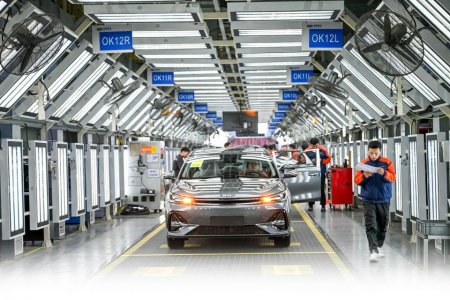
斯泰兰蒂斯的222亿欧元代价
Xin Lang Cai Jing· 2026-02-08 16:27
Core Viewpoint - Stellantis, the world's fourth-largest automotive manufacturer, faces financial and stock price challenges due to misjudgments in its electrification strategy, leading to a €22.2 billion restructuring charge in the second half of 2025 and a shift away from aggressive electrification targets [1][2] Group 1: Financial Impact - Stellantis' stock price dropped over 20% in a single day, resulting in a market value loss of over $6 billion [1][2] - The company plans to recognize approximately €22.2 billion in restructuring costs, including about €6.5 billion in cash payments primarily for supplier compensation [2] - A projected net loss of €21 billion is expected in the second half of 2025, with an annual operating profit margin anticipated to be in the low single digits [2] Group 2: Strategic Adjustments - Stellantis will no longer pursue aggressive electrification goals, instead allowing market demand to dictate the pace of its electric vehicle (EV) transition [3] - The company announced its exit from the joint venture with LG Energy in Canada, with LG acquiring Stellantis' 49% stake [3] Group 3: Focus on China - Stellantis is intensifying partnerships with Chinese companies, investing approximately €1.5 billion in Leap Motor and establishing a joint venture to manage global sales and local manufacturing outside Greater China [4] - The company is collaborating with Pony.ai to develop L4 autonomous vehicles for the European market, starting with light commercial vehicles [4] - Despite these efforts, Stellantis' brands are becoming marginalized in the Chinese market, with Jeep transitioning to a pure import model and Maserati's sales remaining low [5][6] Group 4: Market Challenges - Stellantis faces significant challenges in the Chinese market, including a lack of brand strength and competition from domestic manufacturers [6] - The company has been criticized for its slow response to market changes and internal competition among its brands [6] - Experts suggest that focusing on the Chinese market could help Stellantis overcome its transformation challenges, leveraging the country's robust EV infrastructure and supply chain [6]
持股过节——A股一周走势研判及事件提醒
Datayes· 2026-02-08 15:08
Overall Market Outlook - A-shares are expected to stabilize next week, with no significant declines anticipated, supported by a strong rebound in overseas markets, including a 1.97% increase in the S&P 500 and a 2.18% rise in the Nasdaq [1] - Historical trends indicate that A-shares have a greater than 70% probability of rising before and after the Spring Festival, with large-cap stocks outperforming small-cap stocks before the festival and vice versa afterward [1] Fund Flows and Investment Strategies - This week, stock ETFs saw a net subscription of 44.708 billion yuan, ending three consecutive weeks of net redemptions, indicating a positive shift in investor sentiment [1][38] - Investment strategies suggest holding stocks through the festival, with recommendations to increase positions after the CSI All A Index falls below the 20-day moving average [2][4] Sector Performance and Recommendations - The power equipment sector attracted significant capital inflow of 37.826 billion yuan, while the largest outflows were seen in non-ferrous metals, electronics, and computing sectors [36] - Analysts recommend focusing on sectors with high growth potential, such as AI computing, advanced manufacturing, and cyclical sectors benefiting from price increases, including chemicals and non-ferrous metals [4][21] Market Sentiment and Technical Indicators - The Hong Kong stock sentiment index fell over 24.5% week-on-week, indicating a significant drop in market confidence, with short-selling ratios rising to 17.5% [7] - Technical analysis shows that historical patterns suggest a recovery in stock prices following breaches of the 20-day moving average, with varying success rates across different time frames [3] Industry Insights - The semiconductor industry is experiencing a recovery, with significant interest in the domestic semiconductor supply chain and related sectors [4] - The lithium battery sector is expected to see a resurgence in production post-Spring Festival, driven by strong demand for energy storage solutions [21] Emerging Technologies - The AI sector is gaining traction, with ByteDance's AI video model Seedance 2.0 marking a significant advancement in video generation capabilities [17] - Developments in robotics, particularly humanoid robots, are progressing rapidly, with breakthroughs in dexterity and manufacturing scalability [19][20]


优步(UBER):FY25Q4 业绩点评:增长稳健,平台协同与自动驾驶并进
GUOTAI HAITONG SECURITIES· 2026-02-08 14:44
Investment Rating - The report maintains a "Buy" rating for Uber Technologies (UBER) [6][11]. Core Insights - The company is experiencing robust growth with simultaneous improvements in profitability, driven by a membership system that enhances user stickiness and cross-business collaboration [3][11]. - The autonomous driving strategy is progressing, contributing to the formation of a platform-based network [3][11]. Financial Summary - Revenue projections for FY2024 to FY2028 are as follows: $43,978 million (2024), $52,017 million (2025), $60,835 million (2026E), $69,498 million (2027E), and $78,148 million (2028E), with growth rates of 18.1%, 18.9%, 18.1%, 14.2%, and 13.0% respectively [5][12]. - Operating profit is expected to rise significantly, reaching $2,799 million in 2024 and $12,278 million by 2028, reflecting growth rates of 152.2%, 98.8%, 42.7%, 26.0%, and 22.7% [5][12]. - GAAP net profit is projected to be $9,845 million in 2024, with a slight decline to $6,848 million in 2026E, before recovering to $10,598 million in 2028 [5][12]. - Adjusted EBITDA is forecasted to grow from $6,484 million in 2024 to $15,630 million in 2028 [5][12]. User Engagement and Business Segmentation - In Q4, Uber's total gross bookings reached $54.143 billion, a year-on-year increase of 22%, with revenue of $14.366 billion, up 20% [11]. - Monthly active users (MAPCs) reached 202 million, growing 18% year-on-year, while total trips increased by 22% [11]. - The ride-hailing and delivery segments reported gross bookings of $27.442 billion and $25.431 billion, respectively, with year-on-year growth of 20% and 26% [11]. Membership and Cross-Business Synergy - The Uber One membership program has surpassed 46 million members, a growth of approximately 55%, contributing to higher order frequency and cross-business usage [11]. - Over 40% of users are now utilizing multiple products, indicating an increase in platform penetration and user stickiness [11]. Autonomous Driving Strategy - The company is advancing its hybrid network model, combining human drivers with autonomous vehicles, which is expected to enhance vehicle utilization and address demand fluctuations [11]. - Collaborations with various technology and vehicle partners are accelerating the development of an autonomous ride-hailing platform, which is anticipated to be a significant growth driver for the ride-hailing business in the future [11].
苹果推进造车期间,特斯拉工程师几乎每天都得回避挖人电话
Sou Hu Cai Jing· 2026-02-08 09:35
Group 1 - Apple's electric vehicle project "Project Titan" faced a halt after initially being pursued secretly, leading to intense recruitment efforts targeting Tesla engineers, who reportedly received offers double their current salaries without interviews [1][3] - Tesla CEO Elon Musk revealed that Tesla engineers opted to disconnect calls from Apple to avoid recruitment pressure, indicating the aggressive nature of Apple's hiring strategy [1] - Despite Apple's recruitment attempts, Tesla did not take legal action against Apple for poaching employees, contrasting with its previous actions against Rivian for similar behavior [3] Group 2 - Apple had aimed to develop a fully autonomous vehicle by 2028 but ultimately decided to abandon the project in early 2024, notifying over 2,000 employees of the termination [3] - The project underwent multiple revisions, shifting from a fully autonomous model without steering wheels or pedals to one with limited autonomous capabilities, reflecting Apple's struggle to compete with established automakers like Tesla [3] - Analyst Dan Ives from Wedbush Securities noted that the rapidly changing electric vehicle market has placed Apple at a disadvantage, with many engineers from Project Titan now redirected to Apple's AI initiatives, which are seen as a more logical allocation of resources [3]

全球首个汽车门把手安全强制性标准正式发布,工信部加快推进驾驶自动化等重点标准研制
Xinda Securities· 2026-02-08 06:41
Investment Rating - The industry investment rating is "Positive" [2] Core Insights - The report highlights the official release of the world's first mandatory safety standard for automotive door handles, which will take effect from January 1, 2027. This standard emphasizes safety in design and functionality, requiring independent mechanical release features for each side door and specific structural strength requirements [21][22] - The Ministry of Industry and Information Technology (MIIT) is accelerating the development of key standards related to driving automation and collision safety, aiming to enhance the safety and quality of the automotive industry [21] - The A-share automotive sector outperformed the broader market, with a weekly increase of 0.32%, while the CSI 300 index fell by 1.33% [3][12] Market Performance - The automotive sector's performance ranked 12th among A-share industries, with notable gains in the passenger vehicle segment led by companies like Seres and Haima [3][4] - The commercial vehicle segment saw significant increases, particularly for Jinlong Automobile and Foton Motor, while the automotive parts sector also experienced growth, with leading companies including Xingmin Zhitong and Yinlun [6][19][20] Key Industry News - Strategic partnerships and technological advancements are highlighted, such as the collaboration between Pony.ai and Moore Threads for L4 autonomous driving technology [21] - Changan Automobile's introduction of sodium-ion batteries in collaboration with CATL, aiming for multiple passenger vehicle launches this year [21] - The launch of a vehicle replacement subsidy program in Shanghai, offering an 8% subsidy for purchasing new energy vehicles [21] Upstream Data Tracking - The report includes tracking of key material prices relevant to the automotive industry, such as steel, aluminum, and lithium carbonate, which are critical for production costs [24][25]



