
净息差

Search documents
大额存单全面进入“1时代”,银行优化负债结构
Di Yi Cai Jing· 2025-06-05 12:13
Core Viewpoint - The interest rates for large certificates of deposit (CDs) have significantly decreased, entering the "1.x" era, prompting banks to adjust their offerings and investors to reconsider their asset allocation strategies [1][2][5] Interest Rate Adjustments - Major state-owned banks have lowered their rates for 1-year and 2-year large CDs to 1.2%, with 3-year rates at 1.55%, while some banks have even suspended longer-term products [1][2] - The average interest rate for 3-year large CDs across major banks has dropped to a range of 1.55% to 1.75%, down approximately 80 basis points compared to the same period in 2024 [2][5] - Smaller banks have also reduced rates, with some 3-year CDs dropping from 2.6% to 2.4%, reflecting a broader trend of declining interest rates [2][4] Competitive Landscape - The interest rate advantage of large CDs over traditional fixed deposits has narrowed, with rates for similar terms only slightly higher or even equal [3][4] - Money market funds are becoming increasingly attractive, with yields approaching those of large CDs, while having a much lower investment threshold [3][4] Impact on Bank Profitability - The decline in large CD rates is a response to the pressure on banks' net interest margins, which have been affected by lower loan pricing and high-cost deposits [5][6] - As of the first quarter of 2025, the net interest margin for commercial banks fell to 1.43%, a decrease of 9 basis points from the previous quarter [5][6] Strategic Adjustments - Banks are actively managing their liabilities by reducing the issuance of long-term large CDs to alleviate pressure on their interest margins [6] - This strategy not only aims to enhance banks' interest income but also creates room for further reductions in loan rates, fostering a positive cycle for the real economy [6]






银行业周报:存款利率调降稳定息差-20250604
Bank of China Securities· 2025-06-04 00:57
强于大市 银行业周报 存款利率调降稳定息差 按申万一级行业分类标准,银行板块本周上涨 0.04%,上周上涨 0.61%,银 行板块涨跌幅由高到低排名 18/31,较上周排名下降 10 位。个股方面 A 股 42 家银行有 26 家上涨。拉长时间来看,年初至今银行板块涨幅 7.70%,在全行 业中排名第四,红利仍然是银行的主线,关注银行股投资价值,建议关注招 商银行、农业银行。 银行 | 证券研究报告 — 行业周报 2025 年 6 月 4 日 5 月 20 日,六家国有大行及招商银行、光大银行率先下调了存款挂牌利 率,随后几日,其余股份行以及部分城农商行纷纷下调利率,目前仅郑 州银行尚未跟进调降存款利率。本次调降中,五大行活期利率下调 5 bp 至 0.05%;定期整存整取 3 个月期、半年期、1 年期、2 年期均下调 15bp, 分别为 0.65%、0.85%、0.95%、1.05%;3 年期和 5 年期均下调 25 bp, 分别至 1.25%和 1.30%。定期零存整取、整存零取、存本取息三种期限均 下调 15 bp。7 天期通知存款利率下调 15 bp 至 0.30%。 5 月 7 日央行宣布要"实施好 ...



日本股市遭遇历史性失血,银行股“神话”面临考验
Huan Qiu Wang· 2025-06-01 03:28
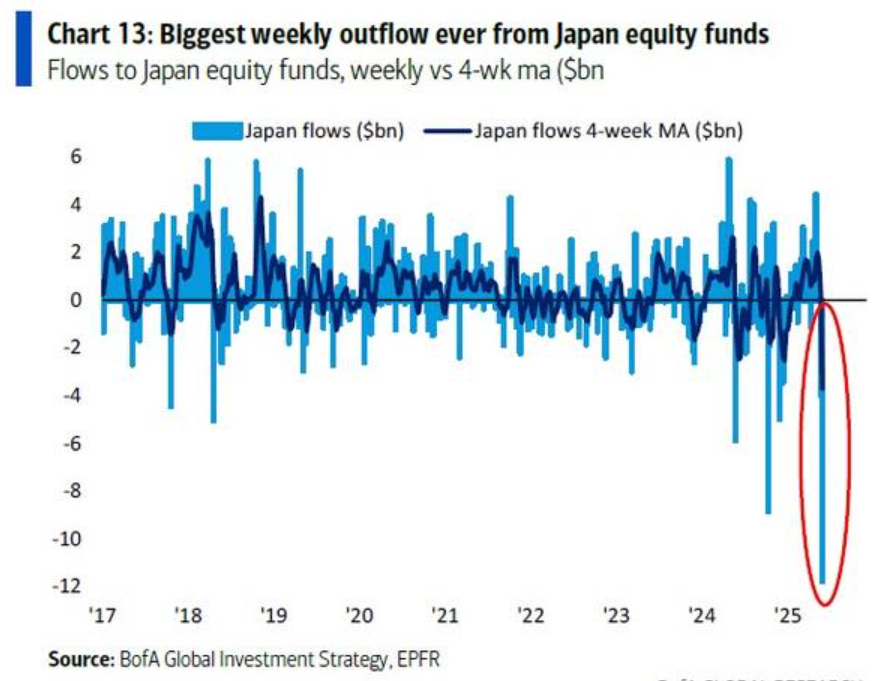
Group 1 - The core point of the articles highlights unprecedented capital outflows from Japanese stock funds, amounting to $11.8 billion, marking the largest weekly outflow on record [1] - Bank stocks in Japan, despite being the best-performing sector globally over the past three years, are showing concerning trends as they fail to rise in tandem with increasing Japanese government bond yields [1][3] - Concerns regarding the Bank of Japan's policy normalization, including the end of negative interest rates and yield curve control, are leading to fears of a rapid tightening of financial conditions [3] Group 2 - The rapid rise in bond yields is interpreted as a sign of doubts about Japan's economic growth potential and resilience, which counteracts the benefits of improved bank net interest margins [3] - After three years of strong performance, the valuation attractiveness of the banking sector has diminished, prompting significant capital to lock in profits amid rising yields [3] - The current situation in the Japanese market, particularly for bank stocks, reflects a critical contradiction where the theoretical benefits of monetary policy shifts are overshadowed by deep concerns about economic outlook and financial stability [3]

亚洲股票及利率网络直播:香港银行同业拆借利率下降-对港元资产的影响
Hui Feng Yin Hang· 2025-05-30 07:20
Investment Rating - The report maintains a "Buy" rating for BOCHK Holdings (2388 HK) despite the decline in HIBOR, indicating resilience in the stock [2]. Core Insights - HIBOR is at a three-year low, raising questions about its implications for the Hong Kong stock market. Strong local liquidity is supporting the market, even with rising HIBOR [1][4]. - The real estate market is expected to gain more support due to low HIBOR, while local banks may face declining net interest margins and slower income growth [4]. Summary by Sections HIBOR and Market Impact - HIBOR's decline is a significant factor influencing investor sentiment and market dynamics in Hong Kong [1][4]. - The report discusses the implications of HIBOR fluctuations on the stock market, local banks, and the real estate sector [4]. Company Ratings - BOCHK Holdings (2388 HK) is rated as a "Buy" due to its resilience despite the declining HIBOR [2]. - Sino Land (83 HK) has been downgraded to "Hold" due to increasing profit pressures [2]. Real Estate Market - The report highlights the growing resilience of the Hong Kong real estate market, suggesting a more stable foundation moving forward [2][4].
银行业周度追踪2025年第20周:新一轮存款降息缓释净息差压力-20250526
Changjiang Securities· 2025-05-26 15:36
Investment Rating - The investment rating for the banking industry is "Positive" and maintained [10] Core Insights - The Yangtze Bank Index increased by 0.6% this week, outperforming the CSI 300 Index by 0.8% and the ChiNext Index by 1.5%. The market's focus on bank stocks has notably increased due to the logic of active fund allocation [2][6] - Following a 10 basis point (BP) reduction in the Loan Prime Rate (LPR) in May, major banks initiated a new round of deposit rate cuts. The interest rate for demand deposits decreased by 5 BP to 0.05%, while the rates for one-year, three-year, and five-year fixed deposits were reduced by 15 BP, 25 BP, and 25 BP respectively, with the one-year fixed deposit rate falling below 1.0% to 0.95% [7][26] - The recent deposit rate cuts are expected to effectively offset the impact of the LPR reduction, leading to a narrowing of the decline in net interest margins (NIM) in the future [8][30] Summary by Sections Market Performance - The Yangtze Bank Index's performance this week shows a cumulative increase of 0.6%, with significant contributions from city commercial banks like Qingdao Bank, which reported a revenue growth rate that exceeded expectations [6][17] - The average dividend yield for the five major state-owned banks in A-shares is 4.49%, with a 277 BP spread over the 10-year government bond yield, while the H-shares yield is even higher at 5.75% [19][24] Deposit Rate Cuts - The recent round of deposit rate cuts is the seventh since 2022, aimed at alleviating the pressure on banks' net interest margins. The current NIM for state-owned banks has reached a new low of 1.33% [7][28] - The report anticipates that the deposit rates will continue to have downward space, but due to the significant cuts already made, no further reductions are expected before the end of 2025 [26][30] Impact on Net Interest Margin - The deposit rate cuts are expected to provide a positive contribution to the banks' NIM, with estimates suggesting an average positive impact of 5 BP from the recent rate adjustments [30][31] - The banks with a higher proportion of fixed deposits and lower mortgage ratios are expected to benefit more from the recent rate cuts [31] Convertible Bonds and Valuation Opportunities - There is a growing market interest in convertible bonds issued by banks, particularly those like Hangzhou Bank, which are expected to see valuation recovery as they exceed forced redemption prices [34][35] - Other banks such as Nanjing Bank and Qilu Bank are also highlighted for their potential valuation recovery as they approach their respective conversion prices [34]
美债“跌倒”,华尔街大行“吃饱”
Hua Er Jie Jian Wen· 2025-05-26 15:20
Core Viewpoint - The recent surge in long-term U.S. Treasury yields, while alarming for investors, may actually benefit banks due to a steeper yield curve that can enhance their profitability [1][4]. Group 1: Impact of Steeper Yield Curve - A steeper yield curve occurs when long-term interest rates rise faster than short-term rates, leading to a widening spread between the two, which is crucial for banks [2][3]. - The current spread between 2-year and 10-year U.S. Treasury yields has reached its widest point since 2022, indicating a favorable environment for banks [2]. Group 2: Bank Profitability and Net Interest Margin - Banks operate on a model of borrowing short-term (e.g., low-interest deposits) and lending long-term (e.g., mortgages, corporate loans), allowing them to profit from the interest rate spread, known as net interest margin [3][5]. - The net interest margin for major U.S. banks was reported at a median of 2.81% as of Q4 last year, below the historical average of 3.2%, but is expected to improve as the yield curve normalizes [5]. Group 3: Potential for Increased Earnings - As long-term rates rise, banks can invest in higher-yielding bonds, allowing them to roll over maturing low-rate bonds into new, higher-rate securities, thus increasing interest income and capital buffers [5][6]. - If regulatory requirements on bank capital are relaxed, banks will have more available funds, enhancing their resilience [6]. Group 4: Risks and Market Sentiment - Despite the potential benefits, rising long-term rates can also lead to increased paper losses on previously purchased low-rate bonds, posing liquidity risks if banks need to sell these assets quickly [7]. - The performance of bank stocks has been mixed, with the KBW Nasdaq Bank Index showing similar year-to-date gains as the S&P 500, reflecting market uncertainty [7].
关注债息情况,港股料整固
Guodu Securities Hongkong· 2025-05-26 02:58
Group 1: Market Overview - The report indicates that the U.S. stock market experienced a decline last Friday, with the Dow Jones Industrial Average down by 0.61% and the S&P 500 down by 0.67% [2] - The Hang Seng Index closed at 23,601, up 0.2%, while the Shanghai Composite Index fell by 0.94% to 3,348.37 [3] - The overall market turnover for the day was 203.67 billion [3] Group 2: Macroeconomic and Industry Dynamics - The report highlights that China's self-regulatory mechanism has lowered the upper limit for bank deposit rates, with some banks reducing rates by 30 to 40 basis points, indicating regulatory efforts to improve banks' net interest margins [6] - The Hong Kong Insurance Authority is actively communicating with insurance companies interested in relocating their registrations to Hong Kong, aiming to facilitate the migration process under a new framework [7] Group 3: Company-Specific News - UBS has raised its year-end target for the S&P 500 index from 5,800 to 6,000, citing better-than-expected first-quarter earnings and improved GDP growth expectations as reasons for the adjustment [8] - The Hong Kong Stock Exchange plans to increase the position limits for Hang Seng Index derivatives starting July 2, pending regulatory approval, to enhance the development of the derivatives market [10] - Country Garden has reported that over 70% of its public noteholders have joined a restructuring support agreement, extending the deadline for early bird participation [11]






80%中国上市银行净息差低于警戒线
日经中文网· 2025-05-23 03:17
Core Viewpoint - The profitability of Chinese banks is declining, as evidenced by a significant reduction in net interest margins, with 93% of the banks reporting a decrease compared to the previous fiscal year [1][3]. Group 1: Net Interest Margin Trends - 54 out of 58 listed banks in mainland China and Hong Kong reported a decrease in net interest margin for the fiscal year 2024 [1]. - 90% of listed banks experienced a reduction in net interest margin due to falling loan interest rates, with 81% of these banks having a net interest margin below the critical threshold of 1.8% [3]. - The average net interest margin for all banks, including non-listed small and medium-sized banks, is projected to be 1.52% by the end of 2024, marking a decline of 0.17% from the previous year [3]. Group 2: Economic and Financial Risks - The ongoing economic challenges, including insufficient domestic demand and potential impacts from tariffs, are contributing to weak funding demand from businesses and households [3]. - Concerns are rising regarding the credit risk associated with small and micro enterprises, as the average loan interest rate for these entities is not significantly higher than that for larger corporations [5]. - Potential non-performing loan ratios are estimated to reach 7.8% by the end of 2024, with real estate being a central risk factor [5]. Group 3: Government Intervention and Capital Injection - To mitigate financial instability, the Chinese government has decided to inject 500 billion yuan of public capital into the banking sector [6]. - There are concerns that merely injecting capital into large banks may not suffice, as smaller banks in economically distressed areas face increasingly severe operating conditions [6].
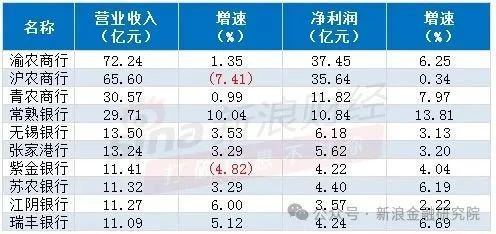
聚焦10家A股农商行一季报:沪农商行营收降超7%,紫金银行净息差仅1.23%
Xin Lang Cai Jing· 2025-05-23 00:34
Core Viewpoint - The A-share listed rural commercial banks demonstrated strong resilience in Q1 2025, with all 10 banks achieving positive net profit growth, highlighting their robust financial performance despite market pressures [1][5][6]. Financial Performance - All 10 A-share listed rural commercial banks reported positive net profit growth in Q1 2025, with Changshu Bank leading at a 13.81% year-on-year increase [1][7]. - Eight banks experienced positive revenue growth, while two banks, Shanghai Rural Commercial Bank and Zijin Bank, reported declines in revenue [1][5][6]. - Revenue figures for major banks include: - Chongqing Rural Commercial Bank: 72.24 billion yuan, up 1.35% - Shanghai Rural Commercial Bank: 65.60 billion yuan, down 7.41% - Qingnong Bank: 30.57 billion yuan, up 0.99% - Changshu Bank: 29.71 billion yuan, up 10.04% [3][5][6]. Asset Quality - As of the end of March, seven banks had non-performing loan (NPL) ratios below 1%, with Changshu Bank, Wuxi Bank, and Jiangyin Bank all below 0.9% [1][15]. - Qingnong Bank had the highest NPL ratio at 1.77%, despite a slight decrease from the previous year [1][15]. Asset Scale - Chongqing Rural Commercial Bank and Shanghai Rural Commercial Bank both exceeded 1.5 trillion yuan in total assets, with Chongqing leading at 1.61 trillion yuan, a 6.3% increase [9][11]. - Qingnong Bank ranked third in total assets at 511.58 billion yuan, while Changshu Bank followed closely with 389.01 billion yuan [11][12]. Interest Margin - The net interest margin for several banks has narrowed, with Zijin Bank reporting the lowest at 1.23%, below the industry average of 1.52% [4][7].


招商银行20250522
2025-05-22 15:23
Summary of China Merchants Bank Conference Call Company Overview - **Company**: China Merchants Bank (招商银行) - **Date**: May 22, 2025 Key Points Financial Performance - **Net Interest Income**: Increased by nearly 2% year-on-year in Q1 2025, attributed to a narrowing of interest rate cuts, despite a decline in net interest margin by 11 basis points year-on-year [2][7][8] - **Loan Pricing**: Overall slight decrease in loan pricing; corporate loans saw a significant decline while retail loans remained stable or slightly decreased due to regulatory guidance [2][3][6] - **Deposit Growth**: Weak loan demand has led to sluggish deposit growth, with M1 and M2 widening [2][10] - **Wealth Management Fees**: Grew by 10.5% year-on-year in Q1 2025, marking the first significant positive growth since 2022, driven by nearly 30% growth in fund sales, wealth management, and trust services [2][13] - **Card Fees**: Card transaction fees and settlement fees declined by 7-8% year-on-year due to weak consumption [2][14] Loan Demand and Credit Quality - **Credit Demand**: Remains weak in Q2 2025; retail loans showed marginal recovery in early May but overall demand is still not significantly improved [3][4] - **Asset Quality**: Retail loan non-performing loans (NPLs) are rising, but the bank maintains a solid provision coverage ratio [3][17][18] - **Corporate Loan Risks**: Concentrated in real estate and related sectors, with overall asset quality in other sectors remaining low [3][19][20] Market Conditions and Economic Outlook - **Trade War Impact**: Limited short-term impact from the US-China trade war observed; however, long-term effects depend on future tariff policies [4][5] - **Interest Rate Trends**: New loan pricing has slightly decreased; retail loan pricing remains stable or slightly down due to regulatory constraints [6][8] - **Deposit Rate Adjustments**: Recent adjustments in deposit rates have raised concerns about potential deposit outflows, but the bank views the changes as beneficial due to its high proportion of demand deposits [9][11] Future Strategies - **Loan Strategy**: The bank will not rigidly increase any specific type of loan but will adjust based on market demand [4][21] - **Wealth Management Focus**: Continued emphasis on wealth management services to enhance fee income, with expectations for further growth in Q2 2025 [13][14] - **Dividends**: Plans for mid-term dividends in 2025 have been announced, with distributions expected in early and mid-2026 [23] Risks and Challenges - **Economic Uncertainty**: The bank faces significant operational pressure due to geopolitical factors and weak loan demand, with Q1 2025 expected to be the most challenging period of the year [15][16][22] - **Retail Loan Quality**: While retail loan quality is under scrutiny, the bank has sufficient provisions to manage potential risks [18][22] Conclusion - China Merchants Bank is navigating a challenging economic landscape with a focus on maintaining asset quality, adjusting loan strategies based on market conditions, and enhancing wealth management services to drive fee income growth. The outlook remains cautious due to external economic pressures and internal loan demand weaknesses.