外汇储备

Search documents
事关美债波动、支持民企、稳就业等 人民银行副行长邹澜这样说
Xin Jing Bao· 2025-04-28 10:57
Core Viewpoint - The People's Bank of China (PBOC) emphasizes the resilience of China's foreign exchange market and plans to implement more proactive macroeconomic policies to support employment and growth amid recent fluctuations in the US Treasury market [1][2]. Foreign Exchange Market - The impact of fluctuations in a single market or asset on China's foreign exchange reserves is generally limited, as the reserves are diversified and managed with safety, liquidity, and value preservation in mind [1]. - China's foreign exchange reserves remain stable at over $3.2 trillion, supported by a balanced international payment situation and a resilient foreign exchange market [2]. Monetary Policy - The PBOC plans to maintain a moderately loose monetary policy, with potential adjustments to reserve requirement ratios and interest rates based on domestic and international economic conditions [3]. - The central bank aims to enhance financial support for key sectors such as technology innovation, green finance, and inclusive finance, while ensuring reasonable growth in money and credit [3]. Employment and Economic Growth - The PBOC will intensify support for employment through policies like entrepreneurship guarantee loans, particularly targeting groups such as returning migrant workers and recent graduates [4]. - Financial institutions will be guided to continue lending to small and medium-sized enterprises (SMEs) that are heavily reliant on foreign trade and facing temporary difficulties [4]. Support for Private Enterprises - The PBOC is committed to enhancing financial services for private enterprises, ensuring a favorable monetary environment through adequate liquidity and targeted financial support measures [5]. - The central bank will broaden financing channels for private enterprises, including expanding bond financing and improving access to foreign capital [6]. Data Insights - As of March 2025, the loan balance for privately held enterprises is approximately 45 trillion yuan, with an increase of 2.4 trillion yuan in the first three months of the year [6]. - The weighted average interest rate for new loans to privately held enterprises in March was about 3.41%, a decrease of 58 basis points compared to the same period last year [6].
央行邹澜回应美债波动:单一市场、单一资产变动对我国外储影响总体有限
news flash· 2025-04-28 02:18
Core Viewpoint - The People's Bank of China is monitoring recent fluctuations in the US Treasury market and emphasizes that the country's foreign exchange reserves are managed with a focus on safety, liquidity, and value preservation, achieving effective diversification in investment portfolios [1] Group 1 - The recent volatility in the US Treasury market has been noted by the People's Bank of China [1] - China's foreign exchange reserves aim for safety, liquidity, and value appreciation [1] - The investment strategy follows market-oriented and professional principles, allowing for effective diversification [1] Group 2 - The impact of fluctuations in a single market or asset on China's foreign exchange reserves is generally limited [1]
马来西亚央行:马来西亚4月15日的外汇储备为1184亿美元,3月28日为1175亿美元。
news flash· 2025-04-22 07:04
马来西亚央行:马来西亚4月15日的外汇储备为1184亿美元,3月28日为1175亿美元。 ...
日本成贸易谈判首选,美国会开出哪些条件?
Hua Er Jie Jian Wen· 2025-04-14 10:06
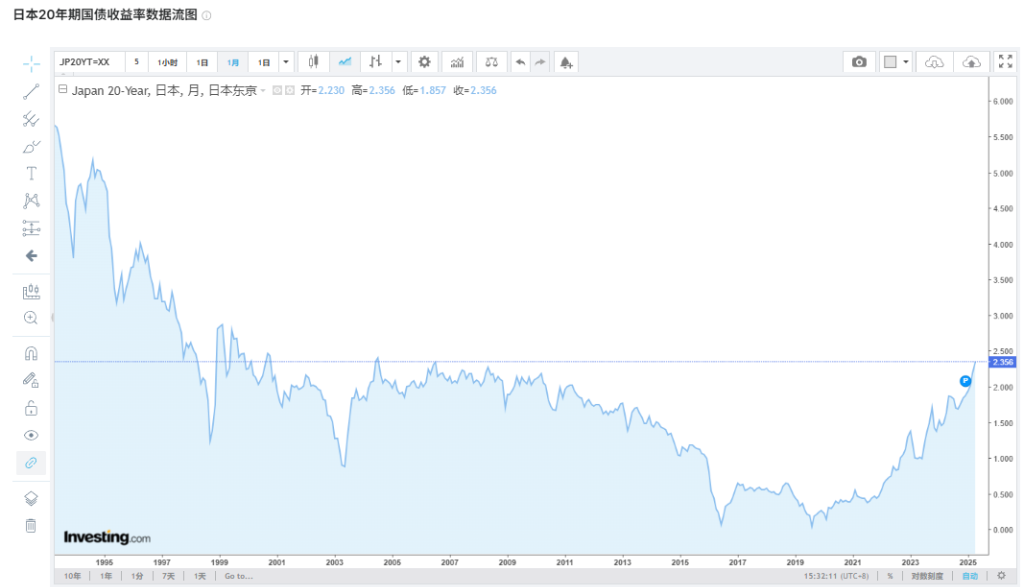
Core Viewpoint - The United States has initiated substantive trade negotiations with Japan, aiming to establish Japan as a model case for agreements with other countries following the recent tariff delay announcement [1][2]. Group 1: U.S.-Japan Trade Negotiations - Japan is the first country to engage in substantial trade negotiations with the U.S. after the tariff delay, indicating a strategic choice by the U.S. [1][2]. - The U.S. intends to use Japan as a template for future agreements with other nations, highlighting the importance of this negotiation [2]. Group 2: Potential U.S. Demands on Japan - The U.S. may push Japan to set explicit trade surplus targets, which could force Japan to reduce exports and increase imports, impacting its trade balance [3]. - Other potential demands include pushing for yen appreciation, which could harm Japanese export-oriented companies and hinder economic recovery [3]. - The U.S. might also request Japan to extend the maturity of its U.S. Treasury holdings, limiting Japan's foreign exchange reserve flexibility [3]. Group 3: Japanese Government's Stance - Japanese Prime Minister Kishida emphasized the importance of not compromising too quickly for a deal, advocating for a careful approach to negotiations [4]. - The potential U.S. demands could significantly impact Japan's financial markets, with warnings of a rapid depreciation of the dollar and a substantial appreciation of the yen [4]. Group 4: Impact on Japanese Economy and Bond Market - A stronger yen could reduce the competitiveness of Japanese exports, adversely affecting manufacturing firms that rely heavily on exports [5]. - Increased fiscal spending, as suggested by the U.S., would require Japan to issue more government bonds, exacerbating supply pressures in the bond market [5]. - The Japanese long-term bond market is already showing signs of instability, with recent spikes in yields indicating market volatility [5]. Group 5: Global Market Implications - Nomura warns of a global bond market imbalance and tightening liquidity risks, which could lead to broader credit contractions [7]. - The recent fluctuations in global stock markets and the widening of high-yield bond spreads indicate ongoing credit tightening [7].

尽管印尼盾贬值,印尼外汇储备仍创历史新高
news flash· 2025-04-14 07:11
尽管印尼盾贬值,印尼外汇储备仍创历史新高 金十数据4月14日讯,在全球市场动荡重创印尼盾之际,印尼外汇储备上月增加26亿美元,再创历史新 高。印尼央行周一在一份声明中称,3月份外汇储备攀升至1571亿美元,税收和服务收入以及政府收回 外国贷款提振了外汇储备。从上个月开始,印尼还要求自然资源出口商必须将100%以美元计价的利润 留在国内至少一年。外汇储备的增加为货币当局提供了额外的支持,以捍卫今年受到多种因素严重打击 的印尼盾,包括特朗普的关税。上周,印尼盾兑美元汇率跌至有史以来最低水平,超过了1998年亚洲金 融危机时创下的低点。 ...
日本财务大臣加藤胜信称,日本外汇储备的适当规模没有预设标准。我们持有外汇储备,以备需要时进行外汇干预。
news flash· 2025-04-09 00:33
日本财务大臣加藤胜信称,日本外汇储备的适当规模没有预设标准。我们持有外汇储备,以备需要时进 行外汇干预。 ...
3月外汇储备数据传递的信号:贸易环境是短期影响汇率的核心因素
ZHESHANG SECURITIES· 2025-04-08 12:58
Group 1: Foreign Exchange Reserves - In March, China's official foreign exchange reserves reached $32,406.65 billion, an increase of $13.441 billion month-on-month, primarily driven by exchange rate factors[1] - The positive contribution from exchange rates was significant, with the dollar index declining by 3.13% from the end of February, impacting reserves positively by approximately $60.625 billion[2] - The valuation effect negatively impacted reserves by about $4.73 billion due to falling European bond prices, leading to a net effect of approximately $55.901 billion on reserves[2] Group 2: Trade Environment and Currency Fluctuations - The short-term trade environment is identified as a core factor influencing exchange rates, with expectations of increased two-way volatility[3] - If trade tensions escalate with other major countries, they may devalue their currencies against the dollar, which could lead to a passive appreciation of the RMB[3] - Conversely, if major countries make concessions in trade negotiations, external pressures on China may increase, expanding the depreciation space for the RMB[3] Group 3: Gold Reserves - As of the end of March, gold reserves stood at 7.37 million ounces, marking the fifth consecutive month of increases[4] - Gold reserves now account for 6.4% of total foreign exchange reserves, with expectations for further increases in this ratio[4] - Short-term outlook suggests a potential slight decline in gold prices due to unmet U.S. gold tariff expectations, but a long-term forecast predicts new highs by 2025 driven by central bank purchases[4]
3月末我国外汇储备规模上升,央行连续第五个月增持黄金
Bei Ke Cai Jing· 2025-04-07 10:06
4月7日,国家外汇管理局统计数据显示,截至2025年3月末,我国外汇储备规模为32407亿美元,较2月 末上升134亿美元,升幅为0.42%。 国家外汇管理局新闻稿指出,3月,受主要经济体宏观经济数据、财政货币政策及预期等因素影响,美 元指数下跌,全球金融资产价格总体下跌。汇率折算和资产价格变化等因素综合作用,当月外汇储备规 模上升。 汇率和资产价格变化等因素作用下3月末外汇储备规模上升 王青认为,短期美元指数下行和全球金融市场下跌还将形成对冲效应,我国外储规模有望保持基本稳 定。这将为保持人民币汇率处于合理均衡水平提供坚实基础,成为抵御各类潜在外部冲击的压舱石。 央行连续第五个月增持黄金 黄金储备方面,3月末我国黄金储备为7370万盎司,2月末为7361万盎司,小幅增加9万盎司。 民生银行首席经济学家温彬指出,3月,受主要经济体宏观经济数据、财政货币政策及预期等因素影 响,美元指数下跌,全球金融资产价格涨跌互现。 3月,美国政府的关税政策导致全球金融市场波动加剧,但国际金价延续开年来的强劲上涨态势,轻松 突破2900、3000和3100美元/盎司三道关口。国内方面,上海黄金交易所3月金价收于730元/克之上 ...
央行出手,增持!
21世纪经济报道· 2025-04-07 05:25
作 者丨 唐婧 编 辑丨肖嘉 4月7日,国家外汇管理局统计数据显示,截至2 0 2 5年3月末,我国外汇储备规模为3 2 4 0 7亿美元,较2月末上升1 3 4亿美元,升幅为0 . 4 2%。这 是我国外汇储备连续1 6个月站上3 . 2万亿美元大关,也是连续3个月出现环比回升。 国家外汇局表示,2 0 2 5年3月,受主要经济体宏观经济数据、财政货币政策及预期等因素影响,美元指数下跌,全球金融资产价格总体下跌。 汇率折算和资产价格变化等因素综合作用,当月外汇储备规模上升。我国经济运行总体平稳、稳中有进,一揽子存量政策和增量政策继续发力 显效,高质量发展扎实推进,为外汇储备规模保持基本稳定提供支撑。 多名受访专家告诉2 1世纪经济报道记者,在外部环境复杂多变的情况下,外汇储备充分发挥了国家经济金融安全的"稳定器"和"压舱石"作用, 已经帮助我国成功经受住了多轮外部冲击的考验,这一次也不会例外。 例如,汇管研究院副院长、对外经贸大学金融学院兼职教授、国际金融专家赵庆明告诉记者,我国外汇储备长期以来稳定在3万亿美元之上, 是全球第一大外汇储备国,远超排在第二的国家。如此雄厚的外汇储备资产,将继续维护我国经济和金 ...

“第二次广场协议”不得不防
日经中文网· 2025-03-20 03:14
Core Viewpoint - The article discusses the potential restructuring of the global trading system, focusing on the implications of the U.S. dollar's strength and the possibility of a new international monetary framework, particularly in light of recent comments from President Trump regarding currency devaluation by trade partners [1][2][4]. Group 1: U.S. Dollar and Currency Valuation - The U.S. dollar is considered overvalued due to its status as the world's primary reserve currency, which imposes costs on U.S. manufacturers and exporters [2][5]. - President Trump has criticized the devaluation of currencies like the Japanese yen and Chinese yuan, asserting that such actions create an unfair disadvantage for the U.S. [2][5]. - The actual exchange rate of the dollar has strengthened, with the International Bank for Settlements indicating that the dollar's real exchange rate is at a high level compared to the pre-Plaza Accord period [4][6]. Group 2: Historical Context and Comparisons - The article draws parallels between the current situation and the Plaza Accord of 1985, which aimed to induce a depreciation of the dollar through coordinated intervention by major economies [5][6]. - The scale of the foreign exchange market has significantly increased since the Plaza Accord, complicating any potential coordinated intervention today [6][7]. - The historical context highlights that the intervention during the Plaza Accord involved approximately $10 billion, while recent interventions, such as Japan's, have reached much higher amounts, indicating a shift in market dynamics [6][7]. Group 3: Challenges and Future Implications - Achieving a new agreement similar to the Plaza Accord would require participation from emerging economies, which presents significant challenges compared to the past [6][7]. - There is speculation that Trump may push for a weaker dollar through tariffs, which could lead to increased pressure on countries like Japan to adjust their monetary policies [7]. - The potential for a new monetary agreement, referred to as the "Mar-a-Lago Accord," remains uncertain, but if realized, it could have profound implications for the foreign exchange market and the global economy [1][7].