
智能化

Search documents
制造型外企扎根辽宁沈阳——“我们始终看好中国市场前景”
Xin Hua Wang· 2026-01-14 23:37
Group 1: Investment and Development in Shenyang - German companies are increasingly investing in Shenyang, with projects becoming industry benchmarks, including Michelin, BeKaert, and BMW [2][7][11] - Michelin's Shenyang factory has an annual production capacity of 17.1 million passenger car tires and has produced a cumulative total of 100 million tires since its establishment [7] - BeKaert's Shenyang factory has implemented a full industrial chain and benefits from local vocational schools producing skilled workers, enhancing its operational efficiency [8][9] Group 2: Technological Advancements and Production Efficiency - BMW's Shenyang plant has integrated approximately 200 AI applications, significantly improving production efficiency [10] - The introduction of advanced production lines and automation in factories is a common trend among foreign enterprises in Shenyang, aligning with China's push for high-tech and sustainable manufacturing [10][12] - The establishment of a local R&D capability has allowed companies like Austrian Voestalpine to reduce procurement costs and enhance profitability [9] Group 3: Government Support and Business Environment - Shenyang has implemented positive incentive mechanisms to attract foreign investment, including measures to optimize the investment environment [9][14] - The city has established a business service system for key foreign-invested enterprises, enhancing the efficiency of administrative processes [14] - Continuous improvements in infrastructure and a stable policy environment have made Shenyang an attractive destination for foreign companies [12][13]

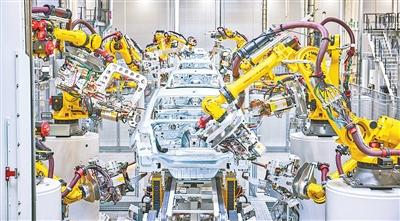
产销连续3年保持3000万辆以上规模 汽车产业竞争力源自硬实力
Xin Hua Wang· 2026-01-14 23:37
Core Insights - The continuous advancement of electrification technology and the rapid application of cutting-edge technologies have led to sustained growth in China's automotive production and sales, reflecting the resilience and dynamic momentum of the economy [1][7]. Group 1: Automotive Production and Sales - China's automotive production and sales have maintained a scale of over 30 million units for three consecutive years, ranking first globally for 17 years [7]. - In 2025, the production and sales of new energy vehicles (NEVs) are projected to reach 16.626 million and 16.49 million units, respectively, representing year-on-year growth of 29% and 28.2% [8]. Group 2: Technological Advancements - The average range of pure electric passenger vehicles in China is expected to approach 500 kilometers by 2025, with fast-charging technology allowing for 80% charge in 15 minutes [8]. - The integration of various technological routes, including electric, hydrogen fuel, and synthetic fuels, is advancing, with China's "super electric hybrid technology" becoming a successful example for reverse technology export to multinational automotive companies [8]. Group 3: Export Growth - In 2025, the export of NEVs is expected to reach 2.615 million units, doubling year-on-year, with passenger vehicle exports at 2.532 million units and commercial vehicle exports at 83,000 units, showing growth rates of 100% and 86.8%, respectively [9]. Group 4: Intelligent Manufacturing and Automation - BYD's factory demonstrates advanced manufacturing capabilities, achieving a vehicle production time of 51 seconds per unit, supported by nearly a thousand industrial robots and a fully automated welding rate of 100% [7]. - The market for L2-level assisted driving vehicles has surpassed 60% of new car sales, with the first L3-level conditional autonomous driving models receiving approval [10]. Group 5: Industry Transformation and Profitability - Measures to combat "involution" in the automotive industry, such as halting price wars and improving payment terms, have led to a profit growth of 4.4% in the automotive sector from January to October 2025, accelerating to 7.5% by November [11]. - High-quality supply and brand upgrades are being emphasized, with several flagship models gaining market recognition, including the Hongmeng Zhixing's Zun Jie S800 and the AITO series [11].
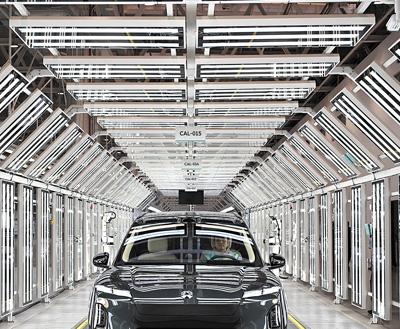
去年我国汽车产销双破3400万辆 连续17年居全球第一
Sou Hu Cai Jing· 2026-01-14 22:41
Group 1 - The core viewpoint of the articles highlights the robust growth forecast for China's automotive industry, with production and sales expected to reach 34.53 million and 34.40 million units respectively by 2025, marking year-on-year increases of 10.4% and 9.4% [1] - The production and sales of new energy vehicles (NEVs) are projected to reach 16.63 million and 16.49 million units by 2025, with year-on-year growth rates of 29% and 28.2%, maintaining China's position as the global leader for 11 consecutive years [1] - NEVs are expected to account for over 50% of new car sales in China, solidifying their status as the dominant force in the automotive market [1] - China's automotive exports are anticipated to exceed 7 million units in 2025, with new energy vehicle exports reaching 2.615 million units, representing a year-on-year increase of 100% [1] - The automotive industry in China has achieved significant breakthroughs during the 14th Five-Year Plan period, maintaining production and sales above 30 million units for three consecutive years and surpassing 10 trillion yuan in revenue [1] Group 2 - The recently released "Two New" policy for 2026 adjusts the vehicle replacement subsidy from a fixed amount to a percentage of the vehicle price, ensuring a smooth transition of policies [2] - A notification from the Ministry of Commerce and nine other departments regarding the implementation of green consumption initiatives is expected to accelerate the green transformation of development and consumption models, positively impacting market expectations and boosting automotive consumption [2]
制造型外企扎根辽宁沈阳——“我们始终看好中国市场前景”(见证·中国机遇)
Ren Min Ri Bao· 2026-01-14 21:57
Core Viewpoint - The article highlights the significant growth and investment of foreign enterprises in Shenyang, China, particularly in the automotive and manufacturing sectors, showcasing successful collaborations and advancements in technology and production efficiency [1][2][3]. Group 1: Foreign Investment and Development - Michelin established a joint venture in 1995, recognizing China's market potential, and has since developed a production capacity of 17.1 million passenger car tires annually at its Shenyang plant [2]. - The BeKaert Group has expanded its operations in Shenyang, benefiting from a skilled workforce and a complete industrial chain, which enhances resource sharing and collaborative development [3]. - The Austrian company voestalpine has five hot forming production lines in Shenyang, significantly reducing procurement costs and projecting a sales revenue of 1 billion RMB in 2024 [4]. Group 2: Technological Advancements and Production Efficiency - BMW's Shenyang plant has integrated approximately 200 artificial intelligence applications, enhancing production efficiency and aligning with China's push for high-end, intelligent, and green manufacturing [6]. - The Spanish company Gestamp has invested in expanding its automotive components project in Shenyang, increasing production capacity by 20% to meet client demands [9]. Group 3: Supportive Business Environment - Shenyang has implemented positive incentive mechanisms to attract foreign investment, including measures to optimize the investment environment and support for foreign enterprises [4][10]. - The establishment of the first German center in Shenyang aims to promote Sino-German industrial interaction and attract more German SMEs to invest [7]. - Continuous improvements in the business environment, such as streamlined administrative processes and enhanced infrastructure, have reinforced foreign companies' confidence in long-term operations in Shenyang [8][10].

产销连续3年保持3000万辆以上规模 汽车产业竞争力源自硬实力(经济聚焦)
Ren Min Ri Bao· 2026-01-14 21:55
Core Insights - The continuous advancement of electrification technology and the application of cutting-edge technologies have led to sustained growth in China's automotive production and sales, reflecting the resilience and dynamic momentum of the economy [1] Group 1: Automotive Production and Sales - China's automotive production and sales have maintained a scale of over 30 million units for three consecutive years, ranking first globally for 17 years [1] - The production and sales of new energy vehicles (NEVs) are projected to reach 16.626 million and 16.49 million units respectively in 2025, with year-on-year growth of 29% and 28.2%, making up 47.9% of total new car sales [2] Group 2: Technological Advancements - The average range of pure electric passenger vehicles in China is expected to approach 500 kilometers by 2025, with rapid adoption of 800V high-voltage silicon carbide platforms and fast-charging technology [2] - The integration of various technological routes, including electrification, efficient internal combustion engines, hydrogen fuel, and synthetic fuels, is advancing, with China's "super electric hybrid technology" becoming a successful example for reverse technology export [2] Group 3: Export Growth - In 2025, China's NEV exports are expected to reach 2.615 million units, doubling year-on-year, with passenger vehicle exports at 2.532 million units and commercial vehicle exports at 83,000 units, showing significant growth [3] Group 4: Intelligent Driving and Automation - Huawei's ADS 5 is transitioning from technology validation to mass production, with over 1 million units equipped and a user engagement rate exceeding 95%, indicating a shift towards large-scale deployment of autonomous driving technology [4] - The proportion of new passenger vehicles with L2-level combined auxiliary driving functions has exceeded 60%, with the first L3-level conditional autonomous driving models receiving approval [4] Group 5: Industry Transformation and Profitability - Measures to combat "price wars" and improve industry standards have been implemented, leading to a 4.4% profit growth in the automotive industry from January to October 2025, accelerating to 7.5% by November [6] - The industry is transitioning from resource-dependent, low-cost competition to a focus on technological innovation and value upgrading, with high-end domestic brands seeing over 40% year-on-year sales growth [6] Group 6: Future Outlook - The Chinese automotive industry is expected to continue its high-quality development and maintain stable market operations in 2026, supported by the smooth transition of new policies [7]
再创新高,中国汽车产销突破3400万辆!
Xin Jing Bao· 2026-01-14 14:55
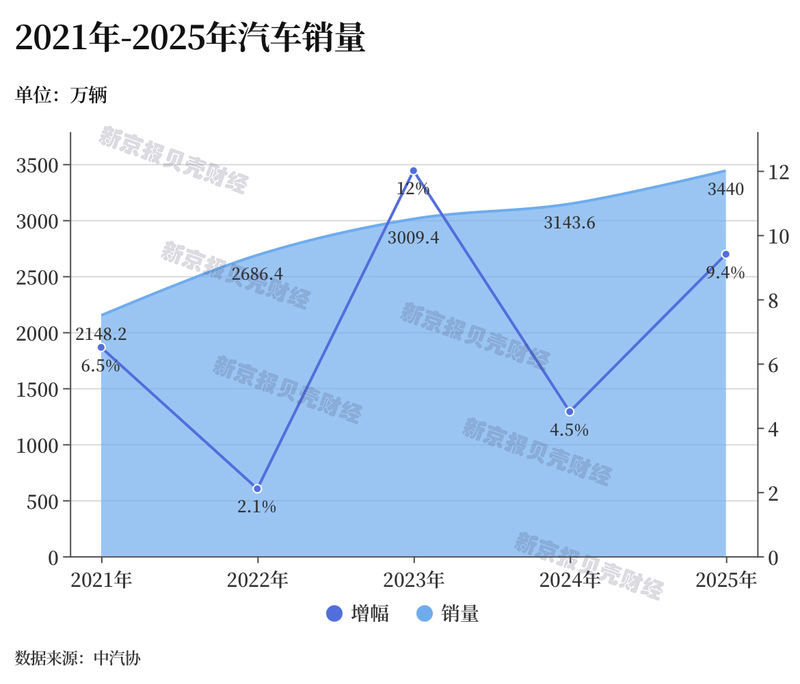
Core Insights - In 2025, China's automotive production and sales exceeded 34 million units, marking the third consecutive year above 30 million and maintaining its position as the world's largest automotive market for 17 years [1][3] - The automotive industry in China has achieved significant milestones, including a revenue surpassing 10 trillion yuan and becoming the world's largest exporter of vehicles, driven by high-quality transformation and the rise of domestic brands in the electric vehicle sector [1][5] - The forecast for 2026 suggests a stable automotive market with total sales expected to reach 34.75 million units, supported by favorable policies and consumer demand [1][13] Production and Sales Performance - In 2025, total automotive production reached 34.53 million units, with sales at 34.40 million units, reflecting year-on-year growth of 10.4% and 9.4% respectively [3] - Passenger vehicle production and sales surpassed 30 million units for the first time, reaching 30.27 million and 30.10 million units, with year-on-year increases of 10.2% and 9.2% [3][4] - The commercial vehicle market also rebounded, achieving over 4 million units in production and sales, with exports exceeding 1 million units for the first time [4] New Energy Vehicles (NEVs) - NEV production reached 16.62 million units in 2025, with sales at 16.49 million units, marking year-on-year growth of 29% and 28.2% respectively [5][8] - NEVs accounted for 47.9% of total new car sales, with domestic sales of NEV passenger vehicles reaching 54% [5] - The growth of NEVs is attributed to favorable policies, abundant supply, and improved infrastructure, alongside advancements in core technologies [8] Export Performance - In 2025, China's automotive exports reached 7.098 million units, a year-on-year increase of 21.1% [10] - NEV exports also saw significant growth, reaching 2.615 million units, doubling from the previous year [10] Future Outlook - The automotive market is expected to continue its positive trajectory in 2026, with total sales projected at 34.75 million units, a 1% increase from 2025 [13] - The passenger vehicle market is anticipated to grow by 0.5%, while the commercial vehicle market is expected to see a 4.7% increase [13] - The NEV market is forecasted to reach 19 million units in sales, reflecting a 15.2% growth [13] - The automotive industry is facing a competitive landscape, with a shift towards AI integration and smart driving technologies, indicating a potential consolidation among leading suppliers [14]
2025年我国汽车产销量再创新高
Zhong Guo Jing Ji Wang· 2026-01-14 13:56
中国汽车工业协会发布最新数据显示,2025年,我国汽车产销量均突破3400万辆,再创历史新高。新能 源汽车产销量均超1600万辆,新能源汽车国内新车销量占比突破50%。 2025年,我国汽车产销量分别为3453.1万辆和3440万辆,同比分别增长10.4%和9.4%,连续17年稳居全 球第一。新动能加快释放,新能源汽车产销分别完成1662.6万辆和1649万辆,同比分别增长29%和 28.2%,连续11年位居全球第一。 "我国汽车行业继续展现出强大的发展韧性和活力,多项指标再创新高。"中国汽车工业协会副秘书长陈 士华表示,"十四五"期间,我国汽车行业取得多方面突破,产销量连续三年保持3000万辆以上规模,营 业收入突破10万亿元,电动化与智能化、网联化加速融合,形成产业领先优势。 2025年,我国"两新"政策加力扩围,企业新品密集上市,汽车市场终端需求持续释放,2025年汽车产销 量实现超预期增长。2026年,"两新"政策平稳有序衔接。近日9部门联合印发的《关于实施绿色消费推 进行动的通知》,将加快发展方式和消费模式绿色转型,提振汽车消费。陈士华表示,2026年,中国汽 车产业将持续推进高质量发展,整体市场保 ...
外贸一线观察丨向新向优、更加多元!2025年我国外贸进出口特点显著
Xin Lang Cai Jing· 2026-01-14 13:25
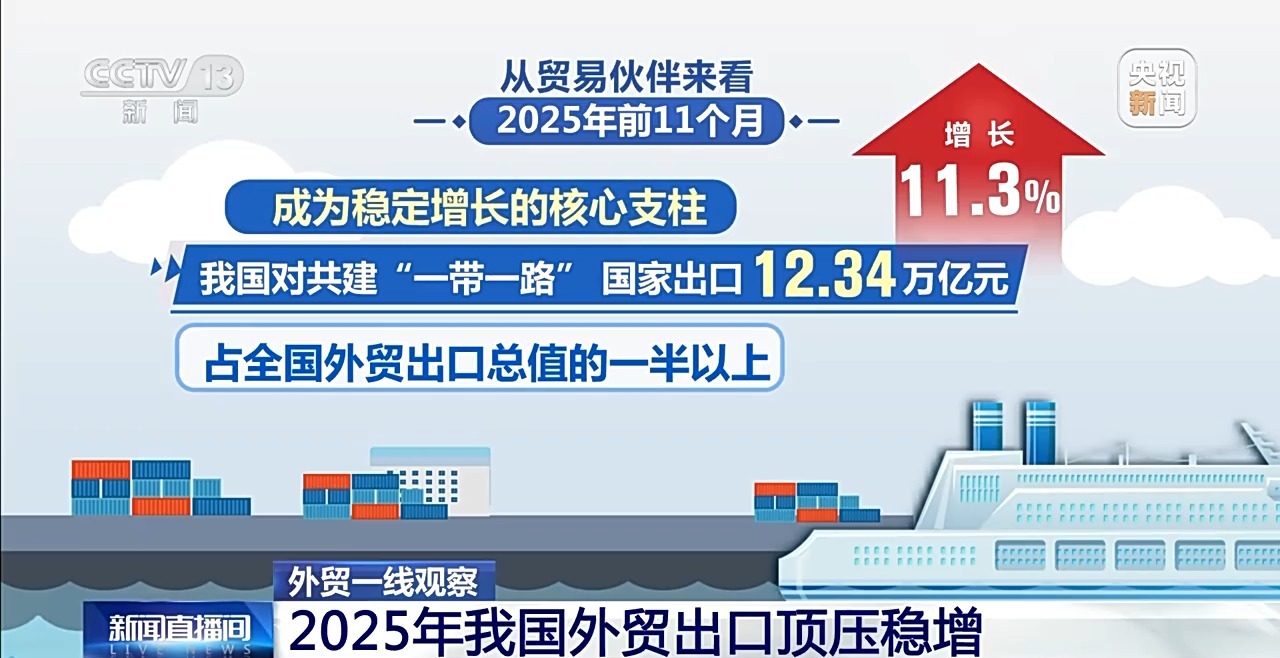
Core Viewpoint - China's exports demonstrated "resilient growth, structural optimization, and dynamic transformation" in 2025, with a notable trend of "stability followed by an increase" in export performance [1] Export Performance - In 2025, China's exports showed steady growth with only a decline in October, while December recorded the highest growth rate for the same period [1] - ASEAN emerged as China's largest trading partner, with exports reaching 4.29 trillion yuan, an increase of 14.6%. The EU followed as the second-largest market, with exports of 3.64 trillion yuan, growing by 8.9% [1] - Exports to Belt and Road Initiative countries totaled 12.34 trillion yuan, marking an 11.3% increase and accounting for over half of the national export value [1] Market Diversification - A significant factor in the unexpected resilience of China's exports is the shift from reliance on the US and Europe to a more balanced global market, particularly with strong trade growth in the "Global South" [3] Export Structure - The export structure is increasingly focused on high-tech and high-value products, with electromechanical products dominating at 60.9% of total exports. Notably, integrated circuits have seen over 20% growth for eight consecutive months, and exports of electric vehicles, lithium batteries, and photovoltaic products have collectively increased by over 20% [7] - The growth of general trade exports outpaced processing trade by more than 5 percentage points, indicating enhanced self-sufficiency in the industrial chain [10] Import Trends - In 2025, the import structure showed a clear trend of optimization, with high-tech and high-value products seeing significant growth. Key imports included integrated circuits, semiconductor manufacturing equipment, and precision instruments, reflecting the acceleration of domestic manufacturing technology upgrades [10] - Resource imports remained stable, with consistent imports of crude oil and iron ore, while there was a noticeable upgrade in consumer goods imports, including high-quality food and health products [10] Trade Efficiency - The implementation of customs facilitation reforms, including the full coverage of the "International Trade Single Window" and the optimization of cross-border logistics systems, has significantly improved trade efficiency [16] Market Demand - The stabilization and improvement of imports indicate a steady domestic market demand, contributing to a more seamless domestic and international dual circulation [18]
一汽解放:公司会加快技术转化,全力推动经营业绩改善
Zheng Quan Ri Bao Zhi Sheng· 2026-01-14 13:09
(编辑 楚丽君) 证券日报网讯 1月14日,一汽解放在互动平台回答投资者提问时表示,公司研发聚焦提升产品竞争力, 同时聚焦于新能源、智能化等转型关键领域,费用支出严格按制度管控。商用车转型需长期技术积累, 研发投入正是为未来筑牢核心竞争力,公司会加快技术转化,全力推动经营业绩改善。 ...

突破3400万辆!2025年我国汽车产销量再创历史新高
Yang Guang Wang· 2026-01-14 11:20
Core Insights - The Chinese automotive industry is projected to achieve record production and sales of over 34 million units in 2025, maintaining its position as the world's largest market for 17 consecutive years [1][2] - New energy vehicles (NEVs) are expected to account for over 50% of domestic new car sales, solidifying their status as the dominant force in the market [1][2] Industry Performance - In 2025, the total production and sales of automobiles reached 34.53 million and 34.40 million units respectively, marking a historical high [2] - The passenger vehicle market showed steady growth, while the commercial vehicle market rebounded with over 10% growth, surpassing 4 million units [2] - NEV production and sales exceeded 16 million units, with exports reaching over 7 million units, including 2.615 million NEVs [2] Globalization and Innovation - The Chinese automotive industry is experiencing a new phase of globalization, with increased export volumes and deeper international cooperation [2][3] - A German luxury car brand has established a research center in China and is collaborating with local tech companies to develop advanced in-car information systems [3] - China's automotive sector is becoming a hub for global automotive innovation, with NEVs contributing over one-third of export volumes [3][4] Technological Advancements - The industry has seen significant breakthroughs in technology, including the approval of L3 autonomous driving models and advancements in hydrogen vehicles and solid-state batteries [4] - The integration of artificial intelligence in driving automation and cabin intelligence is expected to deepen, with increased penetration of L2 and L3 driving assistance features [4] Market Dynamics and Policies - The automotive market's consumption vitality has been enhanced through policy guidance, with over 11.5 million vehicles traded in under the old-for-new program, generating over 1.6 trillion yuan in new car sales [4][5] - The potential for vehicle upgrades remains high, with over 47 million old passenger vehicles eligible for replacement, indicating significant market activation potential [5] - The automotive market is projected to reach total sales of 34.75 million units in 2026, with NEV sales expected to grow by 15.2% to 19 million units [5]