中国资产价值重估

Search documents
杨东、赵军、董承非、冯柳……持仓揭秘!
天天基金网· 2025-08-26 06:11
Core Viewpoint - The article highlights the recent adjustments made by well-known private equity fund managers, indicating a strong interest in sectors such as electronics, pharmaceuticals, and public utilities, suggesting a potential upward trend in the market driven by both liquidity and fundamental factors [3][11][14]. Summary by Sections Private Equity Fund Movements - As of August 22, over 60 listed companies have seen investments from billion-level private equity funds, with a total holding value exceeding 26 billion yuan, including 13 new investments and 13 increased holdings [3][11]. - Notable fund managers have shown interest in electronic and pharmaceutical sectors, with specific examples including Ningquan Asset increasing its stake in Zhouming Technology and Zhao Jun's firm maintaining its position in Shengyi Technology [3][5][7]. Performance of Specific Companies - Zhouming Technology reported a revenue of 3.658 billion yuan for the first half of the year, a year-on-year increase of 7.38%, and a net profit of 121 million yuan, up 20.61% [7]. - Yang Dong's Ningquan Asset held 8.113 million shares of Zhouming Technology by the end of Q2, with a market value close to 60 million yuan [5][7]. - Yang Dong's firm also entered the top ten shareholders of Tianhao Energy, holding 14.557 million shares valued at 73.657 million yuan [9]. Sector Preferences - The article notes that the electronics and pharmaceuticals sectors are favored by private equity funds, with 21 funds appearing in the top ten shareholders of 61 A-share companies, holding a total value of 26.068 billion yuan [11]. - High-profile funds have made significant moves in the pharmaceutical sector, with examples including the acquisition of shares in Taiji Group and Mengke Pharmaceutical, indicating a strong belief in the growth potential of these companies [11][12]. Market Outlook - The market is perceived to be in the early stages of a trend-driven upward movement, with expectations that fundamental factors will take over from liquidity-driven growth [14]. - Investment strategies are focusing on technology growth areas such as robotics and AI applications, as well as sectors benefiting from domestic demand recovery and structural opportunities [14].


看好资金面与基本面双重驱动百亿级私募仓位重回八成以上
Shang Hai Zheng Quan Bao· 2025-08-24 15:36
Group 1 - The core viewpoint is that the market is experiencing a trend-driven upward phase, supported by both liquidity and fundamental factors, with a focus on companies representing economic transformation [4] - As of August 15, the stock private equity position index reached 74.86%, marking a continuous increase over two weeks, with 54.8% of private equity firms fully invested [2] - Billion-level private equity firms have shown significant buying activity, with their position index rising to 82.29%, the highest weekly increase this year, and 61.97% of these firms are fully invested [3] Group 2 - The optimistic market outlook is driving billion-level private equity firms to increase their positions, with expectations of a recovery in corporate performance and a stable domestic demand [4] - Two trends are expected to support the sustainability of market trends: a low-interest-rate environment encouraging risk appetite and a shift in household balance sheets towards equity investments [5][6] - Key sectors for private equity investment include technology, innovative pharmaceuticals, and new consumption, with a focus on companies benefiting from the "anti-involution" policy [7][8]
A股总市值突破100万亿大关,上证指数创10年新高,有一点很反常
Sou Hu Cai Jing· 2025-08-22 09:18
Group 1 - The A-share market has reached a significant milestone, with the Shanghai Composite Index surpassing 3731.69 points, marking a ten-year high and the total market capitalization exceeding 100 trillion yuan for the first time [2][3][6] - Unlike previous surges, this increase is not supported by Federal Reserve interest rate cuts, and global liquidity is not flowing from the U.S. [2][3] - There is a notable absence of exuberance in market sentiment, with seasoned investors and analysts cautioning about potential risks despite the market rally [3][4] Group 2 - The phenomenon of a "silent liquidity revolution" is emerging, with discussions around a potential mass migration of deposits as excess savings of 60 trillion yuan are being released into the market [6][16] - The capital market is seen as the primary outlet for these excess savings, especially as state-owned banks' deposit rates have fallen into the "zero era" [6][16] - The shift in capital dynamics is highlighted by the increasing proportion of technology companies among billion-dollar market cap firms, rising from 12% to 27% over the past decade [9][16] Group 3 - The U.S. has historically held pricing power over global risk and non-risk assets, but recent developments indicate a shift in this dynamic, with Chinese companies potentially facing less pressure from U.S. financial restrictions [9][11] - The Chinese capital market is experiencing a transformation, with significant investments in innovation and technology, as evidenced by a projected 1.88 trillion yuan in R&D spending in 2024 [12][16] - The new policies and tools introduced, such as stock buyback financing and support for unprofitable tech firms, are designed to create a more favorable environment for growth and investment [14][16]

全球PE巨头KKR首支人民币基金落地 外资加码中国资产重估潮
Xin Lang Zheng Quan· 2025-08-22 06:32
Group 1 - KKR's first onshore RMB fund, with a scale of approximately 400 million RMB, has been officially registered in Shanghai's Lingang New Area, marking a significant milestone in China's capital market opening [1][2] - The fund's structure highlights the importance of local capital, with Ping An Capital contributing 79.8% of the funding, indicating a strategic collaboration between foreign and domestic institutions [2][3] - The establishment of this fund reflects KKR's deep localization strategy and the evolving landscape of foreign investment in China's financial market [2][6] Group 2 - The launch of KKR's RMB fund coincides with a critical moment for the revaluation of Chinese assets, as the total market capitalization of A-shares surpassed 100 trillion RMB for the first time on August 18, 2025 [4] - There is a notable shift in international capital's attitude towards investing in China, with foreign LPs increasingly seeking opportunities in Chinese technology companies [4][5] - The regulatory environment is becoming more favorable for foreign investments, as policies are being implemented to facilitate cross-border investments and mergers [4][5] Group 3 - KKR's investment strategy in China is becoming more precise, focusing on mature industries with stable competitive landscapes and high pricing power [6][7] - Despite a decrease in the number and amount of investments in recent years, KKR believes that there are more merger and acquisition opportunities now than in the past [6][7] - KKR's global investment focus is shifting towards tangible assets, with infrastructure assets being highlighted as a resilient investment option in various economic conditions [6][7]

印花税暴增125%!神秘资金狂买中国资产,周三行情稳了?
Sou Hu Cai Jing· 2025-08-21 05:03
Group 1 - The Chinese stock market experienced a dramatic reversal on August 19, 2025, with the Nasdaq Golden Dragon China Index initially dropping 2.3% before recovering to close up 0.9% [1] - JD.com saw its stock price rebound from a 4% decline to a 1.2% increase, while Li Auto's stock surged 7% within 15 minutes, showcasing strong buying interest [1] - The market's recovery was notable, as it marked a rare "V-shaped" reversal in recent trading history, attracting global attention [1] Group 2 - A significant policy meeting was held by China's Ministry of Industry and Information Technology, targeting the photovoltaic industry to address rampant competition and price dumping [2] - The meeting announced three key regulations: strict control on capacity expansion, penalties for below-cost pricing, and crackdown on quality fraud [2] - Following the announcement, JinkoSolar's stock rose 5%, indicating positive market sentiment towards the photovoltaic sector [2] Group 3 - In July 2025, China's securities transaction stamp duty reached 15.1 billion yuan, a 125% increase year-on-year, reflecting the vibrant activity in the capital market [4] - The A-share market saw daily trading volumes exceed 2 trillion yuan for four consecutive days, with a peak of 2.35 trillion yuan on August 14, 2025 [4] - The surge in trading volume has led to a significant inflow of funds into the consumer sector, with leading stocks like Kweichow Moutai and Wuliangye seeing substantial gains [4] Group 4 - The photovoltaic sector is expected to benefit from the new policies, particularly in the silicon wafer segment, where prices have fallen below many companies' cost lines [5] - If effective measures are implemented to curb low-price dumping, leading manufacturers could see a gross margin increase of over 5 percentage points [5] - The brokerage industry is poised for growth, with increased trading volumes translating to higher revenues, as evidenced by a 60% increase in A-share trading compared to the first quarter [6] Group 5 - Despite a slight decline in the Shanghai Composite Index, the market demonstrated resilience with only about 1,100 stocks declining and 63 stocks hitting the daily limit up [8] - The trading volume remained robust at 2.02 trillion yuan, marking the fourth consecutive day above the 2 trillion yuan threshold [8] - Northbound capital showed signs of confidence, with a late-session inflow of 1.5 billion yuan, indicating foreign investors' positive outlook on Chinese assets [8] Group 6 - The series of events, including the reversal of Chinese stocks, the introduction of supportive domestic policies, and sustained high trading volumes, suggests a new round of value reassessment for Chinese assets [10] - This trend serves as a strong testament to the resilience of the Chinese economy and positively boosts global investor confidence [10]


证券交易印花税增长背后的积极信号
Zheng Quan Ri Bao· 2025-08-20 17:07
Group 1 - The core viewpoint of the articles highlights the significant growth in securities transaction stamp duty, which reached 93.6 billion yuan in the first seven months of the year, reflecting a year-on-year increase of 62.5% [1][2] - In July alone, the securities transaction stamp duty amounted to 15.1 billion yuan, showing a month-on-month increase of 29% and a year-on-year increase of 125% [1] - The increase in stamp duty indicates a recovery in investor confidence and a more active capital market, as evidenced by the new A-share accounts reaching 1.9636 million in July, a year-on-year increase of over 70% and a month-on-month increase of over 19% [1][2] Group 2 - The growth in securities transaction stamp duty also reflects the ongoing optimization of the capital market ecosystem, with reforms enhancing market transparency and fairness, thereby increasing investor trust [2] - The stable growth of stamp duty is seen as a sign of the capital market's resilience, allowing it to recover quickly from external shocks [2] - The rise in stamp duty is further attributed to the increasing focus on high-tech enterprises in the A-share market, with over 90% of new listings in 2024 being high-tech companies, driving asset value reassessment in China [2]
3600点往后看,未来会有哪些造成亏损的风险
雪球· 2025-08-16 05:15
Core Viewpoint - The market is currently in a phase of consolidation around 3600 points, with a generally optimistic sentiment among investors, as indicated by trading volumes. There are no systemic risk signals present, and the dual logic of "Chinese asset value reassessment + improvement in listed company quality" is just entering its mid-stage, suggesting that opportunities outweigh risks significantly [5]. Group 1: Investment Behavior Insights - The tendency to chase hot stocks is a major pitfall for investors, often leading to impulsive decisions that disregard initial investment logic and value considerations [8][10]. - Pyramid-style averaging down during market fluctuations can increase costs and reduce risk tolerance, as investors often hesitate to buy at lower prices and instead invest more when prices are high [12][15]. - Frequent short-term trading without a solid rationale leads to high transaction costs and missed opportunities, ultimately draining investor confidence and energy [17][19]. Group 2: Market Conditions and Opportunities - Current economic conditions, including currency depreciation and mild inflation expectations, present a favorable environment for the "Chinese asset value reassessment + improvement in listed company quality" strategy, especially in light of ongoing deflationary concerns [20]. - The long-term view remains positive, with the dual logic of asset reassessment and quality improvement still on track, emphasizing the importance of maintaining confidence and correcting poor investment habits [21].

牛市中,千万不要犯这些错误!
雪球· 2025-08-14 07:52
Core Viewpoint - The market is currently in a phase of consolidation around the 3600 level, with a generally optimistic outlook among investors, as indicated by high trading volumes. There are no systemic risk signals present, and the dual logic of "Chinese asset value reassessment + improvement in listed company quality" is just entering its mid-stage, suggesting that opportunities outweigh risks significantly [4]. Group 1: Investment Strategies - Avoiding the practice of chasing hot stocks is crucial, as it often leads to impulsive decisions that disregard initial investment logic and value considerations [7][8]. - The pyramid-style averaging down strategy is highlighted as a common pitfall, where investors tend to add funds at high market levels, increasing their cost basis and reducing risk tolerance [10][12]. - Frequent short-term trading without a solid rationale can lead to high transaction costs and missed opportunities, ultimately draining investor confidence and energy [14][15]. Group 2: Market Conditions - The current economic environment is characterized by concerns over deflation, but historically, currency devaluation and mild inflation have been the prevailing trends. This context suggests that reasonably priced assets may serve as effective hedges against mild inflation in the future [16]. - The ongoing debate around the 3600 point level emphasizes the need for investors to maintain confidence in the long-term potential of the "Chinese asset value reassessment + improvement in listed company quality" narrative while correcting poor investment habits [16].

全球资金加仓中国
2 1 Shi Ji Jing Ji Bao Dao· 2025-08-01 06:48
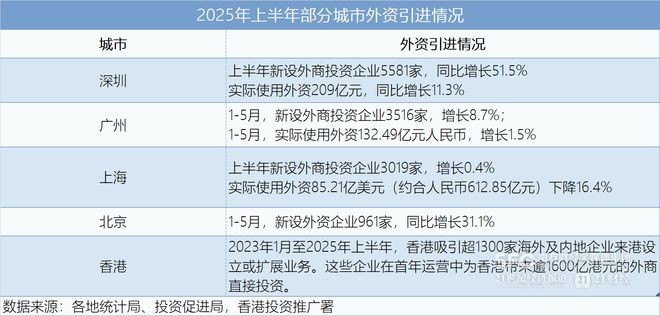
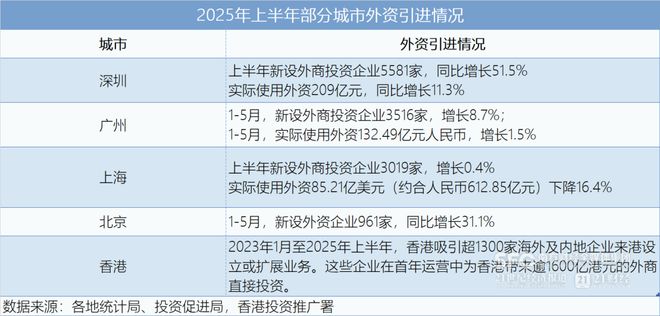
Group 1 - Foreign investment in China is increasing, with 30,014 new foreign-invested enterprises established in the first half of the year, a year-on-year growth of 11.7%, and actual foreign capital utilization amounting to 423.23 billion yuan [1] - Shenzhen leads major cities in China with 5,581 new foreign-invested enterprises established in the first half of the year, reflecting a 51.5% increase, and actual foreign capital utilization reaching 20.9 billion yuan, up 11.3% [3][8] - The service industry is experiencing accelerated opening, with telecommunications and healthcare becoming new hotspots for foreign investment, as evidenced by a significant increase in new foreign-invested enterprises in these sectors [2][16] Group 2 - High-tech industries are attracting substantial foreign investment, with actual foreign capital in high-tech manufacturing in Shenzhen increasing by 122.2% [8] - Major multinational corporations like Siemens and Valeo are making significant investments in China, indicating a positive outlook for the healthcare and automotive sectors [5][6] - The trend of foreign investment is shifting towards high-value-added sectors, with a notable decline in traditional manufacturing investments [6][11] Group 3 - The opening of the telecommunications and healthcare sectors is part of a broader strategy to enhance foreign investment opportunities, with over 2,600 foreign-invested telecommunications enterprises established nationwide [16][17] - The establishment of foreign-owned hospitals is expected to alleviate pressure on public healthcare systems and enhance the quality of medical services available to citizens [18] - The investment landscape in China is evolving, with a focus on innovation and technology, as highlighted by the establishment of international innovation centers and partnerships with foreign firms [14][17]
全球资金加仓中国 深圳抓住这一机遇
2 1 Shi Ji Jing Ji Bao Dao· 2025-08-01 03:59
Core Insights - Global capital is rebalancing, with foreign investment in China increasing significantly, as evidenced by the establishment of 30,014 new foreign-invested enterprises in the first half of the year, a year-on-year increase of 11.7% [1] - Shenzhen leads major cities in China with 5,581 new foreign-invested enterprises established in the first half of the year, reflecting a growth of 51.5% [2] - The service sector is experiencing accelerated opening, with telecommunications and healthcare becoming new hotspots for foreign investment, as seen by a 60% increase in new foreign-invested telecommunications enterprises and an 85.2% increase in healthcare enterprises in Shenzhen [1][13] Foreign Investment Trends - In the first half of the year, Shenzhen attracted 209 billion yuan in actual foreign investment, marking an 11.3% increase [1][6] - High-tech industries accounted for 35.2% of Shenzhen's actual foreign investment, with high-tech manufacturing seeing a remarkable increase of 122.2% [6] - Major multinational corporations like Siemens and Valeo are increasing their investments in China, signaling confidence in the market despite previous downturns in the medical equipment sector [3][4] Regional Preferences - Foreign investment is showing regional preferences, with Shanghai, Beijing, and Guangzhou also reporting significant foreign investment activity, albeit with different focuses based on their unique industrial strengths [8][9] - Beijing is attracting foreign investment in research and development, particularly in the pharmaceutical sector, with significant investments from companies like AstraZeneca [8] - Shanghai is positioning itself as a hub for multinational corporate headquarters and R&D centers, with over 1,042 regional headquarters established [9] Emerging Sectors - The telecommunications and healthcare sectors are emerging as key areas for foreign investment, driven by recent policy changes aimed at expanding service sector openness [12] - The number of foreign-invested telecommunications enterprises in China has grown by 27% year-on-year, with Shenzhen being a significant contributor [12] - The establishment of foreign-owned hospitals is expected to enhance the healthcare service landscape in China, providing high-quality medical resources and alleviating pressure on public hospitals [13]