
产业链垂直整合

Search documents
碳酸锂暴跌80%行业至暗时刻 金晟新能谋“一体化”破局
Zhi Tong Cai Jing· 2025-09-12 00:33
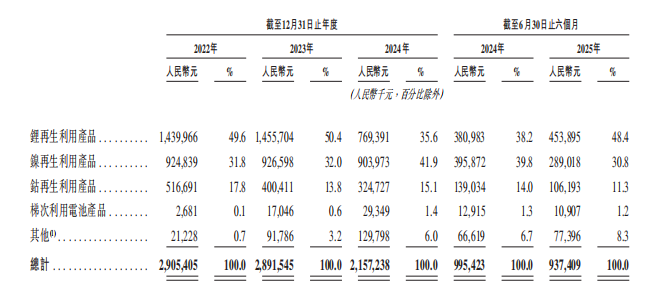
Core Viewpoint - Guangdong Jingsheng New Energy Co., Ltd. (Jingsheng New Energy) has refiled its listing application on the Hong Kong Stock Exchange amid a challenging period for the lithium battery industry, characterized by price declines and increased competition, while the company aims to leverage its resource recycling technology to tell a new story in the capital market [1][2]. Company Overview - Jingsheng New Energy is a leading global provider of lithium battery recycling and regeneration solutions, recognized as the second-largest in the world by revenue from recycling sales in 2024, and the largest third-party service provider in this sector [2]. - The company's recycling business covers mainstream battery systems, including ternary lithium batteries and lithium iron phosphate batteries, with products widely used in electric vehicles, energy storage systems, and consumer electronics [2]. Financial Performance - The company has reported cumulative losses exceeding 1 billion RMB over the past three and a half years, with a significant revenue drop of 56.5% year-on-year in the first half of 2025 [2][3]. - Revenue figures for the years 2022 to 2025 show a decline from approximately 2.905 billion RMB in 2022 to 937 million RMB in the first half of 2025, with net profits fluctuating from a profit of 151 million RMB in 2022 to a loss of 144 million RMB in the first half of 2025 [3][4]. Market Dynamics - The lithium battery metal market has experienced extreme volatility, with lithium carbonate prices plummeting over 80% from a peak of 426,900 RMB per ton in 2022 to 80,100 RMB per ton in 2024, further dropping to a historical low of 62,300 RMB per ton in the first half of 2025 [5][6]. - Despite these challenges, the company achieved a positive gross margin in the first half of 2025, attributed to both market improvements and internal operational efficiencies [5][6]. Strategic Initiatives - Jingsheng New Energy is pursuing an aggressive vertical integration strategy, aiming to strengthen upstream black powder production and extend downstream into cathode material manufacturing, thereby creating a closed-loop industry chain from recycling to regeneration [7][8]. - The company plans to enhance its processing capacity for retired batteries and expand its black powder production to reduce reliance on external suppliers and control costs [7]. Risks and Challenges - The company faces execution risks in its strategy, including technological barriers in transitioning from recycling to cathode material production and potential financial strain from capital expenditures amid tight cash flow [9]. - Customer concentration is a significant concern, with the top five customers accounting for 67.3% of revenue in the first half of 2025, raising the risk of operational instability if any major customer defaults or delays payments [9][10]. Conclusion - The company has shown resilience with a positive gross margin in the first half of 2025, but the focus remains on how well it can navigate the cyclical pressures of commodity prices while maintaining operational stability and growth in the resource recycling narrative [11].

“不要内卷,要联合”!中微公司董事长重磅发声:芯片设备业存在15种内卷形式,产业链过分垂直整合带来不公平竞争
Mei Ri Jing Ji Xin Wen· 2025-09-05 05:51
Core Viewpoint - The semiconductor equipment industry faces ten major challenges, including severe competition and various forms of industry "involution" as highlighted by the chairman of Zhongwei Company, Yin Zhiyao [1][2]. Group 1: Industry Challenges - The semiconductor micro-processing equipment industry is experiencing significant challenges, including unfair competition and the negative impacts of vertical integration attempts by some companies [1][3]. - Yin Zhiyao identified 15 manifestations of industry involution, such as unfair terms between equipment manufacturers and component suppliers, and the use of media to undermine competitors [1]. Group 2: Vertical Integration Issues - Vertical integration in the semiconductor industry leads to unfair competition, as manufacturers may leak proprietary knowledge to equipment suppliers during collaboration [3][4]. - Historical attempts by some chip manufacturers to engage in equipment production have largely failed, reinforcing the need for separation between manufacturing and equipment supply [4]. Group 3: Domestic Equipment Development - The domestic semiconductor equipment industry has made progress in localization, with the highest domestic production rate of 90% for de-bonding equipment, while other segments like thermal treatment and etching equipment have around 20% localization [5]. - The development of semiconductor equipment requires substantial funding, often exceeding the sale price of the equipment by multiples, which poses a barrier to further localization [5][6]. Group 4: Collaboration and Innovation - To reduce internal competition and promote healthy development in the semiconductor equipment industry, collaboration between smaller and larger companies is encouraged [6]. - Zhongwei Company showcased six new semiconductor equipment products at the recent exhibition, demonstrating its technological capabilities in critical processes such as plasma etching and atomic layer deposition [6].


零跑汽车15亿电池包项目完工
鑫椤锂电· 2025-09-03 02:49
Group 1 - The core viewpoint of the article highlights the completion of the main engineering work for the Zhejiang Huzhou Wuxing Donglin Leap Motor New Energy Battery Pack Project, which covers an area of approximately 178 acres with a planned total investment of 1.5 billion yuan [1] - The project is expected to achieve an annual production capacity of 384,000 sets of vehicle batteries and 720,000 sets of power supplies upon full production [2] - Leap Motor has strengthened its vertical integration capabilities in the supply chain by establishing Zhongling New Energy Technology (Zhejiang) Co., Ltd., with a registered capital of 1 billion yuan, focusing on battery manufacturing and related services [2]

押宝自有品牌 宠物企业寻觅增量
Bei Jing Shang Bao· 2025-09-01 16:31
Core Insights - The pet industry is witnessing a clear capital landscape as the mid-year financial reporting season concludes, characterized by leading companies maintaining their positions, accelerated expansion in niche markets, and deepening global layouts [1] - Most companies have achieved varying degrees of revenue growth, while a few face performance pressures due to single business models, reflecting rapid domestic market expansion, the rise of private brands, and product structure optimization [1] Revenue Growth - Yuanfei Pet leads with a 45.52% year-on-year revenue growth, totaling 791 million yuan, driven by a 64.63% increase in pet snacks and a 55.39% rise in pet food [2] - Guobao Pet reported a total revenue of 3.22 billion yuan, up 32.72%, with a net profit of 378 million yuan, a 22.55% increase, primarily from domestic private brand contributions [2] - Zhongchong Co. achieved a revenue of 2.432 billion yuan, a 24.32% increase, with a net profit of 203 million yuan, reflecting strong cost control [2] - Tianjin Langnuo's revenue reached 138 million yuan, up 21.16%, with cat food sales driving growth [3] - Jianhe Group's pet nutrition and care products generated 1.08 billion yuan, an 8.6% increase, with high-end supplements growing by 14.3% [3] - Peti Co. is one of the few companies experiencing revenue decline, with a total revenue of 727 million yuan, down 13.94% [3] Strategic Investments - Companies are increasingly investing in global capacity layout, supply chain extension, private brand development, and digital transformation, which are expected to provide long-term competitive advantages [4] - Zhongchong Co. has established a factory in Mexico, becoming the first Chinese pet food company to do so, aiming to create a responsive global supply chain [4] - Yiyi Co. has also made progress in overseas capacity layout with a factory in Cambodia, producing nearly 300 million pet pads annually [4] - Ruipuhua is focusing on building a supply chain network with 13 regional companies covering 13,000 clients, including 8,400 pet hospitals and 3,500 pet stores [5] Brand Development - The establishment of factories is accelerating the development of private brands, with companies like Yuanfei Pet and Jianhe Group increasing investments in brand building to enhance product value and consumer loyalty [6] - Yuanfei Pet is expanding its domestic market presence through its own brands and distribution of international brands, creating a comprehensive product matrix [5][6] Market Outlook - The pet industry is optimistic about the second half of the year, with companies planning to focus on product innovation, market expansion, and supply chain optimization [7] - Ruipuhua plans to launch new products such as cat interferon and probiotics, while Haizheng Dongbao will expand into innovative and non-pharmaceutical areas [7] - Companies like Yuanfei Pet and Zhongchong Co. are aiming to balance domestic and international market structures through strategic expansions [7][8]
云意电气:公司上半年智能雨刮系统毛利率提升明显的主要原因
Zheng Quan Ri Bao Wang· 2025-08-29 12:09
Core Viewpoint - The company reported a significant improvement in the gross margin of its intelligent wiper system in the first half of the year, attributed to enhanced vertical integration and cost reduction strategies [1] Group 1: Gross Margin Improvement - The gross margin of the intelligent wiper system increased notably due to continuous strengthening of vertical integration within the supply chain [1] - The self-manufacturing rate has further increased, reducing reliance on external suppliers and associated costs [1] Group 2: Procurement and Cost Management - Systematic optimization of the bidding and procurement process has improved the company's bargaining power with upstream suppliers [1] - The establishment of a dynamic monitoring mechanism for raw material prices allows the company to adjust procurement cycles and volumes flexibly based on market conditions [1] Group 3: Production Efficiency - The company has fully implemented lean production practices, resulting in enhanced labor efficiency and cost reduction [1]

6个月狂揽830亿,龙岩老板杀入半导体
芯世相· 2025-08-16 01:04
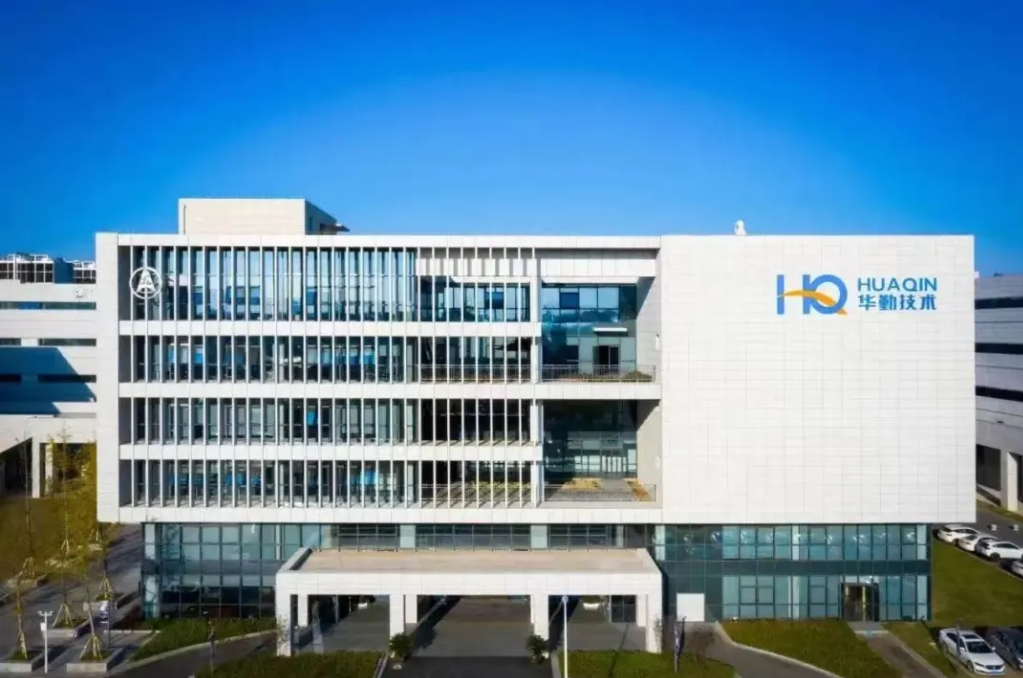
Core Viewpoint - The article discusses the strategic moves of Huakin Technology, led by Qiu Wensheng, as it seeks to diversify from its core ODM business into semiconductor wafer manufacturing and other high-margin sectors, aiming for significant revenue growth in the coming years [5][10]. Group 1: Strategic Expansion - Huakin Technology plans to acquire a 6% stake in Crystal Integrated, marking its first foray into semiconductor wafer manufacturing with a cash investment of 2.4 billion yuan [5][14]. - The company aims to enhance its vertical integration capabilities and explore long-term collaboration opportunities with Crystal Integrated, which is the third-largest wafer foundry in China [15][14]. - Qiu Wensheng has been actively pursuing acquisitions to extend Huakin's reach into the upstream supply chain, with a focus on high-margin sectors such as automotive electronics and robotics [13][18]. Group 2: Financial Performance - Huakin's revenue for the first half of 2024 is projected to exceed 83 billion yuan, reflecting a year-on-year growth of over 110%, driven by high-performance computing and AIoT products [11][28]. - The company's revenue from automotive-related products is expected to grow by 91%, although it currently represents only 1.5% of total revenue [21][28]. - Despite significant revenue growth, Huakin's net profit margin remains low, around 2%, indicating challenges in profitability [29][30]. Group 3: R&D and Product Development - Huakin plans to invest over 9.7 billion yuan in R&D from 2023 to 2024, aiming to enhance its technological capabilities and product offerings [31][32]. - The company has successfully expanded its AIoT product line, achieving a fivefold increase in scale over two years, with a focus on high-margin products [32][34]. - Huakin's automotive and AIoT products have a gross margin of approximately 20%, significantly higher than its traditional business lines [34]. Group 4: Future Goals - Qiu Wensheng envisions achieving a fivefold revenue increase over the next decade, targeting 500 billion yuan by 2034, supported by a "3+N+3" business development strategy [39][41]. - The strategy includes consolidating traditional businesses while expanding into new product categories and growth areas such as automotive electronics and robotics [41][43]. - Huakin has established a global footprint with multiple R&D and manufacturing centers, aiming for a balanced production capacity between domestic and overseas facilities [41][43].
打磨管道、规划行动、产线配送……国产机器人不断向实用“进化”
Ke Ji Ri Bao· 2025-08-10 23:39
Group 1: Industry Overview - The 2025 SIA Shanghai International Smart Factory Exhibition showcased over 1,000 companies presenting various collaborative robots and intelligent control systems, emphasizing the shift from traditional manufacturing to intelligent manufacturing [1] - China has become the world's largest robot producer, with industrial robot production increasing from 33,000 units in 2015 to 556,000 units in 2024, maintaining the largest industrial robot market for 12 consecutive years [2] - The integration of AI technology into industrial robots is a significant trend, enabling them to autonomously perceive, analyze, and make decisions in complex environments [2] Group 2: Technological Advancements - The intelligent pipeline polishing robot developed by Shanghai ZaiKe Intelligent Technology Co., Ltd. can operate in confined spaces, improving work efficiency by over 10 times compared to manual labor [2] - The smart composite robot from Foshan Zhiqing Technology Co., Ltd. features a dual-brain architecture for precise and smooth operations, capable of working in temperatures from 0°C to 50°C with a positioning accuracy of ±0.05 mm [3] - Electric grippers, which are essential for automation, currently have a low market penetration of only 6% in China, indicating significant growth potential [4][5] Group 3: Vertical Integration and Collaboration - Companies are pursuing vertical integration across the entire value chain to provide customized services for industries such as power batteries, automotive, electronics, and semiconductors [4] - A collaboration between Yikaida Technology (Shanghai) Co., Ltd. and Huayan Robotics (Jiangsu) Co., Ltd. has led to standardized solutions in machine tool loading and spraying, enhancing deployment speed for downstream clients [6] - The China Robot Industry Alliance predicts that by 2025, industrial robot sales in China will exceed 400,000 units, with the market size expected to reach 150 billion yuan [6] Group 4: Expanding Applications - Robots are extending their applications beyond industrial sectors into areas like healthcare, with the introduction of acupuncture robots that utilize 3D vision sensors for precise point location [7] - The acupuncture robot employs graphene purification technology to eliminate smoke generated during the process, making it more suitable for patients with respiratory issues [7] - Companies are also focusing on collaborative robots to enhance services in welding, polishing, and material handling within industrial settings [7] Group 5: Market Dynamics - The exhibition highlighted the robust growth momentum of China's robot market, driven by policy support, technological breakthroughs, and increasing demand across various industries [8]

海光信息发布半年报,2025年上半年营收同比增长45.21%
Bei Jing Shang Bao· 2025-08-05 12:12
Core Viewpoint - Haiguang Information Technology Co., Ltd. reported steady growth in its performance for the first half of 2025, driven by the expanding market for high-end processors and increasing demand for domestic high-end chips [1] Financial Performance - For the first half of 2025, Haiguang Information achieved operating revenue of 5.464 billion yuan, representing a year-on-year increase of 45.21% [1] - The net profit attributable to shareholders of the listed company was 1.201 billion yuan, up 40.78% year-on-year [1] - The net profit attributable to shareholders after deducting non-recurring gains and losses was 1.090 billion yuan, reflecting a year-on-year growth of 33.31% [1] Strategic Initiatives - The company is planning a stock swap to absorb and merge with Zhongke Shuguang, along with raising matching funds [1] - This initiative aims to achieve vertical integration of the industry chain and technological synergy, enhancing capabilities from chip design to computing power services [1] - The goal is to improve international competitiveness [1]

华勤技术:受让晶合集成6%股权是公司产业首次延伸至半导体晶圆制造领域
Ju Chao Zi Xun· 2025-08-04 10:17
Core Viewpoint - Company has strategically acquired a 6% stake in Jinghe Integrated for 2.39 billion yuan, marking its first foray into the semiconductor wafer manufacturing sector, achieving vertical integration of "end products + chip manufacturing" [2] Group 1: Strategic Investment - The acquisition positions the company as a significant strategic shareholder and partner of Jinghe Integrated, enhancing its technological capabilities and product competitiveness [2] - This move aligns with the company's ongoing strategy to expand upstream in the industry chain and deepen its involvement in core segments [2] Group 2: Market Context - Jinghe Integrated is a leading domestic semiconductor wafer manufacturer, producing various chips such as display driver chips, image sensors, power management chips, and microcontrollers, which are widely used in consumer electronics and office products [2] - The end products of Jinghe Integrated closely overlap with the company's existing "3+N+3" product lineup, indicating a strong synergy [2] Group 3: Previous Acquisitions - Prior to this investment, the company enhanced its competitiveness in smart terminal structural components through acquisitions of Huayu Precision, Heyuan Xiqin, and Nanchang Chunqin [2] - The company also entered the acoustic module sector by acquiring Yiluda Holdings, leveraging its customer advantages and overseas bases to improve its global customer portfolio [2] - Additionally, the acquisition of Haoyin Robotics allowed the company to venture into emerging business areas, upgrading its product strategy [2]


昊帆生物1.6亿豪赌产能:溢价251%吞下亏损药企,解渴还是饮鸩?
Xin Lang Zheng Quan· 2025-07-10 02:37
Core Viewpoint - Haofan Bio's aggressive acquisition of a loss-making pharmaceutical company highlights the capacity constraints faced by biopharmaceutical firms, reflecting a broader industry challenge in managing production capabilities [1][5]. Group 1: Acquisition Details - Haofan Bio plans to invest 160 million yuan to fully acquire Hangzhou Foster Pharmaceutical in two phases, gaining 85% control after the first phase [2]. - The urgency of this acquisition stems from Haofan Bio's production capacity being fully utilized at its Anhui base, with a lengthy construction period for its new facility in Huai'an [2]. Group 2: Financial Performance of Target Company - Hangzhou Foster reported a revenue of 204 million yuan in 2024 but incurred a net loss exceeding 28 million yuan, with losses continuing into the first quarter of 2025 [3]. - Despite having a net asset value of only 46.03 million yuan, the acquisition was valued at 162 million yuan, resulting in a staggering premium of 251.52% [3]. Group 3: Strategic Intentions Behind the Acquisition - Haofan Bio's acquisition strategy includes vertical integration to enter the intermediate and active pharmaceutical ingredient sectors, thereby extending its industrial chain [4]. - The company aims to alleviate its delivery crisis by acquiring existing GMP production capacity and enhance its CDMO service capabilities through the integration of the target's quality management systems [4]. Group 4: Industry Context and Challenges - The aggressive acquisition by Haofan Bio is indicative of a broader trend in the pharmaceutical industry, where companies face "capacity anxiety" due to the high costs and long timelines associated with building production facilities [5]. - The strategy of acquiring loss-making assets can potentially open up capacity but also poses risks of integration challenges, emphasizing the need for strategic discipline and risk management in navigating industry cycles [5].