
房地产调控

Search documents
韩商业银行个人贷款门槛创新高
Shang Wu Bu Wang Zhan· 2025-08-21 17:19
Core Insights - The average credit score of personal loan borrowers from South Korea's five major commercial banks has reached a historic high due to strict government regulations [1] - The government implemented stringent loan restrictions on June 27, requiring banks to cut personal loan volumes to half of their original targets for the second half of the year [1] - As a result of tightened loan standards, low-credit individuals have been excluded from the formal financial system, leading to an increase in illegal lending, with 61,000 people turning to such markets last year [1] Loan Growth Trends - Despite the regulatory environment, the growth rate of personal loan balances at the five major banks accelerated again in August, reaching 760.8845 trillion won as of August 7, an increase of 1.9111 trillion won from the end of July [1] - The increase in housing mortgage loans accounted for 579.6 billion won, while credit loans rose by 1.0693 trillion won, driving the overall growth [1] - If the current trend continues, the increment in personal loans this month may reach the highest level since August of the previous year [1]
楼市早餐荟 | 国家统计局:7月一线城市新房价格同比降幅较上月收窄0.3个百分点;华发股份上半年归母净利润1.72亿元
Bei Jing Shang Bao· 2025-08-18 01:30
Group 1: Real Estate Market Trends - In July, the new housing prices in first-tier cities decreased by 1.1% year-on-year, with the decline narrowing by 0.3 percentage points compared to the previous month [1] - Second and third-tier cities saw new housing prices drop by 2.8% and 4.2% year-on-year, with declines narrowing by 0.2 and 0.4 percentage points respectively [1] Group 2: Policy Adjustments in Hainan - Hainan's government encourages cities with high inventory of commercial housing to prioritize "purchase instead of construction" methods for housing arrangements [2] - The government aims to support the revitalization of existing real estate through various policy tools, including special bonds and public fund returns [2] - Policies for converting commercial land and office buildings into residential and rental housing have been clarified to enhance awareness [2] Group 3: Company Financials - Vanke's subsidiary, Dongguan Wanwei Supply Chain Co., applied for a loan of 95.5 million yuan, secured by 100% equity of the subsidiary [3] - R&F Properties reported sales of 1.03 billion yuan in July, with a sales area of approximately 84,800 square meters [4] - Huafa Co. reported a net profit attributable to shareholders of 172 million yuan for the first half of 2025, a significant decrease of 86.41% year-on-year [5]

海南:鼓励商品住房去化期高的市县优先采用“以购代建”方式安置
Bei Ke Cai Jing· 2025-08-15 08:10
新京报贝壳财经讯 8月15日,海南省住房和城乡建设厅官网发布《关于进一步优化调整有关调控政策的 通知》(简称"《通知》")。上述《通知》主要从供给和需求两方面进行优化调整。在供给端,多渠道 支持盘活存量房地产用地和用房:一方面加大资金支持力度,鼓励地方政府收购存量商品房用于保障性 相关住房,另一方面对符合相关条件的商服用地"商改住"和商办用房转安居房、租赁住房予以政策支持 等。在需求端,多方面释放并满足引进人才和本地居民家庭住房需要:取消普通住宅和非普通住宅标 准、支持多孩家庭购房、支持居民换购改善住房、支持引进人才申领购房及住房租赁补贴等。 在支持盘活存量房地产用地和用房方面,《通知》提出,一是加大专项债、公积金增值收益等政策工具 支持力度,对收购存量商品房用作保障性住房、公共租赁住房以及保障性租赁住房等方面提出有关支持 政策。二是对《关于盘活存量商服用地和商办用房的意见》中,商服用地"商改住"和商办用房转安居 房、租赁住房等政策予以明确,扩大政策知晓面。三是鼓励商品住房去化期高的市县,在城市更新实施 中优先采用房票安置或"以购代建"方式安置。 此外,在加大财税、金融支持力度方面,《通知》显示,一是落实《关 ...
180°政策大转弯!中国楼市迎来历史性转折点
Sou Hu Cai Jing· 2025-08-11 11:39
Core Insights - A significant transformation in China's real estate sector is underway, marked by a shift in policy focus from demand control to inventory reduction and high-quality development [1][3][4] Policy Changes - Comprehensive relaxation of purchase restrictions has been implemented, with cities like Chengdu, Xi'an, and Hangzhou easing residency requirements, and major cities like Beijing and Shanghai optimizing mortgage policies [3][4] - Downward adjustments in down payment ratios for first-time and second-time homebuyers have been observed, with some cities reducing the first-time home down payment to 15% [3][4] - The loan interest rates have reached historical lows, with the 5-year LPR at 3.50% and public housing loan rates as low as 2.60% [3][4] Tax Incentives - The new tax policies include significant reductions in transaction taxes, with the tax rate for homes under 140 square meters increased to 1% and exemptions for capital gains tax on properties held for over two years [3][4] Inventory Management - A special bond of 4.4 trillion yuan has been allocated to support the acquisition of housing for public welfare and urban village renovations, providing a new channel for inventory reduction [4] - Local governments are actively purchasing newly built homes under 90 square meters in first and second-tier cities to convert them into affordable housing [4] Market Dynamics - The market is experiencing a divergence in recovery, with first-tier cities showing a faster rebound compared to third-tier cities, which are facing prolonged inventory clearance periods [6] - The demand for larger homes is increasing, and a "quality revolution" is emerging, with new standards for residential quality being introduced [6] Consumer Behavior - Families are advised to focus on high-quality properties in core urban areas while avoiding older, poorly equipped homes in suburban regions [8] - The transformation in the real estate sector is not just a numerical adjustment but is fundamentally linked to the housing aspirations of ordinary families [8]

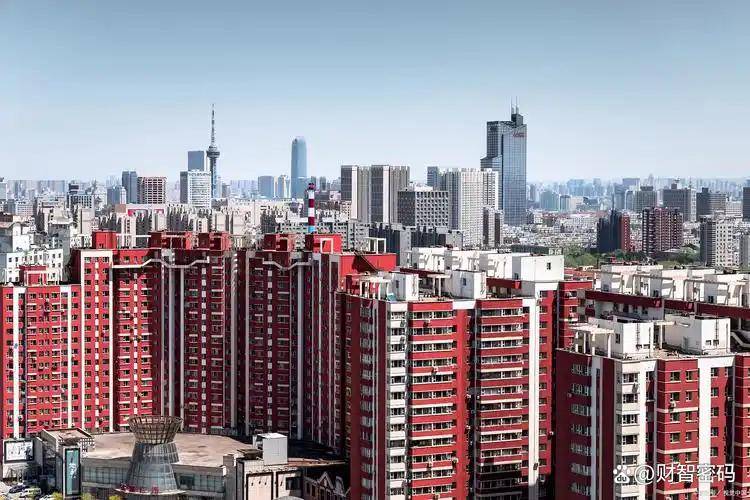
重要:8月开启,房地产调控正在完成180°的全面大转弯
Sou Hu Cai Jing· 2025-08-07 08:16
Core Viewpoint - In 2025, the Chinese real estate market underwent a significant transformation due to prolonged high housing prices and increasing market risks, prompting the government to implement unprecedented policy changes in August to address severe supply-demand imbalances and systemic risks in the real estate sector [1] Group 1: Market Conditions - As of June 2025, the nationwide unsold commercial housing area reached an astonishing 680 million square meters, with over 70% concentrated in third and fourth-tier cities, leading to a critical oversupply situation [2] - The urbanization rate has surpassed 65%, but the growth rate plummeted from 1.2% in 2015 to 0.5% last year, indicating a significant decline in new housing demand and marking the end of the "housing shortage era" [2] - The market transaction data is bleak, with the July second-hand residential price index dropping to 19.7%, and new home transaction volume only slightly increasing by 5% month-on-month, reflecting a lack of confidence among buyers and sellers [2] Group 2: Government Response - In response to the dire situation, the government decided to implement comprehensive market rescue policies during the July city work conference, shifting focus from controlling demand to resolving inventory and from scale expansion to high-quality development [4] - Key measures include the complete relaxation of purchase restrictions in popular second-tier cities like Chengdu and Xi'an, as well as significant easing of restrictions in first-tier cities such as Beijing and Shanghai [4] - The down payment requirements for first-time homebuyers have been significantly lowered to below 20%, and mortgage rates have reached historical lows, with the 5-year LPR dropping to 3.50% and the first loan rate for housing provident funds at 2.60% [6] Group 3: Tax and Housing Policies - The new tax policies implemented at the end of 2024 have begun to show results, with the tax exemption rate for housing under 140 square meters increased to 1%, and second homes in major cities also included in the tax exemption [8] - The government plans to start construction on 1.8 million units of affordable housing in 2025, accelerating related policies to alleviate supply-demand conflicts and stabilize housing price expectations [8] - The series of policy implementations marks a fundamental shift in China's real estate regulation, transitioning from suppressing speculation to supporting self-occupancy demand, with clear goals of risk prevention and economic stability [10]

“睡城”改称呼了?房价一路下跌,却仍没人买账
Sou Hu Cai Jing· 2025-08-06 12:52
Group 1 - The article discusses the transformation of Yanjiao from a "sleeping city" to a "ghost town," highlighting the drastic decline in property prices from 40,000 yuan per square meter to below 20,000 yuan [1][21][37] - Yanjiao was once considered a desirable location for Beijing's workers due to its proximity and lower housing prices, leading to a rapid increase in demand and property prices [3][5][11] - The peak of Yanjiao's real estate market occurred in 2017, driven by policies in Beijing that restricted housing purchases, prompting many potential buyers to turn to Yanjiao [9][13][19] Group 2 - The decline in Yanjiao's property market is attributed to a combination of strict regulatory measures, including increased purchasing thresholds and tightened mortgage policies, which significantly reduced market demand [21][24][26] - Overdevelopment in the region led to an oversupply of housing, with the number of new properties doubling from 2017 to 2021, resulting in a surplus that further pressured prices downward [28][30] - The economic foundation of Langfang, where Yanjiao is located, is weak, lacking sufficient job opportunities and failing to attract talent, which exacerbates the decline in the real estate market [32][34]
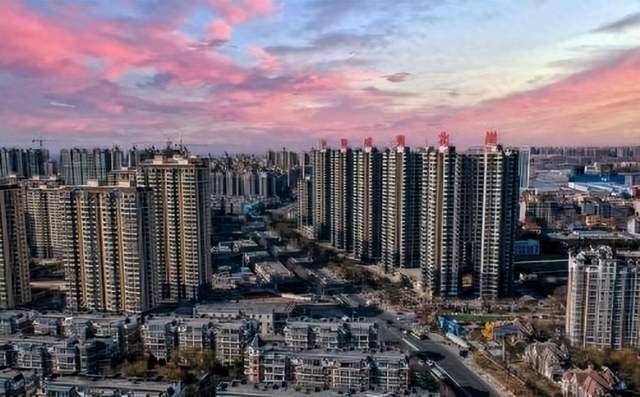
房地产行业第30周周报:本周新房二手房成交同比降幅收窄,成都分阶段取消限售-20250729
Bank of China Securities· 2025-07-29 03:36
Investment Rating - The report maintains a "Strong Buy" rating for the real estate sector, indicating a positive outlook for investment opportunities in this industry [4]. Core Insights - Recent policies in Chengdu and Jinan aim to stimulate the housing market by easing restrictions on property sales and lowering down payment ratios for second homes [3]. - New home transaction volume has shown signs of recovery, with a month-on-month increase in transaction area and a narrowing year-on-year decline [17][18]. - The report highlights a significant increase in domestic bond issuance by real estate companies, indicating improved market confidence [15]. Summary by Sections 1. Key City New Home Market, Second-hand Home Market, and Inventory Tracking - New home transaction area in 40 cities increased by 6.9% month-on-month, while the year-on-year decline narrowed to 9.6% [18]. - Second-hand home transaction area decreased by 2.2% month-on-month, with a year-on-year decline of 11.1% [18]. - New home inventory area increased by 0.2% month-on-month but decreased by 16.0% year-on-year, with a de-stocking period of 17.7 months [44]. 2. Land Market Tracking - Total land transaction area across 100 cities increased by 9.8% month-on-month but decreased by 3.0% year-on-year [15]. - The total land transaction price fell by 7.8% month-on-month and 25.9% year-on-year, with an average floor price of 1598.3 yuan per square meter [15]. 3. Policy Overview - Chengdu's new policy allows for phased cancellation of housing sales restrictions starting July 21, 2025, and Jinan has introduced favorable policies for affordable housing [3]. 4. Sector Performance Review - The real estate sector's absolute return was 4.1%, up by 6.2 percentage points from the previous week, while relative return compared to the CSI 300 index was 2.4%, an increase of 5.6 percentage points [15]. 5. Investment Recommendations - The report suggests focusing on four main lines of investment: established firms in core cities, smaller firms with significant breakthroughs, companies with strategic changes, and real estate brokerage firms benefiting from the second-hand market recovery [15].
楼市传出消息,事关很多人钱包,没买房的人偷着乐!
Sou Hu Cai Jing· 2025-07-27 15:58
Core Viewpoint - The real estate market is experiencing significant changes, with a decline in property prices and sales, creating both challenges and opportunities for buyers and developers [1][3][12]. Market Performance - In the first half of 2025, the national sales area of commercial housing decreased by 11.2% year-on-year, and sales revenue fell by 14.5%, marking the largest decline since 2015 [3]. - Major cities like Beijing, Shanghai, Guangzhou, and Shenzhen saw new home transaction volumes drop by 18.3% month-on-month, while the number of second-hand homes listed increased by 24.7% [3]. - The average price of new homes in first-tier cities fell by 2.1% in Q2, while second-tier cities saw a decline of 1.8% and third- and fourth-tier cities dropped by 3.4% [5]. Policy Changes - The Ministry of Housing and Urban-Rural Development continues to emphasize "housing for living, not speculation," while increasing support for first-time and improved housing buyers [3]. - The average interest rate for first-time home loans dropped to 3.9% and 4.2% for second homes, significantly lowering borrowing costs [3]. - Recent policies from the China Banking and Insurance Regulatory Commission allow for further reductions in mortgage rates, with some areas removing purchase restrictions [9]. Demographic Trends - The proportion of the population aged 60 and above has reached 21.3%, with a declining birth rate of 7.2‰, leading to increased demand for small apartments and retirement housing [9]. - Cities like Hangzhou and Chengdu are experiencing more population inflow compared to traditional first-tier cities, altering the real estate landscape [9]. Developer Challenges - The average debt-to-asset ratio for the top 50 real estate companies has surged to 78.3%, with many companies facing credit rating downgrades and resorting to price cuts to generate cash flow [7]. - The land auction revenue across 300 cities has decreased by 18.7%, with a 26.3% auction failure rate, indicating a cautious approach from developers, especially in third- and fourth-tier cities [11]. Opportunities for Buyers - For first-time homebuyers, the current market presents a favorable opportunity with falling prices, lower loan rates, and various developer incentives [11]. - The average housing price-to-income ratio in 35 major cities has decreased by 0.8, making home purchasing less burdensome [7].
信用债周报:成交金额继续下降,信用利差整体收窄-20250722
BOHAI SECURITIES· 2025-07-22 12:04
Report Industry Investment Rating No relevant content provided. Core Viewpoints - From July 14th to July 20th, the issuance guiding rates announced by the National Association of Financial Market Institutional Investors showed divergence, with high - grade rates rising overall and medium - low - grade rates falling overall, with a change range of - 5 BP to 3 BP. The issuance scale of credit bonds decreased slightly month - on - month, and the net financing amount also decreased. In the secondary market, the trading volume of credit bonds continued to decline, and the yields of credit bonds decreased overall. The credit spreads of medium - short - term notes, enterprise bonds, and urban investment bonds narrowed overall. [1][62] - From a long - term perspective, the yields of credit bonds are still in a downward channel. Due to the current high price, the risk of chasing high is relatively large. When allocating, investors can wait for opportunities and increase positions during adjustments. They should focus on the change trend of interest - rate bonds and the coupon value of individual bonds. At present, the effect of credit sinking is not good, and there is a demand to increase the duration to increase returns. High - grade 5 - year varieties can be considered first. [1][62] - The central and local governments have continuously optimized real - estate policies, which have played a positive role in promoting the real - estate market to stop falling and stabilize. For real - estate bonds, investors with high risk preferences can consider early layout, focusing on central and state - owned enterprises with stable historical valuations and high - quality private - enterprise bonds with strong guarantees. For urban investment bonds, the possibility of default is very low, and they can still be a key allocation variety of credit bonds. [2][66][68] Summary by Directory 1. Primary Market Situation 1.1 Issuance and Maturity Scale - From July 14th to July 20th, a total of 343 credit bonds were issued, with an issuance amount of 281.016 billion yuan, a month - on - month decrease of 0.66%. The net financing amount was 44.902 billion yuan, a month - on - month decrease of 38.421 billion yuan. [12] - In terms of different varieties, the issuance amounts of corporate bonds and private placement notes decreased, while those of enterprise bonds, medium - term notes, and short - term financing bills increased. The net financing amounts of enterprise bonds and private placement notes increased, while those of corporate bonds, medium - term notes, and short - term financing bills decreased. The net financing amounts of enterprise bonds, private placement notes, and short - term financing bills were negative, while those of corporate bonds and medium - term notes were positive. [13] 1.2 Issuance Interest Rates - The issuance guiding rates announced by the National Association of Financial Market Institutional Investors showed divergence. High - grade rates rose overall, and medium - low - grade rates fell overall, with a change range of - 5 BP to 3 BP. By term, the 1 - year, 3 - year, 5 - year, and 7 - year varieties had different interest - rate change ranges. By grade, different grades also had different interest - rate change ranges. [14] 2. Secondary Market Situation 2.1 Market Trading Volume - From July 14th to July 20th, the total trading volume of credit bonds was 864.586 billion yuan, a month - on - month decrease of 5.24%. The trading volumes of all varieties decreased. [19] 2.2 Credit Spreads - For medium - short - term notes, all varieties' credit spreads narrowed. For enterprise bonds, all varieties' credit spreads narrowed. For urban investment bonds, most varieties' credit spreads narrowed, but there were some exceptions in specific grades and terms. [22][33][37] 2.3 Term Spreads and Rating Spreads - For AA + medium - short - term notes, the 3Y - 1Y term spread narrowed by 0.35 BP, the 5Y - 3Y term spread narrowed by 0.44 BP, and the 7Y - 3Y term spread widened by 2.17 BP. For 3 - year medium - short - term notes, the (AA - )-(AAA) rating spread narrowed by 1.00 BP, the (AA)-(AAA) rating spread widened by 1.00 BP, and the (AA + )-(AAA) rating spread remained unchanged. [46] - For AA + enterprise bonds, the 3Y - 1Y term spread narrowed by 1.19 BP, the 5Y - 3Y term spread widened by 0.78 BP, and the 7Y - 3Y term spread widened by 1.28 BP. For 3 - year enterprise bonds, the (AA - )-(AAA) rating spread widened by 1.00 BP, the (AA)-(AAA) rating spread widened by 1.00 BP, and the (AA + )-(AAA) rating spread remained unchanged. [52] - For AA + urban investment bonds, the 3Y - 1Y term spread narrowed by 0.45 BP, the 5Y - 3Y term spread widened by 2.29 BP, and the 7Y - 3Y term spread widened by 1.24 BP. For 3 - year urban investment bonds, the (AA - )-(AAA) rating spread widened by 7.00 BP, the (AA)-(AAA) rating spread widened by 2.00 BP, and the (AA + )-(AAA) rating spread widened by 1.00 BP. [55] 3. Credit Rating Adjustment and Default Bond Statistics 3.1 Credit Rating Adjustment Statistics - From July 14th to July 20th, a total of 4 companies had their ratings (including outlooks) adjusted, with 1 downgraded and 3 upgraded. [59] 3.2 Default and Extended - Maturity Bond Statistics - From July 14th to July 20th, there were no credit - bond defaults or bond - maturity extensions. [61] 4. Investment Views - The investment views are basically the same as the core viewpoints, emphasizing the current situation of credit - bond issuance, trading, and spread changes, and providing investment suggestions from absolute and relative return perspectives. At the same time, it is necessary to pay attention to the impact of stable - growth policies, capital - market conditions, and supply - demand patterns on the bond market. [1][62] - For real - estate bonds, with the real - estate market showing signs of stabilization, investors with high risk preferences can consider early layout, focusing on high - quality bonds and properly speculating on the trading opportunities brought by the valuation repair of undervalued real - estate enterprise bonds. For urban investment bonds, they can still be a key allocation variety, and the short - term credit risk is controllable. [2][66][68]
华侨银行:新加坡房市仍具潜力,但需警惕进一步调控风险
news flash· 2025-07-07 10:25
Core Viewpoint - The report from OCBC Bank indicates that despite recent cooling measures by the Singapore government, the private residential market may still experience an upward trend in both prices and transaction volumes [1] Group 1: Market Analysis - The recent tightening of real estate policies by the government has led to a decline in developer stock prices, which was anticipated by the market [1] - Analysts caution that if the pace of price increases diverges from economic fundamentals, the real estate market may face additional regulatory pressures [1] Group 2: Investment Opportunities - OCBC Bank expresses a favorable outlook on real estate developers that can generate stable income streams, particularly those employing a light-asset model for fund management [1]