渠道转型

Search documents
研报掘金丨国盛证券:甘源食品海外市场空间打开,维持“买入”评级
Ge Long Hui A P P· 2025-08-13 08:16
Core Viewpoint - Guanyuan Food reported a revenue of 940 million yuan for H1 2025, reflecting a year-on-year decline of 9.3%, and a net profit attributable to shareholders of 75 million yuan, down 55.2% year-on-year, indicating a challenging financial period but with signs of recovery potential in the future [1] Financial Performance - The company's revenue for H1 2025 was 940 million yuan, a decrease of 9.3% year-on-year [1] - In Q2 2025, revenue was 440 million yuan, showing a smaller decline of 3.4% year-on-year, suggesting a narrowing of revenue drop [1] - The net profit attributable to shareholders for H1 2025 was 75 million yuan, down 55.2% year-on-year [1] - The adjusted net profit was 64 million yuan, reflecting a decline of 56.0% year-on-year, which is close to the upper limit of the performance forecast [1] Market and Growth Potential - The e-commerce segment showed strong growth, and the resilience of key products was highlighted [1] - Despite short-term profit pressures, the company is expected to achieve a recovery in profit margins as cost fluctuations stabilize and brand image continues to build [1] - The company is actively launching new products and expanding market reach, with potential for increased volume as channel models are refined and overseas market opportunities are explored [1] - The investment rating remains "Buy," indicating confidence in the company's future performance [1]

甘源食品(002991):经营阶段性承压,静待渠道调整效果
GOLDEN SUN SECURITIES· 2025-08-13 02:32
Investment Rating - The report maintains a "Buy" rating for the company [4][5]. Core Views - The company is experiencing short-term pressure due to channel adjustments, but there is potential for recovery as the effects of these adjustments materialize [4]. - E-commerce growth remains strong, with a notable increase in direct sales and other channels, indicating resilience in key product lines despite overall revenue decline [1][2]. - The company is undergoing a transformation phase, focusing on direct sales and overseas market expansion, which is expected to yield positive results in the long term [4]. Revenue and Profitability - In the first half of 2025, the company achieved revenue of 940 million yuan, a year-on-year decrease of 9.3%, with a net profit attributable to shareholders of 75 million yuan, down 55.2% [1]. - The revenue from the e-commerce channel grew by 12.4% to 150 million yuan, showcasing strong performance amidst rising costs in the overall e-commerce landscape [1]. - The gross profit margin for the first half of 2025 was 33.6%, a decrease of 1.3 percentage points year-on-year, primarily due to cost pressures [3]. Cost and Expenses - The company faced increased cost pressures, particularly from rising palm oil prices, which averaged 9,462.2 yuan per ton, up 17.3% year-on-year [3]. - Selling expenses increased by 5.3 percentage points to 18.6% of revenue, driven by enhanced brand promotion efforts [3]. Future Outlook - The company is expected to see revenue growth of 3.0%, 20.4%, and 16.7% in 2025, 2026, and 2027, respectively, reaching 2.33 billion, 2.80 billion, and 3.27 billion yuan [4][9]. - Net profit is projected to decline by 12.9% in 2025 but recover with growth rates of 35.9% and 23.4% in the following years [4][9].
东方雨虹(002271):业绩短期承压,零售占比提升,积极拓展海外市场
CMS· 2025-08-07 12:31
Investment Rating - The report maintains a "Strong Buy" rating for the company [2][6]. Core Views - The company is experiencing short-term pressure on performance, with a focus on increasing retail sales and actively expanding into overseas markets [2][6]. - The domestic construction waterproofing industry is undergoing a structural transformation, with increasing concentration towards leading companies due to enhanced regulations and rising quality demands from downstream customers [2][6]. - The company has made significant strides in establishing overseas operations and pursuing acquisitions, including the construction of a production and logistics base in Houston and the acquisition of local retail companies in Hong Kong and Chile [2][6]. Financial Performance Summary - In the first half of 2025, the company achieved total revenue of 13.569 billion yuan, a year-on-year decrease of 10.84%, and a net profit attributable to shareholders of 564 million yuan, down 40.16% [1][5]. - The company's retail channel revenue increased to 5.059 billion yuan, accounting for 37.28% of total revenue, indicating a shift in sales strategy [5][6]. - The overall gross margin for the first half of 2025 was 25.40%, a decline of 3.82 percentage points year-on-year, with specific product margins also under pressure [5][6]. Business Structure and Strategy - The company is transitioning its sales model from direct sales to a channel-focused approach, with engineering and retail channels accounting for 84.06% of total revenue [5][6]. - The company is actively optimizing its product structure, with non-waterproof business revenues increasing, which supports overall profitability despite challenges in the main business [5][6]. Future Earnings Forecast - The earnings per share (EPS) for 2025 and 2026 are projected to be 0.57 yuan and 0.72 yuan, respectively, with corresponding price-to-earnings (PE) ratios of 21.8 and 17.3 [6][7].

从硬刚奥克斯到怒怼消费保,董明珠为何开启“战斗模式”?
Sou Hu Cai Jing· 2025-08-03 23:10
Core Viewpoint - The conflict between Gree Electric and the consumer complaint platform "Xiaofei Bao" highlights the company's deep-seated anxiety amid declining market share and performance pressures, reflecting broader challenges in the home appliance industry [4][15]. Financial Performance - Gree's 2024 revenue was approximately 189.16 billion yuan, a decrease of 7.26% year-on-year, marking a drop below the 200 billion yuan threshold for the first time since 2018 [5]. - The net profit attributable to shareholders reached about 32.18 billion yuan, an increase of 10.91%, setting a historical high [5]. - The revenue decline is attributed to a 4.29% drop in the consumer appliance segment, primarily air conditioning, which generated 148.56 billion yuan [5][7]. Market Dynamics - Gree's domestic revenue fell by 5.45% to 141.5 billion yuan, while overseas revenue grew by 13.25% to 28.2 billion yuan, indicating weakening competitiveness in the domestic market [7]. - Despite a 9.7% increase in air conditioning production across the industry, Gree's core air conditioning business experienced a decline, suggesting a significant loss in market share [5][7]. Cost Management - Gree achieved net profit growth primarily through substantial reductions in operating expenses, with sales expenses dropping by 34.11% to 9.75 billion yuan [7][8]. - The company's gross margin was 29.43%, down 1.14 percentage points, while the net margin rose to 16.89%, up approximately 3.3 percentage points, reflecting the impact of cost-cutting measures [8]. Strategic Challenges - Gree faces three main pressures: saturation in the air conditioning market, slow channel transformation, and ineffective diversification efforts [15][20]. - The air conditioning market has shifted to a stock competition phase, with a total transaction volume of 172.52 million units in 2024, showing only a 1.8% growth [15]. - Gree's reliance on air conditioning remains high at 78.13%, significantly above competitors like Midea and Haier [19]. Brand and Public Relations - Gree's aggressive public relations strategy, characterized by confrontational tactics, may undermine its long-term brand credibility [10][12]. - The company's response to consumer complaints has shifted focus from data authenticity to its attitude towards consumer feedback, potentially damaging its reputation [11]. Innovation and R&D - Gree's R&D investment decreased by 12% in 2024, raising concerns about its ability to innovate in key areas like smart technology and IoT [16]. - Despite having the largest R&D center globally, Gree's innovation outcomes have not translated effectively into market success [16]. Conclusion - The ongoing conflict with Xiaofei Bao may serve as a catalyst for Gree to confront internal challenges rather than deflecting criticism, emphasizing the need for a strategic overhaul to regain competitiveness in the evolving market landscape [20].



百威亚太二季度收入降幅收窄 战略调整效果待显
Zheng Quan Ri Bao Wang· 2025-08-01 11:41
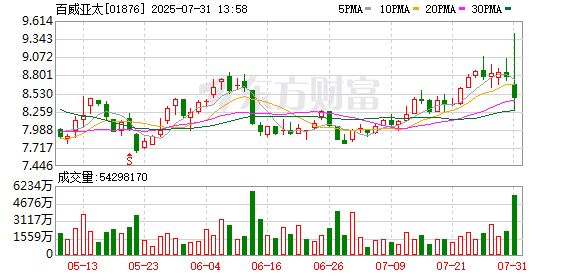
Core Viewpoint - Budweiser APAC reported a decline in revenue and net profit for the first half of 2025, indicating challenges in the beer market, particularly in China, while showing signs of marginal improvement in the second quarter [1][2]. Financial Performance - For the first half of 2025, Budweiser APAC's revenue was $3.136 billion, a decrease of 5.6% year-on-year; net profit was $409 million, down 24.4%; total sales volume was 4.363 billion liters, a decline of 6.1% [1]. - The second quarter showed a smaller revenue decline of 3.9% compared to a 7.5% decline in the first quarter, indicating a trend of marginal improvement [1]. - Average revenue per hectoliter increased by 0.5% year-on-year for the first half, with a 2.4% increase in the second quarter, contrasting with a 1.5% decline in the first quarter [1]. Regional Performance - In China, sales volume decreased by 8.2% and revenue by 9.5% in the first half, with a 7.4% decline in sales volume and a 6.4% decline in revenue in the second quarter [2]. - The Indian market experienced double-digit growth in revenue and sales volume for high-end products, continuing to drive overall growth [2]. - In South Korea, sales volume showed a high single-digit decline, while revenue also decreased significantly due to reduced sales volume, although average revenue per hectoliter saw low single-digit growth [2]. Inventory Management - Inventory adjustment was a key operational focus for Budweiser APAC in the first half, with proactive measures taken to align inventory levels with market conditions [3]. - The company reported lower inventory levels and days compared to the previous year, indicating effective inventory management [3]. Strategic Focus - The new CEO and sales leadership are undergoing structural and strategic adjustments, facing challenges in channel transformation, management efficiency, and external risks [3]. - The company plans to focus on controllable areas, increasing investment in brands like Budweiser and Harbin, while expanding non-immediate consumption channels and enhancing execution [3]. - Analysts suggest that the company may see marginal recovery in the Chinese market in the second half, but emphasize the need for time to build brand influence and establish non-immediate consumption channels [3].

东方雨虹(002271):民建集团展现韧性,海外业务加速布局
GOLDEN SUN SECURITIES· 2025-08-01 10:19
Investment Rating - The report maintains a "Buy" rating for the company [4][6]. Core Views - The company demonstrates resilience in its civil construction business while accelerating its overseas expansion [2]. - The company reported a revenue of 13.57 billion yuan for the first half of 2025, a year-on-year decline of 10.8%, with a net profit attributable to shareholders of 560 million yuan, down 40.2% year-on-year [1]. - The company is actively pursuing channel transformation and consolidating its waterproofing main business while exploring new growth avenues in mortar and overseas markets [4]. Financial Performance Summary - Revenue breakdown for the first half of 2025: - Waterproof membranes: 5.513 billion yuan, down 8.8%, gross margin 22.6%, down 5.2 percentage points - Coatings: 3.946 billion yuan, down 17.1%, gross margin 36.5%, down 1.0 percentage points - Mortar powder: 1.996 billion yuan, down 6.2%, gross margin 26.6%, down 0.87 percentage points - Engineering construction: 849 million yuan, down 32.3% [2]. - The overall gross margin for the first half of 2025 was 25.4%, a decrease of 3.8 percentage points year-on-year [3]. - The company reported a net profit margin of 4.0% for the first half of 2025, down 2.1 percentage points year-on-year [3]. Cash Flow and Dividend - As of June 30, 2025, the company's accounts receivable totaled 11.13 billion yuan, a decrease of 27.3% year-on-year, with cash and cash equivalents amounting to 4.57 billion yuan [3]. - The company announced a mid-year dividend plan of 9.25 yuan per 10 shares (including tax), totaling 2.21 billion yuan [3]. Earnings Forecast - The company’s net profit forecasts for 2025-2027 are 1.206 billion yuan, 1.427 billion yuan, and 1.461 billion yuan, with corresponding P/E ratios of 23.8, 20.1, and 19.7 [4].
资源腾挪渠道重构 上半年保险业加速“瘦身”
Zhong Guo Jing Ying Bao· 2025-07-31 08:53
Core Viewpoint - The insurance industry is undergoing a significant transformation in its distribution channels, with a focus on optimizing resources and enhancing operational efficiency rather than merely downsizing [1][3]. Group 1: Channel Transformation - Recent approvals from regulatory authorities indicate that 11 insurance companies have collectively applied to close 42 branch offices, including 14 subsidiaries and 28 marketing service departments [1]. - The trend of branch closures has been ongoing, with over 1,200 branches shut down in the first half of 2023 alone, while only about 180 new branches were established during the same period [2]. - The majority of the closed branches belong to life insurance companies, accounting for approximately 80% of the total closures, with the remaining 20% from property insurance companies [2]. Group 2: Reasons for Branch Closures - The primary reasons for the significant reduction in branch offices include changes in regulatory guidance, the pressure of "reporting and operation integration," and the shift from a product-driven to a value-service-oriented approach [3][4]. - The rise of digitalization has also played a crucial role, as online services and digital insurance solutions have become more efficient, reducing the reliance on physical branches [3][4]. Group 3: Industry Response and Future Trends - Insurance companies are increasingly emphasizing channel transformation in their mid-year meetings, with a focus on enhancing operational efficiency and adapting to market changes [6][7]. - The industry is expected to see a shift towards multi-channel integration, refined operational strategies, and a greater reliance on technology to improve service delivery and customer engagement [8]. - Future trends in channel transformation include a move from a sales-oriented approach to a customer-centric model, leveraging data and technology to enhance customer lifetime value [8].

百威亚太上半年净利下滑24.4% 中国市场份额正被喜力蚕食?
Mei Ri Jing Ji Xin Wen· 2025-07-31 05:58
Core Viewpoint - The Chinese market remains weak for Budweiser APAC, with declining sales and profits, while Heineken is experiencing strong growth in the same market, particularly in high-end products [2][5][6]. Group 1: Budweiser APAC Performance - Budweiser APAC reported a total sales volume of 4.363 billion liters for the first half of 2025, a year-on-year decrease of 6.1% [3]. - Revenue for the same period was $3.136 billion, down 5.6% year-on-year, with a net profit attributable to shareholders of $409 million, reflecting a 24.4% decline [3]. - In the second quarter, revenue was $1.675 billion, a decrease of 4.6% year-on-year, and net profit fell 31.1% to $175 million [3]. - The company faced challenges in the Chinese market due to weak channel performance and regional layout, with sales volume down 8.2% and revenue down 9.5% in the first half of 2025 [3][4]. Group 2: Heineken's Growth - Heineken reported a revenue of €16.9 billion for the first half of 2025, with a net profit of €744 million, marking a turnaround from previous losses [6]. - In China, Heineken's high-end products saw sales growth exceeding 30%, driven by strong performances of Heineken Classic and Heineken Silver [6][7]. - The partnership with China Resources Beer has significantly enhanced Heineken's market presence and distribution, allowing it to gain market share in the high-end beer segment [6][7]. Group 3: Market Dynamics - Budweiser APAC is undergoing organizational restructuring and channel strategy adjustments, facing three core challenges: channel transformation pressure, management efficiency improvement, and external environment risks [4]. - Heineken's rapid growth in China is attributed to effective localization strategies and collaboration with local partners, which have allowed it to adapt to changing consumer preferences [7].
海外扫地机专家电话会议
2025-07-19 14:02
Summary of Conference Call on Overseas Floor Cleaning Machine Market Industry Overview - The conference call discusses the overseas floor cleaning machine market, particularly focusing on the competitive landscape in Europe and the strategies of key players like Stone Technology, Ecovacs, and Chasing. Key Points and Arguments Chasing's Market Strategy - Chasing is shifting its strategy from low-end to mid-to-high-end products, raising the average price to over $400 through the L20 and X20 series, while avoiding competition in the Nordic and German-speaking regions, focusing instead on Southern Europe, particularly Italy, where it has gained a leading position [1][4] - However, this high-end strategy has led to a backlash from competitors like Stone and Ecovacs, affecting its terminal price range [1] Stone Technology's Channel Transformation - Stone Technology is transitioning from an agency model to a direct sales model in the European market, resulting in increased online operations, logistics, warehousing, and promotional costs, leading to a decline in net profit margin from 13-14% to 10% [1][8] - Despite no significant change in gross margin, the added costs have offset some gross profit space, significantly impacting net profit in the short term [1] Direct Sales Progress - Stone Technology is gradually taking over online platforms and accelerating direct sales by July 2024, expecting over 30% growth in Q4 after an adjustment period of declining shipments from distributors [1][12] - The company aims to increase the ratio of direct sales both online and offline for more stable development by the first half of 2025 [1][12] Competitive Landscape - The floor cleaning machine industry has seen significant changes, with Chasing facing cash flow issues due to business expansion, leading to increased domestic prices and a negative impact on market share [2] - This situation has benefited Stone and Ecovacs, allowing them to capture the market share lost by Chasing, while reducing competitive pressure and optimizing pricing and investment [2] Price Trends in the European Market - The high-end product price range remains stable, with mid-range products experiencing the fastest growth, while the low-end segment is shrinking significantly [3][17][18] - Stone's S8 Max Ultra is priced around €1,300, indicating strong recognition of high-end products [3][17] Market Growth Analysis - The overall market growth rate is approximately 10-11%, with a 2-3% increase in average transaction price compared to last year, leading to a projected net sales growth of 13-14% [3][21] - Stone's European market growth in Q1 2025 is attributed to both volume and price contributions, with a significant increase in sales after transitioning to direct sales [19] Future Profitability and Challenges - Stone's net profit margin is expected to improve as channel maturity and efficiency increase, but high offline promotion and ground expenses may prevent a return to previous high profit levels [10] - The company’s net profit margin for agency business is around 10%, while direct sales can reach 15%, with an overall target of exceeding 20% [11] Chasing's Pricing and Profitability - Chasing focuses on high-end products with prices exceeding €1,000 and a gross margin of 75%, while mid-range products priced at €300-400 have a gross margin of about 40% [25] - The company is adjusting its strategy to prioritize profitability over volume due to previous over-investment for market share [25][26] Ecovacs' Market Position - Ecovacs has established stable partnerships with local distributors but lacks the online conversion efficiency seen in newer brands like Stone and Chasing [27] - The brand is attempting to enhance its online presence but faces challenges due to its traditional marketing approach [27] Other Important Insights - The competitive dynamics in the cleaning appliance industry are expected to ease in the second half of the year, with brands focusing more on profitability rather than sales volume [26] - There is a potential for price wars in the upcoming periods as companies adjust their strategies [24]


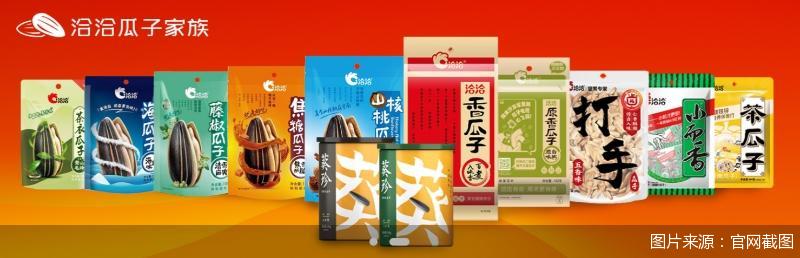
净利下降七成,洽洽食品如何破局
Bei Jing Shang Bao· 2025-07-16 12:49
Core Viewpoint - Qiaqia Food has reported its largest decline in net profit since its listing in 2011, with a projected net profit drop of 71.05% to 76.25% for the first half of 2025 compared to the previous year [2] Group 1: Financial Performance - The company expects a net profit of approximately 80 million to 97.5 million yuan for the first half of 2025, with a significant decline in both net profit and non-net profit [2] - In Q1 2025, Qiaqia Food's revenue decreased by 13.76% year-on-year, and net profit fell by 67.88% [2] - The decline in net profit further worsened in Q2 2025, indicating ongoing financial challenges [2] Group 2: Cost Pressures - The primary reason for the profit decline is the rising cost of raw materials, particularly sunflower seeds, which has led to a significant drop in gross margin [2][3] - The company has acknowledged the impact of rising costs on its operations, citing increased procurement prices for sunflower seeds and nuts [2][3] - Qiaqia Food has attempted to mitigate cost pressures by raising product prices multiple times over the past few years, but the positive impact on gross margin has diminished [3] Group 3: Supply Chain and Procurement - Qiaqia Food employs a mixed procurement model for sunflower seeds, which may weaken its control over quality and cost [3] - The company plans to optimize its procurement strategy by increasing the proportion of direct purchases [3] Group 4: Channel Strategy - In response to market conditions, Qiaqia Food is adjusting its channel strategy, increasing its focus on direct sales channels, which saw a revenue increase of 38.29% to 1.462 billion yuan in 2024 [4] - Despite the growth in direct sales, the gross margin for this channel has declined, with e-commerce channels showing particularly low margins [4][5] - The company aims to enhance e-commerce profitability through product structure optimization and is also exploring new channels such as snack wholesale systems and membership stores [5]