
结构性改革

Search documents
德国推出改革举措提振经济
Ren Min Ri Bao· 2025-12-03 22:29
Group 1: Economic Reforms and Initiatives - The German coalition government has reached a consensus on reforms in three key areas: establishing a new basic social security system, optimizing the pension system, and upgrading transportation infrastructure [1] - The new "basic security payment" will replace the existing citizen allowance, aimed at tightening the rules for benefit eligibility and reducing misuse [1] - The introduction of an "active pension" system will allow seniors who continue to work past retirement age to earn up to €2,000 per month tax-free, set to take effect on January 1 next year [1] - The government plans to allocate approximately €3 billion for electric vehicle purchase subsidies and an additional €3 billion for transportation infrastructure projects, including roads and railways [1] Group 2: Economic Challenges and Forecasts - Germany's economy has contracted for two consecutive years due to rising energy prices, manufacturing decline, and unfavorable external conditions, with significant downward risks identified by major economic research institutes [2] - A report indicates that production in energy-intensive industries is expected to decline by nearly 20% by spring 2025 compared to 2022 levels [2] - A survey shows that 83% of businesses find future planning increasingly difficult, and 63% are delaying or planning to delay investments [2] Group 3: Economic Recovery Indicators - Germany's industrial output increased by 1.3% month-on-month in September, primarily influenced by fluctuations in the automotive sector, though this is not seen as a fundamental recovery [3] - Predictions suggest a rebound in private consumption and a slow recovery in construction investment, with expectations for an improved labor market next year [3] - The latest economic forecast anticipates a modest growth of 0.2% in 2025, with recovery momentum expected to strengthen by the end of this year and into early next year, potentially reaching a growth rate of 1.3% in 2026 [3] - The German government emphasizes the need for substantial government spending and structural reforms to support economic recovery [3]
世界银行上调肯u202f2025年经济增长预测至u202f4.9%
Shang Wu Bu Wang Zhan· 2025-12-03 16:38
Core Viewpoint - The World Bank has raised Kenya's 2025 economic growth forecast from 4.5% to 4.9%, primarily due to a strong rebound in the construction sector [1] Economic Growth - The construction industry showed a significant recovery in the first half of the year, partially offsetting the slowdown in manufacturing growth [1] Risks and Challenges - Despite the improved economic outlook, Kenya faces major risks, including the expiration of trade agreements with the United States, an uncertain international trade environment, and potential limitations on public spending due to fiscal consolidation [1] - High levels of public debt and debt repayment pressures are also critical factors hindering long-term sustainable growth [1] Recommendations - The World Bank suggests that Kenya should pursue structural reforms, such as reducing reliance on state-owned enterprises (SOEs) and easing restrictions on foreign investment [1]
经合组织:当前世界经济富有韧性但潜在脆弱性仍存
Zhong Guo Xin Wen Wang· 2025-12-03 00:53
Core Insights - The OECD report indicates that the current global economy is resilient but still has potential vulnerabilities [1] - The OECD maintains its global economic growth forecasts at 3.2% for 2025 and 2.9% for 2026, with a projected growth of 3.1% for 2027 [1] - Strong demand is attributed to loose global financial conditions, supportive macroeconomic policies, and new investments in artificial intelligence [1] Economic Growth Projections - The United States is projected to have economic growth rates of 2% in 2025 and 1.7% in 2026 [2] - The Eurozone's growth forecasts for 2025 and 2026 have been revised upward to 1.3% and 1% respectively [2] - France's economic growth expectations for 2025 and 2026 are adjusted to 0.8% and 1% [2] Risks and Recommendations - The report highlights potential economic risks such as increased trade barriers, lower-than-expected returns on AI investments, and the possibility of inflation returning unexpectedly [1] - It suggests that countries should seek cooperative paths within the global trade system and maintain vigilance against inflation risks [1] - OECD Secretary-General Coleman emphasizes the need for constructive dialogue among nations to address trade tensions and reduce policy uncertainty [1]
刘元春最新发言:世界经济的弹性与韧性超乎预测,这是为什么呢?
Xin Lang Cai Jing· 2025-12-02 13:52
Core Viewpoint - The resilience and elasticity of the global economy are stronger than expected, with China playing a crucial role in economic globalization [3][4][5]. Economic Growth Outlook - Initial predictions indicated a decline in global economic growth by 0.5 percentage points, from 3.3% to approximately 2.8%, but the actual decline has been less severe [9]. - Global trade growth was expected to fall below GDP growth due to U.S. tariff policies, with a projected drop of 1.8 percentage points; however, trade data from January to October shows a growth rate of 3.6%, surpassing last year's 3.5% [9][10]. - Inflation expectations were for an average price increase of 0.2% to 0.3%, but prices have instead decreased by 0.1 percentage points, indicating strong resilience in global supply chains [4][9]. Trade Dynamics - Despite a significant drop in trade with the U.S. (estimated at around 20%), China's overall trade with the world has increased by 6.2%, with the share of global trade rising from 12.8% in 2020 to approximately 15% this year [10][11]. - The growth in bilateral trade with ASEAN, Africa, and Latin America has been exceptional, showcasing China's ability to create new opportunities in global supply chains and technology environments [10]. Fiscal and Monetary Policies - Many countries have adopted proactive fiscal and monetary policies to counteract U.S. trade policies, with global public debt reaching 95% of GDP, an increase of 2.3 percentage points from previous years [5][10]. - Germany's trade deficit has reached 300 million euros, exceeding the EU's 3% limit, highlighting the widespread fiscal challenges faced globally [10]. Technological Innovation - Significant growth in AI investment, particularly in the U.S., is noted, with a projected increase of nearly 90% this year following an 18% increase last year [5][10]. - Temporary factors such as trade and investment front-loading and inventory management strategies may introduce certain risks [10]. Future Economic Conditions - Key factors for future economic development include potential new proposals under the Trump 2.0 tariff policy, the sustained competitive advantage from China's technological innovations, and whether new technologies can translate into short-term economic growth [11][12]. - The ability of countries to implement structural reforms and effectively address fiscal deficits in a disordered environment is also critical for future economic trends [12].

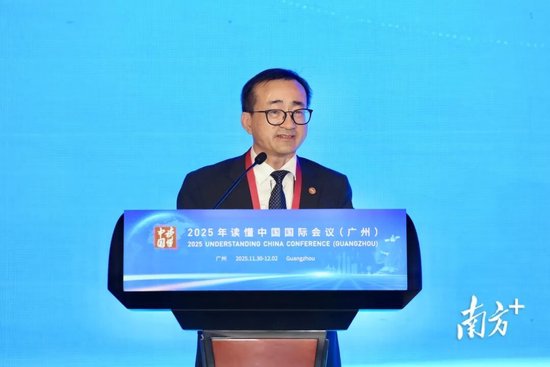
2026年中国经济怎么看、怎么干?刘世锦、李扬、蔡昉、杨瑞龙最新发声
证券时报· 2025-12-01 14:16
Core Insights - The article discusses key recommendations from prominent economists at the China Macro Economic Forum (CMF) regarding China's economic development during the "14th Five-Year Plan" period and beyond, emphasizing the importance of structural reforms and innovation to stimulate domestic vitality [1][2]. Group 1: Economic Growth and Consumption - Liu Shijun advocates for increasing the consumption share of GDP by 1 percentage point annually during the "14th Five-Year Plan" period, highlighting the need to stabilize and expand terminal demand to boost investment [6][8]. - The report presented by Liu Xiaoguang suggests setting cross-cycle targets for economic growth, including a real GDP growth target of 4.5%-5% and a CPI target of 1%-3% for 2026 [2]. Group 2: Financial Factors and Market Opportunities - Li Yang identifies four major financial factors influencing economic operations from 2026 onwards: changes in social financing structure, declining interest rates, new opportunities in capital markets, and a new paradigm for monetary policy [4]. - The phenomenon of "disintermediation" is noted as a positive trend, with funds flowing out of the banking system, which could create better conditions for capital market development [3][4]. Group 3: Employment and Income Distribution - Cai Fang emphasizes the need for a coordinated approach to promote employment, increase income, and stabilize expectations, proposing a framework of "five combinations" to address these issues [10][11]. - The focus on increasing per capita income and improving income distribution is critical, with suggestions to enhance labor remuneration and expand public services to reduce disparities [12][13]. Group 4: Long-term Economic Strategy - Yang Ruilong stresses the importance of addressing short-term economic challenges with a long-term perspective, advocating for the modernization of the industrial system and the integration of technological innovation [14][15]. - The article concludes that despite current pressures, the fundamental trend of China's economy remains positive, with potential for sustainable growth through structural reforms and innovation [1][15].

毛里塔尼亚总统加兹瓦尼发表庆祝国家独立65周年讲话,宣布多项惠民举措
Shang Wu Bu Wang Zhan· 2025-11-29 15:21
Economic Development - The government is committed to deepening structural reforms to enhance economic vitality, encourage investment, and focus on priority production sectors. The economic growth rate is projected to be 4.5% in 2025, with inflation maintained below 2% [1] - The budget revenue and expenditure are expected to grow by over 10% in 2026, with a budget deficit kept within 3.5%. Public debt as a percentage of GDP is projected to decrease from 45.2% to 43.3% [1] Infrastructure Development - Approximately 1,000 kilometers of roads have been constructed or repaired, with ongoing projects for an additional 750 kilometers and plans for 800 kilometers of new and renovated roads. The China-Mauritania Friendship Bridge has been completed, and a hospital expansion is underway [2] - Water supply capabilities are being enhanced through project expansions and new drilling, ensuring access to drinking water for residents [2] - Energy projects include the construction of transmission lines, village electrification, and mixed-energy power plants, aiming for widespread electricity coverage [2] Social Welfare - The government has increased social spending by nearly 4 billion Ouguiyas this fiscal year, covering medical insurance for about 100,000 poor families and providing cash assistance to around 140,000 families [3] - Starting January 1, 2026, salaries for teachers and security personnel will be raised by 1,000 Ouguiyas, with chalk allowances increased by 2,000 Ouguiyas to encourage teaching careers [3] Governance and Anti-Corruption - The president emphasized the importance of inclusive national dialogue to address major national issues and build consensus [3] - Efforts to combat corruption will be institutionalized through legal improvements, judicial independence, and administrative digitization [3] - A large-scale recruitment initiative will be launched to attract approximately 3,000 young talents into public service roles such as teachers, doctors, and engineers [3]
灌水21万亿 高市早苗1.7万亿强化国防!“卖出日元”成国际趋势
Mei Ri Jing Ji Xin Wen· 2025-11-26 22:56
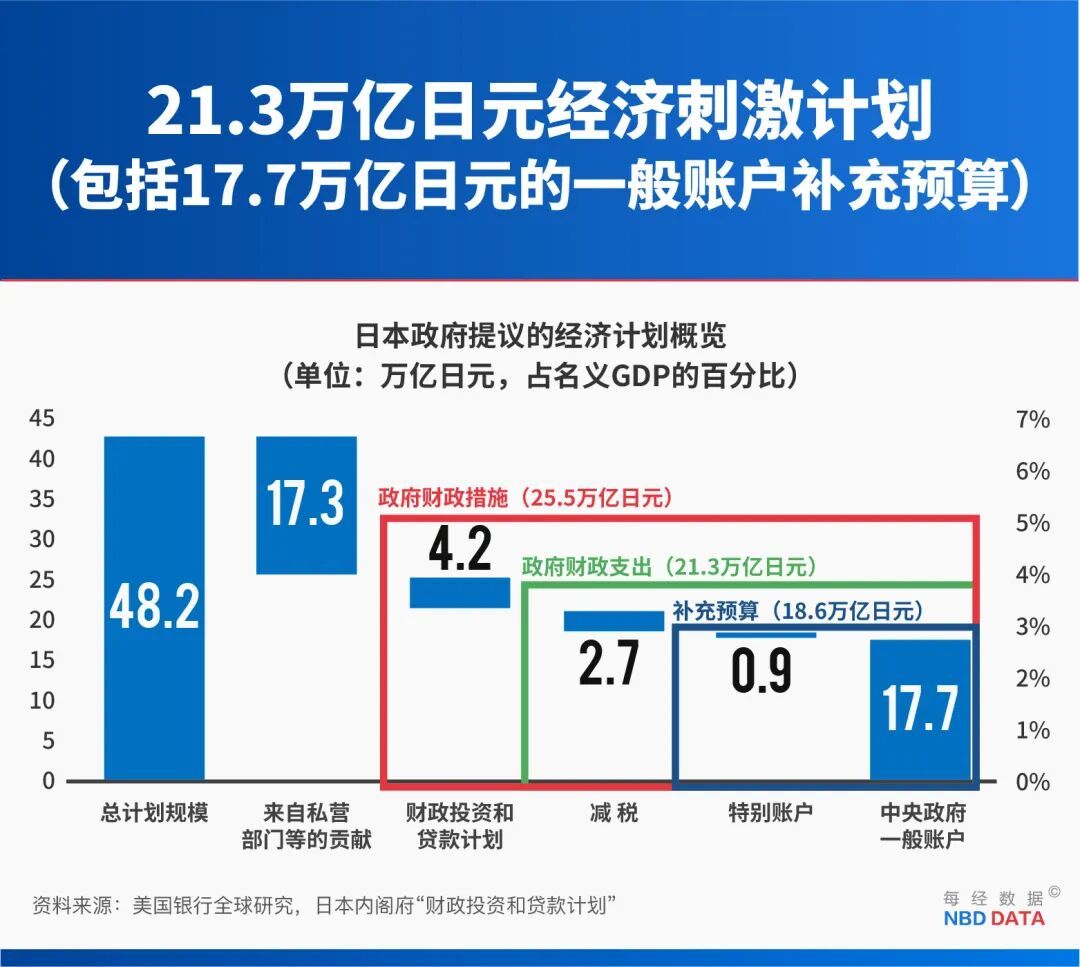
Core Points - The Japanese government, led by Prime Minister Fumio Kishida, has approved a comprehensive economic stimulus plan totaling 21.3 trillion yen (approximately 965.6 billion RMB), marking the first major economic initiative since Kishida took office [1] - The core of this plan includes a supplementary budget for fiscal year 2025, with general account expenditures reaching 17.7 trillion yen, the highest since the COVID-19 pandemic, primarily aimed at alleviating the cost of living for households [1][6] - Concerns have been raised by major investment banks regarding the effectiveness of this fiscal expansion in stimulating the economy, especially in light of Japan's labor shortages and rising debt risks [4][12] Economic Measures - The 17.7 trillion yen supplementary budget significantly exceeds last year's 13.9 trillion yen, representing a 27% increase [6] - Key allocations include 8.9 trillion yen for price relief and improving living standards, with direct financial support measures such as energy cost subsidies and child allowances [9][10] - The government plans to provide 7,000 yen in subsidies for electricity and gas bills per household and 20,000 yen per child for families with children under 18, without income restrictions [9][10] Fiscal Concerns - Major investment banks, including Goldman Sachs and Morgan Stanley, have expressed skepticism about the stimulus's potential impact, citing Japan's labor shortages and the risk of exacerbating debt and fiscal deficits [4][12] - Japan's public debt is projected to reach 1,350 trillion yen (approximately 8.8 trillion USD), with a debt-to-GDP ratio of 263%, the highest among major economies [14][19] - The anticipated fiscal deficit for 2025 could be around 10 trillion yen, approximately 1.5% of Japan's GDP, raising concerns about the sustainability of government debt [14][15] Inflation and Economic Growth - Japan's core Consumer Price Index (CPI) has risen for 49 consecutive months, with a 2.9% year-on-year increase as of September [9] - The ongoing inflationary pressures and stagnant wage growth are dampening consumer spending, leading to cautious consumer sentiment [12] - Experts warn that the current fiscal policies may only provide temporary relief without addressing underlying supply-side issues, potentially leading to further inflation [22][30] Labor Market and Corporate Impact - The labor market is facing significant challenges, with a declining trend in new job openings and rising minimum wage standards, which may pressure small and medium-sized enterprises [13][25] - The disparity in labor distribution rates between large and small enterprises indicates that while large firms have room for wage increases, small businesses are struggling to maintain profitability [25] - The government's focus on defense spending, projected to exceed 11 trillion yen, may further strain fiscal resources and lead to misallocation of funds [26][30]
IMF警示土耳其“通胀回落但风险未除” 短周期改善难掩结构性挑战
Xin Hua Cai Jing· 2025-11-26 14:56
Core Insights - The International Monetary Fund (IMF) projects that Turkey's inflation will decrease to 33% by the end of 2025, down from nearly 50% at the end of 2024, aligning with the Turkish Central Bank's forecast range [1] Group 1 - The report indicates that while short-term indicators show improvement, the inflation outlook still faces risks [1] - The IMF emphasizes the need for Turkey to implement deeper structural reforms to enhance productivity and reduce external vulnerabilities [1]
【环球财经】IMF警示土耳其“通胀回落但风险未除” 短周期改善难掩结构性挑战
Xin Hua Cai Jing· 2025-11-26 13:49
Group 1 - The IMF projects Turkey's inflation to decrease to 33% by the end of 2025, down from nearly 50% at the end of 2024, aligning with the central bank's forecasts [1][2] - Turkey's inflation rate fell to 32.87% in October, but remains high, prompting the central bank to adjust its year-end inflation forecast from 25%-29% to 31%-33% [2] - The IMF emphasizes the need for Turkey to tighten fiscal and monetary policies further, including raising real policy rates and delaying interest rate cuts to ensure sustained inflation decline [2][3] Group 2 - The IMF acknowledges Turkey's fiscal consolidation efforts, projecting the budget deficit to decrease from 4.7% of GDP in 2024 to 3.6% in 2023, with a slight increase to 3.7% by 2026 [2] - Structural reforms are deemed essential for Turkey to achieve higher potential growth, with the IMF highlighting the importance of enhancing productivity and reducing external vulnerabilities [1][3] - The Turkish banking system remains robust, with adequate capital and liquidity levels, and the exit from the foreign exchange-protected deposit mechanism indicates a shift towards more market-oriented macroeconomic policies [3]
瑞银资产管理:中国股票估值仍具吸引力
Zhong Guo Jing Ying Bao· 2025-11-26 11:02
Core Insights - UBS Asset Management held its annual flagship event, The Red Thread Global Investment Outlook, in Hong Kong, where the focus was on the transition from "quantity expansion" to "sustainable and innovation-driven development" as suggested by China's 14th Five-Year Plan [1] - The main theme of high-quality growth is expected to drive sector rotation and valuation shifts over the next twelve months [1] - Investor sentiment is improving, with global investors, including long-term funds and hedge funds, actively participating in cornerstone investments and secondary market trading of Chinese stocks [1] Investment Trends - Currently, foreign capital is primarily entering the Chinese market through ETFs rather than actively managed funds, indicating that the market is still in a "technical repair" phase [1] - For sustained capital inflow, investors need to see ongoing structural reforms and signs of sustainable growth [1]