
美元

Search documents
中信证券:看好美股明年整体表现,对长端美债持谨慎观点
Zhong Zheng Wang· 2025-11-07 02:50
Core Viewpoint - The global economy is expected to enter a softer and clearer growth phase by 2026, with moderate growth anticipated in the US economy and a potential recovery in Eurozone domestic demand [1] Group 1: Economic Outlook - The US economy is projected to grow moderately [1] - Eurozone domestic demand is expected to recover [1] Group 2: Market Expectations - The overall performance of US stocks is viewed positively for the upcoming year [1] - A cautious outlook is held for long-term US Treasury bonds [1] Group 3: Currency and Commodity Insights - The US dollar is anticipated to strengthen after some fluctuations next year [1] - Attention is drawn to potential demand-driven opportunities in gold and industrial metals [1]

金价又跌了,这次该出手还是再等等?
Sou Hu Cai Jing· 2025-11-04 23:34
Core Insights - Recent decline in gold prices is seen as a temporary adjustment rather than a significant drop [1][5] - Gold prices are influenced by the strength of the US dollar, interest rates, and investor sentiment [3] - The current gold price is approximately $4000 per ounce, reflecting a 0.5% decrease from previous highs [1][3] Price Trends - Domestic gold prices have also decreased, with major brands quoting around 1259 RMB per gram, down from previous levels [1] - The Shanghai Gold Exchange reported a price of 921.02 RMB per gram, indicating a decline over the past two weeks [3] Market Dynamics - The recent price drop is attributed to a stronger US dollar and rising US Treasury yields, leading to a shift of investment away from gold [3] - A decrease in geopolitical tensions has reduced the demand for gold as a safe-haven asset, contributing to the price decline [3] Investment Considerations - Gold is viewed as a long-term investment for wealth preservation rather than a short-term trading asset [5] - Upcoming economic data releases may lead to significant price fluctuations, suggesting caution for potential investors [5] Buying Strategies - For investment purposes, purchasing gold bars or investment-grade gold directly from banks or exchanges is recommended due to lower costs compared to jewelry [7] - For personal use, buying gold jewelry is acceptable despite higher prices, as it includes craftsmanship and design value [7] Conclusion - Gold remains a reliable asset for risk diversification, and price fluctuations present opportunities for strategic buying [7]

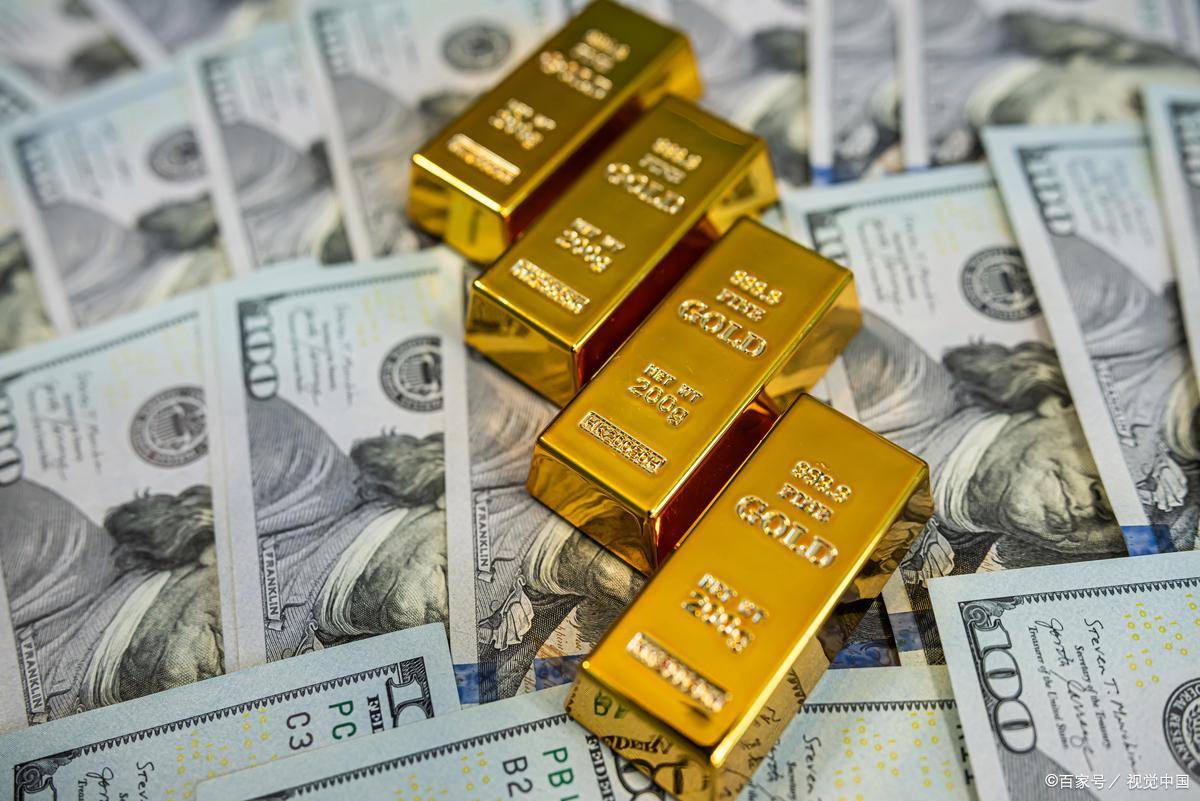
汇丰:美元或持续承压,预计2026年初触底
Sou Hu Cai Jing· 2025-11-03 04:11
Core Viewpoint - HSBC Global Investment Research suggests that the US dollar may remain under pressure due to expectations of interest rate cuts by the Federal Reserve and uncertainty regarding the selection of its chairman, with a forecasted bottom in early 2026 [1] Group 1 - The US dollar is expected to be sensitive to upcoming statements from multiple Federal Reserve officials this week [1] - Key economic indicators such as the ISM index and ADP employment data will be released, increasing the dollar's sensitivity [1] - The market is looking for clues regarding the December policy direction from these upcoming data releases [1]

金价回调是陷阱还是馅饼?世界黄金协会最新报告给出方向
Sou Hu Cai Jing· 2025-10-30 13:35
Core Insights - Global gold demand reached a record high of 1,313 tons in Q3 2025, with a total value of $146 billion, marking the highest quarterly demand ever recorded [1] - The surge in gold prices, which increased over 50% this year, was driven by geopolitical risks and market dynamics, although a recent price correction occurred due to easing tensions between the US and China [1][3] - Investment demand for gold has significantly increased, accounting for 55% of total net demand in Q3, with a year-on-year growth of 47% [6] Demand and Supply Dynamics - Global gold investment demand rose to 537 tons in Q3, driven by geopolitical uncertainties and a weakening dollar, alongside a fear of missing out among investors [6] - Central banks globally purchased a net total of 220 tons of gold in Q3, a 28% increase from the previous quarter and a 10% increase year-on-year, contributing to a total of 634 tons for the first three quarters of the year [7][8] - The total global gold supply reached 1,313 tons in Q3, a 3% increase year-on-year, with mine production up 2% to 977 tons and recycled gold supply up 6% to 344 tons [8][9] Regional Insights - In China, retail gold investment and consumption demand reached 152 tons in Q3, a 7% decline year-on-year, but the monetary value surged to 120.4 billion yuan, a 29% increase, marking the highest Q3 value on record [9][12] - Chinese gold ETF holdings saw a net outflow of 3.8 billion yuan in Q3, with total holdings decreasing by 5.8 tons, although the asset management total increased by 11% to 168.8 billion yuan [12][14] - Despite high gold prices, consumer spending on gold jewelry in China reached 66.5 billion yuan in Q3, a 14% increase year-on-year, indicating a willingness to purchase despite price pressures [12][13] Future Outlook - The World Gold Council anticipates that gold jewelry consumption may see seasonal improvements in Q4, although this could be tempered by high gold prices and the timing of the Chinese New Year [14] - Investment demand for gold is expected to remain strong due to ongoing geopolitical risks and potential monetary policy changes, including interest rate cuts in China [15][17] - The recent regulatory changes allowing insurance funds to invest in gold are expected to provide long-term support for gold investment demand in China [16]
美债突破38万亿,短期激增1万亿,全球银行抢黄金保值
Sou Hu Cai Jing· 2025-10-28 21:35
Core Insights - The U.S. national debt has surpassed $38 trillion, increasing by $1 trillion in just two months, raising concerns about confidence in the financial system [1][3] - The rapid increase in debt is attributed to long-term fiscal laxity, a mismatch in tax and spending structures, and uncertainty regarding future policies [3][5] - Central banks are increasingly reallocating their foreign exchange reserves, with a notable shift towards gold as a hedge against risks associated with U.S. debt and the dollar [5][7] Group 1: U.S. Debt and Economic Implications - The significant rise in U.S. debt is not a sudden occurrence but a result of ongoing fiscal policies and consumer behavior, leading to questions about who will ultimately bear the burden [3][5] - The International Monetary Fund (IMF) and Bank for International Settlements (BIS) data indicate a gradual erosion of the dollar's dominance, prompting central banks to adjust their reserve strategies [5][15] - The relationship between the dollar index and short-term interest rates is loosening, suggesting early signs of market reassessment of U.S. fiscal sustainability [15][17] Group 2: Gold and Currency Dynamics - Gold is increasingly viewed as a strong reserve asset due to its properties of value preservation and risk hedging, although it cannot fully replace the dollar in global transactions [7][13] - The concept of de-dollarization is being approached through marginal adjustments rather than a complete overhaul, focusing on local currency settlements and bilateral trade [7][11] - The internationalization of the renminbi is being debated, with potential paths for market-driven attraction and policy-led initiatives, each with its own risks and benefits [9][11] Group 3: Future Outlook and Recommendations - The transition towards a multi-polar reserve system and diversified settlement methods is expected to be gradual, with the dollar remaining dominant in the short term [17][19] - Investors are advised to maintain a balanced portfolio with hedging assets and foreign currency exposure while monitoring policy changes [19][23] - The evolution of the monetary system is a long-term process influenced by strategic rule-making and institutional reforms, rather than immediate shifts [21][23]

Annual gold price to top $4K per ounce for first time next year: analysts
New York Post· 2025-10-27 16:57
Core Insights - The annual average price of gold is projected to exceed $4,000 per ounce for the first time in 2026, with an average forecast of $4,275, significantly up from $3,400 predicted in July [1][3] - Gold prices have surged over 50% this year, reaching a record high of $4,381.58, marking the best performance since 1979 [3][14] - Analysts have also raised silver price forecasts, expecting an average of $38.45 per ounce in 2025 and $50 in 2026, up from previous estimates [14] Gold Market Dynamics - The current economic climate, characterized by inflation concerns, high interest rates, and a weaker US dollar, has driven investors towards gold as a safe haven [9][12] - The Federal Reserve's recent interest rate cuts are expected to make gold more attractive, as lower Treasury yields enhance its appeal [11] - Gold is increasingly viewed as a key portfolio asset rather than a speculative investment, reflecting a shift in investor sentiment [12] Silver Market Insights - Silver has experienced a 65% increase this year, reaching an all-time high of $54.47, driven by strong demand in solar technology, electric vehicles, and AI data centers [15] - Analysts predict that silver will continue to face structural supply deficits, supporting its price growth into 2026 [15][16] - Silver is seen as a more affordable alternative to gold, maintaining its demand among investors [16]

【招银研究|海外宏观】通胀低于预期,年内降息持续——美国CPI通胀数据点评(2025年9月)
招商银行研究· 2025-10-27 10:05
Core Viewpoint - The article discusses the recent U.S. CPI inflation data for September, which was lower than market expectations, indicating a lack of immediate inflation concerns and suggesting a smooth path for potential interest rate cuts by the Federal Reserve [1][6][15]. Group 1: Inflation Data Analysis - The U.S. CPI year-on-year growth rate increased to 3.0%, while the month-on-month growth was 0.3%, both below market expectations [1]. - Core CPI year-on-year growth slowed to 3.0%, with a month-on-month increase of 0.2%, also underperforming market forecasts [1]. - Strong inflation components are seen as temporary, while weak components appear more sustainable, indicating limited risk of a significant inflation rebound in the short term [6][15]. Group 2: Factors Influencing Inflation - Oil prices and tariffs are expected to push inflation higher in the short term, but international oil prices are not trending upward, and the impact of tariffs is diminishing [4]. - The automotive and housing markets are contributing to lower inflation, with indicators showing both sectors are weakening, which may lead to further softening of related inflation components [4][10]. - Employment remains under pressure, and the wage-price spiral does not support a rebound in inflation [4]. Group 3: Federal Reserve Interest Rate Outlook - The Federal Reserve is expected to cut rates by 25 basis points in both October and December, bringing the policy rate down to a range of 3.5% to 3.75% by year-end [4][15]. - The market has already priced in the rate cut expectations, leading to potential rebound risks for U.S. Treasury yields and the dollar [5][16]. Group 4: Market Reactions and Strategies - The article notes that the U.S. dollar overnight interest rate curve indicates a strong likelihood of rate cuts, with the 10-year Treasury yield remaining stable around 4.00% [16]. - The stock market has responded positively, with major indices reaching historical highs, reflecting investor confidence amid the anticipated rate cuts [16]. - A cautious approach to "rate cut trades" is advised, as the market may have fully priced in the rate cut expectations, limiting further declines in Treasury yields [5][17].


$20T IN SIGHT: Trump says tariffs fueling massive revenue boom
Youtube· 2025-10-22 12:45
Core Points - President Trump is set to meet with Chinese President Xi Jinping in South Korea amid escalating tariff tensions, with Trump acknowledging that a 157% tariff is not sustainable [1][3] - The U.S. is experiencing record-breaking tariff revenues, projected to exceed $215 billion for fiscal year 2025, with expectations of reaching nearly $300 billion by year-end [3][7] - The administration's strategy includes attracting international investment to strengthen the U.S. dollar and lower interest rates, which could benefit middle-class Americans [9][10] Tariff Impact - Tariffs are viewed as a means of national security and wealth generation for the U.S., with Trump asserting that they have led to significant revenue increases [2][5] - The tariffs have contributed to a reduction in the federal budget deficit, which was 4% lower in fiscal year 2025 compared to 2024, with a third of this reduction attributed to tariff revenues [13] - Despite the revenue gains, manufacturing employment has seen a decline of approximately 40,000 jobs, indicating mixed results in job creation [13] International Relations and Strategy - The administration is focusing on strengthening alliances with countries like Australia to counter China's influence, offering favorable trade conditions to isolate China [14][15] - The upcoming Supreme Court decision on the constitutionality of tariffs could have significant implications for the administration's trade strategy and national security claims [3][6] Financial Market Reactions - Financial markets have responded positively to the administration's fiscal policies, with benchmark Treasury yields reaching new intrayear lows, benefiting smaller companies and the tech sector [16][18] - Lower interest rates are seen as crucial for supporting growth in various sectors, including technology and housing, which are sensitive to borrowing costs [17][18]
Dollar wavers with politics, credit risks and trade tensions in focus
Reuters· 2025-10-20 14:52
Core Insights - The dollar experienced a slight increase against the yen as investors redirected their attention to political developments in Japan and the euro area while concerns regarding U.S. credit risk persisted [1] Group 1 - The dollar edged up against the yen, indicating a shift in investor sentiment [1] - Political developments in Japan and the euro area are influencing market dynamics [1] - Ongoing concerns about U.S. credit risk are affecting investor confidence [1]

美元和美债投资者:聚焦推迟通胀数据评估利率前景
Sou Hu Cai Jing· 2025-10-20 12:50
Core Viewpoint - Investors are closely monitoring delayed inflation data to assess the outlook for U.S. interest rates, especially in light of the government shutdown impacting key data availability [1] Group 1: Inflation Data Impact - The inflation data, scheduled for release on Friday, is critical for evaluating the future of U.S. interest rates [1] - If the inflation readings meet or fall below expectations, it may strengthen market expectations for deeper policy easing in 2025-2026, putting downward pressure on yields and the dollar [1] - Only significantly better-than-expected data could meaningfully challenge the current expectations for a series of rate cuts [1]