美国财政赤字

Search documents
特朗普签署“大而美”法案
财联社· 2025-07-04 23:54
Core Viewpoint - The "Big and Beautiful" tax and spending bill signed by President Trump is expected to significantly increase the U.S. fiscal deficit and debt risk, raising concerns about the long-term financial stability of the country [1][2]. Group 1: Legislative Overview - The "Big and Beautiful" bill was passed by the U.S. House of Representatives with a vote of 218 in favor and 214 against, following its approval in the Senate [1]. - The bill extends tax cuts for corporations and individuals initially implemented in 2017, including provisions to exempt tips and overtime pay from taxation [1]. Group 2: Financial Implications - Preliminary analysis indicates that the bill could increase the U.S. deficit by approximately $3.3 trillion over the next decade and reduce tax revenue for decades to come [1]. - The U.S. national debt currently stands at $36.2 trillion, and the bill is expected to exacerbate the structural deficit, making it more challenging for lawmakers to manage debt levels [2]. Group 3: Economic Concerns - The bill has been criticized for potentially leading to cuts in federal assistance and increasing long-term debt, particularly benefiting wealthy individuals and large corporations [1]. - The growing debt burden is projected to have negative implications for future generations, as highlighted by experts [2].

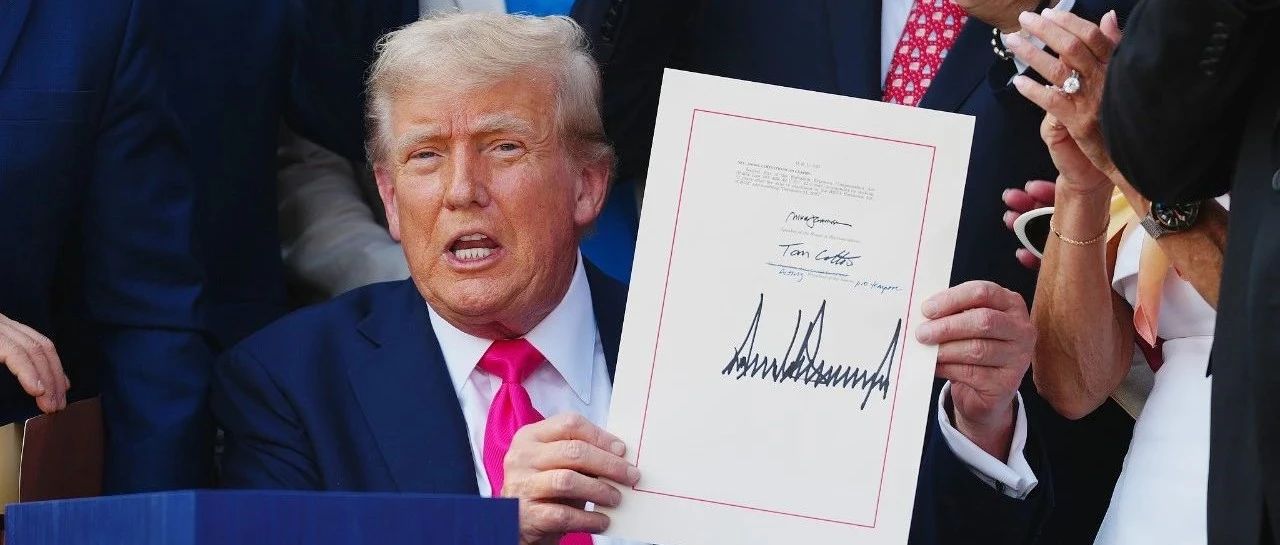
特朗普将签署“大而美法案”,“现在美国人更应该担心了”
Guan Cha Zhe Wang· 2025-07-04 13:58
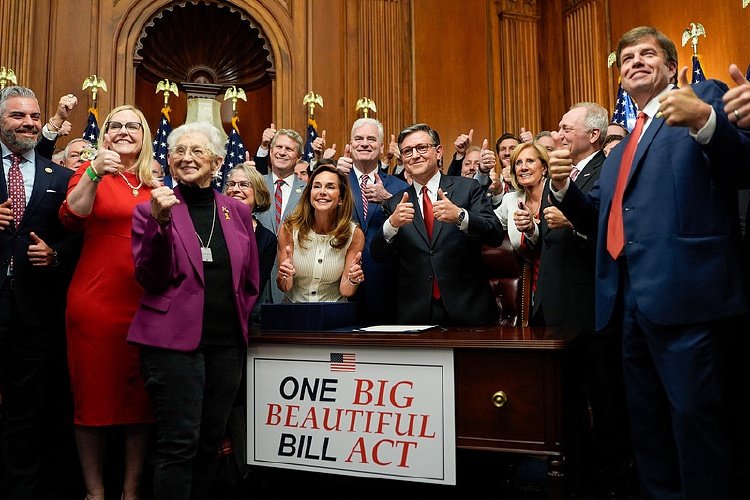
Core Points - The "One Big Beautiful Bill Act" was passed in the U.S. House of Representatives with a vote of 218 to 214, and is set to be signed by Trump on July 4 as a celebration of Independence Day [1] - The act is a significant tax and spending bill, extending the 2017 Tax Cuts and Jobs Act, raising the debt ceiling, and increasing spending on border security, defense, and energy production [1][3] - Critics argue that the act primarily benefits wealthy individuals and corporations while low-income populations bear the brunt of the cuts to social welfare programs [1][5] Tax Cuts and Revenue Impact - The act is estimated to reduce U.S. tax revenue by approximately $4.5 trillion over the next decade, with many tax cuts from the 2017 act being made permanent [3][4] - Corporate tax rates will be permanently reduced from 35% to 21%, and additional tax incentives for business investments will be extended [3][4] - The act raises the state and local tax deduction cap from $10,000 to $40,000, benefiting households earning between $200,000 and $500,000, particularly in high-tax states [4] Social Welfare and Healthcare Cuts - The act is projected to cut $1.5 trillion in spending over the next decade, disproportionately affecting low-income populations [5] - Medicaid funding is expected to be reduced by about $1 trillion, potentially leaving 12 million low-income individuals without healthcare coverage [7] - The tightening of eligibility for the Supplemental Nutrition Assistance Program (SNAP) may lead to a $300 billion reduction in spending [8] Debt and Fiscal Concerns - The Congressional Budget Office estimates that the act will increase the federal deficit by nearly $3.3 trillion over the next decade, raising annual deficit rates to around 7% [9] - The debt ceiling will be raised by $5 trillion, with projections indicating that by 2034, U.S. national debt could reach 124% of GDP, the highest in history [9][11] - Interest payments on federal debt are already surpassing military spending, raising concerns about long-term fiscal sustainability [11] Defense and Energy Spending - The act includes an additional $150 billion for defense spending, with a focus on missile defense systems and military priorities [13] - Approximately $175 billion will be allocated for immigration and border enforcement, including $46.5 billion for border wall construction [14] - The act significantly reduces incentives for clean energy while increasing support for traditional energy sectors, reflecting a shift in U.S. energy policy [14][15]
经济风暴“将至未至”,美联储7月降息希望破灭?
Sou Hu Cai Jing· 2025-07-04 13:00
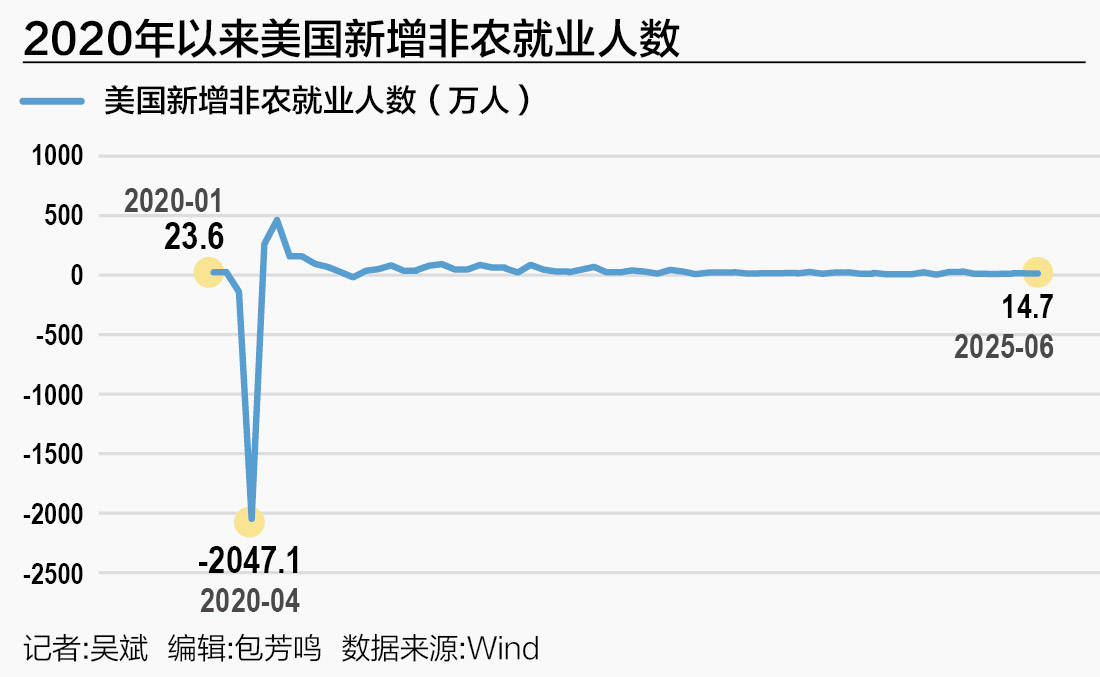
Economic Overview - The U.S. economy is currently supported by a tax and spending bill, with concerns shifting from stagnation to inflation risks [1] - The House of Representatives passed the "Big and Beautiful" tax and spending bill, with a vote of 218 to 214 [1] - Non-farm payrolls in June exceeded expectations, indicating resilience in the labor market despite uncertainties from trade and immigration policies [1][2] Employment Market Insights - In June, the U.S. added 147,000 non-farm jobs, surpassing the expected 106,000, with the unemployment rate unexpectedly dropping from 4.2% to 4.1% [2] - Government employment saw a significant increase of 73,000 jobs, particularly in state and local sectors related to education [2][5] - Private sector job growth was only 74,000, the lowest since October of the previous year, primarily driven by the healthcare sector [2][5] Legislative Impact - The "Big and Beautiful" bill extends tax cuts from 2017, benefiting high-income groups while negatively impacting low-income healthcare access [8] - The Congressional Budget Office estimates that the Senate version of the bill could leave 11.8 million Americans uninsured by 2034 [8] - The bill is projected to increase the annual GDP growth rate by 0.2 percentage points from 2025 to 2027, with a maximum effect of 0.6% [8] Long-term Economic Effects - The bill is expected to increase federal debt significantly, with estimates of over $4.5 trillion in spending costs over the next decade [9] - The International Monetary Fund warns that the bill contradicts recommendations for reducing fiscal deficits in the medium term [9][10] - Concerns are raised about the declining demand for U.S. Treasury bonds, which could lead to higher borrowing costs [10] Federal Reserve Outlook - The likelihood of a rate cut by the Federal Reserve in July has diminished, with a focus shifting towards inflation management [11] - The labor market's health, as indicated by the non-farm payroll report, provides the Fed with room to maintain current policies [11][12] - Future rate cuts may still be possible, with September being a likely timeframe for potential adjustments [12][13]
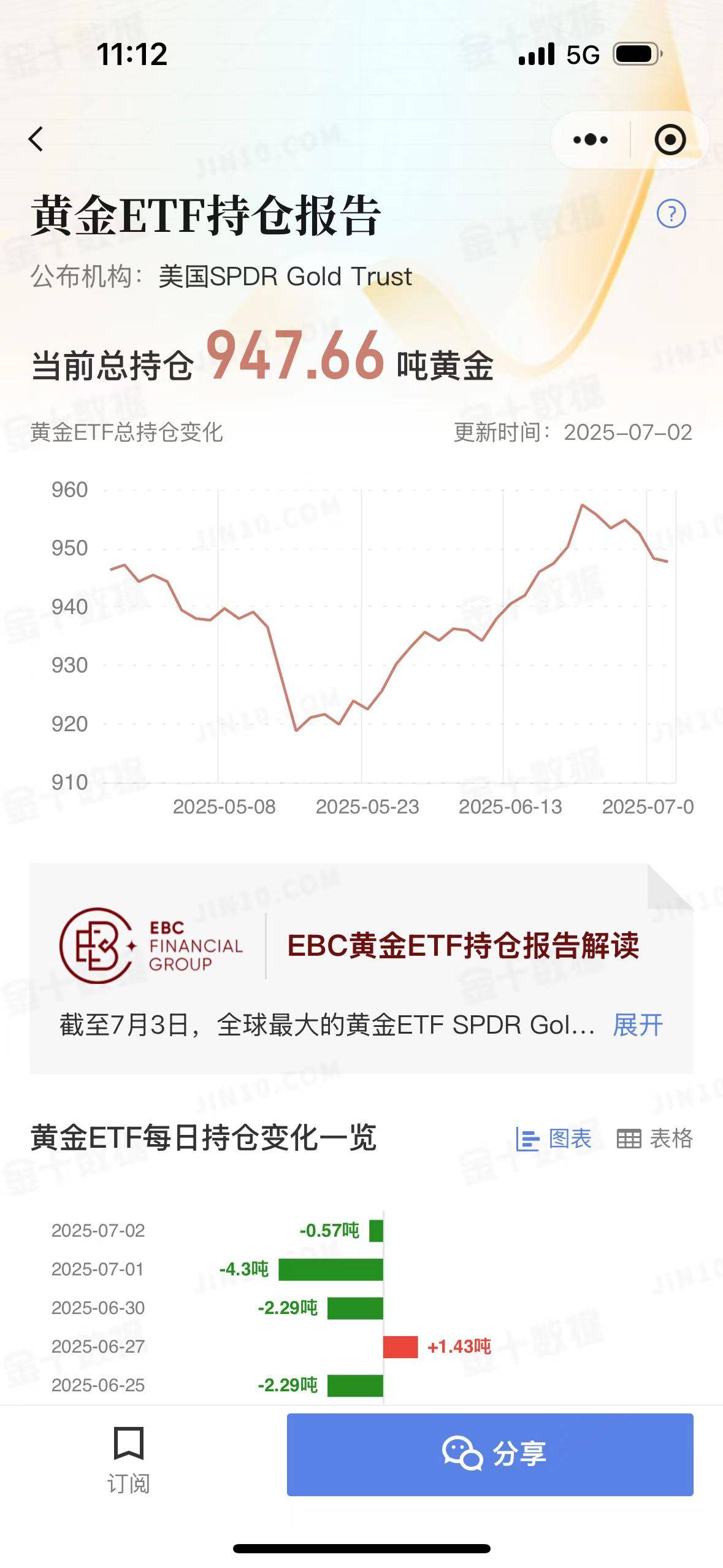
黄金ETF持仓量报告解读(2025-7-4)非农公布金价遭遇猛烈杀跌
Sou Hu Cai Jing· 2025-07-04 03:55
Group 1 - The current total holdings of the largest gold ETF, SPDR Gold Trust, stand at 947.66 tons, unchanged from the previous trading day [5] - On July 3, spot gold prices fell significantly, reaching a low of $3311.37 per ounce and closing at $3325.81 per ounce, a decrease of $31.09 or 0.93% [5] - The recent non-farm payroll report showed an increase of 147,000 jobs in June, exceeding expectations, and the unemployment rate unexpectedly dropped to 4.1%, indicating reduced inflationary pressures [5] Group 2 - The U.S. House of Representatives passed Trump's "Big Beautiful Bill," which raises the federal debt ceiling by $5 trillion, potentially increasing the government budget deficit by $3.4 trillion over the next decade [6] - Concerns over the U.S. fiscal deficit may enhance gold's safe-haven appeal, especially with the approaching deadline of July 9 and ongoing tariff uncertainties [6] - Strong central bank purchases and increases in gold ETF holdings are expected to continue supporting gold prices [6] Group 3 - Technical analysis indicates that the upward trend remains intact, with the next significant resistance level for gold at $3358 per ounce, and a breakthrough could lead to testing the $3400 level [6] - If gold prices fall below $3300, the next support level will be around $3250, which was the low on June 30 [6]
调查发现,美国财政赤字被视为市场的长期担忧
news flash· 2025-07-03 07:09
调查发现,美国财政赤字被视为市场的长期担忧 金十数据7月3日讯,德意志银行研究部在一份全球金融市场调查总结中说,明年美国财政赤字可能不会 成为市场的主要担忧。只有12%的参与者认为美国财政赤字将在明年对市场产生重大影响。然而,调查 发现,未来五年内这一数字上升到52%,只有8%的人认为财政赤字在同一时期不会产生影响。该调查 是在6月30日至7月2日期间,根据来自世界各地的420份回复进行的。 ...
突发!超10万人爆仓!一则利空,突然引爆!
券商中国· 2025-07-02 11:49
Market Overview - The cryptocurrency market experienced significant volatility on July 2, with Bitcoin dropping over 1.5%, Ethereum over 3%, and Cardano over 5% at one point. However, the losses narrowed later in the day [1][2] - Over 100,000 traders were liquidated in the cryptocurrency market within 24 hours, with a total liquidation amount of $261 million, primarily from long positions [3] Legislative Impact - The U.S. Senate passed the "Big and Beautiful" tax and spending bill on July 1, raising concerns about the potential increase in the U.S. fiscal deficit and the risk of government default if the spending cap is not raised later this year [3][4] - The bill includes extensions of tax cuts from Trump's first term, cuts to Medicare and nutrition assistance, and significant funding for immigration enforcement and defense [4][5] Economic Projections - The Congressional Budget Office estimates that the Senate version of the bill could increase the U.S. deficit by $3.3 trillion from 2025 to 2034, with modifications to healthcare programs potentially increasing the uninsured population by nearly 12 million by 2034 [6] Market Sentiment - The market sentiment remains cautious, with investors awaiting key economic data releases, including initial unemployment claims [3] - Cryptocurrency-related stocks also saw declines, with notable drops in companies like MicroStrategy and Coinbase, reflecting the overall risk-off sentiment in the market [3]

特朗普税改法案引发美国赤字担忧,黄金保持涨势
news flash· 2025-07-02 01:57
Core Viewpoint - The passage discusses concerns regarding the U.S. fiscal situation following the Senate's approval of President Trump's multi-trillion dollar tax reform, which is expected to significantly increase the national deficit and boost gold's appeal as a safe-haven asset [1]. Group 1: Tax Reform and Fiscal Concerns - The tax reform bill is projected to expand the deficit by $3.3 trillion over the next decade [1]. - Investors are increasingly worried about the implications of Trump's trade and economic policies on U.S. assets [1]. Group 2: Gold Market Response - Gold prices have remained around $3,340 per ounce, reflecting a 2% increase over the previous two trading days [1]. - The ongoing weakness of the U.S. dollar, currently at its lowest level since 2022, continues to support gold prices [1]. Group 3: Economic Indicators - A report indicating an increase in job vacancies in the U.S. has led to a rise in U.S. Treasury yields, although this pressure on gold prices is being offset by other factors [1].
贵金属:白银价格具备进一步上涨空间
Wu Kuang Qi Huo· 2025-06-30 02:00
Report Summary 1. Industry Investment Rating No industry investment rating is provided in the report. 2. Core View The report posits that silver prices have room for further increase. The Fed is likely to enter a new round of easing cycle in the second half of the year, driven by the heavy interest burden on US Treasury bonds due to the high policy - rate environment and the expected expansion of US fiscal deficits. This will drive up the price of silver [1]. 3. Summary by Directory 3.1 Trump Administration's Tax - Cut Policy and US Treasury Bond Issuance Pressure - The "Beautiful Big Bill" promoted by the Trump administration, which includes extending the main provisions of the 2017 Tax Cuts and Jobs Act and the state and local tax (SALT) deduction cap expiring in 2025, is expected to reduce US fiscal revenue by $3.54 trillion and increase the overall deficit by $2.77 trillion over the next ten fiscal years. The expansion of the US fiscal deficit is positively correlated with the gold price in the medium - term, and it has already driven the international gold price to a record high in the first half of the year [4]. - Affected by the US debt ceiling issue, the net issuance of US Treasury bonds was low in the first half of the year. As of May 2025, the cumulative net issuance of US Treasury bonds was $281.3 billion, a year - on - year decrease of 56.1%. The balance of the US Treasury's cash account decreased from $811.5 billion on January 29 to $334.6 billion in the week of June 25. After the debt ceiling issue is resolved, there is a financing gap of over $500 billion in the Treasury's cash account, indicating significant issuance pressure on US Treasury bonds in the second half of the year [5]. 3.2 Certainty of Fed Policy Rate Cut and Its Driving Factors - The Fed maintains a cautious attitude towards rate cuts due to potential inflation risks from tariff policies. However, the increase in the US import price index excluding food and energy is much lower than that during 2020 - 2022. US inflation data in May 2025 showed a decline compared to expectations and previous values. In the past, the Fed cut rates during the US election, indicating that its monetary policy is not completely free from political influence [9]. - In the recent interest - rate meeting, the Fed decided to keep the interest rate in the range of 4.25% - 4.50%. The dot - plot's median interest - rate expectations for 2025 remained at 3.9%, but were raised for 2026 and 2027. Seven voting members expect no rate cut this year, up from four in March. Powell believes the current interest - rate level is appropriate and that tariff - driven inflation may continue [10][11]. - President Trump is dissatisfied with the Fed's interest - rate policy, stating that a rate cut could save the US fiscal expenditure up to $1 trillion. As of May 2025, the cumulative interest expenditure on US Treasury bonds has reached $776 billion, and high interest rates will further increase the deficit during the subsequent concentrated issuance of Treasury bonds [12]. - There is a clear divergence within the Fed regarding the rate - cut rhythm. Fed Governor Waller and Vice - Chair Bowman are in favor of rate cuts. Considering the maintenance of the US dollar's credit and the large interest expenditure squeezing the overall fiscal expenditure, the Fed is certain to cut the policy rate in the second half of the year. It is recommended to maintain a long - position strategy for silver prices [13].
惊曝金价将破4000!美银说:别盯着打仗,政府欠债多才是主因!
Sou Hu Cai Jing· 2025-06-29 00:06
Group 1 - The core viewpoint of the article is that the future of gold is being driven by a restructuring of the global monetary system due to significant U.S. fiscal deficits, with predictions of gold prices soaring to $4,000 per ounce within a year [1] - The U.S. fiscal deficit is identified as a key driver behind the bullish outlook for gold, with projections of trillions in new deficits due to government spending plans, leading to increased issuance of U.S. Treasury bonds [1][3] - Central banks, particularly in emerging economies, are shifting their reserve strategies by selling U.S. Treasuries and increasing their gold holdings, reflecting a decline in trust in the dollar [3] Group 2 - Geopolitical tensions, such as the ongoing conflict in the Middle East, are causing short-term fluctuations in gold prices driven by investor sentiment, rather than being a long-term price driver [5] - Historical patterns show that gold prices often rise temporarily during the onset of conflicts but tend to revert to economic fundamentals as the situation stabilizes [5] - The long-term potential of gold is seen as undervalued, with current market allocations to gold at only 3.5%, indicating a lack of recognition of its value among investors [7] Group 3 - The persistent U.S. fiscal deficit is expected to lead to a series of repercussions, including increased Treasury yields to attract investors, which could further worsen the deficit and weaken the dollar, thereby benefiting gold [9] - The demand for gold as an alternative asset is anticipated to grow as central banks reduce their dollar reserves, with gold being viewed as a hedge against inflation due to potential quantitative easing measures by the Federal Reserve [10] - The article concludes that the true long-term trajectory of gold will be shaped by the restructuring of the global monetary system in response to U.S. fiscal challenges, marking the beginning of a new era for gold [11]


美银惊人预测:黄金价格或冲破4000美元大关,原因竟是这个!
Sou Hu Cai Jing· 2025-06-25 02:50
多数人认为,当前黄金价格飙升是地缘政治紧张局势所致,但美国银行(Bank of America)的分析师却持不同看法。他们预测,在未来一年内,黄金价格 有望触及每盎司4000美元的历史高位,而推动这波涨势的关键因素并非战争或贸易冲突,而是美国日益膨胀的财政赤字和对美元地位的深层担忧。 报告中写道:"虽然以色列和伊朗之间的战争随时可能升级,但冲突通常不会是黄金价格持续上涨的动力。因此,美国预算谈判的走向将至关重要,如果 财政赤字未能下降,其后果加上市场波动,最终可能会吸引更多买家。" 美银分析师还提到了一个日益明显的全球趋势:各国央行正在逐渐减少其储备中对美元资产(美国国债和美元)的持有,转而增持黄金。他们估计,各国 央行的黄金储备约占美国未偿公共债务的18%,而十年前这一比例仅为13%。 他们警告称:"这一数字应该给美国政策制定者敲响警钟。对贸易和美国财政赤字的持续担忧,很可能会促使更多央行将购买目标从美国国债转向黄金。" 欧洲中央银行的一项研究也印证了这一趋势:黄金在官方储备资产中的地位不断提升,已超越欧元,仅次于美元。据估计,截至2024年底,黄金占全球总 储备持有量的20%。尽管美元仍以46%的份额保持 ...