东数西算

Search documents
储能行业爆发前夜:政策市场双轮驱动,并非短期的“概念炒作”
Ge Long Hui A P P· 2025-10-08 23:43
Core Insights - The Chinese energy storage industry is experiencing unprecedented growth, driven by the introduction of the "New Energy Storage Scale Construction Special Action Plan" with a target of 180 million kilowatts and an anticipated direct investment of 250 billion yuan [1][3] - The cumulative installed capacity of new energy storage surpassed 100 GW by June 2025, marking a 32-fold increase compared to the end of the 13th Five-Year Plan, with a year-on-year growth of 68% in newly installed capacity in the first half of 2025 [1][3] - The industry is transitioning from a "mandatory storage" model to independent storage, with independent storage now accounting for over half of the installed capacity, transforming from an "accessory" to a "key player" in the electricity market [1][3] Policy Breakthrough - The "136 Document" released in February 2025 fundamentally altered the growth rules for energy storage, ending the administrative mandatory storage model and allowing for market-driven pricing [3][4] - The document promotes a phased approach, ensuring revenue for existing projects while pushing new projects towards competitive pricing, thereby enhancing companies' self-sustainability [3] - The policy has triggered a surge in installations, with domestic energy storage bidding volumes reaching 19.2 GWh from March to May 2025, a 210% increase year-on-year [3] Demand Explosion - Global energy storage installations reached 86 GW in the first nine months of 2025, a 92% increase year-on-year, with domestic installations contributing 41 GW and international installations 45 GW [5] - The user-side energy storage market is thriving, with significant profit opportunities due to price differences exceeding 1.2 yuan per kWh in provinces like Guangdong and Jiangsu, leading to a 230% increase in newly installed user-side storage [5][6] - Data centers emerged as a new demand driver, with a 280% year-on-year increase in newly installed storage capacity, accounting for 38.5% of total new installations [6] Technological Breakthroughs - The cost of domestic energy storage systems decreased from 1.8 yuan/Wh to approximately 0.8 yuan/Wh between 2020 and 2025, a 55% reduction, while efficiency improved from 85% to 92% [8][9] - Lithium batteries remain the dominant technology, comprising 82% of global energy storage installations, with significant advancements in cost and efficiency [8] - Alternative technologies are emerging to address the limitations of lithium batteries, including vanadium flow batteries and sodium-ion batteries, which are being tested in various applications [9] Market Dynamics - The "Matthew Effect" is becoming more pronounced in the energy storage industry, with leading companies experiencing revenue growth exceeding 100%, while smaller firms lag behind [10][11] - The upstream segment shows stable costs and scale advantages, while the midstream sector is becoming the value center of the industry [10] - Major companies like Sungrow and CATL are solidifying their market positions, with significant revenue growth in their energy storage businesses [11] Conclusion - The rise of the energy storage sector is not merely a short-term trend but a result of policy restructuring and improvements in the industry fundamentals [12] - The shift from policy dependency to value creation indicates a long-term growth potential for the sector, with a focus on quality enhancement rather than just scale expansion [12][13] - The energy storage market is expected to grow significantly, driven by technological advancements and increasing demand from data centers, positioning it as a critical component of the global energy transition [13][14]


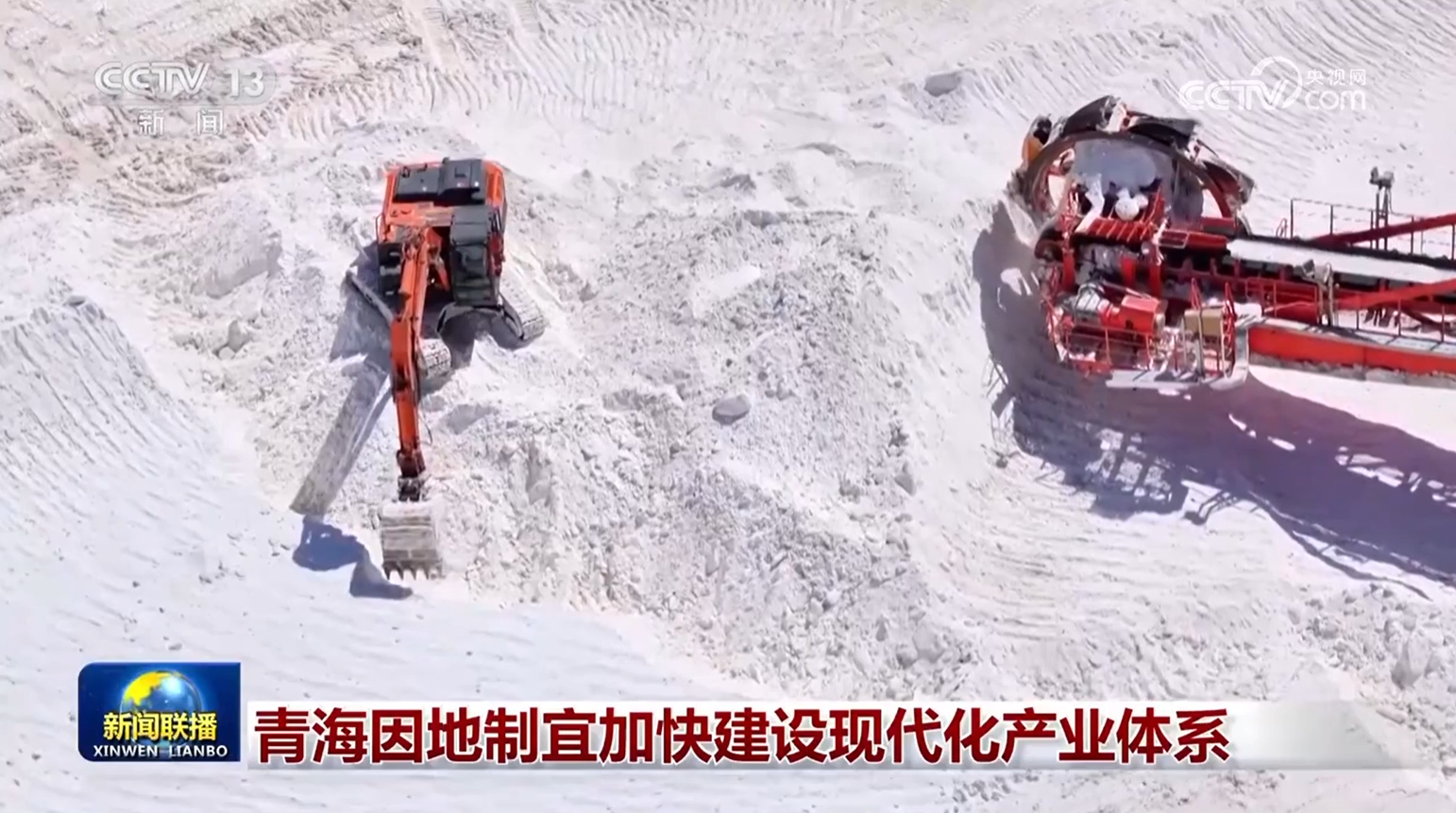
青海因地制宜加快建设现代化产业体系
Yang Shi Wang· 2025-10-08 12:50
Group 1 - The core viewpoint is that during the "14th Five-Year Plan" period, Qinghai is focusing on developing a modern industrial system with local characteristics, achieving high-quality development [1] Group 2 - In the Qaidam Basin, the Chaka Salt Lake is the largest potash fertilizer production base in China, with Qinghai accelerating the construction of a world-class salt lake industry base, forming five major industrial clusters: potassium, sodium, magnesium, lithium, and chlorine, with potash fertilizer production accounting for 77% of the national total [3] Group 3 - During the "14th Five-Year Plan" period, Qinghai's clean energy and new energy installed capacity reached 94% and 72% respectively, actively integrating into the national "East Data West Computing" strategy and the construction of an "integrated computing power network," with 19,000 standard racks and a computing power scale of 17,000 P established by August this year [5] Group 4 - As one of the five major pastoral areas in China, Qinghai has significant advantages in green and organic agriculture, with a strong focus on developing cool-season vegetables and cold-water fish industries, establishing major platforms such as the national-level plateau cool-season vegetable industrial park and the Longyangxia salmon industry technology park, leading to an increase in the export of Qinghai's specialty agricultural and livestock products [7]

储能行业爆发前夜:政策市场双轮驱动,万亿赛道蓄势待发!
Ge Long Hui A P P· 2025-10-08 07:29
Group 1 - The core viewpoint of the article highlights the unprecedented growth and transformation of China's energy storage industry, driven by significant policy changes and market dynamics [1][12]. - The introduction of the "136 Document" in February 2025 marks the end of mandatory energy storage requirements, allowing the industry to evolve from a policy-dependent model to a market-driven one [2][3]. - The energy storage capacity in China is projected to reach 100GW by June 2025, a staggering increase from the end of the 13th Five-Year Plan, with a 68% year-on-year growth in new installations in the first half of 2025 [1][4]. Group 2 - The demand for energy storage is being driven by multiple factors, including the rapid growth of data centers, which saw a 280% increase in new installations in the first nine months of 2025 [6][4]. - The energy storage market is experiencing a shift towards multiple revenue models, with projects increasingly capable of providing auxiliary services beyond just peak shaving [5][4]. - The cost of energy storage systems has significantly decreased, with prices dropping from 1.8 yuan/Wh to approximately 0.8 yuan/Wh between 2020 and 2025, while efficiency has improved from 85% to 92% [7][8]. Group 3 - The competitive landscape is becoming more pronounced, with leading companies like Sungrow and CATL showing revenue growth rates exceeding 100%, while smaller firms lag behind [11][10]. - The upstream segment of the supply chain is characterized by stable costs and scale advantages, with lithium iron phosphate cathode material prices stabilizing at 45,000 yuan/ton [9]. - The market for energy storage systems is expected to grow significantly, with global installed capacity projected to reach 1,200GW by 2030, representing a 380% increase from 2025 [6][12]. Group 4 - The article emphasizes that the rise of the energy storage sector is not a short-term trend but a necessary component of global energy transition, driven by the increasing reliance on renewable energy sources [13][12]. - The integration of AI and advanced technologies is enhancing the operational efficiency and profitability of energy storage systems, with customized solutions emerging for specific applications like data centers [8][7]. - The overall market dynamics suggest a shift from policy reliance to value creation, indicating a long-term growth trajectory for the energy storage industry [12][13].

储能行业爆发前夜:政策市场双轮驱动,万亿赛道蓄势待发!
格隆汇APP· 2025-10-08 07:27
Core Insights - The Chinese energy storage industry is experiencing unprecedented growth, driven by the introduction of the "New Energy Storage Scale Construction Special Action Plan," which sets a target of 180 million kilowatts of installed capacity and anticipates direct investments of 250 billion yuan [2] - The release of the "Document 136" marks the end of the mandatory energy storage era, allowing independent energy storage to emerge as a significant player in the electricity market [3][4] Policy Changes - The key breakthrough of Document 136 is the clarification that energy storage cannot be a prerequisite for new energy project grid connection, effectively ending the administrative mandatory energy storage model [6][7] - The policy encourages a shift from a "policy task" to a "profitable choice," enabling companies to cover costs through peak-valley arbitrage and ancillary services, thus changing the competitive focus from price to value [7][8] Demand Surge - In the first nine months of 2025, global energy storage installations reached 86 GW, a 92% year-on-year increase, with domestic additions of 41 GW and international additions of 45 GW [10] - The user-side energy storage market is thriving, with a 230% year-on-year increase in domestic installations, driven by significant price differences in provinces like Guangdong and Jiangsu [10][13] Technological Advancements - From 2020 to 2025, the cost of domestic energy storage systems decreased from 1.8 yuan/Wh to approximately 0.8 yuan/Wh, a 55% reduction, while efficiency improved from 85% to 92% [15] - Lithium batteries remain the dominant technology, accounting for 82% of global energy storage installations, with significant cost reductions and efficiency improvements [15][18] Market Dynamics - The "Matthew Effect" is becoming more pronounced, with leading companies experiencing revenue growth rates exceeding 100%, while smaller firms lag behind [18][20] - The upstream segment shows stable costs and scale advantages, while the midstream sector is becoming the value center of the industry, with leading companies like Sungrow and CATL capturing significant market shares [19][20] Future Outlook - The energy storage sector is not merely a short-term trend but a necessary choice for global energy transition, with predictions of substantial growth in installed capacity and market size by 2030 [22][23]
“5年烧掉3万亿美元”,越来越喂不饱的AI
吴晓波频道· 2025-10-08 06:09
Core Viewpoint - The article discusses the escalating competition among global tech giants in building AI infrastructure, highlighting the massive investments and the urgent demand for computing power in the AI sector, which is likened to a "power war" reminiscent of historical resource struggles [2][30]. Group 1: Investment and Spending - Current AI infrastructure spending by major companies has already surpassed half of the total expenditure on building the information superhighway over 20 years [24]. - NVIDIA announced a $100 billion investment in OpenAI for large-scale computing centers, marking a significant commitment to AI infrastructure [6][7]. - Morgan Stanley predicts that global spending on AI data centers will reach approximately $3 trillion over the next five years, equivalent to France's GDP in 2024 [7]. Group 2: Computing Power Demand - The demand for computing power in AI is experiencing explosive growth, with Microsoft Azure processing over 100 trillion tokens in Q1, a fivefold increase year-on-year [14]. - The training of top-tier AI models, such as ChatGPT-4, requires exponentially more computing power compared to previous versions, with a reported need 446 times greater than GPT-3 [14]. - By 2035, global computing power demand is expected to increase by 100,000 times, according to Huawei's report [15]. Group 3: Supply Constraints - The supply of computing power is constrained by chip availability and energy resources, with NVIDIA holding an 80% market share in AI chips but facing production and geopolitical challenges [15]. - Data centers are significant energy consumers, with projections indicating that by 2035, their electricity demand in the U.S. will double, representing the largest increase in energy demand since the 1960s [15]. - The rising electricity costs have led to a 267% increase in local electricity bills in areas with dense data center activity [15]. Group 4: Collaborative Strategies - Major companies are forming alliances to strengthen their positions in the computing power market, with NVIDIA's investment in OpenAI reinforcing its influence over AI chip supply [18][19]. - OpenAI's recent contracts with Oracle and NVIDIA illustrate a trend of strategic partnerships aimed at securing computing resources and enhancing operational capabilities [25][28]. - The competition has evolved from individual corporate strategies to a collaborative ecosystem where companies work together to establish industry standards and practices [29]. Group 5: China's AI Infrastructure Development - Chinese companies are also ramping up investments in AI infrastructure, with Alibaba planning to invest over 380 billion yuan in cloud and AI hardware over the next three years [32]. - The "East Data West Computing" initiative aims to optimize resource allocation across regions, addressing supply and demand imbalances in computing power [36]. - China's approach emphasizes a coordinated national strategy to enhance computing capabilities, contrasting with the more fragmented strategies of Western companies [40].

节后A股,三大机会和三个风险
Sou Hu Cai Jing· 2025-10-08 03:52
Core Viewpoint - The global market during the National Day holiday (October 1-7) showed a pattern of "Asia-Pacific leading, Europe and America following, and commodity structure differentiation," driven by technology growth and expectations of global liquidity easing [1] Group 1: Global Market Performance - The Asia-Pacific technology growth sector outperformed, with major indices showing significant divergence [2] - The Nikkei 225 index surged by 6.72%, leading global markets, driven by expectations of easing policies from Japan's new Prime Minister and improved corporate earnings [2] - The S&P 500 and Nasdaq indices rose by 0.39% and 0.57%, respectively, supported by AI industry catalysts and interest rate cut expectations [2] Group 2: Commodity Market Trends - Gold and industrial metals showed strong performance, while energy commodities exhibited significant differentiation [3] - Spot gold surpassed $3980 per ounce, with COMEX gold futures rising by 3.48% to cross the $4000 mark, driven by heightened risk aversion and expectations of Federal Reserve rate cuts [3] - Industrial metals like LME copper and LME zinc increased by 4.45% and 2.75%, respectively, due to supply constraints and demand from AI and new energy sectors [3] Group 3: Industry Insights - The technology growth sector is clearly defined, with macro policies and industry trends resonating [4] - The semiconductor sector is driven by a global inventory cycle bottoming out and AI computing demand, with stocks like SMIC and Hua Hong Semiconductor rising over 14% [4] - The Hong Kong market showed significant sector differentiation, with materials, information technology, and healthcare leading, while consumer staples and real estate lagged [4] Group 4: Future Outlook - The A-share market is expected to see a strong opening post-holiday, with technology growth likely to continue its momentum [5] - Focus areas for investment include technology growth (semiconductor equipment, AI computing, communication devices), safe-haven assets (gold), and cyclical sectors benefiting from policy expectations [5] - Caution is advised regarding potential volatility in the technology sector and external policy uncertainties, particularly related to the U.S. government shutdown [5]

“北京榜样•最美互联网从业者”提名人选|王薇薇:数字基石的编织者
Sou Hu Cai Jing· 2025-10-07 11:05
Core Insights - Wang Weiwei has over 30 years of experience in the IT and internet industry, contributing significantly to the development of China's strategic emerging industries and computing infrastructure [1] Group 1: Industry Development and Strategic Initiatives - Wang Weiwei has been a key figure in the data center and internet sectors, focusing on national policies and industry trends to drive business growth [2] - Since 2015, she has successfully expanded the company's financial client base in Beijing and later shifted focus to the Yangtze River Delta region, leading teams to analyze IDC industry trends and meet the computing needs of major internet companies [2] - The company has actively responded to the national "East Data West Computing" policy, establishing computing nodes in western regions and successfully attracting major internet companies to its facilities [4] Group 2: International Standards and Collaboration - In 2014, discussions with Uptime Institute led to strategic cooperation on data center certification and standards, enhancing the company's global competitiveness [5] - The establishment of the Data Center Standards Promotion Committee in collaboration with Uptime Institute and other industry leaders aims to align China's data center standards with international benchmarks [6] Group 3: Talent Development and Training - Wang Weiwei has emphasized the importance of training professionals in the data center industry, addressing the shortage of skilled personnel by incorporating international standards into training materials [7] - The company has organized study tours to the U.S. to understand the gaps in the domestic data center industry and to promote a comprehensive evaluation system for data centers [9] - Publications such as "Data Center Design and Operation Standards" have been developed to support industry training and have gained popularity among professionals [10]
中国实现全球突破!首座海底数据中心成功部署
是说芯语· 2025-10-05 01:49
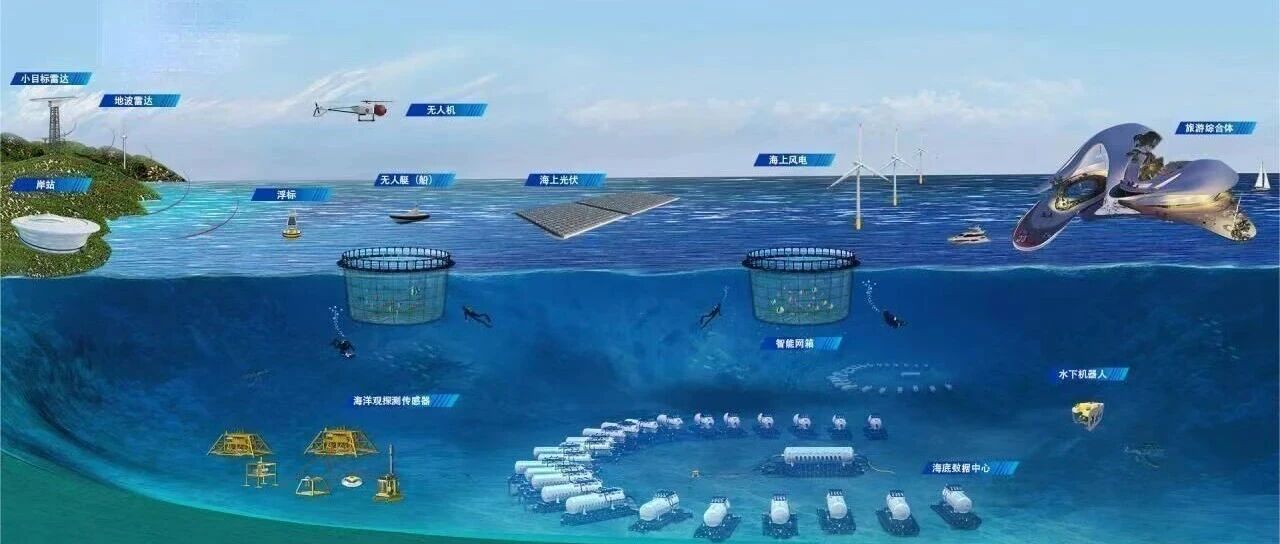
Core Insights - China has achieved a world-class breakthrough in the integration of marine technology and digital economy with the successful deployment of the world's first commercial underwater data center core equipment in Hainan Ling Shui, marking a significant advancement in digital infrastructure [1] Project Overview - The project was initiated in 2022 and is divided into three phases, with plans to deploy 100 data pods [3] - The first underwater data center is expected to be completed by November 2023, with the Hainan Underwater Intelligent Computing Center cluster set to be operational by February 2024 [3] Technological Advantages - The underwater data center utilizes seawater for natural cooling, achieving low energy consumption (PUE value below 1.1) and high reliability (server failure rate only one-eighth that of land-based data centers) [5] - The modular design allows for rapid deployment within 90 days, enhancing operational efficiency [3][5] Strategic Significance - This breakthrough provides robust green computing support for China's "East Data West Computing" initiative, addressing the urgent demand for efficient, low-carbon digital infrastructure in coastal regions [7] - It exemplifies the deep integration of the "Marine Power" and "Digital China" strategies, showcasing China's global leadership in cross-disciplinary technological innovation [7]
如果电力是AI发展的瓶颈,中国是否在领先?
傅里叶的猫· 2025-10-03 15:07
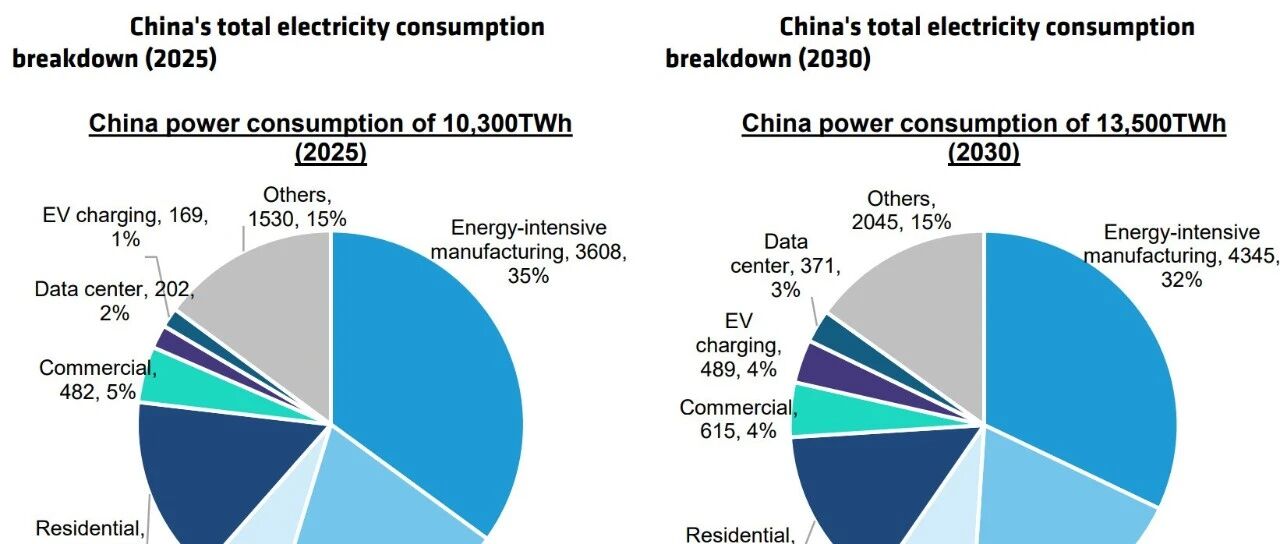
Core Viewpoint - The article emphasizes the critical role of electricity supply and energy storage in supporting the growing demand from AI data centers, highlighting that power availability has become a significant bottleneck for AI infrastructure development [1][7][9]. Electricity Demand and Supply - AI data centers are projected to significantly increase electricity demand, with the International Energy Agency estimating that annual electricity consumption from data centers will rise from 415 TWh in 2024 to 945 TWh by 2030, a growth of over 120% [7]. - In the U.S., data center electricity demand is expected to increase from 4% in 2023 to 12% by 2030, contributing nearly half of the new load [8]. - China is the world's largest electricity consumer, with annual consumption exceeding 9000 TWh, and is projected to reach 13500 TWh by 2030 [9][14]. Growth in Data Center Capacity - By 2030, China's data center capacity may reach 47 GW, with electricity consumption potentially exceeding 371 TWh, accounting for approximately 2.7% of national electricity demand [22]. - The compound annual growth rate (CAGR) for data center electricity demand in China is expected to be 13% from 2025 to 2030, reaching 400 TWh [20]. Renewable Energy and Infrastructure - China is leading in renewable energy, contributing 70% of global new power capacity additions, particularly in solar and wind energy [25]. - By 2050, solar and wind energy generation in China could increase tenfold to 18000 TWh, with these sources expected to account for 70% of total electricity generation [28]. - The expansion of the electricity grid is crucial, as solar and wind resources are primarily located in central and western regions, necessitating significant investment in infrastructure [32]. Energy Efficiency and Usage - The Power Usage Effectiveness (PUE) of data centers in China is expected to remain stable, with Beijing's data center cluster leading the industry at a PUE of 1.4 [23]. - The total electricity demand from data centers in China is projected to grow from 69 TWh in 2020 to 371 TWh by 2023, reflecting a significant increase in energy consumption [24]. Long-term Energy Strategy - Nuclear power is anticipated to play a role in China's energy mix, but its contribution is expected to be smaller compared to solar and wind energy by 2050 [35]. - The need for energy storage systems is highlighted, with an estimated requirement of approximately 3300 GW or 12000 GWh of storage capacity by 2050 to support renewable energy integration [29].
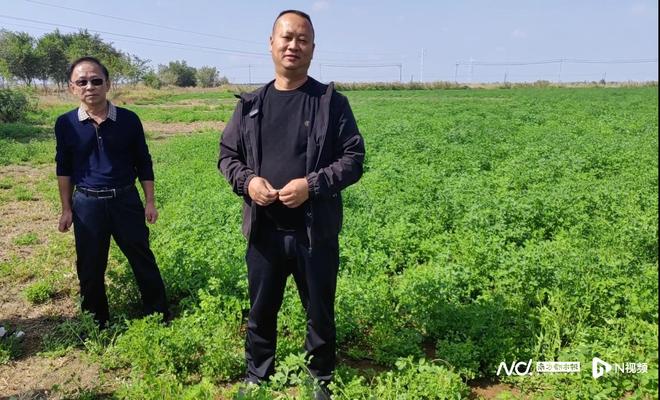
沙漠育草、戈壁追光、疆算东送!看科技如何赋能新疆向新向绿
Nan Fang Du Shi Bao· 2025-10-03 08:16
Core Insights - Xinjiang is transforming into a hub for clean energy and advanced agricultural practices, leveraging technology to enhance traditional industries and promote sustainable development [1][2][3] Group 1: Agricultural Innovations - The introduction of underground drip irrigation technology has significantly increased alfalfa yields, with reports of production rising by 200-300 kg per mu compared to traditional methods [4][5] - The "Two Irrigations and One Protection" technique has improved seedling survival rates in arid conditions from 40% to 90%, expanding alfalfa cultivation from 100,000 mu to over 300,000 mu [10][12] - The establishment of the Alfalfa Technology Institute in Hohotubie County focuses on integrating green industry practices, addressing challenges in water conservation and crop yield [7][9] Group 2: Renewable Energy Developments - The Hami molten salt tower solar power plant, with a capacity of 50 MW, utilizes advanced technology to achieve a thermal conversion efficiency 2-3 times higher than conventional photovoltaic plants, generating approximately 198 million kWh annually [16][19] - The plant's innovative design allows for continuous power generation, utilizing thermal storage to provide electricity even at night, thus enhancing energy reliability [16][20] - The project has significantly reduced carbon emissions, saving approximately 61,900 tons of standard coal and 154,800 tons of CO2 annually [16] Group 3: Digital and Computational Advancements - The establishment of the Hami (Yiw) Cloud Integration Computing Center is pivotal in transforming Xinjiang's energy-based economy into a digital economy, facilitating rapid data transmission and enhancing computational capabilities [24][25] - The region is developing a comprehensive computing network that integrates various computational resources, aiming to support national initiatives like the "East Data West Computing" project [26][27] - The Hami Energy Computing Integration Research Institute is actively recruiting and training talent to support the burgeoning computational industry, addressing the skills gap in this emerging sector [29][30]