人工智能(AI)

Search documents
如何看“TACO”?学者:特朗普取消威胁、增加关税豁免比收紧要多 | 全球洞见
Di Yi Cai Jing· 2026-01-22 10:54
"我认为,他们(法院)很有可能会在某种程度上限制这些关税。" 2026年初,资本市场因特朗普政府掀起的"夺取格陵兰岛"事件遭遇首只"黑天鹅"。 当地时间1月21日,事件再次反转。美国总统特朗普称,暂时不会按原定计划向反对美国得到格陵兰岛 的欧洲8国加征关税。 格陵兰岛问题会成为新一轮贸易战的催化剂吗?在新加坡国立大学东亚研究所的研讨会上,奥巴马政府 时期总统首席经济学家和白宫经济顾问委员会主席、哈佛大学肯尼迪政府学院教授福尔曼(Jason Furman)在回答第一财经记者提问时表示,在(该事件发生之前)的一周前,他大致认为,到2026年 底,美国的关税水平很可能会比开始时低。 而对于"特朗普总统是否总会退缩(TACO)"这一问题,他表示:"总的来说,特朗普总统取消威胁、增 加关税豁免的案例比收紧关税的案例要多。" 如何看待2026年美国关税前景 福尔曼解释道,关税在政治上相对不受欢迎。"目前美国政治辩论的核心经济问题是价格承受能力,也 就是物价水平,而关税显然会对此产生影响。" 新加坡国立大学东亚研究所所长席睿德(Alfred Schipke)和福尔曼等人共同撰写的最新一期《政策评 论》报告也显示,美国通胀的 ...

三星存储芯片涨价80%?官方回应!
半导体芯闻· 2026-01-22 10:39
Group 1 - Samsung's memory product prices are rumored to increase by 80%, but the company denies this claim, stating that no such price hike has been implemented across all products [1] - The semiconductor market is experiencing significant changes due to supply constraints and rising manufacturing costs, prompting agents to issue price increase notifications [1] - Memory module manufacturers have not received official price increase notifications, although they acknowledge that Samsung's memory prices are likely to continue rising without specific details on the extent [1] Group 2 - The U.S. government is intensifying pressure on the South Korean semiconductor industry, particularly targeting memory semiconductors, with threats of 100% tariffs if production does not occur in the U.S. [3] - U.S. Commerce Secretary Howard Lutnick indicated that companies wishing to produce memory chips have two options: pay 100% tariffs or produce in the U.S., specifically aimed at Samsung and SK Hynix [3] - The U.S. has previously warned about imposing tariffs on semiconductor imports, and recent announcements have escalated these threats, complicating the strategic calculations for South Korean semiconductor firms [4] Group 3 - Building memory production facilities in the U.S. is deemed impractical, despite Samsung's $37 billion investment in Texas and SK Hynix's $3.87 billion investment in Indiana for AI chip packaging [4] - The high costs associated with constructing semiconductor facilities in the U.S. make it unlikely for Samsung and SK Hynix to expand memory production there, as they are already heavily invested in domestic projects [5] - Analysts believe that the potential losses for Samsung and SK Hynix are minimal due to their dominant market share of approximately 70% in the global DRAM market, making it difficult for the U.S. to find alternatives [5][6]
美元走弱对亚洲市场意味着什么?经济学家:警惕“非常态”贬值的市场剧震
Di Yi Cai Jing· 2026-01-22 10:38
Core Viewpoint - The potential devaluation of the US dollar is seen as a "market stress scenario" that could lead to broader and more severe financial market turmoil, particularly affecting capital flows towards Asian markets [1][3]. Group 1: Causes of Dollar Devaluation - The chief economist of AMRO, He Dong, explains that during normalized periods, capital typically flows to Asia when the Federal Reserve eases monetary policy, while tightening usually results in capital outflows. However, the current situation requires a distinction between "normalized responses" and "market stress scenarios" [3]. - If the dollar's devaluation is perceived as a sign of diminished independence of the Federal Reserve, it may lead to unexpected market volatility, differing significantly from historical patterns of asset price movements [3][4]. - Morgan Stanley's report indicates that the transition towards a "multipolar world" is raising questions about the dollar's status, with US policies under President Trump being pivotal in determining the extent of the global shift away from the dollar [3][5]. Group 2: Political and Economic Factors - Concerns about the scale of US debt and its long-term repayment capacity are growing, compounded by Trump's use of tariffs as a political bargaining tool, which has strained NATO relations and increased policy uncertainty [4]. - The political pressure faced by the Federal Reserve Chairman and challenges to the independence of US institutions are casting a shadow over the dollar's future [4][5]. - The upcoming midterm elections in November 2026 and the nomination agenda for a new Federal Reserve Chairman are expected to heighten market concerns regarding the dollar [5]. Group 3: Financial Market Implications - He Dong emphasizes the importance of ensuring that financial institutions in the region have sufficient buffers to cope with potential market volatility, as the dollar is a crucial financing currency and Asian investors hold significant risk exposure to dollar assets [6]. - AMRO has placed "increased global financial market volatility" at the center of its risk assessment, indicating a medium level of potential impact and likelihood [6]. - The latest AMRO report highlights that global stock valuations remain high and credit spreads low, making the market particularly vulnerable to shifts in risk sentiment, with geopolitical tensions potentially leading to unexpected fluctuations in exchange rates and asset prices [7].

科技股最新财报季来了!英特尔打头阵,美股科技七巨头走势分化?
Xin Lang Cai Jing· 2026-01-22 10:08
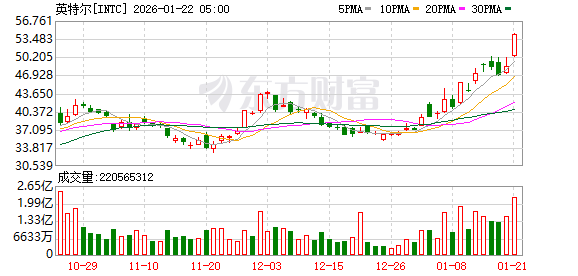
Group 1 - Intel will be the first major U.S. company to report earnings in the current tech earnings season, with the report expected after market close on the 22nd [1][2] - Artificial Intelligence (AI) is anticipated to be a focal point in this earnings season, with investors keen on how major tech firms will monetize their substantial investments in this area [1][3] - Investors are particularly interested in Intel's PC chip sales, with potential performance boosts from Microsoft's discontinuation of Windows 10 support, although ongoing global memory shortages may dampen sales outlook [1][3] Group 2 - The performance of the "Big Seven" tech stocks is showing divergence, attributed to the ongoing AI investment race, which has led to a differentiation among these companies [2][3] - Michael Hartnett, a strategist at Bank of America, noted that the initial grouping of these stocks was due to their size and operational strength, but the AI arms race has caused a split among them [2] - There is an expanding range of stocks benefiting from AI investments, suggesting that new "Big Seven" companies will emerge, particularly those demonstrating that AI is transforming their large businesses [2][3]

科技股最新财报季来了!英特尔打头阵 “七巨头”走势进一步分化?
Di Yi Cai Jing· 2026-01-22 08:37
Group 1: Earnings Reports and AI Investment Focus - Intel will be the first major U.S. company to report earnings after the market closes on the 22nd, with a focus on AI investments and PC chip sales [2] - Major tech companies like Amazon, Google, Meta, and Microsoft are expected to continue increasing their investments in AI data centers, with Amazon planning to invest $125 billion by 2025 [3][4] - Apple's earnings are anticipated to show strong growth driven by robust iPhone sales, with CEO Tim Cook predicting the first quarter will be the company's best ever [5] Group 2: Market Trends and Performance of Tech Giants - The "Seven Giants" of the tech sector have shown performance divergence, with only Alphabet and Nvidia outperforming the S&P 500 in the past year [7] - Concerns about the AI hardware cycle and valuation pressures are affecting Nvidia's stock, with potential gross margin compression due to rising memory prices [6] - Market analysts suggest that the differentiation among AI beneficiaries is becoming more pronounced, with companies that can effectively leverage AI investments likely to perform better [8][9] Group 3: Future Outlook and Sector Impacts - The market is expected to shift focus from major AI enablers to sectors that benefit from AI, such as healthcare, industrial, and financial industries [9][10] - Companies in the semiconductor sector are viewed favorably due to their involvement in AI infrastructure, with a preference for Asian semiconductor stocks due to attractive valuations [10]
科技股最新财报季来了!英特尔打头阵,“七巨头”走势进一步分化?
Di Yi Cai Jing· 2026-01-22 08:34
Core Viewpoint - The "arms race" in the AI sector has led to a divergence among the "Seven Giants" of the tech industry, with a growing focus on how these companies can monetize their substantial investments in AI technology [1][2]. Group 1: AI Investment and Financial Performance - Major tech companies like Amazon, Google, Meta, and Microsoft are planning to significantly increase their investments in AI data center infrastructure, with Amazon projecting $125 billion by 2025 and Google raising its capital expenditure forecast for 2025 to between $91 billion and $93 billion [4]. - Meta's CFO updated the company's 2025 capital expenditure expectations to a minimum of $70 billion, indicating that spending growth in 2026 will be driven by AI infrastructure costs and talent acquisition [4]. - Microsoft anticipates its capital expenditures will exceed $88.2 billion in 2026, with a record $34.9 billion spent in the first quarter of 2026, primarily on data centers and AI tool development [5]. Group 2: Market Expectations and Stock Performance - The market expects strong revenue growth for these companies, with projections of 21% growth for Amazon AWS, 25% for Microsoft's commercial cloud, 35% for Google's cloud business, and 30% for Meta's overall revenue [5]. - The divergence in stock performance among the "Seven Giants" has become evident, with only Alphabet and Nvidia outperforming the S&P 500 index in the past year, while Apple and Tesla have underperformed due to insufficient AI investments and slowing electric vehicle sales, respectively [8][9]. Group 3: Future Trends and Investment Focus - Analysts suggest that the market is beginning to differentiate between companies that can successfully leverage AI investments and those that may struggle, indicating a shift towards identifying "AI beneficiaries" in various sectors such as healthcare, industrial, and finance [10][11]. - The ongoing AI investment trend is expected to enhance productivity and efficiency across industries, with some companies experiencing significant reductions in technology update cycles due to AI advancements [11].




FDA罕见病证据原则(RDEP)
艾昆纬· 2026-01-22 08:31
Report Summary 1. Report Industry Investment Rating - Not provided in the content. 2. Core Viewpoints - The RDEP represents a significant evolution in FDA's approach to ultra - rare disease drug development, emphasizing scientific flexibility and innovation while maintaining strict evidence standards [22]. - Success under the RDEP depends on strategic integration of real - world evidence, strong confirmatory evidence, and careful cooperation with regulatory agencies [24]. 3. Summary by Related Catalog RDEP Introduction - In September 2025, the FDA released the Rare Disease Evidence Principles (RDEP), a new review process for ultra - rare, genetically - defined diseases, aiming to provide more clarity and predictability [3]. - RDEP is built on the precedent of the FDA's 2023 draft guidance, using a well - controlled clinical study to prove effectiveness and provide confirmatory evidence [4]. Comparison with Existing Pathways - RDEP formalizes the FDA's previous practices in rare - disease approvals, and it supplements existing mechanisms like accelerated approval, orphan drug designation, and RDEA pilot by clarifying evidence expectations [7][8]. Eligibility for RDEP - RDEP aims to support therapy developers for diseases that meet all of the following conditions: a sponsor can prove a well - controlled study with strong evidence to establish effectiveness; the disease is caused by a known congenital genetic defect; the situation is critical, rapidly progressing, and there is no disease - modifying treatment; and fewer than 1000 patients in the US are affected [8]. Role of RWE - Before accessing the RDEP process, RWE can be used to confirm the ultra - rare prevalence threshold of a disease by combining medical claims, EHRs, genomic databases, and patient registries, and AI - driven analysis can further refine these estimates [11][12]. - Once in the RDEP process, RWE plays a core role in natural history studies, patient registries, external comparator arms, and expanded access data and case reports [15]. Patient - Centered Development - In ultra - rare diseases, patient - centered drug development is crucial, and natural history studies and registries, especially those co - designed with advocacy groups, help identify important functional changes for patients and caregivers [18]. Time Considerations - Before starting a critical trial, sponsors should submit an application to their existing IND for each protocol they want to be reviewed under RDEP, including reasonable evidence to meet the inclusion criteria and prove the drug's safety and effectiveness [21]. Conclusion - RDEP provides a customized pathway for programs less likely to meet traditional requirements, and cooperation is key to accelerating treatment for patients in need [23][24].

“AI工程师”已上岗!微软 CEO 曝正尝试新学徒制模式:内部工程师的顶级实践全变
Sou Hu Cai Jing· 2026-01-22 08:21
整理 | 褚杏娟 最近的达沃斯论坛上,科技领袖们纷纷出来发表观点。 当 Google 的 Demis Hassabis 和 Anthropic 的 Dario Amodei 在讨论更宏观的 AGI 话题时,微软 CEO Satya Nadella 与英国前首相 Rishi Sunak 的对话,更聚焦在了 AI 应用的话题。 Satya 以自己参加达沃斯的准备工作变化为例,来说明在企业内部,AI 正在打破传统层级架构,让信息 流实现扁平化。 "自从我 1992 年参加以来,直到几年前,流程都没什么变化:我的现场团队会准备笔记,然 后送到总部进一步提炼。但现在我直接找 Copilot 说,"我要见 xxx,给我一个简介"。它会 给我一个全方位的视角。""我做的是立即把这个简介分享给所有部门的同事。" 他指出,企业 AI 应用呈现出明显的 "杠杆效应":初创公司能从零开始构建适配 AI 的组织,落地速度 更快;大型企业虽手握数据、资源优势,但传统工作流程与组织惯性带来的变革管理挑战更大。而无论 大小企业,都需经历 "思维转变 — 技能培养 — 数据整合" 的艰苦过程。 人才方面,他认为全球 AI 技术人才与初创公司 ...
瑞银首席:美国或成为自身成功的“受害者”
Di Yi Cai Jing Zi Xun· 2026-01-22 04:44
2026.01.22 作者 |第一财经 陈玺宇 封图 |等待进入特朗普讲话会场的观众(记者陈玺宇摄) 2026年1月21日,瑞士达沃斯。 一场演讲与一个投资决定 海菲尔提到的第一个背景,并非来自金融市场,而是政治叙事。 本文字数:1983,阅读时长大约3分钟 美国总统特朗普时隔数年后再次出席达沃斯论坛,并发表了特别讲话。随后,在与北约秘书长吕特会晤 后,特朗普称,暂时不会按原定计划向反对美国得到格陵兰岛的欧洲八国加征关税。 同一天,第一财经记者来到瑞银集团位于达沃斯小镇的办事处,采访瑞银财富管理全球首席投资总监马 克·海菲尔(Mark Haefele)。达沃斯论坛期间,瑞银集团高层代表常常在这栋低调的小楼里,同来自全 球各地的投资人与合作伙伴进行交流。 围绕美国、格陵兰岛和其他地缘政治局势的讨论在本届达沃斯论坛期间不曾断绝。此前一天,丹麦公共 投资机构"学界养老基金"宣布,将在本月底前抛售价值1亿美元的美国国债,在会场内外引发了不小的 讨论。 在海菲尔看来,这一事件本身并不足以动摇美国国债市场,但它所折射出的,却是全球投资者正在"边 际层面"重新审视美国资产敞口的现实。 "从某种意义上说,美国未来可能会成为自 ...

“非美投资趋势显著,中国股市更乐观,贵金属热潮将持续”
第一财经· 2026-01-22 03:08
Core Viewpoint - The article discusses the increasing popularity of non-US assets amid geopolitical uncertainties and the evolving dynamics of the US Federal Reserve, highlighting a bullish outlook on precious metals and the Chinese stock market [3][4]. Group 1: Non-US Investment Trends - Global markets are expected to see expanded participation, with many non-US economies outperforming the US stock market, driven by high US market valuations and a strong holding of US stocks [5]. - The US dollar is anticipated to weaken in the coming years, benefiting non-US assets, particularly emerging markets, as most debt issuance and investment sources in these economies are dollar-denominated [5][6]. - US investors are increasingly reallocating funds to non-US markets, as they recognize better returns outside the US, creating a self-reinforcing cycle of investment [5][6]. Group 2: Outlook on Chinese Stock Market - There is a positive shift in sentiment towards Chinese stocks, supported by government stimulus measures, particularly in manufacturing and infrastructure [7]. - The overall view on Chinese stocks is becoming more optimistic, with expectations of value creation opportunities amid fiscal and monetary easing [7]. Group 3: Comparison with Indian Market - The Indian market is experiencing a shift as investors compare it with China, leading to a sell-off of Indian assets in favor of Chinese investments [8]. - While the Indian market is not expected to perform poorly, it is currently viewed as expensive compared to other emerging markets [8]. Group 4: Federal Reserve Independence Risk - The article highlights concerns regarding the independence of the Federal Reserve amid escalating conflicts with President Trump, although the market does not seem overly worried about this risk [9]. - There is a potential scenario where the Fed may aggressively cut rates, which could lead to concerns about its independence and inflation risks [9][10]. - The expectation is that the Fed will maintain its independence, but new appointments may lean towards more dovish policies, potentially supporting further rate cuts [10][11]. Group 5: Precious Metals Bull Market - Precious metals, particularly gold and silver, are experiencing a bull market driven by geopolitical risks, policy uncertainties, and increasing demand [12][13]. - Gold prices are expected to rise further, with structural factors supporting this trend, while silver may have more volatility due to its speculative nature [13][14]. - Industrial metals are also projected to benefit from favorable demand dynamics, although trade and tariff issues may introduce volatility [14].