
高端化

Search documents
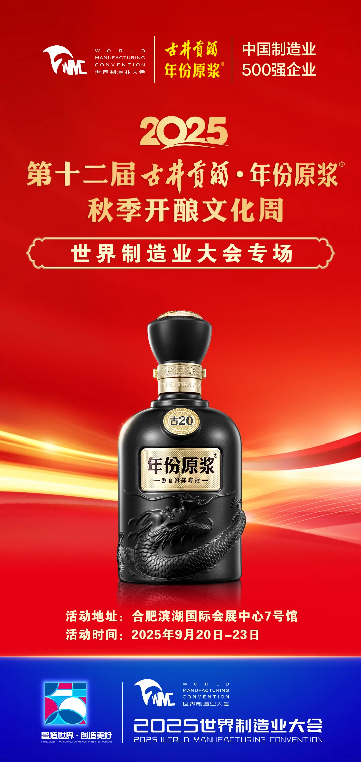
2025第十二届古井贡酒·年份原浆秋季开酿美酒文化周启动
Zheng Quan Ri Bao Zhi Sheng· 2025-09-21 12:40
Group 1 - The 2025 12th Gujinggongjiu Autumn Brewing Cultural Week is taking place from September 19 to 23, featuring a dual-city event in "Bozhou Gujing Wine God Square" and "Hefei World Manufacturing Conference Special Session" [1] - Anhui Gujinggongjiu Co., Ltd. is a strategic partner for the event, showcasing its transformation towards "high-end, intelligent, and green" manufacturing at the Hefei World Manufacturing Conference [3] - The event includes immersive experiences for consumers, such as engaging with traditional brewing techniques and participating in interactive activities [3] Group 2 - The "Yearly Original Light Gu20: Meet Hefei" tasting night on September 20 offers consumers a city tour and an immersive experience of "urban culture" and "innovative cocktail mixing" [4] - The event features cultural exchanges and discussions on the development opportunities for Chinese liquor, with participation from representatives of the Chinese Liquor Association [4][5] - Gujing Health is launching a new market for health-oriented products, integrating instant health drinks and cultural liquor experiences, emphasizing the company's commitment to health and wellness [5]


更绿色、更开放、更互联——在林交会感受林业发展新气象
Xin Hua Wang· 2025-09-20 15:54
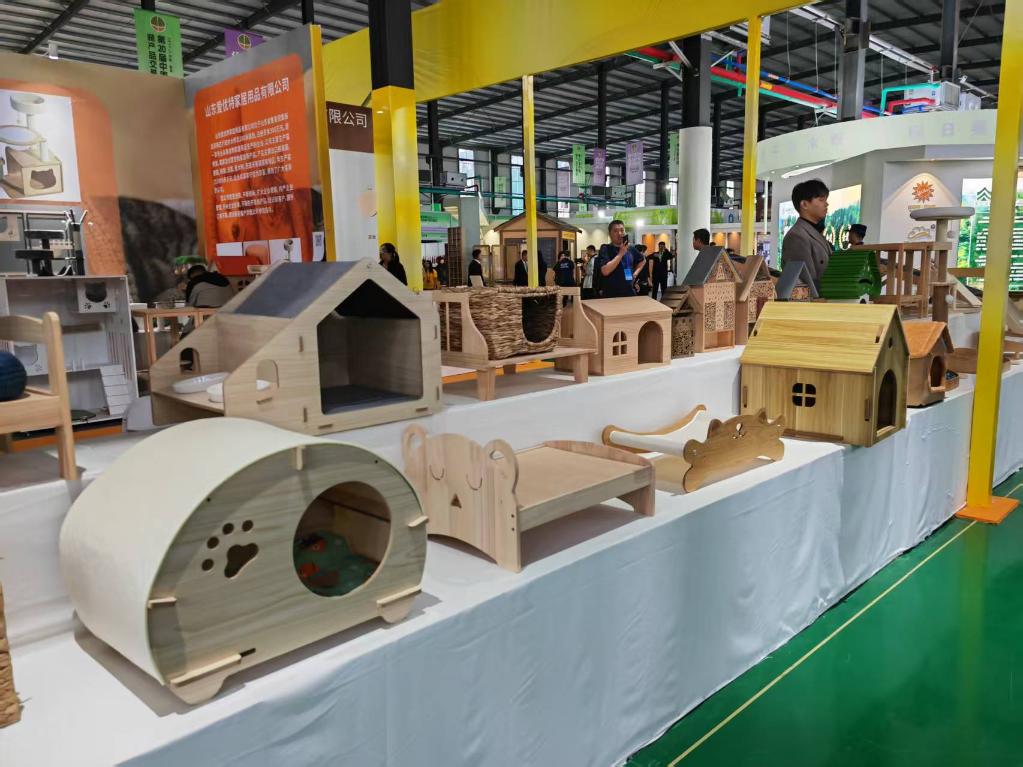
Group 1 - A cargo ship carrying 40 containers of formaldehyde-free density fiberboard arrived at Port of Pasir Gudang, Malaysia, indicating the global market integration of the wood industry in Heze, Shandong Province [1] - The 20th China Timber Products Trade Fair attracted 778 exhibitors and over 20,000 buyers, showcasing a vibrant atmosphere for negotiations and contracts [1] - The fair serves as a national-level forestry exhibition, the largest and most comprehensive in China, with Heze as its permanent venue, having successfully hosted 19 previous editions [3] Group 2 - Companies are increasingly focusing on ecological responsibility and consumer health, with products like moisture-proof and flame-retardant boards transitioning towards greener and higher-end solutions [2] - The fair provided a global platform for businesses, with international buyers expressing interest in high-quality Chinese furniture, highlighting the craftsmanship and reliability of Chinese manufacturing [3] - The event facilitated significant transactions, with over 40 foreign buyers attending and achieving an intended transaction amount exceeding 80 million yuan on the opening day [3] Group 3 - Cao County has developed into a billion-yuan level base for board processing, expanding from traditional paulownia wood processing to include pet furniture and other innovative products [4] - The fair showcased a variety of pet home products, reflecting the high-quality demands of modern pet consumers [4] - The Shandong government aims to leverage wood resources, enhance technological empowerment, and promote high-quality development in the forestry sector [6]
钢火淬新刃:钢铁行业兼并重组迈向深水区
Zheng Quan Ri Bao· 2025-09-19 15:45
Core Viewpoint - The Chinese steel industry is undergoing a transformation towards high-end, intelligent, and green development, driven by mergers and acquisitions that focus on resource integration and market expansion, as well as government policies encouraging industry consolidation [1][2][6]. Group 1: Industry Transformation - The steel industry is shifting from "physical accumulation" to "chemical integration," aiming for value creation rather than mere scale expansion [2][4]. - The Ministry of Industry and Information Technology has introduced the "Steel Industry Normative Conditions (2025 Edition)," which includes mergers and acquisitions as a key indicator for promoting efficiency and industry concentration [1][4]. - The integration of steel companies is expected to enhance operational efficiency and international competitiveness by eliminating redundant capacities and fostering collaboration across the industry [3][5]. Group 2: Case Studies of Successful Integration - China Baowu Steel Group exemplifies successful transformation through mergers, achieving a scale of "one billion tons" while transitioning from scale leadership to technological leadership [2][6]. - CITIC Special Steel has focused on niche markets, leading in seamless steel pipe production and bearing steel sales, demonstrating the effectiveness of targeted integration strategies [2][4]. - The merger between Ansteel Group and Benxi Steel Group resulted in significant cost reductions and efficiency improvements, showcasing the benefits of resource optimization [5][6]. Group 3: Global Expansion and Competitiveness - Chinese steel giants are actively pursuing global expansion to secure scarce resources, acquire advanced technologies, and enhance international branding [6][7]. - Hebei Iron and Steel Group's acquisition of a struggling Serbian steel plant illustrates the application of "chemical integration" principles abroad, leading to a turnaround in profitability [6][7]. - China Baowu's involvement in international projects, such as the Simandou iron ore project in Guinea, aims to establish a global value chain and enhance resource security [6][7]. Group 4: Technological and Environmental Advancements - The restructuring of steel companies has facilitated concentrated investment in R&D, enabling breakthroughs in advanced technologies and large-scale applications [4][5]. - The integration of digital and intelligent systems in production processes is enhancing operational efficiency and resource utilization [5][6]. - The industry's commitment to low-carbon transformation is exemplified by CITIC Special Steel's initiatives to reduce carbon emissions and energy consumption significantly [5][6].





卢伟冰回应“小米17系列改名”:不是蹭苹果热度,7是幸运数字!背屏花了10个亿
Mei Ri Jing Ji Xin Wen· 2025-09-19 14:01
Core Insights - Xiaomi's President Lu Weibing emphasized that the company is not merely riding on Apple's coattails, but rather has significantly improved its product capabilities [2][4] - The Xiaomi 17 series is described as a transformative product line for the company, marking a critical shift in its digital series with a comprehensive upgrade across all models [2][4] - The series includes three models: Xiaomi 17, Xiaomi 17 Pro, and Xiaomi 17 Pro Max, all of which will debut with the fifth-generation Snapdragon 8 Supreme mobile platform [2][4] Product Development - The Xiaomi 17 series has been designed with energy efficiency and durability in mind, with a substantial investment of 1 billion yuan (approximately 10 million) in the back screen technology [4] - Lu Weibing noted that while competitors may attempt to follow suit, the high costs associated with such advancements may deter them [4] Market Strategy - The company aims to attract more Apple users by ensuring compatibility with the iOS ecosystem through its own operating system, 澎湃OS [4] - Xiaomi has seen a gradual increase in Apple users transitioning to its devices, with 14% of Xiaomi 14 users and 16% of Xiaomi 15 users previously owning Apple products [4] Competitive Positioning - Xiaomi 17 series is positioned as a direct competitor to the iPhone, with a focus on superior imaging, battery life, and signal quality compared to Apple devices [4][7] - CEO Lei Jun reinforced the message that the Xiaomi 17 series represents a significant leap in product capabilities, directly challenging Apple's market position [7]

曾经“土掉渣”的手电筒,在海外杀疯了
Feng Huang Wang Cai Jing· 2025-09-19 13:48
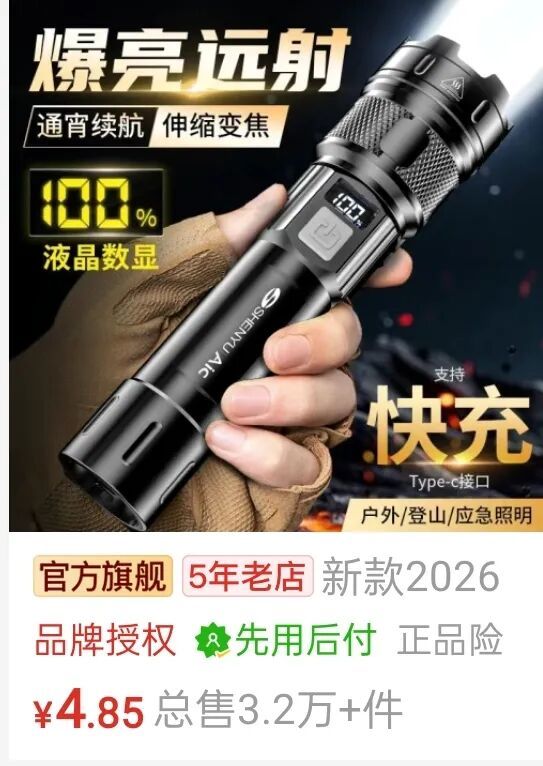
Core Insights - The traditional flashlight has seen a decline in demand in China due to the rise of smartphones and improved urban lighting, leading to its status as a non-essential item [3][4] - Conversely, in North America and Europe, high-end flashlights are experiencing a resurgence, with significant sales driven by outdoor and tactical markets [4][7] Market Overview - The global flashlight market is projected to reach $7.52 billion by 2025 and $10.29 billion by 2030, with a compound annual growth rate (CAGR) of 6.48% [9] - North America is the largest market segment, driven by the demand for high-end, professional-grade flashlights [9] Company Performance - Chinese companies Olight and Nitecore are leading the high-end flashlight market, with Olight achieving over 1.2 billion yuan in sales in 2023, 99% of which came from overseas [11] - Nitecore reported annual revenue of $20 million from its independent sales channels, with products sold in over 100 countries [11] Product Innovation - Olight's Prowess flashlight features 5000 lumens, USB-C charging, and multiple lighting modes, catering to various user needs from outdoor adventures to emergency situations [12] - Nitecore employs targeted marketing strategies, collaborating with outdoor athletes and influencers to promote their products within niche communities [12][14] Consumer Trends - The demand for flashlights has shifted from basic illumination tools to multifunctional lighting solutions that cater to specific lifestyles and activities [14][15] - Companies are innovating by creating lightweight, portable products for everyday users and high-performance models for outdoor enthusiasts and tactical applications [14]
中国船舶:重组促科研融合,助力高端绿色转型,提升全链技术与盈利
Quan Jing Wang· 2025-09-19 13:05
Core Viewpoint - China Shipbuilding participated in the "Communicating Value and Building Confidence for the Future" event, highlighting the integration of research and development capabilities post-restructuring with China Shipbuilding Industry Corporation [1] Group 1 - The company indicated that prior to the restructuring, there was significant overlap in ship types among its shipyards [1] - Important technological breakthroughs have been achieved in various fields such as container ships, LNG ships, bulk carriers, and government vessels in recent years [1] - Post-restructuring, the integration of research systems will enhance efficiency, reduce costs, and improve profitability through technology sharing and collaborative efforts [1]

水羊股份:EDB持续在全球拓展Day SPA专业渠道,并将继续布局高奢酒店、院线渠道
Cai Jing Wang· 2025-09-19 08:43
Core Insights - The company is focusing on high-end brand development and global expansion, particularly through partnerships with luxury hotels and the establishment of exclusive spa experiences [1][2] - The launch of the first EDB brand castle store in Shanghai is expected to enhance the brand's luxury image and has already shown promising sales performance [1] - The company aims to strengthen its brand assets and improve its product system to drive sustained growth for the PA brand, leveraging its high-end brand management capabilities [1][2] Group 1 - The company is collaborating with several five-star hotels globally, including Rosewood, St. Regis, and Waldorf, to expand its EDB spa services [1] - The management highlighted a significant focus on high-end hotel and cinema channels to penetrate luxury consumer segments [1] - The PA brand has experienced rapid growth in the first half of the year, supported by the company's strong brand assets and management expertise [1] Group 2 - The company is optimizing its business layout under the strategy of "high-end and globalization," prioritizing the development of high-end brands like EDB, PA, and RV [2] - There is a continuous improvement in the overall gross margin, indicating enhanced operational quality and efficiency [2] - The company is committed to achieving high-quality revenue growth and improving profitability through meticulous expense management as the share of high-end brands in revenue increases [2]
国资委主任张玉卓:高端化、智能化、绿色化正成为中央企业的鲜明特征
Zhong Guo Xin Wen Wang· 2025-09-19 07:33
Group 1 - The core viewpoint of the news is the progress made by central enterprises in China during the "14th Five-Year Plan" period, focusing on high-quality development and modernization of the industrial system [1] - Central enterprises have significantly increased investment in strategic emerging industries, with an annual growth rate exceeding 20% in new industries, and 30 enterprises are actively developing world-class industrial clusters in fields such as new information technology, new energy, new materials, and high-end equipment [1] - The pace of industrial transformation and upgrading is accelerating, with over 800 application scenarios laid out under the "AI+" initiative, and the establishment of 1,854 smart factories, leading to a reduction in energy consumption and carbon emissions per unit of output value by 12.8% and 13.9% respectively [1] Group 2 - The Sina Finance ESG Rating Center provides 14 ESG services, including information, reports, training, and consulting, to help listed companies promote ESG concepts and enhance sustainable development performance [2] - The center aims to promote sustainable development and responsible investment, establishing a platform for ESG information and ratings, and facilitating the development of ESG assessment standards in China [2] - Through the ESG Rating Center, Sina Finance has launched multiple ESG innovation indices to offer more choices for investors concerned about corporate ESG performance [2]
智能化、绿色化、高端化引领扬州制造立体起势进击“陆海空”
Xin Hua Ri Bao· 2025-09-18 23:34
Group 1: Automotive Industry - The automotive industry in Yangzhou is transitioning from traditional manufacturing to intelligent manufacturing, exemplified by SAIC Volkswagen's upgrade to a Jiangsu base and plans for electric vehicle production [2] - Jiangsu Zejing Automotive Electronics Co., Ltd. is producing a variety of head-up display (HUD) products, with an expected shipment volume of over 900,000 units this year, indicating rapid adoption in mainstream vehicles [2][3] - Yangzhou's supply chain for new energy vehicles includes key components like IGBT modules from BYD Semiconductor and innovative lithium battery materials from Nali New Materials, with the automotive-related industry scale exceeding 20 billion [3] Group 2: Shipbuilding Industry - Yangzhou's shipbuilding industry has evolved from relying on imports to developing advanced capabilities, focusing on green and intelligent technologies, with significant projects like the world's first ammonia dual-fuel chemical tanker [4][5] - New Ocean Shipbuilding is constructing multiple medium-sized bulk carriers, while the industry is experiencing a global boom, leading to increased demand for new vessels [4] - The introduction of advanced technologies has enabled faster delivery times and reduced construction cycles, enhancing competitiveness in the market [4][5] Group 3: Aviation Industry - The establishment of the AVIC airborne "Common Technology Platform R&D Base" in Yangzhou is set to advance the local aviation industry by facilitating the transfer and transformation of cutting-edge technologies [7] - Yangzhou has seen rapid growth in its aviation sector, with 85 enterprises now operating in various fields, including technology R&D and aircraft systems [7][8] - Companies like Baosheng Technology are experiencing significant growth in aviation orders, with a year-on-year increase of over 40%, reflecting the sector's expanding opportunities [8]
江苏恒兴新材料科技股份有限公司关于召开2025年第二次临时股东大会的通知
Shang Hai Zheng Quan Bao· 2025-09-18 19:41
Group 1 - The company will hold its second extraordinary general meeting of shareholders in 2025 on October 14 at 10:00 AM [2][6] - The meeting will be conducted using a combination of on-site and online voting methods [2][3] - The online voting will take place on the same day from 9:15 AM to 3:00 PM [3] Group 2 - The company plans to use a total of RMB 40,744.41 million and RMB 26,255.59 million to increase capital or provide loans to its wholly-owned subsidiaries, Ningxia Gangxing and Shandong Hengxing, for investment projects [21][27] - The company has approved the use of self-owned funds amounting to RMB 37.26 million and raised funds of RMB 145.91 million for capital increase to Ningxia Gangxing [21][25] - The company will terminate some investment projects and adjust the use of raised funds based on market conditions and strategic planning [34][42] Group 3 - The company raised a total of RMB 1,029.20 million from its initial public offering, with a net amount of RMB 905.39 million after deducting issuance costs [23][37] - The company has established special accounts for the management of raised funds to ensure compliance with regulations [37][29] - The company plans to allocate RMB 26,772.80 million of uninvested raised funds to new projects, including a 100,000-ton/year multi-carbon aldehyde alcohol ester project and a research and marketing center construction project [35][41]
