
自动驾驶

Search documents
MOGOX与LG电子达成战略合作
Jing Ji Wang· 2026-02-04 09:03
作为全球领先的自动驾驶全栈技术与运营服务提供商,蘑菇车联通过"前装量产+视觉与固态激光 雷达融合"技术路线,显著提升了系统的一致性与可靠性,使目标感知距离提升超50%,漏检率/误检率 下降70%,接管率降低两个数量级,且大幅降低了研发与硬件成本,为自动驾驶巴士规模化落地奠定坚 实基础。其自研的新一代端到端自动驾驶系统MOGO AutoPilot,融合MogoMind物理世界多模态大模 型,通过海量真实路况数据训练,能够模拟人类司机的驾驶逻辑,在复杂场景中快速生成最优驾驶决 策。 当前,适逢全球自动驾驶产业从封闭场景向城市主干网跨越的关键期,技术协同与生态共建成为行 业发展趋势。在1月初的中韩商务论坛上,中韩双方共签署32份合作文件,自动驾驶成为重点合作领 域。同时,韩国提出《提升自动驾驶汽车产业竞争力计划》,目标是2027年实现L4级自动驾驶商业 化,跻身全球自动驾驶前三,并将光州指定为韩国首个"自动驾驶实证城市",全面推进自动驾驶技术研 发及服务落地。 此次战略合作契合了中韩两国在人工智能、自动驾驶等战略新兴领域的合作共识。蘑菇车联将持续 以技术创新为核心,联合autonoma等生态伙伴全面整合技术能力与市 ...
估值8740亿,自动驾驶最贵独角兽诞生
3 6 Ke· 2026-02-04 08:51
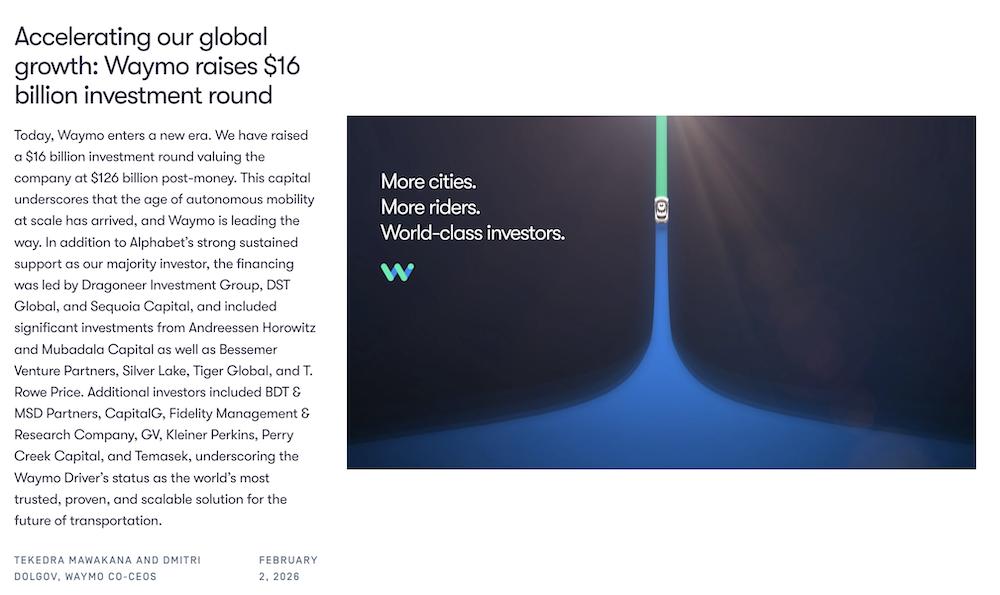
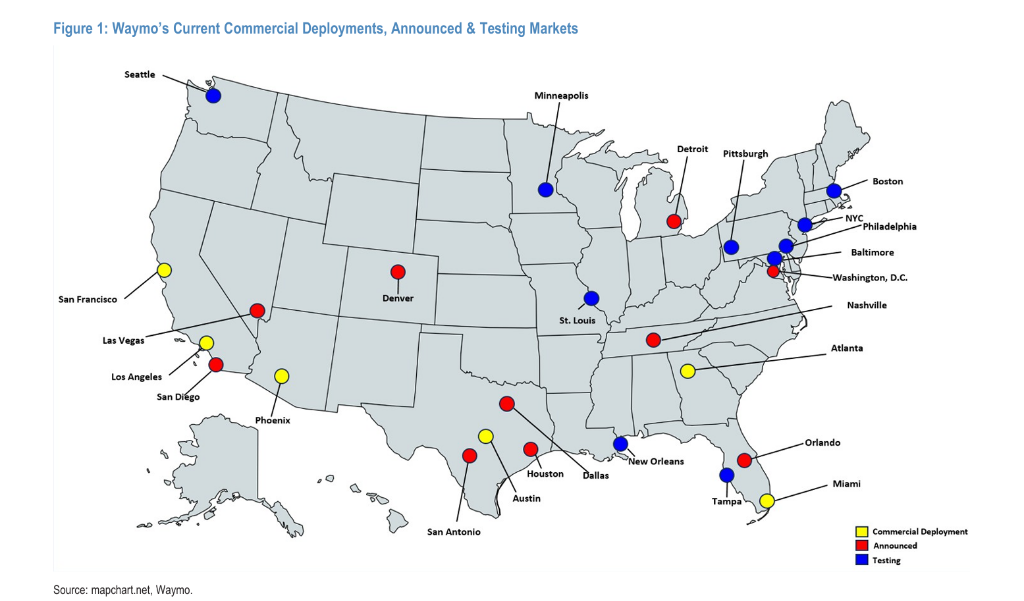
Core Insights - Waymo, the autonomous driving company under Alphabet, has completed a financing round of $16 billion, significantly increasing its post-money valuation to $126 billion, a 180% increase from the previous valuation of $45 billion [4][5][7]. Financing Details - The latest financing round is nearly three times larger than the previous one, making it the largest investment in the global autonomous driving sector to date [4]. - The funding will primarily be allocated to three areas: expanding ride-hailing services in over 20 cities by 2026, increasing fleet size, and optimizing the sixth-generation autonomous driving system [7]. - Alphabet led the financing, contributing approximately $13 billion, which accounts for three-quarters of the total investment [7]. Operational Performance - Waymo has achieved significant operational milestones, with weekly paid ride orders exceeding 400,000, a nearly 150% increase from earlier in the year [9]. - The company has accumulated over 20 million ride orders and has driven over 200 million kilometers, reducing severe accident rates by 90% [9]. - Despite recent operational challenges, including multiple incidents and regulatory scrutiny, Waymo continues to progress towards commercial viability [10][11]. Future Growth Potential - Waymo's CEO predicts that the company could make a "substantial" financial contribution to Alphabet by 2027 [13]. - The company plans to diversify its revenue streams beyond ride-hailing to include local delivery and long-haul trucking, as well as licensing its autonomous driving technology to automakers [13]. - The operational cost per mile for Waymo is currently estimated to be higher than competitors like Tesla, highlighting the need for cost reduction strategies [14][16]. Competitive Landscape - Other autonomous driving companies, particularly in China, are rapidly advancing, with lower operational costs and expanding service areas [16][17]. - Waymo's current hardware costs are significantly higher than those of competitors, which may impact its long-term profitability [14][16].

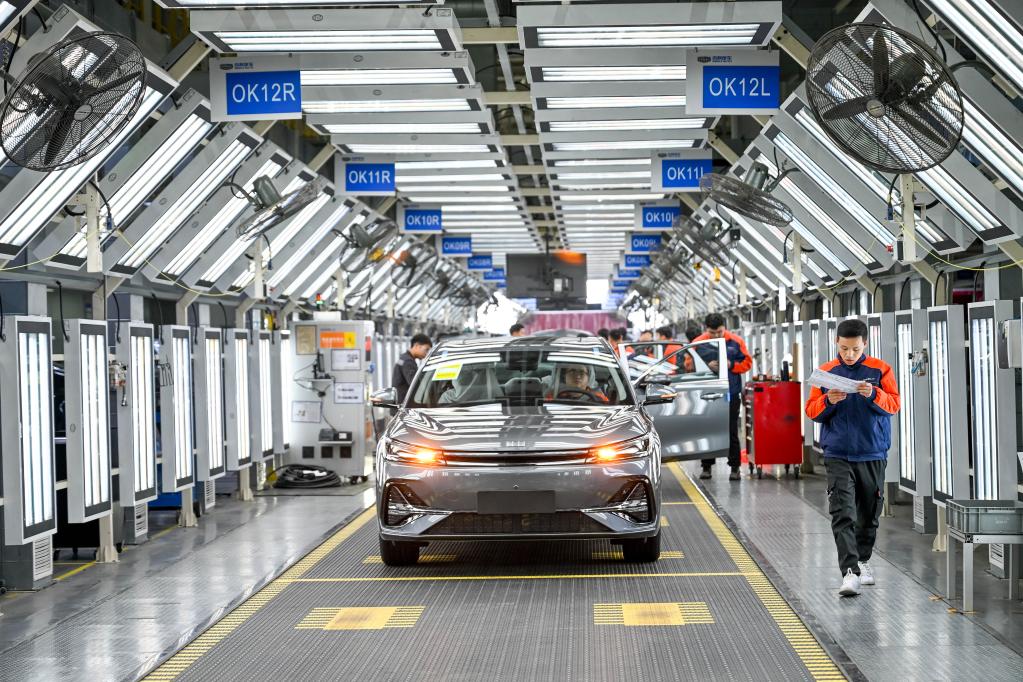
新华视点丨汽车消费“隐形门槛”逐步破除,老百姓买车用车能否更轻松?
Xin Hua Wang· 2026-02-04 08:40
Core Viewpoint - The article discusses the ongoing policy relaxation in the automotive sector aimed at enhancing consumer demand and facilitating industry growth by removing unreasonable restrictions on vehicle purchase, use, and exchange [1][4][5]. Group 1: Policy Changes - The "14th Five-Year Plan" suggests improving consumption promotion mechanisms and eliminating unreasonable restrictions in sectors like automotive and housing [1]. - Policies are being implemented to shift from purchase management to usage management for vehicles, with cities like Beijing and Guangdong taking steps to increase vehicle purchase quotas for families without cars [5]. - The second-hand car market is undergoing significant reforms, with the removal of migration restrictions for certain vehicles, enhancing the ease of transactions across regions [5][11]. Group 2: Market Dynamics - In 2025, China's automotive production and sales reached 34.53 million and 34.40 million units, respectively, marking a year-on-year increase of 10.4% and 9.4%, maintaining its position as the world's largest automotive market [10]. - The second-hand car market transaction volume surpassed 20 million units in 2025, achieving a historical high [10]. - The relaxation of restrictions is expected to broaden consumer choices and reduce costs, thereby enhancing market efficiency and stimulating growth, particularly for small and medium enterprises [10][11]. Group 3: Future Opportunities - The automotive sector is evolving into a platform for various lifestyle services, with significant potential in the aftermarket, including modifications and rentals [6][14]. - The government is promoting the development of new consumption scenarios related to automotive experiences, such as events and camping, to stimulate further growth [6][14]. - The industry is also focusing on the integration of smart and connected vehicles, with policies being relaxed to accelerate their testing and commercialization [7][8][11]. Group 4: Challenges Ahead - Despite progress, the automotive consumption chain still faces deep-rooted challenges, particularly in the second-hand market, where information asymmetry remains a significant barrier [13]. - Recommendations include enhancing data sharing for vehicle assessments and establishing clearer regulations to ensure transparency in transactions [13][14]. - The automotive finance sector is currently limited, particularly for second-hand vehicles, which complicates transactions; expanding financing options could alleviate these issues [13][14].

估值超千亿美元!摩根大通首次覆盖Waymo:预测到2030年订单量超过2.77亿次,CAGR高达79%
Hua Er Jie Jian Wen· 2026-02-04 07:40
摩根大通首次发布Waymo估值模型,预计这家Alphabet旗下的自动驾驶公司将在未来五年实现爆发式增长。该行预测,到2030年Waymo的年度订 单量将从2025年的1500万次飙升至2.77亿次,复合年增长率高达79%,总预订额将接近60亿美元,占据美国网约车市场约6%的份额。 这一预测发布之际,Waymo刚刚完成160亿美元的融资,估值达到1260亿美元,距离上一轮56亿美元融资仅相隔15个月。Waymo在公告中表示, 新资金将使公司"以前所未有的速度向前推进"。在此期间,Waymo的每周付费订单量已从15万次增长近三倍至超过40万次,2025年全年完成1500 万次订单。 据追风交易台消息,摩根大通分析师Doug Anmuth在2月3日发布的报告中认为,Waymo的车辆规模预计将从2025年底的不到3000辆扩张至2030年 底的超过35000辆,复合年增长率达67%。2026年,Waymo车队规模有望翻倍至约5725辆,提供超过3500万次订单,创造超过8亿美元的总预订 额。 该行认为,自动驾驶将扩大整体市场规模,Waymo的大部分增长将来自增量市场,但也会从Uber和Lyft等传统网约车平台夺取部 ...
【Tesla每日快訊】 Tesla火力全開:中國即將統治交通,美國還不動?🔥馬斯克超長線布局曝光(2026/2/4)
大鱼聊电动· 2026-02-04 07:35
大家好我是大鱼 美国正面临 一个决定 21世纪交通霸权 的十字路口 如果国会 不立即更新 自动驾驶法规 中国将主导 全球Robotaxi 与自驾技术标准 美国将彻底 失去领导地位 Tesla与Waymo 罕见联手 将在参议院 听证会上发出 同样的警告 这不只是企业呼声 而是价值 万亿美元的 战略竞赛 堪比当年太空赛跑 这场听证 会将 决定美国是 领跑还是落后 大家不要错过 今天的精彩内容 OK let's go 特斯拉的股票 周二收盘 是421.96% 全天上涨了 0.055% 美元 涨幅是0.013% 成交量是 5551万股 第一部分 Tesla警告国会 Tesla又要上 国会作秀了 Tesla向参议员们 发出警告 如果美国不赶紧 更新自动驾驶法规 中国就会变成 21世纪交通老大 美国全都会 输光光! 这就是明天 要上演的真实戏码 这不就跟当年 美国拼死登月 绝不让苏联 抢先一样? 感觉自动驾驶 科技的未来 就卡在这一关了 这次Tesla的 车辆工程副总裁 Lars Moravy 要亲自上阵 代表公司出席 参议院商务委员会 的听证会 标题叫 上路吧 Mac: 自驾车的未来 Hit the Road The ...

消息称福特与吉利商谈合作,包括共享车辆技术
Xin Lang Cai Jing· 2026-02-04 05:15
Core Viewpoint - Ford Motor Company and China's Geely are in discussions regarding a potential collaboration, focusing on utilizing Ford's manufacturing space in Europe for producing vehicles targeted at that market [1][2]. Group 1: Collaboration Discussions - The two companies are negotiating for Geely to use Ford's factory space in Europe to manufacture cars for the region [1][2]. - Discussions also include a potential framework for sharing vehicle technologies, including autonomous driving technology [1][2]. - Negotiations regarding European manufacturing have reportedly made significant progress, with Ford sending a delegation to China to strengthen talks [1][2]. Group 2: Background and Context - Geely executives met with Ford leadership in Michigan last week, indicating ongoing engagement between the two companies [1][2]. - The negotiations have been ongoing for several months, but details remain private as discussions continue [1][2]. - Ford has stated that it engages in discussions with various companies on multiple topics, with outcomes varying [1][2]. Group 3: Strategic Implications - A partnership with Geely could help Ford catch up with global competitors in connected car technology and autonomous driving, areas where Tesla is prioritizing development [1][2]. - Ford's CEO, Jim Farley, has publicly emphasized the need to close the competitive gap with Chinese automakers [1][2].


福特汽车与吉利据报就一项合作进行谈判
Ge Long Hui A P P· 2026-02-04 05:00
Core Viewpoint - Ford Motor Company is in negotiations with Geely regarding a potential collaboration that may involve allowing Geely to utilize Ford's factory space in Europe [1] Group 1: Collaboration Details - The discussions include establishing a potential framework for technology sharing, which encompasses vehicle technologies such as autonomous driving [1]
多行业联合人工智能2月报:公募增配光通信、半导体设备、封测,减配芯片设计、游戏、广告
Huachuang Securities· 2026-02-04 04:25
Strategy - Public funds increased allocation to optical communication (+2.1 pct), semiconductor equipment (+0.3 pct), and packaging/testing, while reducing allocation to chip design (-1.3 pct), gaming (-0.8 pct), and advertising (-0.3 pct) in Q4 2025[13] - The market saw a slight decrease in the TMT sector's share of active equity funds from 39.8% in Q3 2025 to 38.0% in Q4 2025[13] Electronics - The PCB industry is expected to maintain high growth due to its heavy asset nature, with capacity release and product structure optimization driving non-linear performance improvements[33] - Data center construction is recovering, significantly increasing storage requirements for AI servers, leading to an optimistic outlook for storage prices in 2026[34] Computing - The emergence of end-side agents and data infrastructure is driving AI technology towards system-level collaboration and deeper industry integration[35] Media - The competition for AI traffic entry is intensifying, with major companies accelerating monetization in advertising and e-commerce, particularly during the Spring Festival[36] - OpenAI is preparing for an IPO in Q4 2026, with a projected valuation between $750 billion and $830 billion after the latest funding round[36] Robotics - The humanoid robot industry is transitioning from concept validation to commercialization, with companies showing growth potential in key components and solutions[37] - Investment opportunities are emerging in incremental component markets, driven by the evolving aesthetic preferences of the robotics market[37] Automotive - Zeekr 9X received an L3 testing license, while Tesla has begun operating a driverless Robotaxi service in Austin[38] - Geely and Jianghuai Automotive are recommended for their low valuation and strong order performance, with Geely's expected PE ratio over 6 times indicating potential for rebound[38]


马斯克要建大型芯片工厂,特斯拉真能自己造芯片?
Feng Huang Wang· 2026-02-04 03:32
Core Viewpoint - Tesla's future is increasingly expected to rely on AI rather than electric vehicles, necessitating stronger control over hardware for autonomous driving, robotics, and AI training, leading to the proposal of building a "TeraFab" chip factory [1] Group 1: Feasibility of Chip Manufacturing - The perception that new entrants must achieve cutting-edge technology like TSMC's 3nm and 5nm processes is misleading; there exists a viable middle ground where companies can produce chips suitable for AI workloads without reaching the highest standards [2] - Tesla's potential chip factory would likely target the 7nm technology node, which is still relevant for AI and data center applications, despite being a generation behind the latest advancements [2] Group 2: Challenges in Achieving Manufacturing Goals - Achieving the 7nm technology benchmark is not straightforward; it requires advanced equipment, clean facilities, and a skilled workforce, particularly engineers experienced in reducing chip defect rates [3] - Initial production could take three years or longer, with high material waste and a lengthy trial-and-error process before achieving usable output [3] Group 3: Economic Viability and Risks - Even if Tesla meets the technical requirements, it faces significant economic challenges; TSMC's capital expenditures exceed $40 billion annually, supported by a diverse customer base, which Tesla cannot replicate as it does not plan to sell chips externally [4] - The construction cost for a chip factory is estimated at a minimum of $20 billion, with a long investment recovery period, potentially spanning decades [4] - Execution risks are substantial, as evidenced by Intel's struggles with transitioning to 10nm chips and the operational challenges faced by Tesla in its automotive production [4][5] Group 4: Historical Context and Lessons - GlobalFoundries serves as a cautionary example; after acquiring IBM's chip business, it concluded that advanced chip manufacturing was economically unfeasible within three years [6] - Tesla may encounter dual risks similar to those faced by Intel and GlobalFoundries, which could lead to value destruction, often becoming apparent only after significant capital investment [6]

特斯拉20260203
2026-02-04 02:27
Summary of the Conference Call on Tesla and the Autonomous Driving Industry Company and Industry Involved - **Company**: Tesla - **Industry**: Autonomous Driving and Electric Vehicles Key Points and Arguments Overall Sentiment on Autonomous Driving - The current enthusiasm for autonomous driving is perceived to be at a low point, primarily due to a lack of recent catalysts in the industry [1][2] - Elon Musk is focusing more on ambitious projects like SpaceX and AI, which has led to a decrease in attention towards autonomous driving [2] Future Projections for Autonomous Driving - Three main areas of focus for the future of autonomous driving: 1. Urban autonomous driving penetration expected to increase significantly by 2026, with companies like Chery, BYD, and Geely making advancements [2] 2. The rollout of Level 4 (L4) Robot Taxis is anticipated around mid to late 2026, which could disrupt the automotive industry [3] 3. The integration of robotics and autonomous driving is expected to enhance the value of automotive manufacturers [5] Tesla's Financial Performance and User Growth - Tesla reported nearly 1.1 million paid Full Self-Driving (FSD) users, a significant increase from 400,000 in 2023, indicating a 38% year-over-year growth [9][10] - The subscription user base has more than doubled since last year, reflecting growing confidence in Tesla's autonomous capabilities [11] Robot Taxi Deployment and Safety Data - Currently, around 500 Robot Taxis are operational in North America, primarily in the Bay Area and Austin, with a monthly growth rate exceeding 100% [12] - The expectation is that by the end of 2026, unsupervised FSD could cover 25% to 50% of the U.S. [12] - A significant drop in regulatory oversight for autonomous vehicles has been noted, with Austin initiating a no-safety-driver Robot Taxi service [13] Accident Data and Safety Analysis - Between June and November, 481 accidents involving Robot Taxis were reported, with over 54% occurring while vehicles were stationary [19] - Tesla recorded 10 accidents, with 6 being dynamic collisions and 4 occurring while stationary, indicating that many incidents are not directly attributable to the autonomous technology [20] - The overall safety of Robot Taxis is considered high, with no fatalities linked directly to Tesla's autonomous driving technology [22] Comparison of Tesla and Waymo - Waymo reported 491 accidents, with a higher proportion occurring during dynamic driving situations compared to Tesla [20][23] - Tesla's accidents primarily involved minor collisions, often due to environmental factors rather than failures in autonomous technology [24] Industry Outlook and Investment Opportunities - Companies like Nexperia and Horizon Robotics are expected to benefit from the growth in autonomous driving technology [28][30] - The potential for significant advancements in the robotics and autonomous driving sectors is anticipated, driven by technological innovations [30][31] Other Important Insights - The integration of robotics and autonomous driving is seen as a strategic focus for automotive manufacturers, with a shift in talent towards robotics and AI [6][7] - The overall sentiment in the automotive sector is currently low, but the emergence of the robotics industry is expected to lead to a re-evaluation of automotive manufacturers' values [8][26] This summary encapsulates the key discussions and insights from the conference call regarding Tesla and the broader autonomous driving industry, highlighting both current challenges and future opportunities.