
未来产业

Search documents
科技金融赋能未来产业发展的探索与启示——以合成生物产业发展为例|封面专题
清华金融评论· 2025-11-19 09:32
文/ 资本市场学院研究员 徐雅婷 ,中国人民大学深圳研究生院专职研究员 邢洋 为促进健全因地制宜发展新质生产力体制机制,支持构建同科技创新相适 应的科技金融体制,本文从产业金融供给、产业政策支持、产业生态构建 三个 维度对比 分析了 北 上 深津 常 以科 技金 融赋 能合 成生 物产 业发 展 的做 法,认为目前仍存在早期企业股权融资不足、银行信贷支持额小期短等问 题,建议下一步可在采取多维金融赋能方式、推动政策供给实施、完善产 业生态建设等方面支持合成生物产业发展。 习近平总书记强调,"要做好科技金融这篇文章,引导金融资本投早、投小、投长期、投硬科技"。《中共中央关于进一步全面深化改革、推进中国式现代 化的决定》提出要"建立未来产业投入增长机制"。目前,我国已初步建成了包括创业投资、银行信贷、保险、股票市场和债券市场等在内的多层次科技金 融服务体系,为新质生产力的形成与发展提供着强劲动力。然而,目前对科技金融赋能未来产业发展的逻辑和实践相关总结较为缺乏,本文基于合成生物 产业的特点,梳理科技金融赋能未来产业的逻辑与实践,在总结相关经验基础上提出政策建议。 科技金融赋能未来产业的逻辑 科技金融赋能未来产业的 ...

上海杨浦创新指数发布:区域创新资源要素不断集聚
Xin Hua Cai Jing· 2025-11-19 06:52
Core Insights - The 2024 innovation index for Yangpu District, Shanghai, shows an 8.3% increase compared to the previous year, indicating a continuous accumulation of innovative resources and an enhancement of the innovation environment [1] - Yangpu's innovation index has maintained stable growth over the past nine years, with an average annual compound growth rate of 12.9% [1] Group 1: Innovation Investment and Talent - In 2024, Yangpu's local fiscal expenditure on science and technology reached 2.362 billion yuan, a year-on-year increase of 21.9%, accounting for 8.6% of the general public budget, which is 2.2 percentage points higher than the Shanghai average [1] - The R&D investment intensity in Yangpu for 2024 is 4.83%, up by 0.51 percentage points, exceeding the Shanghai average by 0.48 percentage points, indicating enhanced technological innovation capabilities [1] - The number of high-level talents in Yangpu reached 1,246 in 2024, reflecting an 11.5% year-on-year growth, showcasing a stable "talent pyramid" structure [1] Group 2: Development of Innovation Entities - Yangpu has established a multi-dimensional cultivation system for innovative enterprises, with 12 provincial and ministerial-level technology business incubators in 2024, a 9.1% increase [2] - There are 45 specialized technical service platforms in Shanghai, up by 15.4%, providing professional support for enterprise innovation and reducing innovation costs [2] - The number of enterprise technology centers has reached 111, serving as key carriers for the regional technological innovation system [2] Group 3: Innovation Output and Economic Transition - The transaction amount of technology contracts in Yangpu for 2024 is 23.09 billion yuan, a 16.4% increase, indicating improved liquidity and activity in the technology factor market [3] - The number of invention patents per 10,000 people in Yangpu is 152, a 7.0% year-on-year increase, with high-value invention patents exceeding the Shanghai average by 2.1 [3] - The digital economy in Yangpu is rapidly developing, with over 30% of total enterprises being digital companies and contributing more than 40% to total tax revenue [3] Group 4: Optimizing Innovation Ecosystem - Yangpu is focused on creating a "tropical rainforest" style innovation ecosystem, continuously upgrading its business environment to enhance enterprise confidence [3] - The district is committed to deepening its digital economy and strategically planning for future industrial tracks, promoting the integration of technological and industrial innovation [3]
10年后有望全球登顶!全国大咖为何看好大湾区?
2 1 Shi Ji Jing Ji Bao Dao· 2025-11-19 00:19
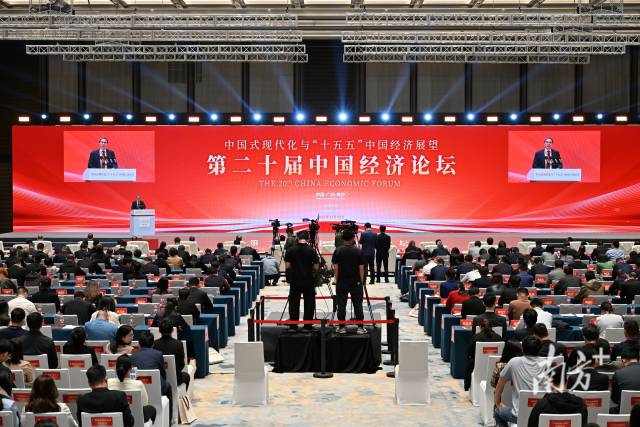
Core Insights - The 20th China Economic Forum was held in Guangzhou, focusing on promoting Chinese-style modernization and high-level opening-up [1] Group 1: Manufacturing Industry - By the end of the 14th Five-Year Plan, China's manufacturing industry accounted for over 30% of the global share, making it the third country to reach this milestone after the UK and the US [3] - China has shed the label of being "large but not strong" in manufacturing, leading in five out of the ten most important manufacturing sectors and keeping pace in the other five [5] - Despite significant progress, the manufacturing sector still faces three major issues: high energy consumption, low profits, and low total factor productivity, which need to be addressed through the development of new quality productivity [5] Group 2: Strategic Emerging Industries - Investment in strategic emerging industries such as new energy, new materials, biomedicine, high-end equipment, and artificial intelligence is projected to attract at least 100 trillion yuan from the 15th Five-Year Plan until 2040 [5] - Guangdong has established nine trillion-level industrial clusters, including new-generation electronic information and advanced materials industries, with emerging industries like AI and autonomous driving rapidly developing [5][7] Group 3: Service Trade and Economic Development - The average growth rate of China's productive service industry during the 14th Five-Year Plan was around 12%, nearly three times the GDP growth rate [11] - China's service trade has become the second largest globally, with significant potential for growth as it has maintained a long-term trade deficit in this sector [11] - The Guangdong-Hong Kong-Macao Greater Bay Area is positioned as a key area for expanding service trade and exploring institutional openness [13][16] Group 4: Future Economic Outlook - The Greater Bay Area is expected to become the world's largest economic and innovation center by 2035 if the 11 cities within it further integrate [16] - The 15th Five-Year Plan is seen as a strategic opportunity for Chinese companies to transition from "Chinese leaders" to "global giants" [13]
规划建议新看点|脑机接口,更多科幻照进现实
Xin Hua She· 2025-11-18 09:44
Group 1 - The core viewpoint of the article emphasizes the strategic importance of brain-computer interfaces (BCIs) as a new economic growth point, as highlighted in the "14th Five-Year Plan" [1] - BCIs are defined as technologies that capture subtle changes in brain electrical signals, decode intentions, and enable control of machines without physical interaction [2] - The "14th Five-Year Plan" specifically mentions BCIs due to their interdisciplinary nature, involving neuroscience, materials, chips, AI, and clinical medicine, indicating strong potential for development [3] Group 2 - BCIs are currently being applied in various fields, with healthcare being a particularly vibrant area; for instance, a patient with ALS was able to communicate using a BCI implant [4] - The BCI market in China is projected to exceed 5.5 billion yuan by 2027, indicating significant growth potential [4] - Policy initiatives are being implemented to support the BCI industry, including a plan for key technological breakthroughs by 2027 and a goal for comprehensive strength to rank among the world's top by 2030 [5]
研究做好下步经济工作等
Liao Ning Ri Bao· 2025-11-18 05:55
Core Viewpoint - The provincial government is focused on enhancing economic resilience and promoting high-quality development through various initiatives, including technological innovation and improved service sectors [1][2]. Economic Development - The provincial government recognizes the long-term potential and resilience of the economy, emphasizing the need for confidence and targeted efforts to achieve optimal results during the "14th Five-Year Plan" and to set a strong foundation for the "15th Five-Year Plan" [2]. - Key areas of focus include stabilizing key industries such as steel and oil, supporting enterprises in digital transformation, and fostering the integration of technological and industrial innovation [2]. Technological Innovation - Higher education institutions are encouraged to strengthen organized research and enhance the conversion of scientific achievements into productive forces by improving talent supply and establishing technology parks and pilot bases [3]. Service Sector Enhancement - The government plans to implement actions to boost service sector capacity and quality, maintain stable commercial circulation, and expand the scale of the platform economy [2]. - New consumption models such as event economy, silver economy, and national trend economy are to be developed to stimulate service consumption [2]. Investment and Business Environment - The government aims to enhance the role of public investment to stimulate private investment, improve project planning, and increase efforts in attracting investment [2]. - A comprehensive approach will be taken to optimize the business environment, focusing on public services, access to resources, fair competition, and legal frameworks [2]. Education and Workforce Development - Vocational schools are urged to align their educational direction with industry needs and improve their management to promote high-quality development in modern vocational education [3].
“十五五”全解读!汇小鲸带你专访未来X大赛道
Zhong Guo Zheng Quan Bao· 2025-11-18 02:13
Core Insights - The "14th Five-Year Plan" outlines China's development blueprint for the next five years, emphasizing the importance of understanding it to identify future investment opportunities [2][16]. Group 1: Emerging Industries and Investment Opportunities - The plan aims to cultivate and expand emerging and future industries, potentially creating several trillion-level markets [7]. - The next decade could see the scale of new industries equivalent to recreating China's high-tech industry [7]. Group 2: Key Focus Areas for Technological Advancement - The plan emphasizes the need for breakthroughs in critical core technologies across various sectors, including integrated circuits, industrial mother machines, and high-end instruments [8]. - It highlights the role of enterprises in driving technological innovation and supporting the growth of high-tech and technology-oriented SMEs [9]. Group 3: Domestic Market Development - The strategy includes measures to strengthen the domestic market and facilitate a smooth domestic circulation, focusing on expanding consumption and developing international consumer center cities [10][11]. - It calls for a shift from price competition to quality competition among enterprises to establish a healthy market order [11]. Group 4: National Security and Emerging Fields - The plan addresses the need to enhance security capabilities in traditional areas like food and energy, as well as emerging fields such as artificial intelligence and biotechnology [12]. - This focus on security is expected to create new development opportunities in sectors like cybersecurity, national defense, and energy resources [12]. Group 5: Investment Themes in A-Share Market - Five key investment themes are identified: hard technology sectors such as artificial intelligence, integrated circuits, industrial mother machines, new energy, and biomanufacturing [14]. - The plan aims to rectify disorderly competition, which may benefit leading companies in solar energy, lithium batteries, and new energy vehicles [14]. - There is a strong emphasis on boosting consumption in sectors like automotive, housing, and tourism, indicating potential growth in these areas [14]. - The implementation of major national strategies and the enhancement of security capabilities are expected to drive growth in industries like construction materials, machinery, new energy, and cybersecurity [14]. - The financial sector is also highlighted, with banks, securities, and insurance institutions currently valued at historical lows, suggesting potential for recovery [14].

竞逐“未来产业”新赛道
Xin Lang Cai Jing· 2025-11-18 00:34
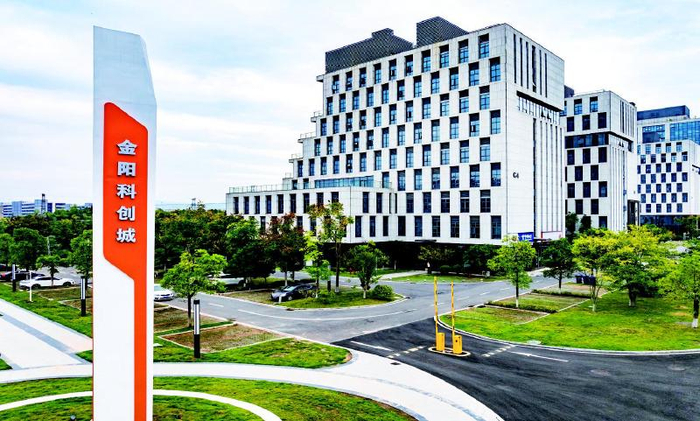
Core Viewpoint - Liuyang is strategically focusing on "strong industry city" initiatives, leveraging Jinyang Science and Technology City to develop future industries, particularly in biomedicine, artificial intelligence, and air economy [2][15]. Group 1: Innovation and Industry Development - Jinyang Science and Technology City is witnessing a surge in innovation, with projects like the modernized traditional Chinese medicine and a new class of macromolecular anti-cancer drugs expected to break new ground in Liuyang's pharmaceutical sector [2][4]. - The establishment of the "Three-Year Action Plan for the Development of Liuyang's Biopharmaceutical Industry Chain (2025-2027)" aims to provide policy incentives, including rent exemptions and subsidies for R&D investments [5][6]. - Warner Pharmaceutical, a leading biopharmaceutical company in Liuyang, has significantly increased its R&D investment to 158 million yuan in 2024, marking a 53.45% increase from the previous year [6]. Group 2: Digital Transformation - Liuyang is actively promoting digital transformation in traditional industries, exemplified by the implementation of AI systems in manufacturing, which has drastically reduced safety inspection times from 10 minutes to 30 seconds [8][11]. - The integration of AI and automation in companies like Lens Technology and Huike Optoelectronics is enhancing production efficiency and product quality, contributing to the growth of the electronic information and high-end manufacturing sectors [9][10]. Group 3: Transportation and Logistics - The proximity to Huanghua Airport is a key advantage for Liuyang's future industry layout, with plans for a 30-square-kilometer air economic zone focusing on biopharmaceutical logistics and cross-border e-commerce [12][13]. - The construction of transportation infrastructure, including the Chang-Liu Maglev line, aims to create a "25-minute air circle," facilitating efficient logistics for high-demand products [13][14]. Group 4: Policy Support and Talent Attraction - Liuyang's government has established a comprehensive policy framework to support the entire lifecycle of enterprises, resulting in the addition of 261 new high-tech enterprises in 2024 [15]. - The city is actively attracting high-level talent, having recruited over 120 professionals and numerous overseas returnees, enhancing its innovation capabilities [15][16].

一线调研 “现代化产业体系”怎么建
Zhong Guo Qing Nian Bao· 2025-11-17 23:04
Group 1 - The core focus of the article is on the development of a modern industrial system in China during the "14th Five-Year Plan" period, emphasizing the integration of technological and industrial innovation to strengthen the real economy [9][10][12] - The article highlights the importance of traditional industries, such as steel and pharmaceuticals, in driving economic growth and their ongoing transformation through digitalization and automation [12][13][14] - The article mentions that since 2016, companies like Hunan Huazhong Steel have been implementing smart manufacturing solutions, resulting in significant efficiency improvements, such as reducing the steel slab rotation time from 6.7 seconds to 3.93 seconds [12][13] Group 2 - The article discusses the emergence of new and future industries, particularly in sectors like renewable energy, aerospace, and low-altitude economy, as part of the strategic focus for the "14th Five-Year Plan" [15][16] - Companies like Hidi Intelligent Driving Technology are capitalizing on market demands for automation in hazardous environments, such as mining, with significant policy support driving growth in this sector [16][18] - The article notes that the humanoid robot market in China is expected to reach approximately 870 billion yuan by 2030, indicating rapid growth in the robotics sector [17] Group 3 - The article emphasizes the need for collaborative innovation among government, enterprises, and research institutions to create a conducive environment for the development of a modern industrial system [19][20] - It highlights the establishment of over 230 excellent smart factories and 1,260 5G factories in China since the beginning of the "14th Five-Year Plan," showcasing the country's commitment to advancing its manufacturing capabilities [13][19] - The article points out that the value added by the "new economy" is projected to exceed 18% of GDP by 2024, indicating a significant shift towards new industries and business models [18][22]




潮涌大湾区 书写新篇章
Ren Min Ri Bao· 2025-11-17 21:59
Core Insights - The article highlights the strategic development of Nansha District in Guangzhou as a key platform for comprehensive cooperation in the Guangdong-Hong Kong-Macao Greater Bay Area, aiming to enhance its global presence [1][2]. Group 1: Innovation and Technology - Nansha is fostering innovation by collaborating with Shenzhen and Dongguan to establish a comprehensive national science center in the Greater Bay Area [1]. - The unveiling of the Hong Kong University of Science and Technology (Guangzhou) innovation and entrepreneurship community aims to facilitate the transformation of scientific achievements [1]. - The establishment of the Bay Area Artificial Intelligence Industry Innovation Alliance, initiated by Hong Kong University of Science and Technology and Huawei, signifies a push towards advanced technology development [1]. Group 2: Industrial Development - Nansha is accelerating the construction of a modern industrial system and nurturing emerging industries [1]. - The district has successfully conducted the first clinical application of cell and gene therapy for thalassemia in the country, showcasing advancements in future industries [1]. Group 3: Talent and Youth Engagement - A new professional title evaluation system for engineering talents from Hong Kong and Macao has been established, with 27 professionals receiving mainland titles [1]. - The creation of 19 youth innovation bases, including the Guangdong-Hong Kong-Macao (International) Youth Innovation Workshop, has led to the establishment of 2,670 enterprises and projects [1].
2025中国未来产业前沿进展:量子科技迅猛、脑机接口落地、具身智能蓬勃发展
3 6 Ke· 2025-11-17 04:08
Core Insights - The article emphasizes the importance of future industries driven by cutting-edge technologies, which are in the early stages of development and have significant strategic, leading, disruptive, and uncertain characteristics [1]. Government Initiatives - The Chinese government has issued multiple guiding documents to promote the development of future industries, focusing on six key areas: future manufacturing, future information, future materials, future energy, future space, and future health [2]. - The 2024 and 2025 State Council work reports highlight the need to cultivate emerging and future industries, including quantum technology and life sciences, and to establish growth mechanisms for future industry investments [2]. - The 15th Five-Year Plan emphasizes the exploration of diverse technology routes and typical application scenarios to drive new economic growth points in various future industries [2]. Industry Developments Quantum Technology - Quantum technology integrates principles of quantum mechanics with various scientific fields, aiming to revolutionize information processing and transmission [5]. - Significant advancements include the development of the "Zuchongzhi III" superconducting quantum computing prototype, which set new global records in quantum computing capabilities [6]. - By 2025, China is expected to lead in quantum computing, transitioning from "catching up" to "leading" in the field [7]. Biomanufacturing - Biomanufacturing utilizes biological processes for material processing and conversion, with applications in pharmaceuticals, new materials, and renewable energy [8]. - China has become the largest exporter of key enzyme preparations and gene components, holding a 29% share of the global market [9]. - The industry is characterized by the integration of AI in research and production, accelerating innovation and improving production efficiency [10]. Hydrogen and Nuclear Fusion Energy - Hydrogen energy is recognized as a crucial component of global energy transition, with China being the largest hydrogen producer [11]. - Major projects include the world's largest green hydrogen base and advancements in nuclear fusion technology, with significant milestones achieved in plasma control and fusion energy development [12][13]. Brain-Computer Interfaces - Brain-computer interfaces (BCIs) are emerging as transformative technologies, with successful trials and clinical applications in various fields [14][15]. - The development of both invasive and non-invasive BCIs is progressing rapidly, with applications in medical rehabilitation and research [18]. Embodied Intelligence - The embodied intelligence sector is witnessing rapid growth, particularly in robotics, with advancements in AI and sensor technologies [19][20]. - 2025 is seen as a pivotal year for humanoid robots transitioning from prototypes to mass production, with applications in various industries [21]. Sixth Generation Mobile Communication - The sixth generation (6G) mobile communication technology is expected to enhance performance metrics significantly compared to 5G, with various breakthroughs achieved in key technologies [22][23]. - Standardization efforts for 6G are underway in China, with commercial deployment anticipated around 2030 [23][24].