
智能驾驶

Search documents
A股早盘放量上攻,商业航天掀涨停潮,两市全天成交额有望创历史新高
Xin Lang Cai Jing· 2026-01-12 03:56
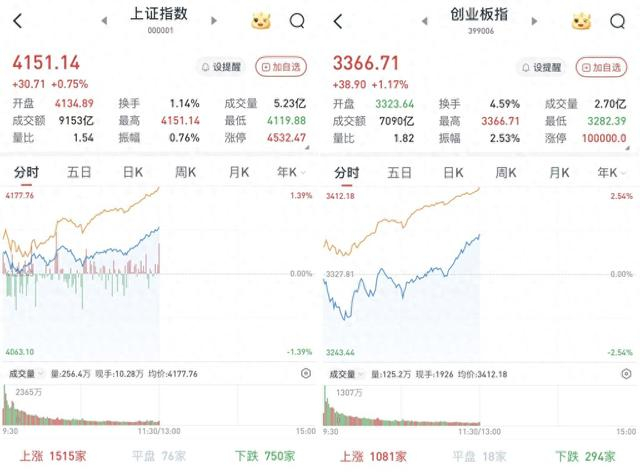
银行股逆市走低,渝农商行(601077)跌超1%,南京银行(601009)、杭州银行(600926)、建设银 行(601939)等跌幅靠前。 从盘面上看,AI应用题材全线爆发,电商、虚拟人、短剧游戏方向领涨。金融科技、脑机接口、商业 航天、智能驾驶概念股表现活跃。 至午间收盘,上证综指涨0.75%,报4151.14点;科创50指数涨2.26%,报1509.29点;深证成指涨 1.31%,报14305.1点;创业板指涨1.17%,报3366.71点。 Wind统计显示,两市及北交所共3801只股票上涨,1501只股票下跌,平盘有162只股票。 沪深两市早盘成交总额23069亿元。根据早盘的成交情况预估,两市全天成交额有望突破3.5万亿元,刷 新A股单日成交额的新纪录。 据大智慧VIP,两市及北交所共有283只股票涨幅在9%以上,5只股票跌幅在9%以上。 从盘面上看,商业航天掀起涨停潮,天银机电(300342)、广哈通信(300711)、智明达(688636)、 蓝盾光电(300862)、斯瑞新材(688102)等超20股涨停或涨超10%。 传媒股暴涨,蓝色光标(300058)、川网传媒(300987)、值得买( ...

北汽新能源与小马智行深化联动 构建智慧出行共同体
Huan Qiu Wang· 2026-01-12 03:29
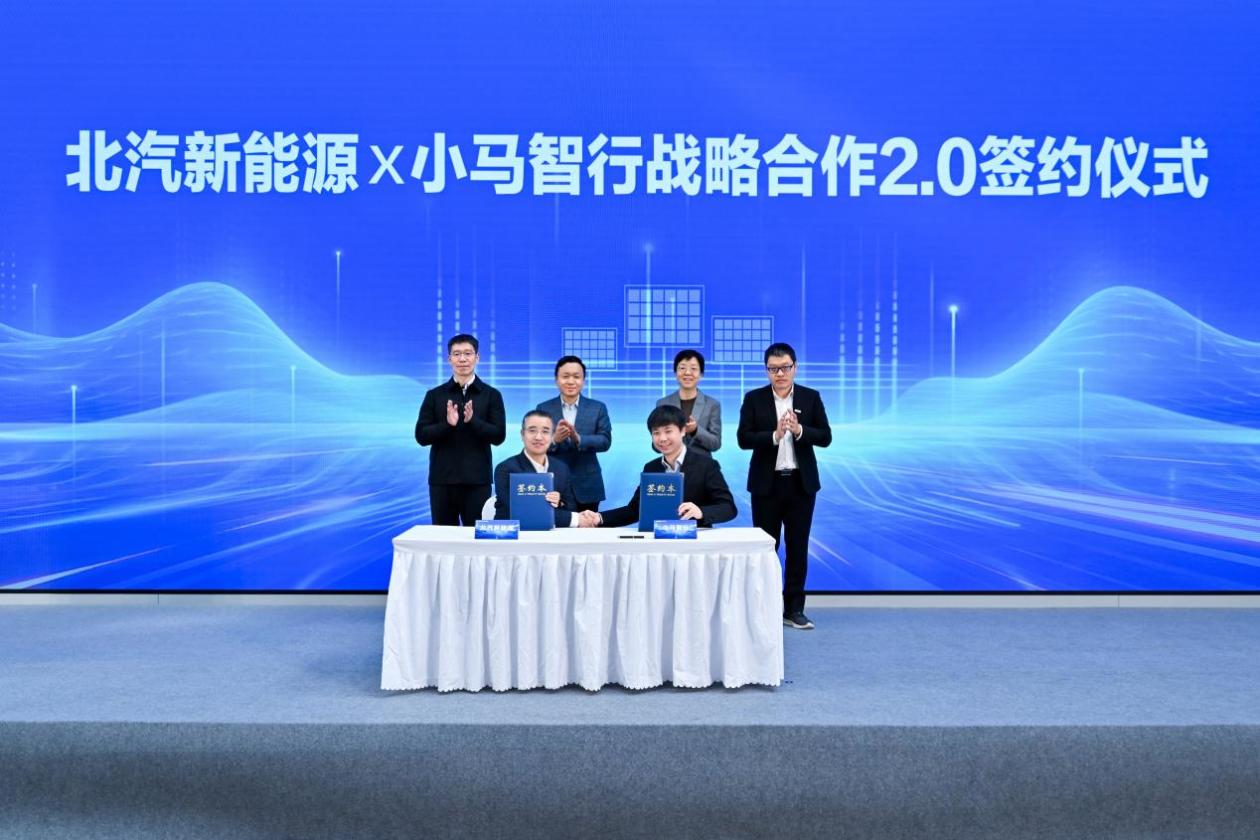
Core Viewpoint - The collaboration between BAIC New Energy and Pony.ai marks the transition into the "2.0 era" of autonomous driving, focusing on a systematic approach across five dimensions: product, market, industry, ecology, and capital [2][6]. Group 1: Partnership Details - BAIC New Energy and Pony.ai signed a cooperation agreement to deepen their collaboration, leveraging BAIC's redundant chassis architecture and Pony.ai's seventh-generation autonomous driving system to develop the L4-level Arcfox Alpha T5 autonomous taxi [2]. - The first mass-produced vehicle is set to roll off the production line in July 2025, with over 600 units already produced, capable of operating in various complex driving scenarios, including urban roads and highways [4]. Group 2: Commercial Operations - The Arcfox Alpha T5 autonomous taxi began full-scale operations in key areas such as Beijing Yizhuang, Shenzhen Nanshan, and Bao'an District starting November 2025, providing a seamless and intelligent travel experience [4]. - The operational model aims to create a closed loop of "mass production, testing, and operation," ensuring efficient integration of autonomous driving technology into everyday use [4]. Group 3: Strategic Vision - BAIC New Energy is committed to an open and collaborative ecological strategy in the smart mobility sector, while Pony.ai brings extensive experience in system development, fleet management, and commercial operations [6]. - The strategic upgrade of the partnership is based on a shared understanding of industry trends and confidence in past achievements, with plans to explore further collaborations with leading global internet and technology companies [6].
2026智驾芯片市场格局
傅里叶的猫· 2026-01-11 12:43
Core Viewpoint - The competition in the intelligent driving chip market has shifted from algorithm functionality to core hardware chips, with significant developments from domestic chip manufacturers like Horizon and Momenta [3]. Group 1: Domestic Intelligent Driving Chips - Horizon's J6P chip has completed hardware design and is in performance testing, with plans to achieve vehicle readiness by Q2 2026, targeting mid-to-high-end models [5]. - Horizon plans to reduce the price of the J6P chip by approximately 15% by 2026, with potential discounts of up to 20% for major clients like BYD, impacting the mid-to-high-end chip market [5]. - Momenta's BMC chip has entered the testing phase, focusing on cost advantages and targeting the market for vehicles priced below 200,000 yuan, with expected mass production in 2026 [6][7]. - Momenta anticipates a significant increase in output, projecting around 1 million units in 2026, driven by partnerships with SAIC, GAC, and Chery [7]. Group 2: Algorithm and Performance Comparison - In standard driving scenarios, both Momenta and Horizon perform similarly, but Momenta excels in complex scenarios, benefiting from its extensive urban experience [8]. - Momenta's software-driven hardware model allows for better adaptation to market needs, enhancing user experience and providing tailored tools for automakers [8]. Group 3: Self-Development vs. Collaboration - Different automakers are adopting varied strategies, with companies like NIO and Li Auto focusing on self-developed chips, while others like Chery and Geely are opting for a mixed approach [9][12]. - High-end models are more likely to utilize self-developed chips to enhance profit margins and adapt to specific driving algorithms, while mid-to-low-end models prioritize cost-effectiveness [13]. Group 4: Market Dynamics and Future Outlook - The market is expected to see a coexistence of self-developed chips and third-party suppliers, with domestic chip market share projected to reach around 10% by 2026 [15]. - NVIDIA is expected to maintain a significant market share in high-end models, while domestic suppliers like Horizon and Momenta are anticipated to capture substantial portions of the mid-to-low-end market [15]. - The price trends indicate that while low-end chips are stabilizing, high-end chips from NVIDIA may see price increases, while domestic chips like those from Momenta are expected to drop significantly [21]. Group 5: Challenges and Opportunities for Domestic Chips - Domestic chips still face challenges in performance and algorithm ecosystem compared to NVIDIA, with a technology gap of about 1-1.5 generations [17]. - The Robotaxi sector presents an opportunity for domestic chips, although current limitations in performance and ecosystem integration hinder broader adoption [18][19]. Group 6: Price Trends and Market Projections - The pricing landscape for intelligent driving chips varies significantly based on performance, with low-end chips around 1,000 yuan and high-end chips from NVIDIA priced between 8,000-9,000 yuan [21]. - The competitive landscape in 2026 will be crucial, with domestic chips pushing for wider adoption and price reductions, enhancing the overall driving experience for consumers [22].


“数智化”领跑汽车产业“新赛程”
Xin Lang Cai Jing· 2026-01-11 08:59
转自:人民论坛网 2025年中央经济工作会议将"坚持创新驱动,加紧培育壮大新动能"确定为明年经济工作的重点任务之 一,提出"深化拓展'人工智能+',完善人工智能治理。"智能驾驶作为人工智能在汽车产业的核心应用 场景,不仅是技术比拼的"竞技场",更是驱动经济增长的"新引擎"。面对这场深刻的产业变革,需以自 主创新筑牢技术根基,以开放姿态拥抱全球合作,以自信步伐走向世界舞台。 甘为"破壁者",以自主创新锚定发展主动。我国首批L3级有条件自动驾驶车型准入许可试点的公布,既 标志着我国L3级自动驾驶从测试阶段迈入商业化应用的关键一步,又是我国智能驾驶领域进展的坚实 印证。上汽通用五菱通过实施"一二五"工程,把代表技术研发的"一"、代表主机厂的"二"和零部件体系 的"五"系统性地整合成一个整体,实现了新能源汽车的电池、电驱、电控系统的完全自主,车载芯片的 自主化率达到了94%。然而,也须清醒地认识到,我国在高端芯片等领域仍面临着"卡脖子"问题。汽车 产业深化拓展"人工智能+",必须锚定自主创新的核心地位。这意味着企业不仅要有持续投入研发、敢 于坐"冷板凳"的决心,深耕底层技术与原始创新;更要构建"产学研用"深度融合的创 ...

地平线增持无人物流第一股佑驾创新,共推L4无人物流业务发展
机器人圈· 2026-01-11 08:24
Core Viewpoint - Horizon Together Holding Ltd. has purchased a total of 688,200 shares of Youjia Innovation's H-shares, reflecting long-term confidence in the company's business and future development prospects [2][3] Group 1: Company Actions and Market Signals - Youjia Innovation has initiated a share repurchase plan of 200 million yuan, extended the lock-up period for major shareholders, and the chairman has made multiple share purchases, signaling strong confidence in long-term development [2] - The partnership with Horizon is based on years of collaboration, with both parties aiming to leverage technology and resources to accelerate the development of L4 autonomous logistics vehicles [2][3] Group 2: Technological Advancements and Market Position - Youjia Innovation has achieved large-scale production of domain control products based on Horizon's hardware, covering multiple leading domestic and international vehicle manufacturers, thus becoming a key player in promoting high-quality industry development [3] - The collaboration has expanded into the L4 autonomous logistics sector, with both companies working on advanced autonomous driving products, showcasing their achievements at the 2025 Horizon Technology Ecosystem Conference [3] Group 3: Investment Implications and Market Context - In the context of a challenging Hong Kong stock market, Horizon's investment serves as a strong endorsement of Youjia Innovation's intrinsic value and growth potential, signaling deep collaboration and long-term progress within the industry [5] - Horizon's continued investment in Youjia Innovation, along with its participation in the IPOs of other leading companies in the smart automotive industry, highlights Youjia's unique capabilities across L2, intelligent cockpit, and L4 autonomous driving sectors [5][6] Group 4: Future Outlook - The increase in Horizon's stake provides an opportunity for investors to reassess Youjia Innovation, as the choice of industry capital often reflects the true quality of a company [6] - With the rising penetration of intelligent driving and the acceleration of L3 deployment, Youjia Innovation is well-prepared for a potential performance explosion, aiming for a successful breakthrough in the competitive landscape of the second half of intelligentization [6]
广汽与华为终端达成全面合作,吉利获L3级测试牌照
CMS· 2026-01-11 08:04
Investment Rating - The report maintains a "Recommended" rating for the automotive industry, indicating a positive outlook for the sector's fundamentals and expectations for the industry index to outperform the benchmark index [5][28]. Core Insights - The automotive industry experienced an overall increase of 2.7% from January 4 to January 10, 2026, with all secondary segments within the automotive sector also showing positive growth [1][2][9]. - Key developments include GAC Group signing a comprehensive cooperation framework with Huawei, and Geely obtaining an L3 level autonomous driving road test license, indicating advancements in smart driving technologies [1][23]. - The market is witnessing a promotional battle led by luxury brands like Tesla and BMW, with various automakers offering significant discounts and financing options to stimulate sales [20][21]. Market Performance Overview - The Shanghai Composite Index rose by 3.8%, while the Shenzhen Composite Index increased by 5.1%, and the ChiNext Index saw a 3.9% rise during the same period [2][9]. - Within the automotive sector, the automotive services segment led with a weekly increase of 6.0%, while the passenger vehicle segment had the lowest increase at 0.3% [2][9]. Individual Stock Performance - Notable stock performances include JunDa Co., which increased by 29.4%, JinGu Co. by 26.3%, and KaiZhong Co. by 23.3% [3][13]. - Among covered stocks, DaoShi Technology saw a rise of 29.5%, XuSheng Group by 18.0%, and XinQuan Co. by 16.2% [3][15]. Recent Vehicle Launches - Key new vehicle launches include the Xiaopeng P7+ with advanced driving capabilities and the Wuling Xingguang 560, which offers multiple powertrain options [18][19]. Industry News and Policies - The Ministry of Commerce projects over 11.5 million vehicles to be replaced under the old-for-new policy by 2025, with significant sales expected in related sectors [20]. - GAC Group and Huawei's collaboration aims to enhance smart vehicle technologies, while Chery Group targets a sales goal of 3.2 million vehicles for 2026, reflecting a 14.03% increase from 2025 [22][23].
注重新场景培育的集成性(编辑手记)
Ren Min Ri Bao· 2026-01-10 22:02
Core Insights - The article emphasizes the importance of collaborative and integrated approaches in building new scenarios, as highlighted by the government's implementation opinions supporting the construction of "integrated scenarios in industry fields" [1] Group 1: Industry Developments - The establishment of demonstration zones for comprehensive road testing relies not only on advancements in individual technologies but also on the integration and promotion of new technologies, enhancement of the entire industry chain's innovation capabilities, precise policy support, and a favorable collaborative innovation ecosystem [1] - A comprehensive effect is formed through the path of "technological breakthroughs—scenario validation—industry application—system upgrades," which aids in the realization of new scenarios and maximizes their industrial driving effects [1] Group 2: Regulatory Approvals - The Ministry of Industry and Information Technology recently announced the first batch of L3-level conditional autonomous driving vehicle approvals, allowing related models to conduct pilot tests in designated areas of Beijing and Chongqing [1] - This development indicates that applications of intelligent connected vehicles and "vehicle-road-cloud integration" are gradually maturing, suggesting a broader future outlook for these technologies [1]
周观点 | 商业航天开启万亿蓝海市场 关注汽车相关标的【国联民生汽车 崔琰团队】
汽车琰究· 2026-01-10 14:42
Market Performance - The automotive sector in A-shares rose by 2.7% from January 5 to January 11, outperforming the Shanghai and Shenzhen 300 index, which increased by 0.2% [3] - Sub-sectors such as automotive services, auto parts, motorcycles and others, commercial vehicles, and passenger cars saw increases of 5.3%, 3.8%, 2.4%, 1.4%, and 0.6% respectively, while commercial passenger vehicles decreased by 0.3% [3] Investment Recommendations - Recommended core stocks include Geely Automobile, Xpeng Motors, BYD, Berteli, Top Group, New Spring Co., Hu Guang Co., and Chunfeng Power [4] - For passenger vehicles, Geely, Xpeng, and BYD are recommended, with Jianghuai Automobile suggested for attention [7] - In the auto parts sector, recommendations include Berteli and Horizon Robotics for intelligent driving, and Jifeng Co. for intelligent cockpits [7] - For the motorcycle segment, Chunfeng Power and Longxin General are recommended as leading companies in the large-displacement motorcycle market [8] - In the tire industry, Sailer Tire and Senqilin are recommended [9] - For commercial vehicles, Weichai Power and China National Heavy Duty Truck are recommended for heavy trucks, while Yutong Bus is suggested for passenger vehicles [10] Robotics Sector - The Chinese robotics exhibition at CES 2026 showcased over 30 companies, indicating a strong presence in the humanoid robotics sector [5] - The focus is on Tesla's production progress and technological iterations, with domestic robot manufacturers like Yushu Technology expected to enter the IPO phase soon, serving as catalysts for the sector [5] - Recommended stocks in the robotics sector include Top Group, Berteli, Yinlun Co., and Junsheng Electronics, among others [7][35] Commercial Aerospace - The commercial aerospace sector is viewed as a core strategic area with significant long-term growth potential, currently transitioning from technology validation to large-scale commercial application [6] - The industry is supported by strong policy backing and increasing demand from national satellite internet projects, which may drive private rocket launch frequency and success rates [6] - Companies like Haoneng Co., Longsheng Technology, and Xusheng Group are highlighted as key players in this sector [6][12] Policy Impact on Automotive Sector - The new national subsidy policy for 2026 aims to stimulate demand by providing vehicle replacement subsidies based on vehicle price, with electric vehicles receiving 12% of the price (up to 20,000 yuan) and fuel vehicles 10% (up to 15,000 yuan) [22][23] - The transition from fixed subsidies to percentage-based subsidies is expected to improve the structure of subsidized vehicles and activate demand for mid-to-high-end models [28][29] - The overall automotive market is anticipated to benefit from these policies, with a focus on intelligent and globalized growth among quality domestic brands [30][31]

4100点!上证指数罕见16连阳,机会在哪儿?
Sou Hu Cai Jing· 2026-01-10 11:50
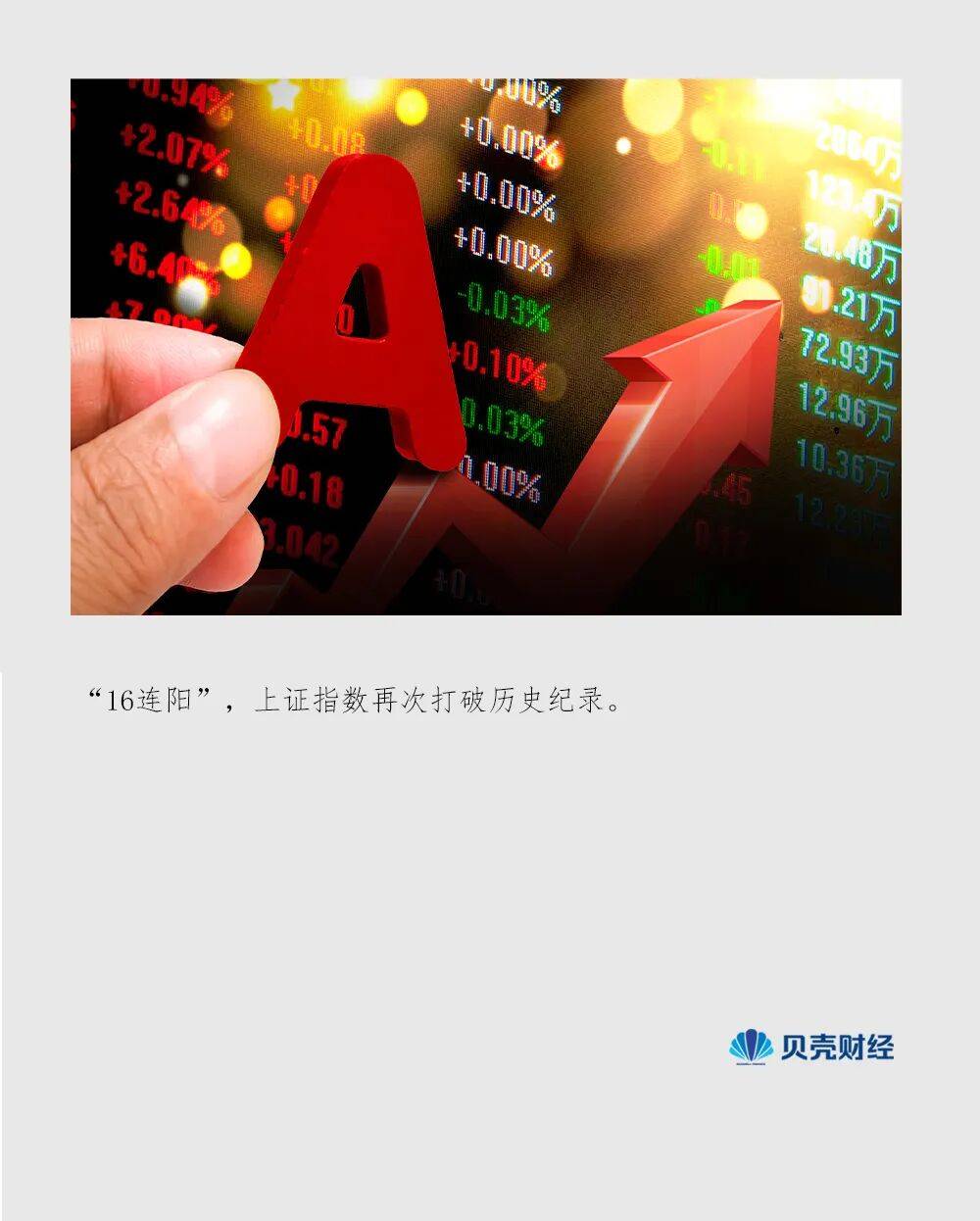
Group 1 - The Shanghai Composite Index closed at 4120.43 points, marking a 16-day consecutive rise and reaching a new high not seen in over 10 years [4][6] - Nearly 4000 stocks rose, with 113 stocks hitting the daily limit, and total trading volume exceeded 30 trillion yuan [6][8] - The AI application sector experienced significant growth, leading the market, particularly in cultural media and internet industries, which saw over 5% gains [5][6] Group 2 - The market is transitioning from a phase driven by liquidity expectations to one supported by profit recovery and valuation alignment, although comprehensive profit improvement is still in its early verification stage [7] - The "spring rally" is attributed to improved liquidity conditions, with significant capital inflows from insurance and pension funds, supporting valuation recovery [8][9] - Analysts expect a balanced market structure in 2026, with a focus on sectors like AI applications, commercial aerospace, semiconductor equipment, and new energy, driven by the "14th Five-Year Plan" priorities [9]
希迪智驾与速腾聚创官宣战略合作,赋能多场景智能驾驶升级
Zheng Quan Shi Bao Wang· 2026-01-10 03:29
Group 1 - Two Hong Kong companies, Hidi Intelligent Driving (03881.HK) and Sutonju Chuang (02498.HK), announced a strategic partnership during the CES exhibition to promote safer, more efficient, and smarter autonomous driving solutions [1] - The collaboration aims to leverage Hidi's expertise in commercial vehicle intelligent driving and Sutonju's technological advantages in digital lidar to enhance the operational efficiency and stability of unmanned mining trucks and logistics vehicles [1][2] - Hidi's CEO, Dr. Hu Sibo, emphasized the importance of this partnership in accelerating the large-scale implementation of intelligent driving technology across various scenarios, including mining, closed parks, and smart cities [1] Group 2 - Hidi Intelligent Driving has extensive experience in the unmanned mining truck sector, focusing on both autonomous driving and vehicle-to-everything (V2X) technologies, contributing to operational safety and cost efficiency [2] - Sutonju Chuang has established partnerships with over 310 automotive manufacturers and suppliers globally, providing products and solutions to more than 3,400 clients across 40 countries [2] - The strategic collaboration is positioned as a starting point for deepening technological synergy and expanding cooperation boundaries to build a more competitive intelligent driving ecosystem [2]