
资本市场改革

Search documents
资本市场制度改革是2025中国股市上升的关键动力
Zhong Guo Xin Wen Wang· 2025-08-19 09:15
Group 1 - The core viewpoint is that the valuation logic of the Chinese stock market is shifting, with the main contradiction moving from economic cycle fluctuations to a decline in the discount rate, leading to an optimistic outlook for the Chinese stock market [1] - The capital market reform aimed at "increasing investor returns" is changing not only the system but also the societal perception of the value of Chinese assets, thereby reducing the risk assessment of the stock market [1][2] - The combination of accelerated transformation in China, declining risk-free returns, and capital market reforms is forming the foundation for a "transformation bull market" in the Chinese stock market, with further upward potential in the A/H share market [1][4] Group 2 - One aspect of the change in perception is that capital market reforms are enhancing the investability of the Chinese stock market and improving societal views on Chinese assets [2] - The new regulations, such as stricter delisting rules and penalties for financial fraud, are significantly improving the investability of the Chinese stock market [2] - The focus of the Chinese capital market has shifted towards investment for the first time in 30 years, with measures to encourage dividends and share buybacks, thereby increasing returns for investors and shareholders [2] Group 3 - Another aspect of the change in perception is that capital market reforms are establishing a "firewall" for the Chinese stock market, systematically reducing risk assessments and attracting long-term capital [3] - The introduction of mechanisms like swap facilities and repurchase loans is clearing obstacles to liquidity improvement in the Chinese stock market, thereby clarifying risk expectations and volatility limits [3] - Regulatory requirements for large state-owned insurance companies to allocate 30% of new premiums to A-shares are part of a broader initiative to establish a "long money, long investment" system [3] Group 4 - The rise of the Chinese stock market is driven by both the decline in risk-free returns and capital market reforms, which are seen as key drivers for the market's upward trajectory [4] - Historical examples of stock market rallies linked to capital market reforms, such as the 2005 split share structure reform and the 2019 registration system reform, support the belief in a "transformation bull market" [4] - The current market dynamics are expected to lead to a more comprehensive market environment in China, influenced by both declining risk-free returns and ongoing capital market reforms [4]
关注证券ETF(512880)投资机会,市场热议交投活跃与长期改革空间
Mei Ri Jing Ji Xin Wen· 2025-08-19 08:37
(文章来源:每日经济新闻) 证券ETF(512880)跟踪的是证券公司指数(399975),该指数主要由A股市场上的证券公司股票构 成,反映了该行业内上市公司的整体表现。指数样本覆盖了经纪、投行、资产管理等业务领域,具有较 强的周期性和市场敏感性,行业配置上集中于金融服务领域。 平安证券指出,2025年非银金融及证券行业呈现积极态势。证券板块近期市场景气度改善,交投活跃度 维持高位,周度股基日均成交达2.45万亿元,板块从估值到业绩均具备β属性,全面受益。长期来看, 资本市场新一轮改革周期开启,券商仍有较大发展增量空间。保险行业2025年有望延续负债端稳中向 好、资产端风险缓释兼具弹性的发展态势,目前行业估值和持仓仍处底部,β属性与地产投资风险缓解 将助力板块估值底部修复,具备长期配置价值。 ...
证券ETF(512880)昨日净流入超11.0亿元,市场活跃度与估值修复引关注
Mei Ri Jing Ji Xin Wen· 2025-08-19 02:26
Group 1 - The core viewpoint is that the securities industry is expected to benefit from improved market conditions and sustained high trading activity by 2025, with both valuation and performance showing β attributes, leading to comprehensive benefits for the sector [1] - Weekly average daily trading volume for stock funds reached 24.5 trillion yuan, indicating high market activity [1] - The new round of reforms in the capital market is anticipated to provide significant growth opportunities for brokerage firms in the long term [1] Group 2 - The insurance industry continues to show a stable improvement on the liability side and a risk mitigation on the asset side, with both aspects demonstrating resilience [1] - The industry valuation and holdings remain at a low point, and the β attributes combined with the alleviation of real estate investment risks are expected to support valuation recovery for the sector [1] - The non-bank financial sector is showing positive development trends driven by both policy and market factors [1] Group 3 - The Securities ETF (512880) tracks the Securities Company Index (399975), which selects listed companies involved in securities brokerage, underwriting, and asset management from the A-share market to reflect the overall performance of the securities industry [1] - The index constituents are primarily competitive firms in the financial services sector, and the industry allocation reflects the market characteristics of the securities industry [1] - Investors without stock accounts may consider the Guotai CSI All-Share Securities Company ETF Connect C (012363) and Guotai CSI All-Share Securities Company ETF Connect A (012362) [1]
中期市场展望:居民资金入市与“慢牛”格局的正反馈逻辑
Sou Hu Cai Jing· 2025-08-18 10:28
Macroeconomic Background - The A-share market has gradually emerged from a period of volatility since 2025, showing a relatively stable upward trend supported by domestic economic resilience and external environmental changes [1][3] - Global trade uncertainties have increased, but the impact of tariff shocks has not led to systemic risks, as domestic investors have shown confidence in China's economic fundamentals [1][3] - The domestic economy is undergoing a structural transformation, with manufacturing upgrades and capital market reforms providing new growth opportunities [3][4] Funding Logic - As of mid-2025, Chinese households have accumulated significant excess savings, with household deposits exceeding the trend line from 2011 to 2019 by over 50 trillion yuan, indicating a large potential fund pool for the stock market [4][5] - The ratio of A-share total market value to household deposits is at a historical low, suggesting that the transition of household funds into the market is just beginning [5][6] Institutional and Reform Dynamics - The direction of capital market reforms since 2024 has become clearer, focusing on "increasing investor returns" through improved dividend policies and optimized delisting systems [7][8] - Institutional reforms are reshaping perceptions of Chinese assets, leading to a decrease in risk premiums and creating long-term space for valuation expansion [7][8] Industry Allocation New Growth Directions - The AI industry is entering a phase of accelerated industrialization, with domestic supply chains rapidly innovating and replacing foreign counterparts [9] - The manufacturing upgrade trend is expected to drive the adoption of industrial and service robots, supported by policy emphasis on new productivity [10] - Solid-state batteries are anticipated to be a breakthrough in electric vehicles, with key domestic companies accelerating R&D [12] - The pharmaceutical sector is benefiting from aging populations and rising health demands, with innovative drugs showing growth potential [13] Financial Sector - The financial sector is poised to benefit from increased market activity as household funds enter the market [14] - Brokerage firms will see enhanced trading activity and expansion in investment banking services [15] - Insurance companies will experience improved returns due to favorable interest rates and a recovering equity market [16] - Banks remain attractive for defensive allocations due to stable dividends and low valuations [17] Thematic Opportunities - The military industry is expected to grow due to geopolitical uncertainties, with a focus on self-sufficiency in critical technologies [18] - Emerging industries like drones and general aviation are gaining traction with significant policy support [19] - Marine technology sectors are projected to grow under the "blue economy" strategy [20] Defensive Allocation - High-dividend assets are becoming preferred defensive options in a declining risk-free interest rate environment, with sectors like coal, oil, and utilities offering attractive yields [21] Conclusion - The mid-term outlook for the A-share market remains positive, supported by economic resilience, household funding potential, and institutional reforms [26] - A virtuous cycle is expected as household deposits gradually shift to the stock market, leading to steady index growth and low volatility [26] - The market is anticipated to present structural opportunities across various sectors, making it an optimal time for long-term investors to gradually position themselves [26]

为何居民存款搬家是A股十年新高主因?专家称三因素影响走势
Sou Hu Cai Jing· 2025-08-18 10:07
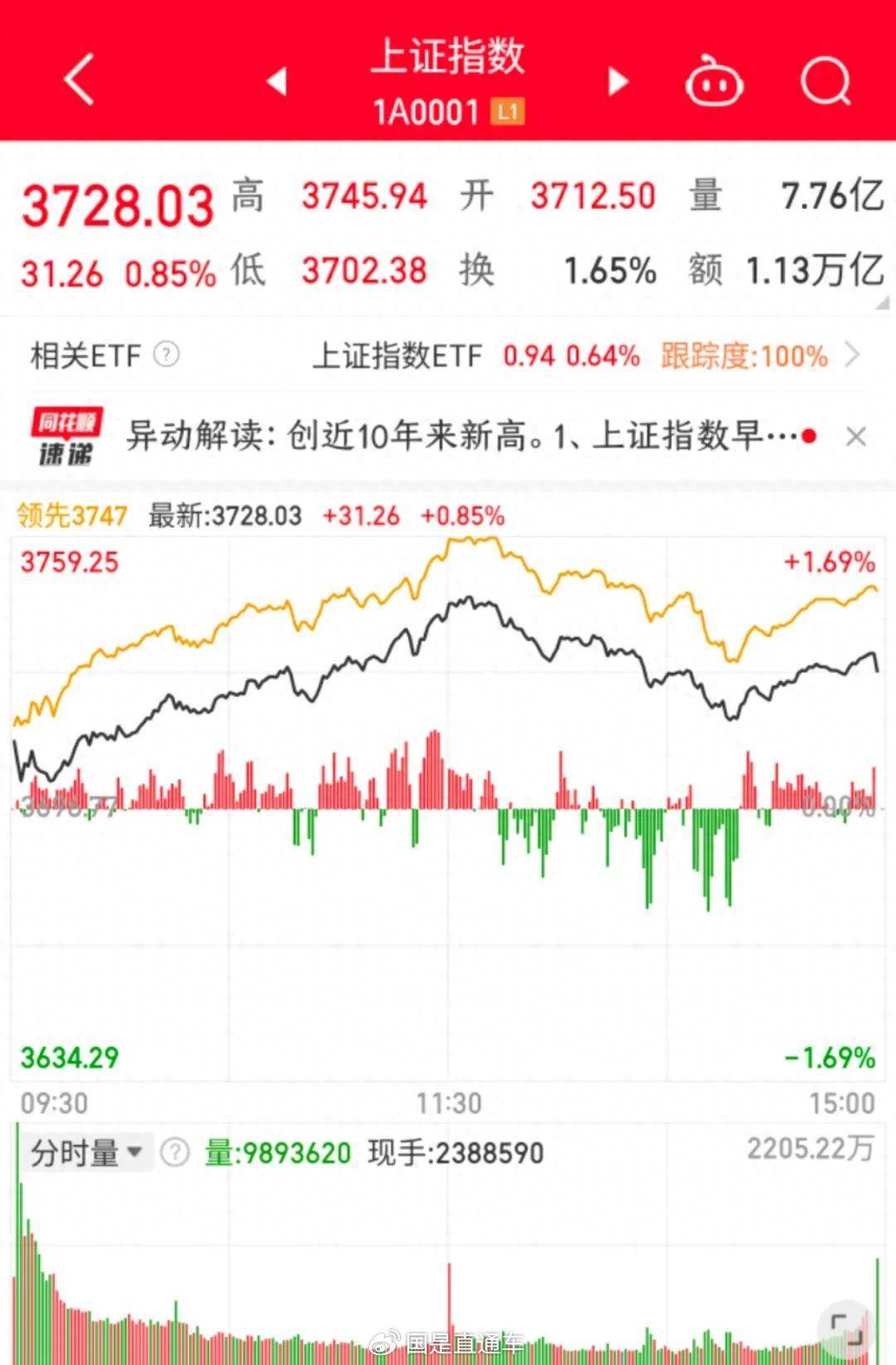
Market Performance - The Shanghai Composite Index closed at 3728 points on August 18, with a gain of 0.85%, marking a new high since August 20, 2015 [3] - The Shenzhen Component Index rose by 1.73% to 11835 points, while the ChiNext Index increased by 2.84% to 2606 points [3] - The total trading volume in the Shanghai and Shenzhen markets reached approximately 27,642 billion yuan, surpassing 20 trillion yuan for four consecutive trading days, with an increase of about 5,196 billion yuan compared to the previous trading day [3] Investment Drivers - The recent surge in A-shares above 3700 points is supported by short-term growth stabilization policies and capital market reforms, providing a "policy bottom" [3] - Medium-term factors include the migration of household savings to the stock market and increased participation from insurance funds and pensions, optimizing the funding structure [3] - Long-term benefits are expected from industry upgrades in sectors like semiconductors and AI, leading to improved profit expectations [3] Household Savings Movement - The phenomenon of "deposit migration" is seen as a significant driver of the current market trend, with a notable increase in non-bank financial institution deposits [4] - In the first seven months of the year, non-bank financial institution deposits increased by 4.69 trillion yuan, the highest since 2015, while household deposits decreased by 1.11 trillion yuan in July [4] - The current trend indicates that household funds are seeking higher-yield investment products as deposit rates and real estate returns decline, positioning the stock market as a potential "fund reservoir" [5] Market Outlook Factors - Key factors that may influence the market's trajectory include policy measures, corporate earnings, and liquidity conditions [7] - Potential policy actions in the third quarter aimed at stimulating consumption and supporting real estate demand could boost market confidence [8] - The upcoming earnings reports in mid to late August will be crucial for confirming corporate profitability and providing solid support for the market [9] - Expectations of a potential interest rate cut by the Federal Reserve in September could enhance global liquidity, although caution is advised regarding Fed policy fluctuations [10]
A股市值历史首次突破100万亿元!沪指创10年来新高,三市近4200股上涨
Sou Hu Cai Jing· 2025-08-18 05:14
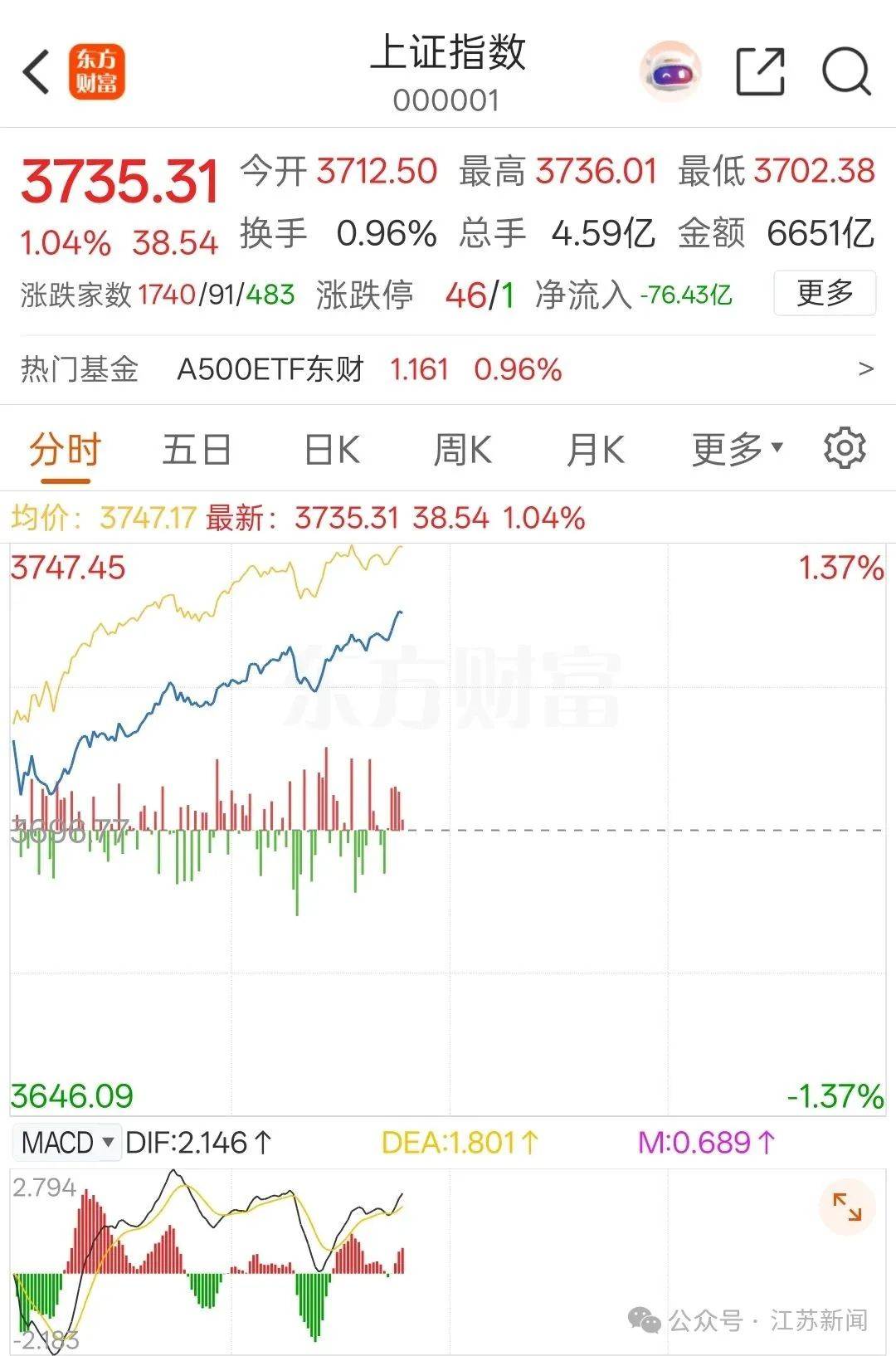
Market Overview - The Shanghai Composite Index (沪指) has surpassed the previous high of 3731.69 points set on February 18, 2021, reaching a new high since August 20, 2015 [1] - The total market capitalization of A-share companies has exceeded 100 trillion yuan for the first time in history [1] Performance Metrics - Since the market bottomed at 3040.69 points on April 7, 2025, the Shanghai Composite Index has increased by 22.72% [3] - The Shenzhen Component Index has risen nearly 30%, while the ChiNext Index has seen an impressive increase of 47% during the same period [3] Market Sentiment - Over 4000 stocks have risen, indicating a broad market rally [4] - The current market uptrend is attributed to policy support and the emergence of new growth drivers, which have boosted market confidence and attracted new capital [4] Future Outlook - Analysts from Guotai Junan Securities express optimism for the future of the Chinese stock market, suggesting that A-share indices may reach new highs [4] - The importance of institutional changes in the Chinese market is emphasized, as these reforms are believed to significantly influence stock valuations [4] - Historical examples of stock market rallies linked to capital market reforms, such as the 2005 split share structure reform and the 2019 registration system reform, are cited as precedents for the current market dynamics [5] Trading Activity - The three major indices opened higher, with the Shanghai Composite Index up by 0.43%, the Shenzhen Component Index up by 0.48%, and the ChiNext Index up by 0.61% [6] - By 10:12 AM, the ChiNext Index had risen over 2%, with nearly 4200 stocks in the Shanghai and Shenzhen markets experiencing gains [10] - The trading volume in the two markets exceeded 1 trillion yuan within the first 40 minutes, marking the 58th consecutive trading day with a turnover above 1 trillion yuan, with an expected total turnover of over 2.7 trillion yuan for the day [9]
突破3731.69点,超4000股上涨,沪指创10年来新高
Sou Hu Cai Jing· 2025-08-18 04:33
从个股上看,截至发稿时超4000股上涨,市场呈现普涨态势。 兴业证券表示,本轮市场的上涨并不在于宏观经济预期的上修,背后更重要的是政策托底下,新动能的 持续显现,带动市场信心活化、增量资金入市不断形成合力。市场调整更多在于连续上涨之后,市场需 要一个阶段性休整的窗口,近期国内外政策的落地只是提供了一个契机。整体而言,支撑此前市场上涨 的三个核心逻辑:政策底线思维、新动能亮点涌现、增量资金入市,均未出现任何变化。 国泰海通证券则认为,展望后市,继续看升中国股市前景,A股股指还有新高。一直以来,市场认为影 响股票估值的因素主要在公司的业绩、无风险利率、风险偏好等。事实上非常容易被忽视,但绝不能忽 视的是制度变化,这个因素在中国市场比其他市场更重要,在特定时期甚至起到决定性的作用。 如今,"提高投资者回报"的资本市场制度改革,改变的不仅仅是制度,还有社会各界对中国资产的价值 观念,以及降低股市的风险评价。由此,中国转型加快、无风险收益下沉与资本市场改革共同构筑起中 国股市"转型牛"的基石,A股股指还有新高。 中国历史上曾有多次与资本市场改革相关的股市走牛案例,远有2005年的股权分置改革;近有2019年注 册制改革 ...
国泰海通晨报-20250818
Haitong Securities· 2025-08-18 03:06
Macro - July economic growth slowed, driven by policy and seasonal factors, with a need for continued policy support to stabilize growth and address structural issues [1][4][31] - The recovery of the economy requires ongoing consumption stimulus policies and optimization of funding allocation in infrastructure projects [4][31] Strategy - The reform of the capital market in China is crucial for stock market valuation, with a focus on improving investor returns, which is expected to boost confidence in Chinese assets [2][5][6] - The shift in valuation logic in the Chinese stock market is moving from economic cycle fluctuations to a decline in discount rates, indicating a bullish outlook for A/H shares [5][9] Overseas Strategy - The Hong Kong stock market has shown weak performance recently, influenced by a depreciating Hong Kong dollar and rising global trade uncertainties [10][11] - The decline in hot sectors and a slowdown in incremental capital inflows have constrained the performance of the Hong Kong stock market [11][34] Food and Beverage - The liquor industry is undergoing a deep adjustment, with the company expecting a revenue decline of 38.3%-41.9% in H1 2025, and a net profit decrease of 39%-40% [2][16] - The introduction of new products like "Da Zhen" and "Niu Shi Beer" is anticipated to contribute to revenue growth and improve margins [2][17] Home Appliances - The company is increasing its market share in domestic refrigeration cabinets, with the launch of its first overseas factory in Indonesia, which is expected to create new growth opportunities [2][19][20] - The demand for commercial refrigeration products is projected to grow due to the expansion of convenience stores and the rise of smart cabinets [21]

从卤味龙头到冻干赛道:煌上煌4.95亿拟并购立兴食品 实现产业突围与政策共振
Sou Hu Wang· 2025-08-18 02:45
Core Viewpoint - The acquisition of a 51% stake in Lixing Food by Huangshanghuang for 495 million yuan marks a strategic move to capture core resources in the freeze-dried food sector, enhancing the company's growth potential and aligning with market reforms [1][5][6] Group 1: Acquisition Details - Huangshanghuang plans to acquire 51% of Lixing Food for 495 million yuan, gaining control and integrating it into its consolidated financial statements [1] - The acquisition is progressing in accordance with relevant laws and regulations, indicating a structured approach to the transaction [1] Group 2: Market Opportunity - The global freeze-dried food market is projected to grow from 2.98 billion USD in 2023 to 5.2 billion USD by 2030, with a compound annual growth rate (CAGR) of 8.35% from 2024 to 2030 [2] - In China, the freeze-dried food market is expected to expand from 3.8 billion yuan in 2024 to 8.8 billion yuan by 2030, with a forecasted CAGR of 15% over the next five years [2] Group 3: Industry Landscape - The freeze-dried food industry has high entry barriers due to significant investment in equipment and stringent quality control requirements, with fewer than 10 leading companies capable of large-scale production [3] - Lixing Food, established in 2006, is a leading player in the freeze-dried food sector, with 37 production lines and an annual output capacity of nearly 6,000 tons of various freeze-dried products [3] Group 4: Strategic Fit - The acquisition allows Huangshanghuang to diversify its product offerings by adding freeze-dried products, which complement its existing fresh and snack food lines [4] - Lixing Food's customer base and distribution channels will enhance Huangshanghuang's market reach and operational efficiency, facilitating entry into new markets [4] Group 5: Policy Environment - The timing of the acquisition aligns with recent reforms in China's capital markets, which encourage mergers and acquisitions to enhance industry integration and transformation [5][6] - The acquisition strategy is consistent with national policies aimed at improving investment value and focusing on core business areas, thereby enhancing operational efficiency [5][6]

将实现“1+1>2”战略倍增效应
Zhong Guo Zheng Quan Bao· 2025-08-17 20:07
Core Viewpoint - China Shenhua's acquisition of assets from its controlling shareholder, China Energy Investment Corporation, aims to enhance core competitiveness and achieve strategic synergies through the integration of 13 companies across various sectors including coal, power, and logistics [1][2][3] Group 1: Strategic Objectives - The transaction is designed to resolve industry competition issues, improve resource reserves, optimize industrial layout, and enhance the overall risk resistance and profitability of the company [1][2] - The integration of strategic resource bases and logistics assets will strengthen the company's emergency response capabilities during critical energy supply periods [2][3] - The restructuring aligns with national energy security strategies and capital market reform requirements, aiming to create a benchmark for state-owned enterprise restructuring [2][3] Group 2: Financial Metrics - The total assets of the acquired entities are projected to be 258.36 billion yuan, with a net asset value of 93.89 billion yuan by the end of 2024 [4] - The expected operating revenue for the acquired assets in 2024 is 125.996 billion yuan, with a net profit of 8.005 billion yuan, indicating a weighted average return on net assets of 10.45% [4] - China Shenhua's current return on net assets stands at 13.7%, suggesting that the acquired assets have potential for value appreciation under the company's integrated management [4][5] Group 3: Dividend Policy - China Shenhua has a strong track record of cash dividends, with cumulative distributions reaching 491.9 billion yuan and an average payout ratio exceeding 60% [5] - The company plans to distribute at least 65% of its net profit to shareholders in cash from 2025 to 2027, with an interim distribution of at least 75% of the first half's net profit confirmed for 2025 [5] - The acquisition is not expected to affect the stability of dividends, with commitments to enhance earnings per share (EPS) and ensure investor returns [5]
