美元霸权

Search documents
美国科技牌打光,中国瞄准美元霸权开火!
Sou Hu Cai Jing· 2025-06-03 05:51
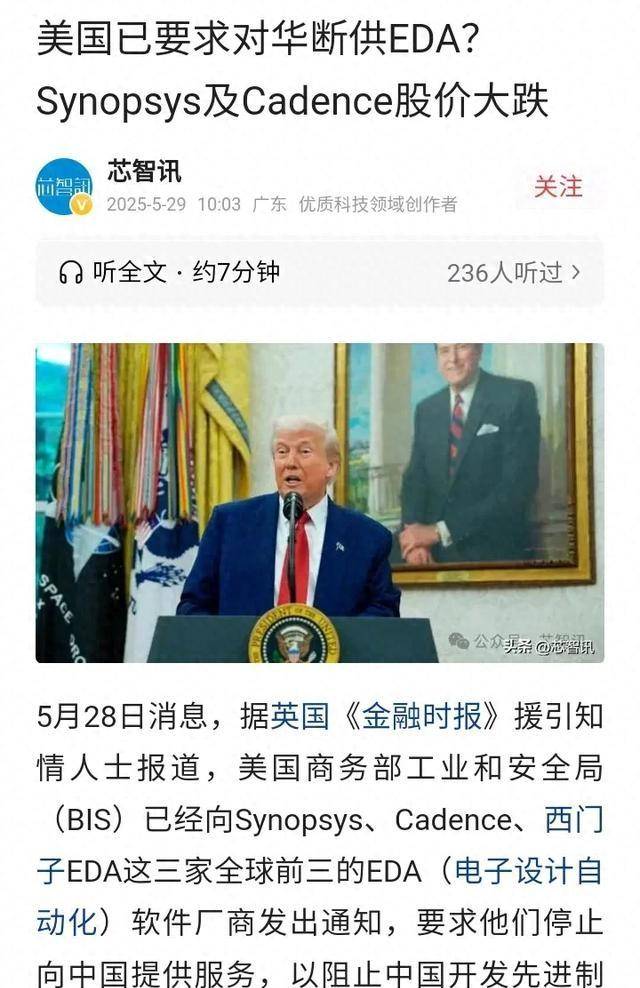
美国对EDA和航发技术的禁售看似凶狠,实则暴露了底牌已尽的窘境。中国罕见地保持沉默,却在关 键时刻亮出为C919量身定制的新型航发,推力达11吨,直接打脸美国的封锁。这种沉稳的反击背后, 是中国制造业转型成功的底气。 特朗普的关税战让美国海关收入暴涨,每月多收数百亿美元,但企业利润却暴跌千亿,一季度GDP负增 长。中国制造业PMI虽然短暂跌破50,但整体经济仍保持5%以上的增速,高端制造业投资活跃。美国 的打压反而加速了中国科技自主的步伐。 中国近期动作频频:与拉美国家举办北京峰会,同东盟、海合会举行首届峰会,筹备中非和中亚峰会, 地缘影响力快速扩张。更关键的是两记重拳——四月抛售超百亿美债导致收益率飙升,香港议会火速通 过全球首个与法币1:1挂钩的稳定币法案。这直接打断了美国通过稳定币重构美元体系的算盘。 美国越打越急,中国越打越稳。双方最后的对决很可能避开热战,在金融战场一决高下。中国正在积蓄 力量,等待时机对美元霸权发起总攻。香港稳定币的突破性立法,就是这场货币战争的第一声炮响。 美元霸权的根基正在动摇。美国滥用金融制裁,冻结他国外汇储备,让全世界看清了美元体系的政治风 险。俄乌冲突后,多国加速去美元化 ...

世界最穷的非洲,成了全球最潮的币圈玩家
3 6 Ke· 2025-06-03 04:01
Group 1 - The article discusses the growing popularity of stablecoins in regions like Africa, Southeast Asia, and South America, where people prefer them over local fiat currencies due to high inflation and economic instability [4][18][30] - In Africa, digital payment accounts reached 856 million in 2023, accounting for 50% of global registered accounts, with a 70% contribution to global growth [8][10] - The average inflation rate in Africa is projected to reach 18.6% in 2024, leading people to lose faith in local currencies and seek stable alternatives like stablecoins [18][20][22] Group 2 - Stablecoins, such as Tether (USDT), are pegged to fiat currencies like the US dollar, providing a stable medium for transactions and savings in regions with volatile local currencies [14][16][24] - The emergence of platforms like Yellow Card allows users to purchase stablecoins with local currencies, facilitating easier access to foreign currency and financial services [24][25] - The transaction volume of stablecoins has surged, with Tether's total holdings reaching $120 billion, and the annual transaction volume exceeding $28 trillion, surpassing traditional payment networks [40][41][45] Group 3 - The article highlights the dual nature of stablecoins, being used for legitimate financial transactions as well as illicit activities, such as money laundering and evading sanctions [31][33][36] - Countries like Russia have turned to stablecoins for international trade settlements after being excluded from the SWIFT system due to sanctions [36][38] - The US government is increasingly focusing on regulating stablecoins, with new legislation aimed at ensuring they are backed by US dollars or government bonds, potentially increasing their market supply significantly [50][52][55] Group 4 - The rapid growth of stablecoins raises concerns about their potential to reinforce the dominance of the US dollar in the global financial system, creating a "shadow dollar" effect [46][48][60] - The article warns that while stablecoins offer a decentralized alternative, they may still be subject to the same risks as traditional financial systems, including trust issues and regulatory scrutiny [58][62]
欠中国最多钱的4个国家,日本第二多,谁排第一?
Sou Hu Cai Jing· 2025-06-01 23:55
Core Insights - China's total external debt claims have surpassed $2.5 trillion, making it the world's largest creditor nation [1] - Four countries have drawn significant attention due to their debt levels and repayment structures, reflecting complex international relations and economic dynamics [1] Group 1: Pakistan - Pakistan ranks fourth with a debt of $35 billion, characterized by a "development partnership" structure, highlighting its strategic significance [3] - The China-Pakistan Economic Corridor, a flagship project of the Belt and Road Initiative, involves $62 billion in infrastructure projects, connecting China's western regions to the Indian Ocean [3] - 60% of loans to Pakistan are at concessional rates, and 20% are interest-free, significantly lower than International Monetary Fund financing costs [5] Group 2: Venezuela - Venezuela holds $50 billion in debt, with a unique debt nature due to its heavy reliance on oil exports and economic collapse [7] - Loans from China are often tied to "oil-for-infrastructure" projects, but domestic political instability has led to project delays [7] - Venezuela exports approximately 500,000 barrels of oil daily to China, with about 30% allocated for debt repayment [7] Group 3: Japan - Japan, as a developed nation, ranks second with $85 billion in debt, attributed to its aging population and social security expenditures [9] - The debt relationship stems from Chinese investments in Japanese enterprises and infrastructure projects, as Japan seeks to expand in the Chinese consumer market [9] - Despite economic challenges, Japan's stable industrial base provides a level of assurance for its debt sustainability [9] Group 4: United States - The United States tops the debt list with $1.47 trillion in U.S. Treasury securities held by China, representing 4.9% of U.S. GDP [12] - This situation reflects the dollar's hegemonic role, as the U.S. attracts global capital through bond issuance to sustain its high consumption and deficit model [12] - China has been reducing its holdings of U.S. debt since 2022, selling $22.7 billion in the first two months of 2024, indicating a strategic shift regarding the dollar's credit system [12] Group 5: Overall Debt Landscape - The debt profiles of these four countries illustrate China's diverse strategies in external debt, balancing financial security through U.S. bonds and supporting developing nations with resource-backed loans [14] - Debt serves as a reflection of capital flows and an indicator of the shifting global economic landscape [14]

军事溃败:美国霸权体系的“阿喀琉斯之踵”
Sou Hu Cai Jing· 2025-06-01 11:41
Group 1: Economic Implications - The U.S. defense budget for fiscal year 2025 is projected to be $895.2 billion, accounting for 40% of global military spending, which underpins the U.S. military presence in over 800 bases worldwide [2] - The stability of U.S. Treasury bonds is closely tied to the military's ability to maintain global order, with $9.2 trillion in U.S. debt maturing in 2025, raising concerns about potential market reactions to military failures [3] - A significant sell-off of U.S. debt due to military failures could lead to soaring interest rates, directly impacting U.S. fiscal sustainability [3] Group 2: Technological Competitiveness - The U.S. military's leading position in military technology is crucial for maintaining competitiveness, with historical examples like ARPANET showcasing military-driven technological advancements [4] - Recent setbacks in key areas such as hypersonic weapons have exposed vulnerabilities in U.S. military technology, potentially undermining global trust in U.S. technological superiority [4] - Non-traditional warfare tactics employed by smaller nations could challenge U.S. military dominance, as demonstrated by attacks on U.S. naval assets [5] Group 3: Geopolitical Consequences - Military failures could lead to a rapid decline in U.S. influence, with allies potentially seeking partnerships with countries like China and Russia, undermining U.S. strategic initiatives [6] - The potential for a liquidity crisis in the U.S. debt market could arise if Asian countries accelerate the sale of U.S. bonds in response to military setbacks, threatening the global financial system [6] - The collapse of U.S. military hegemony could trigger a shift towards a multipolar world, challenging the existing global order [7]

年亏损4200亿?美债崩盘在即,日本兜不住了,人民币或大幅升值?
Sou Hu Cai Jing· 2025-06-01 02:25
Group 1 - The core argument highlights the significant risks associated with U.S. Treasury bonds as the 30-year yield surpasses 5%, leading to a decline in confidence in U.S. debt securities [2][5] - Major Japanese insurance companies reported a total floating loss of approximately $60 billion in domestic bond holdings due to rising interest rates, indicating the financial strain on institutions heavily invested in U.S. Treasuries [2][5] - The report suggests that the U.S. debt market is approaching a critical point, with a potential collapse predicted for 2025, supported by alarming statistics such as a debt-to-GDP ratio of 123% and a single-day stock market loss of 5% [5] Group 2 - International investment firms are actively seeking safe-haven assets to mitigate losses from U.S. dollar and Treasury volatility, with Goldman Sachs identifying China as a secure refuge [7] - The recent threat of tariffs by Trump has led to a significant drop in the U.S. dollar index, reflecting a broader capital flight from U.S. debt markets [10] - There has been a dramatic increase in gold deliveries on the New York exchange, with May 2023 showing a staggering 700% rise compared to the same month in the previous year, indicating a shift towards gold as a protective asset [10][11] Group 3 - China's central bank is strategically increasing its gold reserves to create a buffer against U.S. debt challenges, holding 73.77 million ounces of gold [12] - The Chinese government aims to maintain a stable yuan exchange rate to support its manufacturing sector, recognizing the importance of currency stability for economic health [14][16] - International investment firms have set a target exchange rate of around 7 for the yuan, reflecting a cautious yet optimistic outlook on China's economic prospects [16]

稳定币成1200亿美债‘接盘侠’,中国减持后美国找到新韭菜?
Sou Hu Cai Jing· 2025-06-01 00:30
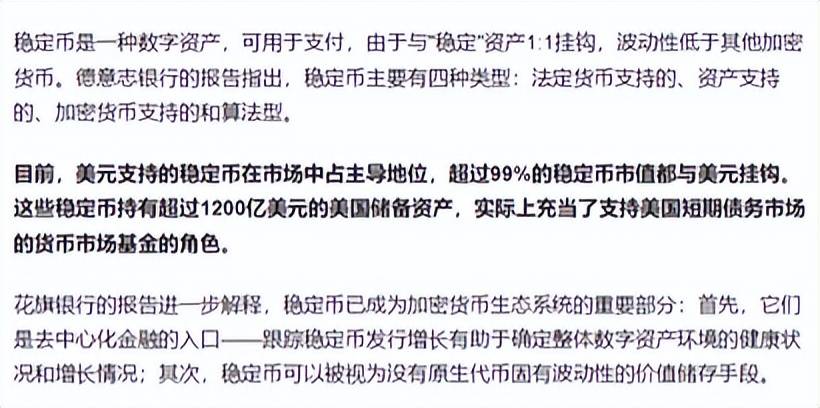
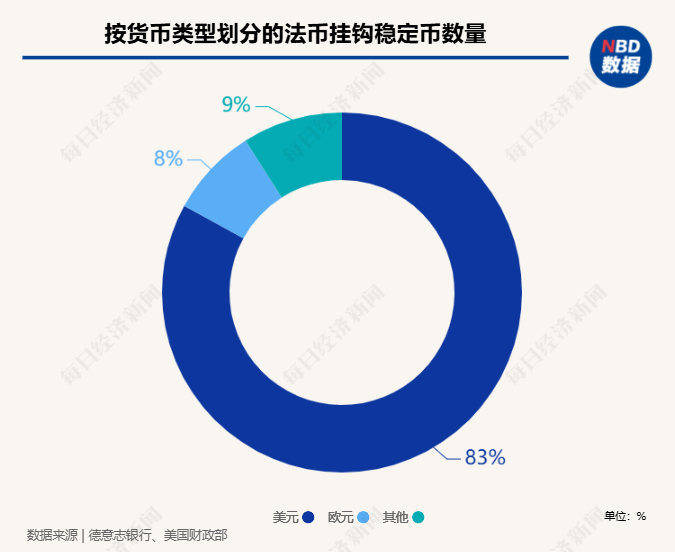
Core Viewpoint - Stablecoins are seen as a potential savior for the US dollar hegemony, possibly leading to a version 3.0 of dollar dominance globally [1][5]. Group 1: Stablecoin Overview - Stablecoins are a type of cryptocurrency that maintain a 1:1 peg to the US dollar, differing from highly volatile cryptocurrencies like Bitcoin and Ethereum [2][4]. - The issuance of stablecoins is strictly regulated, requiring a dollar backing for each stablecoin issued, which simplifies cryptocurrency transactions [2][4]. Group 2: Demand and Market Potential - The demand for stablecoins is rigid, increasing with the number of cryptocurrency traders, and Tether (USDT) has issued over 130 billion coins backed by approximately 130 billion dollars [4]. - Citigroup estimates that the stablecoin market could reach $3.7 trillion by 2030, with 60% of that potentially used to purchase US Treasury bonds, surpassing holdings by China and Japan [4][5]. Group 3: Implications for Dollar Hegemony - Stablecoins could become a core pillar of dollar hegemony 3.0, as they may facilitate global transactions and reinforce the dollar's dominance, especially in regions with limited banking access [5]. - The reliance on stablecoins in regions like Latin America, Southeast Asia, and Africa indicates a trend towards indirect use of the dollar, laying the groundwork for a new version of dollar hegemony [5]. Group 4: Challenges and Risks - The future of stablecoins and their role in dollar hegemony is uncertain, facing challenges such as the need for widespread adoption of cryptocurrencies and potential competition from stablecoins issued by other regions [6][9]. - The risks associated with stablecoins, including their reliance on private companies and the potential for high-risk investments, pose significant uncertainties for the stability of the dollar hegemony [10].
美元稳定币的阳谋:万亿美债“接盘侠”,恐引爆6.6万亿美元银行“失血潮”
Mei Ri Jing Ji Xin Wen· 2025-05-31 11:04
每经记者|岳楚鹏 蔡鼎 每经编辑|兰素英 进入5月,美国金融圈的聚光灯正前所未有地聚焦于一种特殊的数字资产——稳定币。 随着美国参议院关键法案的推进和美国政府高层的公开力挺,这个总市值在大约5年间从200亿美元飙升至近2500亿美元的金融"物种",正被寄予厚望,不仅 要成为美国经济实力的"助推器",更被视为重塑美元全球地位和消化庞大国债的关键棋子。渣打银行的报告预计,到2028年底稳定币发行量将达2万亿美 元,由此带来额外1.6万亿美元的美国短期国债购买需求——"足以吸收特朗普第二任期内剩余时间里所有新增的短期国债发行量"。 然而,这场针对稳定币的战略布局,也可能在未来反噬自身。美银证券发出警示,随着稳定币的崛起,美国传统银行业恐面临高达6.6万亿美元的存款分 流。由于价值创造可能转移至银行体系外,美国银行股也将面临沉重估值压力。 《GENIUS法案》:稳定币走向主流的倒计时 当地时间5月19日,美国参议院以66票对32票的显著优势,通过了《指导与建立美国稳定币国家创新法案》(简称《GENIUS法案》)的程序性立法,为这 一旨在为稳定币量身定制监管框架的法案铺平了道路。不过,法案仍需参议院最终表决,并经众议院 ...
美元霸权松动黄金需求创新高,全球资产配置格局迎来重大转变
Sou Hu Cai Jing· 2025-05-30 14:29
Group 1 - The traditional trust in the US dollar is gradually eroding, leading to a significant shift in global asset allocation towards gold as a safe-haven asset [1][3] - As of the end of 2024, the US dollar's share in global foreign exchange reserves is projected to drop to 57.8%, a decrease of 0.6 percentage points from the end of 2023, marking the lowest level since 1995 [3] - Major credit rating agencies have downgraded the US credit rating, with Moody's lowering it from Aaa to Aa1, citing deteriorating long-term fiscal conditions as a key factor [3] Group 2 - Gold is re-establishing its core position in the global financial system, with global gold demand expected to reach 4,974 tons in 2024, a 1.5% increase from 4,899 tons in 2023, driven by strong central bank purchases and rising investment demand [4] - Goldman Sachs predicts that central bank demand for gold will continue for at least two more years, potentially pushing gold prices to $4,000 per ounce [4] - A survey by Kitco indicates that 58% of retail investors expect gold prices to exceed $3,000 per ounce by 2025, reflecting strong market confidence in gold's long-term value [4] Group 3 - Global capital is increasingly flowing into safe-haven assets like gold, with a notable reduction in investment in US assets, which have decreased from over 90% to approximately 79% in recent years [5] - The allocation towards currencies such as the renminbi, euro, and yen has increased as investors seek opportunities outside the US [5]

金价或考验支撑 双锯齿结构酝酿中
Jin Tou Wang· 2025-05-30 07:13
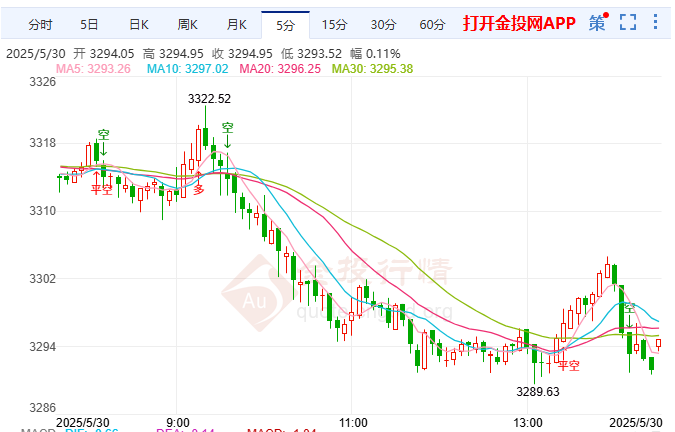
Group 1 - The US dollar weakened due to disappointing initial jobless claims data, leading to a rebound in gold prices, which broke through the key psychological level of $3,300 per ounce [1] - The Federal Reserve's minutes from the May 6-7 meeting indicated that policymakers face a "dilemma" in the coming months, with rising inflation and unemployment rates increasing the risk of economic recession [1] - Gold, as a non-yielding asset, tends to be more attractive in a low-interest-rate environment, which may drive further investment interest [1] Group 2 - The global debt market is showing dangerous signals, with the US 30-year Treasury auction experiencing historic cold reception and the bid yield soaring to 4.85% [3] - The debt-to-GDP ratios for the US and Japan have surpassed 135% and 265% respectively, indicating unsustainable fiscal conditions that threaten the foundation of the US dollar [3] - Attention is focused on key upcoming events, including the PCE data release, OPEC+ production meeting, and G7 finance ministers' summit, which could influence monetary policy decisions [3] Group 3 - Technical analysts predict that spot gold is expected to test a support level of $3,272 per ounce, with a potential drop to the range of $3,215 to $3,243 if this level is breached [3] - The current correction phase in gold prices, starting from $3,336, may have the potential to break below the previous low of $3,253 [4] - Resistance is noted at $3,308, and if surpassed, prices could rise to the range of $3,330 to $3,348 [4]
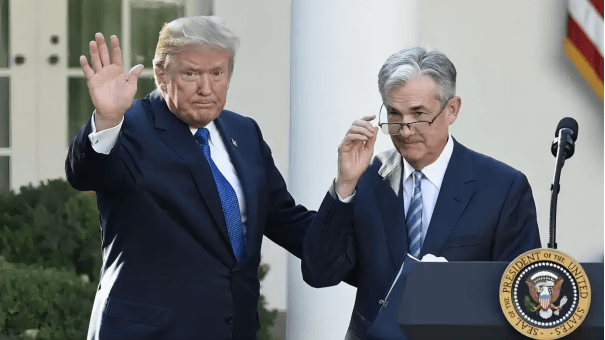
ETO Markets 市场洞察:白宫60分钟"利率核战":特朗普怒斥鲍威尔"叛国",美元霸权岌岌可危?
Sou Hu Cai Jing· 2025-05-30 05:49
Group 1 - The core conflict between President Trump and Federal Reserve Chairman Powell revolves around the Fed's decision to maintain high interest rates, which Trump argues is detrimental to U.S. manufacturing competitiveness [1][3] - Trump highlighted that the U.S. dollar index has risen by 12% since 2022, negatively impacting the profits of U.S. export companies, while China has stimulated its manufacturing sector through interest rate cuts [3][5] - Powell emphasized the Fed's commitment to data-driven decision-making, citing that core inflation remains above the 2% target and warning against premature rate cuts that could lead to a wage-price spiral [3][5] Group 2 - The historical context of the conflict dates back to 2017 when Trump nominated Powell, but their relationship soured after the Fed began raising interest rates in 2018 [4] - Trump's administration is currently attempting to reshape the Fed's decision-making body by nominating members with dovish tendencies, while facing legal and market constraints on removing Powell [4][5] - The current federal funds rate is maintained in the range of 4.25%-4.5%, close to the peak levels since 2001, with concerns about the implications of high rates on the economy and international competitiveness [5][7] Group 3 - The meeting reflects a deeper structural conflict between the "America First" policy and the independence of the Federal Reserve, highlighting three major challenges: rising federal debt exceeding $35 trillion, a declining share of the dollar in global reserves, and geopolitical shifts towards non-dollar trade agreements [8][10] - The Fed's monetary policy decisions will significantly influence global capital flows, with potential outcomes ranging from increased debt crises in emerging markets to a decline in the dollar's status as a reserve currency [8][10] - The ongoing power struggle between political and economic cycles is expected to intensify as the 2026 Fed chair transition approaches, indicating a period of heightened uncertainty in the financial markets [10]