
健康食品

Search documents
魔芋产业链的“三重考验”:原料缺口、价格波动与全球化采购路径
Xin Jing Bao· 2025-05-27 10:27
Core Insights - The konjac industry is experiencing significant growth, reshaping the snack food sector as consumer health awareness increases [1][2] - Major snack companies are investing heavily in konjac products, diversifying their offerings beyond traditional spicy snacks to include meal replacements and beverages [1][3] - Despite its growing popularity, the supply of konjac remains unstable, with production concentrated in specific regions of China [1][5] Industry Overview - The konjac market has seen a compound annual growth rate (CAGR) of 26% over the past decade, with the market size expected to expand significantly [7][13] - The total market size for konjac products is estimated at 26.9 billion yuan, with the snack segment alone accounting for 18.3 billion yuan [11] - The demand for konjac products is projected to continue rising, driven by health trends and consumer preferences for low-calorie, high-fiber foods [13] Company Developments - Weitong reported a revenue of 6.266 billion yuan in 2024, with a 28.6% year-on-year increase, largely driven by its konjac product line [2] - Salted Fish initiated a "new Chinese snack" strategy, launching the "Big Demon King" brand to capitalize on the konjac trend, with sales growing from 117 million yuan in 2021 to 838 million yuan in 2024 [3] - Companies like Weitong and Salted Fish are expanding their production capabilities and supply chains to meet the increasing demand for konjac products [10][12] Supply Chain Dynamics - The supply of konjac is currently insufficient to meet demand, leading to price volatility; prices for konjac have doubled from 2 yuan per jin in 2023 to 4 yuan per jin in 2024 [8][9] - The domestic konjac production is unable to satisfy the current market needs, prompting companies to source from international suppliers [9][10] - The industry is witnessing a trend towards vertical integration, with companies establishing processing facilities in key production areas to secure raw materials [10][12] Future Trends - The konjac product category is expected to diversify further, with increased industry concentration as more companies enter the market [11][13] - Government support through subsidies and research initiatives is anticipated to bolster the konjac industry, enhancing its status as a key agricultural product [13] - The growing consumer acceptance of konjac products is reflected in rising repurchase rates and average spending on these items [13]
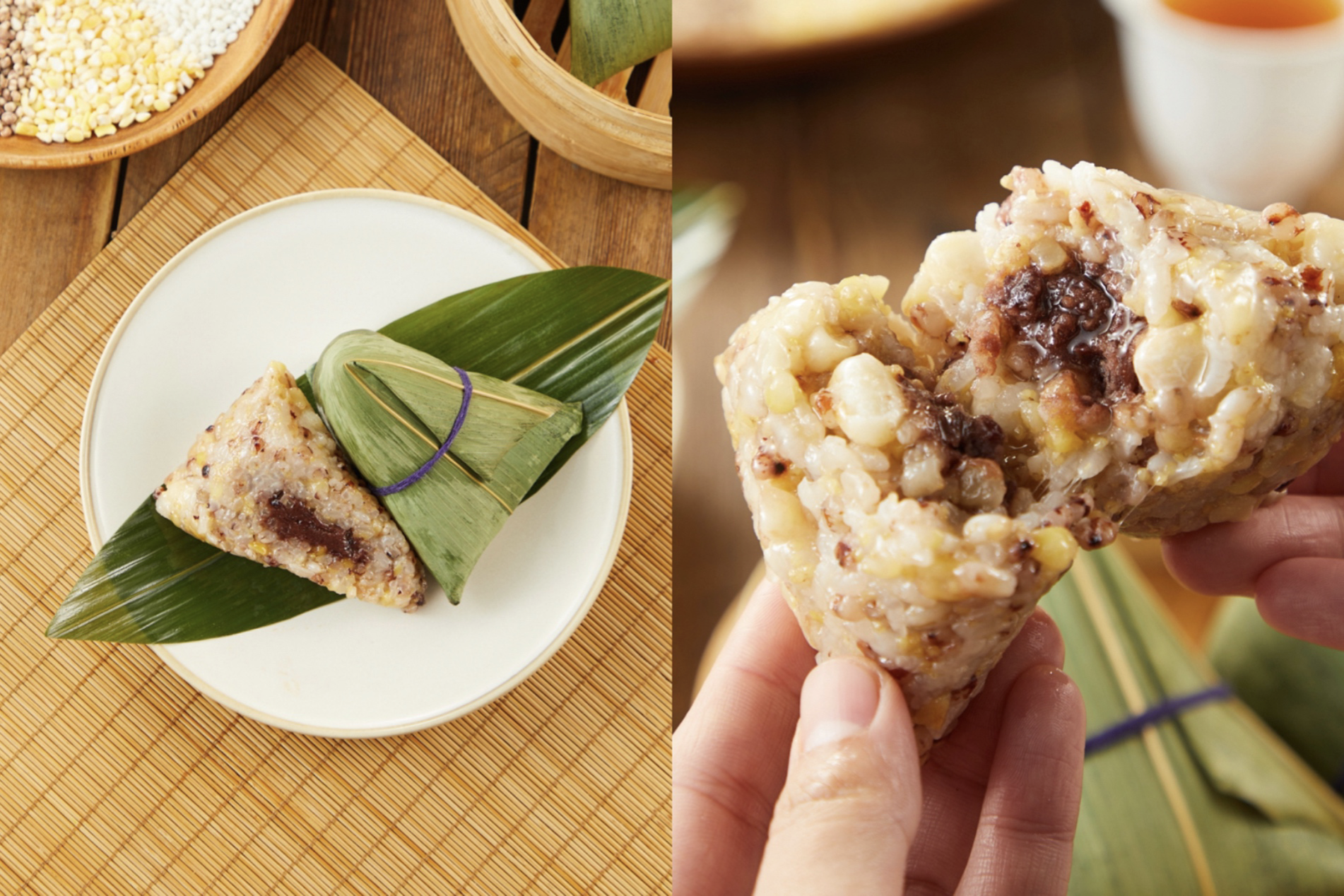
牛肋条肉粽、潮汕风味粽、八宝杂粮粽盒马端午粽子花式上新
Qi Lu Wan Bao· 2025-05-27 07:23
Core Insights - The company has introduced a variety of rice dumplings for the upcoming Dragon Boat Festival, focusing on both traditional flavors and healthier options to meet consumer demand for health and ritual significance [1][2][4] Product Development - The company has launched over ten types of rice dumplings, including traditional flavors like fresh meat and red bean, as well as new low-sugar and low-oil options such as eight-treasure grain dumplings and mushroom dumplings [1][4] - A significant sales increase of over 30% was observed for the newly introduced white rice dumpling within two months of its launch, indicating a shift in consumer preference towards this product [2] Consumer Trends - There is a noticeable shift in consumer preferences from novelty to practicality, with a growing emphasis on health-conscious choices in seasonal foods [4] - The company has recognized the need to modify traditional festive foods to reduce calorie content and improve digestibility, responding to consumer concerns about high-calorie options [4] Cultural Significance - In addition to food, the company has also introduced six types of mugwort bouquets, reflecting the increasing importance of traditional rituals among younger consumers [7] - The new products include various designs and meanings, such as small dragon boat-shaped decorations and gourd-themed bouquets symbolizing "blessings and health" [7]

研判2025!中国粉丝行业市场政策、产业链、发展现状、竞争格局及发展趋势分析:海外市场持续火爆[图]
Chan Ye Xin Xi Wang· 2025-05-09 01:32
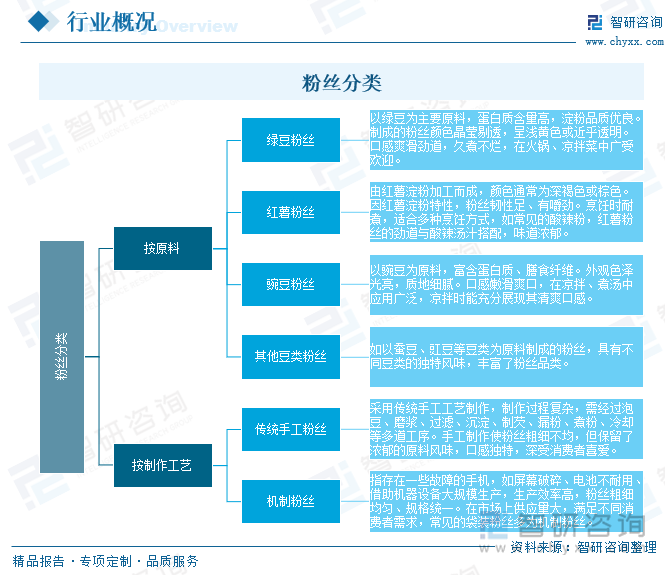
Overview - Vermicelli is a traditional food in China and Asia, primarily produced from legumes and tubers, with over 95% of production concentrated in China due to natural conditions [1][12] - In 2024, China's vermicelli production is projected to reach 1.5557 million tons, with a demand of 1.4403 million tons and a market size of 21.749 billion yuan, averaging 15.10 yuan per kilogram [12][14] Market Policy - The Chinese government has implemented various policies to ensure food safety and promote the healthy development of the vermicelli market, including guidelines for traditional food production and food safety management [5][7] Industry Chain - The upstream of the vermicelli industry includes suppliers of raw materials like peas, mung beans, and sweet potatoes, as well as food additives and production equipment [8] - The downstream market consists of both household and restaurant consumers, with household consumption accounting for approximately 46.47% and restaurant consumption for 53.53% [10] Development Status - The vermicelli industry has a long history in China, with production methods evolving through various stages, including collective production and globalization [3] - The industry faces challenges such as small-scale production and low technological advancement, with over 90% of related enterprises having registered capital under 1 million yuan [16][18] Competitive Landscape - Major companies in the industry include Yantai Shuangta Food Co., Ltd., which is the largest producer and has received multiple quality awards, and Yantai Sanjia Vermicelli Co., Ltd., which has a global marketing network [18][20] Development Trends - Future trends indicate a shift towards healthier vermicelli options, with an emphasis on low-sugar, low-sodium, and additive-free products made from natural ingredients [22]

西麦食品(002956):健康食品持续扩容 燕麦龙头势能向上
Xin Lang Cai Jing· 2025-05-08 10:37
Core Viewpoint - The company reported strong revenue growth and profitability in 2024 and Q1 2025, driven by its core oat business and expansion into new retail channels [1][2][3]. Financial Performance - In 2024, the company achieved revenue of 1.9 billion yuan, a year-on-year increase of 20.2%, and a net profit attributable to shareholders of 130 million yuan, up 15.4% [1]. - For Q1 2025, revenue reached 660 million yuan, reflecting a year-on-year growth of 15.9%, with a net profit of 60 million yuan, increasing by 21.2% [1]. Product Performance - The company's main oat products, including pure oat flakes, compound oat flakes, and cold oat products, generated revenues of 710 million, 850 million, 150 million, 140 million, and 50 million yuan respectively, with growth rates of 9.6%, 28.8%, 24.1%, 23.9%, and 25.3% [2]. - The "Oat+" series and the classic milk oat series each surpassed 200 million yuan in sales, with the "Oat+" series growing over 20% and the milk oat series over 30% year-on-year [2]. Channel Development - The company emphasized the development of direct sales channels, achieving revenue of 830 million yuan from direct sales, a year-on-year increase of 31.0% [2]. - Online sales, particularly through traditional e-commerce and social e-commerce platforms like Douyin, saw significant growth, with Douyin's GMV reaching 470 million yuan, up 20.3% year-on-year [2]. Cost and Profitability - The gross margin for 2024 was 41.3%, a decrease of 3.2 percentage points year-on-year, primarily due to rising raw material costs and low capacity utilization of new production facilities [3]. - The net profit margin for 2024 was 7.0%, down 0.3 percentage points year-on-year, but improved to 8.3% in Q1 2025, reflecting a 0.3 percentage point increase [3]. Strategic Expansion - The company is expanding its product range beyond oats, developing new products such as instant porridge, lotus root powder, sesame paste, and probiotic protein powder, while also pursuing strategic partnerships and acquisitions [3][4]. - The company is actively embracing new retail channels, including snack wholesale, Douyin e-commerce, and membership stores, leading to rapid growth [4]. Market Outlook - The company forecasts net profits of 180 million, 230 million, and 280 million yuan for 2025-2027, with corresponding EPS of 0.81, 1.01, and 1.24 yuan [4]. - As a leading player in the oat industry, the company is expected to benefit from market expansion and increased concentration, with potential for profit improvement in the future [4].
百龙创园2024年营收净利润双增长 紧抓机遇积极扩产
Zheng Quan Ri Bao Zhi Sheng· 2025-04-30 04:14
Core Viewpoint - Shandong Bailong Chuangyuan Biotechnology Co., Ltd. reported strong financial performance for 2024, with total revenue of 1.152 billion yuan, a year-on-year increase of 32.64%, and a net profit of 246 million yuan, up 27.26% [1] Group 1: Financial Performance - In 2024, the company achieved total revenue of 1.152 billion yuan, a 32.64% increase year-on-year [1] - The net profit attributable to shareholders was 246 million yuan, reflecting a 27.26% growth [1] - For Q1 2025, the company reported revenue of 313 million yuan, a 24.27% increase year-on-year, and a net profit of 81.42 million yuan, up 52.06% [3] Group 2: Product Segments - The company's main product lines include prebiotics, dietary fibers, health sweeteners, and other starch sugar products [1] - Revenue from prebiotics and dietary fibers reached 322 million yuan and 624 million yuan, with year-on-year growth of 25.43% and 40.42%, respectively [1] - Health sweeteners generated 156 million yuan in revenue, a 13.85% increase, accounting for 14.12% of total revenue [1] Group 3: Expansion and R&D - The company is expanding production capacity with new projects, including a 30,000-ton soluble dietary fiber project and a 15,000-ton crystallized sugar project [2] - R&D expenses for 2024 reached 44.4622 million yuan, a significant increase of 36%, with an R&D expense ratio of 3.86% [2] - The gross profit margin improved to 34.35%, up 1.32 percentage points from the previous year, indicating strong profitability [2] Group 4: Global Market Presence - In 2024, the company's overseas revenue reached 698 million yuan, a 58.42% increase, accounting for 63.08% of main business revenue [2] - The company has expanded its market presence across Asia, Europe, and North America, capitalizing on the growing demand for health foods and functional sweeteners [2]

保龄宝:2024年利润翻倍,在变革中释放增长潜力
Zheng Quan Shi Bao Wang· 2025-04-28 12:21
Core Insights - The company reported a revenue of 2.402 billion yuan for 2024, a year-on-year decrease of 4.84%, while net profit attributable to shareholders reached 111 million yuan, a significant increase of 105.97% [1] - The company achieved a substantial growth in net profit excluding non-recurring gains and losses, which amounted to 124 million yuan, reflecting a remarkable increase of 254.56% [1] - Key business segments such as prebiotics, dietary fiber, and sugar-reducing sweeteners saw sales volume and revenue growth, with prebiotics generating 335 million yuan (up 16.02%), dietary fiber at 238 million yuan (up 14.52%), and sugar-reducing sweeteners at 516 million yuan (up 29.73%) [1] Cost Control and Product Structure Optimization - The company enhanced supply chain management and optimized procurement processes, establishing stable long-term relationships with suppliers to effectively reduce procurement costs [2] - Production cost savings were achieved through process upgrades for prebiotics, dietary fiber, and sugar-reducing sweeteners, leading to a significant reduction in raw material consumption [2] - High-value products such as premium prebiotics and dietary fibers contributed to 60.46% of the company's total gross profit [2] Innovation and Marketing Strategies - The company is expanding its product lineup with new offerings in the field of human milk oligosaccharides and has initiated lactose production to strengthen its prebiotic product system [3] - Strategic partnerships, such as with Qingdao Haizhiyuan Life Science Technology Co., are aimed at promoting DHA and enhancing the company's position in the nutritional oil market [3] - The company is innovating its marketing strategies to meet the growing demand for health-oriented and functional foods, focusing on high-margin products [3] Equity Incentives and Future Outlook - The company introduced a restricted stock incentive plan, granting 11.1 million shares to 50 key personnel, with performance targets set for net profits in the coming years [4] - The performance targets reflect the management's confidence in future prospects and aim to motivate the sales and R&D teams to enhance market competitiveness [4] - The company is well-positioned to benefit from the rapid growth of the health food market, driven by increasing consumer awareness and demand for functional food ingredients [5] Overall Performance and Future Prospects - The 2024 annual report highlights the company's commitment to transformation and resilience in overcoming challenges, achieving significant improvements in profitability [6] - Continuous investment in R&D and innovative marketing strategies are expected to solidify the company's foundation for sustainable growth in the health food sector [6]

2025年中国串番茄行业市场政策、产业链、发展现状、竞争格局及发展趋势研判:鲜食消费占比最大[图]
Chan Ye Xin Xi Wang· 2025-04-25 01:38
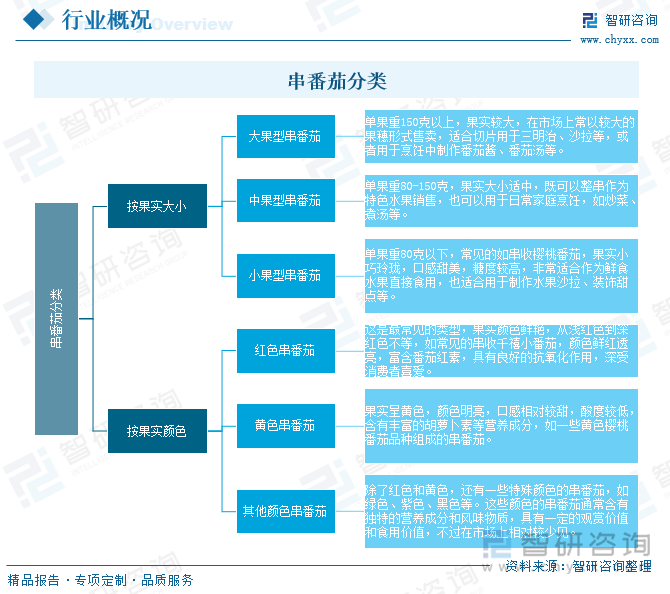
Overview - The first variety of cherry tomatoes was developed in Italy in 1987, and they are increasingly favored by consumers due to their rich nutrition and excellent taste, especially as health awareness rises [1][11] - In 2024, the demand for cherry tomatoes in China is projected to reach 488,000 tons, with a market size of 10.15 billion yuan, and the average market price is expected to drop to 20.8 yuan per kilogram [1][11] Market Policies - The Chinese government has issued several policies to support agricultural development, including guidelines for rural revitalization and the promotion of traditional food products, creating a favorable environment for the cherry tomato industry [4][6] Industry Chain - The cherry tomato industry consists of upstream sectors (seeds, fertilizers, pesticides), midstream (cultivation and harvesting), and downstream (retail, catering, food processing), with fresh cherry tomatoes primarily distributed through cold chain logistics [7][9] Consumption Structure - The retail sector for fresh cherry tomatoes accounts for over 70% of the total consumption, driven by the growing demand for nutritious foods rich in vitamins and minerals [9] Competitive Landscape - The cherry tomato market is becoming increasingly competitive, with major players including large agricultural companies and numerous small farmers. Key companies like Kaisheng Haofeng Agricultural Group and Beijing Jixing Agriculture are leading the market due to their financial strength and established distribution networks [14][16] Company Analysis - Kaisheng Haofeng Agricultural Group, established in 2006, focuses on modern agricultural solutions and has a comprehensive supply chain from seed to table, with a high consumer satisfaction rate [16] - Beijing Jixing Agriculture, founded in 2016, operates a modern agricultural park and has achieved significant production efficiency through advanced technologies, producing 700,000 kg of high-quality cherry tomatoes annually [18] Development Trends - Future developments in the cherry tomato industry will leverage gene editing and biotechnology to create more resilient and higher-yielding varieties, as well as diversify products to meet consumer preferences [20]
海融科技(300915):营收净利双增 创新与市场拓展助力成长
Xin Lang Cai Jing· 2025-04-24 12:43
Core Insights - The company reported a revenue of 1.087 billion yuan for 2024, representing a year-on-year growth of 13.89%, and a net profit attributable to shareholders of 111 million yuan, up 23.78% year-on-year [1] - The company continues to focus on R&D-driven product innovation, with significant revenue contributions from cream, chocolate, jam, and flavoring segments [1][2] - The direct sales channel showed remarkable growth, with a 65.37% increase in revenue, indicating successful expansion into tea and restaurant sectors [2] Revenue Breakdown - In 2024, the revenue from cream, chocolate, jam, flavoring, and other businesses was 1.008 billion, 38 million, 26 million, 13 million, and 3 million yuan respectively, with year-on-year changes of +16.25%, +25.83%, -26.93%, +38.31%, and -79.57% [1] - The cream segment continues to dominate, accounting for 92.71% of total revenue, with specific contributions from different cream types [1] Profitability Metrics - The company achieved a gross margin of 35.03% and a net margin of 10.19% in 2024, with slight changes from the previous year [2] - The operating expenses ratio decreased to 24.38%, indicating improved cost management [2] Strategic Initiatives - The company is actively enhancing its product structure and marketing network, focusing on health foods and plant-based strategies to strengthen market competitiveness [3] - Future product development will target various retail and food service segments, aiming to create "scene-based solutions" to meet diverse customer needs [3] Future Projections - Revenue forecasts for 2025-2027 are 1.357 billion, 1.716 billion, and 2.124 billion yuan, with expected growth rates of 24.79%, 26.50%, and 23.77% respectively [3] - Projected net profits for the same period are 133 million, 157 million, and 187 million yuan, with growth rates of 20.06%, 18.16%, and 18.86% [3]

五谷磨房20250401
2025-04-15 14:30
Summary of Conference Call Records Company and Industry Overview - The conference call pertains to a health food company focusing on the development of health-oriented products and traditional herbal food ingredients. The company emphasizes its commitment to the health food sector and the integration of traditional and modern nutritional science. Key Financial Metrics - The company reported a revenue of 1.88 billion, a year-on-year increase of 23% from 1.52 billion [1] - Basic earnings per share increased to 8.7 cents, up 23% from 7.1 cents [1] - Dividend per share rose to 3.69 cents, a 14% increase from 3.23 cents [1] - Gross margin improved to 65.8%, an increase of 1.8 percentage points from the previous year [1][2] - Net profit margin increased to 9.1%, up 0.8 percentage points from 8.3% [1][2] - The annual payout ratio was 42.4%, an increase of 3.1 percentage points year-on-year [1] Revenue Growth and Channel Performance - Overall revenue growth was reported at 11.7%, with a 7.6% increase in the second half compared to the first half of the year [1] - New channel revenue share increased from 14.4% to 17.3% year-on-year, indicating rapid growth in this segment [1] - E-commerce revenue grew by 9% year-on-year, with a 1.6% increase in the second half compared to the first half [1][5] - Specialty stores saw a year-on-year growth of 6.5%, with a 2.7% increase in the second half compared to the first half [2] Cost and Profitability Analysis - The increase in gross margin was attributed to a decrease in product costs [2] - Selling expenses rose from 48.6% to 50.6% of revenue, indicating increased promotional costs associated with online channels [2][42] - Administrative expenses remained stable, decreasing slightly from 5.4% to 5.2% of revenue [2] Business Strategy and Future Outlook - The company is focusing on three main areas: health food, the development of traditional herbal ingredients, and the "谷方" series, which combines classic recipes with modern nutritional science [3][4] - The company aims to enhance sales efficiency and organizational effectiveness, with a 7% increase in specialty store sales efficiency [5] - The health food industry in China is projected to grow at a compound annual growth rate (CAGR) of 8%, driven by factors such as aging population, rising income, and increased health awareness [6] Market Trends and Consumer Behavior - The company noted a shift in consumer behavior towards health-oriented products, with a focus on traditional herbal ingredients [6][7] - There is a growing trend towards smaller, specialized retail channels, such as convenience stores and snack shops, which are gaining traction [8] - The online channel is experiencing fragmentation, with traditional e-commerce and content-driven platforms emerging [8] Risks and Challenges - The company highlighted potential risks related to changes in retail channel strategies, particularly concerning a major client [10][18] - The competitive landscape is evolving, with more brands entering the health food sector, which could impact market share [16][18] Additional Insights - The company is exploring opportunities for mergers and acquisitions to enhance growth and shareholder value [19][28] - There is a focus on maintaining a balance between product quality and cost management, emphasizing the use of high-quality raw materials [35] - The company is cautious about expanding into new markets, preferring to strengthen its presence in existing markets first [20] This summary encapsulates the key points discussed during the conference call, providing insights into the company's financial performance, strategic direction, market trends, and potential risks.
第 112 届糖酒会:繁荣表象下的行业阵痛与破局求索
Xin Lang Zheng Quan· 2025-03-25 10:49
Core Insights - The 112th National Sugar and Wine Fair in Chengdu showcased a record exhibition area of 325,000 square meters and over 6,600 participating companies, yet the atmosphere was notably cold compared to previous years [1] - The price for prime exhibition spaces has halved from 1.5 million yuan in 2024 to 800,000 yuan, and foot traffic at key hotels has decreased by 30% year-on-year, with major brands like Wuliangye and Luzhou Laojiao canceling their hotel exhibits [1] Summary by Sections White Wine Industry: From "Volume and Price Rise" to "Value Reconstruction" - High channel inventory and pressure on pricing systems have emerged, with inventory levels around three months due to weak sales during the 2024 Mid-Autumn Festival and National Day peak seasons [2] - Distributors have shifted their focus from "grabbing new products" to "clearing inventory," indicating a need for actual sales data rather than relying solely on policy-driven inventory management [2] - Leading companies like Wuliangye and Yanghe are adopting a "decentralization" strategy, directly reaching consumers through digital membership systems, while smaller brands face challenges and may exit the market, increasing industry concentration [2] Technology and Health: The "Double-Edged Sword" of Industry Transformation - Despite the challenges in the white wine sector, new AI and health food sections at the fair attracted significant interest, indicating potential growth areas for the industry [3] - AI technology is being leveraged to enhance production efficiency, with collaborations between tech firms and food leaders showcasing innovations like AI inspection robots and smart cooking devices [4] - The trend towards health-oriented products is evident, with low GI foods and sugar-free beverages gaining attention, although issues with industry standards and transparency remain a concern [5] Channel Transformation: From "Selling Products" to "Selling Services" - Companies like Jialong Foods are implementing strategies such as "data middle platform + new product insurance pool + channel academy," with 77% of distributors having over ten years of partnership [6] - Guizhou Dukang is accelerating channel penetration with plans to cover over 1,000 experience centers, while Luzhou Laojiao is enhancing user engagement through digital systems, resulting in a 15% increase in repurchase rates for core products [6] Conclusion: Seeking Certainty Amidst Change - The contrasting dynamics at the fair reflect the broader challenges within the Chinese food and beverage industry, with the white wine sector's adjustments highlighting the fragility of traditional models [7] - The focus for the industry moving forward should be on consumer demand, channel transformation, standard establishment, and technological inclusivity to navigate the new cycle effectively [7]